
An overpronating foot collapses inward with every step, throwing your entire kinetic chain—ankle, knee, hip, and lower back—out of alignment. The right insole doesn’t just pad your step; it imposes a rigid architectural correction that stops your arch from collapsing and stabilizes your gait from the ground up.
I’m Min — the co-founder and writer behind Gadgets Feed. I’ve spent hundreds of hours analyzing foot biomechanics research and cross-referencing real-world user data to evaluate which orthotic insoles deliver genuine structural control for overpronation rather than just plush cushioning.
This guide puts seven serious contenders through a rigorous spec-level and performance-based filter to identify the one true best arch support for overpronation and the runner-ups that solve specific fit and activity needs.
How To Choose The Best Arch Support For Overpronation
Picking the right insole for overpronation means ignoring the marketing fluff about “cloud-like” softness and focusing on structural rigidity, heel-cradle depth, and the geometry of the medial arch. Without these three elements, an insole is just a glorified rug for your foot.
Shell Rigidity and Medial Posting
The base material of the insole—typically semi-rigid polypropylene or a firm TPU blend—is what actually resists the inward roll of your subtalar joint. Insoles with a flexible foam-only base allow your arch to continue collapsing. Look for a shell that has visible torsional resistance when you try to twist it. A 2-degree to 4-degree medial post (a wedge built into the heel or arch area) further controls how much your foot can roll inward.
Heel Cup Depth and Stability
A U-shaped or deep heel cup that rises at least 15-20mm on the sides locks your calcaneus in place and prevents the heel from tilting inward during stance phase. If the heel cup is shallow or flimsy, your rearfoot will still pronate even if the arch feels supported. The heel cup must be rigid enough that it doesn’t deform under your full body weight.
Arch Height and Trim-to-Fit Options
Overpronation correction requires an arch that is high enough to fill the void created by your collapsed arch, but not so high that it digs into the navicular bone. Most premium insoles offer at least two arch-height options (medium vs. high). For those with very flat feet, a gradual break-in period of 1-2 hours per day is critical to avoid arch pain from the sudden change in foot posture.
Quick Comparison
On smaller screens, swipe sideways to see the full table.
| Model | Category | Best For | Key Spec | Amazon |
|---|---|---|---|---|
| PowerStep Pinnacle Maxx | Premium | Maximum stability & heavy-duty pronation control | 2° medial post; firm polypropylene shell | Amazon |
| PowerStep Pinnacle | Premium | Moderate pronation & all-day standing | Flexible arch support; dual-layer EVA | Amazon |
| Protalus T-100 Elite | Premium | Whole-body alignment & multi-activity use | Patented alignment frame; deep heel cup | Amazon |
| Tread Labs Pace 2 | Premium | Clinical-grade correction & replaceable top cover | 4 arch heights; Polypro+ shell | Amazon |
| Bukihome Orthotic Inserts | Mid-Range | Budget-friendly rigid arch & plantar fasciitis | Rigid arch structure; 83% more shock absorption | Amazon |
| BestHalo Heavy Duty Insoles | Mid-Range | Heavy users (220+ lbs) & work boots | Gel + EVA cushioning; deep heel cup | Amazon |
| FiotSkep 3/4 High Arch Orthotics | Mid-Range | Overpronation correction in shallow shoes | TPU 3/4 length; metatarsal pad | Amazon |
In‑Depth Reviews
1. PowerStep Pinnacle Maxx Orthotic Insoles

The PowerStep Pinnacle Maxx is the gold standard for controlling severe overpronation. Its defining feature is the 2-degree medial post built into a firm polypropylene shell that resists torsional twisting even under heavy load. This squared heel design sits flush in the shoe and refuses to roll laterally, which is exactly what an overpronator’s rearfoot needs during stance phase.
The dual-layer EVA foam provides targeted cushioning without compromising the shell’s rigidity. Users report immediate stabilization of the ankle and a noticeable reduction in inward collapse during walking and running. Unlike softer insoles that compress after a few weeks, the Maxx maintains its structural integrity over months of daily wear across athletic shoes, work boots, and casual footwear.
This is a no-trimming-required insole that transfers seamlessly between shoes. The deeper heel cup and squared base make it the most effective off-the-shelf solution for heavy-duty pronation correction. For anyone whose flat feet are causing knee or hip pain, this is the first and best upgrade you can make.
Why it’s great
- 2° medial post actively controls rearfoot pronation
- Firm polypropylene shell resists twisting and collapse
- Squared heel sits flat and prevents lateral rolling
Good to know
- Stiffer break-in period; needs 2-3 days of gradual wear
2. PowerStep Pinnacle Insoles

The standard PowerStep Pinnacle is the #1 podiatrist-recommended insole for good reason: it strikes a precise balance between moderate pronation control and all-day wearability. The arch support shape is calibrated to provide stability to the foot and ankle without the aggressive rigidity of the Maxx, making it ideal for users who pronate moderately rather than severely.
The dual-layer cushioning system reduces stress and fatigue during long standing hours while the premium arch support offloads the plantar fascia. Users report dramatic improvements in plantar fasciitis pain and lower back discomfort within the first week. The full-length design fits athletic shoes, walking shoes, and work boots without requiring trimming.
Made in the USA and backed by a 30-day guarantee, the Pinnacle is an HSA/FSA-eligible option that delivers predictable, repeatable results. If you need reliable pronation support for daily commuting or light running, this is a proven workhorse that won’t overwhelm your feet with an overly stiff shell.
Why it’s great
- Trusted podiatrist-recommended design with proven efficacy
- Excellent plantar fasciitis relief without excessive rigidity
- No trimming required; fits most removable-insole shoes
Good to know
- Arch support is flexible, not rigid—less effective for severe overpronation
3. Protalus T-100 Elite Premium Insoles
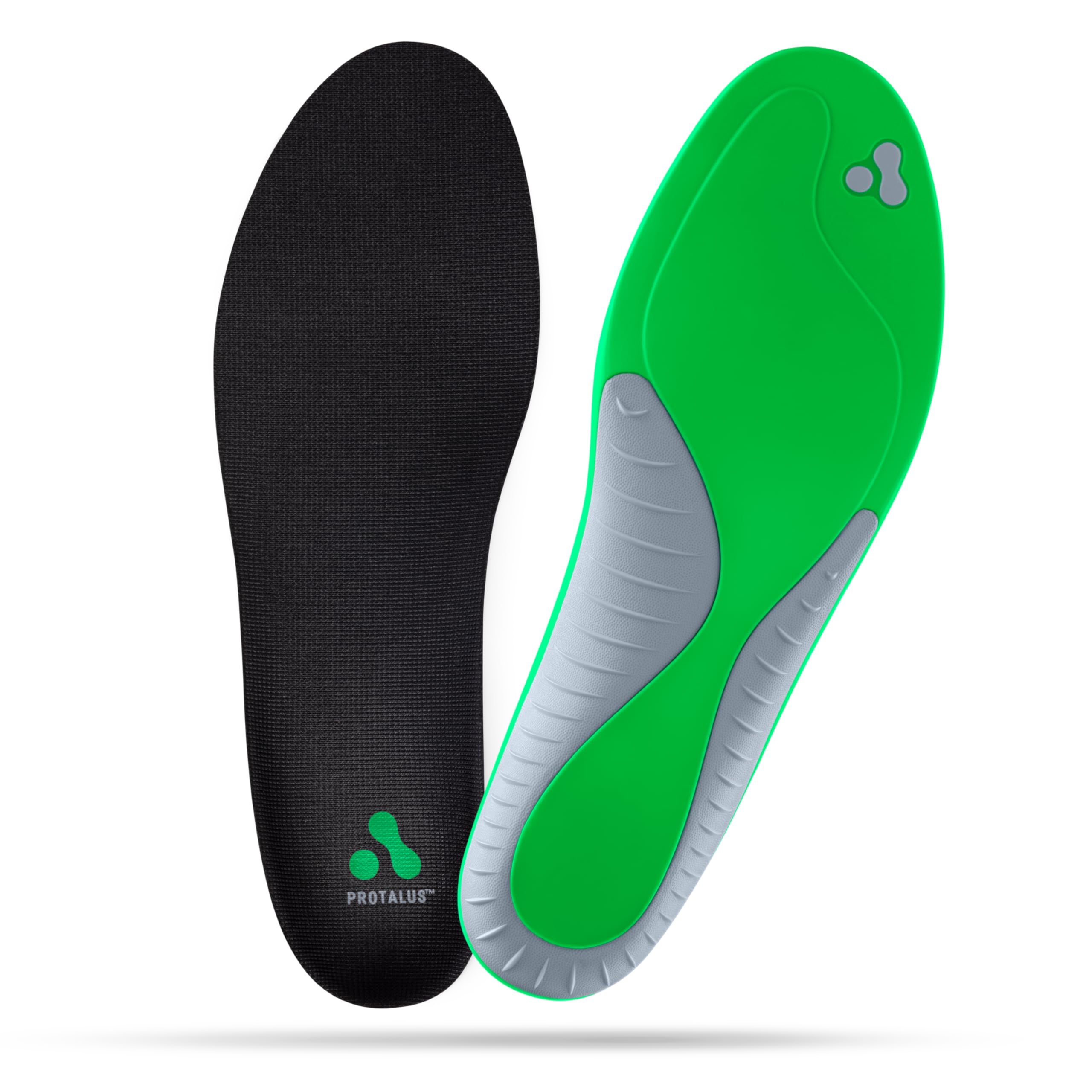
The Protalus T-100 Elite uses a patented alignment system that doesn’t just support the arch—it gently guides the entire foot into a more natural, neutral position. This approach targets the whole kinetic chain, addressing ankle, knee, hip, and lower back stress that originates from overpronation. The deep heel cup is particularly effective at stabilizing the calcaneus during impact.
The shock-absorbing layer is tuned for multi-activity use: walking, running, hiking, and standing. Users report a significant reduction in arthritic ankle pain and overall foot fatigue during long shifts. The universal adaptive design accommodates both flat feet and high arches without the need for multiple arch-height versions.
Built to last roughly 12 months of consistent wear, the T-100 Elite uses premium materials that resist compression breakdown. The only trade-off is a slight squeaking noise reported in quiet environments, which is a minor compromise for the level of structural correction these insoles provide for whole-body alignment.
Why it’s great
- Patented alignment frame addresses whole-body posture chain
- Deep heel cup provides excellent rearfoot stabilization
- Universal fit works for flat feet and high arches alike
Good to know
- Can produce a squeaking noise against certain shoe liners
4. Tread Labs Pace 2 Insoles
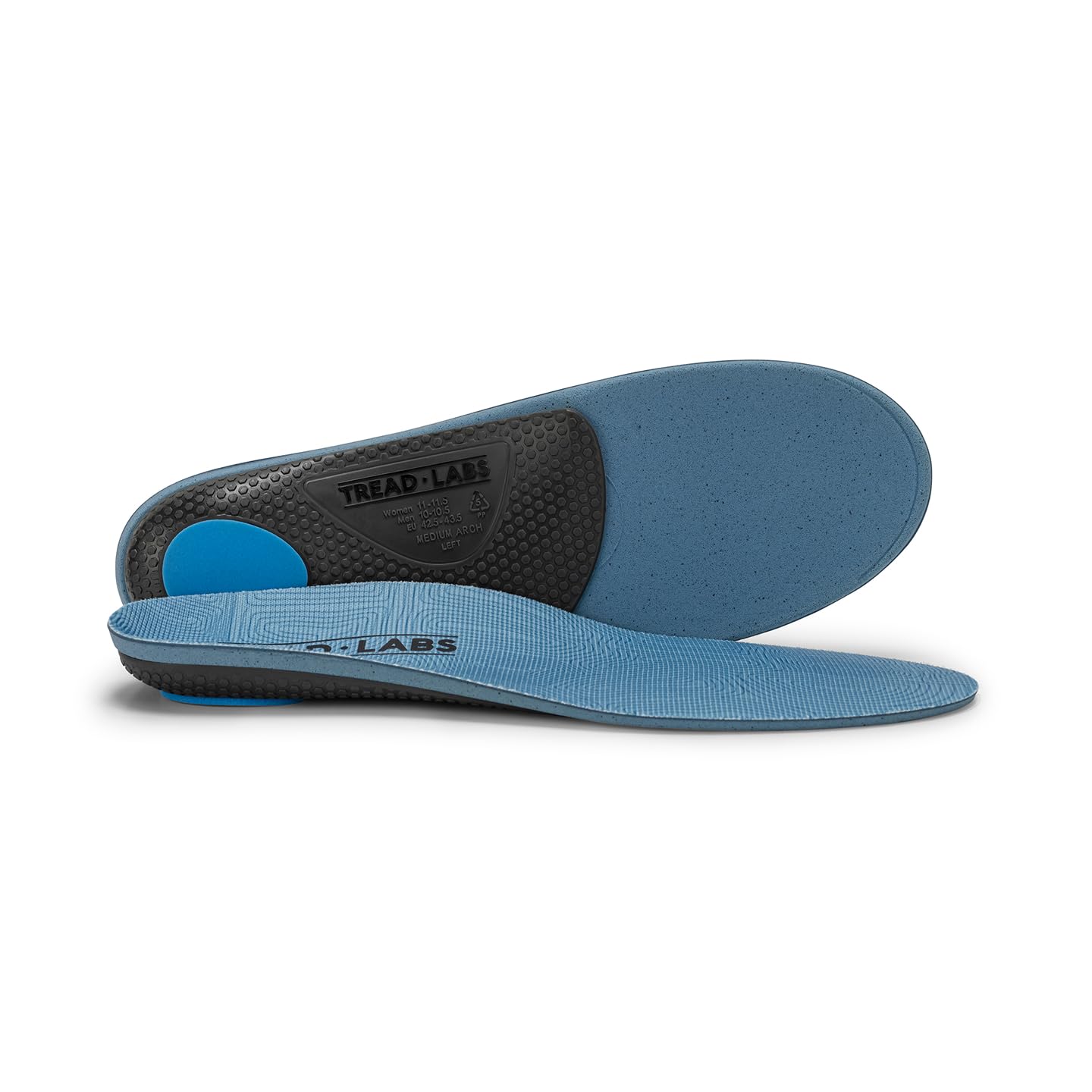
The Tread Labs Pace 2 is a clinical-grade orthotic that uses a molded Polypro+ shell for maximum pronation resistance. What sets it apart is the 2-part system: the rigid arch support base lasts for years, while the top cover with precision heel cushion can be replaced when the foam compresses. This modular design reduces long-term cost and environmental waste.
Available in four distinct arch heights, the Pace 2 allows for a truly customized fit that off-the-shelf single-height insoles cannot match. The updated top cover geometry includes a precision heel cushion specifically designed to soften heel strike without compromising stability. The 5mm thickness makes it easy to fit into wide shoes after trimming.
The Million Mile Guarantee backs the shell’s durability, and the anti-odor materials add practical value for daily wearers. However, the arch placement is aggressive—users with very flat feet may experience soreness in the navicular area if they choose too high an arch level. Proper arch-height selection is essential for success with this insole.
Why it’s great
- Four arch heights allow precise pronation correction matching
- Replaceable top cover extends lifespan and reduces cost
- Polypro+ shell provides clinical-grade rigidity
Good to know
- Selecting the wrong arch height can cause arch soreness
5. Bukihome Orthotic High Arch Support Inserts
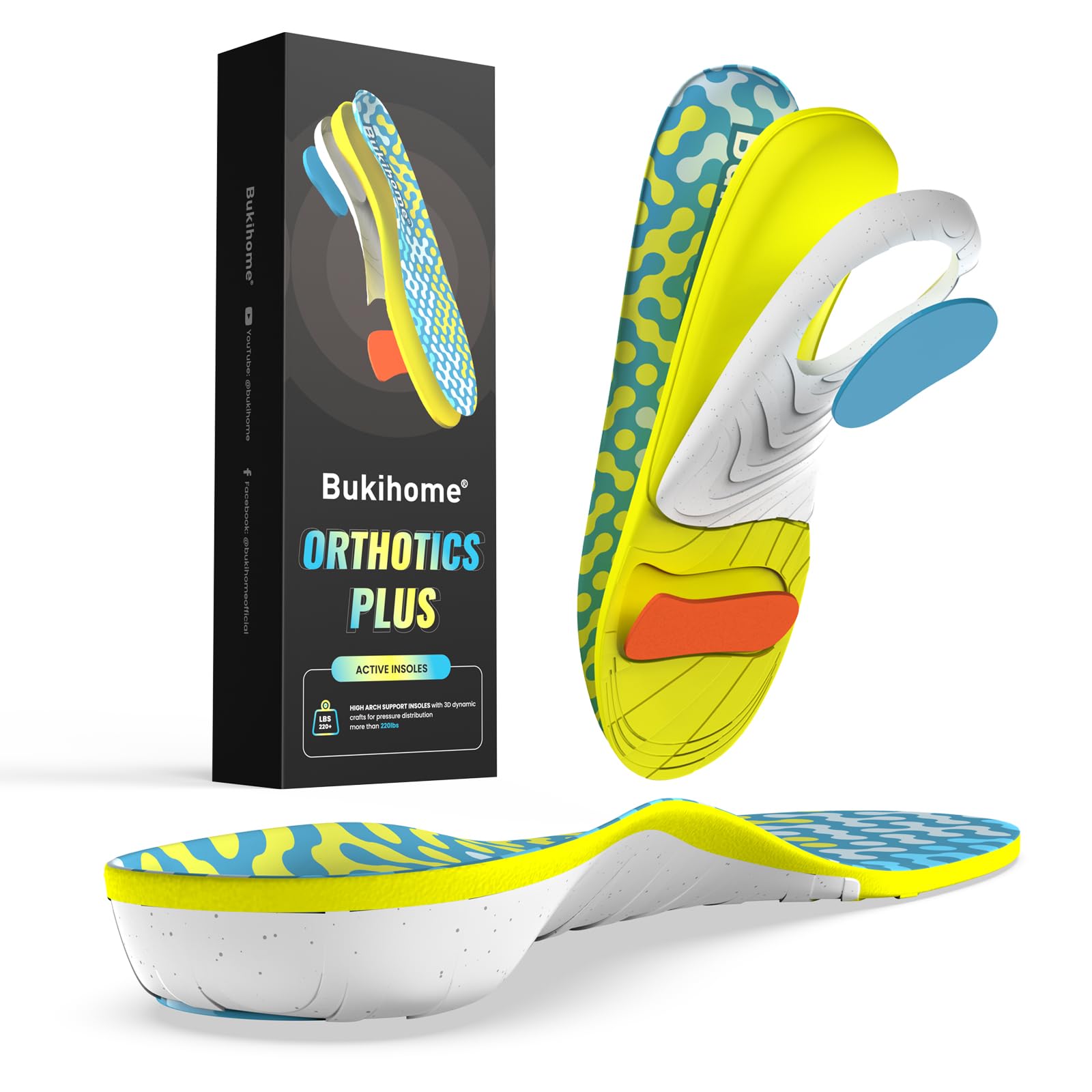
Bukihome’s orthotic insert employs a medical-grade rigid arch structure that directly targets overpronation with a level of firmness usually found in premium products. The dual-layer cushioning system in the forefoot and heel claims to absorb 83% more impact force than standard insoles, which translates to noticeably less joint strain during walking and running.
The U-shaped heel cup provides a stabilizing cradle that locks the heel and prevents excessive internal rotation. Users report that these insoles feel virtually identical to doctor-prescribed orthotics at a fraction of the cost, with no break-in period required for most wearers. The velvet top layer adds moisture-wicking comfort for all-day use.
At this price point, the Bukihome delivers a rigid correction that competes with insoles costing twice as much. The only caveat is that the stiffness can make inserting them into shoes with tight collars slightly challenging. For budget-conscious buyers who need real pronation control, this is the smartest money you can spend.
Why it’s great
- Rigid medical-grade arch support at a value price point
- Deep U-shaped heel cup provides excellent calcaneus lock
- No break-in period for most users
Good to know
- Stiff construction can be hard to insert into snug shoes
6. BestHalo Heavy Duty Plantar Fasciitis Insoles
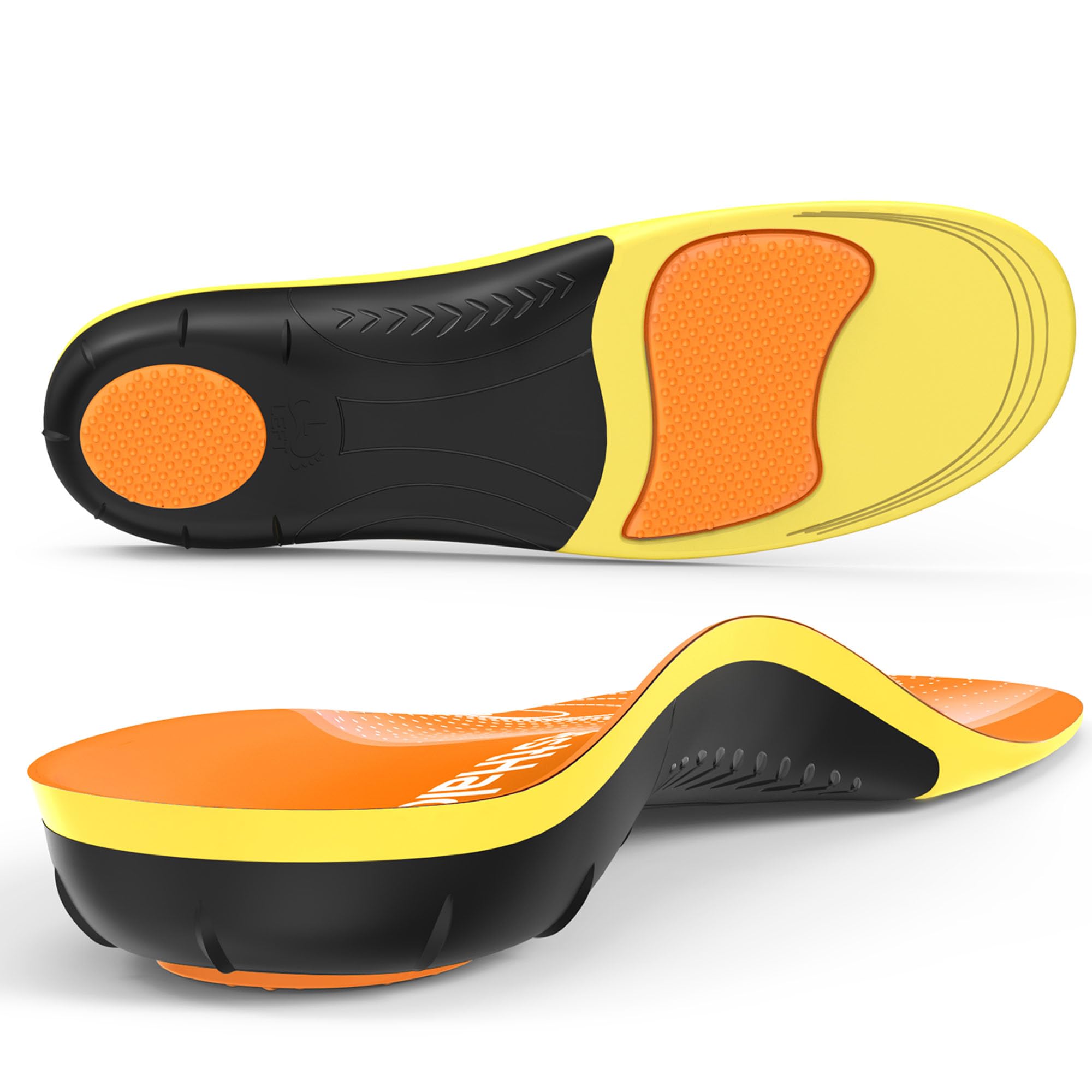
The BestHalo Heavy Duty insoles are explicitly engineered for users weighing 220+ pounds, a demographic that often finds standard insoles compress too quickly. The combination of premium EVA foam and targeted gel cushioning delivers shock absorption that reduces impact on the knees and hips during prolonged standing or heavy walking loads.
The biomechanical design includes a structured arch support that promotes natural alignment and helps control overpronation without being overly aggressive. The ergonomic deep heel cup stabilizes the heel and maintains proper positioning during gait. Users report significant relief from heel and sole pain after long standing shifts in work boots.
A gradual 3-7 day adaptation period is recommended, as the firm support can initially feel intense for flat feet. The trim-to-fit design accommodates a wide range of shoe types from athletic sneakers to heavy work boots. For large-framed individuals who struggle to find insoles that hold their shape, BestHalo provides a durable, supportive solution.
Why it’s great
- Rated for 220+ lbs; resists compression under heavy loads
- Gel cushioning at heel and forefoot reduces joint impact
- Fits work boots and casual shoes with trim-to-fit design
Good to know
- Requires 3-7 day gradual break-in for flat feet users
7. FiotSkep 3/4 High Arch Orthotics

The FiotSkep 3/4 orthotics solve a specific problem: fitting high-arch overpronation support into shoes with little toebox space, like dress shoes or slim casual sneakers. The 3/4 length means the insole ends before the toe area, so it doesn’t cramp your toes while still providing full arch correction and a stabilizing deep U-shaped heel cup.
Manufactured from thermoplastic polyurethane (TPU), the shell offers a good balance of firmness and flex. The low-profile metatarsal pad provides additional support for ball-of-foot pain commonly associated with overpronation. Users with flat feet report that these orthotics effectively reduce foot, calf, and lower back pain after extended wear.
The arch height is notably high and firm, which works well for pronation correction but caused discomfort for some users who expected a more moderate support level. The trim-to-fit 3/4 design makes them versatile across various shoe styles. For anyone who needs real pronation control in shoes that can’t accommodate a full-length insole, this is the targeted solution.
Why it’s great
- 3/4 length fits shallow or dress shoes without toe crowding
- TPU shell provides firm TPU pronation resistance
- Metatarsal pad addresses ball-of-foot pain
Good to know
- Very high arch support may feel aggressive for some
FAQ
How long does it take for orthotic insoles to correct overpronation?
Can insoles fix severe overpronation without custom orthotics?
Should I buy full-length or 3/4 length insoles for overpronation?
How often should I replace overpronation insoles?
Final Thoughts: The Verdict
For most users, the arch support for overpronation winner is the PowerStep Pinnacle Maxx because its 2-degree medial post and squared heel deliver the most aggressive pronation control in a ready-to-wear package. If you need whole-body alignment with a patented guidance system, grab the Protalus T-100 Elite. And for clinical-grade customization with replaceable components, nothing beats the Tread Labs Pace 2.