
When your foot rolls outward with every step, the entire kinetic chain is thrown off—ankles, knees, hips, and lower back all compensate for a gait that lands heavily on the outside edge. This lateral instability, known as supination or underpronation, demands footwear with rigid medial posts, deep heel cups, and a firm arch bed that prevents the foot from collapsing outward. Without targeted arch support, the constant micro-adjustments lead to plantar fasciitis, peroneal tendonitis, and stress fractures over time.
I’m Min — the co-founder and writer behind Gadgets Feed. I’ve spent countless hours analyzing the biomechanics of supination, cross-referencing customer gait patterns with actual midsole construction, arch profiles, and heel counter rigidity to separate shoes that merely feel soft from those that actively correct lateral drift.
Whether you need stability running shoes for daily miles or orthotic-friendly walking sneakers that lock your heel in place, this guide breaks down the seven best options for correcting overpronation’s mirror image. For anyone struggling with chronic ankle instability or worn-down outer soles, I’ve curated the definitive list of the best arch support supination footwear available right now.
How To Choose The Best Arch Support Supination
Finding the right shoe or insert for supination means looking past marketing claims about “cushioning” and focusing on lateral stability, arch profile, and heel counter rigidity. Here are the four factors that matter most when correcting an outward-rolling gait.
Heel Cup Depth and Lateral Post
Supinators need a heel counter that wraps deep and firm around the calcaneus to prevent the foot from sliding outward on impact. Look for a rigid external heel clip or a pronounced medial post that extends into the midfoot. A shallow heel cup allows excessive lateral drift even if the arch feels supportive.
Arch Profile and Insole Compatibility
High arches are the most common trait among supinators, but not all shoes accommodate them. Shoes with a removable insole let you swap in a custom orthotic or a molded cork insert like the FootScientific Type 3. Check that the midsole itself has a pronounced arch shape—flat insoles force your foot to create its own support, which it cannot do while supinating.
Midsole Density and Outsole Wear Pattern
Supinators wear down the outer edge of the outsole rapidly. A shoe built for this gait uses a firmer density foam on the lateral side to resist compression and slow the outward roll. Overly soft, uniform cushioning (like many neutral trainers) collapses unevenly and accelerates supination. Look for dual-density midsoles or stability frames.
Toe Box Volume and Splay Room
Supination often accompanies a wider forefoot or hammer toes because the foot splays more on the lateral edge. A narrow toe box pinches the metatarsals and exacerbates instability. Choose shoes with a generous toe box—round or anatomical shapes—that allow your toes to spread naturally during the gait cycle.
Quick Comparison
On smaller screens, swipe sideways to see the full table.
| Model | Category | Best For | Key Spec | Amazon |
|---|---|---|---|---|
| Saucony Women’s Guide 17 | Stability Shoe | Post-injury gait correction | Wide heel platform + PWRRUN cushioning | Amazon |
| Saucony Men’s Guide 18 | Stability Shoe | Daily walking on hard surfaces | Stability frame + cloud-like cushioning | Amazon |
| Saucony Women’s Guide 14 | Running Shoe | Wide-foot stability running | Firm supportive sole + deep heel cup | Amazon |
| Skechers Womens Max Cushioning Arch Fit Roslyn | Cushion Shoe | High arches + Achilles tendinitis | Arch Fit insole + 1.5-inch elevated heel | Amazon |
| Skechers Women’s Arch FIT 2.0-Rich Vision | Comfort Shoe | All-day standing at work | Arch Fit contour + 1.5 lb weight | Amazon |
| Arches Insoles Type 3 – Supination/High Arch | Orthotic | Adding arch support to any shoe | Molded cork + EVA foam + BK mesh | Amazon |
| ALLSWIFIT Women’s Road Running Shoes Active5K | Budget Shoe | Short-term cost-effective support | Thick rocker sole + 5.8 oz weight | Amazon |
In‑Depth Reviews
1. Saucony Women’s Guide 17
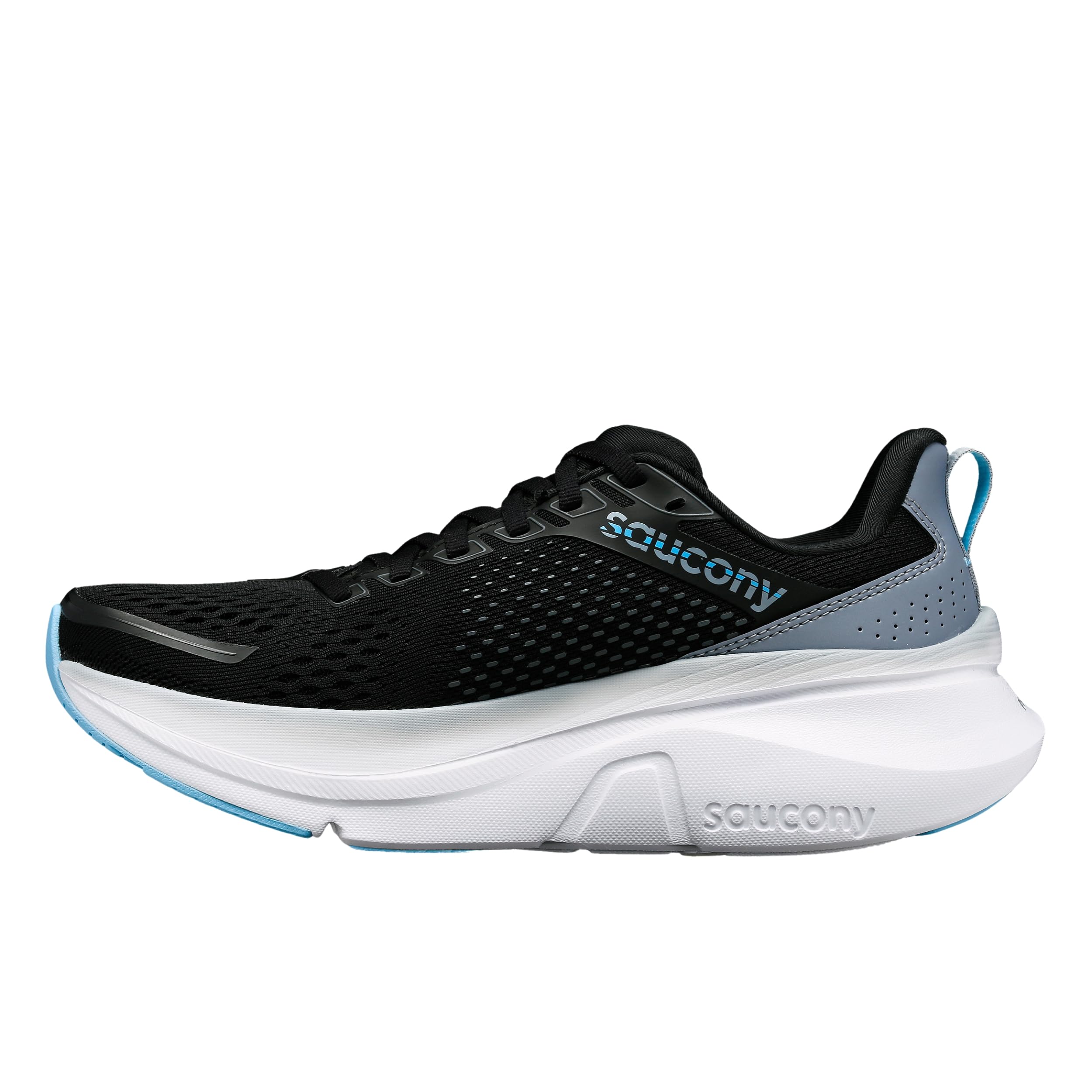
The Guide 17 delivers the most comprehensive stability package for supinators, pairing a wide heel platform with Saucony’s PWRRUN cushioning that is soft enough for comfort yet dense enough to resist lateral collapse. Multiple reviewers with unsteady gaits—including post-brain injury and post-bunion surgery—report immediate improvements in balance and pain-free walking. The roomy toe box accommodates splay without rubbing, a critical detail for supinators who often develop bunions or hammer toes from the outward-leaning gait.
The heel counter is notably rigid and wraps deep around the calcaneus, preventing the outward slide that triggers peroneal tendonitis. At this price point, the Guide 17 offers superior build quality over neutral trainers, with a medial post that guides the foot into a neutral alignment without feeling intrusive. The shoe works straight out of the box with no break-in period, saving users from the painful adjustment phase common with rigid stability shoes.
Where the Guide 17 truly shines is in its ability to handle both walking and light running for supinators with wide feet. The extra-wide sizing option is rare in stability-focused footwear, and the full-length PWRRUN+ insert adds a layer of rebound that keeps the gait cycle fluid. For anyone recovering from foot surgery or dealing with chronic ankle instability, this is the most dependable option in the lineup.
Why it’s great
- Wide heel platform provides exceptional lateral stability for supinators
- Roomy toe box prevents rubbing on bunions and post-surgery feet
- PWRRUN cushioning balances softness with firm lateral support
Good to know
- Color options may be limited for some sizes
- Runs slightly long; size down half if between sizes
2. Saucony Men’s Guide 18
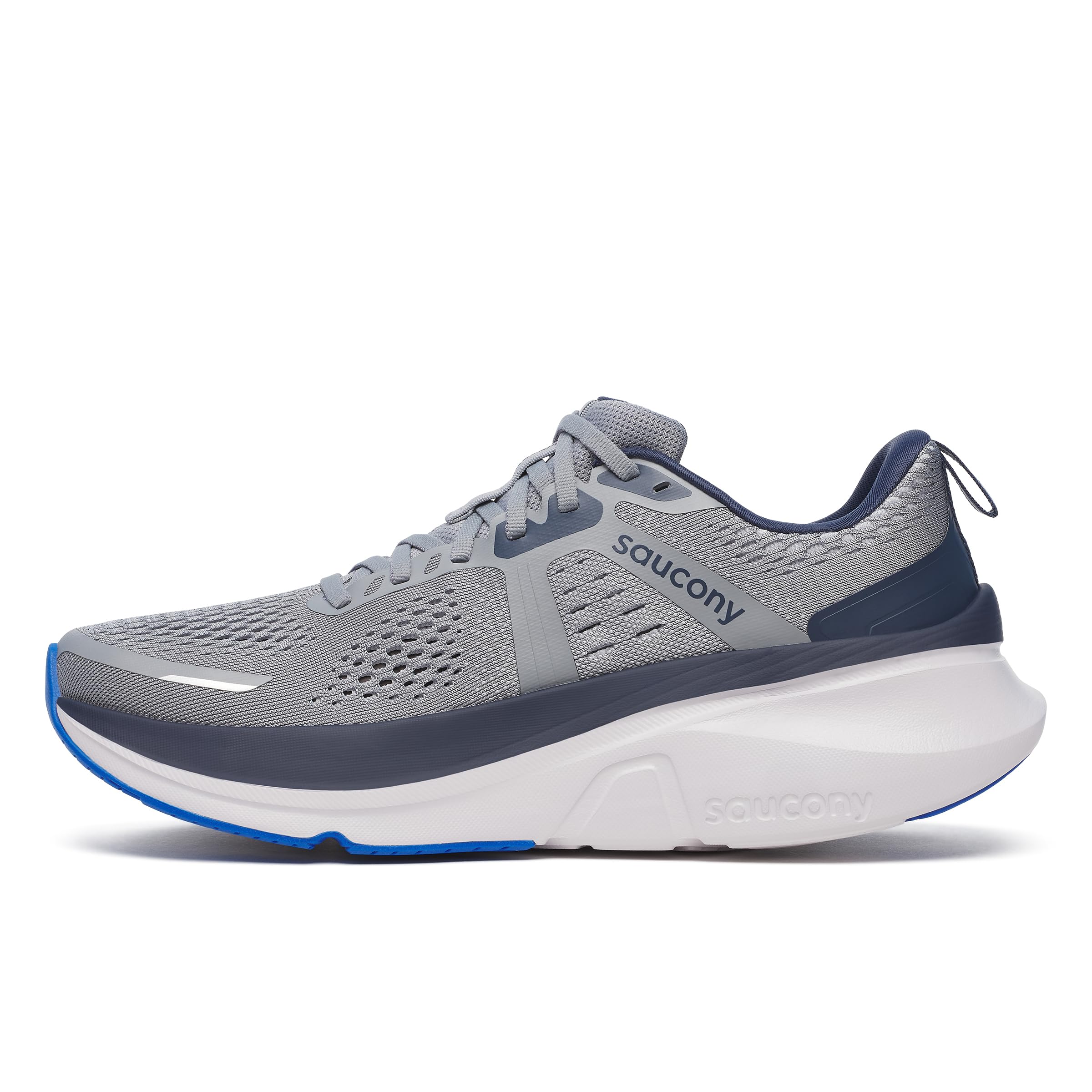
The Guide 18 refines the stability formula with a slightly lower heel-to-toe drop than its predecessor, making it a better fit for supinators who heel-strike heavily. Reviewers who also pronate note that the shoe wears evenly—a rare feat for a shoe that must correct both inward and outward drift. The cloud-like cushioning absorbs shock without allowing the foot to roll, and the stability frame extends from the heel through the midfoot.
Flat-footed users with supination tendencies find the moderate arch support sufficient without additional inserts, though the toe box runs slightly narrower than the Guide 14 and 15. This is a shoe that rewards break-in—the heel counter softens slightly after a few miles while retaining its supportive shape. At this weight class, the Guide 18 feels lighter than its 1.87-pound spec suggests, thanks to the responsive PWRRUN foam.
Durability is a standout feature here: the outsole shows minimal wear even after months of daily pavement walking. For supinators who wear down the lateral edge of every shoe they own, the Guide 18’s dual-density lateral post resists compression far longer than standard EVA. This is the top choice for men who need a reliable daily driver for both walking and treadmill running.
Why it’s great
- Dual-density lateral post resists outward roll better than most stability shoes
- Cloud-like cushioning absorbs heel strike shock without sacrificing stability
- Outsole holds up well against lateral wear patterns common in supination
Good to know
- Toe box is narrower than previous Guide versions
- Low heel-toe drop may feel different for runners used to 10mm+ drop
3. Saucony Women’s Guide 14
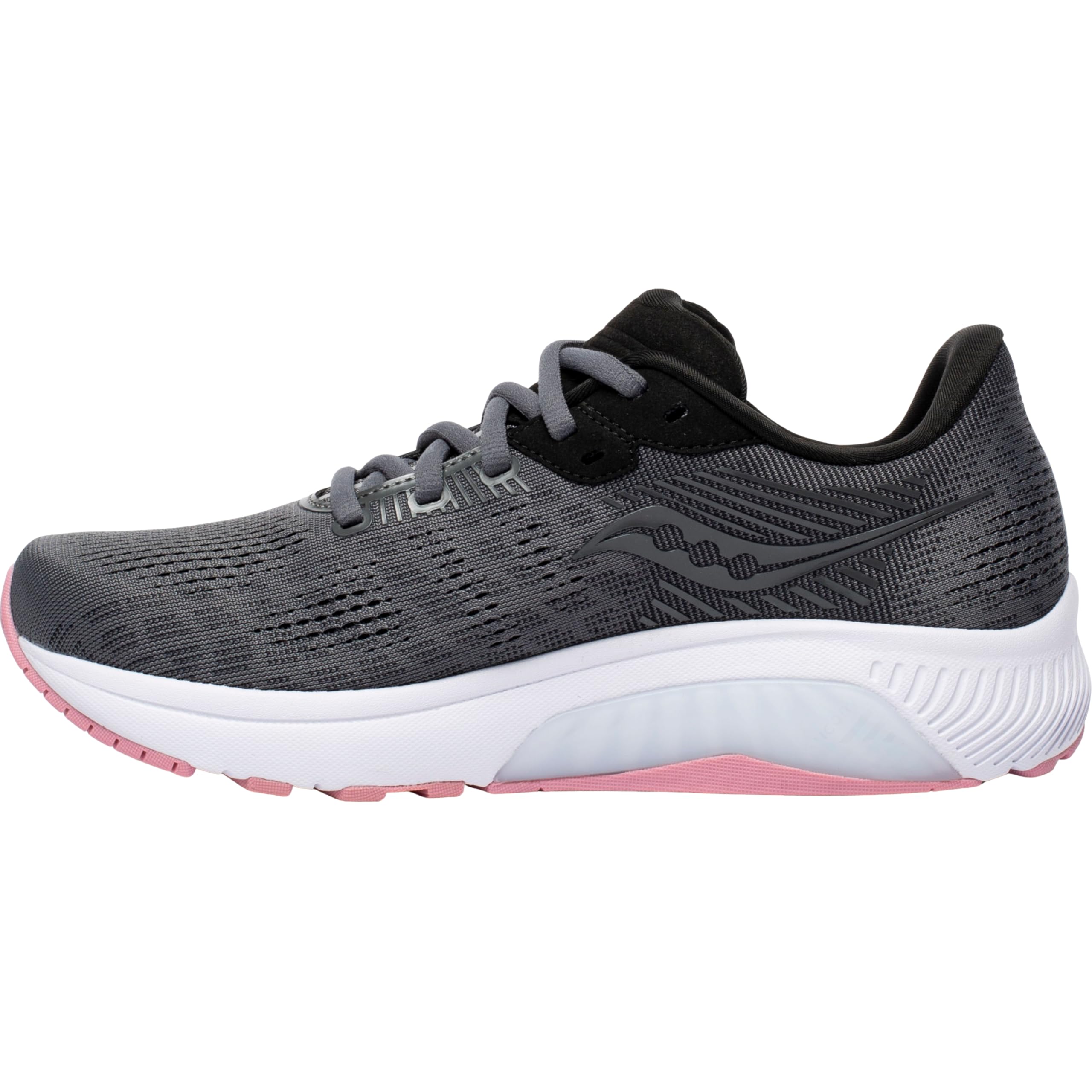
The Guide 14 is a previous-generation stability shoe that still outperforms many current models for supination correction. Its deep heel cup and firm midsole provide the lateral resistance that underpronators need, and the laces stay tied even during high-mileage runs—a small but meaningful detail that prevents mid-run adjustments. Reviewers with wide feet and multiple foot pathologies (bunions, plantar plate tears, hammer toes) consistently choose the Guide 14 over newer competitors.
The forefoot is wide enough to allow natural toe splay, which reduces the lateral pressure that aggravates supination. While the cushioning is firmer than the Guide 17 or 18, that firmness is actually an advantage for supinators who need a stable platform rather than a marshmallow-soft ride. The 4mm drop is lower than typical stability shoes, encouraging a midfoot strike that naturally reduces outward roll.
At a mid-range price point, the Guide 14 offers exceptional value for a shoe that was originally premium-priced. The sole is more durable than the Kinvara line and shows slower wear on the lateral edge. For budget-conscious buyers who prioritize structural support over plush comfort, this is the best deal in the category.
Why it’s great
- Deep heel cup and firm sole actively correct outward drift
- Wide forefoot accommodates splay and reduces lateral pressure
- Durable outsole resists lateral wear patterns
Good to know
- Firmer cushioning may feel stiff for walking-only users
- Toe box runs slightly small for some foot shapes
4. Skechers Womens Max Cushioning Arch Fit Roslyn
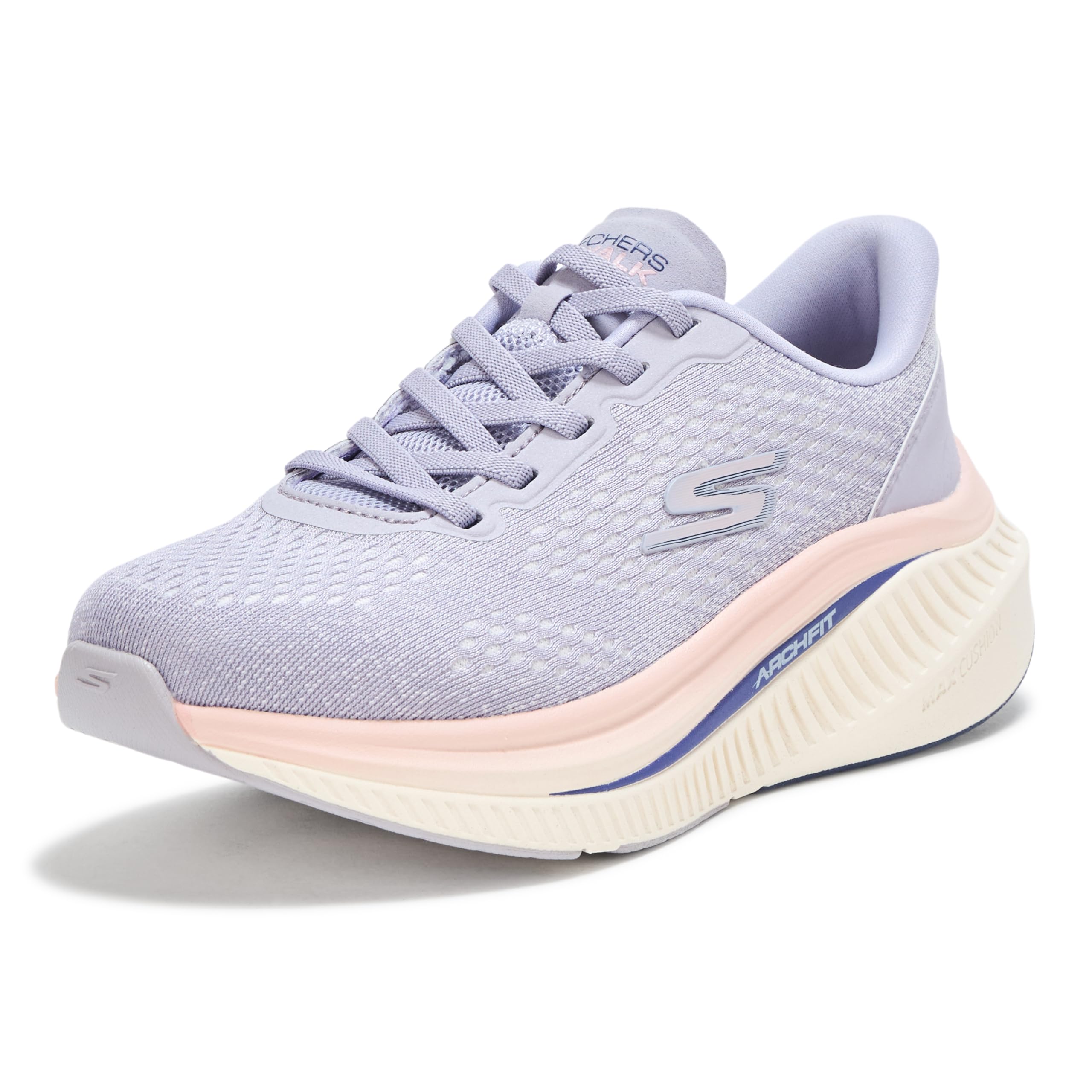
The Max Cushioning Arch Fit Roslyn solves a specific problem that many supinators face: finding a shoe that combines maximum plush cushioning with genuine arch support. Most ultra-cushioned shoes use uniform soft foam that allows the foot to roll outward, but Skechers integrates an Arch Fit insole with a pronounced medial contour that cradles the arch. The elevated heel (approximately 1.5 inches) also takes tension off the Achilles tendon—a critical benefit for supinators who often develop Achilles tendinitis from the outward-leaning gait.
Reviewers with Achilles issues and high arches report zero break-in pain and immediate comfort during long walks. The shoe is not suitable for hiking or uneven terrain due to its thick stack height, but for daily errands, standing at work, and pavement walking, it delivers unmatched comfort. The upper is breathable and flexible, while the outsole provides reliable grip on dry surfaces.
The main trade-off is width: reviewers with wider feet note the shoe runs narrow despite the generous cushioning. Going up half a size helps, and the bootie-style construction makes slipping on and off effortless. For supinators who prioritize cushioning but still need arch support, this is the premium option that delivers both.
Why it’s great
- Arch Fit insole provides pronounced contour for high arches
- Elevated heel reduces Achilles tension common in supination
- No break-in period; comfortable immediately for long walks
Good to know
- Runs narrow; size up or go wide if you have wider feet
- Not stable enough for uneven terrain or hiking
5. Skechers Women’s Arch FIT 2.0-Rich Vision

The Arch FIT 2.0-Rich Vision is designed for one primary scenario: standing on hard surfaces for eight hours or more. The Arch Fit contour is podiatrist-certified and provides a deep, structured arch bed that prevents the foot from collapsing laterally. Reviewers with neuropathy and arthritis report zero foot stinging even after full work shifts, and the lightweight fabric upper keeps feet ventilated during long wear.
The shoe strikes a careful balance between arch support and cushioning softness. Unlike many stability shoes that feel rigid, the Arch FIT 2.0 uses a responsive foam that compresses slightly under weight but rebounds to maintain support. The wider toe box accommodates forefoot splay, and the strap-style lacing system allows micro-adjustments for a locked-in fit. The 1.5-pound weight is reasonable for a shoe packing this much structure.
Durability is a mixed bag: the outsole holds up well, but the inner lining can degrade at the ankle collar with frequent use. The sizing is finicky—some reviewers found it ran slightly large, others slightly small. For supinators who need a work shoe they can slip on and wear all day without foot pain, this is the most reliable option in the lineup.
Why it’s great
- Podiatrist-certified Arch Fit contour prevents lateral collapse
- Responsive foam supports 8+ hours of standing without fatigue
- Wider toe box accommodates forefoot splay
Good to know
- Inner ankle lining may degrade faster than the outsole
- Sizing can be inconsistent; order from a flexible return policy
6. Arches Insoles Type 3 – Supination/High Arch

The Arches Insoles Type 3 is the only dedicated supination orthotic in this lineup, built specifically for underpronators with high arches. The molded cork base provides a semi-rigid structure that maintains alignment while absorbing shock, while the EVA foam comfort layer adds a plush top surface. The BK mesh top fabric controls moisture and odor—critical for all-day wear—and the heel-stabilizing padded foam prevents the calcaneus from sliding outward.
Reviewers with diagnosed supination confirm that these inserts actively correct their gait, reducing foot soreness even in thin-soled shoes. The cork material does require a break-in period (typically 3-5 days of gradual wear), and wearing them for 8+ hours immediately can cause discomfort. The 4.8-ounce weight is negligible, making them easy to transfer between shoes. The size chart is accurate: Men’s 7-7.5 corresponds to Women’s 9-9.5.
The main drawback is longevity: while the cork base holds its shape for months, the EVA top layer compresses faster than premium medical orthotics. At a mid-range price point, these offer the best cost-to-corrective-value ratio for supinators who already own comfortable neutral shoes and just need to add arch support. They are not recommended for shoes with already-removable orthotics—the combo can make the fit too tight.
Why it’s great
- Molded cork provides semi-rigid structure specifically for supination
- Heel-stabilizing foam prevents outward calcaneus slide
- Lightweight and transferable between multiple pairs of shoes
Good to know
- Requires gradual break-in period of 3-5 days
- EVA top layer compresses faster than premium medical orthotics
7. ALLSWIFIT Women’s Road Running Shoes Active5K
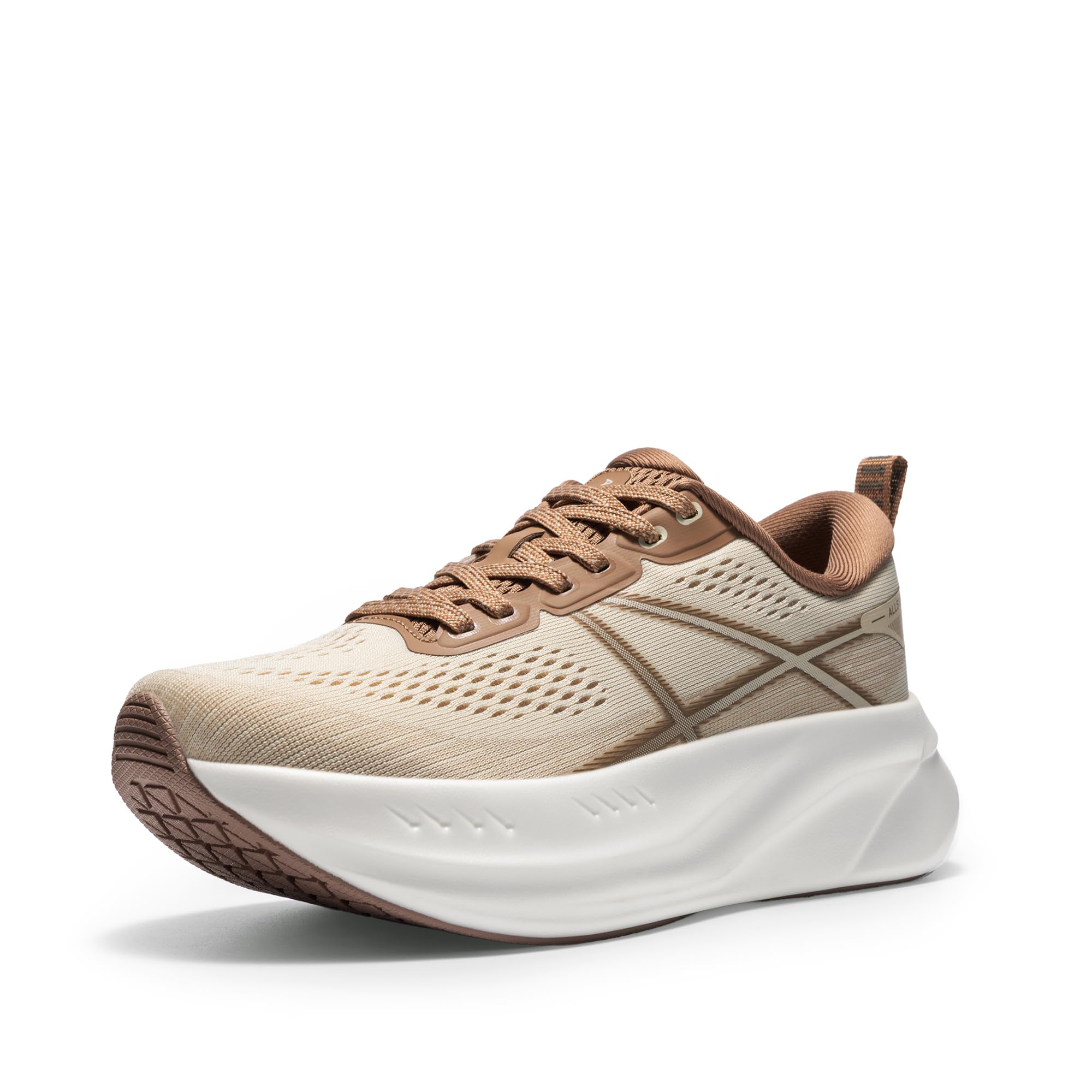
The ALLSWIFIT Active5K is a budget-friendly option that punches above its price point for supinators who need arch support without spending premium money. The shoe features a thick padded rocker sole that propels the foot forward—a biomechanical advantage for supinators who tend to land heavily on the heel. The lightweight construction (5.8 ounces) and non-slip outsole make it suitable for gym workouts, walks, and casual daily wear.
Multiple reviewers compare the Active5K favorably to Hoka and Brooks at a fraction of the cost, noting that it resolved metatarsal pain and provided good heel/Achilles support. The toe box allows natural splay, and the arch support is described as “great” by users with high arches. The shoe runs large, so sizing down half a size is recommended. The cushioning is soft and bouncy, which works well for shorter durations.
The primary trade-off is durability: one reviewer reported that the support began to degrade after about two months of heavy use, and the ultra-soft cushioning may not hold up for users who stand all day or walk more than 5 miles daily. For supinators looking for a low-commitment entry point or a secondary pair for light activity, the Active5K delivers surprising value. For heavy daily use, the Saucony options above will outlast it significantly.
Why it’s great
- Thick rocker sole promotes forward propulsion for heel-striking supinators
- Lightweight at 5.8 oz with good heel/Achilles support
- Excellent value for gym and short walks
Good to know
- Soft cushioning may lose support within 2 months of daily use
- Runs half size large; size down for best fit
FAQ
Can supination be corrected with just arch support insoles?
How do I know if I have supination and not pronation?
Should I size up or down for stability shoes if I supinate?
Final Thoughts: The Verdict
For most users, the best arch support supination winner is the Saucony Women’s Guide 17 because it combines the widest heel platform in the category with PWRRUN cushioning that prevents lateral roll without sacrificing comfort. If you want the best value for a stability running shoe, grab the Saucony Women’s Guide 14. And for all-day standing at work, nothing beats the Skechers Women’s Arch FIT 2.0-Rich Vision.