
Our readers keep the lights on and my morning glass full of iced black tea. As an Amazon Associate, I earn from qualifying purchases.
Specs are compiled from manufacturer listings and verified buyer reviews and can change over time — please confirm the key details on the product page before buying.
If your arches ache and your heels slide around every time you point your skis downhill, the fix is usually not a new boot. It is the flimsy factory insole already inside your boot. A proper arch support gives your foot a firm platform, so your heel stays locked and your turns feel more direct. The main thing to get right is volume: too thick and your toes jam against the front of the shell, too thin and nothing changes.
I’m Min — the founder and writer behind Gadgets Feed. This guide is built by comparing the manufacturers’ published specifications and the patterns across verified customer reviews, so you get each pick’s real strengths and trade-offs instead of marketing spin.
If your toes go numb on every run, a bulky footbed is usually the culprit. You need a slim, moldable insert that firms up your arch without stealing toe room. The picks below cover every arch height and boot volume. Each one is built for the tight, cold, low-volume shell of a ski or snowboard boot. That is exactly why these are the arch supports for ski boots worth your money.
Our Picks at a Glance


How To Choose The Best Arch Supports For Ski Boots
Ski and snowboard shells are the tightest footwear most people own. That one fact decides almost everything about which insert works. A ski boot liner holds your foot with almost no spare room. So a footbed that adds height in the wrong place pushes your toes into the front of the shell. Every run becomes a numb-toe contest. The goal is firm support under your arch and heel without adding bulk anywhere else.
Volume first, cushioning second
A ski boot has a fixed interior volume, meaning the total space inside the shell for your foot plus the liner plus the insole. Every millimeter your footbed adds takes room from your toes. That is why a thin model like a 1.6mm cork base exists — it slides under the arch and heel to add structure without stealing toe space. Thicker cushioned footbeds, by contrast, are better suited to roomier or higher-volume boots where there is space to spare. If your boots already feel snug, go thin. If they feel roomy, a fuller footbed can actually tighten the fit.
Match the arch shape to your own foot
No two arches are identical. A flat or low arch wants gentle, flexible support that follows the foot, while a high arch wants a deeper, firmer curve to fill the gap under the midfoot. Getting this wrong is the most common reason an insert feels like a lump under your foot. A moldable base — one that softens with heat or breaks in with wear — helps here, because it slowly conforms to the exact curve of your arch instead of staying a generic shape.
Why a deep heel cup matters in a ski boot
Heel lift is the classic ski-boot problem. When your heel rides up during a turn, your foot moves inside the shell and you lose the direct connection that lets you steer the ski with small movements. A deep heel cup cradles the back of your foot and holds it down. That heel cup is often the difference between fighting your boots all day and forgetting you are wearing them.
Quick Comparison
| Model | Best For | Profile / Thickness | Footbed Type | Trim-To-Fit | Amazon |
|---|---|---|---|---|---|
| SOLE Performance Thin Insoles★ Best Overall | Tight, low-volume shells | 1.6mm cork base | Firm orthotic cork | Yes | Amazon |
| FORM Premium Ultra-Thin InsolesBest for Slim Fits | Slim dress shoes and boots | Ultra-thin, 4.66 oz | High-density EVA foam | Yes (cut to size) | Amazon |
| Remind Insoles Destin | Soft comfort for all arches | 5.5mm forefoot / 9mm heel | Self-forming soft foam | Guidelines included | Amazon |
| EZFit QF Ski/Snowboard Boot Insoles | Auto-adapting boot fit | Regular & Low volume options | Ergonomic support shell | Yes (forefoot) | Amazon |
| Icebug SLIM Low Cushion Insole | Heavy cushioning, high volume | 5mm | Open-cell poliyou foam | Yes | Amazon |
| Superfeet Winter Support Insoles | Stability in ski and snowboard boots | Deep heel cup profile | EVOLyte carbon fiber blend | Trim-to-length | Amazon |
In‑Depth Reviews
1. SOLE Performance Thin Insoles – Custom Moldable, Mens 5/Womens 7
Our pick — over 4★ from 300+ verified ratings; the strongest balance of quality and price.
The slim cork platform that turns a loose ski boot into a locked-in one
For skiers whose shells are already snug, the SOLE Performance Thin is the obvious place to start. Its base is just 1.6mm thin — a sliver of molded cork that slides under your arch and heel without stealing the toe room a bulky footbed would. That slimness is the whole point in a ski boot, where a couple of extra millimeters at the front is the difference between a relaxed toe and a numb one. It is a firm orthotic, not a pillow, so your foot sits on solid support instead of sinking into mush.
The cork base is heat moldable, meaning you can warm it and let it shape to the exact curve of your arch, or simply let it break in over a few days of wear. That personalization is where this pick separates from the cheap factory insole, which is flat and generic. What wins people over most is the arch support itself — that is the benefit owners reach for again and again. The deep heel cup plays a big part too, holding the back of the foot down so it stops sliding forward in the shell. One skier who had gone through multiple ankle surgeries called these insoles better than a dozen others, including custom and prescription pairs.
Here is the catch worth knowing before you buy. This is deliberately a firm footbed, so if you want a soft, squishy cushion under your heel, it will feel hard at first. The value question also splits opinion depending on whether you are used to paying for genuine support. And at 4.16 ounces it is lighter than you might expect for a support built this firm — the thick, chunky alternative in this list runs 6.74 ounces, a noticeably heavier foot inside the boot. Weave in a trim-to-fit edge and this is the one most skiers should try first.
The strong suit
- 1.6mm cork base adds arch support without crowding a low-volume shell
- Heat moldable and break-in friendly, so it conforms to your own arch
- Firm orthotic platform instead of flat foam
- Trim-to-fit edges for narrow or performance boot shapes
Worth knowing
- Firm feel — not a soft cushioned footbed
- Size down if you are between sizes, and measure your factory insole first
- Some buyers feel it is priced high for a single pair
The bottom line: the pick for tight ski boots and anyone who needs genuine, firm arch and heel support without added bulk.
Think twice if: you want a plush, cushioned feel or you have boots with lots of spare interior room.
2. Ultra-Thin Plantar Fasciitis Insoles Designed for Comfort & Maximum Pain Relief, Ideal for Dress Shoes & Boots | Black (Women’s 6.5-7)
Barely-there foam that adds arch support to boots where nothing else fits
Narrow women’s boots and snug shells are exactly where this FORM insole earns its place. It carries the “ultra-thin” tag honestly — thin enough to slip into slim-fitting footwear where a standard insole simply will not go. The build is a high-density foam blend (listed as 80% EVA foam, 19% polyurethane, 1% polyester), which is the soft, shock-absorbing material that gives a cushioned step rather than a hard orthotic platform. If your priority is padding your arch and heel without changing how the boot fits, this is the angle to take.
What earns the praise here is the arch support, followed closely by the overall build quality — the two things owners come back to most. The shaped arch and heel cup hold your foot steady and soak up landing impact, and the foam can be trimmed or optionally molded to dial in the fit. Trim-to-fit also means you can match it to almost any boot shape. It even drew kudos for service: a customer who damaged their own pair had them replaced at a discount within 20 minutes.
The trade-off to understand is that “maximum comfort” here does not mean soft. A hard-arching insert that needs to mold down over time is not for everyone, and a few owners expecting a pillow found the arch too high from the start. Thin foam also does not have the firm, structural bridge of a cork or carbon orthotic, so it supports by cushioning more than by cradling. In a snug boot, the thin foam disappears underfoot.
Where it hits: a slim, trimmable foam footbed that adds an arch and heel cup to boots with no room to spare, absorbing impact along the way.
Where it misses: it sup端口 cushioning rather than structural firmness, so a hard-arch skier who wants a rigid platform may find it soft underneath.
Reach for this if: you need arch support that vanishes into narrow boots or dress shoes.
Look elsewhere if: you want a firm, hard orthotic feel under your arch.
3. Remind Insoles Destin | Shoe Inserts for Low Arch Support | Ski Boot, Snowboarding & Skateboarding | Walking & Running | Lightweight Comfort | Reflexology | Mens Size 9-9.5
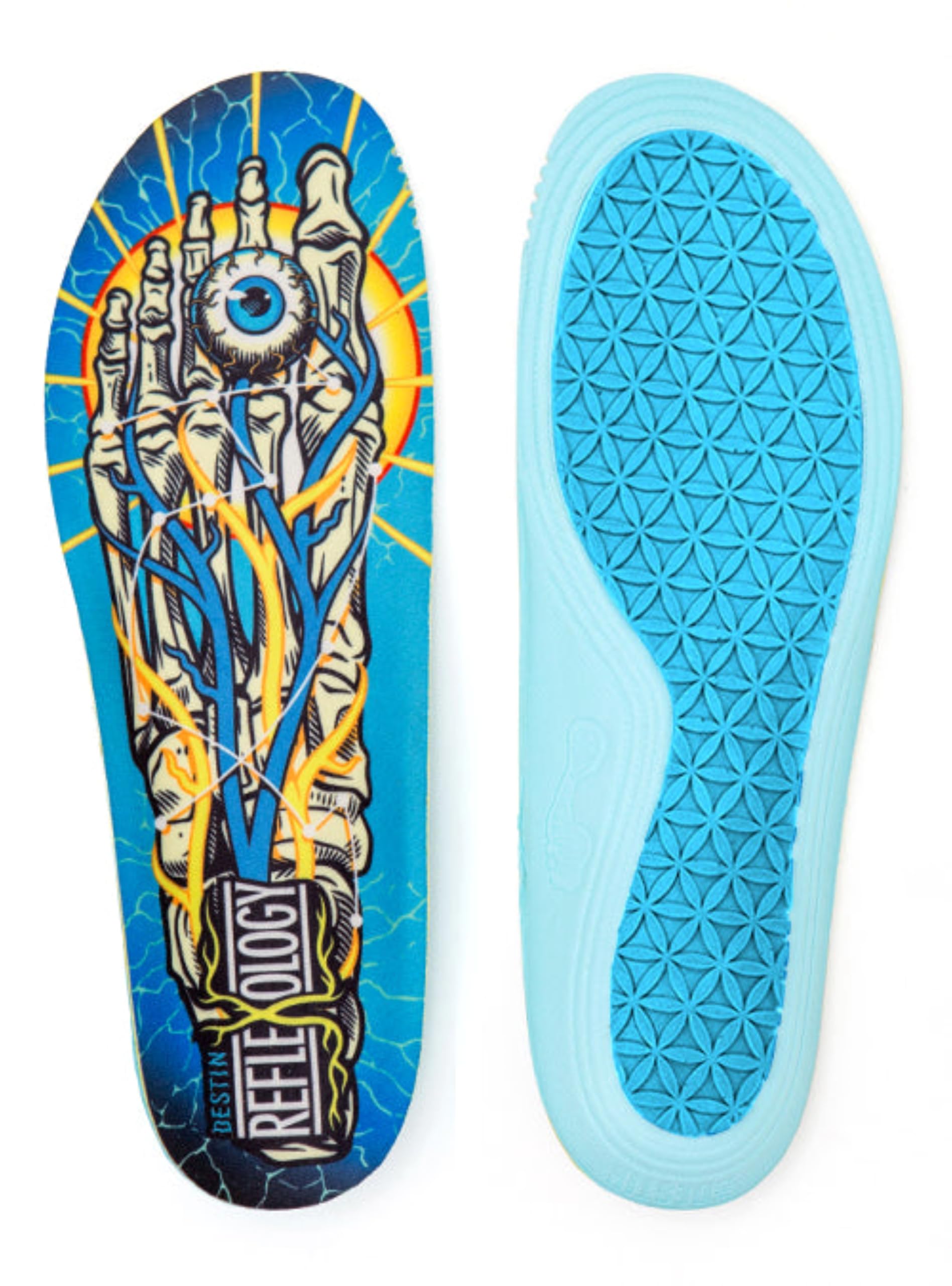
The soft, self-forming ride that flattens pain after a long snowboarding session
Snowboarders and low-arch skiers tune out when an insole feels like a hard plank. The Destin takes the opposite road — a soft, flexible footbed described as a 5.5mm forefoot cushion rising to a 9mm heel, with no stabilizer material. That means it bends and moves with your foot instead of bracing it, and it is built for low to all arch types. For a boarder whose arch does not need a deep aggressive curve, this is the comfortable middle ground.
The foam layers do two jobs worth naming. They give back energy and hold their structure rather than packing flat, which builds the long-lasting feel owners notice. Moisture-wicking layers also pull sweat away to keep the boot fresh across a long day. Its standout feature is the arch itself — the part riders call out as the best thing about the pair. One snowboarder put it plainly: it took away the foot pain from long sessions and “takes away most of the impact when landing tricks of rails or boxes.”
Compare the fit reality to the SOLE above and the difference shows. At 6.74 ounces the Destin is a distinctly heavier, thicker footbed — the slim SOLE runs just 4.16 ounces. That extra bulk means it is happiest in wider or roomier boots, and it takes up more toe-box and arch room. A few wide-footed skiers found the edges press where they want extra width. If your boots are tight, size your expectations accordingly.
What riders like
- Soft self-forming foam melts to the shape of your foot
- 5.5mm forefoot and 9mm heel cushioning
- Arch is the most praised feature, with warmth and sweat control on top
- Cutting guidelines included for a neat fit
The fine print
- Thicker build takes up toe-box and arch room — best in roomier boots
- Not wide enough for some wide-footed skiers
- Soft support, so it will not satisfy a hard-arch, firm-platform skier
Best for: snowboarders and comfy-boot skiers who want soft, cushioning support that forms to the foot.
skip it if: you need a firm orthotic or you wear snug, low-volume shells.
4. EZFit QF Ski/Snowboard Boot Insoles w/Arch Support. Reg Vol/SM

A purpose-built ski footbed with the pick of two boot volumes
Not every insert is made with a ski boot in mind, and the EZFit is. It is engineered by Masterfit specifically for ski and snowboard shells, and it comes in two volumes: Regular for roomy boots and Low for snug ones. That dual option is the key detail, because it lets you match the footbed to your actual boot instead of guessing. An AutoAdapt shape forms to your foot and arch, and an ergonomic support shell firms up the underfoot platform for better balance and direct power to the edges.
Fit and responsiveness are the draw for skiers who want their boots to feel tighter and more connected. Five-star buyers describe it as dramatically improving the fit and adding noticeable arch support and structure. Trimming the forefoot with scissors matches it to your exact boot shape, and it is listed for both men and women.
Now the honest read. This is a firm, structured footbed, not a cushiony one — that is normal for a ski shell, but do not expect plush padding. Reported warmth gains are inconsistent, so treat extra heat as a bonus, not a promise. And if your boots run narrow, the Regular volume can feel like it adds bulk; the Low volume option is the smarter call there. It is the only footbed here engineered specifically for ski and snowboard shells.
Why it works on the hill: a ski-and-snowboard-specific shell with Regular and Low volume choices plus AutoAdapt forming, so the footbed matches the boot rather than fighting it.
The flip side: it is a firm structured insert with no soft cushion, and the Regular volume can be too much in an already narrow shell.
Choose this if: you want a footbed made for ski shells and are ready to pick the volume that matches your boot.
Pass if: you want a soft, cushiony footbed or you wear very narrow boots.
5. Icebug SLIM Low Cushion Support Insole with Arch Flex Technology

Maximum cushioning for high-volume boots that want a marshmallowy step
If you have room to spare in your shell and you want the softest ride here, the Icebug SLIM earns the nod. It is described as the brand’s most cushioned product, thanks to an extra layer of open-cell poliyou foam that asks for 5mm of space — a footbed built for high-volume boots rather than tight ones. A double-arc heel design cups the back of the foot to ease pressure under the arch, and the low-friction top cover cleans easily and holds up to wear. It is listed for ski and snowboard boots among other high-volume footwear.
The reason people keep buying it is the foot support, which is the trait praised most, followed by how it simply works as intended. Riders credit it with clearing up numbness during long efforts — the pattern of a smooth, thin footbed that lets blood flow instead of pinching the forefoot. There is also an adjustable low bump under the ball of the foot that some wearers say keeps feet fresher on extended days. Note the size runs differently: a size M is listed to fit U.S. women’s 7.5-8 and most athletic shoes, so check the chart before ordering.
The honest caveat centers on fit and feel, which draw a genuinely mixed response. The metatarsal bump under the ball of the foot is the biggest divider — some find it helpful, others call it a lump that takes getting used to. And the arch dome can feel unfamiliar when you first stand, even if it fades once you are moving. In a tight boot, its 5mm footprint may simply be too much.
Standout strengths
- Cushioned open-cell poliyou foam layer for shock absorption
- Double-arc heel design cups the foot to ease pressure
- A long-wearing, easy-clean low-friction top cover
- Works in ski, snowboard, hiking and work boots
Where it asks more of you
- 5mm cushion needs a high-volume boot to seat properly
- Metatarsal bump under the ball of the foot divides owners
- Comfort and fit are mixed, so try before you commit to a snug shell
Pick it when: your boots are roomy and you want the most cushioned footbed on this list.
Avoid it when: your shell is snug or you dislike a bump under the ball of your foot.
6. Superfeet Winter Support Insoles, 9.5–11 M / 10.5–12 W
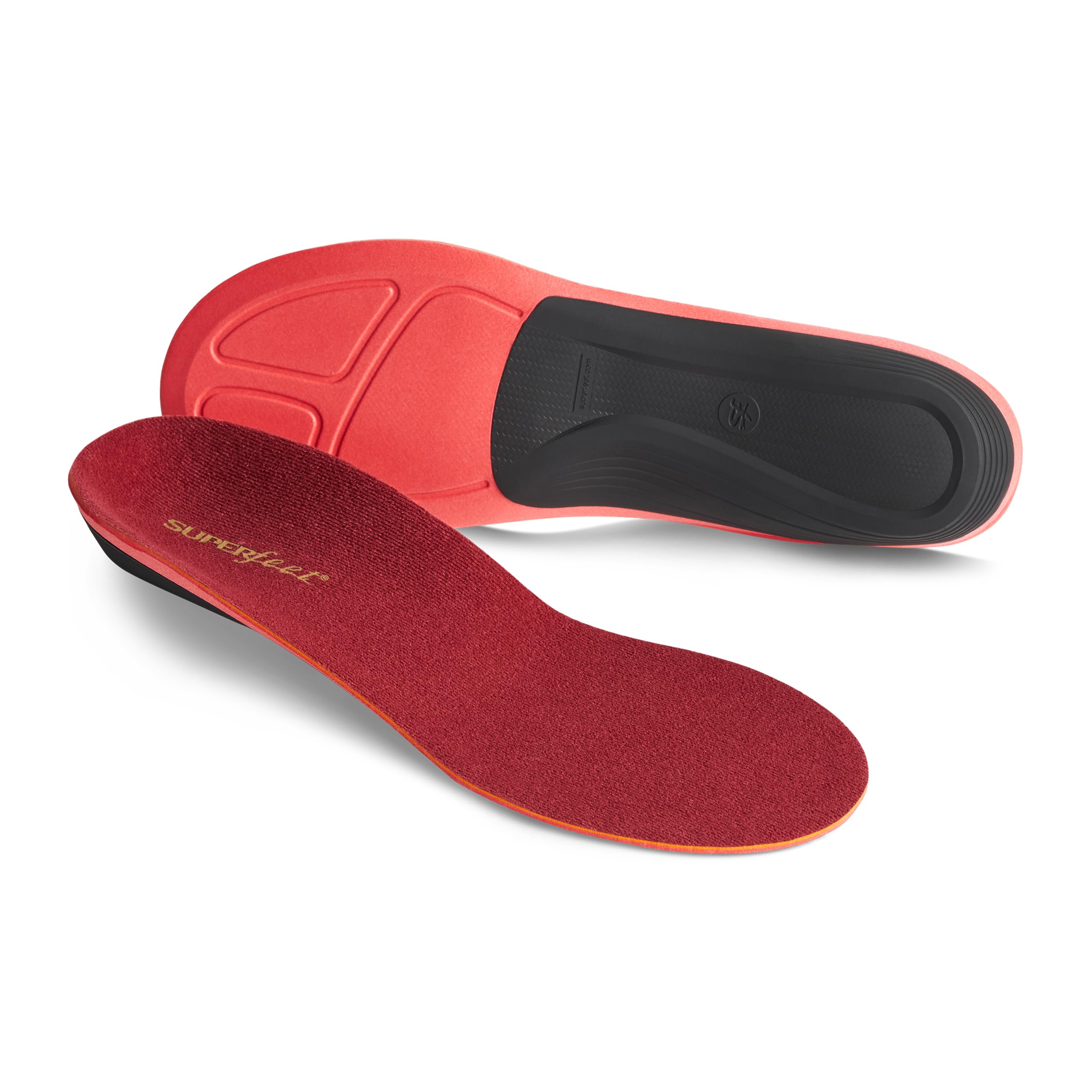
The alpine footbed built to keep firm shape turn after turn
When heel lift has you sliding around an oversized boot, this is the footbed that fixes the fit. The Superfeet Winter Support is designed to brace the foot inside ski and snowboard shells, with a deep heel cup that cradles the back of the foot for a secure, stable hold. The trick under the hood is the EVOLyte carbon fiber and polymer blend, which responds to compression and keeps its shape with every turn instead of flattening out. A thermal top cover adds warmth in the cold, and a moisture-wick top cover helps cut odor so boots stay fresher.
The most valued feature is how well it stabilizes the foot and keeps that support working on the mountain. Snowboarders who know bootfitting describe swapping the thin factory footbed for a Superfeet as a night-and-day jump in support. Skiers with flat feet found it eased foot, ankle and knee discomfort enough to buy a second pair for their ski boots. It is a fit one, mostly — slip it in over the existing footbed and the boot often feels immediately more planted.
The one real caution is arch height. Even though it is sold as fitting all arch heights, the firm carbon plate is aggressive, and low-arch wearers report it sitting too high, with one flat-arched skier getting blisters from the stiffness. If you have a genuinely low arch, this is the pick to be careful with. For medium-to-high arches chasing tighter boot control, it is a strong close.
Where it wins: a carbon-fiber blend that holds its shape per turn, a deep heel cup that kills lift, plus a thermal and moisture-wick cover for cold boots.
Where to be careful: the firm carbon plate is high and aggressive under a low arch, so flat-footed skiers may find it harsh.
An easy call if: you need to lock down heel lift and want support that keeps its shape.
Think hard if: your arch runs low or you dislike a firm, rigid plate underfoot.
Understanding the Specs
Thickness and Volume
Thickness is measured in millimeters, and in a boot it decides whether everything else works. The number to know is your boot’s interior volume — the total space inside the shell. A 1.6mm cork base like the SOLE adds support while taking almost no toe room, so it suits snug shells. A 5mm cushioned option like the Icebug wants a roomier boot where the extra layer has space to seat. Buy too thick for a tight shell and your toes press the front; too thin for a roomy one and the fit stays loose.
Base Material and Support Type
The base material tells you how the footbed supports your arch. Cork is firm and moldable — it warms up and forms to your arch curve for a solid orthotic feel. A carbon fiber and polymer blend like Superfeet’s EVOLyte resists compression and springs back to shape. High-density EVA and polyurethane foam, like the FORM and Remind models, support by cushioning and shock absorption instead of a rigid bridge. Neither is automatically better: a firm base suits high arches and tight boots, while soft foam suits low arches and comfort-first riders.
FAQ
Will these insoles fit inside my ski boots without making them too tight?
Can I trim a ski boot insole to fit my shell?
How do I stop heel lift inside my ski boots?
Is a thin footbed better than a cushioned one for skiing?
Do I need to heat mold these footbeds, or will they form on their own?
How long does a good ski boot insole last?
Will an arch support help if I have flat feet or high arches?
Do these insoles work in snowboard boots as well as ski boots?
Can I wash or clean my ski boot insoles?
Should I remove my boot’s original insole before adding a new one?
Final Thoughts: The Verdict
For most skiers, the arch supports for ski boots winner is the SOLE Performance Thin Insoles, because its 1.6mm cork base adds firm arch and heel support without stealing the toe room a snug shell cannot spare. If heel lift and boot control are your problem, reach for the Superfeet Winter Support and its deep heel cup and shape-holding carbon blend. And for soft, self-forming comfort in roomier boots, the Remind Insoles Destin is the one to grab. One honest nudge before you commit: match the footbed to your boot’s interior volume first, then to your arch shape — get the volume right and almost any of these transforms a day on the mountain.
How We Picked
We do not accept paid placement. Every pick is matched to a real buyer and a real use-case; we do not hands-on test units.
Sources & Methodology
Specifications: manufacturer listings and product documentation. Review insights: verified customer reviews, as of September 2026. Pricing: not shown on this page (it changes often); check the current price via the retailer link.
As an Amazon Associate, Gadgets Feed earns from qualifying purchases. This does not affect which products we feature.