
A roof is a shield, and the shingles on it are the first line of defense against wind, rain, and decades of UV exposure. But not all shingles are created equal; the difference between a roof that weathers gracefully and one that starts shedding granules within a few years comes down to the material composition, the weave density, and the precision of the manufacturing process. The right architectural shingles deliver a bold, dimensional profile that mimics the look of natural slate or wood shakes, while adding significant structural integrity to your home’s envelope.
I’m Min — the co-founder and writer behind Gadgets Feed. This guide is the result of hundreds of hours spent analyzing technical product sheets, comparing warranty terms, and cross-referencing real-world installer feedback to separate the truly durable from the prematurely degraded.
Whether you are re-roofing after storm damage or building new, selecting the best architectural shingles determines how long your investment stands against the elements without curling, cracking, or leaking.
How To Choose The Best Architectural Shingles
Architectural shingles aren’t a single material category — they span fiber-cement, polymer, vinyl, and natural cedar. Your choice must weigh fire resistance, dimensional stability, weight load, and the visible texture you want. Here are the three most critical factors to lock down before you order a single bundle.
Material Composition and Fire Rating
Fiber-cement shingles, like the GAF WeatherSide line, are non-combustible per ASTM E136 and resist rot and termites naturally. Polymer and vinyl options are lighter and easier to install but may not carry the same Class A fire rating. Cedar shingles offer natural insulation but require chemical treatment for fire resistance in certain jurisdictions. Always check your local building code’s fire classification requirement before choosing a material.
Warranty Length and Transferability
A mid-range shingle typically carries a 25- to 30-year limited warranty, while premium options often offer a limited lifetime warranty. The real differentiator is transferability: the best architectural shingles allow the warranty to pass to a new homeowner, which directly impacts resale value. Look for wording that covers both manufacturing defects and granule adhesion — a common failure point that lesser policies exclude.
Installation Method and Nailing Pattern
Double coursing (used with cedar and some fiber-cement shingles) provides better water shedding and a thicker shadow line than single coursing. Vinyl and polymer panels typically snap together with interlocking joints that demand precise J-channel sizing. Installing below 45°F can make vinyl brittle and hard to seat, while fiber-cement requires pre-drilling or carbide-tipped blades to avoid cracking. Choose a shingle system whose installation demands match your contractor’s skill set.
Quick Comparison
On smaller screens, swipe sideways to see the full table.
| Model | Category | Best For | Key Spec | Amazon |
|---|---|---|---|---|
| GAF WeatherSide Purity Wavy | Fiber-Cement | Historical restoration & fire safety | Non-combustible per ASTM E136 | Amazon |
| CertainTeed Cedar Impressions Double 7″ | Polymer | Hurricane‑force wind resistance | 0.090 in. panel thickness | Amazon |
| CertainTeed Rough Split Shakes Double 9″ | Polymer | Deep shadow lines & visual depth | 0.125 in. thick panels | Amazon |
| The Foundry Vinyl Round 6″ Shapes | Vinyl | Fast coverage with scalloped detail | 0.040 in. nominal thickness | Amazon |
| The Foundry 10″ Vinyl Staggered Shakes | Vinyl | Large‑area shake appearance | Low thermal expansion design | Amazon |
| MasterCut Fish Scale Cedar | Cedar | Decorative gables & vintage match | 4 15/16 in. width pieces | Amazon |
| Miller Shingle R&R Natural Groove | Cedar | Premium sidewall uniformity | Rebutted & Rejointed (R&R) | Amazon |
| Miller Shingle Undercourse Cedar | Cedar | Starter course & double coring | Utility grade underlayment | Amazon |
| Nationwide Coatings Shingle Sealer | Treatment | Extending existing asphalt roof life | Breathable 24 perms rating | Amazon |
In‑Depth Reviews
1. GAF WeatherSide Purity Wavy Fiber-Cement Siding Shingles (12×24) 18 Bundle
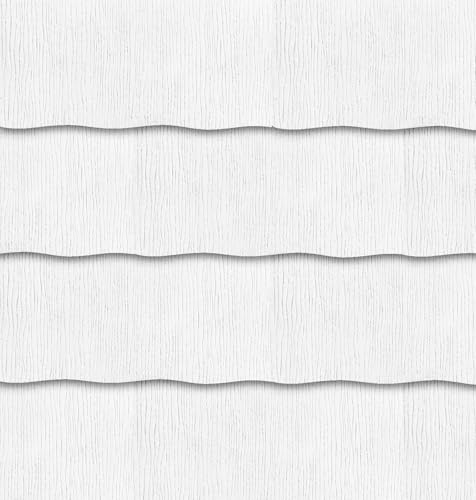
GAF WeatherSide Purity Wavy shingles are a fiber-cement product engineered to replicate the look and dimensions of classic asbestos siding without any of the health hazards. Each shingle is UL Classified per ANS/UL723 and non-combustible per ASTM E136, making them the safest option in this roundup for homes in high-fire-risk zones. The pre-primed, textured surface accepts paint readily and eliminates the need for caulking at the joints, which speeds up the installation cycle noticeably.
Buyers consistently report a near-perfect match to original asbestos siding from mid-century homes, which is a huge advantage for restoration projects where historical accuracy matters. The fiber-cement composite resists warping, UV degradation, and termite damage, though multiple reviewers note the material is noticeably more brittle than the original asbestos — pre-drilling nail holes is strongly recommended to prevent edge cracking during installation.
Packaging earns consistent praise: shingles arrive well-protected and chipped units are rare. At a residential grade rating, these are best suited for sidewall application rather than roof decking. The 0.23-kilogram per-shingle weight is light enough for a single installer to handle, but the product’s density delivers a solid, non-hollow sound when tapped — a distinct upgrade over thin vinyl alternatives.
Why it’s great
- Non-combustible and 100% asbestos-free construction meets the strictest fire codes.
- Pre-primed factory surface reduces painting prep time by about half.
Good to know
- Brittler than original asbestos siding — use a carbide drill bit to avoid cracks.
- Intended for sidewalls only, not structural roofing applications.
2. CertainTeed Cedar Impressions Double 7 Inch Straight Edge Perfection Shingle Siding

CertainTeed’s Cedar Impressions line uses a high-density polymer formulation that is injection-molded to a 0.090-inch thickness, giving each panel a rigidity that resists dents and flex far better than standard vinyl. The patented PanelThermometer simplifies alignment during install, while the Molded Continuous Perimeter Lock ensures each panel stays mechanically interlocked even under hurricane-force wind loads. Each carton holds 11 panels covering a half-square, and the material accepts standard siding tools with no special blades required.
The True Texture finish technology creates a convincing cedar grain that fools the eye at curb level. Panel projection is a precise 3/4 inch, so you must use a 3/4-inch J-channel — a common oversight that leads to buckling if mismatched. Early buyers praise the firm, secure feel once nailed, and the availability for next-day delivery through Amazon matched local supplier pricing without the week-long wait.
However, a longitudinal review from a homeowner who installed these five years ago reports uneven fading across panels despite all pieces matching out of the box. The polymer material, while rated for 50 years in ideal conditions, shows differential UV exposure staining that creates a patchy appearance on south-facing walls. This isn’t a structural failure, but it compromises the aesthetic uniformity that drives the premium price point.
Why it’s great
- Hurricane-force wind tested with interlocking perimeter lock system.
- Limited lifetime warranty that covers manufacturing defects on a residential structure.
Good to know
- Some users report visible uneven fading within 5 years on high-exposure walls.
- Requires exact 3/4-inch J-channel — using the wrong size voids the fit guarantee.
3. CertainTeed Cedar Impressions Double 9in. Staggered Rough Split Shakes (1/2 Square) Pacific Blue

This Rough Split Shake variant from CertainTeed bumps the panel thickness to 0.125 inches — 38% thicker than the Straight Edge model — and adds a staggered double-9-inch design that produces deeper, more dramatic shadow lines. The injection-molded polymer construction mimics hand-split cedar with a texture that reads as natural from the street. Each carton contains just 7 panels (half-square coverage) because the staggered pattern requires more material per square foot, so factor that into your coverage calculations.
Installation feedback is overwhelmingly positive: the panels lock together cleanly and the Quick Reference nail indicators eliminate measuring for correct nailing depth. Midwest homeowners report the material holds up well through freeze-thaw cycles and high winds. The Pacific Blue color option delivers a muted coastal tone that pairs well with white trim and natural stone foundations.
The main trade-off is coverage cost — because each panel is 0.125 inches thick and 57 inches long, the per-square price runs higher than thinner vinyl or basic polymer shakes. Some installers note the panels need to be warmed above 50°F for the interlocking tabs to seat fully without stress cracks. Despite the premium cost, the visual depth and wind resistance make this a strong choice for front elevations and visible gables where curb appeal drives the budget.
Why it’s great
- Thickest polymer panel in the lineup at 0.125 inches for maximum rigidity.
- Staggered pattern creates authentic hand-split shake shadow lines.
Good to know
- Half-square cartons mean fewer panels per box — plan for more cartons per job.
- Panel tabs may crack if installed below 50°F without pre-warming.
4. The Foundry Vinyl Round 6″ Shapes – 1/2 Square
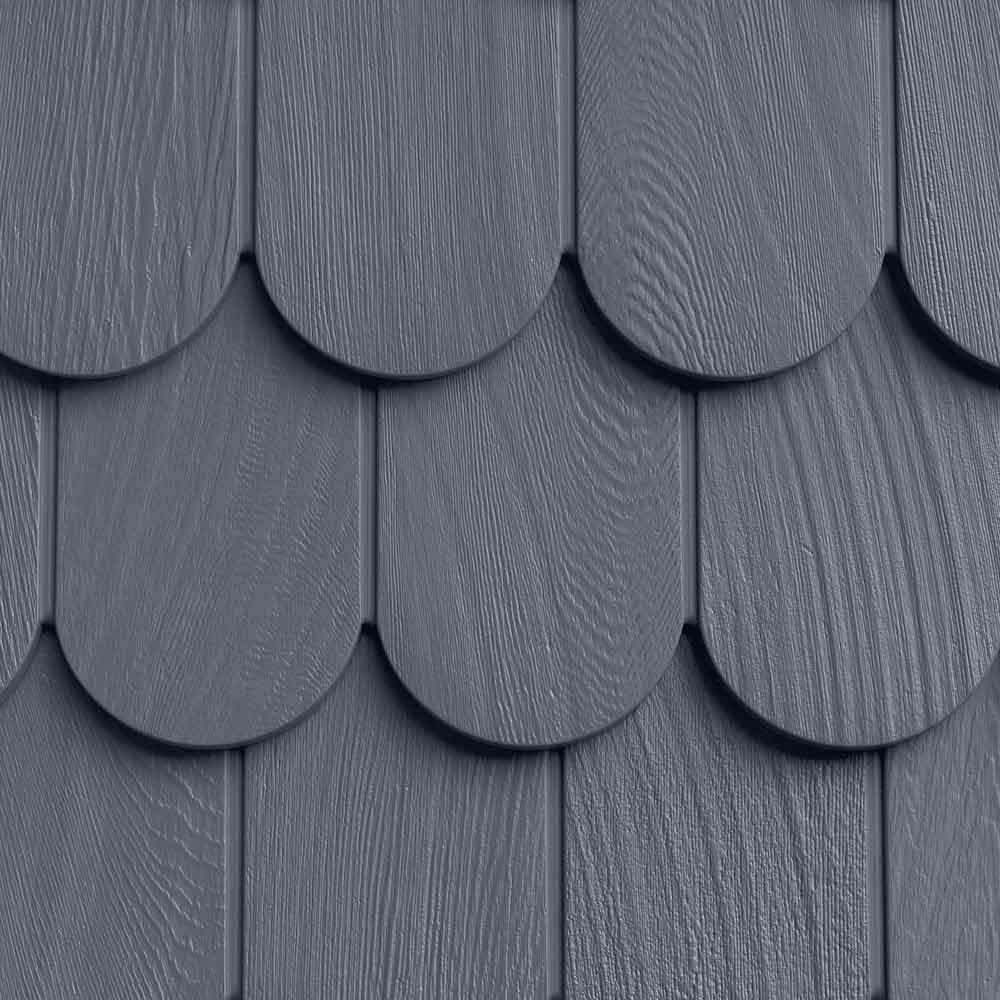
The Foundry’s Round 6 Shapes offer a scalloped design that stands apart from straight-edge or staggered shake profiles, making them ideal for accent features like dormers, porch skirting, and decorative gable ends. Each panel is 60 inches long and 6 inches wide with a nominal thickness of 0.040 inches — lightweight enough for a single person to handle entire cartons. The single-course design means each row is independent, which simplifies repairs down the line because you can replace one course without disturbing the rows above or below.
Color matching requires attention: buyers report that the online swatch for 202 Oceanside appears significantly darker on screen than the actual siding, which arrived as a lighter eggshell or ivory tone. Order physical samples before committing to a full square. The vinyl material cuts easily with standard tin snips and accepts standard 3/4-inch J-channel, though The Foundry does not sell dedicated starter strips for this profile — you will need to fabricate or improvise a starter course.
The lightweight vinyl at 0.040 inches is best suited for low-impact zones where hail and falling branches are rare. In colder climates, vinyl becomes brittle and the scalloped tabs can snap if struck during winter maintenance. For pure decorative applications on covered porches, however, these deliver an undeniably charming aesthetic at a reasonable per-square cost.
Why it’s great
- Distinctive scalloped profile that sets accent walls apart from standard shakes.
- Single-course design makes future repairs fast and low-waste.
Good to know
- No dedicated starter strip available — you may need to custom-make one.
- 0.040-inch vinyl is prone to cracking in sub-freezing temperatures.
5. The Foundry 10″ Vinyl Staggered Shakes – 1 Square
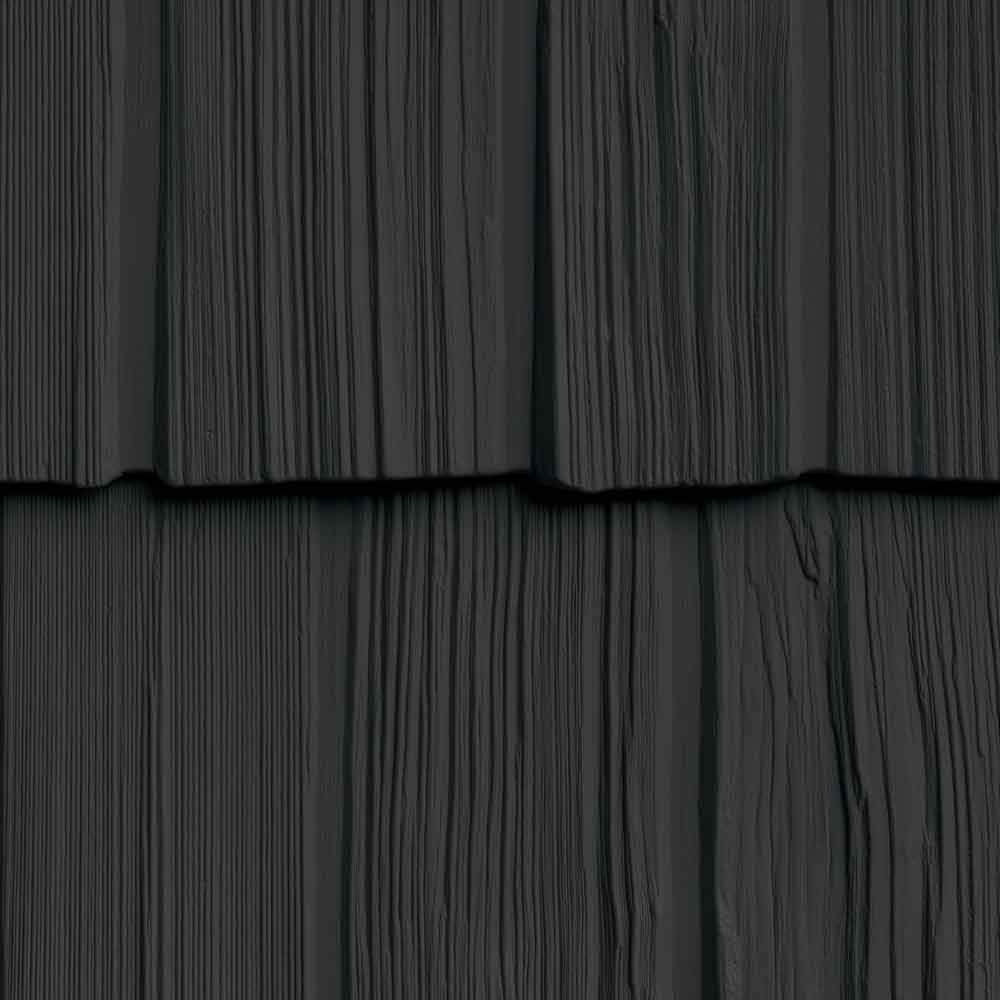
The Foundry’s 10-inch Staggered Shakes provide a larger format alternative to the 6-inch rounds, covering more area per panel and producing a more contemporary scaled look. Each panel is 62.5 inches long and 10 inches wide with a 0.05-inch nominal thickness — slightly thicker than the Round 6 Shapes, which adds marginal impact resistance. The single-course design controls key-way width at the lap, ensuring consistent shadow gaps across the installation. A full square ships as 23 panels in one carton.
Installation feedback highlights the paint-grade surface finish: one homeowner used these as decorative top trim on a white vinyl siding facade and received multiple compliments on the unique finish. The low thermal expansion formulation is a genuine engineering advantage — vinyl siding that expands too much in summer heat buckles at the seams, and Foundry’s blend mitigates that issue noticeably. The color code 692 Deep Granite is a dark charcoal that reads almost black in overcast light.
The main challenge reported is tab engagement at ground level: hooking the bottom shake tab into the starter strip while kneeling is physically awkward, especially at 40°F when the vinyl stiffens. Warming the tabs with a heat gun or hairdryer helps seat them fully. For vertical walls with consistent temperature installation conditions, these shakes deliver a clean, modern aesthetic that rivals higher-priced polymer alternatives.
Why it’s great
- Low thermal expansion chemistry reduces summer buckling compared to generic vinyl.
- 23-panel carton covers a full square, simplifying material ordering.
Good to know
- Tab engagement becomes difficult below 50°F — warm panels before snap-in.
- No dedicated starter strip; you must improvise with standard J-channel.
6. MasterCut Fish Scale Decorative Cedar Shingles 104 Pieces

The MasterCut Fish Scale shingles from Miller Shingle Company are precision-machined from #1 grade 18-inch rebutted and rejointed Western Red Cedar. Each piece measures 17 inches long and 4 15/16 inches wide, with one sanded face that accepts paint or stain readily. The fish scale (also called octagon or scallop) profile is a classic Victorian-era detail that adds ornamental character to gables, eaves, and porch ceilings. A carton delivers 104 pieces — enough for roughly half a square at standard exposure.
Buyers restoring pre-1920 homes report an almost perfect dimensional match to original fish scale shingles, which is extremely rare in the decorative shingle market. The red cedar substrate takes paint well, though the natural tannins in the wood can bleed through light colors unless a stain-blocking primer is used first. Damage out of the box is practically zero, with multiple reviewers noting zero broken pieces across all 104 shingles in the carton.
The premium pricing reflects the specialized milling and the grade of cedar used. Some pieces arrive with slight thickness variation and rough edges, which is inherent to natural wood rather than a defect. For homeowners who need to match an existing fish scale pattern on a historic structure, these shingles are effectively irreplaceable — synthetic alternatives simply don’t replicate the subtle grain variation and handcrafted character of real cedar.
Why it’s great
- Dimensional match to early 1900s fish scale patterns is nearly perfect.
- Zero damage reported in shipping — each piece is individually sound.
Good to know
- Natural cedar tannins bleed through paint without a stain-blocking primer.
- Pricing is premium — this is a specialty decorative product, not a budget cover material.
7. Miller Shingle 18 Inch Rebutted and Rejointed (R&R) Natural Groove Cedar Sidewall Shingles 1 Square Carton

Miller Shingle Company’s 18-inch R&R Natural Groove shingles are the benchmark for premium cedar sidewall application. Each shingle is grooved on one face and machined with rebutted and rejointed edges for tight, uniform seams. The 24-piece carton (one square) covers 100 square feet at a 14-inch exposure when double coursed, or 57 square feet at 8-inch exposure when single coursed. The kiln-dried Western Red Cedar construction offers natural insulation and dimensional stability that outlasts many synthetic siding options.
Homeowners matching 60-year-old original cedar siding report near-perfect edge uniformity and groove alignment. The material arrives primed, which cuts finishing time roughly in half compared to raw cedar. At 60 pounds per carton, the weight signals a dense, high-quality wood product with minimal waste. Reviewers consistently describe the shingles as a joy to work with — crisp lines, consistent widths, and no short counts.
The premium price point positions these at the top of the cedar category, but the value becomes clear when you compare per-square cost against local lumber yards: buyers report saving 30-35% through Amazon while getting identical Miller Shingle factory stock. The trade-off is that the primer coat can have thin spots that require spot-patching before the final paint layer. For owners committed to natural wood aesthetics, these shingles deliver a combination of historic accuracy and modern manufacturing precision that polymer alternatives cannot match.
Why it’s great
- R&R machining delivers the tightest seam fit of any sidewall shingle on the market.
- Pre-primed surface slashes painting prep time and improves final adhesion.
Good to know
- Thin primer spots on some shingles require spot-patching before final coat.
- Premium pricing but still 30-35% cheaper than local lumberyard alternatives.
8. 18″ #4 Undercourse Cedar Kiln Dried Sidewall Shingle 1 Square Carton, Natural
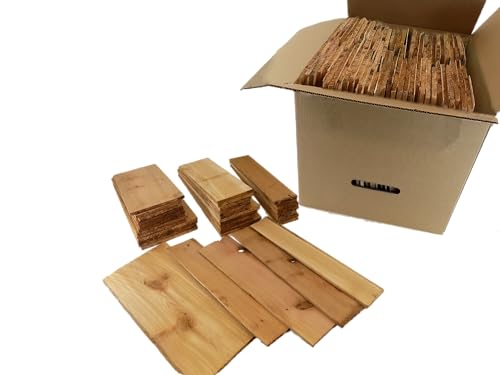
Miller Shingle’s #4 Undercourse Cedar is a utility-grade product explicitly designed for starter courses and double-coursed sidewall underlayment — it is not intended for roof decking or exposed single-course siding. Each carton contains 250 shingles covering 100 square feet at a 14-inch exposure when double coursed. The Western Red Cedar construction provides the same natural rot resistance as higher grades, but the #4 grading means more knots, thinner sections, and less uniform edges.
Buyers appreciate the availability of utility-grade cedar siding shingles, which are increasingly hard to find at local supply houses. The material works well for outbuildings and shop sidewalls where a rustic, natural appearance is acceptable. Some shingles contain knots that span nearly the full width, making them unusable unless cut in half lengthwise — plan for 10-15% waste when calculating your order quantity.
The value proposition is straightforward: if you need a large quantity of cedar for a non-critical structure or as a hidden under-course layer, this product delivers at a significantly lower per-square cost than #1 or #2 grade shingles. For visible front elevations or projects requiring uniform appearance, the knots and thinner pieces will be frustrating. A block plane helps trim the worst-edge pieces, and the natural wood takes stain well if you choose to expose the undercourse.
Why it’s great
- 250-shingle carton provides generous coverage for undercourse and starter applications.
- Natural Western Red Cedar offers inherent rot and insect resistance even at utility grade.
Good to know
- Not suitable for visible single-course sidewall — knots and thin sections are common.
- Expect 10-15% waste from unusable pieces with full-width knots.
9. Nationwide Coatings Shingle Sealer – 7 Year – High Solids – Clear Sealer Protectorant 5 Gallon
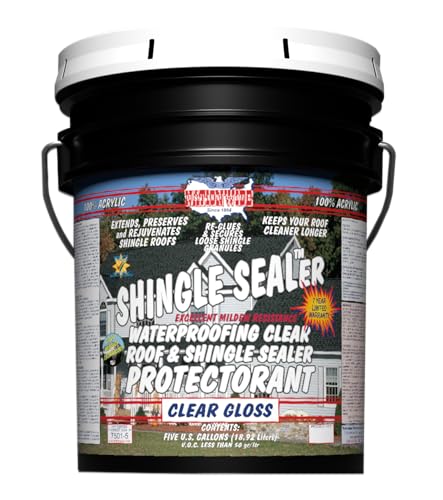
Nationwide Coatings Shingle Sealer is a 100% acrylic, water-based clear sealant formulated specifically for asphalt and fiberglass shingle roofs. Its primary function is granule adhesion retention: in testing, uncoated shingles lost over 5% of granules in 1,000 scrub cycles, while treated shingles lost only 0.2%. The breathable 24-perms rating allows water vapor to escape while blocking liquid water ingress, preventing the moisture trapping that leads to rot in unventilated roof decks.
Homeowners report dramatic visual results — a 22-year-old shed roof restored to a 5-year-old appearance after three medium coats, and an 18-year-old roof outperforming a 5-year-old untreated addition on the same home. The clear gloss finish adds a subtle sheen that deepens color saturation without changing the shingle’s base hue. Application is straightforward through any backpack or airless sprayer, and the thin formula does not clog tips — a major pain point with thicker roof coatings.
The critical limitation is that this product only works on shingles with remaining serviceable life. Multiple buyers who applied it to heavily granule-depleted or curled shingles saw no improvement and in one case the cleaning process made the roof look worse before the sealer was applied. It is a preservation treatment, not a resurrection product. For roofs with 5-10 years of life left, it can defer full replacement by 5-7 years. At 300 square feet per gallon per coat, a 5-gallon pail covers roughly 750 square feet with two coats.
Why it’s great
- Granule loss reduced from 5% to 0.2% in standardized scrub testing.
- Breathable 24-perms film prevents moisture trapping while blocking liquid water.
Good to know
- Ineffective on shingles with no remaining serviceable life — not a replacement substitute.
- Two coats recommended at 300 sq ft per gallon per coat; coverage planning is essential.
FAQ
Does a thicker polymer panel always mean better wind resistance?
Can I mix fiber-cement and vinyl architectural shingles on the same wall?
How do I calculate the number of squares I need for a sidewall project?
Why do some cedar shingles bleed brown stains through paint?
Is a clear sealer worth it for a roof that is less than 5 years old?
Final Thoughts: The Verdict
For most users, the best architectural shingles winner is the GAF WeatherSide Purity Wavy Fiber-Cement because it combines a non-combustible ASTM E136 rating, dimensional match to vintage siding, and fiber-cement durability that resists rot and termites without the brittleness of pure cement board. If you want a deep shadow line and polymer impact resistance, grab the CertainTeed Rough Split Shakes. And for top-tier natural cedar craftsmanship on a historic restoration, nothing beats the Miller Shingle R&R Natural Groove.