
Our readers keep the lights on and my morning glass full of iced black tea. As an Amazon Associate, I earn from qualifying purchases.
Specs are compiled from manufacturer listings and verified buyer reviews and can change over time — please confirm the key details on the product page before buying.
You need an arrow saw that cuts perfectly straight every time, because even a slight angle ruins your arrow flight, kills your accuracy, and wastes costly carbon shafts. The saws below hold your arrow firmly, spin the blade fast enough for a clean edge, and let you set an exact length without guesswork. Here is which one is worth your money and why.
I’m Min — the founder and writer behind Gadgets Feed. This guide is built by comparing the manufacturers’ published specifications and the patterns across verified customer reviews, so you get each pick’s real strengths and trade-offs instead of marketing spin.
Use this guide to separate a true workshop tool from a hobbyist gadget, because the arrow saw you choose determines whether you get square cuts or a shelf full of wasted shafts.
Our Picks at a Glance


How To Choose The Best Arrow Saw
The goal is a perfectly square cut — the blade must meet the shaft at a 90-degree angle so the insert sits flush and the arrow flies true. A saw that wobbles, drifts, or cuts at an angle will make you redo every arrow.
Match the Speed to the Material
Higher RPM (revolutions per minute) means the blade spins faster. For carbon and aluminum shafts, faster spinning blades slice through with less pressure, fewer burrs, and less risk of cracking the shaft. Look for a motor that holds steady speed under load, not just on a spec sheet.
Check the Length Range
Your arrow saw needs to handle the full length of your shafts. If you shoot a 30-inch draw, a saw with a max cutting length shorter than your shaft won’t work. Most saws cover 4.3 to 32 inches, but some premium models extend further.
Don’t Skip the Dust Control
Cutting carbon arrows creates fine, abrasive dust that you don’t want in your lungs or your workspace. A built-in dust collector is the gold standard, but a dust cover that minimizes splatter helps. If you cut indoors, this feature matters a lot.
Quick Comparison
| Model | Best For | Motor Speed | Cutting Range | Blade Type | Amazon |
|---|---|---|---|---|---|
| Decut Arrow Saw★ Best Overall | Precision & Full-Size Handling | 6000 rpm | 9 – 38 inches | Aluminum | Amazon |
| SPG 12,000 RPM CutterBest Value | Speed & Value on a Budget | 12000 rpm | 4.3 – 32 inches | Dual-Mesh Resin | Amazon |
| SOPOGER Mini SawCompact Pick | Featherweight Portability | 12000 rpm | 4.3 – 32 inches | Fiber Mesh Resin | Amazon |
| FENJANER 8000RPM Saw | Simple Straight Cuts | 8000 rpm | 4.3 – 32 inches | Carbide | Amazon |
| AISANJAN 12K Cutter | Rigid Aluminum Precision | 12000 rpm | 4.3 – 32 inches | — | Amazon |
| ZSHJGJR Corundum Saw | Polishing Combo | 12000 rpm | — | Corundum | Amazon |
| Moyujian Arrow Saw | Ready-To-Use Convenience | 12000 rpm | 4.3 – 32 inches | Diamond | Amazon |
| SPG 3-in-1 Workshop | All-In-One Workshop | 12000 rpm | 5 – 31.5 inches | Diamond | Amazon |
| Carbon Express Saw | Dust Collection & Heavy Use | 10000 rpm | — | High Speed Steel | Amazon |
In‑Depth Reviews
1. Decut Archery Arrow Cutter Saw Electric
Our pick — over 4.5★ from 100+ verified ratings; the strongest balance of quality and price.
The versatile workhorse that spans the longest arrow lengths in this roundup.
If you cut long or oversized shafts, this saw is your best bet. It cuts lengths from 9 to 38 inches, so a full-length 38-inch shaft fits without awkward maneuvering. That range beats the 4.3-to-32-inch limit on the Decut below, giving you room for specialty arrows.
Owners consistently describe the cuts as extremely accurate, and the adjustment system is a real strength — you get fine length tuning plus cutting depth control, so you can roll the shaft for a more square cut. It runs on a 110v AC input at 6000 rpm, which is slower than the 12,000 rpm machines here, yet buyers report it gets the job done efficiently. The device weighs 3 kg and is built around an aluminum handle and blade, giving it a solid, shop-tool feel.
The recurring trade-off is the pedal and power cord connector. Owners mention that the plastic connector feels cheap and does not hold up if you unplug it after every use — so leave it plugged in and it should serve you well. There’s also no shop vac dust port, so carbon dust will drift unless you add your own extraction.
What wins people over: The adjustability. Micro length tuning and cutting depth control let you dial in a precise fit, and owners love being able to roll arrows for a true square cut.
The honest caveat: Treat the power connector gently. It’s the one part that drew consistent complaints about long-term durability.
Reach for this if: you cut a variety of arrow lengths up to 38 inches and want precise adjustment for perfect square cuts.
Look elsewhere if: you need a built-in dust collector — this one has none, so you’ll manage dust yourself.
2. SPG Electric Archery Arrow Saw
A budget-friendly bundle that cuts carbon, aluminum, and fiberglass at 12,000 rpm.
This saw spins at 12,000 rpm — exactly double the Decut’s 6,000 rpm — so it slices through shafts fast and leaves a clean, burr-free edge, all for roughly a third of a premium cutter’s price. The cutting range of 4.3 to 32 inches, with a built-in scale, lets you set an exact length without repeated measuring. It handles carbon fiber, aluminum alloy, and fiberglass shafts.
Customers note cutting 12 arrows in under 10 minutes, all perfect, with a dust cover that minimizes splatter at the source. The kit comes with 4 blades total (2 dual-mesh resin plus 2 bonus), so you have spares ready for long-term use. The dual-mesh resin blades cut more gently than metal, protecting the shaft from chipping.
The honest catch is in the build. Owners note the 3D-printed parts and aluminum rail work fine for home use but aren’t pro-grade, and some had to sort through the blades to find one that didn’t wobble. It’s a saw for the occasional builder, not a shop running hundreds of arrows a week.
Why it’s a steal: The speed-to-price ratio. You get 12,000 rpm cutting plus a spare blade set for less than many single-blade machines.
Who should pass: Anyone cutting high volumes daily — the plastic components won’t love that pace.
Best for: the home builder who wants fast, accurate cuts on a budget and appreciates the included spare blades.
Think twice if: you need a production-grade tool; the wobble and plastic parts make it a poor fit for heavy daily use.
3. SOPOGER Electric Carbon Arrow Cutter Mini Saw
The featherweight that delivers 12,000 rpm of cutting power in a 1.5-pound frame.
At just 1.5 pounds and 32 inches overall, this is the saw you grab when you want to cut arrows in the backyard without hauling heavy shop equipment. The thumb-actuated mechanism lets you operate it with one hand, and the 4.3-to-32-inch cutting range covers standard carbon, fiberglass, and aluminum shafts. It uses a 100-240V plug, so voltage fluctuations won’t stall the motor.
Reviewers point out cutting 32 carbon arrows on day one, with clean, straight results. The cut quality is a standout, described as super clean and accurate, and one reviewer noted it will cut FMJs (full metal jacket arrows) with no problem. The dust cover and double-layer fiber mesh resin blade help keep the cutting dust out of the air.
The downsides center on vibration and blade setup. The blade is hard to get squared to the shaft, and there’s a fair amount of wobble during operation — one owner mentioned having to upgrade the shaft and blade for better results. It’s best for the occasional arrow builder, not high-volume production.
The standout spec: 12,000 rpm in a 1.5-pound package — you get pro-level speed without the bench-mount weight.
The fair warning: Expect to fiddle with blade alignment; the wobble is a known quirk that patience will fix.
Grab it if: portability is your priority and you cut a few arrows a year in a home or backyard setting.
skip it if: you demand perfectly square cuts every time without tinkering — the blade alignment takes effort.
4. FENJANER 8000RPM Electric Arrow Saw

A 30-tooth carbide blade and bench-mount design for low-vibration straight cuts.
This saw is designed to be mounted to a workbench or board, which is exactly what it wants. The solid metal base and locked shaft holder reduce vibration, and the 8000 rpm motor delivers clean, smooth cut surfaces with fewer burrs. It also doubles as a polisher for your arrow shafts after cutting. The 4.3-to-32-inch range covers standard arrow sizes.
Buyers were surprised by how accurate and straight it cuts, noting that with a couple of practice cuts you’ll be making straight cuts reliably. It handled Easton Axis 5mm arrows well. The engraved scale on the base lets you set the cutting length precisely, and the 100-240V transformer means you don’t worry about voltage fluctuations.
Owner feedback splits on durability: one buyer calls it “not the most sturdy product,” while another reports the motor failed after 3 uses. The 3D-printed parts and T-track nuts that can drift are the weak points. This saw suits a careful user who mounts it properly and takes time; pass on it if you need a rugged, drop-in tool.
The thing everyone raves about: The straightness of the cuts. Owners consistently note how accurate it is once mounted and dialed in.
The honest trade-off: The T-track nuts can drift, so you’ll want to re-check your settings between sessions.
Perfect for: the patient DIYer who mounts it properly and wants straight cuts without paying premium prices.
Not for: heavy production use — the plastic parts and T-track system aren’t built for constant adjustment.
5. AISANJAN 12000 RPM Electric Arrow Cutter
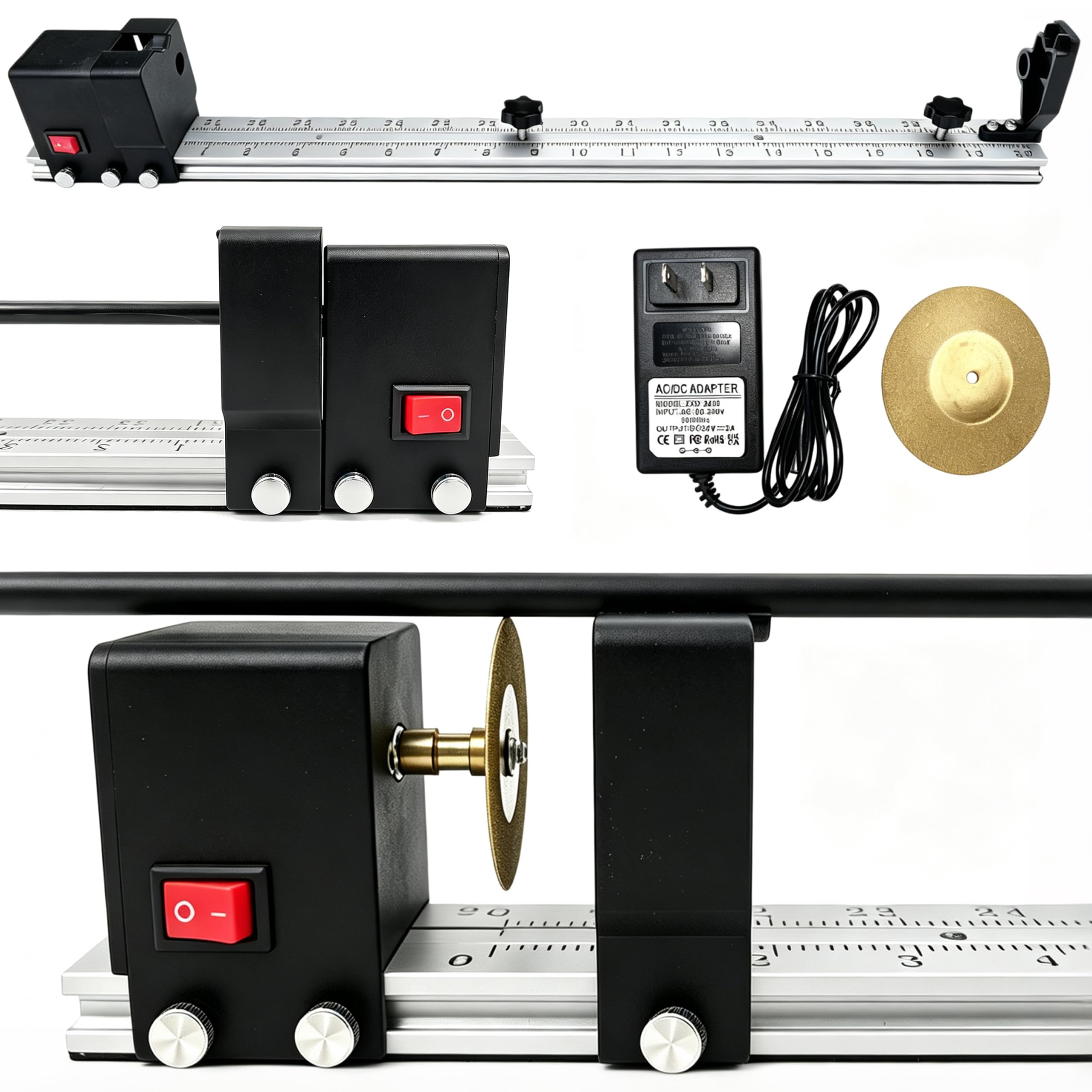
The full-aluminum build that locks cutting angle for factory-level consistency.
Where many budget saws rely on plastic, this one uses a rigid full aluminum structure that keeps every cut identical. The precision-machined guide rail locks the cutting angle, eliminating offset or tilt, so you get a perfectly perpendicular, burr-free cut on every shaft. It handles 19-to-24-inch crossbow bolts and 29-to-34-inch compound bow arrows, covering most mainstream archery needs.
Owners describe it as a dream to work with, producing professional-quality arrows at a budget price. The 12,000 rpm motor makes quick work of carbon, aluminum, and fiberglass, and the built-in trimmer plus spare blade add convenience. It’s designed for home workshops, bow shops, and outdoor hunting prep without deformation over time.
The recurring flaw is the steel knob screws that can indent the soft aluminum base. One owner measured length setting errors up to ±3/8″ after the screws dug in. Tighten gently and use the scale as a final check. Carbon dust still needs a vacuum or mask, so plan for that.
Why it stands out: The aluminum base and guide rail give it a rigidity that budget saws lack, translating to consistent square cuts.
The catch: Those steel knobs can mar the aluminum over time, so don’t overtighten and verify lengths regularly.
Choose this if: you want premium cut consistency and an aluminum build without a premium markup.
Reconsider if: you’re a high-volume pro — vibration and alignment quirks make it better for the serious hobbyist.
6. ZSHJGJR Archery Electric Arrow Cutter Saw

A cut-and-polish combo that saves you buying a separate shaft polisher.
This 12,000 rpm cutter does double duty: after slicing your shaft, the built-in polishing function smooths the cross-section flat — so you don’t need to buy a separate arrow shaft polisher. The corundum (a hard abrasive mineral) saw blades are more durable and accurate than standard resin blades, and they reduce dust spread while cutting. The CNC-machined aluminum alloy body keeps things sturdy.
Shoppers say it cuts as described and balances out at speed — even if the blade looks slightly off-center at slow startup, the high spin evens it out. The 100-240V plug provides stable power, and there’s an adjustment screw to center the blade if vibration becomes an issue. It handles carbon, fiberglass, and aluminum shafts.
The main gripes involve setup friction. The length adjustment thumb screw needs pliers to stay put, and installing the saw blade takes patience to get it cutting straight. The 3D-printed parts fit tightly. It’s a functional tool that rewards careful setup, with the polishing feature as its genuinely unique selling point.
What wins people over: The polishing function. You cut, then smooth the surface flat without a second tool.
The fair warning: Setup takes patience — the thumb screw and blade alignment both need firm, careful attention.
Best for: the DIYer who wants cut-and-polish in one unit and doesn’t mind a fiddly initial setup.
Look elsewhere if: you want quick, tool-free adjustments between arrow builds — this one needs pliers for the length screw.
7. Moyujian Electric Arrow Saw

The no-assembly saw with a diamond blade that leaves cuts burr-free.
This one arrives ready to use — no installation required — and buyers report having it cutting arrows within minutes of unboxing. The 12,000 rpm high-speed motor keeps cut surfaces smooth with almost no burrs, and the diamond blade is the standout feature. As owners put it: “the diamond blade is better than carbon blade cutter.” One cut 36 arrows in 15 minutes and found the accuracy perfect.
The aluminum alloy base has clear engraved markings, and the cutting range of 4.3 to 32 inches covers standard shafts. Anti-slip pads on the bottom keep the saw steady during use, and the cutting method moves from the side to the top for easier operation. It works on carbon fiber, fiberglass, and aluminum arrows.
Two small caveats: the diamond wheel is slower on aluminum (about 3x the time of carbon), though it still leaves a burr-free cut, and the included wrench is the only accessory. It’s a home-shop saw, not a production tool. For the price, owners consistently call it a smart buy.
Why it’s impressive: The diamond blade delivers burr-free cuts that owners say outperform carbon-blade cutters.
The honest note: Aluminum cuts slower here — about three times the time of carbon — so be patient with metal shafts.
Reach for this if: you want a tool that works right from the start with minimal fuss and a superior diamond blade.
Think twice if: you cut a lot of aluminum arrows and need speed — the diamond wheel favors carbon.
8. SPG Archery Electric Arrow Cutter 3-in-1
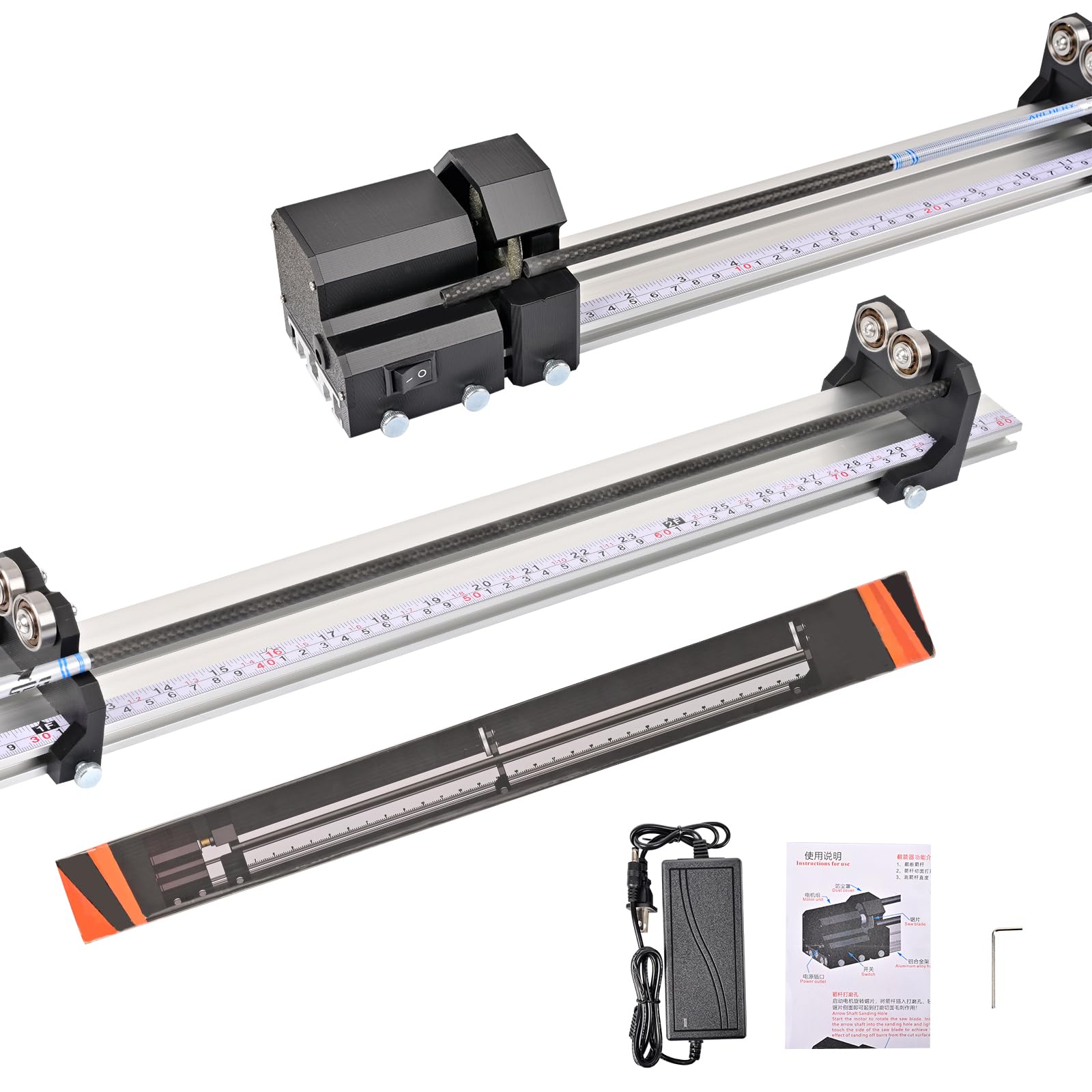
A saw, straightness spinner, and polisher in one unit — built for the full arrow workshop.
This is the most complete tool here: it cuts arrows with a 12,000 rpm diamond blade, spins them on rollers to check straightness (suggested test length 12–17 inches), and polishes the cut surface flat. It can slice carbon or aluminum shafts in about 2 seconds, and the aluminum alloy base with ceramic bearings provides pro-level accuracy. The cutting range is 5 to 31.5 inches.
Owners who got a good unit love it — it cuts aluminum and carbon very well and feels well built. The dust cover keeps the workspace cleaner, and the updated system is rated for 5000+ cuts. For a DIYer who wants to verify arrow straightness without buying a separate tool, this consolidates the whole workflow.
The durability gamble is real. Some units arrive broken in the box, and the arrow-holding parts are low-density 3D-printed pieces that can fail under pressure. There are reports of the manufacturer not supporting the product well. If you buy this, buy it knowing the moving parts may need careful handling, and test it immediately.
The big idea: One unit that cuts, checks straightness, and polishes — replacing three separate tools.
The risk to know: The 3D-printed arrow holders and some assembly quality have drawn sharp criticism, so inspect yours right away.
Choose this if: you want an all-in-one arrow workshop and are willing to gamble on quality control for the convenience.
it’s not for you if: reliability is non-negotiable — the arrival-damage and support complaints make it a higher-risk buy.
9. Carbon Express Arrow Saw With Dust Collector
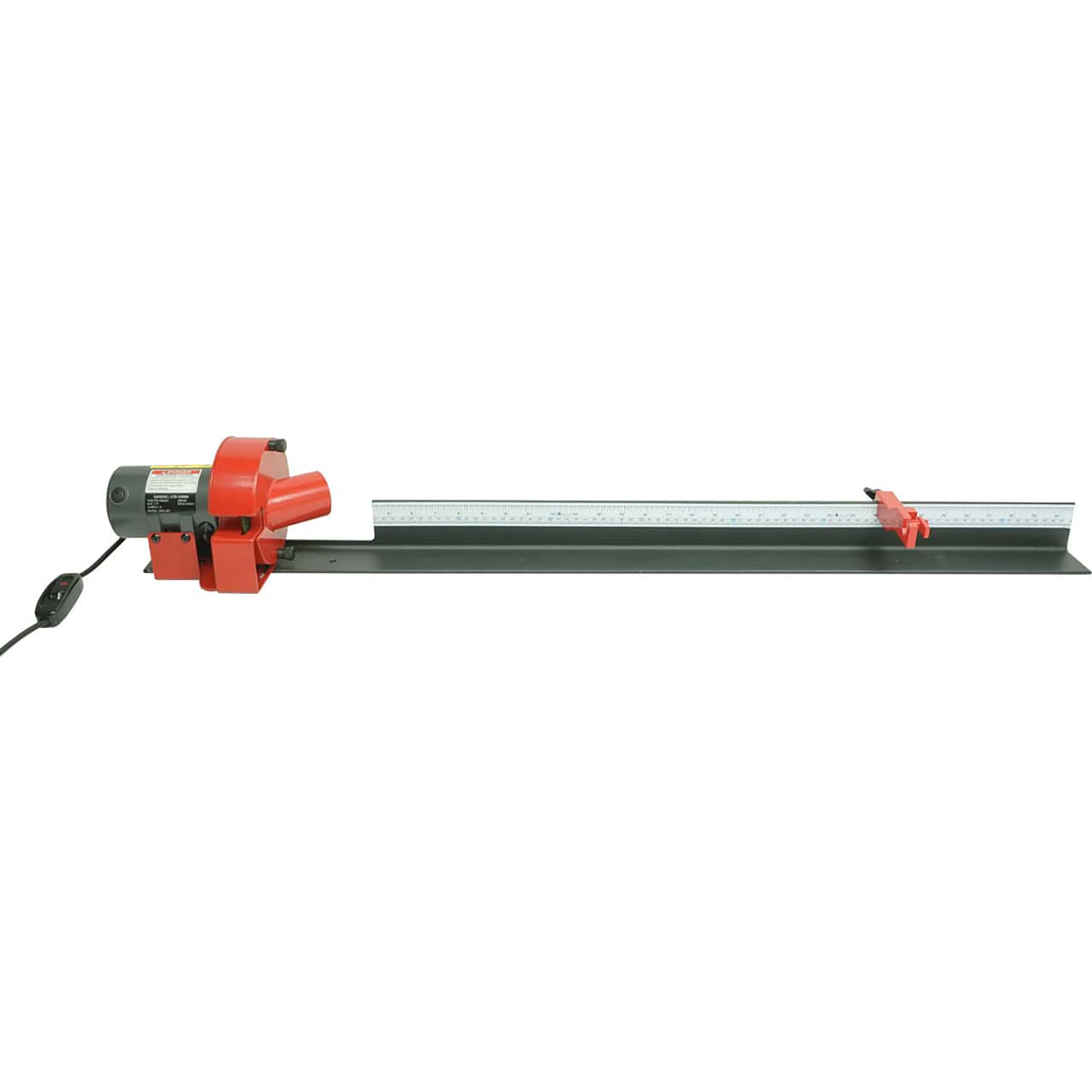
The heavyweight shop saw that collects its own carbon dust at 10,000 rpm.
If you’ve cut carbon arrows indoors without extraction, you know the dust problem — this saw solves it with a dedicated dust collector attachment included in the box. It’s a heavy-duty 120V motor spinning a high speed steel blade at 10,000 rpm, cutting all types of arrow shafts. The 17.9-pound weight tells you this is a bench tool built for repeated serious work, not a lightweight hobby gadget.
Buyers call this a must-have for home arrow building, whether you use budget or premium shafts. The measuring scale delivers consistent, accurate cuts, and the build quality earns repeated praise — “well made” and “not flimsy” come up often. It is the one saw here you would trust for a busy home workshop.
Two honest gripes: the adhesive tape measure has been inaccurate on some units — off by 1/16 inch per 6 inches on a reported pair — and the tape can tear near the motor. One owner plans to replace the sticker with a metal ruler. Double-check your cuts against a separate tape measure if precision is critical.
What makes it shop-grade: The included dust collector and 17.9-pound build mean it stays put and keeps your air clean.
The one flaw: The tape measure sticker has a track record of inaccuracy, so verify lengths with your own ruler.
Best for: the serious arrow builder who values dust extraction and bench-mount stability over portability.
Not for: occasional use or tight budgets — this is an investment for a real workshop.
Understanding the Specs
RPM (Revolutions Per Minute)
This tells you how fast the blade spins. A higher number, like 12,000 rpm, means the blade slices through carbon and aluminum with less pressure, leaving a smoother edge with fewer burrs. Slower saws, around 6,000 rpm, work but require a gentler touch and more patience, especially on thicker shafts.
Cutting Length Range
This is the span of arrow lengths the saw can handle, usually shown as a range like 4.3 to 32 inches. Your saw needs a max length at least as long as your arrow shafts. If you shoot a 30-inch draw, a 28-inch max won’t work, so always check this against your specific arrows.
Blade Material
Blades come in resin, corundum, carbide, diamond, or high-speed steel. Resin blades cut gently and protect the shaft but wear faster. Diamond and corundum blades are harder and more durable, giving cleaner edges on carbon. High-speed steel is a solid general-purpose choice, and aluminum blades suit aluminum shafts.
Dust Control
Carbon dust is fine, abrasive, and bad to breathe. A saw with a built-in dust collector channel keeps your workspace clean, while a dust cover just reduces splatter. If you cut indoors, prioritize a model with a collector or plan to run your own vacuum nearby.
FAQ
What is the best RPM for an arrow saw?
Will an arrow saw fit my arrow length?
Can a budget arrow saw cut carbon arrows well?
How do I stop my arrow saw from cutting crooked?
What is the difference between resin and diamond saw blades?
Is a dust collector really necessary on an arrow saw?
How long does an arrow saw blade last?
Can I use an arrow saw to cut aluminum and fiberglass arrows?
Final Thoughts: The Verdict
For most people, the arrow saw winner is the Decut Arrow Saw because its 38-inch cutting range and precise micro-adjustments make it the most versatile and accurate pick here, backed by the strongest owner satisfaction in the group. If you want maximum speed and value on a budget, grab the SPG 12,000 rpm cutter, which cuts carbon fast with spare blades included. And for a serious home workshop that values clean air, the Carbon Express saw with its built-in dust collector is the one to reach for.
How We Picked
We do not accept paid placement. Every pick is matched to a real buyer and a real use-case; we do not hands-on test units.
Sources & Methodology
Specifications: manufacturer listings and product documentation. Review insights: verified customer reviews, as of August 2026. Pricing: not shown on this page (it changes often); check the current price via the retailer link.
As an Amazon Associate, Gadgets Feed earns from qualifying purchases. This does not affect which products we feature.