
A standard borescope shows you what is straight ahead. An articulating borescope lets you steer the camera tip left, right, up, or down — bending around obstructions inside engine cylinders, wall cavities, and plumbing runs that a rigid or non-steerable probe simply cannot reach. The ability to look behind a valve, inspect the back side of a pipe elbow, or peer into a gearbox without disassembly transforms a guessing game into a confirmed diagnosis.
I’m Min — the co-founder and writer behind Gadgets Feed. I’ve spent countless hours analyzing the articulation range, camera resolution, probe diameter, and battery endurance of these specialty inspection tools to separate the genuinely useful models from the ones that frustrate more than they help.
Whether you are diagnosing a misfire on an overhead cam engine or tracing a leak behind a finished wall, this guide to the best articulating borescope will walk you through the essential specs and real-world trade-offs so you pick the right tool for the job.
How To Choose The Best Articulating Borescope
Selecting an articulating borescope involves more than just picking the cheapest model with a screen. The articulation range, probe diameter, image quality, and battery life each directly affect whether a tool can complete a specific inspection task — or leave you frustrated with a camera that cannot bend far enough or fit through the opening.
Articulation Range and Control Mechanism
The two key numbers are degrees of rotation and the number of axes (one-way or two-way). A 180° two-way articulation lets the tip bend left or right to look sideways, while a 210° range provides a slightly wider sweep that can be the difference between seeing a crack and missing it entirely. The control mechanism — a thumb wheel, a joystick, or a lever — determines how precisely you can steer. Mechanical wheels offer the most tactile feedback, while some budget models rely on a less responsive knob that makes fine adjustments harder.
Probe Diameter and Cable Construction
Probe diameter is the single most restrictive spec for automotive and mechanical inspections. A 3.0mm or 3.9mm probe can slip through spark plug holes and tiny oil passages that an 8.5mm probe cannot enter. The trade-off is image quality — smaller sensors typically capture less light and produce softer images. Cable construction matters almost as much: a semi-rigid metal gooseneck holds its shape after bending, which is critical for feeding the probe around obstacles without it springing back or flopping. Stainless steel braided cables resist kinking and last longer in oily, dirty environments.
Display Quality and Recording Features
A built-in 4.5-inch to 5-inch IPS screen eliminates the hassle of connecting to a phone or laptop. Resolution of 1080p is the baseline for clear defect identification; some premium units offer digital zoom (2x to 10x) that helps inspect fine cracks or corrosion. Brightness matters far more than marketing numbers — a screen that washes out under workshop lighting or direct sun is useless. Recording to an included microSD card (often 32GB) saves stills and video for documentation, which is essential for repair reports or insurance claims.
Quick Comparison
On smaller screens, swipe sideways to see the full table.
| Model | Category | Best For | Key Spec | Amazon |
|---|---|---|---|---|
| Ralcam 3mm | Premium | Tightest access (3mm) | 3.0mm probe, 210° articulation | Amazon |
| FOXWELL Y406D | Premium | Dual-lens versatility | 0.25in probe, 220° articulation | Amazon |
| DXZtoz AGC500L | Premium | Large 5in display | 5in screen, 10x digital zoom | Amazon |
| Ralcam 3.9mm | Mid-Range | Slim stainless steel probe | 3.9mm probe, stainless snake cable | Amazon |
| Teslong TD450S | Mid-Range | Dual forward/side cameras | Dual lenses, audio recording | Amazon |
| DEPSTECH DS650 | Mid-Range | 10ft cable with dual lens | 10ft cable, dual 78° FOV cameras | Amazon |
| UJOYOK 420° | Mid-Range | Wide 420° articulation | 420° two-way, 4.3in screen | Amazon |
| VEVOR 6.4mm | Budget | Value with long battery | 6.4mm lens, 4500mAh battery | Amazon |
| DEPSTECH DS660 | Budget | Entry-level articulation | 5in screen, 210° articulation | Amazon |
In‑Depth Reviews
1. Ralcam 3mm Two-Way Articulating Borescope
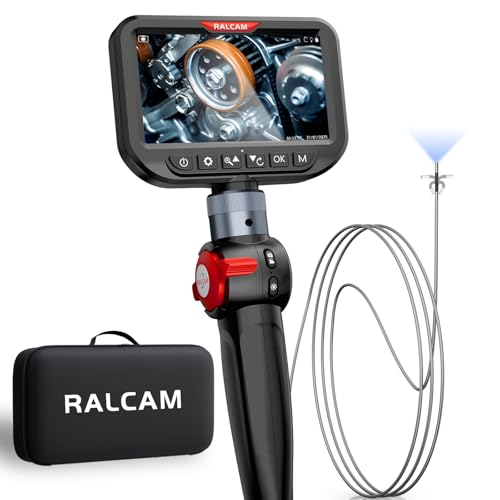
At 3.0mm, the probe on this Ralcam is the thinnest in the lineup — it slides through spark plug holes, tiny oil galleries, and narrow fuel injector ports that block every other consumer borescope. The 210° two-way articulation, controlled by a wheel on the handle, gives you full steering authority in both directions without fighting a stiff cable. The 5-inch IPS HD screen renders bright, detailed images even in dim engine bays, and the three adjustable LED brightness levels let you dial in illumination without washing out reflective surfaces.
The full-length stainless steel snake cable resists kinking and holds its shape when you bend it around obstacles, which is a major advantage over rubber-coated cables that memory-set poorly. An IP67 waterproof rating means the probe survives oil, coolant, and wet environments. The high-temp warning system triggers an alert if the tip exceeds safe operating temperature — a feature that matters when you are inspecting a hot exhaust manifold or turbo housing. The 32GB microSD card records 1080p stills and video, and the USB-C port handles both charging and data transfer.
Image sharpness is excellent for a 3.0mm sensor, though digital zoom at 4x does show pixelation — this is physics, not a flaw. The side-mounted articulation lever defaults back to center when released, which some users find less intuitive than a locking wheel. Overall, this is the tool that gets into spaces others cannot, making it the definitive choice for professional mechanics and serious DIYers who need maximum access.
Why it’s great
- 3.0mm probe fits the tightest ports and passages
- Stainless steel cable resists kinking and holds shape
- High-temp warning protects probe in hot environments
Good to know
- Digital zoom introduces pixelation at 4x
- Articulation lever auto-centers instead of locking
- Premium-tier pricing reflects specialized capability
2. FOXWELL Dual Lens Articulating Borescope Y406D
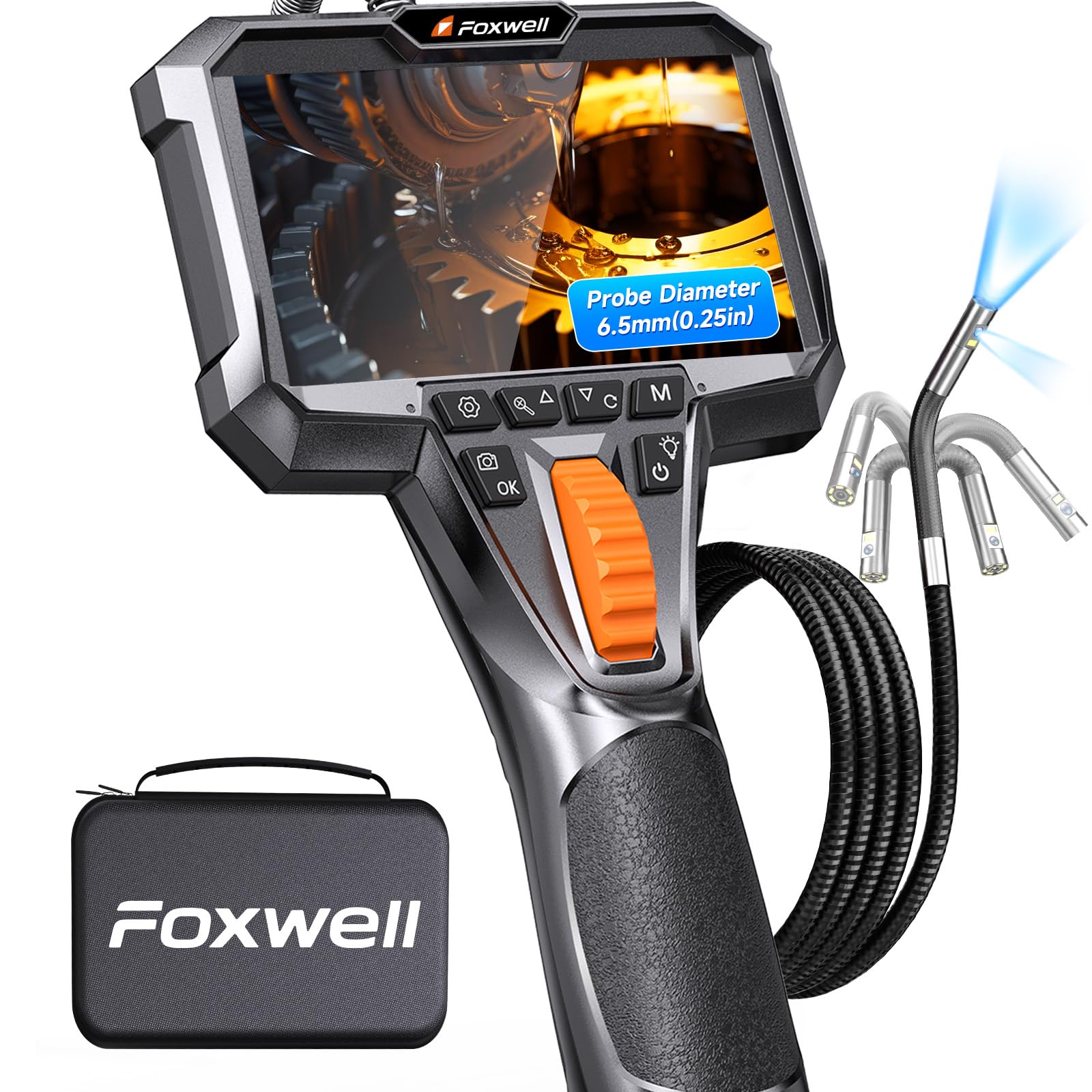
The FOXWELL Y406D delivers a 220° articulation range — the widest sweep in this roundup — combined with an innovative dual-lens probe that carries a forward-facing camera and a side-facing camera in the same 0.25-inch tip. Switching between the two views lets you inspect directly ahead and then instantly glance sideways without repositioning the cable, which is a genuine time-saver when tracing wiring harnesses or checking cylinder walls. The 5-inch IPS HD screen is bright enough to use under direct sunlight, and the adjustable LED array lights up dark cavities evenly.
A advanced CMOS sensor and fast image processor produce crisp 1080p video at 30fps with minimal lag. The dual zoom modes (2x and 4x) help spot hairline cracks or carbon deposits, though the zoom remains digital rather than optical. The IP67 waterproof rating and smart heat-protection system that shuts down above 70°C make this safe for hot engine and exhaust work. The included 32GB storage saves over 10,000 photos, and the USB-C port charges the 4-hour battery quickly.
Audio recording is built in, which is a rare feature in this category and useful for narrating inspection findings. The symmetrical control knob on the handle is comfortable for both left- and right-handed users, and the ergonomic grip reduces fatigue during extended inspections. Some users report occasional screen freezing that requires a restart, but for the combination of articulation range, dual-camera flexibility, and build quality, the Y406D is a serious tool for pros.
Why it’s great
- 220° articulation is the widest in the guide
- Dual forward/side cameras eliminate blind spots
- Audio recording for narrated inspection documentation
Good to know
- Occasional screen freezing reported by some users
- Digital zoom only; no optical magnification
- Premium pricing near the top of the category
3. DXZtoz Dual-Lens Articulating Borescope AGC500L
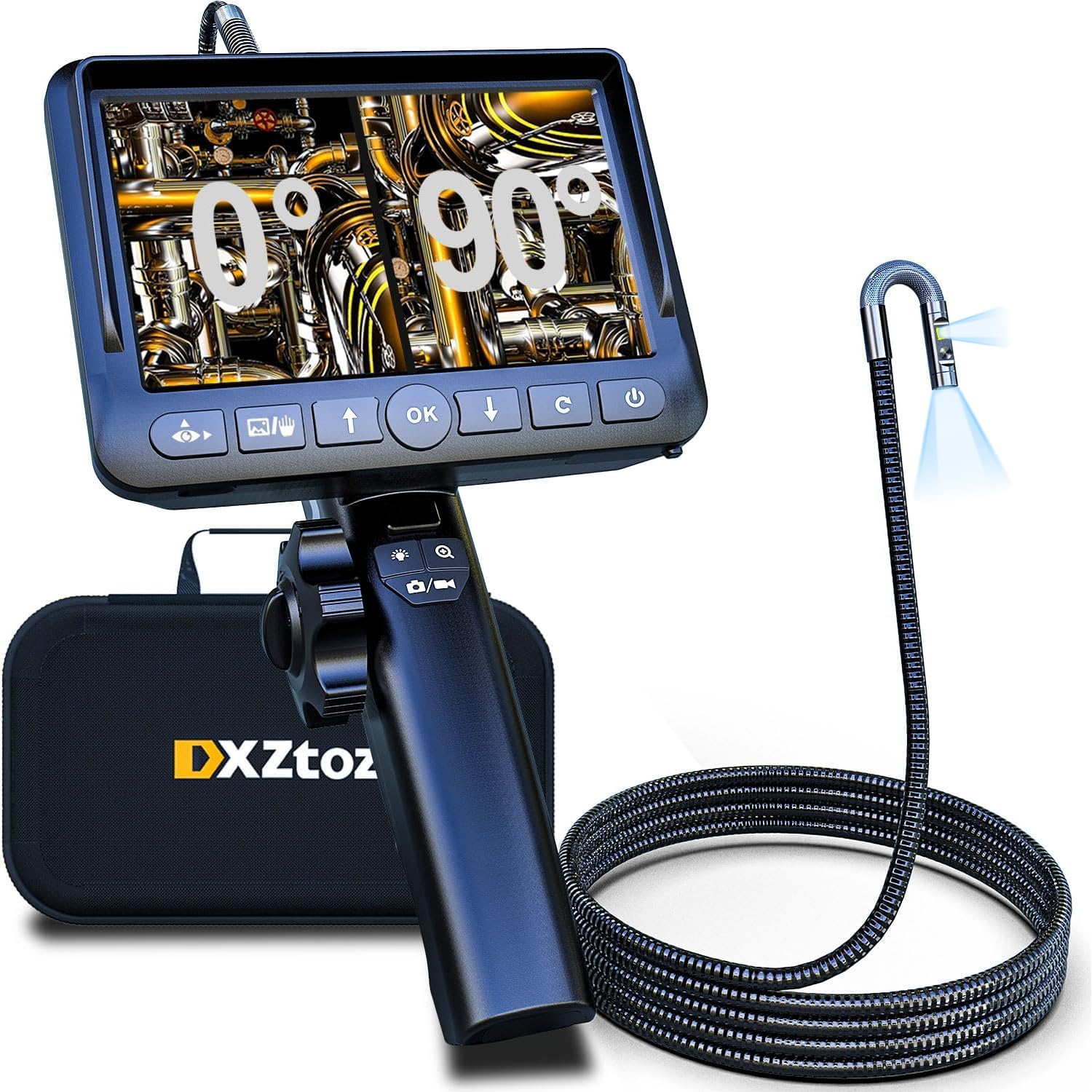
The DXZtoz AGC500L uses a 5-inch IPS screen that is roughly 30% larger than the 4.5-inch displays found on many competitors, which makes a real difference when you are trying to distinguish a hairline fracture from a casting line. The 10x digital zoom is the highest magnification in this comparison, allowing you to blow up details significantly, though at max zoom the pixel grid becomes visible. The two-way articulating probe bends to any angle via a control wheel, and the side camera on the rotatable tip provides a 90-degree view that is invaluable for inspecting the inner walls of pipes without spinning the whole cable.
IP67 waterproof and oil-proof construction means the probe handles engine oil, coolant, and grime without damage. The 3000mAh battery delivers 4-5 hours of continuous operation, which is enough for a full day of diagnostic work. The kit includes a hook, a magnet, and a comprehensive lens cleaning set — accessories that are usually sold separately. The front-exit cable design reduces drag during articulation, making steering smoother than rear-exit alternatives.
Image quality at the 2MP sensor is good but not class-leading; the 1080p resolution holds up well for most automotive and HVAC tasks. The screen latching mechanism on some early units was reported as finicky, though recent builds appear to have corrected this. For the screen size alone and the inclusion of retrieval tools, the AGC500L is a strong mid-range contender with premium screen real estate.
Why it’s great
- 5-inch IPS screen is the largest in class
- 10x digital zoom for magnifying small defects
- Includes hook and magnet retrieval accessories
Good to know
- Max zoom reveals visible pixelation
- Screen latch was inconsistent on early runs
- 2MP sensor is adequate but not the sharpest
4. Ralcam 3.9mm Two-Way Articulating Borescope
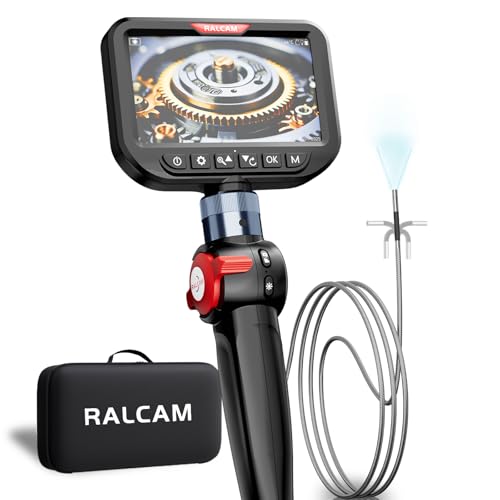
Stepping down from the 3.0mm flagship, the Ralcam 3.9mm model retains the stainless steel snake cable construction and 210° articulation but at a more accessible price point. The 3.9mm probe still fits into most spark plug holes and narrow mechanical ports, and the 5-inch HD IPS screen delivers clear, vivid imagery. Three adjustable LED brightness levels handle everything from dark oil pans to bright engine compartments without glare. The 180° image rotation lets you flip the view for comfortable reading from any angle, which is a small touch that reduces neck strain during long inspections.
The full-length stainless steel snake tube resists kinking far better than rubber or plastic cables, and it holds its shape after bending so you can set the probe in position and focus on the screen. IP67 waterproofing covers the probe for wet and oily environments. The 4x digital zoom is modest compared to the 10x on the DXZtoz, but the image stays cleaner at 4x because the sensor is not being pushed beyond its optical sweet spot. The 32GB TF card stores plenty of photos and video, and USB-C charging is convenient.
Some users note that the thermometer reading can be inaccurate — it reported 120°F in a desk drawer for one reviewer — so treat that reading as a relative indicator rather than a precision measurement. The camera cover is difficult to remove, which is a minor annoyance when you first unpack it. For the combination of build quality, slim probe, and articulation, this Ralcam sits comfortably in the upper mid-range value zone.
Why it’s great
- 3.9mm probe accesses tight engine and pipe openings
- Stainless steel cable resists kinking and holds shape
- 180° image rotation reduces inspection fatigue
Good to know
- Thermometer readings can be inaccurate
- Camera cover is stubborn to remove initially
- Digital zoom limited to 4x
5. Teslong Dual Lens Articulating Borescope TD450S

The Teslong TD450S takes a different approach to eliminating blind spots: instead of a single articulating camera, it mounts two separate cameras on the probe tip — one facing forward and one facing to the side. Switching between them with a button lets you inspect straight ahead and then immediately check side walls without moving the cable. The two-way articulating probe still provides 180° steering for navigating bends, so you get the flexibility of articulation plus the convenience of instant side views. The 4.5-inch IPS WVGA display delivers good clarity at 1080p, and adjustable LED illumination handles dark environments.
This is one of the few models in the guide that includes audio recording, letting you narrate observations as you capture video. The 32GB microSD card stores extensive footage, and the USB-C port handles both charging and data transfer. Battery life is solid for a full day of inspections. The build quality feels pro-grade, with a durable cable and a comfortable grip that keeps the articulation wheel within easy thumb reach. The dual-camera design particularly shines for HVAC ductwork and wall cavity inspections where you need to see both straight in and to the side.
The 1.5x digital zoom is limited — if you need to magnify fine details significantly, this is not the model for that. The side camera image does not articulate independently; it only shows a fixed 90-degree perspective, so you still rely on the main articulation for steering. For DIYers and professionals who value multitool flexibility, the TD450S represents excellent value with its dual-camera setup.
Why it’s great
- Dual forward and side cameras reduce repositioning
- Audio recording for narrated inspection video
- Solid build at a mid-range price
Good to know
- Digital zoom is only 1.5x
- Side camera is fixed at 90 degrees
- Not the best for extreme close-up magnification
6. DEPSTECH 10FT Articulating Endoscope DS650
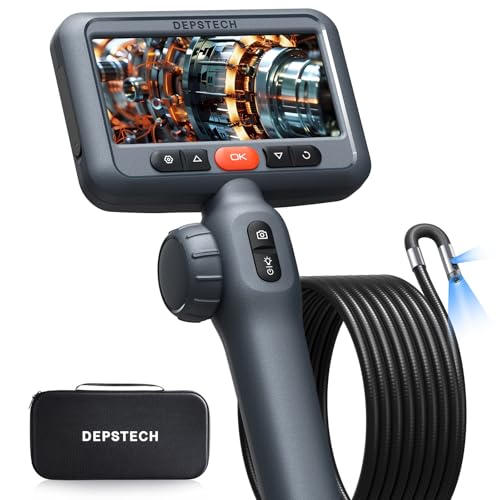
The DEPSTECH DS650 is built for situations where you need both articulation and extended reach. The 10-foot semi-rigid gooseneck cable lets you snake deeper into wall cavities, HVAC ducts, and long pipe runs than the typical 5-foot models. The dual-lens probe uses two cameras with separate 78° fields of view, and the split-screen mode displays both perspectives simultaneously, giving you a wider situational awareness of the inspection area. The 210° bidirectional articulation is controlled by a smooth side wheel that allows one-handed operation.
The 4.5-inch IPS screen runs at 1080p with Blaurt 3.0 image processing that boosts clarity in low-light conditions — useful when inspecting deep inside a dark attic or basement crawl space. The integrated high-temp warning system prevents damage in hot industrial or automotive environments. A manual focus adjustment (optimal at 3-5cm) and 1.5x zoom help with close-up detail work. The 2200mAh battery delivers 4+ hours of runtime, and the included 8GB TF card is enough for a day’s worth of captures, though you may want to upgrade to a larger card for extended projects.
The ultra-slim 0.33-inch probe is small enough for most automotive ports but not as thin as the 3mm Ralcam. The front-exit cable design on some competitors is replaced here by a rear cable exit, which a few users find awkward when working in tight spaces. The carrying case is well-padded and keeps everything organized. For inspections requiring extra length without sacrificing articulation, the DS650 is a capable mid-range option.
Why it’s great
- 10ft cable reaches deeper than standard 5ft models
- Dual-lens split-screen view expands inspection awareness
- High-temp warning protects in hot environments
Good to know
- Rear cable exit can be awkward in tight spaces
- 8GB included storage may need upgrading
- Probe is 0.33in — not as slim as 3mm options
7. UJOYOK Two-Way Articulating Borescope

The UJOYOK borescope advertises a 420° two-way articulation, which sounds like a huge range, but this number appears to measure both left and right rotation combined — effectively 210° each direction, matching most other articulating models. The 4.3-inch IPS screen is slightly smaller than the 5-inch displays on higher-tier units, but it is still clear and readable for most inspection tasks. The 8mm probe with 2x digital zoom and a 2MP CMOS sensor captures sufficient detail for automotive and plumbing diagnostics, and the AI chip helps adjust contrast automatically in varying lighting conditions.
The semi-rigid metal gooseneck probe holds its shape well and can be bent into position for hands-free viewing. IP67 waterproofing covers the probe for wet and oily environments. The kit includes a 32GB TF card, a carrying case, and a USB charging cable. The 8 LED lights with adjustable brightness levels do a decent job illuminating dark cavities, and the one-handed operation design is comfortable for extended use.
Build quality is good for the price, but some users report the camera module detaching from the hose after a few months of use — it appears to be glued with cyanoacrylate, which can fail under stress. Reattaching it with superglue is a fixable issue, but it is worth noting for those who plan heavy daily use. The heat temperature reading feature is a nice bonus for checking engine exhaust or heating pipes. Overall, this is a solid entry-level articulating borescope that delivers the core function at a budget-friendly price.
Why it’s great
- Articulation range matches higher-priced models
- Semi-rigid gooseneck holds shape for hands-free use
- Includes 32GB card and carrying case
Good to know
- Camera module may detach from hose over time
- Only 3.5 hours of battery life
- 4.3in screen is smaller than category leaders
8. VEVOR Articulating Borescope Camera

The VEVOR articulating borescope stands out for its 4500mAh battery, the highest capacity in this guide, delivering 4-6 hours of continuous operation — enough for an entire workday without recharging. The 180° two-way articulation covers the standard steering range, and the 5-inch IPS 1080p HD screen provides sharp, true-color images. An 8x digital zoom lets you magnify details significantly, though quality degrades at the highest zoom levels as expected with digital magnification. The 6.4mm ultra-slim lens is narrower than the 8.5mm cameras found on many budget models, allowing access to tighter spaces.
Eight LED lights with three adjustable brightness levels provide ample illumination, and the unique high-temperature protection triggers a buzzer alarm when the lens exceeds 85°C — a useful safety feature for hot engine inspections. The IP67 waterproof probe handles wet environments without issues. The USB-C charging is fast and convenient, and the included 32GB TF card stores plenty of photos and video for analysis. The 180° image rotation function helps view results from comfortable angles without moving the probe.
The image clarity is slightly softer than premium competitors — the trade-off for the sub- price point and huge battery. The camera head can be fragile if stepped on or struck by a heavy object, and replacement heads are not readily available. For users who need extended runtime on a single charge and can accept slightly softer image quality, the VEVOR is a compelling value.
Why it’s great
- 4500mAh battery offers 4-6 hours of runtime
- 8x digital zoom for detail inspection
- High-temp alarm protects probe at 85°C
Good to know
- Image is softer than premium models
- Camera head can be damaged if impacted
- No replacement camera heads available
9. DEPSTECH Articulating Borescope DS660
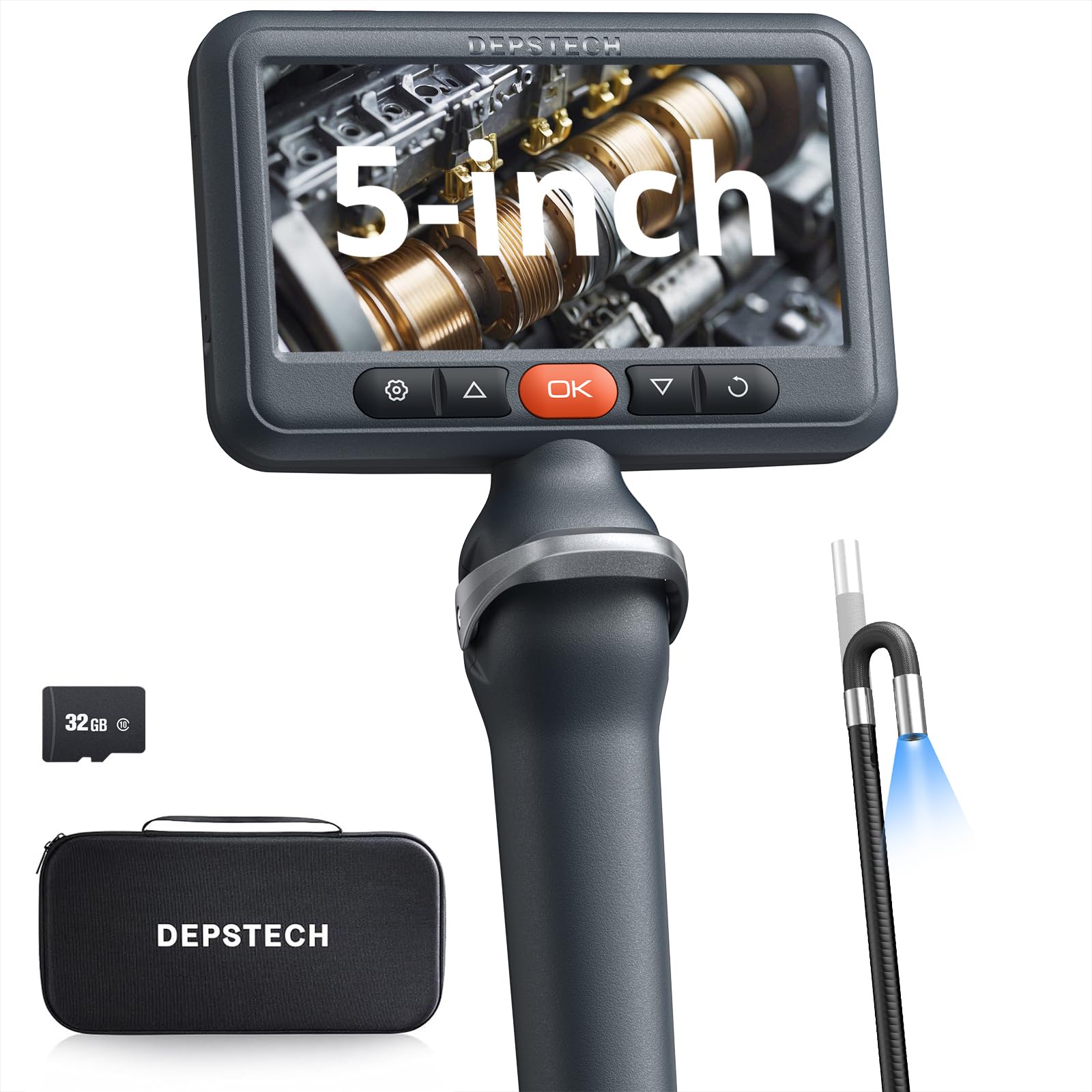
The DEPSTECH DS660 is the baseline entry point for articulating borescopes, offering 210° two-way articulation, a 5-inch IPS HD screen, and a 0.24-inch flexible probe at a budget-friendly price. The 5-foot cable is shorter than the 10-foot DS650 from the same brand, but it is sufficient for automotive engine work, wall cavities, and standard plumbing inspections. The three-level adjustable LED lights provide adequate illumination in total darkness, and the IP67 waterproof rating allows use in wet or oily environments without worry. The 32GB included storage card captures photos and video for later review.
The ergonomically centered joystick allows one-handed operation, and the rear-mounted button makes snapping photos or starting video quick and intuitive. The built-in 4-hour battery covers a full morning of diagnostics. The carrying case keeps everything organized and protected during transport. The metal gooseneck probe holds its position once bent, which is helpful for hands-free inspections. Image quality at 1080p is good for the price, with the 2MP sensor delivering clear stills and video in the optimal 3-10cm focal range.
The DS660 lacks zoom functionality entirely — no digital zoom at all — so you cannot magnify small details on screen. There is no camera swivel feature, and the cable exits from the bottom of the handle, which some users find awkward during extended use. The build quality is decent but not industrial-grade; for light to moderate DIY use, it performs well, but daily professional use may reveal its limitations. For a first-time buyer wanting to test whether an articulating borescope solves their inspection problems, the DS660 is a low-risk starting point.
Why it’s great
- 210° articulation at an entry-level price
- 5in IPS screen with 1080p clarity
- Includes 32GB card and carrying case
Good to know
- No digital zoom for magnifying details
- Bottom cable exit can feel awkward
- 5ft cable is shorter than some competitors
FAQ
What is the difference between one-way and two-way articulation in a borescope?
Can a 3mm articulating borescope replace a non-articulating model for general use?
How important is the IP67 waterproof rating for a borescope?
Final Thoughts: The Verdict
For most users, the best articulating borescope winner is the Ralcam 3mm because its ultra-slim 3.0mm probe and 210° stainless steel articulation unlock access to the tightest engine ports and mechanical passages that other borescopes cannot even enter. If you want dual-lens flexibility with forward and side views in a single probe, grab the FOXWELL Y406D. And for the best value with a dual-camera design and audio recording, nothing beats the Teslong TD450S.