
Forget the annual cycle of staining, sealing, and replacing warped wooden planks. The latest artificial decking materials deliver real wood grain, structural stability, and drain-through designs that let you hose down your patio and move on with your day. Whether you are covering a bare concrete balcony, refreshing a pool surround, or replacing rotted boards on a back deck, the modern options snap together without tools and resist UV, moisture, and foot traffic season after season.
I’m Min — the co-founder and writer behind Gadgets Feed. I have spent hundreds of hours analyzing composite formulations, acacia hardwood densities, interlocking clip mechanisms, and raised base drainage patterns to separate the durable contenders from the disposable fillers in this space.
You need materials that will not splinter underfoot or turn spongy after a single rainy winter, which is why I built this guide to help you confidently select the right best artificial decking for your specific outdoor area, foot traffic level, and aesthetic preference.
How To Choose The Best Artificial Decking
The market splits into three material camps: natural hardwood acacia tiles pre-finished with linseed oil, wood-plastic composites with a polymer cap, and full synthetic high-density PP resin. Each offers a different balance of weight, texture, drainage, and long-term care requirements.
Material and Real-World Durability
Solid acacia tiles deliver an authentic wood feel and robust bearing capacity — many handle over 400 lbs distributed — but they need periodic oiling if used in direct weather year-round. Composite tiles blend wood fibers with recycled polyethylene and a polymer shell that resists fading and cracking without annual sealing. Full PP resin tiles are the most synthetic in feel but excel in wet environments because they never absorb moisture. Your climate and willingness to re-oil should drive this decision.
Drainage and Base Design
Every tile in this category uses a raised plastic base to allow water to flow underneath rather than pond on the surface. The critical difference is the design of the base grid: larger drainage gaps clear debris faster, while dense grid patterns provide more support for heavy furniture. Look for a base that lifts the wood slat at least 0.2 inches off the subfloor. Without adequate airflow, moisture can get trapped beneath the tiles and damage both the decking and the surface underneath.
Interlocking Mechanism and Installation
Most tiles use either a peg-and-hole system or a four-way clip system. Peg-and-hole designs are straightforward to align but can loosen over time on uneven subfloors. Four-way clip systems lock each side independently and create a more rigid surface. Both allow tool-free assembly, but the clip systems generally produce a tighter fit that reduces tile shifting under foot traffic.
Quick Comparison
On smaller screens, swipe sideways to see the full table.
| Model | Category | Best For | Key Spec | Amazon |
|---|---|---|---|---|
| NewTechWood Canadian Maple | Composite | Fade-resistant long-term decking | 0.88 in thick / polymer cap | Amazon |
| NewTechWood Peruvian Teak | Composite | Premium color match for teak furniture | 0.88 in thick / polymer cap | Amazon |
| Majestick Goods Longboard | Acacia Hardwood | Large patio layouts | 24 x 12 in tiles / peg-and-hook | Amazon |
| DECKIFY Acacia Crossed | Acacia Hardwood | Barefoot-friendly pool surrounds | 0.9 in thick / 490 lbs capacity | Amazon |
| GREEN ALLUVIUM Acacia Striped | Acacia Hardwood | Quick refresh for small balconies | 0.9 in thick / 466 lbs capacity | Amazon |
| VEVOR 54 Pack PP | PP Resin | Large-area budget coverage | 0.8 in thick / 440 lbs capacity | Amazon |
| Yaheetech Fir Wood 55-Pack | Fir Wood | Budget-friendly large-area coverage | 0.87 in thick / PP plastic base | Amazon |
In‑Depth Reviews
1. NewTechWood UltraShield Naturale Quick Deck Composite Tile in Canadian Maple
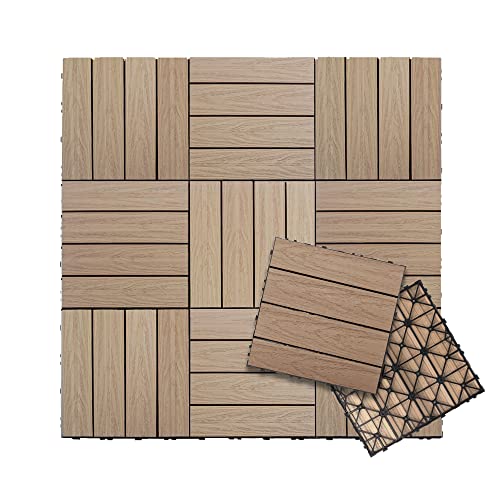
The NewTechWood tiles use high-density polyethylene and wood fibers wrapped in a polymer coating that resists fading, cracking, and bending far better than raw hardwood. Each tile measures 12 x 12 x 0.88 inches and clicks together with a four-way interlocking system that creates a uniform, shift-free surface. The raised base lifts the composite slat above the subfloor, allowing rain and hose water to drain freely without pooling between the joints.
Customer reports confirm these tiles maintain their color after four years of outdoor exposure, which speaks to the UltraShield cap’s UV stability. The Canadian Maple finish offers a medium-light wood tone that keeps the patio feeling open and bright. Installation requires no tools beyond a jigsaw for edge cuts, and the tiles lock securely enough to be picked up and relocated if needed. Each box covers 10 sq. ft., making it straightforward to calculate quantity per project.
The polymer cap does make the surface feel slightly less warm under bare feet than natural acacia, but the trade-off is genuinely low maintenance — no sealing, no oiling, just an occasional rinse with a household cleaner. For homeowners who want a set-it-and-forget-it deck surface that will still look consistent after several summers, composite is the smarter long-term investment over untreated wood.
Why it’s great
- Polymer coating prevents fading and cracking through multiple seasons
- Four-way interlocking clips create a rigid, non-shifting surface
- Low maintenance — no sealing or oiling required
Good to know
- Composite texture feels less natural than solid acacia under bare feet
- Only compatible with NewTechWood deck tiles, limiting future mixing
2. NewTechWood UltraShield Naturale Quick Deck Composite Tile in Peruvian Teak
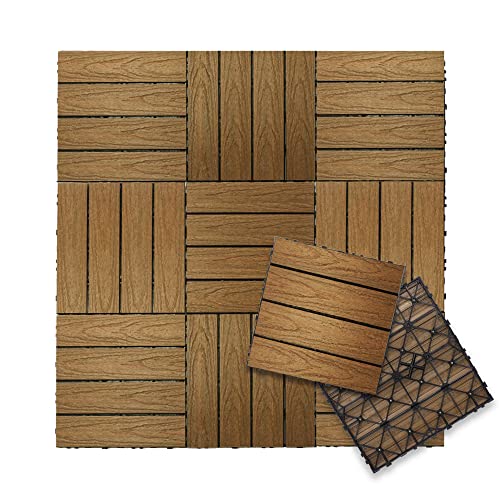
This is the same UltraShield Naturale composite construction as the Canadian Maple variant — same 12 x 12 x 0.88 inch dimensions, same four-way clip system, same polymer cap — but finished in a richer, darker Peruvian Teak tone. The deeper brown grain works well in spaces that need to hide dirt between cleanings, such as walkways from the back door to the garden or around a grill station where grease splatter is common.
The composite formulation here uses the same high-density polyethylene base and wood fiber core, so the structural behavior is identical: no warping, no splintering, and the raised base lifts the tile for water runoff. Customer feedback confirms consistent color retention and no material degradation after extended UV and rain exposure over multiple years. The four-way interlocking system keeps the grid aligned even when cut tiles at the edge create partial clips.
The main consideration is aesthetic — Peruvian Teak is noticeably darker than Canadian Maple and will absorb more heat in direct summer sun, which could be uncomfortable for barefoot walking during peak afternoon hours. If your deck is shaded or you plan to use it primarily in the evenings, this is not a concern. For full-sun patios where cool surface temperature matters, lighter composite or natural acacia colors are better choices.
Why it’s great
- Rich dark teak tone hides dirt between cleaning cycles
- Same proven polymer cap durability as the top-rated composite option
- Full UV and moisture resistance without any annual maintenance
Good to know
- Dark color absorbs more heat in direct sunlight
- Higher per-tile investment compared to natural acacia options
3. Majestick Goods Interlocking Longboard Deck Tiles, Acacia Wood

Instead of the standard 12 x 12 inch square, Majestick Goods uses a longboard format measuring 24 inches by 12 inches. This rectangular layout covers 12 sq. ft. per 6-tile box with fewer interlocking seams across the surface, which creates a more continuous wood-floor aesthetic. The acacia hardwood slats sit 0.9 inches thick on a raised PPC base that channels water underneath to keep the walking surface dry.
The peg-and-hook interlocking system requires no tools for assembly, and the longer tile format speeds up installation on open rectangular patios where you can run the planks in one direction. Customer reports note that these tiles have spent two years outdoors on a patio without visible wear or color shift, and the grooved slat surface provides reliable grip even around wet pool areas. The 8.44 kg per box weight gives each tile a substantial feel underfoot.
The peg-and-hook connectors sit in holes without a snapping lock, so the connection is slightly looser than a four-way clip system. On very uneven subfloors, individual tiles might shift slightly under heavy foot traffic. A bead of outdoor adhesive on the pegs solves this, or you can install on a level concrete base for the best stability. The rich brown finish and larger tile format make this a strong choice for covering visible, open spaces.
Why it’s great
- Rectangular 24×12 format reduces seam lines for a more premium look
- Solid acacia slats hold up well under continuous outdoor exposure
- Raised base keeps water draining freely underneath the surface
Good to know
- Peg-and-hook connectors do not snap — can shift on uneven subfloors
- Not sealed from factory — applying a wood sealant extends lifespan
4. DECKIFY Premium Acacia Wood Interlocking Patio Deck Tiles, Golden Teak Crossed
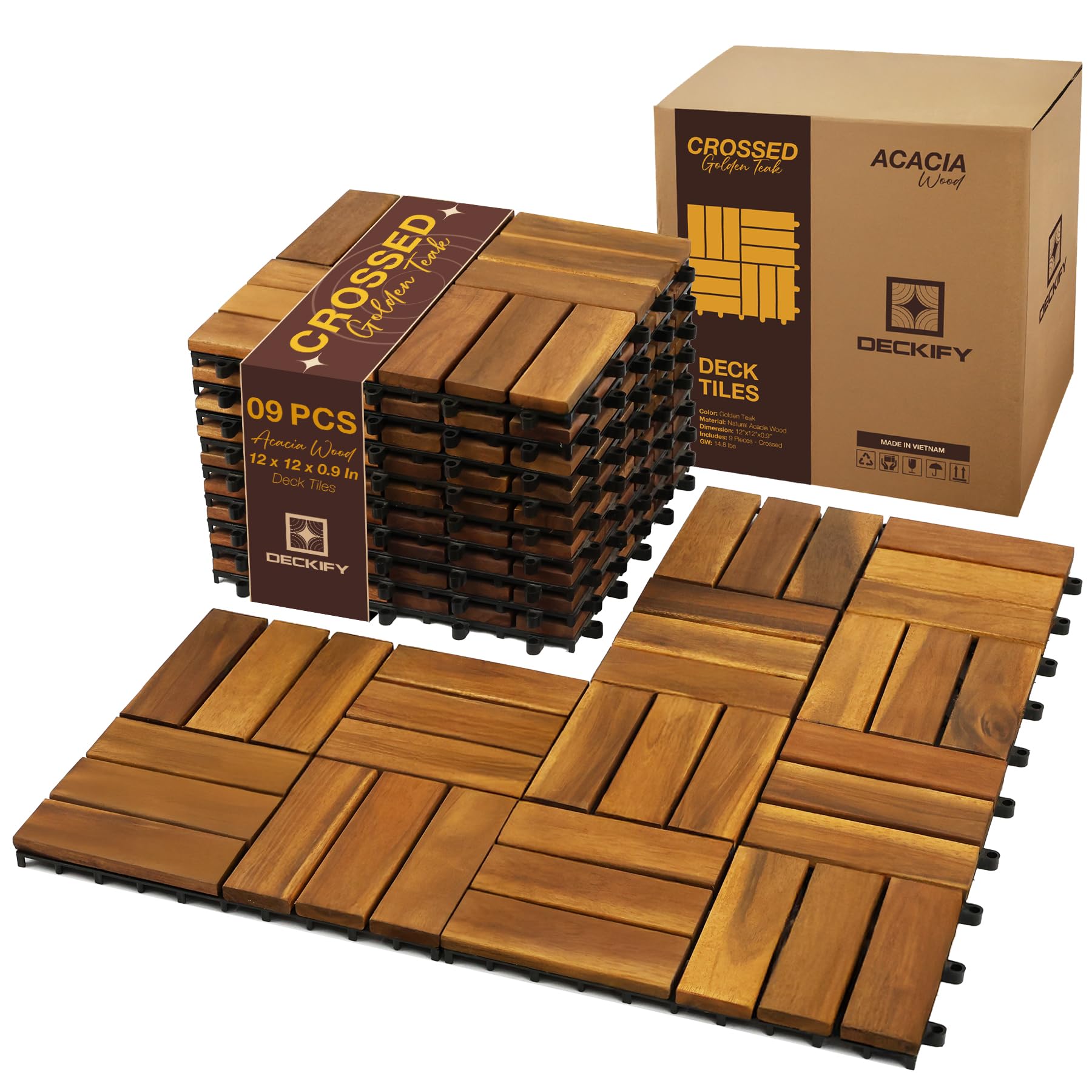
These DECKIFY tiles use solid acacia hardwood with a natural linseed oil finish that arrives ready for outdoor placement straight from the box. Each 12 x 12 x 0.9 inch tile features a crossed slat pattern that looks distinctive and provides deep grooves for wet-surface grip. The raised PPC base elevates the tile enough to promote airflow underneath, which is especially important when installing over concrete or compacted soil where standing moisture would otherwise lead to mold.
The interlocking clips on all four sides snap together by hand without tools, and the tiles can be cut with a standard hand saw to fit posts, corners, and irregular edges. Customer feedback confirms these hold up well in rainy climates — one verified review in a high-rainfall area noted the wood resists moisture damage effectively thanks to the pre-applied linseed oil. The 490-lb distributed load capacity means standard patio furniture, grills, and heavy foot traffic are well within range.
The linseed oil finish is a protective layer, not a permanent seal. Tiles installed in direct exposure to full sun and rain will eventually need a fresh coat of wood oil — typically once per year — to maintain the golden teak color and prevent the acacia from drying and cracking. If you are willing to spend an afternoon re-oiling annually, these tiles deliver the best tactile warmth and natural appearance of any option at this price tier.
Why it’s great
- Solid acacia wood provides authentic warmth and texture underfoot
- Deep-groove slats and raised base deliver reliable drainage and slip resistance
- 490-lb load capacity handles heavy furniture without flexing
Good to know
- Linseed oil finish is not permanent — annual re-oiling needed in harsh weather
- Crossed pattern creates smaller wood blocks than longboard styles
5. GREEN ALLUVIUM Premium Acacia Wood Interlocking Deck Tiles, Golden Teak Striped
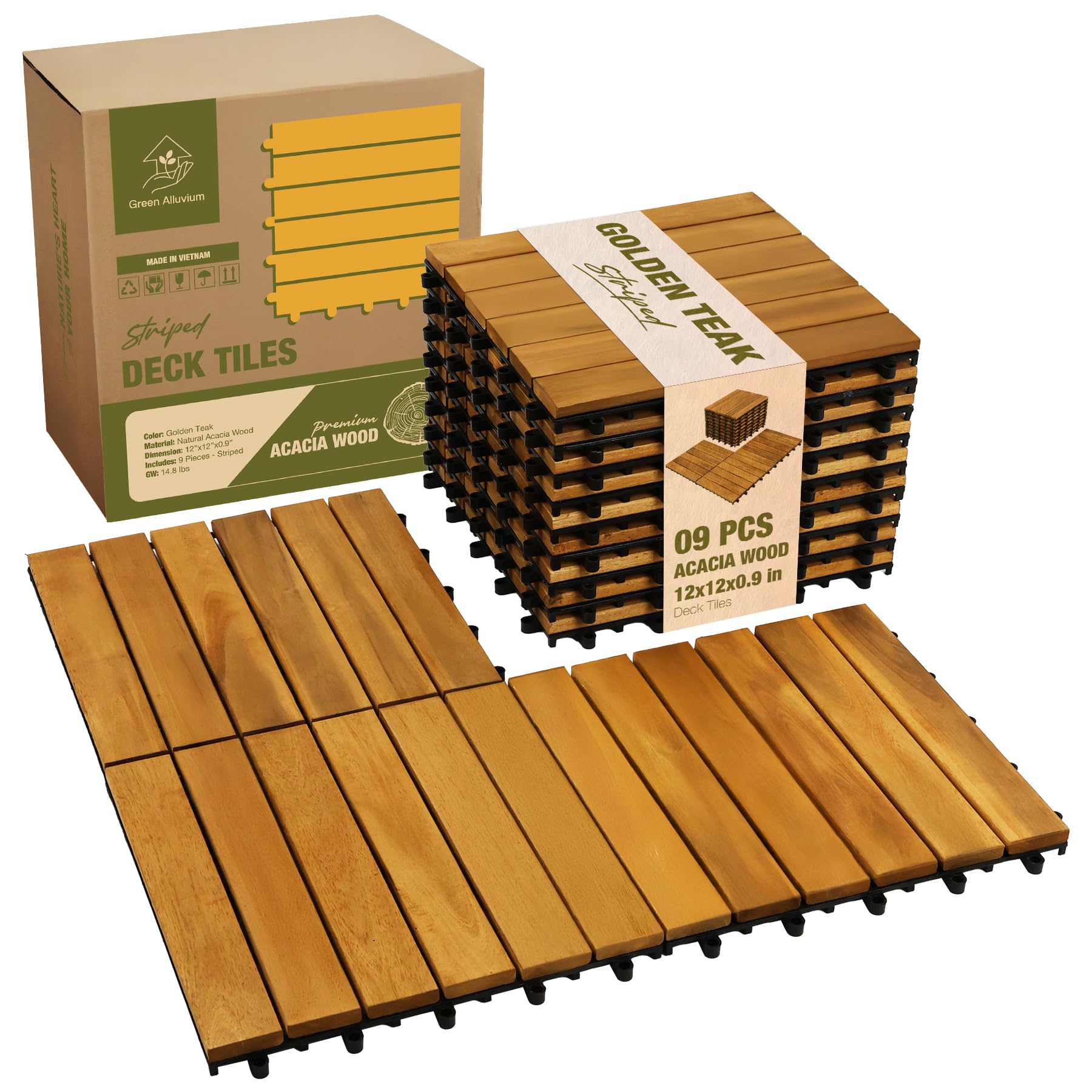
These GREEN ALLUVIUM tiles mirror the DECKIFY acacia construction closely — same 12 x 12 x 0.9 inch dimensions, same pre-finished linseed oil, same raised base drainage — but use a striped parallel slat layout rather than the crossed pattern. The striped arrangement is less decorative and more closely mimics traditional deck planks, which makes it a better match for spaces where you want the flooring to recede visually rather than call attention to itself.
The interlocking base clips together by hand without adhesive or nails, and the tiles pull apart easily for storage or rearrangement. Customer feedback highlights the easy assembly — multiple reviews mention installing several boxes in under an hour. The 466-lb distributed weight capacity matches standard patio furniture loads, and the wood finish arrives polished and ready for immediate use with no sealing step required.
The same acacia maintenance requirement applies: the linseed oil will degrade under continuous exposure, and annual re-oiling will keep the wood from drying out. One customer noted that fitting the tiles around an edge requires cutting a full tile width because the interlocking clips run along all four sides; partial cuts can leave exposed clip loops. Plan your layout carefully before cutting to avoid wasted tiles.
Why it’s great
- Striped parallel slat layout looks cleaner for traditional deck aesthetics
- Pre-finished with linseed oil — install straight out of the box
- Snap-together assembly with easy removal for restacking or storage
Good to know
- Edge cutting wastes a full tile if clips are exposed
- Annual oiling required to prevent sun drying and cracking
6. VEVOR 54 Sq. Ft. Plastic Interlocking Deck Tiles, Dark Brown

This VEVOR set delivers 54 sq. ft. of coverage from 56 individual PP resin tiles, making it the most economical way to cover a large patio or porch in one order. Each tile measures 11.6 x 11.6 x 0.8 inches and uses a quick-connect design that snaps together like large puzzle pieces. The surface is molded with an anti-slip coating and drainage gaps that channel water away quickly, and the 440-lb load capacity is sufficient for typical patio furniture, grills, and foot traffic.
The high-density PP material is completely waterproof and does not absorb moisture, so mold and rot are non-issues even in consistently wet climates. Customer feedback includes a notable real-world use case: one buyer placed these tiles under a hot tub on a wood deck to create airflow and prevent moisture damage to the underlying deck boards. The tiles can be cut with standard tools to fit irregular shapes, and the cross-patterned backing adds impact resistance without increasing weight significantly.
The trade-off is tactile. PP resin does not replicate the warmth or wood grain of acacia or composite tiles — it looks and feels like plastic, especially under bare feet on a hot afternoon. The snap-together fit is secure enough for everyday use, but individual tiles may come apart if the set is dragged across the ground rather than lifted. For purely functional spaces like equipment pads, garage floors, or rental patios where aesthetics are secondary, this is a cost-effective solution with real longevity.
Why it’s great
- Generous 54 sq. ft. coverage in a single box
- Full waterproof construction — no moisture damage ever
- 440-lb load capacity with anti-slip grooved surface
Good to know
- Plastic surface does not look or feel like real wood
- Tiles can separate when dragged rather than lifted
7. Yaheetech 55-Piece Fir Wood Interlocking Deck Tiles

The Yaheetech 55-piece set uses natural solid fir wood slats attached to a polypropylene interlocking base. The fir wood is kiln-dried for humidity resistance, and the grooved slat surface provides adequate slip protection. Each tile covers a standard 12 x 12 inch footprint and snaps together with adjacent tiles through the PP base clips, allowing straightforward installation on any hard surface, including cement, existing wood subfloors, and even carpet.
Customer feedback highlights the appealing light reddish-brown color and the easy assembly — one user covered approximately 510 sq. ft. using 32 boxes. The tiles can be cut to fit around posts and railings, and the screws on the base are removable if you need to secure cut pieces. Multiple reviews note that the wood looks premium for the investment level, especially after applying a sealant.
The fir wood is softer than acacia and the PP base uses fewer attachment points, so the tiles are best suited for low to moderate foot traffic. Several customers explicitly recommend treating the wood with a sealant at least twice per year if used outdoors, because untreated fir will decompose and crack when exposed to sustained moisture. This is a budget-conscious choice for temporary installations, seasonal patios, or covered porches where the wood stays dry. For full-exposure decks that need to endure rain directly, the composite or acacia options above provide significantly better longevity without extra maintenance steps.
Why it’s great
- Large 55-piece set covers big areas at a low per-sq-ft cost
- Fir wood provides a natural grain appearance
- Interlocking PP base is quick to snap together and cut
Good to know
- Fir is soft and requires annual sealant for outdoor moisture protection
- PP base uses fine staples — not as rigid as composite grid systems
FAQ
Do artificial deck tiles need to be sealed or oiled every year?
Can I install interlocking deck tiles directly on grass or dirt?
How do I cut deck tiles to fit around posts and corners?
Final Thoughts: The Verdict
For most users, the best artificial decking winner is the NewTechWood UltraShield in Canadian Maple because the polymer-coated composite resists fading and warping without annual maintenance, and the four-way clip system creates a stable surface that stays aligned over multiple seasons. If you want the natural warmth of solid wood, grab the DECKIFY Acacia Crossed tiles and commit to a yearly oil session. For covering a large patio on a tight budget, nothing beats the per-square-foot value of the VEVOR 54-Piece PP set.