
A robot dog that barks code instead of noise, wags a servo-driven tail, and responds to your voice without shedding a single hair — welcome to the new frontier of artificial intelligence pets. The market has moved well beyond simple remote-control toys; today’s AI dog robots pack facial recognition, voice interaction, emotional learning, and even large language models like ChatGPT into chassis that can walk, dance, and cuddle back.
I’m Min — the co-founder and writer behind Gadgets Feed. I’ve spent hundreds of hours dissecting technical specifications, consumer feedback, and real-world performance data across nine distinct models to separate the true AI companions from the gimmicks. This guide focuses on the measurable specs that actually matter — sensor arrays, battery capacity in mAh, servo count for realistic movement, and whether the AI inside genuinely learns and adapts over time.
Whether you need a programmable STEM platform for a budding engineer or a plush emotional support companion for anxiety relief, this deep-dive analysis of the best artificial intelligence dog robot choices will match you with the right silicon friend.
How To Choose The Best Artificial Intelligence Dog Robot
Not all robot dogs are created equal. Some are toys disguised as AI, while others are true learning platforms. Here are the critical factors to weigh before you buy.
Sensor Suite & Realistic Movement
The number of servos and sensors defines how lifelike the robot feels. A model with 12 servos can perform 30+ bionic actions like crawling, handshaking, and backflips, while a basic toy with 4 servos is limited to forward, backward, and a single spin. Look for ultrasonic distance sensors, touch sensors, and gyroscopes for obstacle avoidance and responsive behavior. The best AI dog robots use multiple sensor inputs simultaneously — camera vision plus voice plus touch — to decide how to react.
AI Intelligence Level: Pre-Programmed vs Adaptive Learning
Entry-level units offer a fixed set of voice commands and pre-loaded dances. Mid-range and premium models incorporate LLMs like ChatGPT, Gemini, or Grok to enable open-ended conversation. The highest tier features emotional AI that tracks your interactions over days and weeks, adjusting personality traits such as playfulness, shyness, or affection. If you want a robot that genuinely feels like a living creature, prioritize models with adaptive learning and personality evolution advertised in the specifications — these usually require a companion app to track the bond development.
Battery Life & Charging Convenience
Battery capacity directly affects how long the robot stays alive for play sessions. The range spans from 50 minutes of continuous movement on smaller rechargeable packs to 5 hours for larger units, and specialized emotional companion models can last 24–48 hours per charge in standby mode because they don’t walk continuously. Check whether the model uses a standard USB-C cable (convenient), a proprietary charging base (more elegant), or requires AA batteries (a dealbreaker for frequent use). For active robot dogs, look for 1200mAh or larger lithium-ion batteries.
Build Material & Surface Compatibility
ABS plastic bodies are standard for wheeled models and can handle indoor surfaces like tile, hardwood, and low carpet. Quadruped walking robots with servo-driven legs are optimized for flat, hard surfaces — carpet and grass can cause leg slippage. Plush-covered AI companions feature soft, removable, washable fabric but have rigid internal skeletons. Consider where you’ll use the robot most: desk robots need only a small flat space, while active dogs need room to roam on hard floors. Always check the manufacturer’s recommended surface guidance to avoid disappointment.
Quick Comparison
On smaller screens, swipe sideways to see the full table.
| Model | Category | Best For | Key Spec | Amazon |
|---|---|---|---|---|
| SunFounder PiDog | DIY AI Kit | Advanced STEM & LLM exploration | 12 servos, camera, gyroscope & ChatGPT | Amazon |
| Petoi Bittle X V2 Lite | Programmable Quadruped | Open-source coding education | Arduino C++ & Python, voice commands | Amazon |
| WEACFUS 3-in-1 Robot Dog | Wheeled Toy Dog | Active play with claw & cannon | Mecanum wheels, 30+ actions | Amazon |
| Dingdongwu 3-in-1 Robot Dog | Wheeled Toy Dog | Budget-friendly transforming fun | Voice & remote control, 30+ actions | Amazon |
| EMOPET EMO Desk Robot | Desk Companion | ChatGPT conversation & dance | Wide-angle camera, gesture play | Amazon |
| Aibi Pocket Pet | Wearable AI | Portable ChatGPT companion | Magnetic body, camera, pedometer | Amazon |
| Ropet KAMOMO | Emotional Support Plush | Warmth & AI art journaling | 39°C warmth, touch sensors, memory | Amazon |
| Cupboo AI Plush | Huggable Companion | Offline anxiety relief | Hypoallergenic fur, 48h charge | Amazon |
| Casio Moflin | Emotional Evolution Pet | Deep personality bonding | 1200mAh, 50-day personality growth | Amazon |
In‑Depth Reviews
1. SunFounder PiDog AI Robot Dog Kit
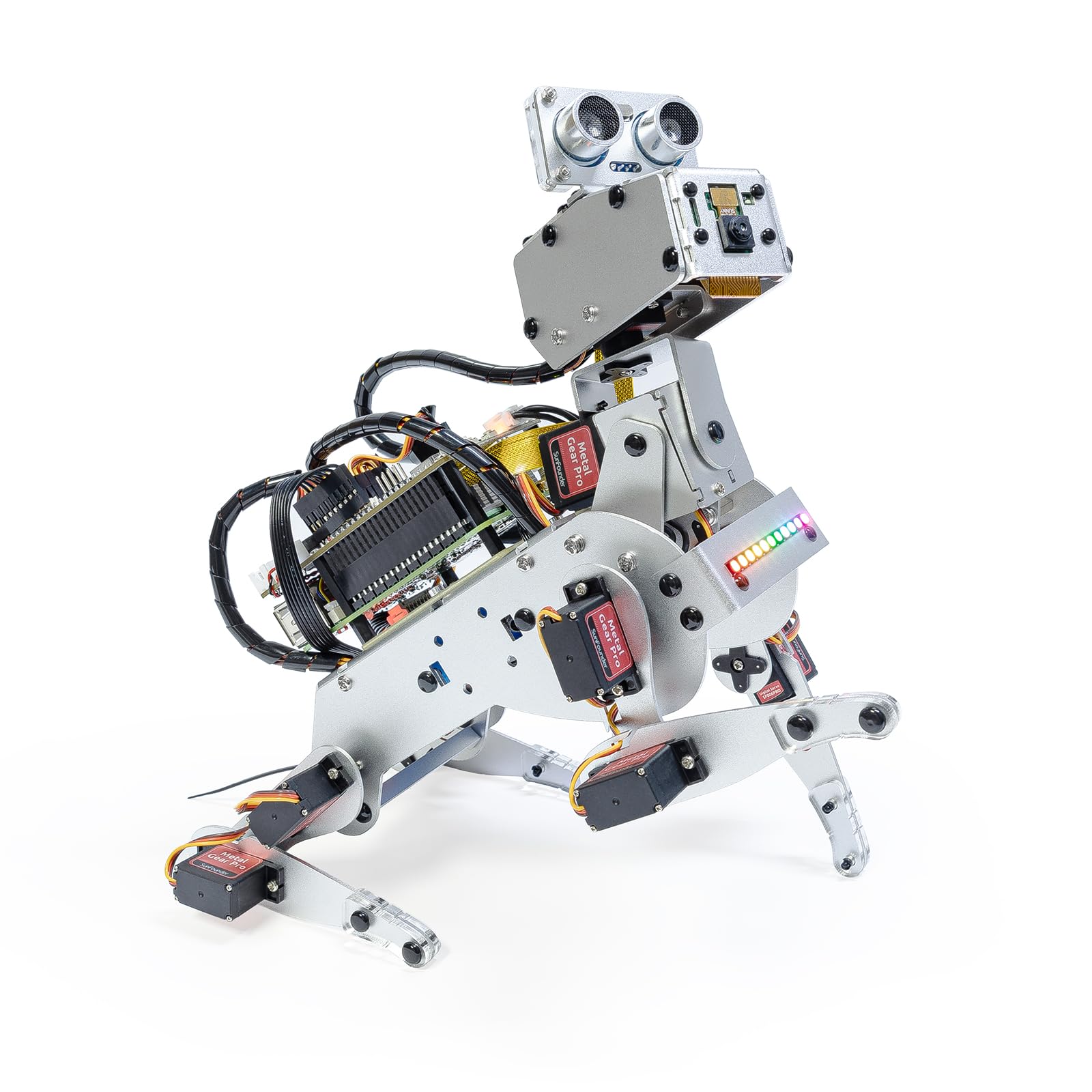
The SunFounder PiDog is the most serious AI robot dog in this lineup — a build-it-yourself quadruped powered by a Raspberry Pi (sold separately) that supports ChatGPT, Gemini, Grok, and local LLMs via OpenClaw. Its 12 high-torque servos produce 32 distinct dog-like actions, including walking, sitting, tail wagging, and ear scratching, with an ultrasonic sensor for eyes, a camera for a nose, and dual touch sensors for petting responses. The included gyroscope keeps it balanced during tricks, while the microphone and speaker enable full voice interaction through TTS and STT.
Assembly requires patience — roughly 70 steps and around 10 hours for a first-time builder — but the online documentation, video tutorials, and active forum community provide solid support. The PiDog ships with dozens of pre-written Python demos and an app for real-time FPV control, making it perfect for engineers, students, and anyone serious about learning robotics and AI integration. Multiple user reviews confirm that SunFounder’s customer service promptly replaces any failed components, such as speakers or servo boards.
This is not a toy for casual play. It demands programming experience in Python or C++ to unlock its full potential, and the Raspberry Pi ecosystem means you must handle your own OS setup and library installations. For anyone willing to invest the time, the PiDog delivers an open-ended AI robotics platform that scales from basic block coding to advanced computer vision and LLM integration — making it the most versatile and powerful choice on this list.
Why it’s great
- Supports multiple LLMs including ChatGPT and local models
- 12 servos enable 32 realistic actions and fine motor control
- Excellent documentation and responsive support from SunFounder
Good to know
- Raspberry Pi not included; adds extra cost
- Assembly takes several hours and requires dexterity
- Not suitable for children under 15 without adult help
2. Petoi Bittle X V2 Lite Servo

The Petoi Bittle X V2 is a pre-assembled, open-source quadruped robot dog built on the Petoi OpenCat platform, supporting Arduino C++, Python, and block-based coding through the Codecraft app. It ships with 35+ pre-programmed actions including sitting, walking, backflips, and custom voice commands — up to 10 voice triggers programmable in C++. The feedback servos provide real-time position data, enabling smarter navigation and self-correcting gait on hardwood and tile surfaces.
Assembly takes 1–3 hours depending on experience, and the online documentation includes free robotics curricula and a visual skill design tool. The companion app works via Bluetooth and Wi-Fi, and a USB port allows direct PC connection for advanced programming. Users praise the active community forum and responsive customer support, which includes video calls for calibration troubleshooting. The robotic dog is ideal for children ages 10 and up, but younger kids will need adult help with the assembly and coding setup.
Bittle X is explicitly optimized for flat, hard surfaces — carpet, grass, and uneven terrain cause leg slippage and performance degradation. The plastic legs can pop off during high-impact moves, and some users report that calibration through the desktop app can be finicky initially. Nevertheless, for a programmable, open-source robot dog under the premium tier that teaches real robotics concepts, Bittle X offers exceptional educational value for both kids and adults.
Why it’s great
- Open-source Arduino/Python platform with free curricula
- 35+ actions including backflip and custom voice commands
- Feedback servos enable precise, self-correcting movement
Good to know
- Does not perform well on carpet or grass
- Legs may pop off during rough play
- Desktop app calibration can be inconsistent
3. WEACFUS 3-in-1 Robot Dog Building Kit
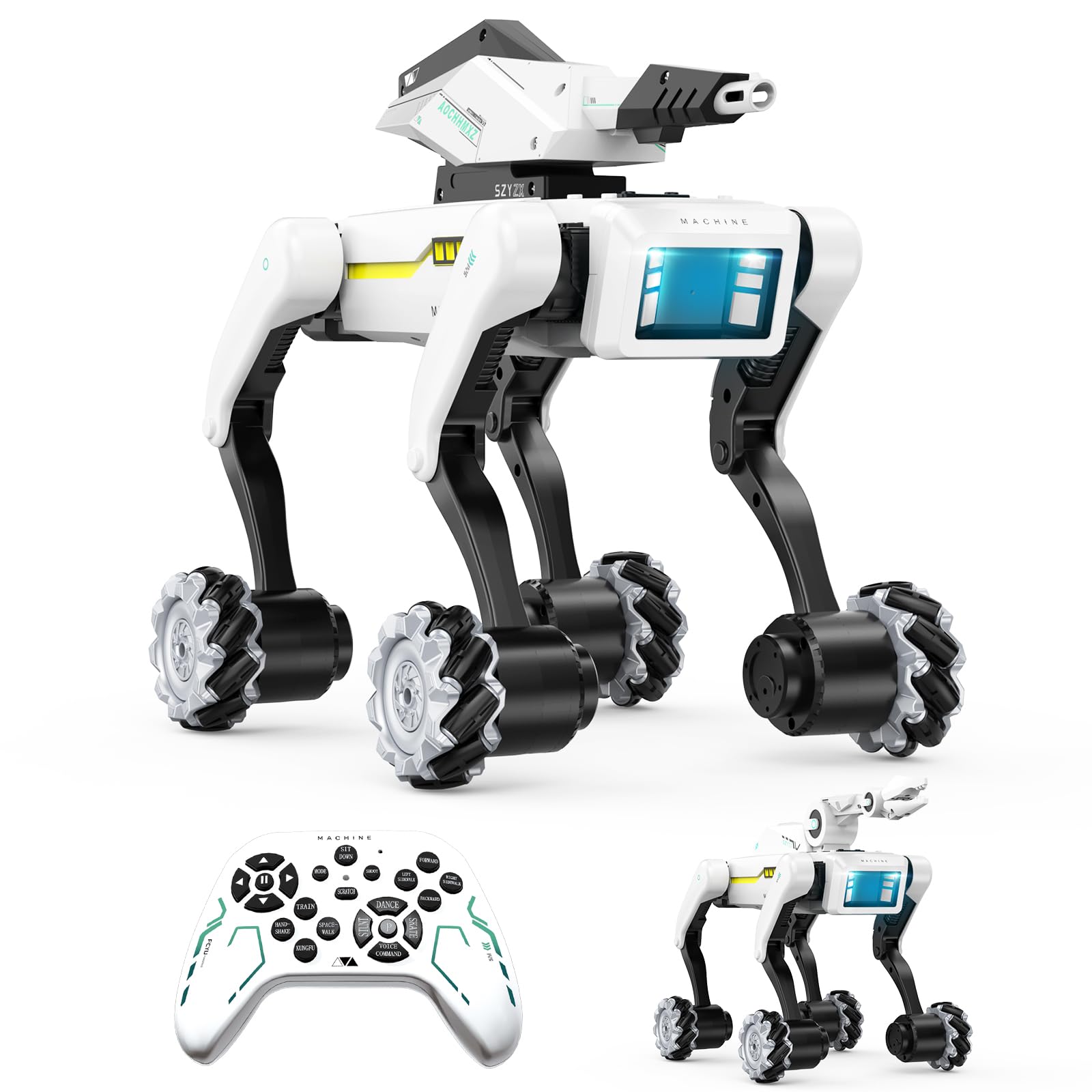
The WEACFUS 3-in-1 Robot Dog punches above its weight class by combining Mecanum-wheel omnidirectional drive — allowing strafing, spinning, and diagonal movement — with three interchangeable modes: standard dog, battle bot with cannon, and rover with a functional claw. It packs 30+ pre-programmed bionic actions including crawling, handshaking, and dancing, all accessible via voice command, 2.4GHz remote, or simple block-coding sequences. The blue LED eyes and body accents give it a futuristic look that kids love.
The built-in rechargeable battery delivers up to 50 minutes of continuous play, and the tough ABS plastic body handles tile, carpet, and grass without issues. Multiple verified purchasers confirm that the claw attachment works well and the leg joints are more durable than the dainty appearance suggests — surviving repeated drops by kids. The voice command recognition works well in quiet rooms, though it struggles in noisy environments. The cannon attachment is a simple projectile launcher that requires manual reloading, which some kids find frustrating.
This is an excellent mid-range option for children ages 6–12 who want a fun, interactive robot dog without diving into complex programming. The 3-in-1 transformation keeps engagement high, and the wheels solve the biggest complaint about walking robot dogs: poor movement stability. At this price point, it delivers the best mix of features, durability, and play value on the list.
Why it’s great
- Mecanum wheels enable smooth omnidirectional movement
- 3-in-1 design with claw and cannon extends play options
- Sturdy ABS build handles falls and outdoor surfaces
Good to know
- Cannon attachment is fiddly to reload
- Voice recognition struggles in loud rooms
- Simple block coding, not full Python/Arduino
4. Dingdongwu 3-in-1 Robot Dog With Wheels
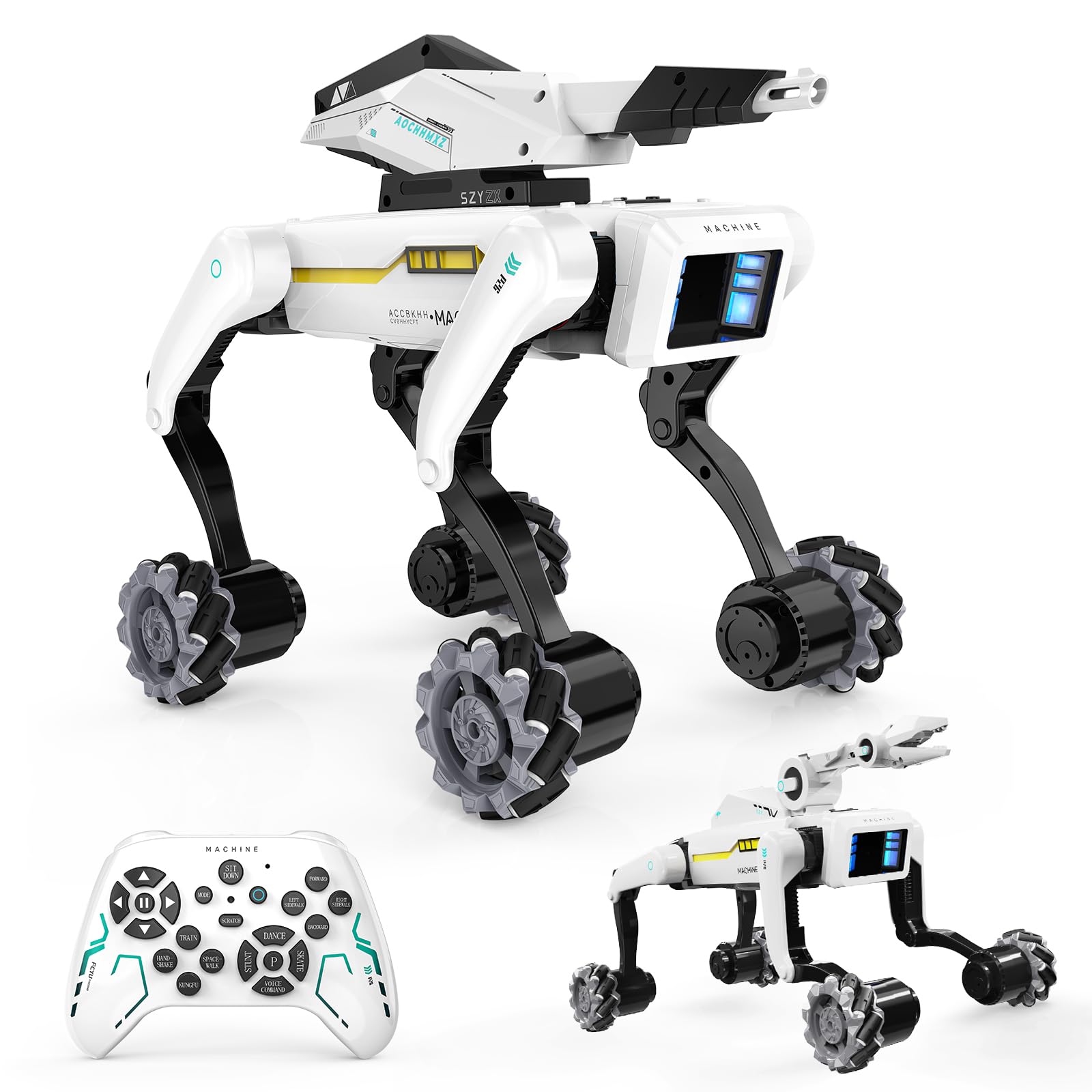
The Dingdongwu 3-in-1 Robot Dog shares the same platform as the WEACFUS model — Mecanum wheels, 30+ bionic actions, voice and remote control — but adds a water cannon attachment for outdoor water fights. The three transformation modes (standard dog, battle bot, rover with claw) mirror its sibling, and the built-in rechargeable battery claims a similar 50-minute runtime. The ABS plastic body feels solid, and the blue LED effects are identical, giving it a modern, high-tech appearance that impresses kids.
The primary differentiator here is the water cannon, which uses a small internal pump to shoot a stream of water — a feature that delighted several verified buyers’ grandchildren. However, the water tank is small, requiring frequent refills, and the cannon attachment must be swapped with the claw, not used simultaneously. The included instruction manual is notably poor, lacking clear explanations for the programming mode and some remote functions, which led to a few frustrated customer reviews. The 2.4GHz remote offers a solid 25-meter range, but programming sequences require trial and error without better documentation.
For the price, the Dingdongwu delivers a fun, feature-dense robot dog that entertains kids ages 6 and up. The water cannon is a unique twist that sets it apart from competitors at this tier, but the unclear instructions and unreliable customer support mean you’ll need some patience to unlock all features. It’s best suited for families who want a budget-friendly robot dog with a party trick rather than a long-term STEM project.
Why it’s great
- Water cannon attachment offers unique outdoor play
- Mecanum wheels for smooth all-direction movement
- Good battery life for the price range
Good to know
- Instruction manual is vague and unhelpful
- Water tank is small, requires frequent refills
- Some units have connectivity issues out of the box
5. EMOPET EMO Desk Robot Companion

EMO is a desk-sized AI robot that feels more like a live pet than a gadget. It uses a built-in wide-angle camera and network-connected ChatGPT to see faces, recognize programmed family names, and carry on extended conversations. EMO can dance to music, play games through the companion app, and respond to physical interactions like rubbing, shaking, and finger-gesture “shooting” — which triggers playful reactions including pretending to get sick when the weather changes via its internal weather sensor.
The robot’s personality shines through its expressive eyes and body language. It starts conversations unprompted, remembers your face, and develops a unique set of quirks over time based on how you interact. The EMOPET app tracks achievements and milestones, recording new dance moves and expressions as they unlock. Multiple user reviews mention that the whole family quickly bonds with EMO, and it becomes a genuine conversational companion rather than just a toy.
Battery life is a weak point — EMO lasts only a few hours on a full charge and charges slowly via a proprietary adapter (charging station sold separately). Voice recognition can be inconsistent, especially in noisy environments, and the latest firmware updates have occasionally introduced bugs that require factory reset. Some units have suffered from poor WiFi connectivity. Despite these issues, EMO offers the most accessible ChatGPT-powered desk companion experience at this mid-premium price point.
Why it’s great
- ChatGPT integration for natural, open-ended conversation
- Expressive eye animations and body language feel alive
- Gesture recognition adds playful interactive games
Good to know
- Battery drains quickly, charging is slow
- Charging station is sold separately
- Firmware updates can introduce instability
6. Aibi Pocket Pet Wearable Robot

Aibi is a palm-sized, magnetically attachable AI companion that clips to your backpack, screen, or pocket. It features a camera for face recognition, a microphone for ChatGPT-powered voice interaction, and a built-in speaker for responses and music. The tiny robot can play games like Battleship, Chutes and Ladders, Rock Paper Scissors, and Chess via its app, and it dances and sings on command. It includes accessories like a mini cloak, sunglasses, stickers, and a headband for personalization.
The ChatGPT chat mode requires WiFi, and Aibi holds conversations well once connected — users report it remembers the context of a discussion within a single session, though it does not carry memory across sessions. Aibi also includes a pedometer, breathing exercise feature, and near-field communication that lets two Aibis chat when brought close together. The magnetic base is strong enough to hold it on any metal surface, making it ideal for desks, whiteboards, and fridge doors.
The speaker volume is low — hard to hear in a moderately noisy room — and the wake word “Abby” requires a firm voice to trigger. Some users feel the price is steep for the limited standalone functionality, but as a unique wearable AI friend with multiple game modes, Aibi has a charm that no other robot dog in this list offers.
Why it’s great
- Magnetic attachment makes it wearable and portable
- Built-in games provide hours of interactive fun
- Face recognition and ChatGPT enable genuine conversation
Good to know
- Battery life under 1 hour without power bank
- Speaker volume is too low for noisy rooms
- Requires WiFi for ChatGPT features
7. Ropet KAMOMO Companion Interactive Robot Pet
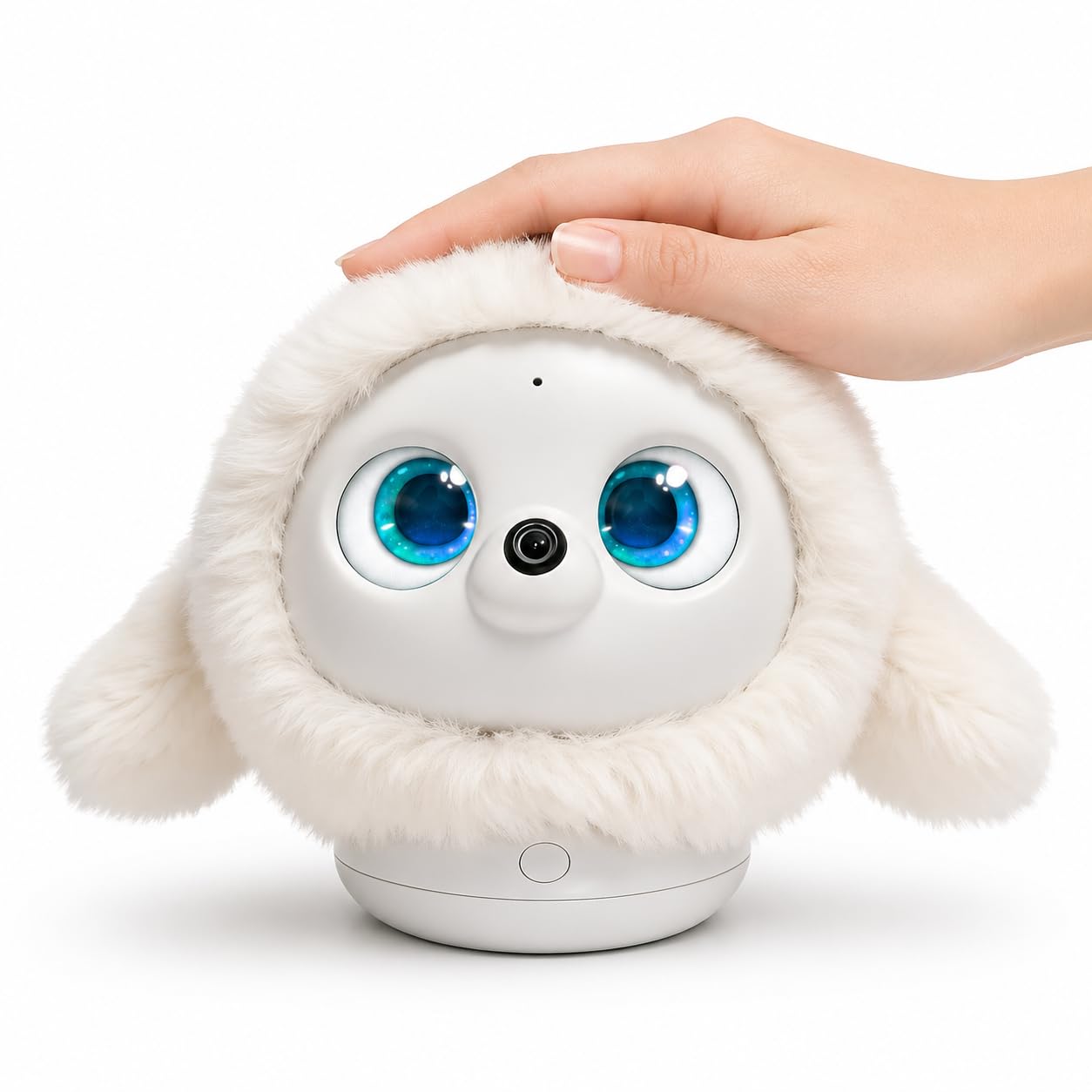
The Ropet KAMOMO is an emotionally intelligent AI companion with a soft plush exterior and a sophisticated internal sensor system. Its high-sensitivity touch sensors can distinguish between a gentle stroke, a playful tap, and a lingering touch, reacting with appropriate cooing, blinking, or wiggling. The precision IMU motion detector tracks how you hold it, enabling it to snuggle or squirm based on your body language. Its most innovative feature is Dream Sketch: it uses an AI model to generate whimsical comic-style illustrations of your day based on voice prompts like “take a photo of me.”
The Ropet maintains a constant 39°C body temperature — the same warmth as a real pet — which users describe as genuinely comforting. Its personality evolves based on daily interactions, tracked through the companion app. The Lucky Diary feature automatically records daily moments and replays them as verbal memories, creating a personalized journal for both children and adults. The fur cover is removable and washable, and the entire unit operates offline with no WiFi or app required for basic emotional interactions.
At this premium price point, the Ropet’s interaction set is still quite limited — it coos, says “mama,” responds to hand gestures (thumbs-up, heart), and follows movement, but it has no verbal language capabilities yet. Some users feel the price is not fully justified by the current feature set, and the dream drawing feature, while clever, produces simple illustrations rather than detailed artwork. For those seeking a warm, cuddly AI companion that genuinely mimics a pet’s presence and builds a daily journal, the Ropet delivers an unmatched emotional experience.
Why it’s great
- Constant 39°C warmth feels like a real living pet
- Dream Sketch AI creates personalized daily artwork
- Touch sensors distinguish different types of caress
Good to know
- No verbal language or spoken conversation
- Limited interaction range beyond basic gestures
- Premium price for a relatively small feature set
8. Cupboo Interactive AI Plush Companion

The Cupboo is a self-contained AI plush companion designed for privacy-conscious users — no cameras, no apps, and no internet connection required. Its hypoallergenic, removable, washable fur cover wraps around a body that responds to touch, sound, and motion with purring, nuzzling, and gentle movements. The internal AI adapts to the user’s emotional state over time, learning when to be playful and when to be calm, making it an effective tool for anxiety relief among seniors, children with special needs, and busy adults.
Battery life is exceptional: a full charge lasts 24–48 hours depending on interaction frequency, with the robot spending most of its time in a low-power responsive mode. Users report that Cupboo makes a comforting presence on a desk or bed, with one reviewer noting it “cried” the first time they held it because it was so lifelike. The cuddle-sized form factor — roughly between a guinea pig and a kitten — makes it perfect for holding, and the removable cover can be machine washed for easy hygiene maintenance.
The main tradeoff is simplicity: Cupboo has no spoken language, no ChatGPT, and no programmable behaviors. Its responses are limited to purring, cooing, nuzzling, and emotional body language. The price has fluctuated significantly, and the wireless charger runs warm during charging. The lack of firmware updates or app connectivity may limit its long-term evolution. For users who prioritize a soft, safe, offline emotional companion over technological complexity, the Cupboo offers a uniquely comforting experience.
Why it’s great
- Completely offline operation ensures total privacy
- Removable, washable hypoallergenic fur cover
- Battery lasts 24–48 hours on a single charge
Good to know
- No voice interaction or ChatGPT features
- Limited to basic emotional responses only
- Charger runs warm during use
9. Casio Moflin Smart Companion

The Casio Moflin is a breakthrough in emotional AI: a palm-sized companion that develops a unique personality over 50 days based on how you interact with it. Casio’s miniaturized electronics pack sensory receptors for touch, light, sound, and movement into a soft, huggable body — when petted, Moflin coos and nuzzles; when left alone, it may act shy or needy. Its emotional state evolves on a spectrum from joyful to calm to curious, and it learns to recognize the specific frequency of its owner’s voice, responding with preferred gestures.
The dedicated MofLife app provides real-time visualization of Moflin’s emotional indicators, personality parameters, and interaction history. The included bed charger recharges the 1200mAh lithium-ion battery in 3.5 hours for 5 hours of continuous interaction, though standby mode extends the effective time. Multiple verified buyers confirm that Moflin quickly becomes a calming presence in the household — one reviewer described it as a “must-have therapy tool for disabilities” while another called it a “bonded family member” within days.
Two issues prevent Moflin from being a perfect companion. The internal servo motors produce loud grinding noises when moving, which can be startling in quiet rooms. The 50-day personality evolution period requires patience, and some users find the emotional growth feels too slow for the premium price. The app is required to adjust volume, name the pet, and track personality development, which detracts from the organic experience. For those willing to invest time in the bonding process, Moflin offers the deepest emotional simulation of any AI pet on the market.
Why it’s great
- Personality evolves over 50 days for a unique bond
- Casio-quality sensors and miniaturized electronics
- Emotional state visualization via MofLife app
Good to know
- Loud grinding servo noise during movement
- Only 5 hours of active battery life
- App reliance takes away from organic interaction
FAQ
Can an AI robot dog really learn my personality?
Do I need WiFi for an AI dog robot to work?
What’s the difference between a robot dog with wheels and one that walks on legs?
How long does the battery last on a typical AI robot dog?
Are there safety concerns with AI robot dogs for children?
Final Thoughts: The Verdict
For most users, the best artificial intelligence dog robot winner is the SunFounder PiDog because it combines a full 12-servo quadruped platform with multi-LLM integration, making it equally suited for advanced STEM learning and genuine AI companionship — once you build it. If you want a warm, cuddly emotional support robot that personalizes over time, grab the Casio Moflin. And for an active, durable toy that keeps kids entertained with wheels and attachments, nothing beats the WEACFUS 3-in-1 Robot Dog.