
That gritty, sandy, “something’s in my eye” sensation after LASIK is your cornea healing. The nerves cut during the procedure take months to regenerate, and until they do, your natural tear signal is broken — leaving you with chronic dryness that ordinary drops can’t fix. The wrong formula stings, blurs your vision, or evaporates too fast. The right one mimics your natural tear film, hydrates for hours, and protects the healing epithelium without preservatives that can delay recovery.
I’m Min — the co-founder and writer behind Gadgets Feed. I’ve spent hundreds of hours cross-referencing ophthalmologist guidelines, poring over ingredient lists, and analyzing real-world user reports to separate the tears that actually heal from the ones that just feel wet for five minutes.
Choosing the best artificial tears after lasik means prioritizing preservative-free formulas with lipids, hyaluronate, or electrolytes that actively support corneal nerve regeneration rather than just masking symptoms.
How To Choose The Best Artificial Tears After Lasik
The LASIK flap heals in days, but the corneal nerves can take six to twelve months to reconnect. During that window, your eyes don’t produce enough of the right tear components — lipids, mucins, and water — so you need an artificial tear that compensates for each missing layer. Picking the wrong formula can leave you with blurry vision, increased irritation, or a dependency on drops that wear off in minutes.
Preservative-Free is Non-Negotiable
Preservatives like benzalkonium chloride (BAK) damage epithelial cells and can accumulate in the tear film with repeated use. After LASIK, your cornea is already vulnerable — BAK can slow healing and worsen irritation. Every drop you use in the first three months must be labeled “preservative-free.” Single-use vials are the gold standard because they contain zero chemical stabilizers, but newer multi-dose bottles with mechanical filters (like the ABAK system) are also acceptable.
Match the Formula to Your Tear Deficiency
Post-LASIK dry eye usually involves a deficient lipid layer (tears evaporate too fast) or an aqueous deficiency (not enough water). Aqueous drops with carboxymethylcellulose or propylene glycol relieve immediate dryness but evaporate quickly. Lipid-containing drops with castor oil or mineral oil seal the tear film to prevent evaporation. Hyaluronic acid formulas hold water like a sponge, keeping the eye hydrated for hours. The smartest strategy — and one many ophthalmologists recommend — is using a thinner aqueous drop during the day and a thicker lipid-based gel at night.
Check the Electrolyte Balance
Your natural tears contain precise concentrations of potassium, sodium, calcium, magnesium, and zinc — electrolytes that signal the corneal epithelium to stay healthy. Artificial tears that replicate this balance (called hypotonic or electrolyte-balanced formulas) actually nourish the surface cells rather than just wetting them. Brands that list “electrolyte balanced” or “hypotonic” on the label are mimicking the biological environment your healing cornea needs.
Quick Comparison
On smaller screens, swipe sideways to see the full table.
| Model | Category | Best For | Key Spec | Amazon |
|---|---|---|---|---|
| Refresh Optive Advanced | Premium | All-day hydration & lipid seal | Hydrocell + castor oil | Amazon |
| TheraTears Dry Eye Therapy 2-Pack | Premium | Preservative-free value twin pack | Electrolyte-balanced, 60 vials | Amazon |
| Blink Triple Care | Mid-Range | Lipid + HA for 10-hour relief | HA + lipid nano-emulsion | Amazon |
| Splash Pure PF | Mid-Range | Budget-friendly multi-dose HA | 0.6% Propylene Glycol + HA | Amazon |
| TheraTears Nighttime | Premium | Overnight gel therapy | Hypotonic gel, 30 vials | Amazon |
| Biotrue Hydration Boost | Mid-Range | Contact lens rewetting post-LASIK | HA + Electrolytes, 0.33 oz | Amazon |
| Refresh Classic | Budget | Budget single-use aqueous drops | Povidone, 30 vials | Amazon |
In‑Depth Reviews
1. Refresh Optive Advanced Lubricant Eye Drops
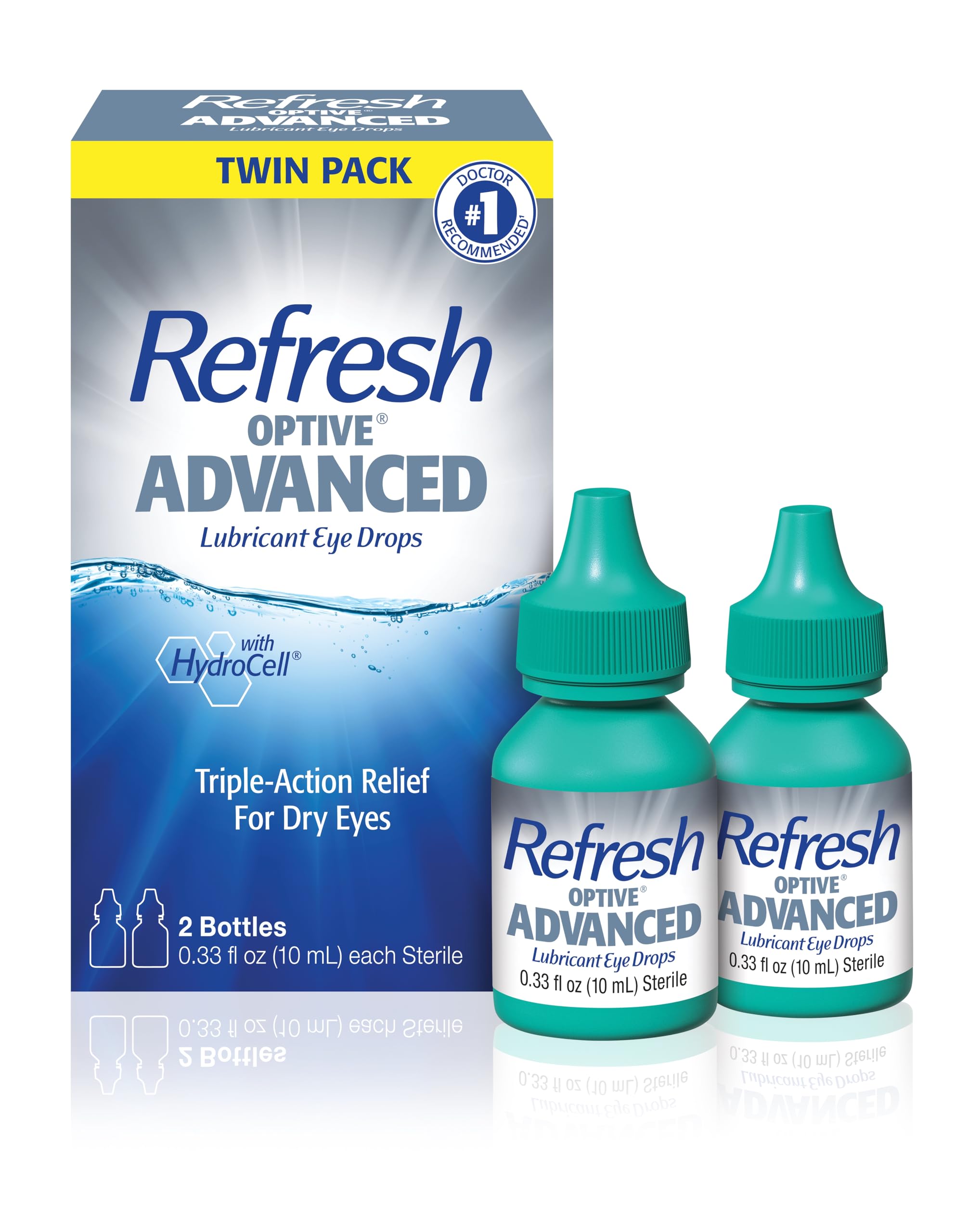
Refresh Optive Advanced uses Hydrocell technology to draw moisture to the corneal surface while castor oil prevents tear evaporation — a dual-action approach that directly addresses the post-LASIK problem of rapid tear breakup. The 0.33 oz multi-dose bottle delivers a measured drop without preservatives, and the combination of carboxymethylcellulose and glycerin creates a cushioning layer that keeps the eye comfortable between blinks.
Reviews consistently mention that it outperforms prescription-strength drops for severe dry eye without the cost or blur time. Users report lasting hydration through 8-hour workdays with screen use, which is the most common complaint in the first three months after LASIK. The bottle design allows precise drop control, and the formula is pH-balanced to match natural tears, reducing the sting that Artificial Tears After Lasik often cause.
The main trade-off is the price per ounce — it sits at the premium end of the market. Some users found the multi-dose bottle runs out faster than single-use vials, but the convenience of a single bottle in your pocket usually outweighs that concern. For most LASIK recovery plans, this is the drops you keep at your desk.
Why it’s great
- Triple-action relief — lubricates, hydrates, and seals tear film
- Hydrocell technology maintains corneal cell volume
- #1 doctor-recommended brand for post-surgical care
Good to know
- Premium pricing compared to basic aqueous drops
- Multi-dose bottle may feel wasteful when nearing empty
2. TheraTears Dry Eye Therapy 2-Pack
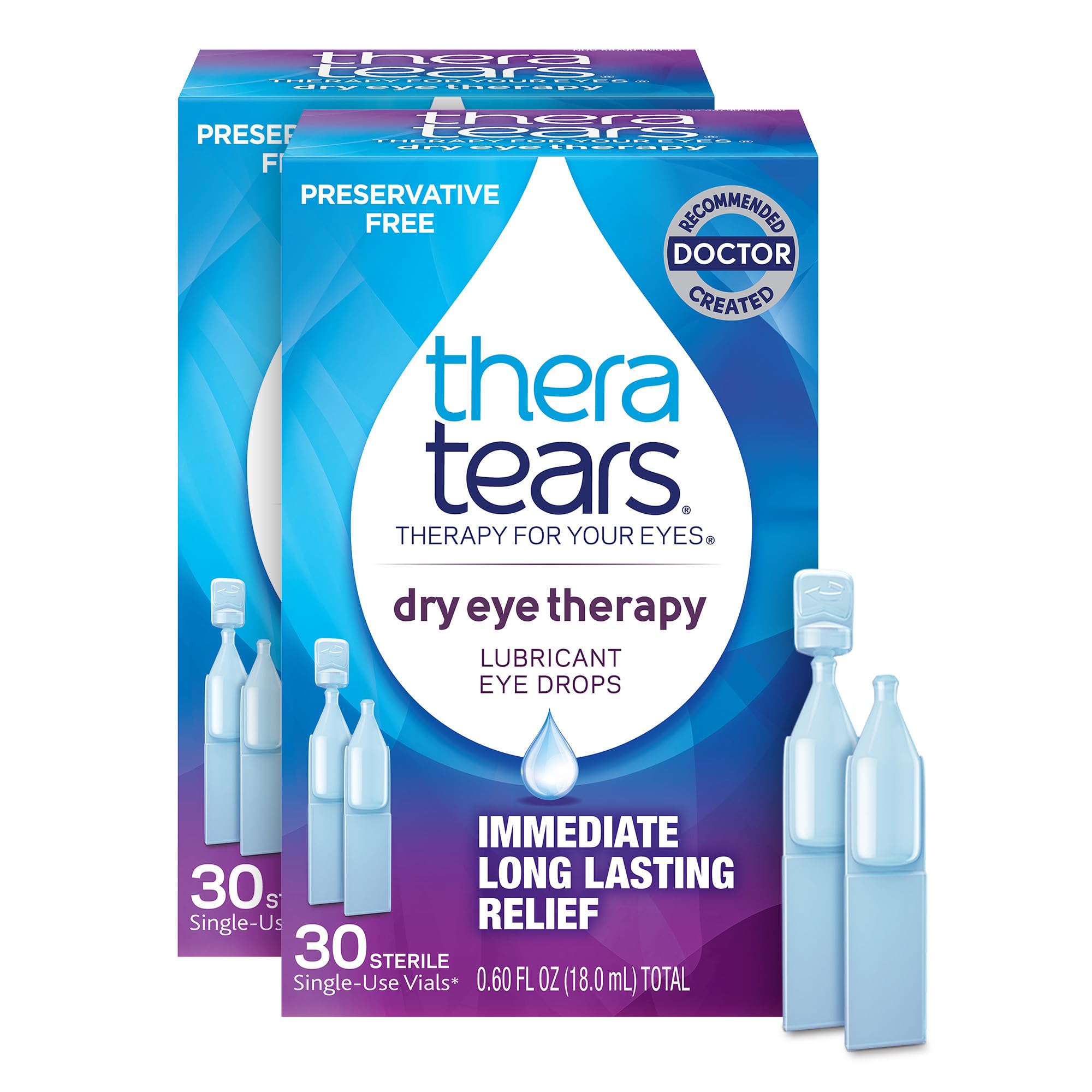
The TheraTears Dry Eye Therapy 2-Pack delivers 60 preservative-free vials with an electrolyte-balanced formula designed by an ophthalmologist after 18 years of research. The hypotonic solution contains OxyLytes — five vital electrolytes (potassium, sodium, calcium, magnesium, and zinc) that mimic the mineral composition of healthy human tears, which is critical for corneas that are healing their nerve connections.
Post-LASIK users specifically praise this formula for not burning on application and providing longer-lasting relief than competing brands. Each vial contains about three drops (enough for three uses if recapped carefully), and the twist-and-apply design keeps the tip sterile. The 2-pack provides roughly a month of daytime use, making it one of the most cost-effective single-use options on the market.
The downsides are minor but real — some users found the plastic vials require scissors to open cleanly, and the lack of a re-sealable cap means you can’t recap the vial after opening if you want to maintain sterility. Still, for the price-per-vial ratio and the science-backed electrolyte formulation, this is the smartest stock-up option for anyone early in recovery.
Why it’s great
- Electrolyte-balanced formula replicates natural tear chemistry
- 60 vials in a single purchase for multi-week supply
- Doctor-recommended brand with decades of dry eye research
Good to know
- Vials can be hard to open without scissors
- No re-sealable cap, sterile single-use only
3. Blink Triple Care Preservative Free
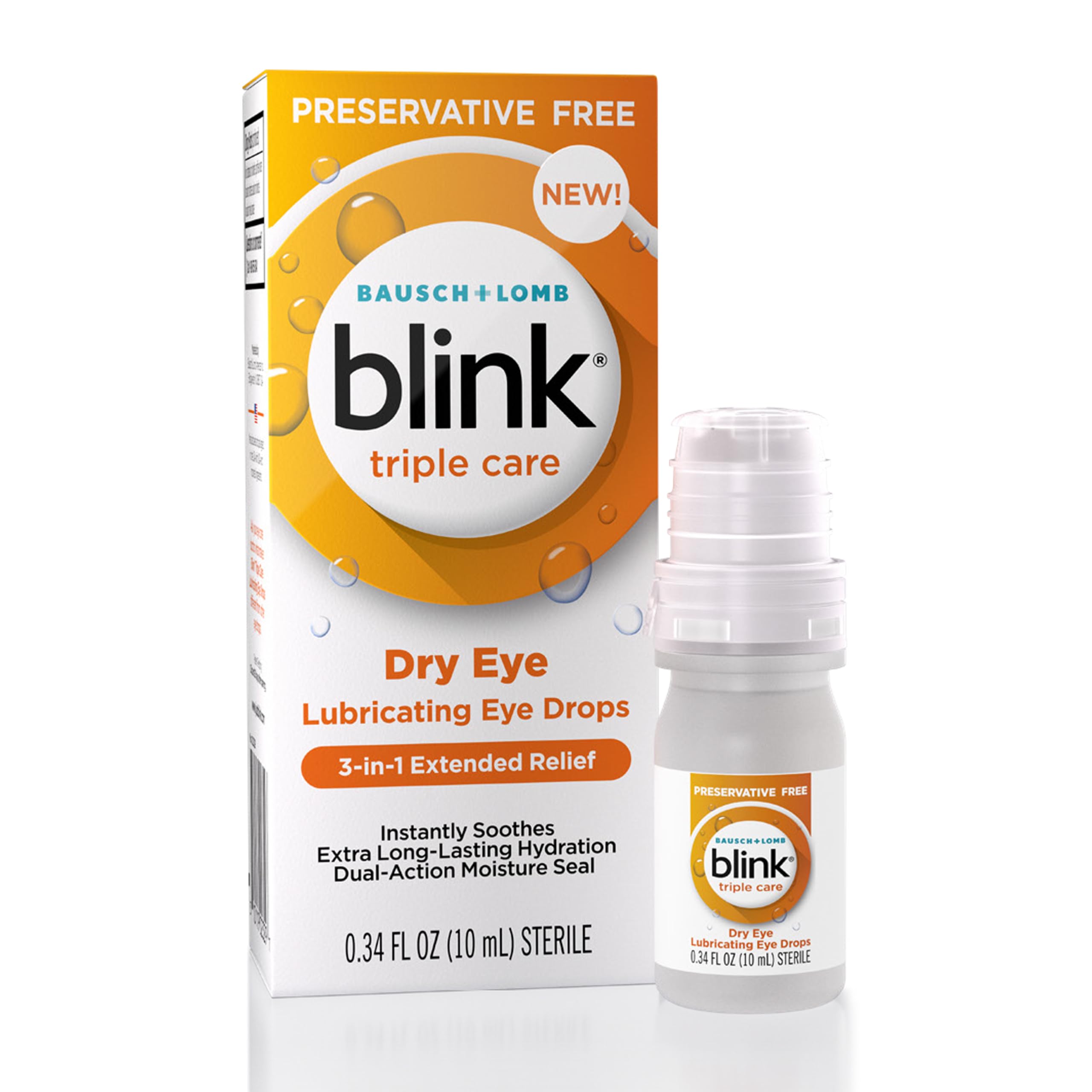
Blink Triple Care combines hyaluronic acid with a lipid nano-emulsion to deliver 3-in-1 relief — immediate soothing, long-lasting hydration, and a moisture seal that locks the tear film. The visco-elastic formula is engineered to thin and thicken with every blink: it stays fluid when the eye is open, then thickens when the eye closes to maximize hydration retention. Clinical data shows 93% of users reported relief for up to 10 hours after application.
For post-LASIK patients who need fewer applications during the day (especially those returning to screen-heavy jobs), this formula significantly reduces the need to carry drops everywhere. Users report it’s the most comfortable drop they’ve tried — zero sting, no heavy residue, and a smooth feel that mimics natural tears. The castor oil component addresses the lipid deficiency that often develops after flap creation.
The bottle design is the weak link — multiple reviews describe a permanently collapsing bottle that makes the last three-quarters of the product impossible to dispense. The tiny opening hole also requires a firm squeeze. If you can look past the packaging flaw, the formula itself is among the most advanced preservative-free multi-dose options available for LASIK recovery.
Why it’s great
- Clinically proven 10-hour relief reduces application frequency
- HA + lipid nano-emulsion for dual-layer tear support
- Visco-elastic formula works with blink mechanics
Good to know
- Bottle collapses permanently after ~10 uses, wasting product
- Difficulty dispensing drops due to tiny opening hole
4. Splash Pure PF Preservative-Free
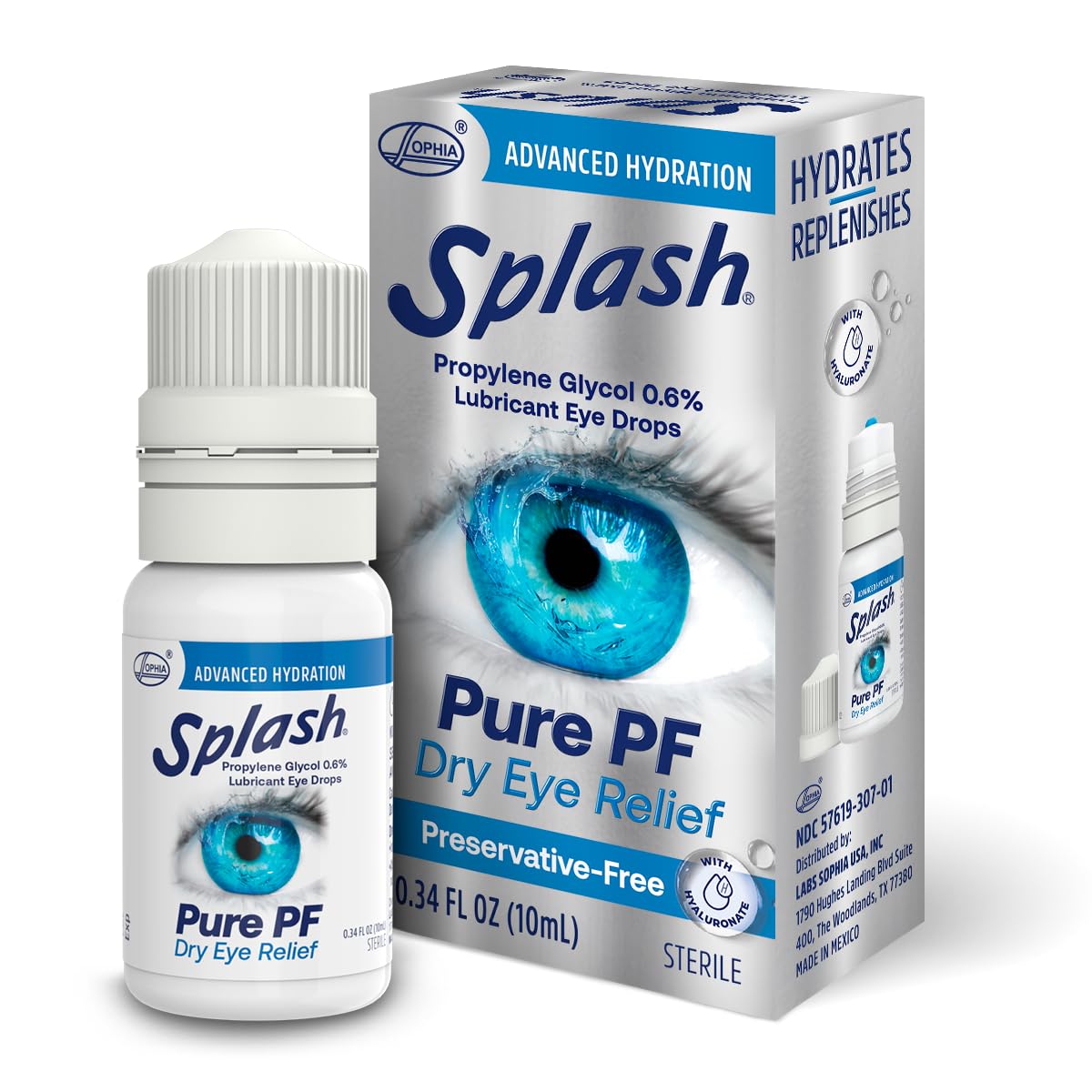
Splash Pure PF uses 0.6% propylene glycol combined with sodium hyaluronate (hyaluronic acid) to deliver extended hydration in a preservative-free multi-dose bottle. The 10 mL bottle is significantly larger than most single-use alternatives, and the cost-per-drop is among the lowest in the preservative-free market — a critical factor for LASIK patients who may be using drops six to ten times per day during the first month.
The formula is designed specifically for sensitive eyes — the hyaluronate helps retain moisture on the ocular surface, while the propylene glycol acts as a humectant to draw water into the tear film. Many users report it provides immediate relief without the sting or sticky residue that cheaper drops leave behind. The bottle’s short applicator tip gives better control than longer nozzles, reducing the risk of touching the tip to the eye.
Because this is a newer product in the category, there are fewer long-term reviews than established brands. Some users found it runs out faster than expected given the 10 mL volume, likely because propylene glycol-based drops require frequent reapplication. It also contains no lipid component — so if your primary issue is tear evaporation rather than aqueous deficiency, you’ll need a separate lipid-based drop for night use.
Why it’s great
- Excellent cost-per-drop value for high-frequency use
- Hyaluronate for deep moisture retention
- Short, controlled tip reduces contamination risk
Good to know
- No lipid content, so evaporation protection is limited
- Newer product with fewer long-term reviews
5. TheraTears Nighttime Dry Eye Therapy

TheraTears Nighttime is a hypotonic lubricant eye gel specifically formulated for overnight use — it’s thicker than daytime drops and designed to coat the corneal surface for up to eight hours. For LASIK patients, morning dryness is one of the most common complaints because the eyelids don’t fully seal during sleep, and natural tear production drops at night. This gel formula physically stays on the eye longer, preventing the “stuck eyelid” sensation that many wake up with.
Post-LASIK reviewers consistently note that this product eliminated their morning redness and irritation within days of use. The hypotonic electrolyte balance helps draw excess fluid out of the corneal tissue, reducing swelling that can occur after surgery while simultaneously lubricating the surface. Each single-use vial contains enough gel for two to three applications, though the gel consistency means it will blur vision for about 10 minutes after application — that’s expected for any nighttime gel.
The main drawback is the texture — some users find it leaves a crusty residue on eyelashes in the morning, and the gel can sting initially if you’re sensitive to carbomer-based formulas. It also requires rinsing makeup before use, as the gel can trap particles against the cornea. For anyone in the first six months of post-LASIK recovery, this is still the most effective overnight solution available.
Why it’s great
- Hypotonic gel reduces overnight swelling and dryness
- Electrolyte-balanced formula supports corneal healing
- Single-use vials maintain sterility for sensitive eyes
Good to know
- Blurs vision for 10 minutes after application
- Can leave crusty residue on eyelashes overnight
6. Biotrue Hydration Boost for Contacts

Biotrue Hydration Boost is the first preservative-free multi-dose contact lens rewetting drop, making it a unique option for post-LASIK patients who eventually return to contact lens wear — or for those who had PRK instead of LASIK and want drops that work with lenses. The formula contains hyaluronan (HA), antioxidants that protect HA from free radicals, and electrolytes to maintain corneal health during lens wear.
Laboratory data shows it provides up to eight hours of moisture on contact lenses, which is critical because post-LASIK eyes are more prone to lens dehydration and protein buildup. Users with hard contact lenses specifically report that this formula eliminates the burning sensation that other rewetting drops cause. The pH-balanced formula matches natural tear pH, so it doesn’t trigger the reflex tearing that can wash out the drop before it works.
The bottle design is a recurring complaint — the flexible plastic collapses when partially empty, making it difficult to extract the last third of the product. Users with arthritis in their hands find it especially hard to squeeze. The 0.33 oz bottle is also smaller than it appears in photos, so heavy users may need to reorder frequently. Still, for the specific use case of rewetting contacts post-LASIK, this remains the most advanced preservative-free option.
Why it’s great
- Specifically designed for contact lens rewetting post-surgery
- HA + antioxidant formula protects against deposit buildup
- pH-balanced for zero stinging on sensitive eyes
Good to know
- Bottle collapses when half-empty, wasting product
- Difficult to squeeze for users with hand arthritis
7. Refresh Classic Preservative-Free

Refresh Classic is the original preservative-free single-use artificial tear, relying on povidone (a gentle lubricant) to provide quick, no-fuss relief without additives. At roughly 40 cents per vial, it’s the most budget-friendly option in this lineup — and one that ophthalmologists have been recommending for decades because it works consistently. For post-LASIK patients who need drops multiple times daily for months, this makes long-term compliance financially realistic.
Users report that the formula wets the eye instantly and effectively, with many describing it as “the boring original that never fails.” The 30-count box is compact and portable, and each 0.01 oz vial contains enough for one application per eye. The povidone-based formula is thinner than lipid-containing drops, so it won’t blur vision — a major advantage for daytime use at work or while driving.
The biggest limitation is that it offers only basic aqueous lubrication — there’s no lipid component, no hyaluronic acid, and no electrolyte balancing. For LASIK patients with moderate to severe dry eye, this will wear off in 30-45 minutes, requiring frequent reapplication. The single-use design also generates plastic waste, and the cardboard box packaging often arrives crushed during shipping (though the sealed vials inside remain unaffected).
Why it’s great
- Lowest cost per application of any preservative-free brand
- Doctor-trusted formula with decades of clinical use
- Won’t blur vision — ideal for daytime and driving
Good to know
- Short relief duration — only 30-45 minutes per application
- No lipid or electrolyte support for advanced tear deficiency
FAQ
How soon after LASIK can I use artificial tears?
Can I use the same artificial tear for day and night?
What should I do if my artificial tears sting after LASIK?
How often should I use artificial tears in the first month?
Can I use artificial tears with prescription eye drops?
Final Thoughts: The Verdict
For most users, the artificial tears after lasik winner is the Refresh Optive Advanced because its triple-action approach addresses both the aqueous deficiency and lipid layer evaporation that plague post-surgical eyes — and it’s the most doctor-recommended brand for a reason. If you want the best value per application, grab the TheraTears Dry Eye Therapy 2-Pack with its scientifically matched electrolyte formula. And for overnight comfort, nothing beats the TheraTears Nighttime gel that prevents that dreaded morning crustiness.