
Our readers keep the lights on and my morning glass full of iced black tea. As an Amazon Associate, I earn from qualifying purchases.
Specs are compiled from manufacturer listings and verified buyer reviews and can change over time — please confirm the key details on the product page before buying.
Flattened blades and a lawn that looks bare after a few weeks are the classic signs your artificial turf is underweighted. The fix is sand infill — material brushed down between the fibers to hold them upright and keep the surface firm underfoot. This guide compares three 50-pound bags of green silica sand engineered for exactly that job, so you can pick the one that matches your lawn’s needs.
I’m Min — the founder and writer behind Gadgets Feed. This guide is built by comparing the manufacturers’ published specifications and the patterns across verified customer reviews, so you get each pick’s real strengths and trade-offs instead of marketing spin.
If your synthetic lawn is lying flat and looking tired, the right artificial turf sand infill restores that upright, natural bounce by weighing down the turf base and supporting each blade from root to tip.
Our Picks at a Glance
How To Choose The Best Artificial Turf Sand Infill
Sand infill adds weight to hold turf in place and props blades upright for a freshly brushed look. It adds weight so the turf stays put, and it props each blade up so the lawn looks freshly brushed instead of trampled. The three things that matter most are grain grade, whether the sand is coated, and the color of the material.
Match the grain grade to your turf
The numbers on the bag — like 12/20 or 30/50 — describe how coarse the sand grains are. A larger grain, such as 12/20, suits standard landscape turf where blades are longer and need solid support. A finer grain, like 30/50, is better for putting greens cut very short, where a chunky grain would feel bumpy under the ball. Buy the wrong grade and the sand either fails to settle or feels uneven.
Coated and rounded beats raw sand
Coated silica sand carries a protective shell that stops the grains from fusing together under pressure. That matters because uncoated sand compacts over time, turning your springy lawn into a hard, flat surface. Rounded grains are gentler on the turf backing too, so they cause less wear where the fibers are anchored.
Green sand keeps the illusion alive
Plain tan sand can show through the blades and ruin the natural look. Green-tinted infill blends with the synthetic fibers, so even after a good brushing the color stays uniform. Green-tinted infill blends with synthetic fibers, keeping the lawn’s color uniform and natural.
Quick Comparison
In‑Depth Reviews
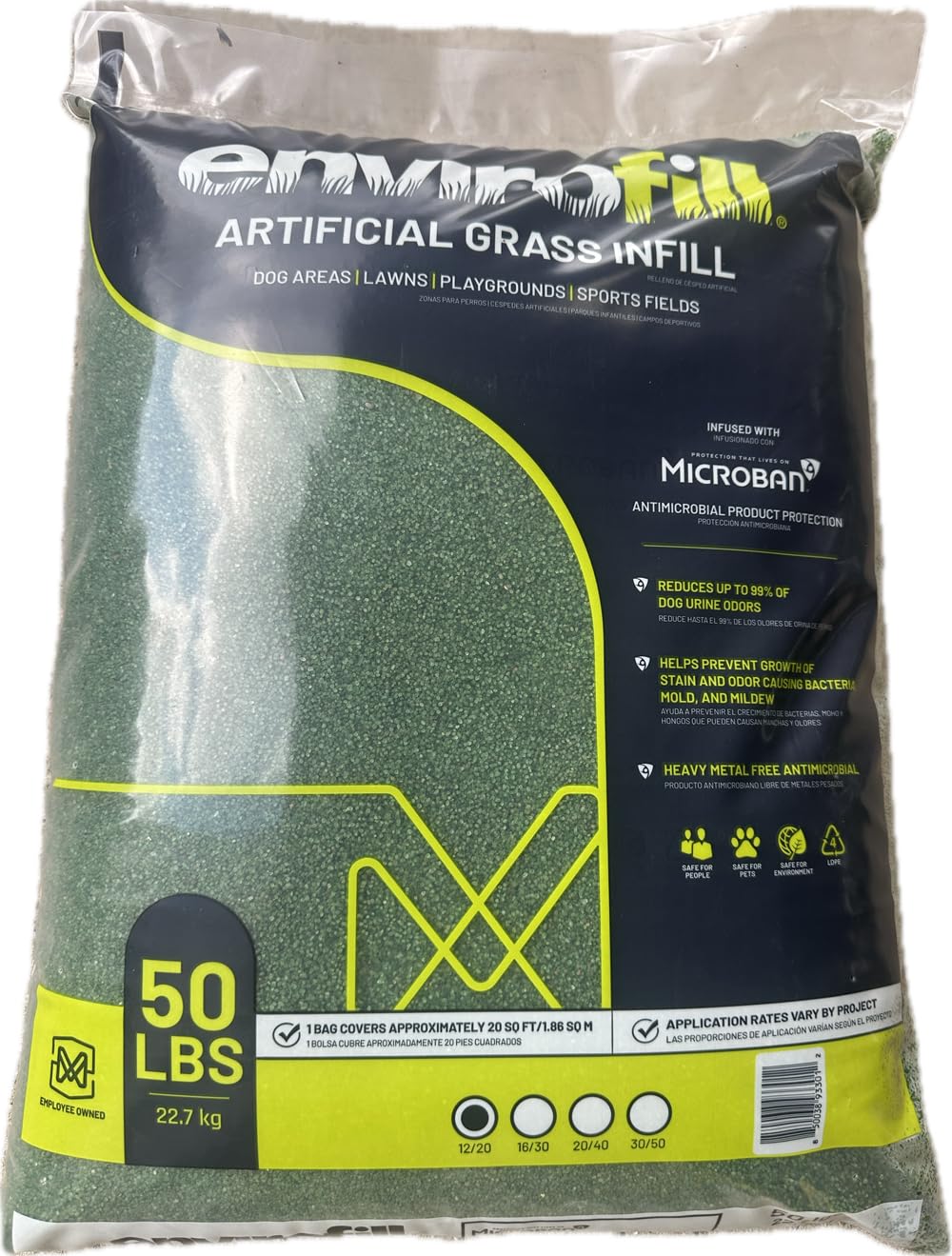
1. Envirofill Green Silica Sand — 50 Pound Bag of 12/20 Coated Sand
Our pick — over 4.5★ from 100+ verified ratings; the strongest balance of quality and price.
The crowd favorite — a green coated 12/20 sand backed by a 16-year warranty for long-term durability.
This is the bag to beat when durability is the priority. The 50 lb bag of 12/20 coated sand is clean, toxin-free, and built to last, which is why it carries a 16-year warranty — the most extensive coverage in the industry. The highly-rounded quartz core resists compaction, so it doesn’t keep settling and hardening over the life of your lawn the way cheaper sand can.
What wins people over is the green tint. Buyers report choosing this over regular sand specifically because they “didn’t want to see it” — the green blends right into the turf so the lawn keeps its uniform color. It also gets consistent praise for how easily it applies and how well it holds down the grass while staying firm and fast underfoot for athletes and pets alike.
It is also the pet-friendly option here, designed to combat odors while maintaining longevity and cleanliness in backyards and playgrounds. The honest trade-off is cost — even satisfied buyers call it “really expensive for what it is” — so weigh the premium against the 16-year warranty before you buy.
Why It Wins the Top Spot
- 16-year warranty — the longest coverage in the industry
- Rounded quartz core resists compaction over time
- Pet-friendly coating that helps combat odors
Weigh This First
- Premium price tag that buyers call expensive
- 50 lb bag covers less area than you might expect
Reach for this if: you want a set-and-forget infill backed by a 16-year warranty and don’t mind paying more for longevity and odor control.
Look elsewhere if: you are covering a huge area on a tight budget — the upfront cost per bag adds up fast.
2. MSI Wonderfill Green 12in. x 20in. Sand 50 lb. Landscaping Bag
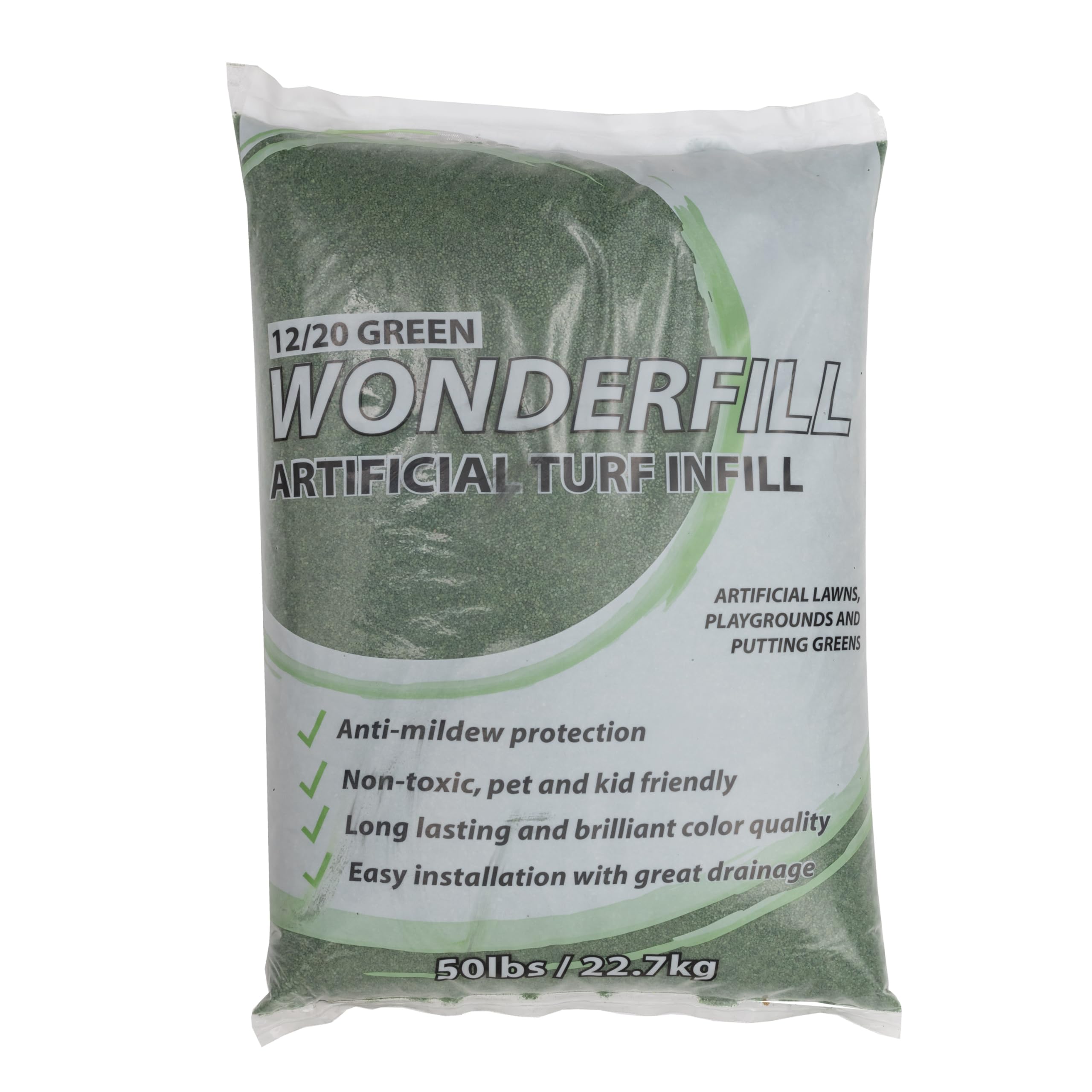
The smart spender’s pick — a green coated sand with exceptional drainage and vibrant color at a friendlier price.
If wet weather is your lawn’s biggest enemy, this is the infill built for it. The high-quality coating and naturally round shape protect your turf fibers, but the standout spec is the exceptional drainage that keeps the surface pristine even in heavy rainfall. That makes it a strong fit for residential yards, pet zones, and sports fields where water pools quickly.
Buyers describe it as a quality product that is worth its price, and it gets specifically praised as “great infill for turf” that performs exactly as advertised. The fine green color and dust encapsulation mean less mess during application and a cleaner-looking lawn afterward — the coating traps dust so it doesn’t puff up and settle on the blades.
The recurring note is honest about coverage — one buyer sums it up: “50 pounds doesn’t go far, but an excellent product.” Plan for more bags than you think you need, especially if your turf has been neglected and is lying flat after light foot traffic. The cardboard packaging is also flimsy enough that an occasional bag arrives with a tear, though the sand inside is generally unaffected.
Best for: homeowners in rainy climates who need a quality green infill with excellent drainage at a friendlier price than the premium pick.
Not for: anyone covering a very large lawn — the 50 lb weight disappears quickly over big areas.
3. Silica Sand Infill 12/20 Landscape Turf Artificial Grass
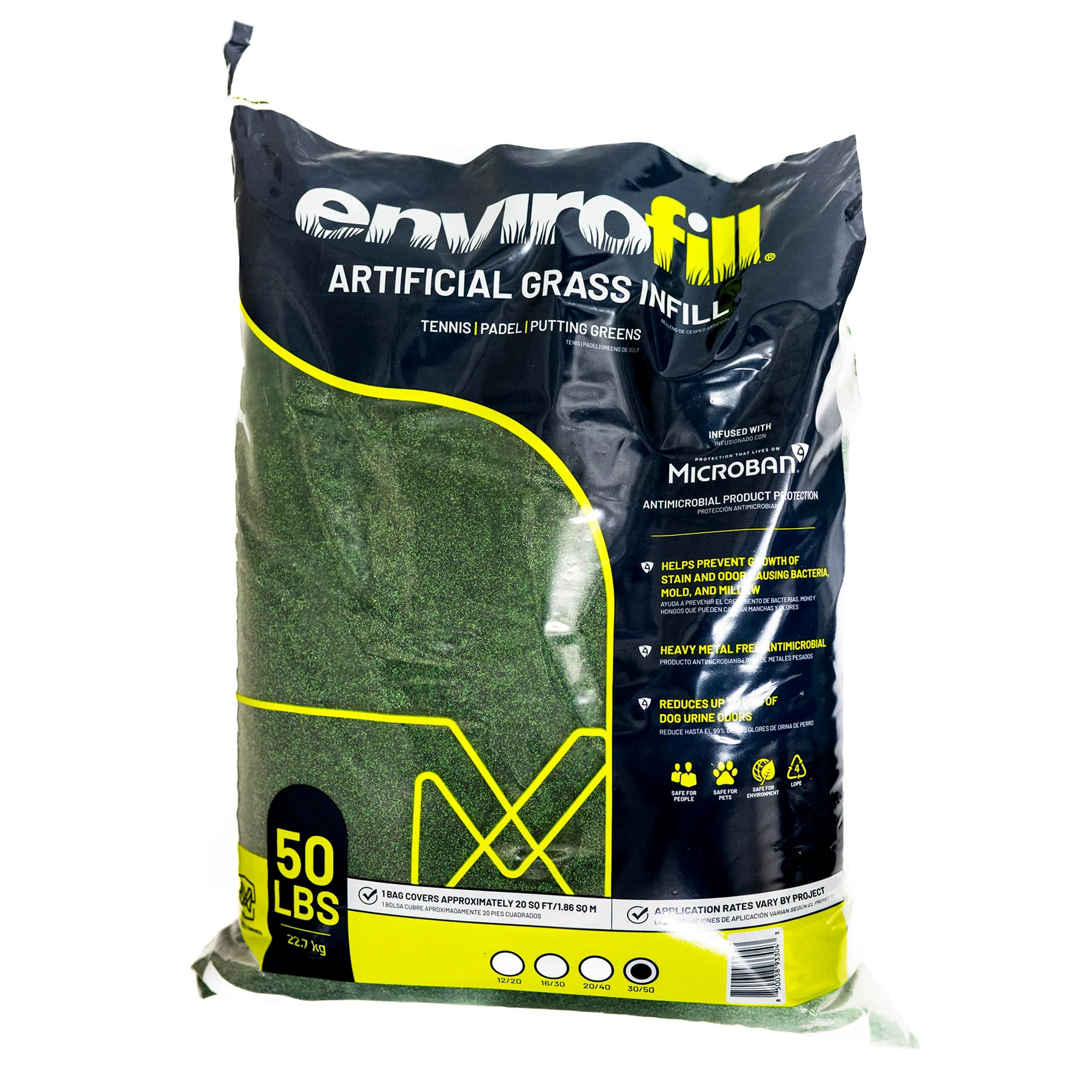
The landscaping specialist — a larger-grain 12/20 green infill that adds ballast and keeps blades upright.
This bag offers both 12/20 landscape and 30/50 putting-green grades for different turf needs. The larger-grain 12/20 grade is sized for landscape and lawn artificial turf, while the maker offers a 30/50 smaller-grain version for putting green turf. Choose wrong and you hit the one real complaint in the reviews — buyers who grabbed this thinking silica sand is “a super fine sand” for a short-cut putting green were disappointed.
What this grade does best is add weight and ballast. Spread across your turf, it weighs the grass down and helps it lie flat and even, while the acrylic-silica coating resists compaction and stays hydrophobic so water doesn’t get trapped in the base. Brushed in between the blades, it supports the synthetic fibers and helps them stand upright for that freshly groomed look.
Owners who bought it for landscape yards, dog runs, and play areas are happy — they call it a nice filler that works as described and say they’d buy again. Just be clear about your turf’s pile height before ordering, because this 12/20 grade is not the fine sand a putting green needs.
Smart pick if: your turf is standard landscape length and you want a coated, hydrophobic infill that adds solid ballast and keeps blades upright.
One caution: it is not for short-cut putting greens — that job needs the 30/50 finer grade instead.
Understanding the Specs
Grain Grade (12/20 vs 30/50)
The numbers describe how coarse the sand is. A 12/20 grade uses larger grains that suit standard landscape turf with longer blades, giving them solid support. A 30/50 grade is much finer, made for putting greens cut shorter than 3/4 of an inch, where a chunky grain would feel bumpy. Matching the grade to your turf length is the single most common mistake buyers make.
Coated vs Uncoated Silica
Coated sand — like the acrylic coating on these picks — carries a protective shell that stops grains from fusing under pressure. That keeps the infill from compacting into a hard layer over time. Uncoated sand can settle and harden, making your springy lawn feel like concrete. Rounded grains also cause less wear on the turf backing where the fibers are anchored.
FAQ
How much sand infill do I need for my artificial lawn?
What is the difference between 12/20 and 30/50 silica sand infill?
Why does the sand infill keep my artificial grass blades standing up?
Can I use regular play sand instead of turf-specific infill?
Is green sand infill worth the extra cost over regular sand?
Will silica sand infill help with pet odors in my artificial yard?
How do I spread sand infill evenly across my turf?
What happens if I use landscape infill on a putting green turf?
Final Thoughts: The Verdict
For most buyers, the artificial turf sand infill winner is the Envirofill Green Silica Sand because its 16-year warranty and compaction-resistant coating make it the most durable, lowest-maintenance option for homeowners and pet owners alike. If you want excellent drainage for a rainy yard at a friendlier price, grab the MSI Wonderfill Green. And for a straightforward landscape ballast that keeps blades standing, the Silica Sand Infill 12/20 is the one to reach for.
How We Picked
We do not accept paid placement. Every pick is matched to a real buyer and a real use-case; we do not hands-on test units.
Sources & Methodology
Specifications: manufacturer listings and product documentation. Review insights: verified customer reviews, as of August 2026. Pricing: not shown on this page (it changes often); check the current price via the retailer link.
As an Amazon Associate, Gadgets Feed earns from qualifying purchases. This does not affect which products we feature.