
Ash wood’s open, porous grain is its defining feature—and applying the wrong stain can leave it looking muddy, blotchy, or lifeless instead of dimensional and rich. The trick lies in selecting a formula that penetrates deeply without obscuring those characteristic grain lines, whether you’re finishing a butcher block island, refinishing a mid-century credenza, or sealing an exterior project.
I’m Min — the co-founder and writer behind Gadgets Feed. I’ve spent countless hours comparing formulation chemistry, coverage rates, and real-world application results to curate the most reliable options for this specific wood type.
Ash accepts stain unevenly across its two distinct grain zones, so finding the right formula is critical for uniform, professional-looking results. This guide breaks down the top contenders for the best ash wood stain.
How To Choose The Best Ash Wood Stain
Selecting a stain for ash starts with understanding its anatomy. Ash is a ring-porous hardwood with strikingly deep grain pores, meaning it will absorb pigment aggressively into the early-wood zones while leaving the denser late-wood bands lighter. A stain that dries too fast or that relies solely on surface pigment will exaggerate this contrast, leading to a zebra-stripe look that beginners find frustrating.
Penetrating Oil vs. Surface Coating
Penetrating oils—like Danish oil or hardwax oil—soak into the open grain, carrying pigment deep into the wood. This evens out the absorption disparity on ash because the oil wicks uniformly through the porous structure. Surface coatings, such as film-forming acrylics, sit on top of the wood; on ash they tend to pool in the pores, creating visible dark spots that must be wiped aggressively. For a clear, consistent result, a penetrating formula or a water-based stain with robust wipe-off instructions is your safest bet.
Grain Raising and Sanding Strategy
Ash is prone to a phenomenon called grain raising when water-based stains are applied. The moisture swells the exposed wood fibers, leaving a rough texture that demands an extra sanding step between coats. Oil-based stains raise the grain less aggressively, but they carry stronger odors and longer dry times. If you are set on a water-based stain for low-VOC indoor use, plan to lightly sand with 320-grit after the first coat to restore a smooth finish.
UV Resistance for Exterior Ash Projects
Ash used for outdoor furniture, decking, or fencing needs UV absorbers built into the stain formula, otherwise natural sunlight will gray the wood and degrade the finish within a single season. Look for stains that explicitly list UV protection, fade resistance, or mildew resistance in their technical specifications. The coverage rate also matters: exterior stains typically need 250–300 sq. ft. per gallon for a meaningful first coat.
Quick Comparison
On smaller screens, swipe sideways to see the full table.
| Model | Category | Best For | Key Spec | Amazon |
|---|---|---|---|---|
| Watco Danish Oil | Penetrating Oil | Indoor furniture, food-safe projects | 16 fl oz / 85 sq ft coverage | Amazon |
| Rubio Monocoat Ash Grey | Hardwax Oil | High-end furniture, floors, uniform flat color | 130 ml / 39-65 sq ft per coat | Amazon |
| General Finishes Exterior 450 | Water-Based | Vertical outdoor surfaces, UV protection | 1 Quart / 200 sq ft per quart | Amazon |
| Varathane Dark Walnut | Water-Based | Fast-drying indoor projects, low odor | 1 Quart / 100 sq ft per quart | Amazon |
| KILZ Cedar Naturaltone | Acrylic Exterior | Decks, fences, siding | 1 Gal / 250-300 sq ft first coat | Amazon |
| Vermont PolyWhey | Bio-Based Exterior | Eco-friendly outdoor furniture and siding | 1 Quart / 48-hour dry time | Amazon |
| Mollor Water-Based Stain and Sealer | 2-in-1 Coating | Budget-friendly all-in-one indoor/outdoor | 16 fl oz / dries in 4 hours | Amazon |
In‑Depth Reviews
1. Watco 242219 Danish Oil Wood Finish, Natural

Watco Danish Oil is the archetype of a penetrating finish that works beautifully on ash. Its blended oil-and-varnish formula wicks deep into the open grain, depositing pigment evenly across both early-wood and late-wood zones. The result is a rich, warm glow that enhances the natural figure of ash without the blotchy pooling common with film-forming stains. It dries to the touch in about six hours and covers up to 85 square feet per pint, making it efficient for small-to-medium furniture projects.
Pyrography artists and charcuterie board makers specifically favor this formulation because it is food-safe once fully cured. The oil penetrates so thoroughly that surface residue—and the accompanying risk of sticky spots—is virtually eliminated when applied correctly. Users report excellent results on maple and walnut, but the real advantage shows on ring-porous woods like ash where the oil’s low viscosity allows it to level out absorption discrepancies naturally.
The clear color option lets ash’s own warm tone dominate, but the oil does darken the wood slightly, similar to a light coat of tung oil. Expect a satin-to-semi-gloss sheen depending on how much you wipe off. The main downside is the strong solvent odor during application; forced ventilation is mandatory. Still, for an authentic, hand-rubbed look on ash furniture, this remains the most forgiving and effective entry point.
Why it’s great
- Deep penetration evens out ash’s porous grain
- Food-safe when fully cured
- Easy wipe-on/wipe-off application with no lap marks
Good to know
- Strong petroleum odor requires ventilation
- Clear tint darkens ash by about one shade
- Not recommended for flooring or high-traffic horizontal surfaces
2. Rubio Monocoat Wood Stain & Finish, Ash Grey
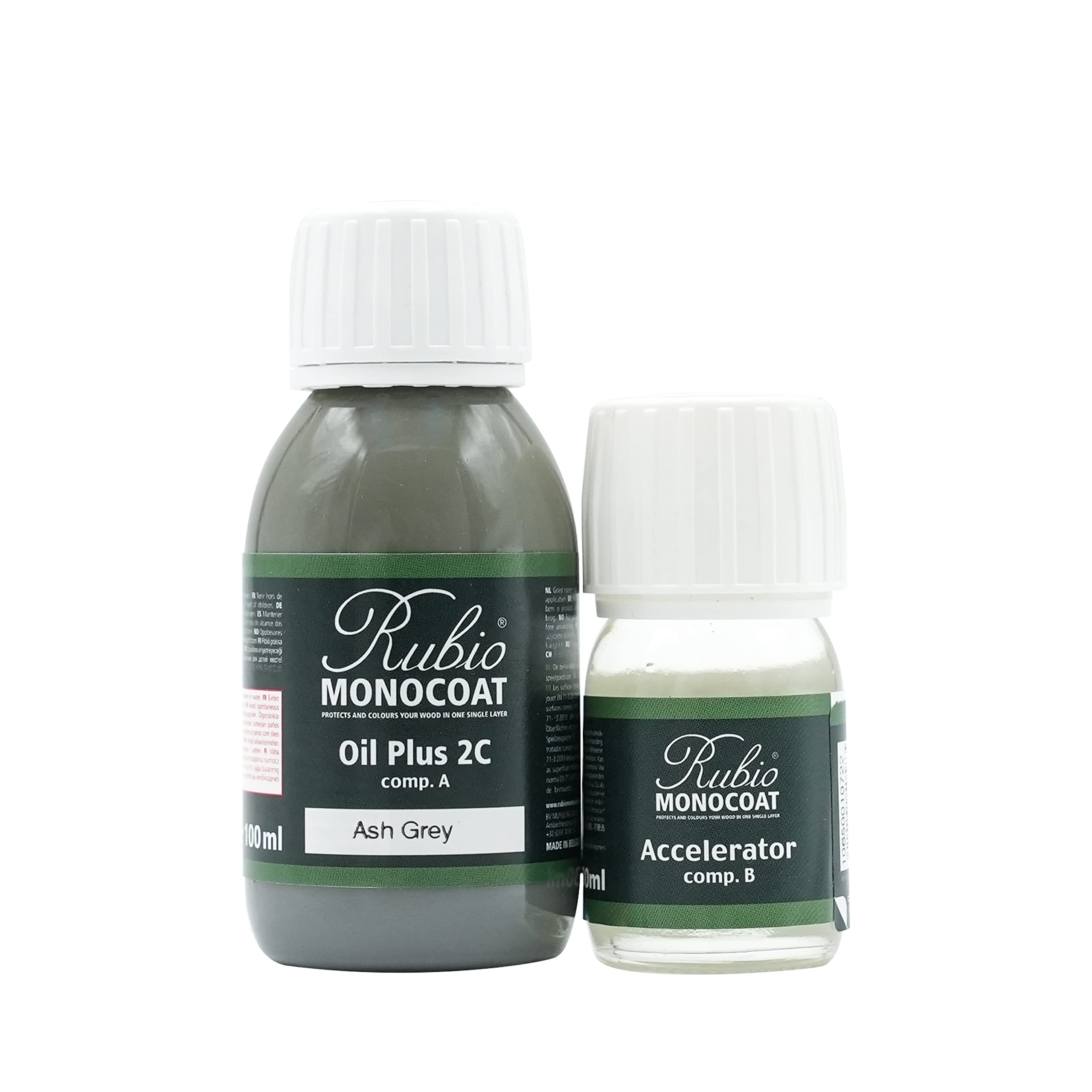
Rubio Monocoat is engineered around a unique molecular bonding technology that allows a single coat to color and protect the wood simultaneously. The Ash Grey variant is specifically designed to neutralize the warm orange undertones in ash, producing a flat, contemporary matte look that is increasingly popular in modern interiors. The two-component system—Part A (oil) and Part B (accelerator)—activates the curing process, achieving full durability without needing multiple layers.
This is not a stain you slap on and wipe off quickly; the application technique matters. You apply the mixed oil with a white scrub pad or rag, let it sit for 20 minutes, then buff off the excess with a clean cloth. On ash, the 130 ml bottle covers roughly 39 to 65 square feet, which is efficient given that one coat is all you get. The coverage is predictably uniform because the oil saturates the wood fibers evenly rather than depositing pigment on the surface.
The finish is certified safe for food contact and toys (EN 71-3 and GREENGUARD Gold), so it works for kitchen countertops and children’s furniture. Scratch resistance is not on par with polyurethane—users report micro-scratches on high-traffic kitchen islands—but the maintenance regime is simple: reapply a maintenance oil when the surface shows wear. For ash dining tables, desktops, and cabinetry where the look matters more than indestructibility, this is the premium standard.
Why it’s great
- Single-coat application saves material and labor
- Ash Grey perfectly neutralizes ash’s warm undertones
- Zero VOC and food-contact safe
Good to know
- Higher cost per square foot than traditional stains
- Part B cap threads can stick if not cleaned
- Not ideal for heavy-traffic floors without periodic maintenance
3. General Finishes Exterior 450 Water Based Wood Stain
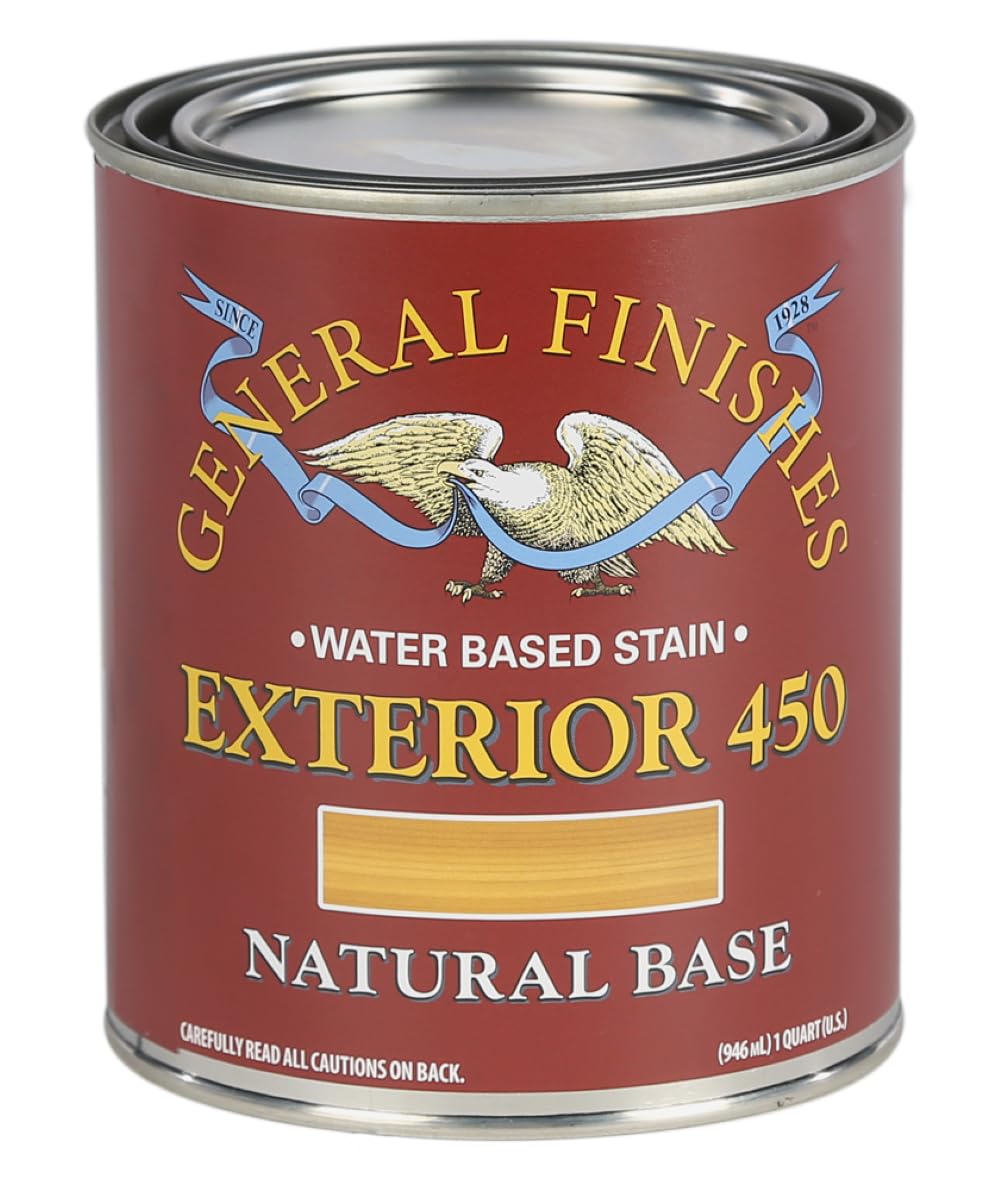
General Finishes Exterior 450 is a water-based stain formulated with built-in UV absorbers that extend the life of outdoor ash projects. It is designed for vertical surfaces—fences, garage doors, outdoor kitchen cabinets, and patio furniture—but the manufacturer explicitly advises against using it on large horizontal surfaces like deck boards because the water-thin consistency can lead to uneven coverage on flat planes. That specificity tells you everything about its intended use case.
On ash, the water base raises the grain noticeably. Plan to sand with 320-grit after the first coat dries, apply a second coat, and then seal. The “Natural Base” color lets you tint it or use it on its own for a subtle, clear enhancement that protects the wood without obscuring the grain. Coverage is generous at 200 square feet per quart, and dry time is approximately two hours under ideal conditions of 70°F and 50% humidity.
User feedback from furniture makers who build outdoor seating consistently praises the adhesion and color retention through multiple seasons. The finish, when brushed, leaves a smooth texture that resists peeling and cracking better than many consumer-grade exterior stains. The premium price reflects the American manufacturing and the plant-protein renewable resource base, but the payoff is a stain that does not require a separate topcoat for UV defense.
Why it’s great
- Integrated UV absorbers protect ash from graying
- Water-based for easy soap-and-water cleanup
- 200 sq ft per quart is excellent coverage
Good to know
- Not for horizontal surfaces like decks or tabletops
- Water base raises ash grain; requires inter-coat sanding
- Higher price point per quart compared to basic stains
4. Varathane 381119 Water Based Wood Stain, Dark Walnut

Varathane’s Dark Walnut water-based stain hits a sweet spot for indoor ash projects where you want a rich brown tone without waiting days for oil to cure. The semi-transparent formula uses advanced pigments that produce even color in a single coat on most woods, but on ash, the fast drying time demands speed. You have to apply and wipe off quickly; any hesitation results in visible overlap streaks, especially across the porous grain bands.
The low-odor profile makes it comfortable to use indoors without a respirator, and cleanup is straightforward with soap and water. The 32-ounce quart covers up to 100 square feet, and because it is semi-transparent, it allows ash’s natural grain to show through the dark brown pigment. Some users report that the color runs darker than expected on light woods like ash or acacia, so test on a scrap piece before committing to the full project.
Grain raising is present but manageable. A quick sand with 320-grit after the first coat eliminates the rough texture. Once dry, the stain accepts a polyurethane topcoat without adhesion issues. For DIYers who need a project finished in a weekend—think bookshelves, window trim, or a small ash table—Varathane delivers professional-looking results with minimal odor and mess.
Why it’s great
- Fast drying suits quick-turnaround projects
- Low odor suitable for indoor use
- Dark Walnut color adds depth without hiding grain
Good to know
- Dries very fast; requires quick wipe-off to avoid streaks
- Raises grain on ash; inter-coat sanding recommended
- Color is darker than the label image suggests on light woods
5. KILZ Waterproofing Semi-Transparent Wood Stain, Cedar Naturaltone

KILZ’s Cedar Naturaltone is where waterproofing performance meets color enhancement for exterior ash. The 100% acrylic formula wraps the wood in a breathable yet waterproof barrier that blocks rain, snow, and UV rays simultaneously. The semi-transparent finish deposits enough pigment to warm up the ash while keeping the grain visible, and the cedar tone neutralizes the yellow undertones that ash naturally carries.
Coverage is excellent for a large-scale exterior job: a single gallon handles 250 to 300 square feet on the first coat and up to 600 square feet on the second. Recoat time is only one to two hours, meaning a deck or fence can be finished in a single day. KILZ backs this with a warranty of up to three years on decks and five years on fences and siding, which is rare in the stain category.
The acrylic base does not penetrate as deeply as an oil-based stain, so on ash, you must apply it to properly cleaned and slightly weathered wood (0–10 years exposure) for good adhesion. Users report that the stain holds up well against foot traffic and weather extremes, outperforming cheaper exterior stains by a wide margin. The can is heavy at 9.3 pounds, but the value per square foot remains strong for the durability it delivers.
Why it’s great
- Superior waterproofing with 3–5 year warranty
- Excellent UV and mildew resistance
- Large coverage area at 250–300 sq ft per gallon
Good to know
- Acrylic sits on surface rather than penetrating deep
- Best adhesion on moderately weathered wood, not new ash
- Strong shipping container; product sometimes lost in transit
6. Vermont Natural Coatings PolyWhey Exterior Penetrating Stain

PolyWhey uses whey protein as a co-binder, making it one of the most environmentally advanced stains on the market. Despite the unusual ingredient, the real-world performance on ash is impressive: the stain penetrates deeply, carrying pigment into the grain while simultaneously sealing against moisture and UV rays. The Lakeside Cedar color delivers a soft, silvery-brown tone that complements ash’s natural hue without overpowering it.
The texture is noticeably thin—almost watery—which demands patience during application to avoid drips on vertical surfaces. Users consistently report that it glides on smoothly with a brush and dries to a flat, smooth finish. Dry time is roughly 48 hours between coats, longer than solvent-based options, but the absence of VOC fumes makes it safe to apply indoors or in enclosed areas without respiratory gear.
For garden furniture, fences, and siding made from ash, PolyWhey holds up well through multiple seasons. The charcoal and balsam green colors have been reported to maintain their appearance from spring through late fall with minimal fading. The thin consistency also means the gallon can leak during shipping if the cap is not seated perfectly, so inspect the container on arrival. For builders prioritizing nontoxic, renewable materials, this is the standout choice.
Why it’s great
- Bio-based, low-odor, and zero VOCs
- Penetrating formula protects ash from within
- Easy water cleanup and smooth brush application
Good to know
- Watery texture can drip easily on vertical surfaces
- 48-hour dry time between coats is slower than average
- Thin product prone to shipping leaks
7. Mollor Water Based Wood Stain and Sealer in One, Teak
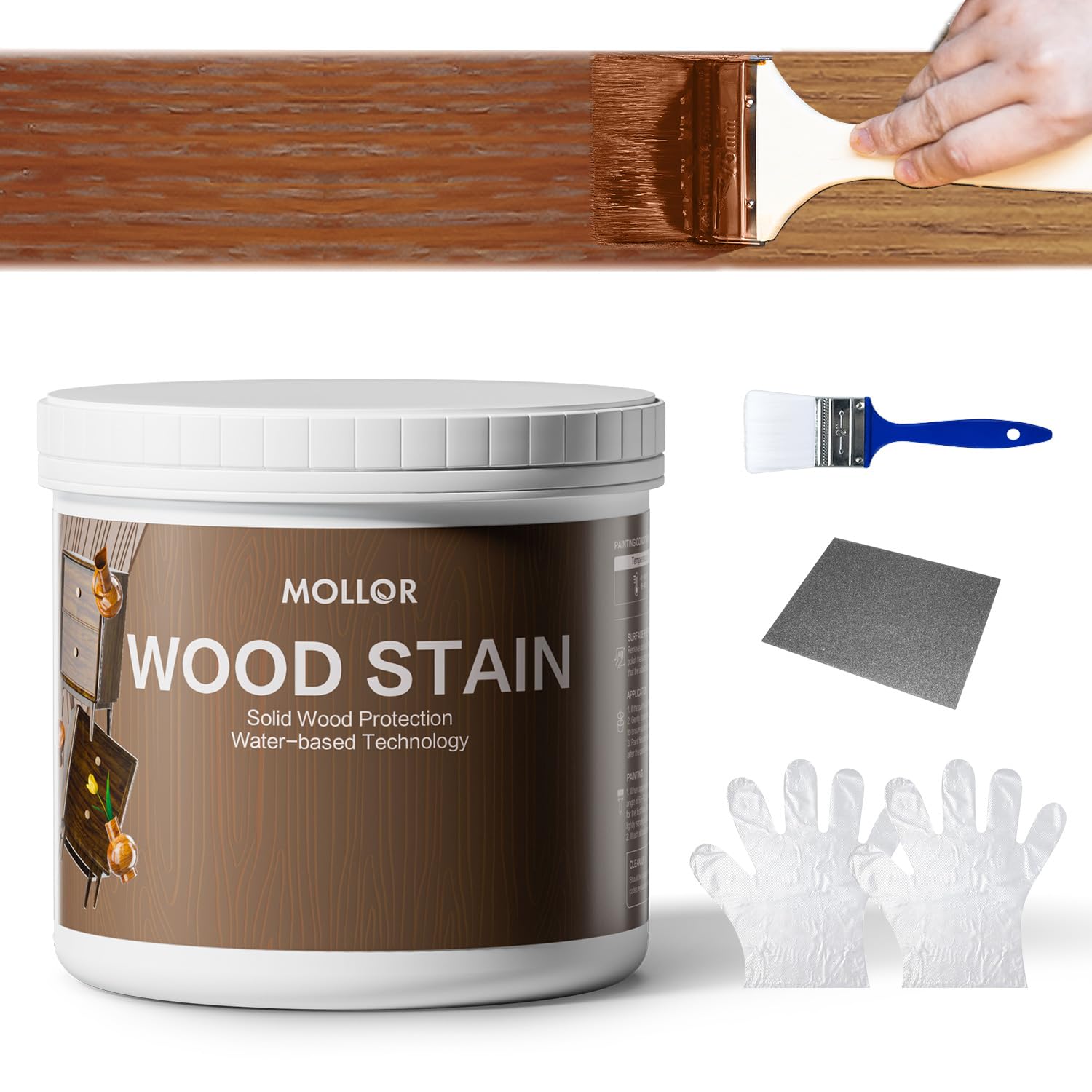
Mollor’s 2-in-1 stain and sealer eliminates the need for separate topcoat, making it an efficient option for budget-conscious DIYers tackling ash furniture or small outdoor projects. The teak color produces an amber-orange-brown hue that complements ash’s warm tone, though experienced users note it is not a perfect match for real teak’s color palette. The water-based acrylic emulsion formula is non-toxic and ultra-low in VOCs, useable indoors without strong fumes.
Surface drying takes about four hours, with full curing after seven days. The fast dry time, however, is a double-edged sword on ash. Applying along the grain with a clean cloth or brush is essential; working too slowly causes visible brush strokes as the stain begins to set. Users who applied two coats with overnight drying reported a significantly deeper, richer color with fewer imperfections.
The included brush works adequately for small projects, but upgrading to a quality stain brush improves results on larger ash surfaces. The waterproofing performance is evident immediately after drying—water beads up on the surface rather than soaking in. For a budget-friendly all-in-one solution that saves the cost of a separate sealant layer, Mollor offers a solid entry point without the complexity of multi-step finishing systems.
Why it’s great
- Stain and sealer in one coat saves time and money
- Non-toxic and low-odor for indoor use
- Fast surface drying at 4 hours
Good to know
- Fast dry time can cause brush strokes on large surfaces
- Teak color is not an exact match for natural teak
- Requires multiple coats for maximum depth and durability
FAQ
Does ash wood stain blotch worse than oak?
Can I use a water-based stain on ash without grain raising?
How many coats of stain should I apply to ash furniture?
Final Thoughts: The Verdict
For most users, the best ash wood stain winner is the Watco Danish Oil because its deep penetration evens out ash’s tricky porous grain better than any surface-coating alternative. If you want a premium, single-coat finish with a modern matte look and zero VOCs, grab the Rubio Monocoat Ash Grey. And for exterior ash projects that need robust UV and waterproofing defense, nothing beats the General Finishes Exterior 450.