
Our readers keep the lights on and my morning glass full of iced black tea. As an Amazon Associate, I earn from qualifying purchases.
Specs are compiled from manufacturer listings and verified buyer reviews and can change over time — please confirm the key details on the product page before buying.
If you chop onions and carrots most nights and you are tired of a knife that wanders, the answer is simpler than the knife aisle makes it look: a broad Chinese-style cleaver with a tall blade and real weight does the work for you. This guide covers nine of them so you can pick the one that fits your hands and your board.
I’m Min — the founder and writer behind Gadgets Feed. This guide is built by comparing the manufacturers’ published specifications and the patterns across verified customer reviews, so you get each pick’s real strengths and trade-offs instead of marketing spin.
Most people overthink the brand name and skip the two things that actually decide whether a knife feels right in your kitchen.
Our Picks at a Glance

How To Choose The Best Asian Cleaver Knife
An Asian cleaver is not one tool — it is a family of wide, tall blades that split into two jobs. One group is built for vegetables and everyday prep, thin and light so it glides. The other is built for bone and heavy meat, thick and weighty so it powers through. Buying the wrong group for your cooking is the single most common mistake, and it is the reason a knife that gets rave reviews can feel useless in your own kitchen.
Match the blade to the job, not the label
If you cook stir-fries, soups, and salads, you want a vegetable cleaver: a thinner blade that slices cleanly and lets you scoop what you cut straight into the pan. If you break down whole chickens or split ribs, you want the heavier bone chopper with more steel behind the edge. Many listings use the word “cleaver” for both, so read the blade thickness and the maker’s own description before you commit.
Blade height is the spec nobody talks about
Height is the measurement from the spine down to the cutting edge. A taller blade keeps your knuckles clear of the board and gives you a flat surface to scoop with. That height matters more to daily comfort than blade length does, because it changes your hand position on every single cut.
Steel hardness and edge angle decide your sharpening routine
Hardness is measured on the Rockwell scale, written as HRC, and a higher number means the steel resists rolling over but can also chip if you abuse it. The edge angle — the degrees per side the blade is sharpened to — decides how easily it slides through food. A steeper angle cuts more aggressively and demands gentler handling.
Quick Comparison
| Model | Best For | Blade Length | Construction | Handle Material | Amazon |
|---|---|---|---|---|---|
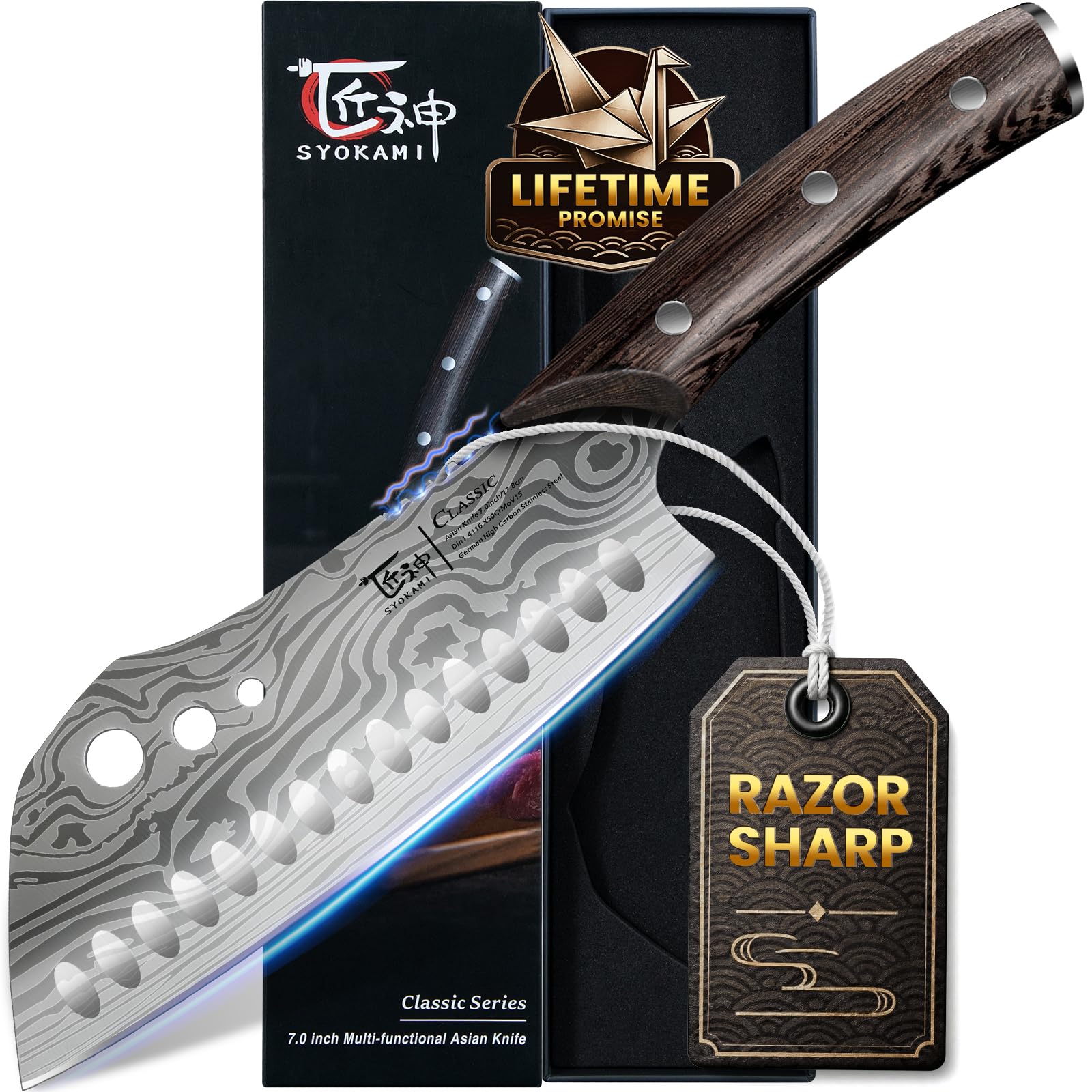
| SYOKAMI Cleaver Chef Knife with Herb Stripper, 7″ Asian Kitchen Knife★ Best Overall | All-round everyday prep | 7 inches | Forged | Wood | Amazon |
| Non-stick Cleaver Knife 7-inch, Chinese Chef’s Knife (CaiDao)Best Value | Gift buyers and first cleaver | 7 inches | Stamped | Wood | Amazon |
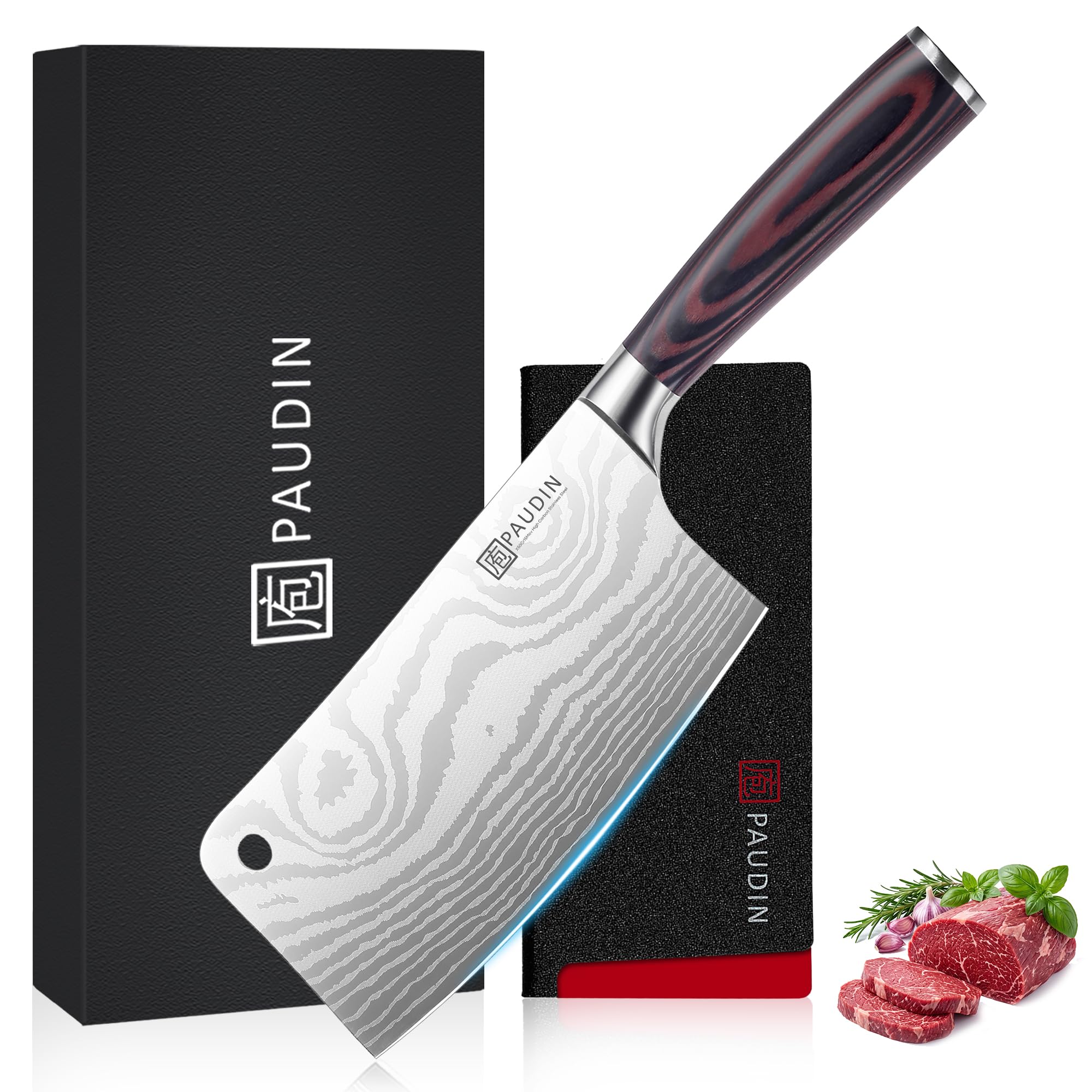
| PAUDIN Cleaver Knife, Ultra Sharp Meat Cleaver 7 InchBuilt For Bone | Heavy meat and bone work | 7 inches | Stamped | Pakkawood | Amazon |
| Mercer Culinary Asian Collection Chinese Chef’s Knife | Fast vegetable prep on a budget | 6 inches | Stamped | Santoprene | Amazon |
| MAD SHARK 7.5 Inch Meat Cleaver | Smashing through bone and joints | 7.5 inches | Forged | Pakkawood | Amazon |
| Dexter Russell S5198 Chinese Chef’s Knife, 8″ | High-volume vegetable slicing | 8 inches | Forged Wood | Wood | Amazon |
| Victorinox Fibrox 7 in Chinese Cleaver | Chinese and Western cooking alike | 7.1 inches | Stamped | Thermoplastic Rubber | Amazon |
| Mac Knife Japanese Series Vegetable Cleaver, 6-1/2-Inch | Serious vegetable work | 6.5 inches | Stamped | Wood | Amazon |
| KYOKU 7″ Japanese Damascus Meat Cleaver | Buyers who want a showpiece | 7 inches | Forged | Stainless Steel | Amazon |
In‑Depth Reviews
1. SYOKAMI Cleaver Chef Knife with Herb Stripper, 7″ Asian Kitchen Knife
Our pick — over 4.5★ from 700+ verified ratings; the strongest balance of quality and price.
Sharpened to 14-16 degrees per side, it bites through onions before you have really pushed.
At 7 inches of blade and 11.6 inches overall, this one takes the classic Chinese chef’s knife, adds the light feel of a Santoku, and borrows the straight push-cut of a Nakiri, so it ends up doing slicing, chopping, dicing, and mincing without you reaching for a second tool. That length is note against the CaiDao below, which measures 7 inches overall — the SYOKAMI runs 11.6 inches against 7 inches, a 66% longer footprint from handle to tip. In practice that extra reach is what keeps your knuckles off the board and lets you scoop a full pile of diced onion straight into the pan.
The steel is imported high-carbon German stainless, forged full-tang (one continuous piece of metal running the whole length of the handle) and rated at 56+ Rockwell hardness, which is the score that tells you how well it will hold its edge between sharpenings. Owners describe it gliding through food with almost no effort, and the balanced weight is the part that comes up again and again. What wins people over is the sheer quality of the build — the most-praised thing in the listings by a wide margin — followed closely by how long that edge lasts. A three-hole herb stripper sits on the blade, so you can strip rosemary, thyme, or kale leaves off the stem without reaching for a second gadget. The wenge wood handle is FSC-certified and carries a gear-tooth texture that is there specifically to keep your grip stable when your hands or the handle are wet.
The honest catch is durability at the tang, the point where blade meets handle. Most buyers report it holding up fine, but a minority have had the tang break, so treat it as a slicing and chopping knife rather than a bone splitter. The same owners who love it also note the wood handle can leak a little stain when wet, which is a towel-dry-after-washing habit, not a defect. Given how many people use it daily without issue, this is a care-and-fit note rather than a warning.
Where It Earns Its Keep
- 14-16° hand-polished edge per side makes short work of vegetables, herbs, and meat
- Forged full-tang build at 56+ Rockwell hardness holds its edge between sharpenings
- Built-in 3-hole herb stripper means one tool does prep start to finish
- Gear-tooth texture and FSC-certified wenge wood handle stay grippy when wet
Worth Knowing First
- The tang is the weak point some owners have hit — it is a slicer, not a bone chopper
- The wenge handle can bleed a little stain when wet; dry it rather than leaving it on the rack
Pick this if: you want one wide knife that handles vegetables, herbs, and meat and you cook most nights.
Think twice if: your regular job is splitting chicken bones or breaking down ribs — that calls for the MAD SHARK below.
2. Non-stick Cleaver Knife 7-inch, Chinese Chef’s Knife for Kitchen, High Carbon German Stainless Steel (CaiDao)
A gift-boxed CaiDao that slices a watermelon in one stroke and weighs in comfortably for the money.
If you are buying your first Chinese cleaver — or buying one for somebody else — this YTUOMZI model is the easy entry. It arrives in a proper presentation box, which is why it keeps turning up as a Mother’s Day, Father’s Day, or housewarming pick, and the blade itself is the same 7-inch profile as the more expensive options on this list. The high-carbon German stainless is vacuum heat-treated and cooled to land at 56±2 HRC, a hardness range that resists rust and wear while still responding to a honing rod.
Owners mention the kind of performance that sounds like a stunt until you try it: “Watermelon cleaved in one stroke, banana mid-air sliced, oranges wedged <10 sec, salami sliced invisibly thin.” The hammered look on the blade face is genuinely well executed, and the ergonomic handle is shaped to keep your hand from tiring during a long prep session. It is dishwasher safe, though the maker recommends hand washing to protect the edge — take that advice, because the edge is the whole point of this knife.
The trade-off worth planning for is durability. Most owners use theirs hard and report no trouble, but a handful have seen damage after very little use, which suggests it rewards a little care over repeated abuse. It is also not a nimble tool — one owner’s mother found the maneuverability hard going, and that is simply the nature of a broad blade with real weight behind it. That weight is the reason it chops so well; it just is not a paring knife.
The weight question: the slightly-heavy feel that owners mention is the same mass that lets the blade fall through a carrot or a melon without you leaning on it. If you want a light, quick knife, this is not it — if you want the blade to do the work, it is.
One to reach for: your first cleaver, or a well-presented gift for someone who cooks.
Not the one for: anyone who wants a featherweight knife for delicate, precise work.
3. PAUDIN Cleaver Knife, Ultra Sharp Meat Cleaver 7 Inch
A 2.3mm slab of hand-sharpened steel that goes through whole chickens without arguing.
The PAUDIN is the knife you hand someone who says their current blade bounces off chicken. Each side is sharpened to a 15° angle on a 2.3mm-thick blade of high-carbon stainless at 56+ Rockwell hardness, and that combination is specifically aimed at cartilage and whole birds. The wide, slightly curved profile also does the other half of the job — cutting large squash and root vegetables in even slices rather than wedges. At 11.97 inches overall it is the longest handle-to-tip knife in this group apart from the Dexter below, so people with larger hands get a full grip rather than a pinch.
Owners describe it as the best cleaver they have used, with the sharpness holding up over time and the edge staying effective on genuinely hostile jobs like heavy fish skin and bone. “Heavy duty knife – very well made. Feels comfortable in the hand and looks very nice.” is one of the cleanest summaries of the feel. The pakkawood handle — a resin-treated wood that resists moisture and slipping — is shaped so you are not fighting the knife during long sessions, and the included sheath makes storing it in a drawer safe.
Here is the part to weigh honestly: a few owners find the handle heavier than the blade, which makes the balance feel tip-light for delicate chef-style cutting. That is a real characteristic of a heavy butcher cleaver, not a flaw in manufacture, but if you want a knife for shallots and herbs it will feel like overkill. It also comes with a lifetime warranty against defects in material and workmanship, which softens the cost of a heavier tool.
Strong Points
- 15° edge per side on 2.3mm stock cuts through cartilage and whole chickens
- 56+ Rockwell high-carbon stainless resists rust and re-sharpens easily
- Pakkawood handle stays comfortable and non-slip through long prep
- Lifetime warranty against material and workmanship defects, plus a storage sheath
Trade-Offs
- Handle-forward balance can feel tip-light if you are used to a chef’s knife
- Too much knife for fine work like herbs and small aromatics
Suits: cooks who break down whole birds, ribs, and thick cuts and want the knife to do the heavy lifting.
Look elsewhere if: your prep is mostly delicate slicing and chopping — the SYOKAMI handles that better.
4. Mercer Culinary Asian Collection Chinese Chef’s Knife with Santoprene Handle

Six inches of taper-ground German steel that shaves sharp from the start and swings light.
For anyone whose counter is dominated by vegetables, this Mercer is the low-risk introduction to the whole style. The 6-inch dual-edge blade is taper ground — meaning the steel thins gradually toward the cutting edge — and finished on a fine stone, which is why owners describe it as shaving sharp straight out of the packaging. The Santoprene handle is the specific reason this one works for people who cook with wet or oily hands: it holds grip when a smooth wooden handle would not.
What buyers talk about most is the edge, and the second most-discussed point is the value. “Fantastic value. Extremely sharp out of the packaging, slices through anything with ease. Despite its size it’s quite light and easy to maneuver. A great introduction to Chinese style knives.” That is the pattern across the reviews — the height of the blade is what makes chopping so quick, because it guides your cut and lets you scoop finished food off the board in one motion instead of two.
Two honest limits. First, this is a slicing knife, not a bone breaker — the maker names thin or soft bones and hard vegetables like squash as its territory, and owners who tried harder materials on it got chips. Second, a few people note the edge wants touching up more often than they expected at this price. Both are consistent with a thinner, lighter blade, which is exactly what makes it so pleasant on vegetables. Handle-wise, the round shape divides opinion, but even the owners who dislike the roundness say the grip itself is fine.
Room to move: because it is so light and so sharp, it suits small kitchens and smaller hands better than the heavyweight cleavers here — you can work through a pile of carrots without your wrist complaining.
Right choice for: vegetable-forward cooking and anyone stepping up from a standard chef’s knife.
Wrong choice for: bone and butchery work; it chips on hard materials and the maker says so.
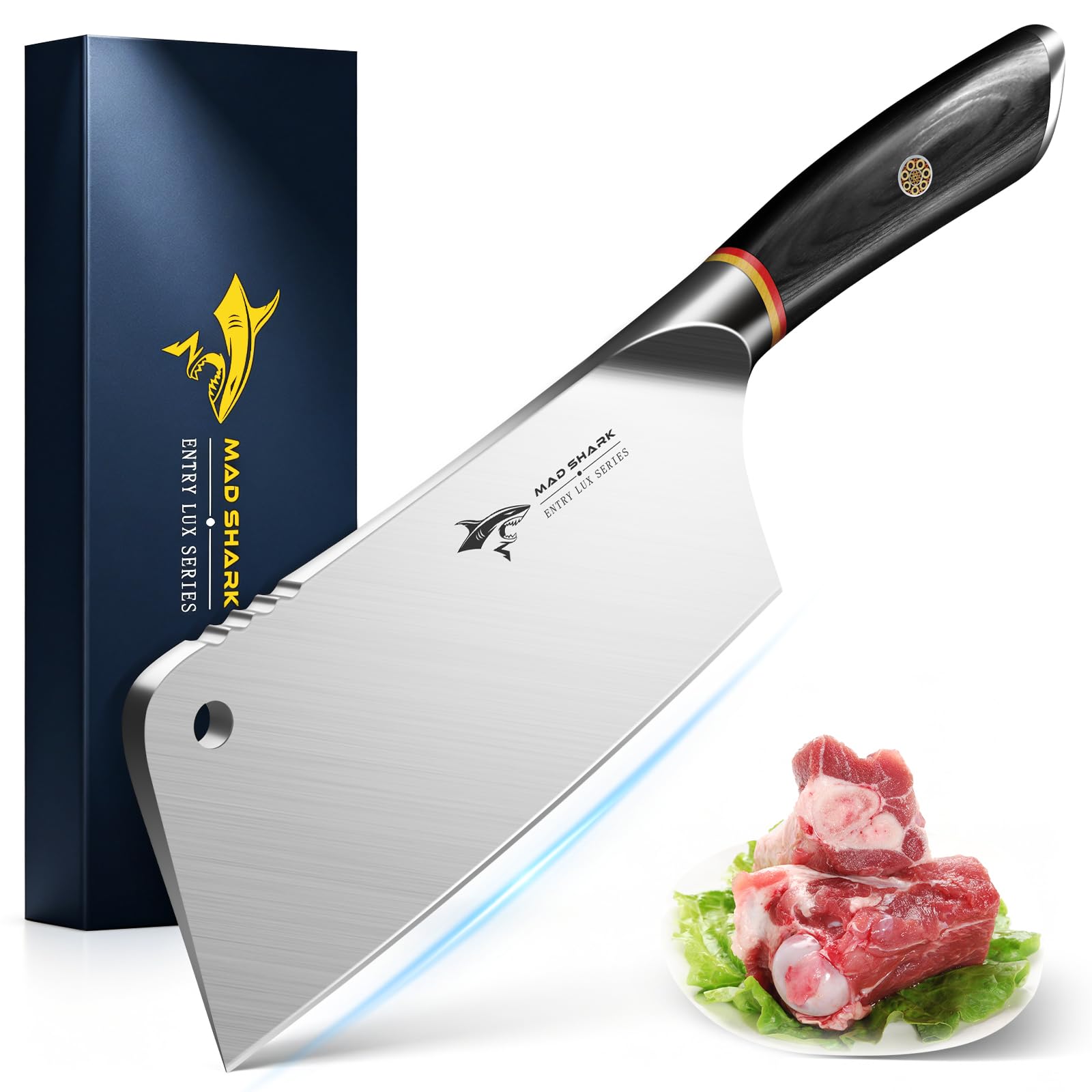
5. MAD SHARK 7.5 Inch Meat Cleaver with German Military Grade Composite Steel
A forged 7.5-inch chopper built to hit bones with the spine and keep going.
For kitchens where whole chickens, ribs, and joints are routine, the MAD SHARK is the tool that earns its shelf space. The blade is forged from composite steel with carbon, chromium, molybdenum, vanadium, and cobalt, a mix the maker says resists rust and stays easy to clean. The 7.5-inch blade is the longest here after the Dexter’s 8 inches, and the full-tang forged construction runs the steel the entire length of the handle for strength under impact. You can strike with the spine of this one — the maker specifically points that out — which is the clearest signal that it is built for force rather than finesse.
Owners consistently describe it as well built and sharp, and the weight is a point of pride rather than a complaint: it feels substantial but stops short of unwieldy, and it comes in a white presentation box that makes it a straightforward gift. The ebony wood handle carries carved rivets, which is a small detail that owners repeatedly call out as a nice touch, and the grip does not slip when things get messy.
Plan around the mass. At 1.3 pounds this is a knife that announces itself — the listing itself says 1.3 pounds and owners estimate around 2 pounds in hand — and a 12.44-inch overall length means drawer space is a consideration. A few owners note mixed results on blade durability, which is worth knowing before you make it your bone-splitting workhorse. Neither is a reason to avoid it; both are reasons to buy it for the job it is actually designed to do.
Why Owners Keep It
- 7.5-inch forged blade handles disjointing, carving, and hacking bones
- Composite steel with carbon, chromium, molybdenum, vanadium, and cobalt resists rust
- Full-tang forged build means the spine is rated for striking
- Ebony wood handle with carved rivets stays secure in the hand
Before You Buy
- At 1.3 pounds and 12.44 inches overall, it needs real drawer or block space
- Blade durability draws mixed feedback — excellent for bone, less proven on gristle-heavy daily use
Buy it when: bone-in meat is a regular part of your cooking and you want one knife that can take a hit.
Skip it when: you need a light prep knife — this is the heaviest tool on the list and needs the room to match.
6. Dexter Russell S5198, Chinese Chef’s Knife, 8″ High Carbon Steel Blade
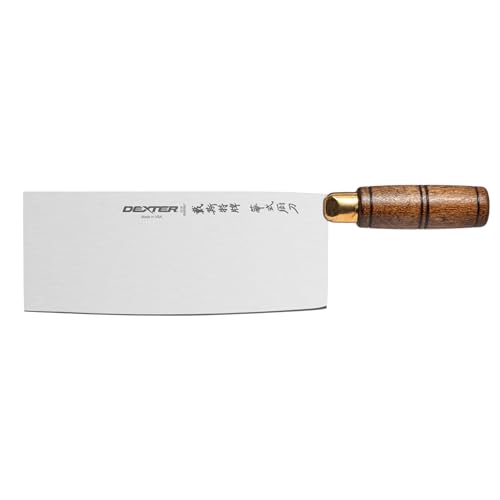
An 8-inch blade with 3-1/4 inches of height that sweeps through vegetables and doubles as a bench scraper.
This is the shape that professional kitchens reach for, and the numbers explain why. The broad blade stands 3-1/4 inches tall, which gives you serious knuckle clearance over the board, and at 8 inches it is the longest blade in this lineup. It is made from high carbon stain-free steel at 12 ounces, so it has enough substance to feel deliberate while staying controllable. The wide Chinese-style profile gathers and transfers chopped ingredients with fewer motions, which is exactly the efficiency a busy line cook is chasing.
Owners describe it as a professional tool that arrives sharp right from the start, heavy enough to feel substantial and light enough to maneuver, and a genuine multi-tasker for slicing and dicing. It doubles as a bench scraper, which owners note means it earns counter space even when you are not chopping. A long-time user who has run one for years reports the handle has stayed tight the whole time — the kind of durability that comes from a simple, no-nonsense build.
The trade-off is care, and it is not optional. High carbon steel takes and holds an edge beautifully, but it needs wiping dry right after washing, and it should not go in the dishwasher. The handle is also fairly plain, which owners point out honestly — this knife spends money on steel and blade shape rather than presentation. One more thing: at 3-1/4 inches of height it may not fit a shallow knife drawer, so check your storage before you commit.
The steel choice: the high carbon content is why it sharpens up so quickly and holds that edge through a long session. It is also why it will spot if you leave it wet — treat drying it as part of the ritual, not a chore.
Go for it if: you prep a lot of vegetables and want the tall, flat blade that makes scooping and guiding easy.
Hold off if: you know you will leave a knife on the drainer — this steel wants towel drying every single time.
7. Victorinox Fibrox 7 in Chinese Cleaver – Swiss Made Butcher Chef Knife
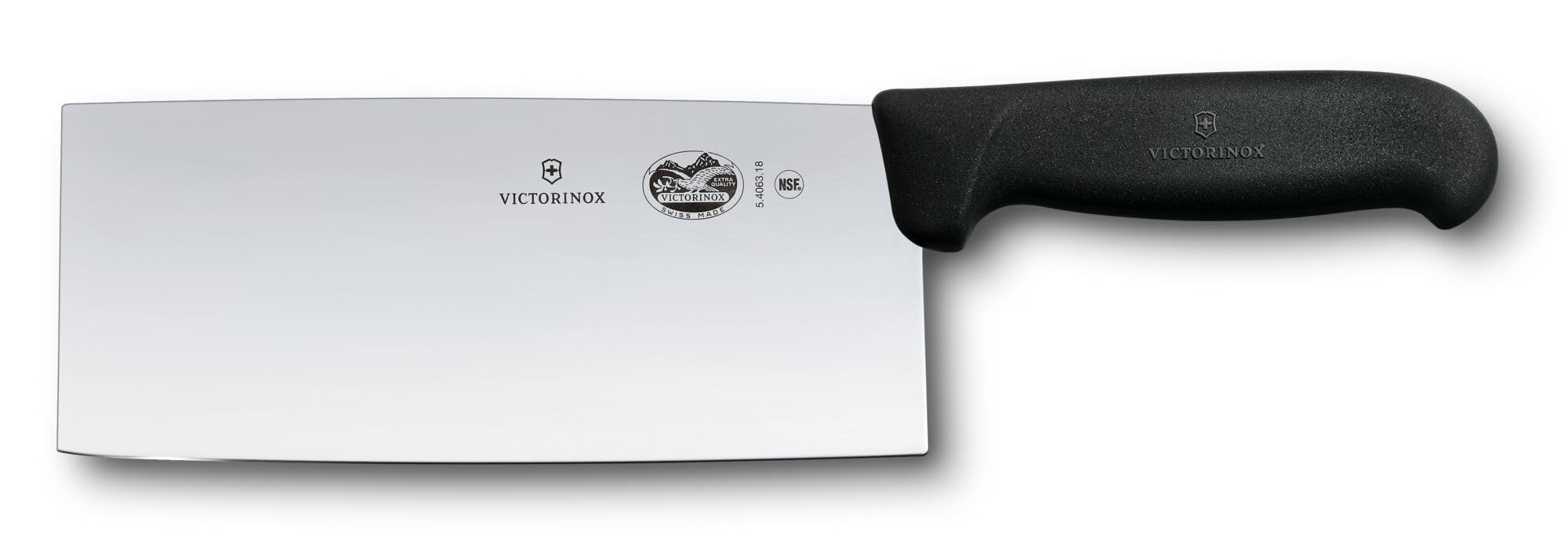
A light, dishwasher-safe workhorse that handles Chinese and Western cooking without fuss.
Where the heavier cleavers demand commitment, the Victorinox Fibrox is the one you can hand to anyone. The 7.1-inch stainless blade is plain-edged and straight, which makes it ideal for chopping rather than rocking, and the thermoplastic rubber handle is built to stay non-slip even when your hands are oily. Customers note that confidence explicitly — a grip that holds through a butchered chicken and a pile of onions. It is also dishwasher safe, a genuine outlier in this group of hand-wash-only blades.
It behaves more like a light vegetable cleaver than a butcher’s tool. Owners use it on vegetables, meat, cartilage, and chicken bones, and it doubles as a bench scraper when you need to move a pile of chopped garlic into the pan. People who cook both Chinese and Western food tend to keep it in rotation because it never feels like a specialist tool. The blade is also light enough that the chopping motion is quick rather than ponderous, which suits people who are used to a chef’s knife.
Be realistic about the weight class. It is light for a cleaver, and owners say so plainly — which means pork bones are out, and one long-term user rolled the edge on duck thigh bones before sharpening it back. It is also best kept at around a 20-degree angle on the steel, or the edge will not hold up to heavy chopping. The handle draws some criticism for feeling plain, but nobody faults the steel for the money.
What Works
- Thermoplastic rubber handle stays non-slip with oily or wet hands
- Dishwasher safe, unlike most cleavers in this group
- Flat, straight 7.1-inch blade chops cleanly and doubles as a bench scraper
- Works for both Chinese and Western cooking without feeling specialized
Go In With Eyes Open
- Light for a cleaver — not built for pork bones or heavy butchery
- Needs a roughly 20-degree steel to avoid rolling the edge on firm chopping
Made for: cooks who want one reliable, easy-care cleaver that handles a bit of everything.
Not made for: heavy bone work — pick any of the heavier options above for that.
8. Mac Knife Japanese Series Vegetable Cleaver, 6-1/2-Inch

The vegetable knife people keep returning to — thin, sharp, and made in Japan.
If butternut squash and acorn squash are the enemies in your kitchen, this Mac is the answer. It is a 6.5-inch blade in molybdenum steel, just 2.5mm thin, with a pakka wood handle and a horizontal blade finish that owners say does a better job of preventing food from sticking than anything they have used. At 9.07 grams it is by far the lightest knife on this list — you will forget you are holding it — which is why it works so well for long sessions of shredding cabbage, dicing onions, and slicing through dense winter vegetables.
The reviews read like a fan club. Owners describe it as the sharpest and best vegetable knife they have used, with the thin profile cutting through tough squash and dense root vegetables rather than splitting them. It is often recommended as a cross between a chef’s knife and a cleaver, and that is exactly the niche it fills — it slices and chops large vegetables beautifully. It is made in Japan and has been in some owners’ kitchens for years without losing its edge, which says everything about the steel quality.
The catch is maintenance, and the reviews are refreshingly blunt about it. Molybdenum steel discolors when it meets acidic foods like tomatoes, lemons, and limes, so you rinse and dry the blade immediately after use — no soaking, no dishwasher, no air drying. Owners who keep up with that describe the knife as entirely worth the effort; owners who do not end up with corrosion spotting. It is also not full tang, meaning the steel does not run the full length of the handle, and at 6.5 inches this is the shortest blade here apart from the Mercer.
Care is the deal: the 2.5mm molybdenum blade is thin and takes a very fine edge — thin edges need a rinsed, dried, stored-dry routine. Do that and this knife rewards you for years.
The one for you if: vegetables are the center of your cooking and you want the thinnest, sharpest blade on the list.
Not for you if: your cooking leans on meat and bone, or you want a knife you can leave in the sink.
9. KYOKU 7″ Japanese Damascus Meat Cleaver Chopping Knife with Silver Ion Coating

A 66-layer Damascus showpiece with a silver ion coating the maker says keeps the blade sanitary.
The KYOKU is the knife you buy when you want the board to look as good as it cuts. The blade is 66-layer Damascus VG10 stainless steel, forged full-tang so the steel runs the whole length of the handle, and the edge is hand-sharpened to 8 to 12 degrees using the traditional 3-step Honbazuke method — a very steep, very fine edge that slices through vegetables, fruit, and meat with almost no resistance. The fiberglass handle with a mosaic pin resists cold, heat, and corrosion, and stays comfortable through long sessions. It also ships with a case and a sheath, and it carries a lifetime warranty.
The feature you will not find elsewhere here is the silver ion coating — the maker says it is the first silver ion coated cleaver on Amazon and that laboratory testing shows it keeps meat and vegetables sanitary through sharp cutting. It is aimed at households with children, elderly family members, or anyone who wants extra care around food safety. Owners rave about how it looks, and the sharpness gets consistent praise: “It’s basically a vegetable knife, but the wide blade allows you to carry the veggies to the bowl or pan. Thinner than my old cleaver, it cuts through all things easily.”
Two things to weigh before you spend the most of any knife here. First, the Damascus pattern is etched onto the surface rather than formed by folded layers, and owners note it is far less visible in person than in the product photos — one reports it scuffing off during sharpening. Second, this is the least-reviewed knife on the list, so the track record is shorter than the others. It is the most contentiously received pick here, with strong praise for looks and sharpness standing next to complaints about edge performance. If you want the showpiece and the coating, it delivers; if you want the safest bet, the heavily-used picks above have more history behind them.
Who this is really for: someone who wants a striking, giftable, full-tang Damascus cleaver and values the coated-blade idea. It is a beautiful object that also cuts.
Worth it when: the Damascus look, the silver ion coating, and the lifetime warranty are exactly what you are shopping for.
Reconsider when: you want the longest, most consistent review history — the higher-volume picks above offer that instead.
Understanding the Specs
Blade Height and Blade Length
Blade length is measured tip to heel — the distance the edge runs. Blade height is measured from the spine down to the cutting edge. For cleaver-style knives, height is the spec that changes how the knife feels in daily use, because a tall blade keeps your knuckles clear of the board and gives you a flat surface to scoop with. Length matters for reach and for how much you can cut in a single stroke. The Dexter Russell here, for example, stands 3-1/4 inches tall, which is one of the reasons owners describe it as easy to guide.
Steel Hardness and Edge Angle
Rockwell hardness, written as HRC, scores how well steel resists deforming. A knife rated 56+ HRC holds its edge longer but can chip if you force it through frozen food or bone. Edge angle is measured in degrees per side and determines how aggressively the blade bites — a 14-16 degree edge slices smoothly, while a 20 degree edge is tougher and better for heavier work. Read both together with what you actually cook, and the right knife picks itself.
FAQ
What is the difference between a Chinese cleaver and a meat cleaver?
Can I use an Asian cleaver on a glass or stone cutting board?
How often should I sharpen a Chinese chef’s knife?
Is a heavier cleaver harder to control?
Can I put a Chinese cleaver in the dishwasher?
What does Rockwell hardness mean on a kitchen knife?
Will a vegetable cleaver cut through squash and root vegetables?
Do I need a separate knife for bone and one for vegetables?
How do I stop a wood handle from drying out or cracking?
Is a Damascus blade actually sharper than a plain steel blade?
Final Thoughts: The Verdict
For most kitchens, the asian cleaver knife worth starting with is theSYOKAMI Cleaver Chef Knife because its 14-16 degree edge, 7-inch forged blade, and built-in herb stripper cover vegetables, herbs, and meat in one tool that keeps its edge. If bone-in meat is a regular part of your cooking, the MAD SHARK 7.5 Inch Meat Cleaver is the one to reach for — its forged 7.5-inch blade and full tang are rated to take strikes on the spine. And for vegetable-forward cooking where a thin, sharp blade matters most, the Mac Knife Japanese Series Vegetable Cleaver is the specialist that earns its place.
The SYOKAMI is the one to buy first if you want a single knife that does nearly everything — it carries the highest score of the group with more than 700 ratings behind it, and its balance of sharpness, weight, and price is the hardest combination on this list to beat. The two heavier cleavers above are worth adding later once you know your kitchen needs the extra muscle.
How We Picked
We do not accept paid placement. Every pick is matched to a real buyer and a real use-case; we do not hands-on test units.
Sources & Methodology
Specifications: manufacturer listings and product documentation. Review insights: verified customer reviews, as of September 2026. Pricing: not shown on this page (it changes often); check the current price via the retailer link.
As an Amazon Associate, Gadgets Feed earns from qualifying purchases. This does not affect which products we feature.