
Sensitive skin turns sunscreen shopping into a minefield — one wrong ingredient and you’re dealing with stinging eyes, red patches, or clogged pores that take days to calm down. Asian sunscreens have earned a cult following precisely because their formulations prioritize skin barrier support and cosmetically elegant textures that Western sunscreens often overlook. The challenge is finding a formula that delivers high-level UV protection without triggering the very irritation you’re trying to prevent.
I’m Min — the co-founder and writer behind Gadgets Feed. By cross-referencing ingredient decks, SPF ratings, verified user reviews from sensitive skin types, and real-world feedback on white cast and wearability, I’ve narrowed down the field to the options that genuinely work for reactive complexions.
After analyzing dozens of formulations and filtering through hundreds of reviews from eczema-prone and rosacea-prone users, this guide delivers the definitive list of the asian sunscreen for sensitive skin that actually lives up to the promise.
How To Choose The Best Asian Sunscreen For Sensitive Skin
Choosing a sunscreen for reactive skin isn’t just about the SPF number — you need to examine the filter type, the base ingredients, and the potential for eye or skin irritation that doesn’t show up on the label. Here are the three non-negotiable factors to consider before you buy.
Filter Type: Mineral vs. Chemical
Mineral sunscreens using zinc oxide or titanium dioxide sit on top of the skin and reflect UV rays, making them the first choice for those with rosacea, eczema, or general reactivity. Chemical filters absorb into the skin and convert UV rays into heat, which can trigger stinging or flushing in sensitive users. However, modern Asian chemical filters like Uvinul A Plus and Tinosorb S are far gentler than older US-standard oxybenzone and octinoxate, and many sensitive-skin users tolerate them perfectly well — especially when the formula includes soothing ingredients like cica, ceramides, or hyaluronic acid. The key is to test the texture and look for “fragrance-free” and “alcohol-free” on the bottle.
Formulation Base: Alcohol, Fragrance, and Essential Oils
The biggest hidden threats to sensitive skin are denatured alcohol (often listed as “Alcohol Denat.”), synthetic fragrance, and essential oils. Alcohol gives that quick-drying, matte feel that oily-skin users love, but it strips the moisture barrier and causes stinging on reactive skin. Fragrance — even natural essential oils like lavender or citrus — is a common contact allergen. A true sensitive-skin sunscreen should be completely fragrance-free and alcohol-free, with a water- or glycerin-based formula that nourishes rather than strips the barrier.
Eye Sting Factor and Real-World Wearability
Many sunscreens that feel fine on cheeks and forehead will burn the eyes within minutes of application, especially if you sweat or apply near the lash line. The “no eye sting” test is the ultimate differentiator. Reading verified reviews from users who specifically mention wearing the sunscreen around the eyes, under makeup, or during outdoor activity will tell you far more than the ingredient list alone. Additionally, a sunscreen that leaves a white cast or feels greasy will discourage daily reapplication — so prioritize finishes that suit your skin type, whether dewy, satin, or semi-matte.
Quick Comparison
On smaller screens, swipe sideways to see the full table.
| Model | Category | Best For | Key Spec | Amazon |
|---|---|---|---|---|
| KraveBeauty Beet The Sun | Chemical Hybrid | Acne-prone, reactive skin seeking a hydrating daily base | SPF 40 PA+++ | Amazon |
| TIRTIR Hydro UV Shield | Chemical | Oily to combo skin wanting a semi-matte glow | SPF 50+ | Amazon |
| innisfree Daily Mineral UV Defense Tinted | Mineral | Redness-prone skin wanting a green-tinted mineral option | SPF 45 | Amazon |
| P.CALM Water Barrier Sun Cream | Chemical Hybrid | Dry, sensitive skin that stings easily with other SPFs | SPF 50+ PA++++ | Amazon |
| MAKE P:REM Soothing Pink Tone Up | Mineral | Combo skin wanting a tone-correcting, calming mineral shield | SPF 50+ PA++++ | Amazon |
| Melixir Airfit Invisible Sunscreen | Chemical | Water-resistant daily wear needing an invisible, no-cast finish | SPF 50 | Amazon |
| SCINIC Enjoy Super Mild Sun Essence | Chemical | Eczema and rosacea-prone skin needing soothing hydration | SPF 50+ PA++++ | Amazon |
In‑Depth Reviews
1. KraveBeauty Beet The Sun Lightweight Sunscreen SPF 40 PA+++
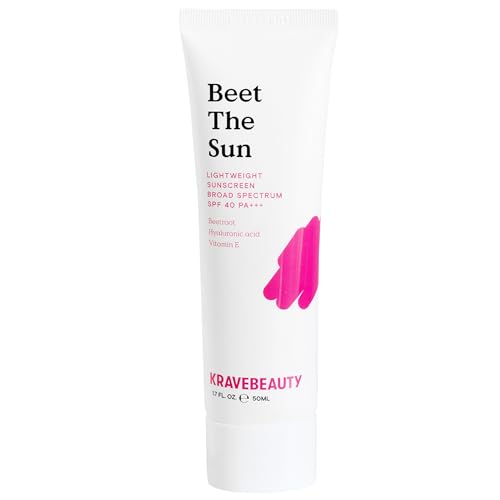
The KraveBeauty Beet The Sun is widely regarded as a holy grail for acne-prone and sensitive skin types because it manages to deliver broad-spectrum SPF 40 protection without any sunscreen smell, eye sting, or skin irritation. The formula relies on beet root extract and hyaluronic acid to provide hydration, while propanediol helps support the moisture barrier without feeling heavy. The fast-absorbing texture sets into a dewy finish that acts as a smooth primer under makeup — with zero white cast reported consistently across all skin tones in user reviews.
What sets this apart from other mid-range daily sunscreens is its complete lack of fragrance, essential oils, and drying alcohols. Many users with rosacea, perioral dermatitis, and fungal-acne-prone skin report that this is the only SPF they can use daily without breakouts or burning sensations. The texture is lightweight enough for humid summer days yet hydrating enough to double as a moisturizer in the morning routine for normal-to-combination skin types.
One trade-off is the SPF 40 rating, which is sufficient for daily incidental exposure but lower than the SPF 50 options in this guide. Users who spend extended time outdoors should pair this with a hat or reapply more frequently. Additionally, the 50 mL tube runs out faster than thicker creams due to the thin, milky consistency — budget-conscious buyers may want to stock up during sales.
Why it’s great
- Zero white cast confirmed across all skin tones, including deep and dark complexions
- Completely fragrance-free and essential oil-free with no eye stinging
- Acts as an effective makeup primer with no pilling under foundation or cushion
Good to know
- SPF 40 is lower than competitors offering SPF 50 protection
- Thin lotion consistency empties the 50 mL tube faster than expected
- Not water-resistant — not ideal for sweaty activities or swimming
2. SCINIC Enjoy Super Mild Sun Essence 2 Set SPF50+ PA++++

The SCINIC Enjoy Super Mild Sun Essence has developed a fiercely loyal following among the most reactive skin types — including those with eczema, psoriasis, rosacea, and fungal acne. It combines SPF 50+ PA++++ protection with a lightweight essence texture that feels more like a hydrating serum than a sunscreen. The formula uses soy protein and hyaluronic acid to plump the skin while delivering a natural satin finish that doesn’t require a separate moisturizer underneath for those with normal-to-combination skin.
What makes this particularly compelling for sensitive skin is the complete absence of fragrance, essential oils, and drying alcohols, combined with soothing ingredients that actively calm redness rather than just sitting on top. Multiple verified reviews from users with chronic skin conditions report that this is the only sunscreen they have ever repurchased, citing its non-clogging nature and ability to calm rosacea flare-ups during wear. The slight yellow-green tint helps neutralize redness without leaving an obvious tint on lighter skin tones.
The main downside is the bottle size — each 50 mL tube lasts about one month with daily use to the face and neck, making it a faster repurchase cycle than denser creams. The two-pack helps offset this concern. Some users with very oily skin find the initial application too glossy, though it dries to a satin finish after a few minutes. It is not marketed as water-resistant, so heavy sweating or beach days will require reapplication.
Why it’s great
- Actively calms rosacea and eczema-prone skin during wear according to user reports
- No white cast, no scent, and no pilling under makeup despite the essence texture
- Moisturizing enough to serve as a standalone daily lotion for normal-to-combination skin
Good to know
- Each 50 mL tube lasts under one month with consistent daily application
- Initial glossy finish may require blotting for very oily skin types
- Not water-resistant — not suitable for intense outdoor activity without reapplication
3. P.CALM Water Barrier Moisturizing Sun Cream SPF 50+ PA++++
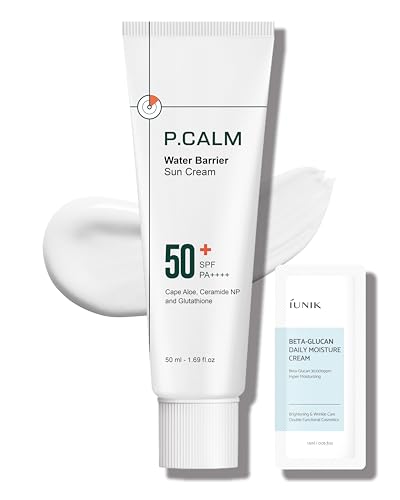
The P.CALM Water Barrier Sun Cream is specifically engineered for skin that stings or flushes with most sunscreens. This is a water-based formula with a high concentration of hydrating ingredients like cape aloe, ceramide NP, and glutathione that deliver a lightweight gel texture that absorbs quickly without any white cast. It has been dermatologist-tested as hypoallergenic and carries the PA++++ rating for maximum UVA protection, making it a strong contender for daily wear under makeup without pilling or greasiness.
User feedback consistently highlights the complete absence of eye stinging — multiple reviews confirm that it can be applied right up to the lash line and under the eyes without irritation, even for those with chronic dry eyes or contact lens wearers. The formula is also free from the sweaty-foot smell that some sensitive-skin users have reported with other Korean sunscreens, though there is a very faint clean scent that dissipates within seconds. The matte finish is rare for a hydrating SPF, making it suitable for combination skin that doesn’t want an oily sheen.
The primary downside is that the formula is not sweat- or waterproof, which limits its usefulness for outdoor exercise or humid climates unless you reapply diligently. The tube is also on the smaller side at 2.12 ounces, and some users note that the cream can feel slightly thick on first application before warming up on the skin. Patch testing is still recommended for extremely reactive skin given the plant-based extracts in the formula.
Why it’s great
- Zero reported eye stinging — safe for under-eye and lash-line application
- Hypoallergenic and dermatologist-tested with a matte, non-greasy finish
- Contains barrier-supporting ceramides and soothing aloe for reactive skin
Good to know
- Not sweat-resistant or waterproof — requires reapplication for outdoor activity
- Gel texture can feel thick initially before warming and absorbing
- Some users note a faint clean scent despite being fragrance-free
4. TIRTIR Hydro UV Shield Sunscreen SPF 50+

The TIRTIR Hydro UV Shield is a chemical sunscreen that has won over oily and combination skin types with its semi-matte finish that delivers a glass-skin glow without looking greasy. It contains 3-Hyaluronic Acid for hydration, phyto collagen from mushrooms for elasticity, and U-active Real Vera from aloe for soothing — a combination that provides genuine skincare benefits alongside SPF 50 protection. Users consistently report that it absorbs instantly, leaves no white cast, and has a very faint sunscreen scent that dissipates quickly.
What makes this stand out for sensitive skin is the non-irritation testing and the fact that it doesn’t burn the eyes during wear. Multiple verified reviews from users with sensitive eyes confirm that they can wear it around the orbital area without the typical chemical-filter sting. The creamy texture spreads easily and layers well under TIRTIR’s own cushion foundation without pilling or oxidation. Users with oily-combination skin specifically note that the finish stays glowy but not greasy throughout the day, requiring no blotting for standard indoor wear.
The biggest concern is that the formula is not alcohol-free — it contains denatured alcohol which can be problematic for very dry or compromised skin barriers. A small subset of sensitive skin users report mild stinging on application, particularly if their skin is already irritated or dehydrated. The price per ounce is also higher than many competitors in this guide, though the performance and finish justify the cost for those with compatible skin chemistry.
Why it’s great
- Instantly absorbs with a semi-matte glass skin glow that doesn’t turn greasy
- No eye stinging reported even with contact lens wearers
- Layers flawlessly under cushion foundation without pilling or oxidation
Good to know
- Contains denatured alcohol which may sting very dry or compromised barriers
- Higher cost per ounce compared to other mid-range options
- Light sunscreen scent present that may bother fragrance-sensitive users
5. innisfree Daily Mineral UV Defense SPF 45 Tinted

The innisfree Daily Mineral UV Defense is one of the few green-tinted mineral sunscreens formulated specifically to neutralize redness while providing gentle SPF 45 protection with zinc oxide. The formula combines 8 types of hyaluronic acid with soothing Cica (centella asiatica) to hydrate and calm reactive skin. A two-week independent study showed 86% of users felt the product helped even out overall skin tone and reduce redness, making it a dual-purpose product for those with persistent flushing or rosacea.
User reviews highlight that this is the best mineral sunscreen they have found for deeper skin tones — the green tint neutralizes without leaving the chalky white cast that pure zinc formulas typically leave on melanin-rich skin. While there is a brief white cast on initial application, it fades within minutes as the product blends in, leaving a satin natural finish that doesn’t look oily or dry. The texture is lightweight and absorbs quickly, wearing well under makeup without pilling and without any sunscreen smell or eye irritation reported by most users.
On lighter skin, the green tint may initially appear unnatural before blending, and some users with darker complexions report that the tint requires thorough blending to avoid a ghostly appearance before it neutralizes. The SPF 45 rating is strong but not the maximum protection available in this category. Additionally, the product bottle is relatively small at 0.61 ounces for the 2-pack, so frequent reappliers will go through it quickly. Patch testing is advised for those with extremely sensitive skin given the botanical extract blend.
Why it’s great
- Green tint actively neutralizes redness and evens skin tone naturally
- Minimal white cast on melanin-rich skin compared to standard mineral sunscreens
- Contains 8 types of hyaluronic acid and Cica for soothing hydration
Good to know
- Initial white cast is present and requires thorough blending to fade
- Very small bottle size at 0.61 ounces — faster repurchase cycle
- Green tint may look unnatural on very fair skin before blending
6. MAKE P:REM Soothing Pink Tone Up Sunscreen SPF 50+ PA++++
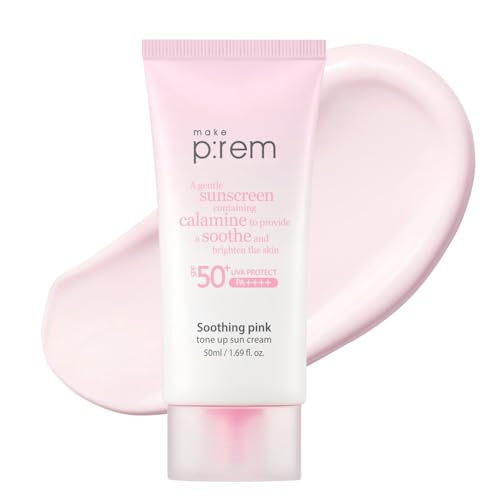
The MAKE P:REM Soothing Pink Tone Up Sunscreen is a mineral-based SPF 50+ PA++++ formula that adds a luminous pink tint to brighten dull or tired-looking skin while providing maximum UV protection. It boasts an irritation index of 0.00, meaning it was clinically tested to cause zero skin irritation, making it exceptionally safe for reactive complexions. The lotion-like texture spreads effortlessly and leaves a natural radiant glow that doubles as a makeup primer without heaviness or caking.
Users with rosacea and redness-prone skin report that this sunscreen provides a calming effect during wear while the pink tint brightens without masking or feeling heavy. The formula is free from artificial fragrances and relies on naturally derived ingredients for a faint pleasant scent. Multiple verified reviews mention that the finish transitions from glowy to satin after a few minutes of wear, making it suitable for combination skin that doesn’t want an overly dewy look. The mineral formula also offers the reassurance of physical protection for those who react to chemical filters.
The pink tint works best on light-to-medium skin tones — users with deeper complexions may notice a white or pink cast that doesn’t fully disappear even with thorough blending. The tube empties fairly quickly given the 1.69-ounce size, and the formula requires a cleansing balm or oil cleanser at the end of the day rather than a standard water-based cleanser. A very mild initial eye sting has been reported by some users, though it dissipates within seconds and doesn’t linger.
Why it’s great
- Clinical irritation index of 0.00 — exceptionally safe for reactive skin
- Pink tint provides a brightening, natural radiant glow as a standalone or primer
- Mineral formula with SPF 50+ PA++++ for maximum physical UV protection
Good to know
- Pink tint may leave a noticeable cast on deeper skin tones
- Requires oil-based cleansing to fully remove at end of day
- Very mild temporary eye sting reported by a minority of users
7. Melixir Airfit Invisible Sunscreen SPF 50

The Melixir Airfit Invisible Sunscreen is a lightweight chemical formula that combines SPF 50 protection with 80-minute water resistance and a truly invisible finish. It is enriched with Korean rice extract and hyaluronic acid for moisture, alongside basil oil and turmeric extract to reduce skin irritation. The formula has been dermatologist-approved as non-irritating and meets OTC UV filter regulations, giving it a broader safety assurance than some imported Asian sunscreens that don’t go through US FDA clearance for OTC labeling.
What makes this unique is the “airfit” texture that absorbs almost instantly with zero stickiness or greasiness — it genuinely feels like nothing on the skin after application. Users with sensitive-combination skin report no irritation, no pilling under makeup, and a finish that sits between matte and dewy, making it versatile for various skin types. The water resistance up to 80 minutes makes it one of the few options in this guide that can handle sweaty commutes, light exercise, or humid days without immediate breakdown. It is also 100% vegan and certified cruelty-free.
The most notable risk is eye irritation — a significant number of verified reviews report that this sunscreen causes eye stinging and watering, making it unsuitable for those who apply SPF around the eye area. Some users also note that the initial application leaves a temporary white film that requires thorough blending before it becomes invisible. The 1.7-ounce tube is on the smaller side, and the price per ounce places it in the higher tier of this guide.
Why it’s great
- Water-resistant for 80 minutes — rare in the sensitive-skin sunscreen category
- Completely invisible finish with zero white cast after thorough blending
- Dermatologist-approved with OTC UV filter compliance for added safety assurance
Good to know
- Reported eye irritation for a significant number of users
- Requires thorough blending to eliminate initial white film on application
- Higher cost per ounce than most alternatives in this guide
FAQ
What makes Asian sunscreens better for sensitive skin than Western ones?
Does SPF 50+ actually provide more protection for sensitive skin than SPF 30?
Can I use a chemical Asian sunscreen if I have rosacea or eczema?
How do I know if a Korean sunscreen will leave a white cast on my skin tone?
Why do some Asian sunscreens sting my eyes even when others don’t?
Final Thoughts: The Verdict
For most users, the asian sunscreen for sensitive skin winner is the KraveBeauty Beet The Sun because it combines zero white cast, no eye sting, and effective SPF 40 protection in a weightless formula that works as a makeup primer across all skin tones. If you need maximum SPF 50 PA++++ protection with active soothing for rosacea, grab the SCINIC Enjoy Super Mild Sun Essence. And for water-resistant daily wear that stays invisible, nothing beats the Melixir Airfit Invisible Sunscreen — though watch for eye irritation on sensitive orbital areas.