
Our readers keep the lights on and my morning glass full of iced black tea. As an Amazon Associate, I earn from qualifying purchases.
Specs are compiled from manufacturer listings and verified buyer reviews and can change over time — please confirm the key details on the product page before buying.
Freshly laid asphalt radiates 300-degree heat through boot soles, so a heat-defending sole is the first line of defense. Freshly laid asphalt will cook a standard work boot from the bottom up, so the right pair has a heat-defending sole and a protective toe, not just a sturdy leather upper that looks the part. Modern asphalt boots now pair heat-rated soles with protective toes for real jobsite safety.
I’m Min — the founder and writer behind Gadgets Feed. This guide is built by comparing the manufacturers’ published specifications and the patterns across verified customer reviews, so you get each pick’s real strengths and trade-offs instead of marketing spin.
If you’re laying hot mix on a road crew or patching parking lots, your boots face heat that can melt regular soles. These picks resist heat and slipping, and this asphalt boots guide explains the specs that keep your feet safe on the hot mix.
Our Picks at a Glance

How To Choose The Best Asphalt Boots
When you stand on a fresh mat, the ground below you is hot enough to soften the rubber on a standard boot. You need a sole that shrugs off that heat, a toe that won’t crush if equipment rolls over it, and an outsole that keeps you upright when the mix is tacky. The right sole rating and toe protection decide whether a boot lasts a season or fails fast.
The Heat Rating Rule
Look for a sole that can handle direct contact with extreme heat. A polyurethane or nitrile rubber blend is the common answer here, and some of these soles are rated to resist up to +572 °F for a full minute of contact. A sole rated to +572 °F confirms the boot is built for asphalt, not just labeled for it.
Toe Protection and Puncture Resistance
You want a crush-resistant toe cap and a puncture-resistant sole plate for the jobsite. Many of the best asphalt boots use a composite toe, which keeps your feet safe without the heavy weight or the cold-conducting metal of a steel toe. A puncture plate stops stray nails and sharp debris from finding your foot through the bottom.
Slip Resistance and Sizing Reality
Tack and diesel make the ground slick, so a superior slip-resistance rating is a must. European-made asphalt boots often run a full size to a size-and-a-half big, so check review fit advice before ordering. Ordering your usual size can leave a boot too loose for safe work.
Quick Comparison
| Model | Best For | Sole Heat Rating | Sole Type | Toe Protection | Amazon |
|---|---|---|---|---|---|
| Cofra 82020-CU0.W12★ Best Overall | Lace-up asphalt coverage | +572 °F | Polyurethane/Nitrile | Composite | Amazon |
| ROCKROOSTER Bakken AK303Slip-On Pick | Easy-on slip-on comfort | — | Rubber | Soft / Steel / Comp options | Amazon |
| Cofra 82020-CU0.W08 | Lace-up asphalt coverage | +572 °F | Polyurethane/Nitrile | Composite | Amazon |
| COFRA US Road | Heat insulation on the mat | 572 °F | Nitrile Rubber | Composite | Amazon |
| COFRA Boot | Season-long durability value | 572 °F | Nitrile Rubber | Composite | Amazon |
| COFRA Speedway | Flat industrial slip-on | — | — | — | Amazon |
| COFRA Heat Shield | Max tack and heat defense | +572 °F | Polyurethane/Nitrile | Composite | Amazon |
In‑Depth Reviews
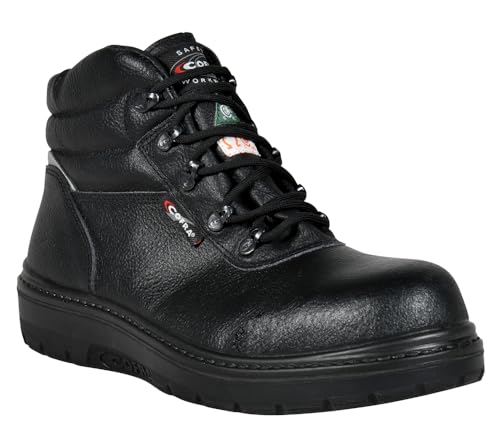
1. Cofra 82020-CU0.W12 New Asphalt EH PR Safety Boots
Our pick — over 4★ from 350+ verified ratings; the strongest balance of quality and price.
The lace-up workhorse known for surviving the whole asphalt season when other boots quit.
People on the crew keep coming back to this one for a simple reason: it lasts. Buyers report about two full seasons of use per pair, a standout lifespan on a hot paving crew. The leather upper is breathable and weatherproof, so your feet aren’t swimming inside by mid-morning.
The real heat defense is the polyurethane/nitrile rubber sole, rated to resist up to +572 °F for a full minute of contact. That’s the spec that matters when you’re standing on fresh mat, and it pairs with a crush-resistant composite toe and a puncture-resistant sole plate. One paving veteran notes the soles are super easy to clean once the asphalt warms up, which is a small daily win that adds up.
Comfort is where opinions split—some owners call it the most comfortable boot they own, others find it needs time. The fit runs notably different from other boots, with some long-term buyers sizing a whole size smaller than their usual. The thermic polyurethane insole keeps feet cool during use, the core purpose of this category.
What keeps owners loyal
- Heat-defender sole rated to +572 °F for 1-minute contact
- Composite toe plus puncture-resistant sole plate for jobsite safety
- Breathable, weatherproof leather that holds up for about two seasons
What to sort out first
- Fit runs large—long-time buyers often size one whole size down
- Comfort is mixed, so expect some hours of break-in
Reach for these if: you need a laced-up boot with serious heat and puncture defense for daily paving work.
Look elsewhere if: you refuse to size down a full size, because the loose fit will bother you all day.
2. ROCKROOSTER Bakken Men’s Black 6 inch Chelsea Boots
The laceless slip-on that skips the break-in period without skipping the durability.
If you are tired of bending over to tie laces before every shift, the Bakken is built for you. This Chelsea boot uses a special elastic collar and soft leather to slide on and off easily, and it is genuinely break-in free—no blisters or ankle rubs on day one. It’s an electrical hazard rated boot with non-conductive soles, so it checks that safety box too.
The build quality is the standout here, and it earns more praise than any other trait. The leather has survived mud, chemicals, and even a bike accident, then cleaned up well afterward.
The catch is breathability. The waterproof Hydroguard membrane keeps water out, but it also traps heat, and owners mention sweaty feet in warm weather or engine rooms. The other big note: sizing runs large, and the brand’s own chart tells you to downsize by half a size—or more if you have narrow feet.
Tough and easy: the rock-solid leather and the no-lace design make this the least fussy boot on the list, but plan for a half-size-down order and warm-weather foot heat.
Best if: you want a slip-on that’s comfortable from the first wear and shrugs off tough environments.
Think twice if: you work in hot climates where trapped heat will make your feet overheat.
3. Cofra 82020-CU0.W08 New Asphalt EH PR Safety Boots

A handsome lace-up with the same heat-proof sole, held back by a tricky fit conversation.
This is the same New Asphalt platform as our top pick, just in a different size run with a flat heel instead of a platform heel. You get the identical heat defense—a polyurethane/nitrile rubber sole rated up to +572 °F for a minute of contact—plus the same composite toe and puncture-resistant plate. A paver doing finish work found it suits the job perfectly and still looks great on the foot.
This pair differs from the crowd favorite on fit. Buyers warn it runs about a size and a half big, and a few owners hit real problems: one got the wrong size shipped entirely, and another found the flat sole lets asphalt stick a lot more, requiring diesel to keep it clean. Comfort is another friction point, with some reporting blisters during break-in.
It is note this is a smaller-sample product with a lower star rating than the 12-size sibling, so treat it as the same strong design with more variation in what arrives at your door. The heat protection and safety specs are identical, which is what actually keeps you safe on the mat.
Same shield, bigger gamble: identical +572 °F heat defense as the top pick, but the size-and-a-half oversize reports make this a careful-order boot.
Choose this if: you need the flat-heel version and you are prepared to size down aggressively.
skip it if: you can’t tolerate breaking in leather over a few days, because comfort is the weak spot here.
4. COFRA mens Us Road

The mat-test favorite that stays cool underfoot and shrugs off sticky tack.
Comfort is what owners lead with on the US Road. The Thermic Insole protects against high temperatures while a water-repellent, breathable leather upper keeps things from getting swampy, and a paver working 13-hour days on hot asphalt reports feet staying cool through the shift. One buyer in the trade confirms these don’t hold asphalt or anything, which is the daily win that keeps you productive.
The outsole is a special nitrile rubber blend resistant to temperatures up to 572 °F, and the non-metallic TOP RETURN composite toe keeps its shape for safety. The APT PLATE in the sole resists punctures and carries high electrical resistance. A long-season owner found these held up through 5 months of wear six days a week.
The honest trade-off is cushioning. That same 13-hour-day reviewer recommends adding insoles, because the stock footbed is thin and foot fatigue sets in on long shifts. Quality has its doubters too—one pair lost an eyelet on the first day out—but the consensus from the paving crowd is that the heat insulation and comfort are the real strengths here.
Cool feet, thin cushion: the standout heat insulation is the reason to buy, but budget for a good insole from day one.
Grab these if: you spend all day standing on hot mat and want the insulation that keeps feet cool.
Pass if: you expect plush all-day cushioning straight from the start, because the stock insole is firm.
5. COFRA mens Boot
The repeat-buy asphalt boot that outlasts pricier names.
This is the boot people buy four pairs of. Owners consistently call it the go-to for asphalt work, and the quality is the most-discussed strength—it holds up against hot mix, keeps feet cool on 10-to-15-hour shifts, and one buyer reports it outlasts Redwings. A paver’s second pair made it through about a season and a half before the sole finally gave out.
The nitrile rubber outsole resists temperatures up to 572 °F, which is exactly why a fresh pile won’t melt these. The composite safety toe meets jobsite rules, and the insulation is good enough that dump truck patch work doesn’t cook your feet. The hi-top style is a favorite for keeping tack and diesel off the ankle.
Durability is genuinely mixed after several years of ownership—the same person who loved their first pairs noted the quality has gone down on newer ones, with soles tearing in under a month. Fit runs large too, so owners order down a full size or more. For the price, the consensus is still strong, but know you’re betting on the classic build rather than the newest batch.
The repeat-buy reasons
- 572 °F-resistant nitrile outsole that survives fresh asphalt piles
- Composite toe that meets jobsite safety rules
- Value that beats local stores
What to verify before buying
- Newer batches show quality dips—soles tearing in under a month
- Runs large, so most owners size a full size down
Best for the season-long crew: proven heat defense and value make this the practical workhorse for paving.
Not for first-time Cofra buyers: the generous sizing and variable quality mean you should size down and inspect your pair early.
6. COFRA mens Speedway

A straightforward flats-style boot that works on asphalt when the sizing cooperates.
The Speedway is the simplest entry on this list—a COFRA flats industrial boot in brown that owners describe as working exactly as advertised for asphalt work. It’s a no-frills option for someone who wants the Cofra heat pedigree without the padded feature list, and it is easy to put on, which matters when you’re gearing up before the sun’s fully up.
What holds it back is the fit. Sizing complaints dominate the reviews, with multiple owners reporting the boot runs a full size and a half too big on the large end. One long-time buyer who’d worn the same size for five years found the new pair didn’t fit at all, and another added padding just to make it work. A long-term owner also notes these are not holding up to the heat like earlier pairs, with bubbles forming along the bottom.
The value math is simple: you get a working asphalt boot at a friendly price, but you’re gambling on the vague sizing and the newer build quality. If you nail the size, the boot does the job—just budget for a possible return, which isn’t free.
Simple but size-risky: the easiest Cofra on the wallet, but the size-and-a-half oversize reports and newer build issues make it the cautious pick.
Choose it if: you want a basic, easy-on flats boot for asphalt work and you’re comfortable sizing down hard.
Look elsewhere if: you need consistent quality batch to batch, since heat durability has slipped on recent pairs.
7. COFRA Leather Work Boots – HEAT SHIELD

The treadless heat specialist with lace protectors built to fight tack and diesel.
This HEAT SHIELD model is all about one thing: keeping the heat off your feet. Owners are blunt that it handles heat and tack better than any other boot they’ve tried, and the lace protectors are great against tack and diesel eating your laces. The polyurethane/nitrile rubber sole resists up to +572 °F for a minute of contact, and the composite safety toe plus puncture plate covers the jobsite basics.
The treadless design is a deliberate choice for a paving crew—there’s less tread for hot mix to gum up between you and the mat. The durability gets steady praise, with owners calling them very durable and noting they last a long time, and more than one buyer calls them simply the best boots for working with asphalt.
The trade-off is a brutal break-in. One owner would give zero stars for comfort, calling them the worst boots to break in he’s ever worn, even though the heat defense is class-leading. The bigger structural problem is sizing—there are no women’s sizes or smaller sizes at all, which locks out a chunk of the paving workforce. Treat this as a specialist tool with a punishing first week.
class-leading heat defense, punishing start: the best tack-and-heat performance available, but the break-in is rough and the size range is limited.
Pick these if: heat and tack resistance is your #1 priority and you can push through a brutal break-in week.
Pass if: you’re outside the size range or you want comfort on day one, because this boot delivers neither.
Understanding the Specs
Sole Heat Resistance
This is the make-or-break spec for asphalt work. Look for a polyurethane or nitrile rubber outsole rated to a specific temperature, like +572 °F for one minute of direct contact. That rating tells you the sole won’t soften, deform, or transfer that heat straight to your foot when you step on fresh mat.
Composite Toe vs Steel Toe
A composite toe cap protects your toes from crushing impacts without the heavy weight of steel, and it won’t conduct cold in winter. Many asphalt boots use this non-metallic option because it’s lighter for all-day wear while still meeting jobsite safety rules. Pair it with a puncture-resistant sole plate so stray nails don’t find your foot.
FAQ
Why do asphalt boots need a heat-resistant sole?
Do asphalt boots run big or small in size?
How long do asphalt work boots last?
What is the difference between a composite toe and a steel toe?
Can I use regular work boots on an asphalt crew?
Why does asphalt stick to the bottom of my boots?
Are slip-On boots or lace-up boots better for asphalt work?
What makes a boot slip resistant for oily or wet surfaces?
Final Thoughts: The Verdict
For most paving crews, the asphalt boots winner is the Cofra New Asphalt because its +572 °F heat-defender sole, composite toe, and proven multi-season durability make it the most complete package. If you want the easy-on convenience of a laceless boot, the ROCKROOSTER Bakken skips the break-in entirely. And for the crew that measures durability in seasons, not months, the COFRA Boot is the repeat-buy value pick.
How We Picked
We do not accept paid placement. Every pick is matched to a real buyer and a real use-case; we do not hands-on test units.
Sources & Methodology
Specifications: manufacturer listings and product documentation. Review insights: verified customer reviews, as of August 2026. Pricing: not shown on this page (it changes often); check the current price via the retailer link.
As an Amazon Associate, Gadgets Feed earns from qualifying purchases. This does not affect which products we feature.