
A pothole that reappears after one freeze-thaw cycle isn’t a repair — it’s a recurring chore. The best asphalt cold patch bonds aggressively on contact, compacts to a density that sheds water, and survives vehicle loads immediately without crumbling. Choosing the wrong formula means watching your work wash away or crack apart within months, forcing you to repurchase and reapply.
I’m Min — the co-founder and writer behind Gadgets Feed. I’ve spent countless hours researching polymer-modified binders, aggregate gradation, and cure-time chemistry across dozens of asphalt repair products to separate the permanent fixes from the seasonal placeholders in this category.
Whether you’re tackling a single driveway divot or maintaining a commercial lot, this guide breaks down the seven most effective options available today so you can confidently select the best asphalt cold patch for your specific repair demands.
How To Choose The Best Asphalt Cold Patch
Not every black bag or bucket delivers the same result. The chemistry behind how a cold patch bonds, compacts, and weathers dictates how long your repair holds. Focus on three factors: the binder system, the aggregate size and shape, and the environmental tolerance of the formulation.
Binder Type: Polymer-Modified vs. Emulsion vs. Asphaltic Rock
Polymer-modified patches use a rubberized or plastic-infused binder that stays flexible in extreme cold and resists rutting in summer heat. Emulsion-based patches rely on water-activated adhesion and cure harder over 24 to 48 hours. Natural asphaltic rock products bind through the oil naturally infused in the stone itself — no mixing required but they rely entirely on compaction force. For driveways seeing daily car traffic, polymer-modified or emulsion systems hold up longer. For temporary repairs on low-traffic areas, asphaltic rock offers the fastest application.
Coverage Depth and Density
A cold patch that claims seven square feet of coverage per bag often delivers closer to two or three square feet when applied at a proper two-inch depth. Shallow applications crumble under vehicle weight because the patch lacks the mass needed to lock aggregate particles together. Always estimate based on volume — one cubic foot of compacted cold patch requires roughly 100 pounds of material — rather than surface area alone.
Cure Time and Traffic Readiness
Some patches support immediate drive-over traffic the moment you tamp them down, while others require a full 24-hour cure before they reach structural strength. Emulsion-based patches that set with water often reach drivable hardness within two hours. Polymer-modified gel fillers may stay tacky for several hours but deliver superior adhesion to vertical crack walls. Match cure speed to your timeline — if you need the driveway usable by evening, choose a product rated for immediate traffic.
Quick Comparison
On smaller screens, swipe sideways to see the full table.
| Model | Category | Best For | Key Spec | Amazon |
|---|---|---|---|---|
| Aquaphalt 6.0 | Premium | Permanent pothole repair with 3-year warranty | 51 lb bucket, water-activated, 2-hour cure | Amazon |
| Liquid Rubber 44lb Pail | Premium | Large-area patching for pros and homeowners | 4 gallons, ready-to-use rubber formulation | Amazon |
| Road Rescue AP-100 (2-Pack) | Premium | Contractor-grade, no-mix application | 100 lb total, asphaltic rock, zero VOC | Amazon |
| Crack-Stix 125 ft 1/2″ | Mid-Range | Crack filling with heat-melt application | 125 feet of 1/2-inch rope, torch required | Amazon |
| Liquid Rubber 11lb Pail | Mid-Range | Small- to medium-sized potholes | 1 gallon, ready-to-use rubber formulation | Amazon |
| Sakrete U.S. Cold Patch | Mid-Range | Deep hole filling with recycled asphalt | 50 lb bag, immediate traffic, all-weather | Amazon |
| MuzeFansi Crack Filler (2-Pack) | Budget | Narrow crack sealing with self-leveling gel | 2.2 lb total, silicone-based, waterproof | Amazon |
In‑Depth Reviews
1. Aquaphalt 6.0 Permanent Asphalt Repair

Aquaphalt 6.0 uses a proprietary water-activated emulsion that cures to a density rivaling hot-mix asphalt. Spread the material, add water, tamp it down, and the chemical reaction drives the binder into a rigid matrix that supports vehicle loads within two hours. The 51-pound bucket covers roughly 2.5 square feet at a two-inch depth — significantly less than optimistic manufacturer claims but the bond quality justifies the premium placement.
Zero VOCs and a resealable tub make it practical for homeowners who want a single product for multiple small repairs over time. The material stays soft inside the sealed bucket indefinitely, so you can reseal after partial use without waste. Users consistently report that patches hold tight through winter freeze-thaw cycles and summer heat without edge cracking or sinkage.
The per-unit cost sits above most competitors, but the three-year warranty reflects confidence most cold patch brands won’t touch. For anyone with a deep pothole or a high-traffic driveway who wants a single application that outlasts the season, Aquaphalt 6.0 is the reference standard.
Why it’s great
- Drivable in two hours after water activation
- Zero VOC formulation with no odor
- Resealable bucket for multi-use repairs
Good to know
- Expensive compared to bagged cold patch
- Coverage is lower than claimed on the label
2. Liquid Rubber Asphalt Patch 44lb Pail
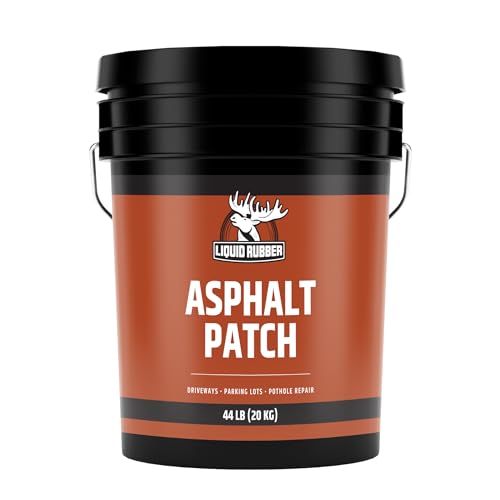
With over a million gallons sold across twenty years, Liquid Rubber’s 44-pound pail is the volume play for homeowners and contractors covering larger potholes or multiple spots in a single session. The rubber-modified binder delivers flexibility that resists thermal cracking — a common failure point in cheaper emulsion-based patches that go brittle in subfreezing temperatures.
No mixing is required. Scoop directly from the pail, spread into the hole, tamp down, and the material bonds to the existing asphalt edge without priming. The 4-gallon volume covers about eight square feet at a one-inch depth, making it efficient for parking lots, long driveway cracks, or road edge repairs where bagged cold patch runs out too fast.
Some buyers report that the bucket lid is extremely difficult to open, requiring prying tools and significant force. Plan to transfer the material into a secondary container before starting your repair. Once applied, the finish cures to a smooth black surface that blends well with aged asphalt.
Why it’s great
- Proven 20-year track record with millions of gallons sold
- Rubber binder stays flexible through winter freezes
- No mixing or special tools required
Good to know
- Bucket lid is notoriously difficult to open
- Can be too thick for shallow crack filling
3. Road Rescue AP-100 50 lb 2-Pack

Road Rescue AP-100 uses natural asphaltic rock that contains its own binding oil — no mixing, no water activation, just pour and compact. The 100-pound two-pack offers the lowest per-pound cost among premium-tier products in this guide, making it the economical choice for patching multiple holes or deep depressions where volume matters more than binder chemistry.
Application takes under a minute per hole. Sweep the area clean, pour the material, then tamp or drive over it repeatedly to lock the particles together. The material works in wet or dry conditions and at any temperature, which is rare in the cold patch category. The contractor-grade binder does not require squared edges on the hole, so irregular craters fill without prep work.
Real-world coverage falls closer to 2–3 square feet per 50-pound bag at a two-inch depth rather than the advertised 7 square feet. The patch holds well on slopes and survives rain, but users in snowplow zones note that the material can dislodge if hit by a blade edge before full compaction sets in.
Why it’s great
- One-minute application with zero mixing or water
- Lowest per-pound cost in the premium tier
- Works in wet, dry, hot, or freezing weather
Good to know
- Coverage is far less than the 7 sq ft claim
- Not recommended for edges hit by snowplows
4. Crack-Stix 125 Foot 1/2″ Blacktop Crack Filler

Crack-Stix is not a pothole patch — it is a heat-melt rope designed specifically for filling long, narrow cracks in asphalt. The 1/2-inch diameter rope lays into the crack and melts when heated with a propane torch, flowing into the void and curing to a hard, epoxy-like consistency that standard cold-pour crack fillers cannot match.
The resulting fill does not re-melt on hot summer days, a common frustration with rubberized liquid crack fillers that soften and track onto car tires. Users report that properly applied Crack-Stix lasts for years rather than a single season, especially when backer rod or sand fills deep voids before the rope is melted on top.
Mastering the technique takes practice. Heat too aggressively and the material burns; heat too little and it won’t bond to the crack walls. The 125-foot spool covers a substantial amount of linear cracking, but deep or wide cracks will consume the rope faster than expected. Have a helper available to feed the rope while you torch.
Why it’s great
- Dries hard like epoxy, does not soften in summer heat
- 125 feet covers large driveway crack networks
- Zero VOC, safe for residential application
Good to know
- Requires a propane torch and some practice
- Not suitable for potholes or wide gaps
5. Liquid Rubber Asphalt Patch 11lb Pail
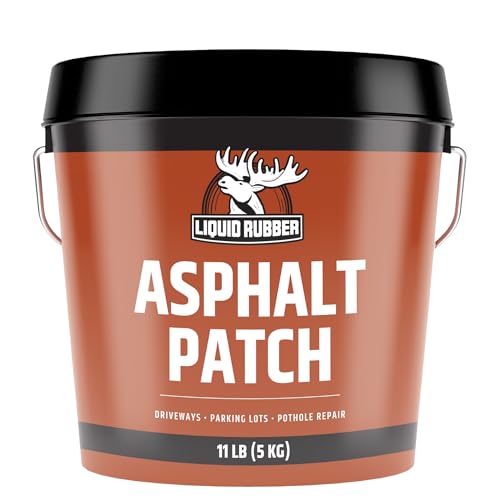
The 11-pound pail from Liquid Rubber is the same trusted rubber-modified formulation as the 44-pound version, scaled down for homeowners tackling a single pothole or a few square feet of damage. The ready-to-use consistency scoops and spreads without dripping, making it less messy than bagged cold patch that generates dust and loose aggregate.
All-weather application means you can repair in light rain or cold temperatures without the patch failing to bond. The rubber binder absorbs expansion and contraction from freeze-thaw cycles, which is the primary failure mode for rigid cold patches that crack out within months. Full cure takes 24 to 48 hours, so traffic should be kept off the repair until the surface firms completely.
As with the larger pail, the lid design is frustratingly difficult to remove. Buyers also note that the 11-pound quantity disappears quickly — expect about one square foot of coverage at a two-inch depth, making this best for spot repairs rather than ongoing maintenance across a long driveway.
Why it’s great
- Same proven rubber formulation as the 44lb pro pail
- Works in rain and cold without bond failure
- Cleaner application than loose bagged patch
Good to know
- Lid is extremely difficult to open
- Very limited coverage per pail
6. Sakrete U.S. Cold Patch Permanent Pothole Repair
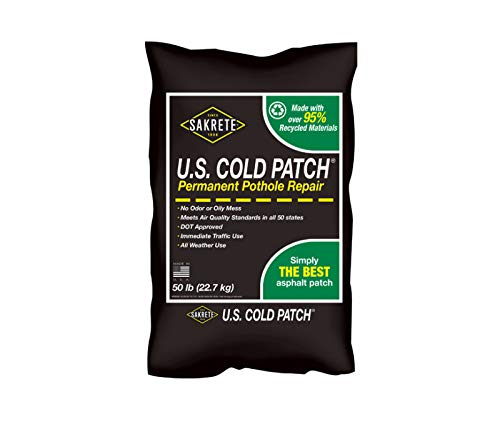
Sakrete U.S. Cold Patch uses recycled asphalt aggregate that stays pliable even at 20°F, making it one of the few budget-tier options that genuinely works in winter conditions. The material pours easily from the bag and shapes into deep holes up to six inches without requiring a water cure or special binder activation.
Traffic readiness is immediate after compaction. Stomp the patch down or drive over it, and the recycled asphalt particles lock together under pressure to form a dense surface that does not leave tire marks or sink under vehicle weight. For deep, sunken areas covering multiple square feet, the 50-pound bag provides better value per cubic inch than premium pails that cost two to three times more per pound.
The primary trade-off is long-term durability. Recycled asphalt lacks the polymer-modified binder that prevents edge cracking and aggregate loss over multiple seasons. Expect to refresh the patch after one or two winters, especially in regions with heavy freeze-thaw cycling. The bag also weighs only 50 pounds despite some listings claiming 60 pounds, so factor the actual weight into your coverage math.
Why it’s great
- Stays workable and pliable at subfreezing temperatures
- Immediate traffic readiness after tamping
- Excellent value for deep, large-area holes
Good to know
- May need reapplication after 1-2 freeze-thaw seasons
- Bag weighs 50 lbs despite some marketing claims
7. MuzeFansi Asphalt Crack Filler 2-Pack
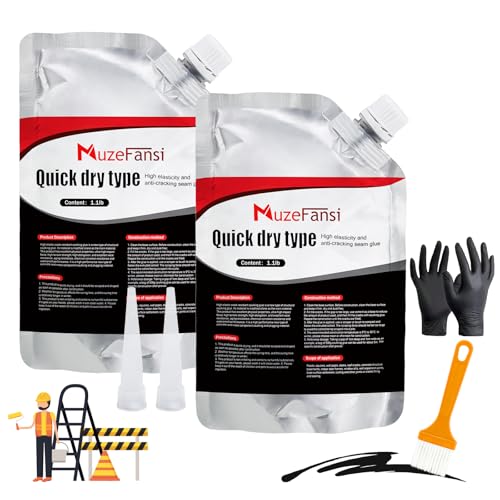
MuzeFansi is a silicone-based self-leveling gel designed for sealing narrow cracks on asphalt and concrete surfaces, not for filling potholes or deep depressions. The gel flows into gaps as thin as 1/8 inch and cures to a waterproof seal that prevents water infiltration from widening the crack during freeze-thaw cycles.
The cement-based adhesive technology provides high bond strength to the crack walls, absorbing movement from expansion and contraction without peeling or shrinking. Tack-free time is 2–3 hours, with full cure in 24–48 hours. The two-pack includes 2.2 pounds total, which covers roughly 20 linear feet of standard-width driveway cracks depending on depth.
For crack sealing only, this gel outperforms typical rubberized liquid fillers that sink or shrink as the solvent evaporates. However, the 2.2-pound total quantity is small — buyers tackling extensive cracking report needing multiple packs to complete the job, which drives the effective cost above larger tub options. Massage the pouch thoroughly before application to avoid thick spots that clog the nozzle.
Why it’s great
- Self-leveling gel penetrates and seals thin cracks
- Waterproof bond prevents freeze-thaw widening
- Strong adhesion to asphalt and concrete surfaces
Good to know
- Very small quantity for the price
- Not suitable for potholes or gaps wider than 1/2 inch
FAQ
Can I apply cold patch when the temperature is below freezing?
Why does my cold patch sink or push out after a few months?
How much cold patch do I actually need for a typical pothole?
Final Thoughts: The Verdict
For most users, the best asphalt cold patch winner is the Aquaphalt 6.0 because its water-activated binder and two-hour cure deliver permanent results that outlast seasonal alternatives by years. If you want maximum volume for the money and need to patch multiple deep spots, grab the Road Rescue AP-100 2-Pack for its one-minute application and bulk value. And for sealing long, narrow cracks before they become potholes, nothing beats the heat-melt durability of Crack-Stix — just bring a torch and some patience.