
The single most common mistake chai drinkers make is using a tea that buckles under the weight of milk and spice. A delicate Darjeeling or a generic breakfast blend simply disappears once you add a simmer of whole milk and a few pods of cardamom. What you actually need is a tea with the structural integrity to punch through—a second-flush Assam with a high leaf particle density and a malt-forward flavor profile that defines the backbone of a proper cup.
I’m Min — the co-founder and writer behind Gadgets Feed. I’ve spent hundreds of hours analyzing the production processes, leaf grades, and tasting notes from the major Assam estates to understand exactly what makes a tea leaf hold its character when boiled with milk and sugar.
This guide breaks down every relevant spec—from CTC particle size to organic certification and caffeine content—so you can confidently pick the best assam tea for chai and stop settling for a watery imitation.
How To Choose The Best Assam Tea For Chai
Not every Assam black tea is built for chai. The traditional method of simmering tea leaves directly in a mixture of water and milk—often with ginger, cardamom, and cloves—demands a tea that releases its flavor quickly without turning bitter. You need to look at three specific factors before you buy.
CTC vs. Orthodox Leaf Grade
Crush, Tear, Curl (CTC) processing produces small, granular particles that infuse rapidly under boiling conditions. This is the preferred processing method for chai because it maximizes both color extraction and caffeine release in a short simmer. Orthodox teas like TGFOP (Tippy Golden Flowery Orange Pekoe) are beautiful sipping teas but require longer steeping and produce a lighter liquor that often gets overwhelmed by milk.
Flush Season: First vs. Second Flush
The first flush (spring harvest) yields a lighter, more floral tea with lower astringency. Second flush (summer harvest) leaves are darker, more oxidized, and carry the signature malty, full-bodied profile that stands up to milk. For chai, always prioritize second flush Assam unless you specifically want a thinner, more delicate brew.
Organic Certification and Purity
When you boil tea leaves directly, any pesticide residue or artificial flavoring gets concentrated into your brew. USDA Organic certification—or equivalent—ensures the leaves were grown without synthetic chemicals. Many premium brands also offer Fair Trade certification, which guarantees the farmers who harvested those second flush leaves received a fair price.
Quick Comparison
On smaller screens, swipe sideways to see the full table.
| Model | Category | Best For | Key Spec | Amazon |
|---|---|---|---|---|
| VAHDAM Assam CTC Loose Leaf | Loose Leaf | Traditional boiled chai | 170+ cups per 12 oz bag | Amazon |
| Frontier Co-op TGFOP Assam | Loose Leaf | Premium sipping or light chai | TGFOP grade, Fair Trade | Amazon |
| Davidson’s Organic Banaspaty | Loose Leaf | Full-bodied daily chai | 1 lb bag, single estate | Amazon |
| VAHDAM Assam Exotic Bags | Tea Bags | Convenient strong chai | 100 count, pyramid bags | Amazon |
| Taylors of Harrogate Assam | Tea Bags | Quick morning chai | 100 count, Rainforest Alliance | Amazon |
| Republic of Tea Organic Assam | Tea Bags | Everyday organic chai | 50 count, USDA Organic | Amazon |
| 20 Leaves Organic Assam | Loose Leaf | Budget-friendly bulk chai | 1 lb bag, resealable pouch | Amazon |
In‑Depth Reviews
1. VAHDAM Assam CTC Black Tea Loose Leaf
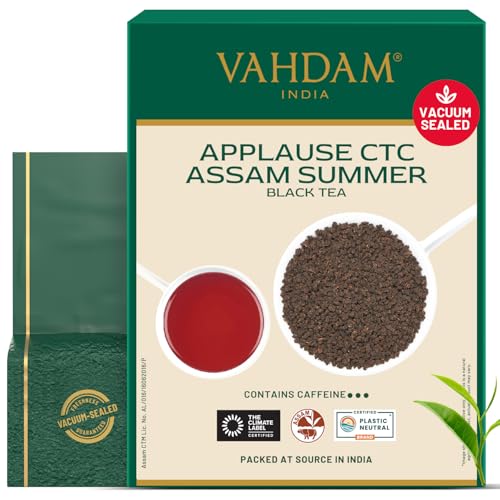
The VAHDAM Assam CTC is the definitive chai tea. Its Crush, Tear, Curl processing creates small, dense granules that release a deep red-amber liquor within minutes of boiling—exactly what you need for a milk-based simmer. Customer reviews consistently describe it as “strong, bold, and rich,” with one brewer noting that two teaspoons steeped for five minutes with half-and-half produces a cup that’s “somewhat malty and earthy, not too bitter.” The 12-ounce bag yields over 170 cups, making it one of the most cost-effective options for daily heavy use.
VAHDAM sources their second flush leaves directly from premium plantations in Upper Assam and vacuum-seals them within 72 hours of harvesting. This speed of processing preserves the volatile aromatic compounds that give Assam its characteristic malty punch. The company also carbon-neutral certifies their operations and redirects 1% of revenue to educate tea growers’ children—a strong ethical bonus that doesn’t affect the brew quality but adds peace of mind.
The only practical trade-off is that this is a loose leaf product. You’ll need an infuser, a tea strainer, or a dedicated chai pot to filter the granules after boiling. For chai purists who simmer tea directly in milk, this is a non-issue; but if you’re accustomed to the convenience of a tea bag, the extra step might slow you down during a rushed morning routine.
Why it’s great
- CTC processing extracts maximum flavor and caffeine in short simmering times
- 170+ cups per bag offers exceptional per-cup value
- Ethically sourced with carbon-neutral certification
Good to know
- Loose leaf format requires a strainer or infuser
- Packaging is a resealable bag, not a tin
2. Frontier Co-op Organic Fairtrade Assam TGFOP
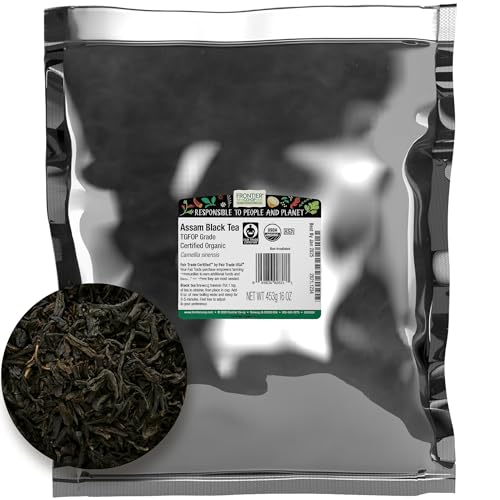
Frontier Co-op delivers a Tippy Golden Flowery Orange Pekoe grade Assam that sits at the top tier of orthodox leaf quality. The TGFOP designation means the leaves contain a high proportion of golden tips—the unopened leaf buds that contribute to a smoother, less astringent brew. One customer review noted this tea “does not get astringent when over steeped,” which is a direct benefit of the tippy leaf composition. The flavor profile is brisk and malty with a bright clarity that works beautifully for both English-style afternoon tea and a lighter, milk-forward chai.
The Frontier Co-op is a member-owned cooperative with strict organic and Fair Trade certifications. The leaves are hand-picked in India and sun-dried without any irradiation or chemical treatment. The 16-ounce bag is a generous bulk size, though it lacks a resealable closure—customers have pointed out that transferring the leaves to an airtight container is recommended to maintain freshness over the weeks you’ll spend working through a pound.
Because this is an orthodox TGFOP tea rather than a CTC, it needs a slightly longer steep—around 5–6 minutes in boiling water—to achieve the strength required for chai. If you prefer to boil your leaves directly with milk, the orthodox leaf format requires more careful attention to avoid under-extraction. This is better suited for brewers who make their chai using the traditional decoction method with a separate strainer step.
Why it’s great
- TGFOP grade delivers a smooth, non-astringent cup
- USDA Organic and Fair Trade certified from a member-owned cooperative
- Bulk 1-pound bag provides long-lasting supply
Good to know
- Requires a longer steep time compared to CTC-processed Assam
- Packaging is not resealable; you’ll need a separate container
3. Davidson’s Organic Assam Banaspaty Estate
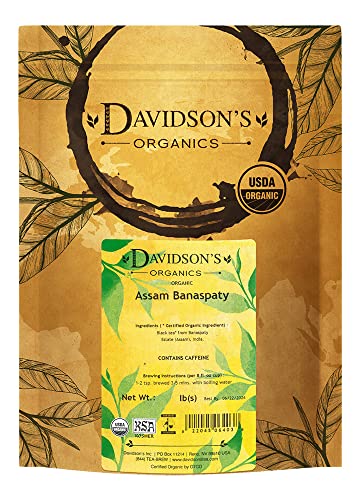
Davidson’s Organic Assam Banaspaty Estate is sourced from a single tea estate in the Brahmaputra Valley, giving it a consistent flavor profile that chai drinkers can rely on bag after bag. Customer reviews are emphatic about its “bold, malty, full-flavored” character, with one longtime user describing it as “great for ex-coffee drinkers” because the body and caffeine hit are comparable to a dark roast. The leaf quality is a full-leaf cut that balances the quick infusion of CTC with the complexity of a whole-leaf tea.
Davidson’s Organics has been in the tea business since 1976 and is a vertically integrated operation—they grow, import, blend, package, and sell under one roof. This supply chain control allows them to offer premium organic Assam at a per-pound cost that undercuts many competitors. The USDA Organic certification is backed by third-generation farming practices that avoid synthetic pesticides and chemicals.
One nuance reported by multiple buyers is that this tea requires precise steeping discipline. A 5-minute steep at 212°F produces a rich, slightly sweet liquor with no bitterness; pushing past 7 minutes introduces astringency that can clash with the milk in a chai. If you are the kind of drinker who likes to walk away mid-steep, this tea demands a timer.
Why it’s great
- Single estate sourcing delivers consistent cup quality
- Vertically integrated supply chain offers strong per-pound value
- Certified organic with no synthetic chemicals
Good to know
- Requires precise steeping to avoid bitterness
- Loose leaf; needs a strainer for preparation
4. VAHDAM Assam Exotic Black Tea Bags (100 Count)
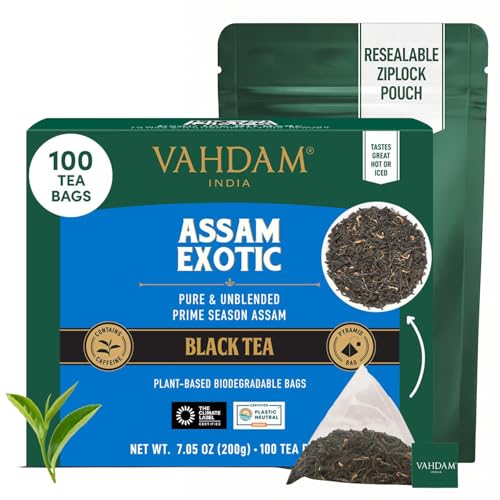
VAHDAM’s Assam Exotic in pyramid tea bag format bridges the gap between loose-leaf quality and bag convenience. The pyramid shape allows the second-flush Assam leaves to fully unfurl during steeping, releasing a malty, robust liquor that rivals many loose-leaf options. A customer review confirms that these bags “brew very dark with a tiny hint of floral flavor,” and that the bags are “sturdy with no leaking,” even when the string is wrapped around a tall mug. The 100-count box is designed for daily consumption, with each bag individually wrapped in a vacuum-sealed packet to preserve freshness.
The second flush harvest timing is clearly stated on the packaging, and the caffeine content is categorized as high-medium, which is ideal for a morning chai that needs to cut through the milk without causing an afternoon crash. VAHDAM also extends its ethical sourcing model to this product line, with the same carbon-neutral and plastic-neutral certifications and the 1% revenue allocation to farmer education.
Some users in the reviews noted a change in bag material between batches. Earlier shipments included a silky mesh bag, while more recent lots have a papery feel. The flavor is consistent across both material versions, but if the tactile experience of the bag matters to you, this inconsistency may be noticeable over time. The per-cup cost is slightly higher than loose-leaf alternatives, which is the trade-off for bag convenience.
Why it’s great
- Pyramid bags allow leaves to unfurl for full flavor extraction
- Individually vacuum-sealed packets preserve freshness
- High caffeine content stands up to milk in chai
Good to know
- Bag material may vary between silky mesh and papery texture
- Higher per-cup cost than loose-leaf bulk options
5. Taylors of Harrogate Assam Black Tea Bags
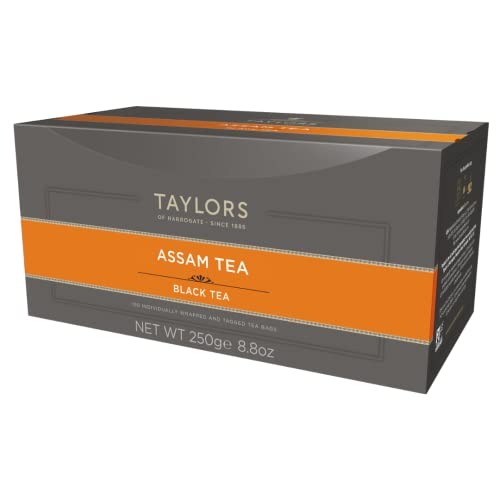
Taylors of Harrogate is a legacy British tea brand known for its Yorkshire Gold blend, and their straight Assam offering carries the same pedigree. The bagged Assam delivers a “rich, strong, and full-bodied with malty notes” profile that is very consistent across every brew. One customer noted that the tea bag contains “loose tea not dust,” which confirms that Taylors uses a larger leaf cut than many supermarket brands. The recommended steep time is 6–8 minutes, which is longer than CTC-processed teas but typical for an orthodox-style bag. Taylors is Carbon Neutral Certified, a member of the Ethical Tea Partnership, and Rainforest Alliance Certified—a solid ethical framework for a mass-market brand.
Where this tea falls slightly short for serious chai drinkers is in its sheer intensity. Multiple user reviews describe the flavor as “balanced” and “not overly spicy or malty,” which is a polite way of saying it lacks the aggressive punch that traditional chai brewing demands. When you boil this with a full cup of milk and three cardamom pods, the tea flavor can fade into the background. It works best for a lighter chai or for drinkers who prefer a more subtle tea presence in their cup.
A notable complaint worth flagging is a shelf-life issue: one reviewer reported that the box they received had an expiration date just months away. This appears to be a stock rotation inconsistency rather than a product flaw, but it means you should check the printed date upon arrival. The 100-count box is a generous volume for the price, and the individually wrapped bags make it easy to grab one without opening the entire box.
Why it’s great
- Individually wrapped bags with real loose-leaf quality
- Carbon Neutral and Rainforest Alliance certified
- Well-balanced malt profile suitable for lighter chai
Good to know
- Flavor intensity may be too subtle for robust chai
- Short shelf life reported in some shipments
6. The Republic of Tea Organic Assam Breakfast Black Tea
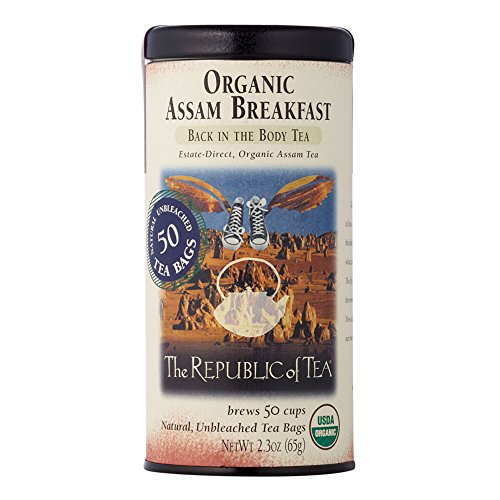
The Republic of Tea sources its Assam from the Gossainbarie tea estate in northern India, a known producer of robust organic black tea. The bags are USDA Certified Organic, Non-GMO Project Verified, and kosher. A key selling point is the flavor stability: one reviewer confirmed that the tea “is not bitter no matter how long it is steeped,” which is a rare quality for Assam and points to a well-handled oxidation process. The flavor is full-bodied and malty, with a caffeine level that sits below coffee but above many breakfast blends—ideal for chai drinkers who want a morning jolt without the coffee jitters.
The tin packaging is a practical advantage over bags and pouches. The 2.5-inch-wide, 5.5-inch-tall tin keeps the bags organized and protects the tea from light and air better than a cardboard box. However, with only 50 bags per tin, the per-bag cost is higher than larger bulk options. The Republic of Tea also markets this as a breakfast tea rather than a chai-specific Assam, so the leaf cut is optimized for a standard teacup steep rather than a full boil with milk. It works well for a quick chai made by steeping a bag in hot milk, but chai purists who boil leaves in water first may find the extraction depth slightly shallow.
A minor practical observation from the reviews: the bags are tagged but not individually wrapped, so the entire tin must be opened to access a bag. If you live in a humid climate, the open tin can expose the remaining bags to moisture over time. Plan to rotate through the tin within a month or two of opening.
Why it’s great
- Certified organic, non-GMO, and kosher
- Tin packaging protects tea from light and air
- Resists bitterness regardless of steep duration
Good to know
- 50-count tin has a higher per-bag cost than bulk alternatives
- Bags are not individually wrapped; open tin may risk moisture
7. 20 Leaves Organic Assam Loose Leaf Tea
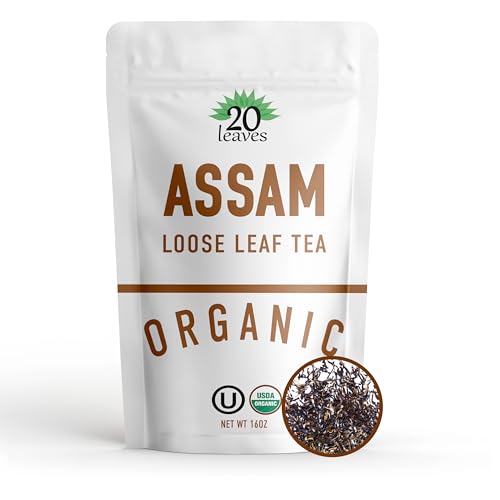
20 Leaves is the direct-to-consumer brand of QTrade Teas & Botanicals, a company with over 28 years of experience importing organic teas. This Assam is a medium-leaf, orthodox-style loose tea that balances maltiness with “hints of fruit and spice,” as described in the product information. The brewing instructions call for 3 grams per 8 ounces at 190–210°F for 5 minutes, which falls squarely in the standard Assam preparation range. One customer review noted that it is “fresh, smooth” and “brews well with a mesh infuser without bitterness even with a longer steep,” making it a forgiving option for less precise brewers.
The primary strength of this tea is its value proposition. At roughly a dollar per ounce, it is one of the most affordable organic Assams on Amazon. The 1-pound pouch uses a resealable kraft paper bag with an interior lining, which does a reasonable job of preserving freshness for a budget product. A reviewer who uses it for kombucha confirmed it delivers “the expected strength, smell, and color,” suggesting that the leaf quality is reliable even for secondary fermentation.
The trade-off is flavor complexity. One experienced tea drinker described it as “a fresh and good quality, but rather simple Assam,” noting that it is “less interesting than Ahmad’s Kalami Assam” and offers fewer of the high-end aromatic notes that second-flush connoisseurs seek. For chai, where spices and milk dominate the profile, this simplicity is less of a liability—the tea provides a solid, clean base without fighting the other ingredients. If you are looking for a tea that can also stand alone as a sipping experience, this may feel one-dimensional.
Why it’s great
- Most affordable organic Assam per ounce on this list
- Resealable kraft pouch maintains freshness
- Forgiving steep profile resists bitterness
Good to know
- Flavor is simpler and less complex than premium Assams
- Orthodox leaf format requires a strainer or infuser
FAQ
Can I use a tea bag grade Assam for chai, or do I need loose leaf?
Should I boil Assam tea leaves directly in milk or steep in water first?
What does “malt profile” mean when describing Assam tea for chai?
Final Thoughts: The Verdict
For most users, the best assam tea for chai winner is the VAHDAM Assam CTC Loose Leaf because its CTC processing and second-flush sourcing deliver the exact malt-forward punch that holds up under a long milk boil. If you want the convenience of a tea bag without sacrificing intensity, grab the VAHDAM Assam Exotic Bags. And for budget-conscious bulk buyers who need an organic base that doesn’t fight the spices, nothing beats the 20 Leaves Organic Assam.