
The right safety shoe does more than protect your toes—it determines whether you finish a 12-hour shift feeling like a human or nursing blisters, back pain, and cold concrete fatigue. The ASTM F2413-18 standard isn’t just a sticker on a box; it’s a documented promise that the footwear can withstand 75 pounds of static compression and a 250-foot-pound impact without crushing your metatarsals. But compliance alone doesn’t guarantee comfort, slip resistance, or longevity on a warehouse floor or an oil rig.
I’m Min — the co-founder and writer behind Gadgets Feed. I’ve spent hundreds of hours decoding the fine print of safety certifications, analyzing customer feedback across industrial and construction work environments, and comparing materials from budget steel toes to premium carbon-fiber composites so you don’t have to guess which boot will hold up on day 300.
After cross-referencing durability reports, break-in timelines, and real-world waterproofing claims from thousands of verified users, this guide reveals which astm f2413-18 safety shoes actually deliver on their certified promises for long shifts and harsh conditions.
How To Choose The Best ASTM F2413-18 Safety Shoes
Selecting a certified safety shoe means evaluating three overlapping layers: the protection rating, the work environment, and your personal foot mechanics. The ASTM F2413-18 standard covers impact resistance (I), compression resistance (C), and additional markings like puncture resistance (PR) or metatarsal protection (Mt). Understanding which combination applies to your daily hazards is the first step toward a purchase that won’t compromise safety or comfort.
Steel Toe vs. Composite vs. Alloy Toe
The toe material directly affects weight, electrical hazard properties, and thermal conductivity. Steel toes offer the most affordable impact protection but conduct cold and heat and add noticeable weight. Composite toes (fiberglass, Kevlar, carbon-fiber) are lighter, non-metallic, and thermally insulating—ideal for metal detectors and cold-weather environments—but typically come at a higher price point. Alloy toes (aluminum, titanium) split the difference, offering lighter weight than steel with a thinner profile, though they can dent under severe impact where steel would spring back.
Slip Resistance and Outsole Durability
An ASTM-certified toe means nothing if the outsole can’t maintain traction on lubricated concrete or steel decking. Look for ISO 20345 SRA (ceramic tile with sodium lauryl sulfate) or SRB (steel with glycerol) test standards. In practice, rubber compounds with deep multi-directional lugs provide the best grip on wet or oily surfaces, but softer rubber wears faster on abrasive concrete—a trade-off between immediate grip and outsole lifespan.
Waterproofing and Breathability
Waterproof membranes (Gore-Tex, proprietary films) are essential for wet environments but trap heat and moisture vapor, leading to sweaty feet in warm conditions. Shoes without waterproof linings breathe better but will soak through quickly in standing water. If your job involves both puddles and high temperatures, look for models that pair waterproof membranes with moisture-wicking mesh interiors to manage sweat accumulation.
Quick Comparison
On smaller screens, swipe sideways to see the full table.
| Model | Category | Best For | Key Spec | Amazon |
|---|---|---|---|---|
| Timberland PRO Titan EV | Composite Toe | All-day comfort on concrete | 4.21 lb per boot, waterproof membrane | Amazon |
| Irish Setter Two Harbors | Steel Toe | Oil rig & extreme conditions | 11″ height, waterproof full-grain leather | Amazon |
| KEEN Utility Dover | Carbon-Fiber Toe | Cold climate & long-term durability | 8″ height, 235g carbon-fiber cap | Amazon |
| Ariat Outpace | Composite Toe | Ultra-lightweight warehouse work | Sneaker-like profile, zero break-in | Amazon |
| Timberland PRO Powertrain | Alloy Toe | Rough terrain & warehousing | 501.7g per shoe, non-waterproof | Amazon |
| OUXX OX2518 | Steel Toe | Budget all-weather protection | 5″ height, Kevlar puncture midsole | Amazon |
| Skechers Cankton Ebbitt | Steel Toe | Budget-friendly wide-foot comfort | 2.4 lb per shoe, slip-on build | Amazon |
In‑Depth Reviews
1. Timberland PRO Titan EV 6″ Composite Safety Toe Waterproof
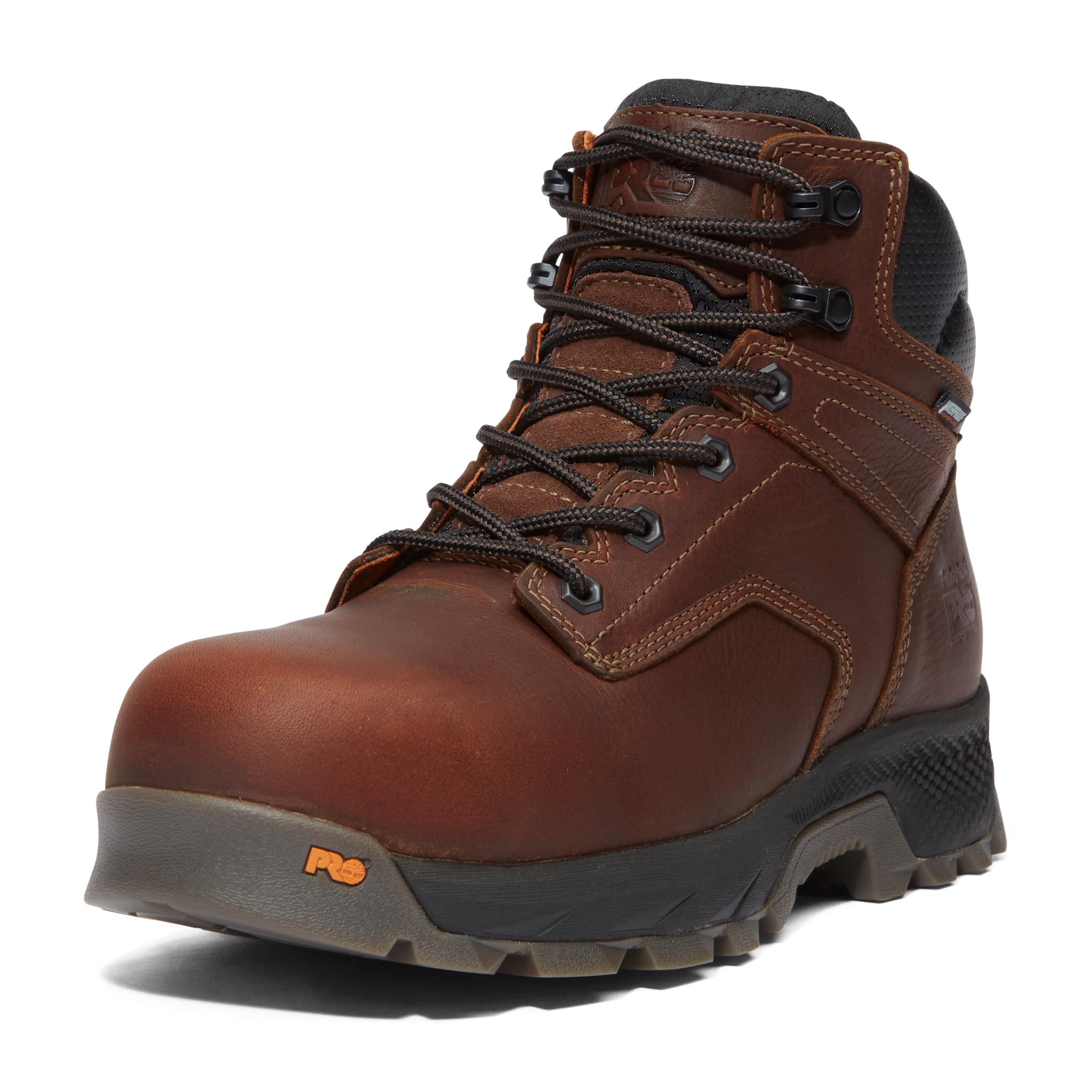
The Titan EV delivers an unusually balanced package: a composite toe that meets ASTM F2413-18 I/C standards without the cold-conducting issues of steel, yet the boot weighs just 4.21 pounds—light for a 6-inch waterproof boot. The anti-fatigue insole and molded EVA midsole absorb shock effectively on concrete, and multiple reviewers confirm zero break-in time straight out of the box.
Real-world testing from a five-month wearer confirms excellent traction on wet surfaces and consistent waterproofing through standing water. The full-grain leather upper is bulky enough to resist abrasion from daily scraping against equipment, yet the pliable tongue and padded collar prevent heel slip. A common sentiment among users with flat feet and plantar fasciitis is that the arch support remains supportive without causing pressure points, even after 10-hour shifts.
The primary trade-off is that the high-quality leather and waterproof lining reduce breathability—these run warm in summer conditions. The weight, while low for a safety boot, is still noticeable compared to sneaker-style composite toes. However, for anyone who needs a single boot that handles concrete, wet floors, and cold environments without sacrificing certified protection, the Titan EV strikes the hardest-to-find balance of comfort, durability, and safety compliance.
Why it’s great
- Zero break-in—wearable from first step
- Waterproof membrane stays dry through 15+ months in wet conditions
- Excellent arch support for flat feet and plantar fasciitis sufferers
Good to know
- Runs warm due to waterproof lining and thick leather
- Replacing the insole is recommended for maximum long-term comfort
2. Irish Setter Two Harbors 11″ Waterproof Steel Toe Work Boot

Built for the most punishing industrial environments—oil rigs, frozen pipelines, and heavy mud—the Irish Setter Two Harbors features an 11-inch shaft that provides calf-high protection against water and debris, paired with an ASTM F2413-18 steel toe that resists compression and impact with heavy machinery. The full-grain leather upper and waterproof membrane have held up for over 15 months of daily submersion without leakage, according to long-term reviewers.
The boot’s outsole is its standout feature: an oil-resistant rubber compound that doesn’t melt or deteriorate on hot rig floors, a common failure point for cheaper boots. Multiple users report wearing the same pair for a decade with only one replacement in 11 years, despite being “hard on footwear.” The traction pattern grips frozen steel platforms and slick concrete equally well, and the steel toe offers a wide profile that doesn’t pinch broad forefeet.
The height and weight are the main barriers—these are not boots for walking miles on flat concrete. The 11-inch shaft creates stiffness in the ankle that can take days to break in, and the leather doesn’t breathe well in warm climates. For anyone working on oil fields, construction sites with deep mud, or environments where standing water and heavy equipment are daily realities, however, the Two Harbors is among the most durable ASTM-certified boots available.
Why it’s great
- Outsole withstands hot oil rig surfaces that melt standard boots
- Virtually indestructible—users report over a decade of daily wear
- Waterproof membrane stays intact beyond 15 months of submersion
Good to know
- Requires a break-in period for the high shaft and stiff leather
- Poor breathability in hot weather due to height and waterproof lining
3. KEEN Utility Dover 8″ Waterproof Carbon-Fiber Toe
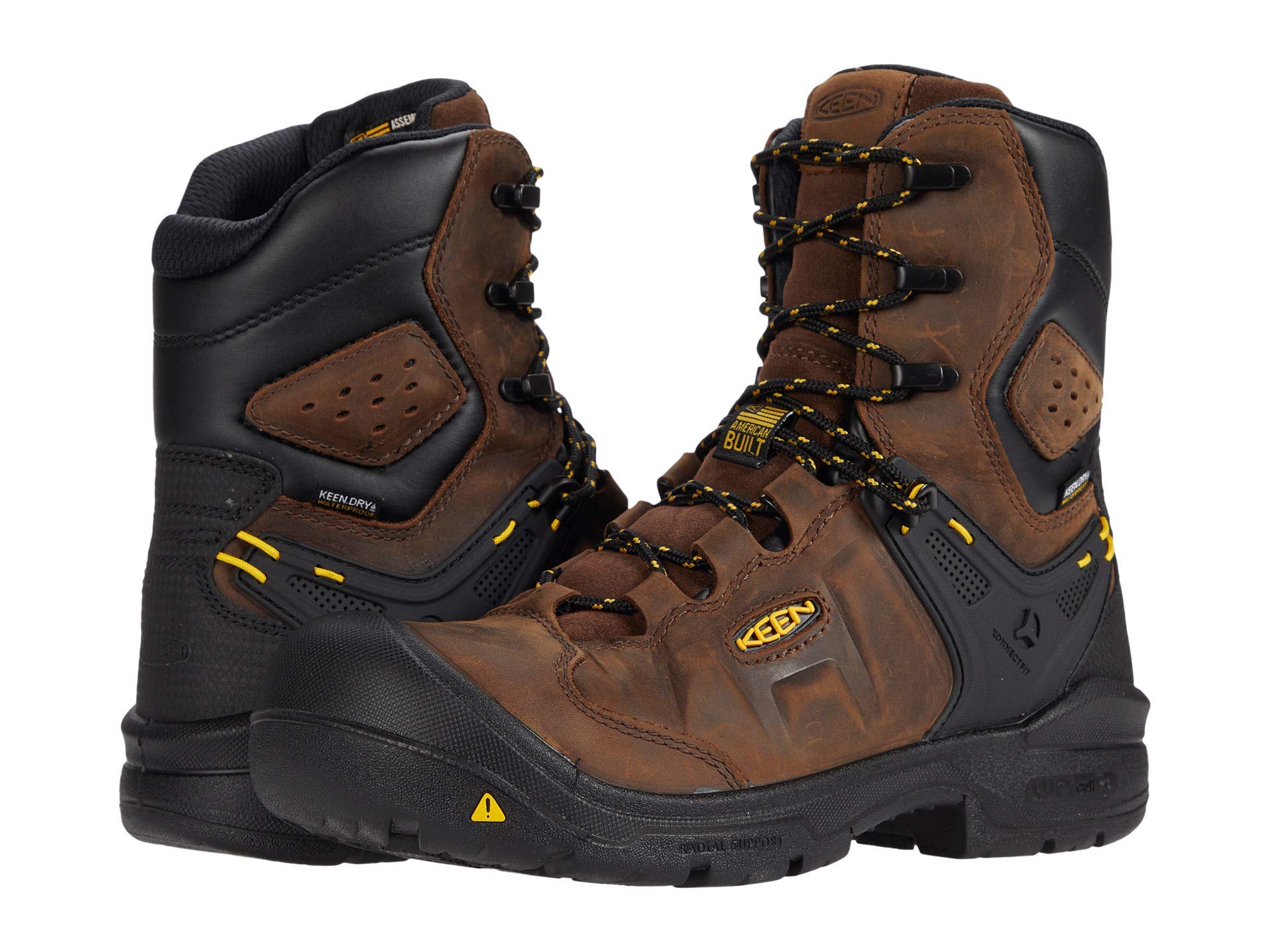
The KEEN Utility Dover uses a carbon-fiber toe cap that meets ASTM F2413-18 impact and compression standards while being significantly lighter than steel and completely non-metallic—ideal for environments with metal detectors or extreme cold where steel would conduct freezing temperatures. The 8-inch shaft provides better ankle stability than low-top options without the full mobility sacrifice of taller boots, and the KEEN.ReGEN polyurethane midsole returns energy on each step to reduce fatigue on all-day concrete walks.
Alaska-based users report that the Dover keeps feet dry, warm, and non-sweaty in sub-zero conditions, and the waterproof membrane remains intact after two to four years of daily 8-to-12-hour use. The carbon-fiber toe offers a naturally wider internal volume than steel toe caps, accommodating thicker socks and providing a roomier forefoot that reduces pressure on the metatarsals—a major advantage for anyone with wide feet or bunions who has struggled with standard steel-toe fit.
The primary downsides are the price—it sits at the top of the mid-range category—and the 8-inch height rigidity, which some reviewers found awkward when driving a vehicle. A consistent minor complaint is that the inner membrane stitching at the tongue can have a sharp knot that requires taping. For those who prioritize lightweight certified protection and superior insulation for frigid work conditions, the Dover’s carbon-fiber construction and plush midsole justify the premium.
Why it’s great
- Carbon-fiber toe is lightweight and non-conductive in cold weather
- Wide internal toe box fits thick socks and wide feet without pressure points
- Proven waterproof performance for 2–4 years of daily use in snow and rain
Good to know
- 8-inch shaft stiffness makes driving and kneeling less comfortable
- Some units have sharp inner stitching that requires modification
4. Ariat Outpace Composite Toe Safety Shoe
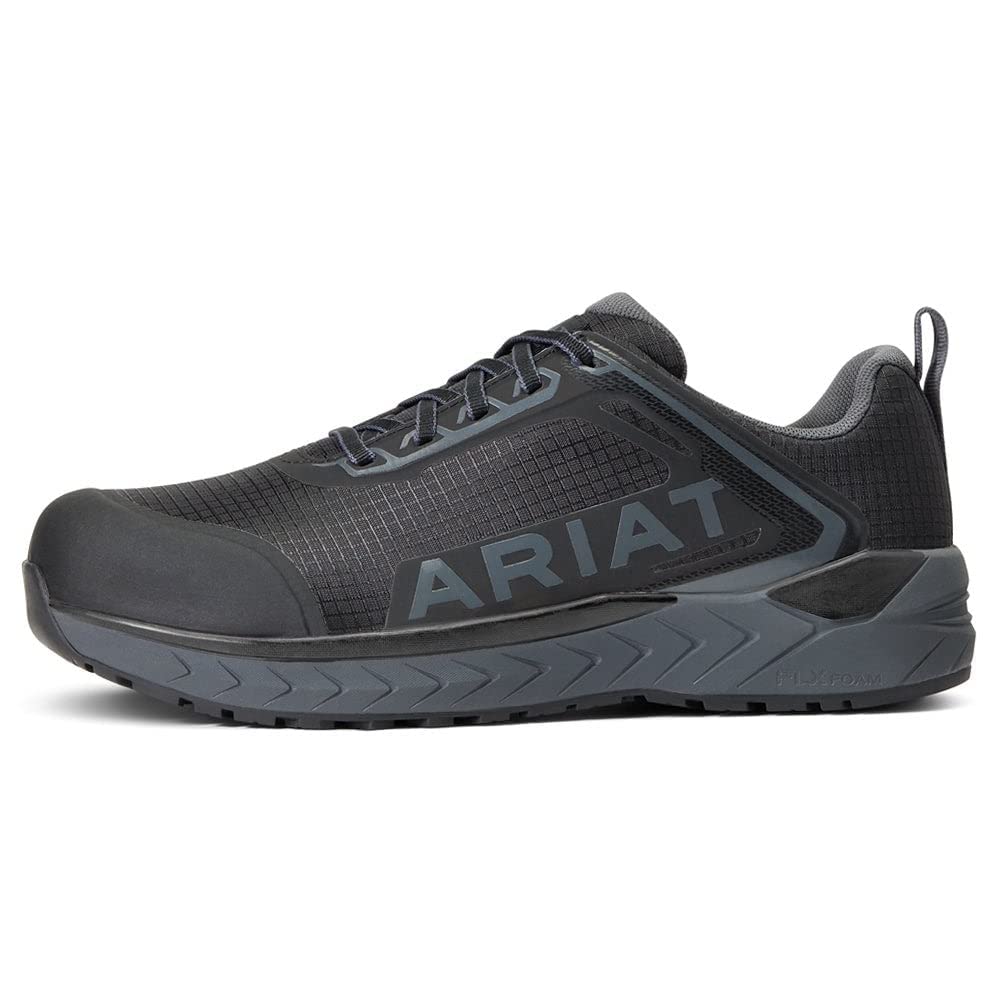
The Ariat Outpace is designed for workers who spend their shifts on hard, flat surfaces and want certified protection without the weight of traditional work boots. The composite toe is ASTM F2413-18 compliant but weighs less than 400 grams per shoe, and the sneaker-like mesh upper combined with the cushioned EVA midsole allows for zero break-in time—multiple reviewers confirm that after one walk around the block, the shoes feel fully broken in.
The outsole’s traction pattern is specifically praised for its performance on wet and oily concrete, with a user reporting excellent grip on a restaurant kitchen floor that left other brands sliding. The insole provides sufficient arch support for 9-hour shifts, and two separate reviewers with flat feet and plantar fasciitis report no foot pain after full shifts—a feat many bulkier safety boots fail to achieve. The non-metallic composite toe also means no triggering of metal detectors at airport checkpoints or jobsite security gates.
Durability is the primary compromise—daily use sees the outsole wear down in the 8–10 month range, and the laces require double-knotting to stay secure. The shoe also lacks ankle support, which makes it unsuitable for uneven terrain or jobs requiring frequent ladder climbing. For warehouse, retail, manufacturing, or kitchen workers who prioritize weight and comfort above all else, the Outpace delivers certified safety in a package that feels more like a running shoe than a work boot.
Why it’s great
- Zero break-in—comfortable from the first step
- Excellent slip resistance on wet and oily concrete surfaces
- Lightweight composite toe reduces foot fatigue on long standing shifts
Good to know
- Outsole wears down faster than heavier boots—around 8–10 months
- No ankle support for uneven terrain or ladder work
5. Timberland PRO Powertrain Alloy Toe Hiker

The Powertrain Alloy Toe Hiker uses an aluminum-alloy cap that meets ASTM F2413-18 impact and compression standards while shaving off significant weight compared to steel—each shoe weighs only 501.7 grams. The alloy toe offers a thinner profile than steel or composite, allowing for a more natural toe-off motion during walking. The outsole features Timberland PRO’s oil- and slip-resistant rubber with deep lugs for off-road grip, making this shoe a strong option for construction and warehousing on loose or packed dirt.
Reviewers consistently praise the lightweight feel and the sneaker-like comfort that doesn’t sacrifice certified protection. The shoe is sized true to fit for wide feet, and even after 9–10 hours of installation work on rough terrain, users report no pressure points or hot spots. The lacing system provides secure lockdown, and the padded collar and tongue prevent debris entry while offering enough flex for natural ankle movement.
The notable durability concern is that some users have reported outsole splitting at the flex point after 6–9 months of heavy use. Additionally, this model is not waterproof—the mesh-and-leather upper breathes well but will soak through in wet grass or puddles. For dry environments where weight and certified impact protection are the main demands, the Powertrain delivers an alloy-toe experience that undercuts heavier premium boots while maintaining the safety rating.
Why it’s great
- Very lightweight alloy toe reduces walking fatigue
- Comfortable for wide feet with no break-in required
- Good grip on loose dirt, gravel, and rough terrain
Good to know
- Not waterproof—avoid standing water or heavy rain
- Outsole splitting reported at flex point after 6–9 months
6. OUXX OX2518 5″ Waterproof Steel Toe Work Boot
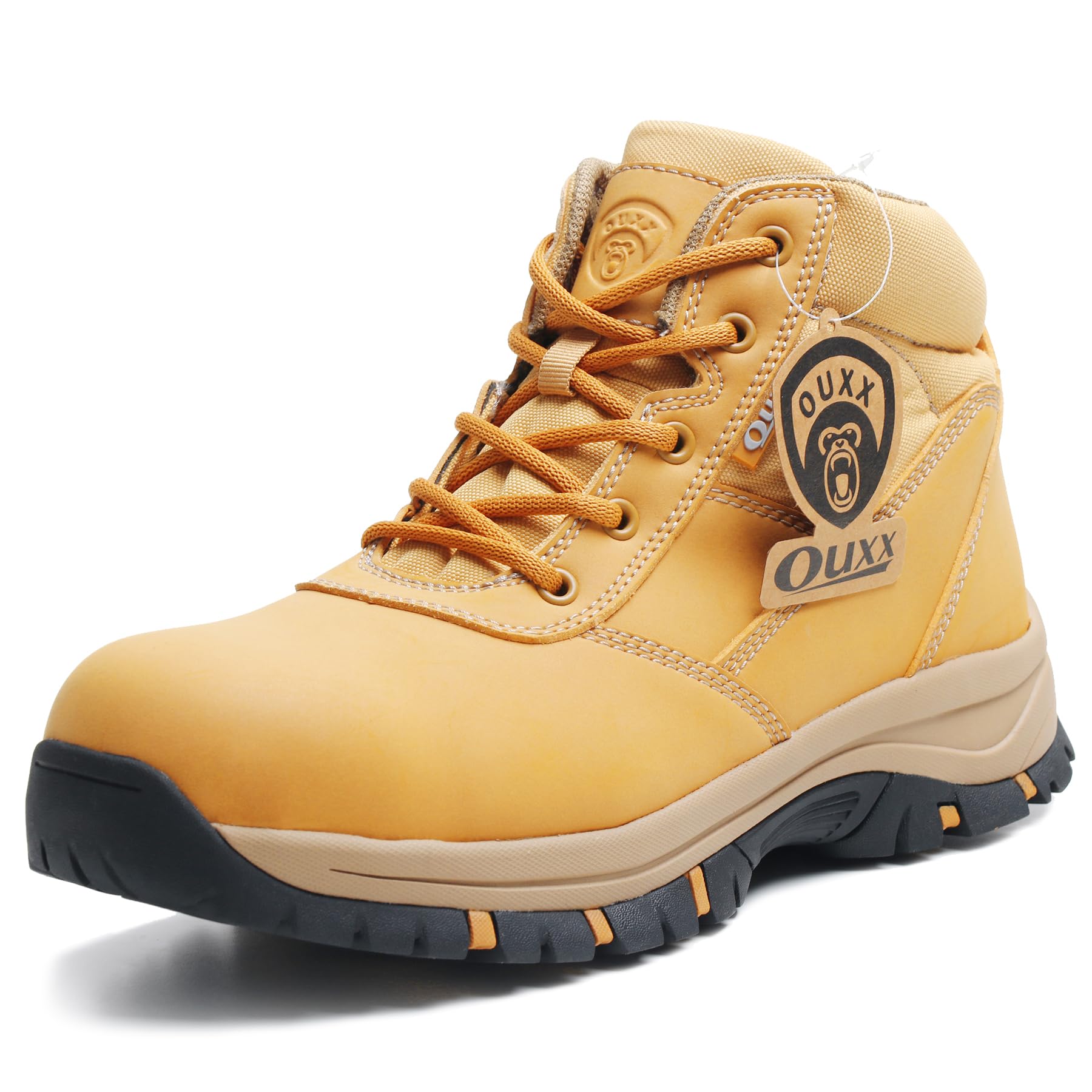
The OUXX OX2518 packs substantial safety features into an entry-level price point: an ASTM F2413-18 certified steel toe, a Kevlar puncture-proof midsole, a waterproof membrane, and an oil- and slip-resistant rubber outsole. The side zipper is a rare convenience at this tier, allowing quick on-and-off without wrestling with laces every time you enter a clean zone or break room.
Long-term reviewers report impressive durability—two pairs have lasted a cumulative four years of heavy daily use in cold, wet environments, with the first pair still functional for yard work. The steel toe is rated for the full 75-pound compression and 250-foot-pound impact, and the outsole grips wet factory floors and icy surfaces without degradation. The boot molds to the foot after a few days of wear, becoming comfortable enough for all-day use despite starting tight.
The value comes with compromises in fit consistency and midsole cushioning—the boot is not designed for marathon concrete walking. The insole lacks the shock absorption of premium boots, and the waterproof membrane, while effective, makes the boot run warm in summer. For anyone needing ASTM-certified protection, puncture resistance, and waterproofing at the lowest possible cost, the OX2518 delivers safety specs that often cost double.
Why it’s great
- Side zipper makes on/off fast and convenient
- Kevlar puncture midsole adds a safety layer rare at this price
- Proven four-year durability in cold, wet industrial environments
Good to know
- Midsole cushioning is basic—not ideal for all-day concrete standing
- Fit can be inconsistent; waterproof lining reduces breathability
7. Skechers Cankton Ebbitt Steel Toe Construction Shoe

The Skechers Cankton Ebbitt brings the brand’s heritage of slip-on, relaxed-fit comfort to the safety shoe category, featuring an ASTM F2413-18 steel toe housed in a lightweight package—just 2.4 pounds per shoe. The relaxed fit is a genuine advantage for workers with wide feet or high-volume insteps who find standard safety shoes too restrictive. The slip-on build eliminates laces entirely, using elastic panels and a rear pull tab for quick entry.
Automotive professionals and construction workers report that after a 2-month break-in period, the shoe becomes very comfortable for 12-hour shifts, with excellent arch support that remains intact even after a full year of use. The steel toe has proven effective at preventing injuries from dropped tools and heavy equipment, and the outsole maintains decent tread longevity compared to some sneaker-style safety shoes currently on the market. Multiple users have purchased second pairs, citing the comfort as superior to their hiking boots for all-day wear.
The compromises center on build quality longevity—the insole degrades and the shoe develops squeaks within a year, and the exterior shows wear more quickly than leather counterparts. The slip-on design also lacks ankle support and is not suited for muddy or deep-water conditions. For dry, indoor job sites where certified steel-toe protection is mandatory but walking comfort is the priority, the Cankton Ebbitt offers an accessible entry point that doesn’t sacrifice the safety rating.
Why it’s great
- Slip-on relaxed fit is ideal for wide feet and high insteps
- Excellent arch support holds up for a full year of daily wear
- Very lightweight at 2.4 pounds per shoe
Good to know
- Insole degrades and squeaks develop within a year
- No ankle support and limited waterproofing
FAQ
Does ASTM F2413-18 require steel toe shoes to be marked on the outside?
What does the Mt designation mean in ASTM F2413-18?
Final Thoughts: The Verdict
For most users, the astm f2413-18 safety shoes winner is the Timberland PRO Titan EV because it combines zero break-in, certified composite toe protection, and waterproofing into a package light enough for all-day wear without sacrificing durability. If you want the highest traction and longest lifespan for extreme environments, grab the Irish Setter Two Harbors. And for lightweight, sneaker-like comfort on concrete floors, nothing beats the Ariat Outpace.