
Our readers keep the lights on and my morning glass full of iced black tea. As an Amazon Associate, I earn from qualifying purchases.
Specs are compiled from manufacturer listings and verified buyer reviews and can change over time — please confirm the key details on the product page before buying.
Capturing the night sky is a different game from daylight photography. You’re fighting sensor noise, Earth’s rotation, and light pollution all at once, so the gear you choose matters more than in almost any other genre. This guide breaks down the best options — from dedicated astronomy cameras that attach to your telescope to full-frame workhorses that double as everyday shooters.
I’m Min — the founder and writer behind Gadgets Feed. This guide is built by comparing the manufacturers’ published specifications and the patterns across verified customer reviews, so you get each pick’s real strengths and trade-offs instead of marketing spin.
Whether you’re a beginner with a smart telescope or a veteran upgrading your rig, the right astrophotography camera hinges on sensor cooling, pixel size, and how much automation you want guiding the shot.
Our Picks at a Glance

How To Choose The Best Astrophotography Camera
Your first decision is the biggest one: are you shooting through a telescope, or with a camera and lens on a tracking mount? Dedicated astronomy cameras attach to a telescope and often have built-in cooling, while interchangeable-lens cameras are more versatile for landscapes, star trails, and everyday use. Your choice hinges on whether you’re shooting wide-field landscapes or deep-sky objects through a telescope.
Cooled vs. Uncooled Sensors
Heat is the enemy of long exposures. As a sensor warms up, it produces dark current — a form of noise that shows up as a haze over your faint nebula shots. A cooled camera drops the sensor well below ambient temperature, which keeps your frames clean. If you plan on deep-sky imaging with exposures over a minute, a cooled sensor is the single most important feature you can pay for.
Pixel Size and Resolution
Bigger pixels catch more light per pixel, which helps with faint detail, but smaller pixels on a high-resolution sensor can resolve more fine structure if your telescope optics are sharp. A dedicated astronomy camera with a 4/3-inch sensor and pixels around 4 or 5 microns strikes a strong balance for most scopes. Match the pixel size to your telescope’s focal length to avoid over- or under-sampling your target.
Quick Comparison
| Model | Best For | Sensor Cooling | Resolution | Key Tech | Amazon |
|---|---|---|---|---|---|
| Canon 5D Mark IV★ Best Overall | Versatile full-frame deep-sky | No | 30.4 MP | ISO to 102,400 | Amazon |
| BRESSER Deep-SkyBudget Entry | Beginner telescope imaging | No | 2.1 MP | ST-4 autoguider | Amazon |
| DWARFLAB Dwarf 3Most Portable | Portable smart telescope | No | Dual-lens 4K | App auto-tracking | Amazon |
| SVBONY SV405CC | Budget cooled deep-sky | Yes, -30°C | 11.7 MP | IMX294 sensor | Amazon |
| ZWO Seestar S30 Pro | Easy urban smart imaging | No | Dual-camera 4K | Light pollution filters | Amazon |
| ZWO ASI183MC Pro | High-res cooled color | Yes, -40°C | 20.1 MP | 5496×3672 sensor | Amazon |
| Canon EOS R8 | Light full-frame mirrorless | No | 24.2 MP | Dual Pixel AF II | Amazon |
| Sony a7 III | Low-light full-frame | No | 24.2 MP | ISO to 204,800 | Amazon |
| Nikon D850 | Maximum resolution detail | No | 45.7 MP | BSI no-AA filter | Amazon |
| Sony a7 IV | Versatile hybrid shooters | No | 33 MP | BIONZ XR engine | Amazon |
| Nikon Z6III | Premium all-rounder | No | 24.5 MP | ISO to 204,800 | Amazon |
In‑Depth Reviews
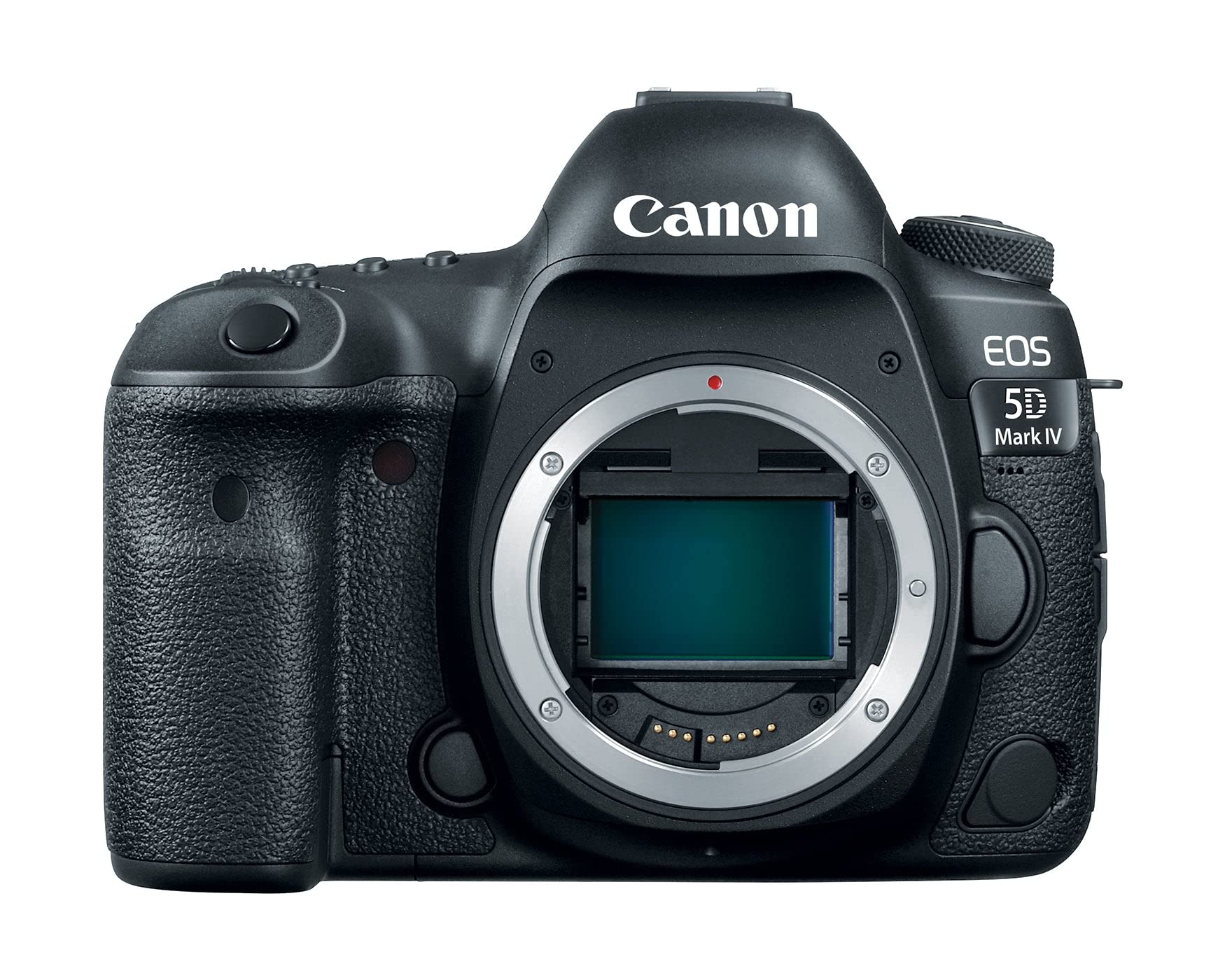
1. Canon EOS 5D Mark IV Digital SLR Camera (Body Only)
Our pick — over 4.5★ from 850+ verified ratings; the strongest balance of quality and price.
The full-frame DSLR that turns high ISO noise into a non-issue.
The 30.4-megapixel full-frame CMOS sensor is the heart of this camera, and its low-light performance is what makes it a night-sky favorite. Buyers report that ISO 12,800 is genuinely usable for capturing detail, and that 6400 roughly matches what the older 5D Mark III delivered at 1250 — a massive jump in sensitivity. That means you can push the sensitivity and still pull out faint nebula structure without the frame dissolving into noise.
The DIGIC 6+ processor keeps up with up to 7.0 frames per second continuous shooting, which helps if you’re capturing a meteor shower or a fast-moving target. The 61-point autofocus system with Dual Pixel CMOS AF locks on smoothly during live view, and the full touchscreen makes adjusting focus points on a dim star field far less fiddly than on older bodies. Built-in Wi-Fi lets you transfer files to your phone via the Canon Camera Connect app for quick previews on the go.
Reviewers consistently call out the rugged build and ergonomic feel, with a 2.5-year owner noting the battery easily lasts a full night of shooting — about 500-600 shots per charge. The main trade-offs are the lack of an articulating screen and the huge file sizes from 4K Motion JPEG recording at 30 or 24 frames per second. Reviewers consistently praise its build quality and image quality, cementing it as the top full-frame pick.
low-light full-frame king
- Clean images at ISO 12,800 with excellent dynamic range
- Touchscreen and fast Dual Pixel AF make focusing easy
- Rugged build with great battery life for long sessions
pricey for hobbyists
- No articulating screen for awkward angles
- 4K Motion JPEG files are enormous
- No 4K output over HDMI
low-light pro: you want one camera that shoots clean deep-sky images at night and still works perfectly for daytime photography.
budget buyers: the 4K video workflow demands big, fast memory cards — budget for storage.
2. BRESSER Full HD Deep-Sky Camera – Green 4959050
A featherweight 68g planetary camera that won’t strain your telescope.
Built around the SONY IMX290 back-illuminated CMOS sensor with a claimed 77% quantum efficiency at 533nm, this little camera is genuinely good at pulling in faint light for its price. It delivers 1936 x 1096 pixel resolution at 15 frames per second, with switchable 8 or 12-bit depth. Owners mention capturing M13 (mag 8), the Moon, and Jupiter with a 6-inch SCT telescope, which is a solid result for an entry-level rig.
You get everything you need to start right away: a C-Mount adapter (a standard lens mount), a 200cm USB cable, a 150cm ST-4 autoguider cable (a cable that connects to your telescope’s tracking system), and the ToupSky software DVD all in the box. The metal body is compact at about 7.2x3x3 cm, and long exposures keep the sensor from overheating, so you can shoot for hours without image-degrading heat. The dedicated ST-4 autoguider port lets you guide your main telescope while this camera captures, a feature simpler planetary cameras lack.
There are real caveats to weigh. The software is not the most intuitive, and there’s no Mac OSX installable version despite what the DVD claims — that’s a dealbreaker for Apple users. Windows XP users report crashes. This is a capable entry point for Windows-based telescope owners, but the software quirks mean it’s not the most “from the start” experience for everyone.
budget astro: Windows users with a telescope who want a low-cost first dedicated astronomy camera without paying for cooling.
serious imagers: you’re on a Mac — the software simply won’t install.
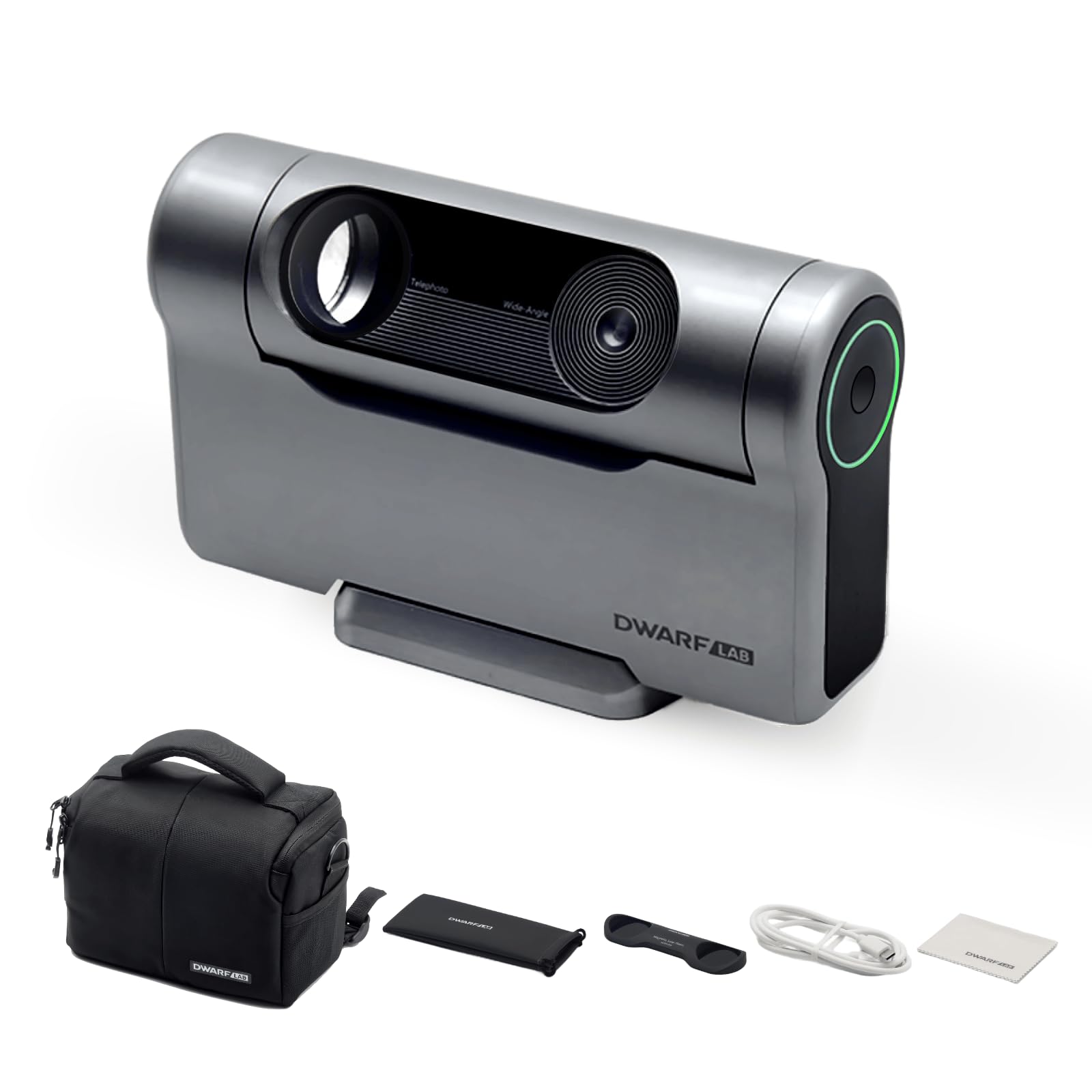
3. DWARFLAB Dwarf 3 Smart Telescope
The smart telescope that fits in a backpack and tracks stars automatically.
Weighing just 3lb / 1.35kg, this smart telescope slips into a standard backpack, so you can grab it for spontaneous stargazing trips. Its dual-lens system is the standout feature: a telephoto lens handles wildlife, landscape, and deep-sky objects, while a wide-angle lens captures the Milky Way and star trails. Customers note it works well even under heavy light pollution, which is impressive for a device this small.
The 4K auto-tracking system locks onto celestial objects and follows them automatically, and the one-touch cloud processing in the DWARFLAB app produces a finished image without needing a PC or complex software. Reviewers point out the setup takes about 2 minutes, and the EQ mode with a bubble level app makes alignment simple. Three built-in filters (astro, dual-band, visible) plus a magnetic sun filter give you range right from the start.
Owners praise its build and image quality, loving that it replaces a complex DSLR and equatorial mount setup. A few note the app can be slightly annoying, and some report it stops working when switching from the device’s WiFi. Also, the maximum sub-exposure is 120 seconds, but 60 seconds gives the best results. If you travel and want instant astro shots without gear hassle, this is a delightful pick.
smart all-in-one scope
- Incredibly portable at 3lb with a carrying case included
- Smart auto-tracking with app-based cloud processing
- Works well even in light-polluted urban backyards
small aperture limits
- Max sub-exposure is 120 seconds
- App can be finicky when switching WiFi
ease of use: you want point-and-shoot astrophotography without learning a mount and guiding setup.
resolution hunters: you want full manual control over long, untracked exposures.
4. SVBONY SV405CC Astronomy Camera

Real two-stage TEC cooling on a budget — a deep-sky bargain.
The 4/3-inch back-illuminated IMX294 sensor with 4.63μm pixels (4144×2822) captures excellent light, and its 63ke- full well capacity preserves both bright highlights and faint shadows. What sets this apart at its price is the two-stage TEC cooling, which drops the sensor to 30°C below ambient temperature. Shoppers say the cooler hits -10°C easily, and that dramatically reduces sensor noise during long exposures.
The fast USB 3.0 interface with a 256MB DDRIII buffer delivers 19fps (RAW8) or 16fps (RAW16) at full 11.7MP resolution, which keeps one-shot color focusing fluid. Smart HCG mode activates at gain 120 or higher, reducing read noise without sacrificing dynamic range, so you can push the gain for faint objects. It’s compatible with Windows, Linux, Mac OS, and even Raspberry Pi, plus SharpCap and TheSkyX via the included ASCOM driver.
Reviewers call it an ASI294MC Pro clone at a budget price, and it works well in Bortle 7 light pollution. The honest caveats are that cooling performance and reliability get mixed feedback — some buyers report the cooler fan stops working after about 10 uses, and it’s sensitive to USB cable length. For the price, it’s a fantastic entry into cooled imaging, but treat the cooling unit with care.
color accuracy: you’re moving up from a DSLR and want genuine sensor cooling without spending flagship money.
plug-and-play fans: the cooling fan reliability is a known mixed point — some units have issues after repeated use.
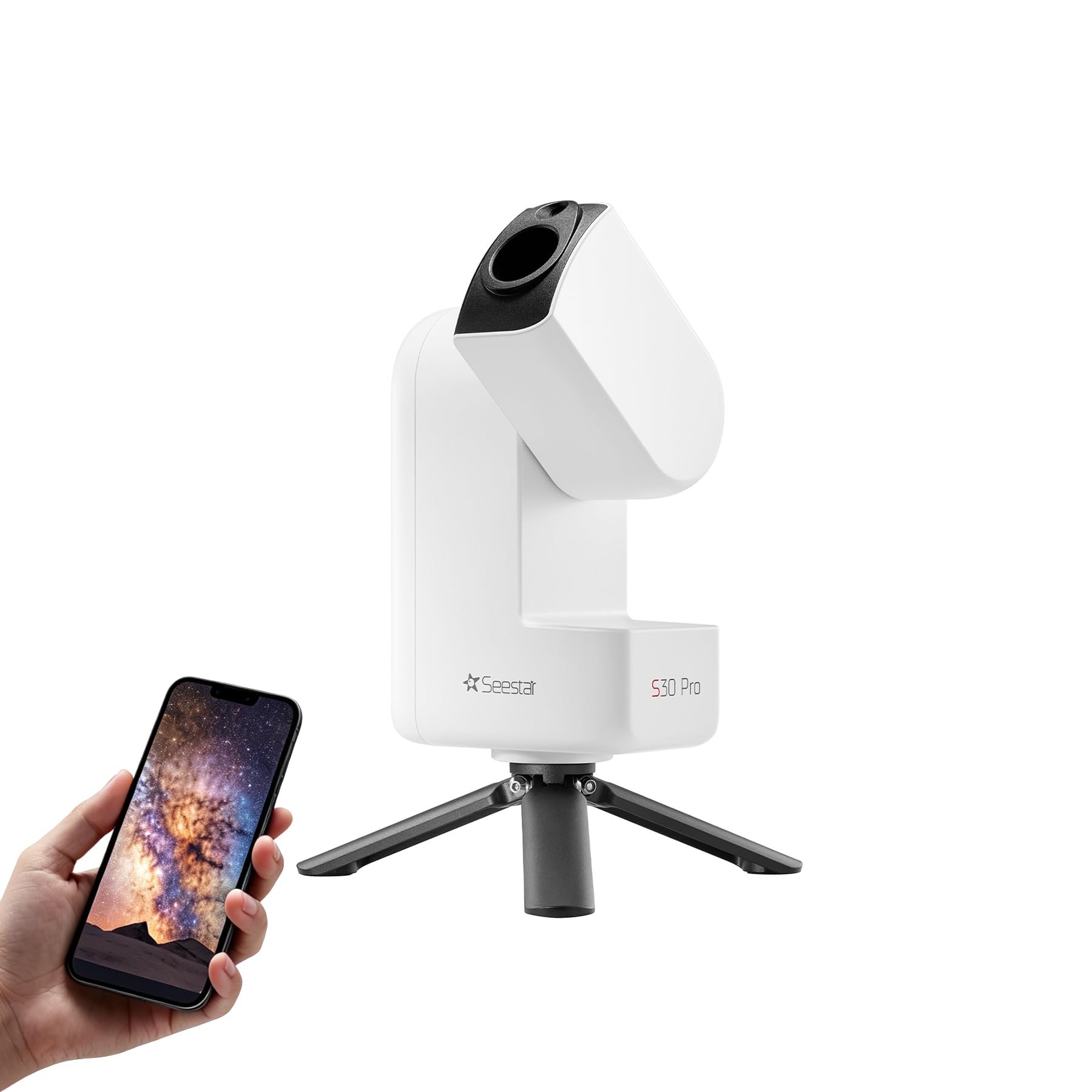
5. ZWO Seestar S30 Pro Smart Telescope
Built for city dwellers — light pollution filters make urban skies workable.
This smart telescope is designed around one problem: getting sharp images from bright urban environments. Apochromatic optics reduce color distortion for sharper stars and higher contrast, and built-in light pollution filters help you capture clearer astrophotography even where city glow is strong. Owners mention capturing images in under 10 minutes from a light-polluted city lot, with one impressive shot of the Pac-Man Nebula.
The dual-camera 4K imaging system captures deep-sky objects and wide night landscapes with clear detail. One-tap modes handle the Milky Way, star trails, planets, and galaxies, with automatic mosaic stitching for wide-field shots. AI smart imaging reduces noise and separates the sky from the foreground for more natural night photos. At 3.64 lb with a tripod included in the box, it’s a complete travel kit.
Users love the user-friendly app, simple setup, and stable auto-aligning mount. A few owners note the documentation is thin, with one saying they had to buy a separate book to understand all the features. The 160mm focal length and 4.6-degree field of view make it a great beginner-friendly smart scope, though the learning curve for software settings is real.
app-driven auto setup
- Built-in light pollution filters for urban use
- One-tap Milky Way, star trail, and planet modes
- Complete with tripod and Type-C cable
short battery life
- Documentation is sparse — expect a learning curve
- Keep the device stationary during deep-sky imaging
quick sessions: you live in a city and want a capable smart scope that fights light pollution automatically.
long exposures: you prefer detailed manual control over every setting — this is app-driven.
6. ZWO ASI183MC Pro Color Astronomy Camera

A 20.1-megapixel cooled sensor that pulls fine detail from faint nebulae.
The 5496×3672 resolution with 2.4-micron pixels captures fine detail in deep-sky objects like nebulae and galaxies, and the integrated TEC cooling drops the sensor 40-45°C below ambient for clean, low-noise long exposures. That heavy cooling is exactly what you need for faint supernova remnants. The red anodized CNC aluminum body is built to stand up to heavy field use.
Fast USB 3.0 transfer hits up to 19 frames per second at maximum resolution, and the 256MB DDR3 buffer keeps data transfer stable while reducing amp glow. It’s compatible with a wide range of gear — 1.25″ and 2″ telescope focusers, Mac OS X, and Windows. It also integrates perfectly with the ASIAIR Plus controller, which makes the whole capture process more automated.
Owners note that amp glow requires calibration frames — taking nightly darks works better than relying on a dark library. The camera pairs beautifully with a RedCat 51 and an 8″ SCT, and the color/mono flexibility is a plus. One fair warning: the cooler needs a separate 12V@3A power supply that isn’t included. This is an older ZWO model, so newer 533/585 alternatives exist, but it remains a strong, well-regarded performer.
low-light detail: high-resolution cooled deep-sky work where you want to resolve fine nebula structure.
noise purists: you’ll need to supply your own 12V@3A power for the cooler.
7. Canon EOS R8 Mirrorless Camera Body

Canon’s lightest full-frame RF body makes night-sky travel genuinely easy.
The 24.2-million-pixel full-frame CMOS sensor with the DIGIC X processor delivers a solid mix of resolution and low-light capability, and customers note it shares the same sensor, autofocus, and video performance as the pricier R6 II. The Dual Pixel CMOS AF II covers 100% x 100% of the frame with 1,053 AF zones and automatic subject detection for people, animals, vehicles, and aircraft. That makes it a superb all-rounder for day and night shooting.
Night performance is genuinely strong — a full-year owner calls it a huge upgrade from the 5D Mark II, praising the phenomenal low-light, fast eye/face AF, and superb dynamic range. The uncropped 4K at up to 60fps is oversampled from 6K, which produces sharp detail for both astro-landscapes and video. It shoots Full HD high-frame-rate at up to 180fps, and the compact body is easy to handle on a tracker.
Reviewers highlight its value, calling it the “R6 Mark II without the price.” The honest trade-offs are a single SD slot, a smaller battery, and no in-body image stabilization. Battery life is the one negatively-mentioned aspect, so plan for spares on a long night of imaging. For travel-friendly full-frame astrophotography, this is a winner.
compact mirrorless power
- Lightest full-frame RF body with excellent low-light
- 4K 60p oversampled from 6K for sharp detail
- Fast, accurate eye/face autofocus
battery drains fast
- Single SD card slot
- Smaller battery — carry spares
- No in-body image stabilization
travel friendly: you want a light, powerful full-frame body for both night-sky landscapes and everyday photography.
all-day shoots: it’s the one weak point for all-night sessions.
8. Sony Alpha a7 III Mirrorless Camera with 28-70mm Lens

A back-illuminated sensor with 15-stop dynamic range for dark skies.
The 24.2MP back-illuminated full-frame sensor is the star here, delivering exceptional low-light performance that reviewers consistently praise. Its 15-stop dynamic range and 14-bit uncompressed RAW give you the latitude to pull faint detail out of dark frames without crushing the highlights. The ISO range extends to 204,800, which is a serious tool for capturing the Milky Way at high sensitivity.
The autofocus system uses 693 phase-detection and 425 contrast AF points covering 93% of the image, and reviewers call it faster and more accurate than Canon DSLRs. The kit 28-70mm lens is reliable, and the camera shoots up to 10fps with silent or mechanical shutter, useful for capturing fast events. Owners note the 4K video is stunning, though it needs a high-speed UHS-II card for smooth recording.
Owners praise its picture quality and low-light performance, with one reporting about 710 photos per charge. The menu system is complex and reliability gets mixed feedback, so it’s not the most beginner-friendly body. The adapters make it flexible — Canon glass works via a Sigma MC-11 adapter. For dedicated night-sky shooters, this is a proven, capable workhorse.
versatile kit: you want a proven full-frame body with superb low-light and strong autofocus for tracking.
menu minimalists: a UHS-II memory card and some time learning the complex menu.
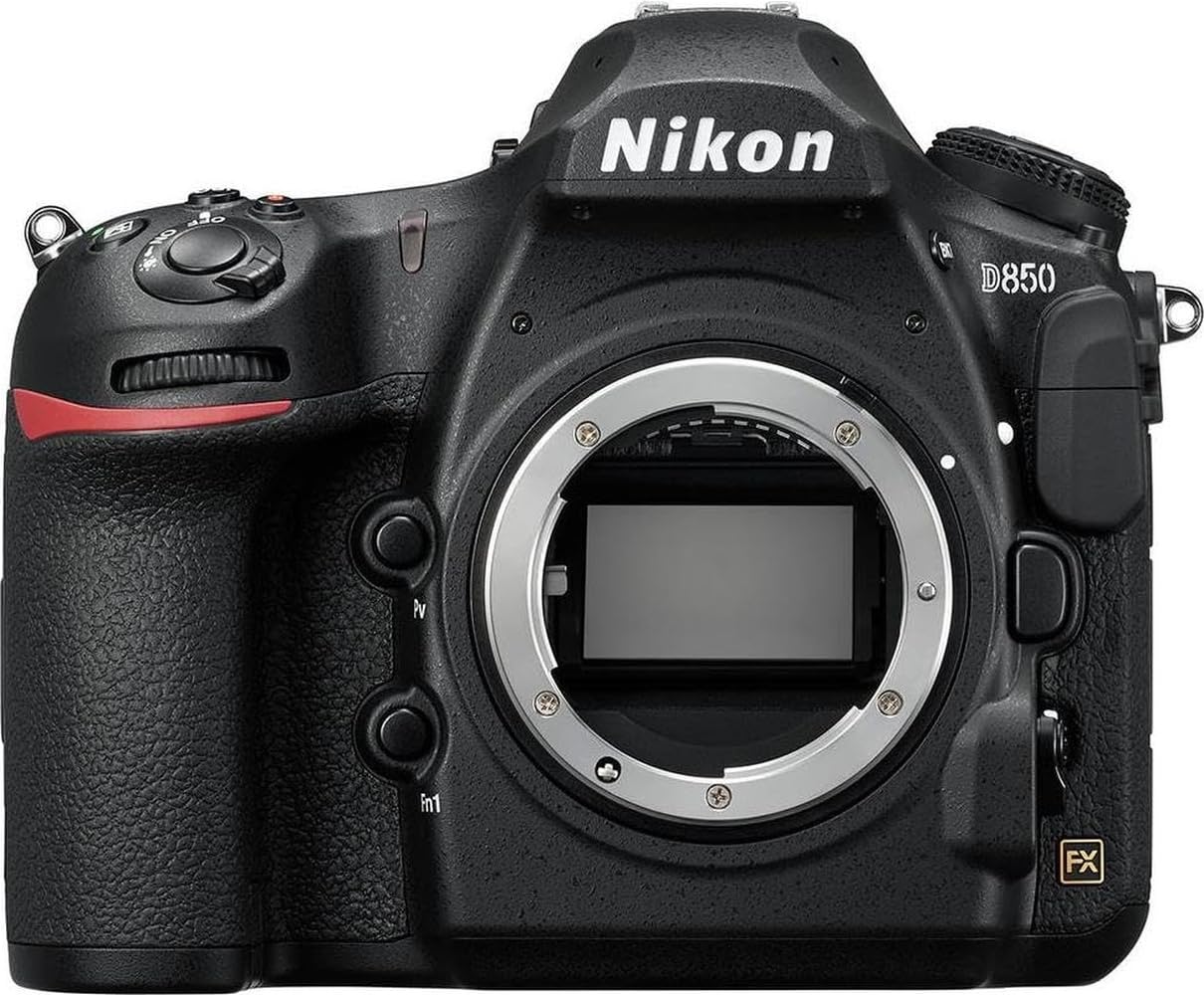
9. Nikon D850 FX-Format Digital SLR Camera Body
45.7 megapixels of back-illuminated resolution — the detail champion.
The back-side illuminated (BSI) full-frame sensor with no optical low-pass filter delivers extraordinary resolution at 45.7 megapixels, and owners say the detail approaches medium-format quality with the right glass. Removing that low-pass filter means sharp, fine star detail with virtually no risk of moiré. The dynamic range is outstanding, and low-light performance stays workable up to ISO 12,800.
Up to 9 frames per second continuous shooting at full resolution with full AF performance makes it capable for fast action. The tilting touchscreen, focus shift shooting mode, and focus peaking are genuinely useful for night work, and the illuminated buttons are a small but real upgrade when you’re fumbling in the dark. The 153-point autofocus system is industry-leading, with vastly improved AF-C tracking over older bodies.
Owners overwhelmingly praise its build quality, calling it the best DSLR body ever made. The honest caveats are that it’s heavy, produces large RAW files that fill a 32GB card fast, and the video autofocus is a weak spot. Performance gets mixed feedback — some report it won’t turn on after a few months. For maximum resolution in a DSLR, though, nothing here matches it.
landscape detail: the highest-resolution full-frame detail, especially with sharp prime lenses.
street shooters: big storage — a 45.7MP RAW file eats card space quickly.
10. Sony Alpha 7 IV Full-frame Mirrorless Camera

33 megapixels with a next-generation processor for photos and video alike.
The 33MP full-frame Exmor R back-illuminated CMOS sensor captures exceptional detail and color, and the BIONZ XR processing engine keeps everything fast and responsive. It records 4K 60p 10-bit 4:2:2 with full pixel readout, and 4K 30p comes from 7K oversampling with no pixel binning. The S-Cinetone color profile makes pleasing color straight out of the camera — a real plus for night-sky landscapes.
Owners call the autofocus remarkably accurate, with a bigger grip than the a7 III that handles better in the field. The improved menu system is a welcome change from earlier Sony bodies, and there’s an amazing amount of customization available. The 693-point autofocus with dual card slots (CFexpress Type A, SDHC, SDXC) gives you flexible, fast storage options for large RAW files.
Reviewers praise its image quality and versatility, noting it performs like a modern camera. The honest caveat is that performance gets mixed feedback, with some reporting overheating issues during heavy use. Battery life is slightly lacking for long sessions. It works best for enthusiastic shooters who want a pro-level hybrid without the flagship price.
all-rounder: you want a versatile full-frame body that handles both astro-landscapes and serious video.
action shooters: overheating in extended use and average battery life.
11. Nikon Z6III Mirrorless Camera 28-400mm Lens Kit
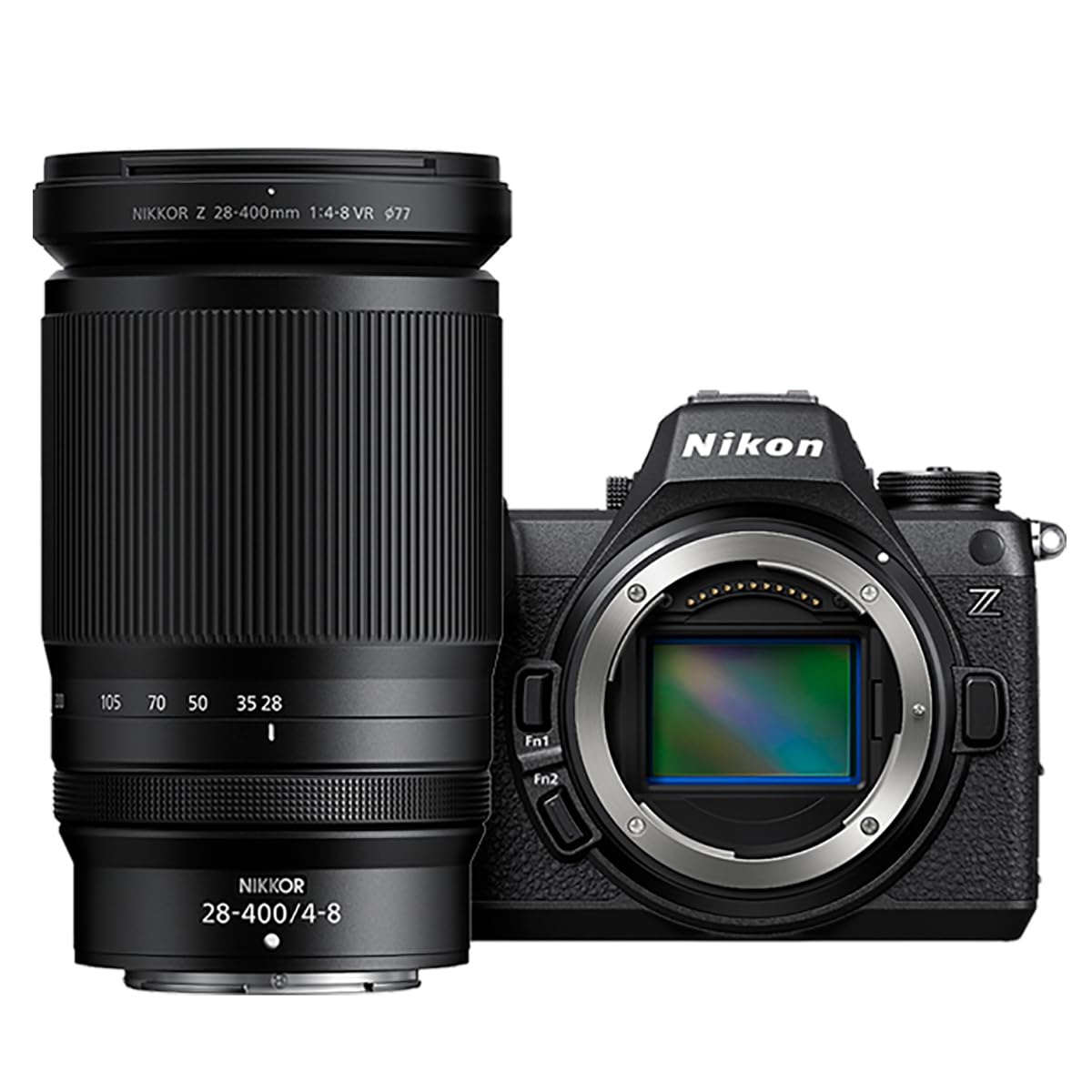
A class-leading 4000-nit viewfinder that stays bright in any conditions.
You can compose stars clearly even in bright daylight thanks to the electronic viewfinder, which hits 4000 nits of brightness (a measure of screen luminance), a 5760k-dot resolution, and a 120 fps refresh rate. The ISO range of 100-64000, extendable up to ISO 204,800, gives you strong low-light performance, so you can capture faint stars without excessive noise. Autofocus works down to -10EV (a measure of light level), using Nikon’s Deep Learning for multi-subject recognition.
This kit pairs the Z6III body with the NIKKOR Z 28-400mm f/4-8 VR lens, which one owner says captured great low-light photos at a vow renewal without flash. The 8 stops of built-in image stabilization with Focus Point VR helps for handheld night work. It records 6K/60p internal N-RAW video plus oversampled 4K UHD, with 4K/120p and Full HD/240p slow motion for creative flexibility.
Owners rave about how fast it locks onto birds in flight and eyes in photos, calling it excellent in low light. The main concern is a real one: one owner reports a 3-month-old body cracked, and Nikon offered no warranty because the Amazon seller wasn’t an authorized dealer. If you buy this, make sure the seller is legit or get a separate warranty plan. It’s a premium all-rounder that performs beautifully.
28-400mm superzoom reach
- 4000-nit EVF stays clear in bright conditions
- ISO up to 204,800 for extreme low light
- 6K/60p N-RAW internal video recording
lens weight hefty
- Warranty only valid with authorized Nikon dealers
- Body durability had one reported failure
one-lens travel: you want a top-tier hybrid with an incredible viewfinder and video power.
prime purists: confirm the seller is authorized so your Nikon warranty stays valid.
Understanding the Specs
Sensor Cooling
A cooled sensor uses a thermoelectric cooler (TEC) to drop the chip well below air temperature. This reduces dark current — the noise that builds up during long exposures — so your faint deep-sky shots look cleaner. Cooling is listed as a temperature drop below ambient, like 30°C or 40°C below, and it’s the single biggest upgrade for serious deep-sky work.
Pixel Size and Quantum Efficiency
Pixel size in microns (like 2.4μm or 4.63μm) affects how much light each pixel catches. Bigger pixels collect more light, which helps with faint targets, while smaller pixels on high-resolution sensors resolve finer detail. Quantum efficiency is the percentage of incoming photons the sensor actually captures — higher numbers mean shorter exposure times.
FAQ
What’s the difference between a smart telescope and a camera on a tracker?
How important is sensor cooling for astrophotography?
Will a full-frame camera body work for astrophotography?
What is an ST-4 autoguider port and do I need one?
How does light pollution affect astrophotography cameras?
Is a DSLR or a dedicated astronomy camera better for beginners?
What does ISO 12,800 being “usable” actually mean?
What autoguider or guiding do I need for long exposures?
How many frames per second do I need for astrophotography?
What is the best budget astrophotography camera in this list?
Final Thoughts: The Verdict
Across the board, the Astrophotography Camera winner is the Canon EOS 5D Mark IV because its full-frame sensor delivers clean, usable high-ISO images that tackle the darkness of deep space while remaining a versatile everyday camera. If you want a grab-and-go smart telescope that handles tracking automatically, the DWARFLAB Dwarf 3 is the most portable and beginner-friendly. And for budget-conscious telescope owners who want real sensor cooling, the SVBONY SV405CC is the value pick that gets you serious deep-sky results without the flagship price tag.
How We Picked
We do not accept paid placement. Every pick is matched to a real buyer and a real use-case; we do not hands-on test units.
Sources & Methodology
Specifications: manufacturer listings and product documentation. Review insights: verified customer reviews, as of August 2026. Pricing: not shown on this page (it changes often); check the current price via the retailer link.
As an Amazon Associate, Gadgets Feed earns from qualifying purchases. This does not affect which products we feature.