
Our readers keep the lights on and my morning glass full of iced black tea. As an Amazon Associate, I earn from qualifying purchases.
Specs are compiled from manufacturer listings and verified buyer reviews and can change over time — please confirm the key details on the product page before buying.
New astrophotographers often buy a telescope before understanding the mount, which is the real key to sharp images. Your mount is what tracks the stars as Earth rotates — without it, every long exposure turns into a blurry streak. This guide focuses on the optics, tracking, and software that deliver crisp galaxy photos for your skill level and budget.
I’m Min — the founder and writer behind Gadgets Feed. This guide is built by comparing the manufacturers’ published specifications and the patterns across verified customer reviews, so you get each pick’s real strengths and trade-offs instead of marketing spin.
From beginner-friendly smart scopes that do the work for you to precision mounts for serious camera rigs, these are the best astrophotography telescopes.
Our Picks at a Glance
How To Choose The Best Astrophotography Telescopes
Choosing the right telescope for space photography is about matching your goals to the right type of gear. A visual observer wants a wide bright view; a photographer needs precise tracking and a camera mount. These are different tools, so decide what you want to shoot first.
Decide Between Smart and Traditional
Smart telescopes (like the DWARFLAB or ZWO models) combine optics, a camera, and tracking into one unit you control from a phone app. They do the heavy lifting automatically — aiming, tracking, and even stacking images. Traditional telescopes (like the SVBONY or Askar) are pure optics; you supply the camera, the mount, and the guiding yourself. Smart is easier to start; traditional gives you more control and upgrade potential.
Track Your Target, Not Just Your Interest
Astrophotography requires the telescope to stay locked on a target for minutes at a time. An equatorial mount (EQ) rotates on an axis parallel to Earth’s, which naturally follows stars. A computerized GoTo mount finds objects for you and tracks them automatically. Without one of these, your exposures are limited to a few seconds before stars blur.
Quick Comparison
| Model | Best For | Type | Aperture | Focal Length | Amazon |
|---|---|---|---|---|---|
| SVBONY SV503 80ED★ Best Overall | Entry deep-sky imaging with a DSLR | ED Refractor OTA | 80mm | 560mm | Amazon |
| DWARFLAB Dwarf MiniBest Value | Beginners wanting a phone-controlled scope | Smart Telescope | — | 150mm | Amazon |
| DWARFLAB Dwarf 3Most Versatile | Travel and quick deep-sky captures | Smart Telescope | — | — | Amazon |
| Sky-Watcher Star Adventurer 2i | Wide-field Milky Way with a camera lens | Star Tracker Mount | — | — | Amazon |
| Askar 71F | Full-frame DSLR deep-sky imaging | APO Refractor OTA | 71mm | 494mm | Amazon |
| ZWO Seestar S30 Pro | Urban users wanting one-tap imaging | Smart Telescope | — | 160mm | Amazon |
| Celestron NexStar 6SE | Planets and bright objects with GoTo | Schmidt-Cassegrain | 6-inch | 1500mm | Amazon |
| Celestron Advanced VX Mount | Serious astrophotography setups | German EQ Mount | — | — | Amazon |
| UNISTELLAR Odyssey | All-in-one convenience with citizen science | Smart Telescope | 85mm | 320mm | Amazon |
| Vaonis Vespera Pro | Premium easy deep-sky imaging | Smart Telescope | — | 120mm | Amazon |
| UNISTELLAR Equinox 2 | Deeper objects with a larger aperture | Smart Telescope | 114mm | 450mm | Amazon |
In-Depth Reviews
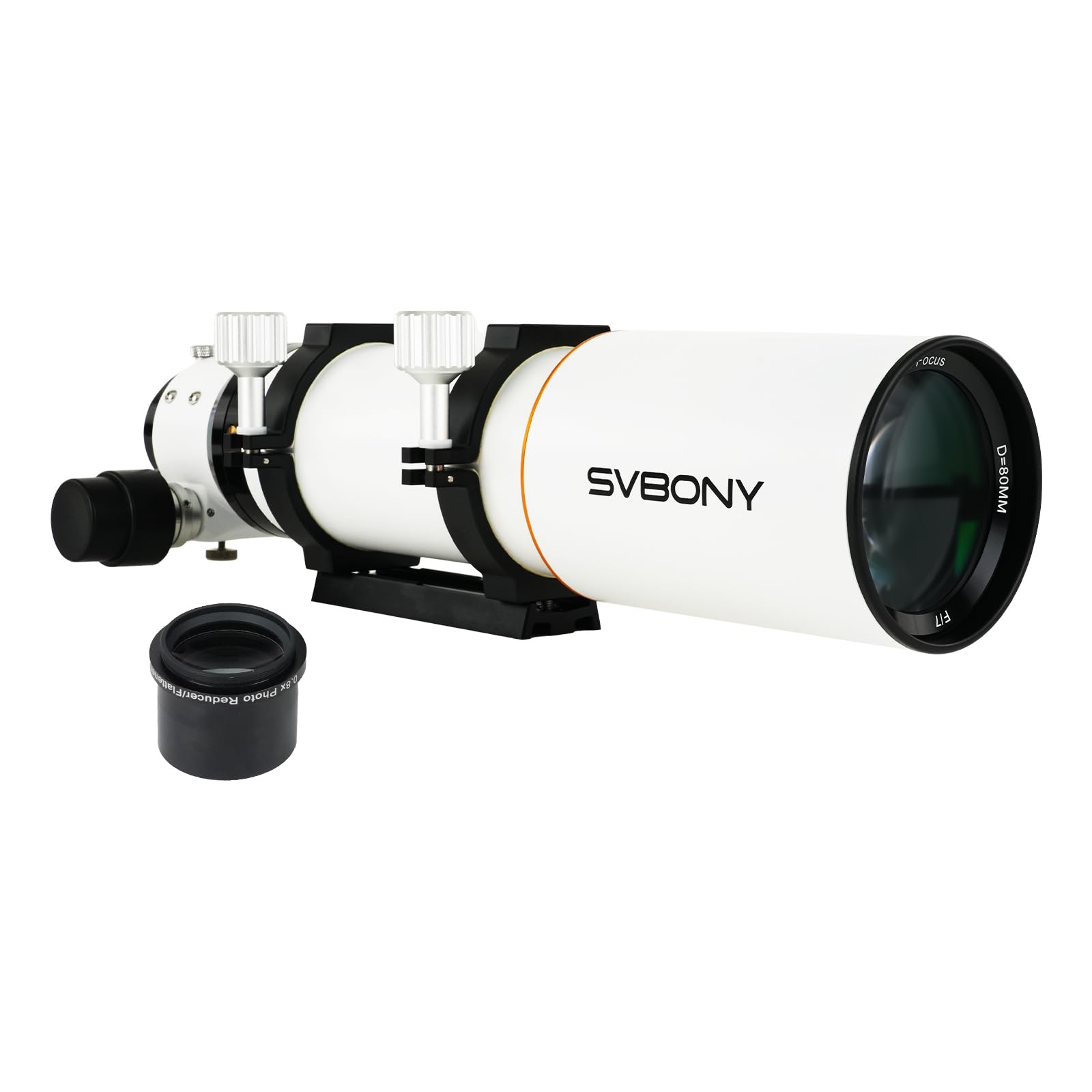
1. SVBONY SV503 Upgraded ED Refractor Telescope, 80mm F7 with Field Flattener
Our pick — over 4.5★ from 150+ verified ratings; the strongest balance of quality and price.
An 80mm refractor that delivers exceptional value for first-time imagers.
If you want to attach your own DSLR or dedicated astronomy camera and learn real deep-sky imaging, the SV503 is the pick. Its 80mm aperture at f/7 with a 560mm focal length is a classic balance for beginners. The included 0.8X field flattener (a lens that corrects edge distortion) does two jobs: it speeds up the system to capture more signal in shorter exposures, and it keeps stars sharp from the center of the frame to the very edges, so your photos look crisp across the whole image.
The optical core uses S-FPL51 ED glass (extra-low dispersion glass, which prevents the blue and purple fringing around bright stars that plagues cheap refractors). Owners consistently praise the sharp views and the smooth dual-speed focuser with its 1:10 micro-adjustment, which lets you dial in critical focus for faint nebulae. At just 5.51lb, it won’t strain an entry-level mount, and the white CNC-machined metal details give it a premium feel.
Note that some owners found the focuser stiff on a single unit, a quality-control blip rather than a widespread problem. Also, this is an optical tube only — you will need a mount (an equatorial or computerized one for astrophotography) and a camera to complete the setup.
What Owners Rave About
- Sharp, bright stars with excellent contrast for deep-sky targets.
- Outstanding value; optics that rival scopes costing much more.
- Lightweight build that keeps your mount happy.
Keep In Mind
- Manual focus only; no electronics in the tube.
- Few accessories are included beyond the flattener.
Reach for this if: you want to build a real astrophotography setup with your own camera and mount, and you appreciate glass quality over gadgetry.
Look elsewhere if: you aren’t ready to buy a separate mount and camera — a smart telescope handles that for you.
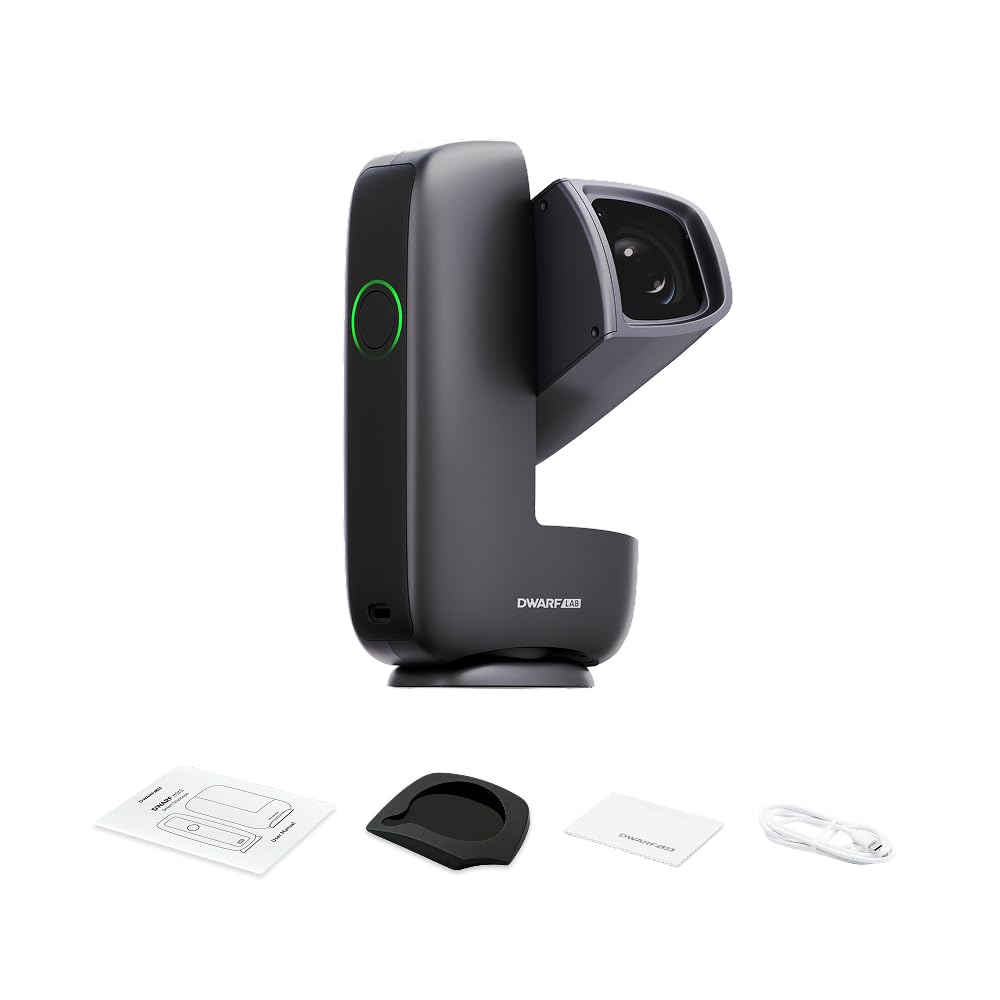
2. DWARFLAB Dwarf Mini Smart Telescope
A palm-sized smart scope that captures your first nebula photo minutes after unboxing.
If you’re a beginner who wants results without learning polar alignment or autoguiding, the Dwarf Mini is your gateway. Weighing just 1.85lb, it fits in a backpack, and the DWARFLAB app includes an interactive star map — you pick a target and the scope’s automatic GoTo system finds and tracks it for you.
Its star camera uses a high-sensitivity Sony IMX662 sensor (a 1/2.8-inch chip with 2.9μm pixels) that captures low-noise details of faint objects. The Equatorial (EQ) Mode is the key feature for deep-sky work, supporting single-frame exposures up to 90 seconds, and the built-in light pollution filter helps cut through city glow. Owners describe the app as intuitive, with features like auto dark frames, internal stacking, and cloud processing via Stellar Studio.
Owners are clear about the limits: the small field of view struggles with very small deep-sky objects and the low resolution is not for large prints — and the views of planets are minimal. A few found the setup frustrating, calling the software hard to understand, but most find it “the best value in astrophotography” for the price.
Why It Wins People Over
- Auto-finds and tracks galaxies and nebulae with plate-solving.
- Works surprisingly well in high light pollution.
- Utterly portable and quick to set up.
Who It Isn’t For
- Planet viewers — no detail at the small focal length.
- Makers of large prints — resolution is limited.
Best for: families, kids, and beginners who want to see the Orion Nebula from their backyard with zero fuss.
The trade-off: the tiny size and sensor cap what you can capture, so serious hobbyists will outgrow it.
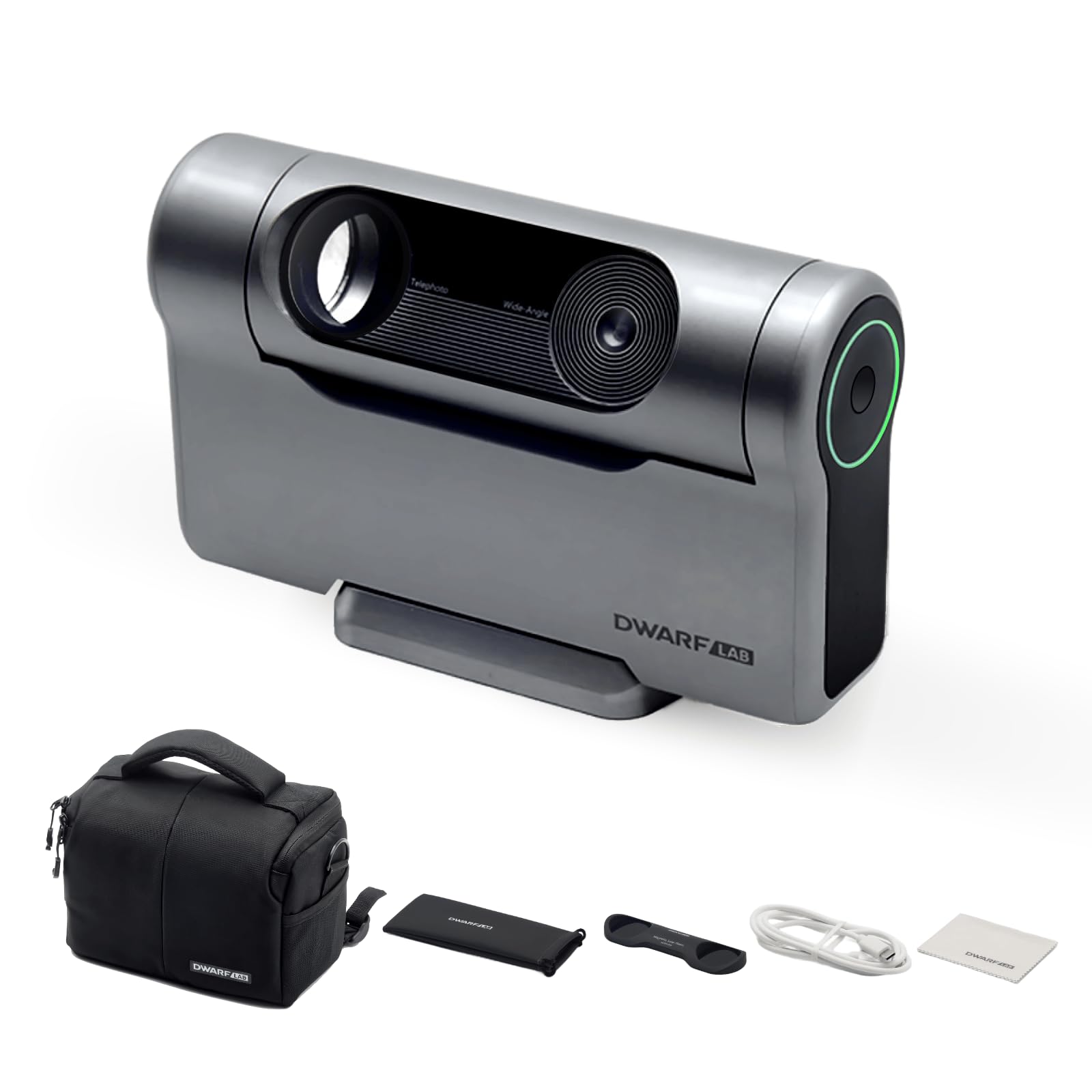
3. DWARFLAB Dwarf 3 Smart Telescope
The smart scope that doubles as a wildlife camera is a travel powerhouse.
The Dwarf 3 takes the smart-telescope formula and adds a second lens for daylight. Its dual imaging system pairs a telephoto lens for deep-space objects with a wide-angle lens for the Milky Way and star trails — so it works as an astrograph (a telescope designed for photography) at night and a wildlife or landscape camera during the day. At just 3lb/1.35kg, it fits in a standard backpack, so you can carry it on a hike without extra gear.
Set up takes about 2 minutes, with 4K auto-tracking that follows celestial objects and can even track moving subjects. The onboard cloud processing via the app handles the image stacking and enhancement, so you don’t need a laptop. Owners praise the image fidelity for the size and price, noting the dual-band filter lets you capture nebulae even under an 80% moon.
Despite the strong praise, some buyers report the scope can stop working when the phone switches away from the device’s WiFi network. The app also has its occasional annoyances. But for a compact, all-in-one unit that goes from birds to Andromeda, it’s tough to beat.
What Dazzles
- Day and night dual cameras in a book-sized body.
- Programmable schedules for autonomous overnight imaging.
- Battery lasts a full night with an external power bank.
Possible Frustrations
- WiFi connection can drop when switching devices.
- Some app controls are finicky to learn.
Choose this when: you want one device for both daytime photography and night-sky imaging while traveling.
Think twice if: you demand a rock-solid app experience on the first try.
4. Sky-Watcher Star Adventurer 2i Pro Pack

A tracker for camera lenses that turns your DSLR into a Milky Way machine.
The Star Adventurer 2i isn’t a telescope at all — it’s a motorized tracking platform for your existing camera and lenses. That makes it the ideal step up for photographers who already own a decent camera and want to shoot wide-field nightscapes of the Milky Way without buying a full telescope-and-mount rig.
It’s built around a Deluxe Equatorial base that positions the unit at the correct angle for polar alignment (lining up the mount’s axis with Earth’s spin). The new Wi-Fi connection lets you control it from your smartphone using the free SAM Console app. Owners mention it handles heavy camera setups — one runs a Sigma 60-600mm plus a Canon 5D Mark III on it — though precise balancing is required.
There’s a learning curve here; owners note you’ll be watching tutorial videos to get the polar alignment right. The tracking performance is excellent once set up, but the build has some weak points, including a flimsy battery cover and a mode switch that can toggle in transit. It’s genuinely a camera mount first, not for telescopes, so plan accordingly.
The Upside
- Enables long exposures of the Milky Way with your own camera gear.
- Modular design works on your existing tripod.
- Wi-Fi app control is stable during long sessions.
The Catch
- Steep learning curve for polar alignment.
- Flimsy plastic details; requires a very sturdy tripod.
Reach for this if: you already own a good camera and lens and want to shoot stunning Milky Way panoramas.
skip it if: you want a complete telescope to look through — this won’t show you planets.
5. Askar 71F Flat-Field Telescope
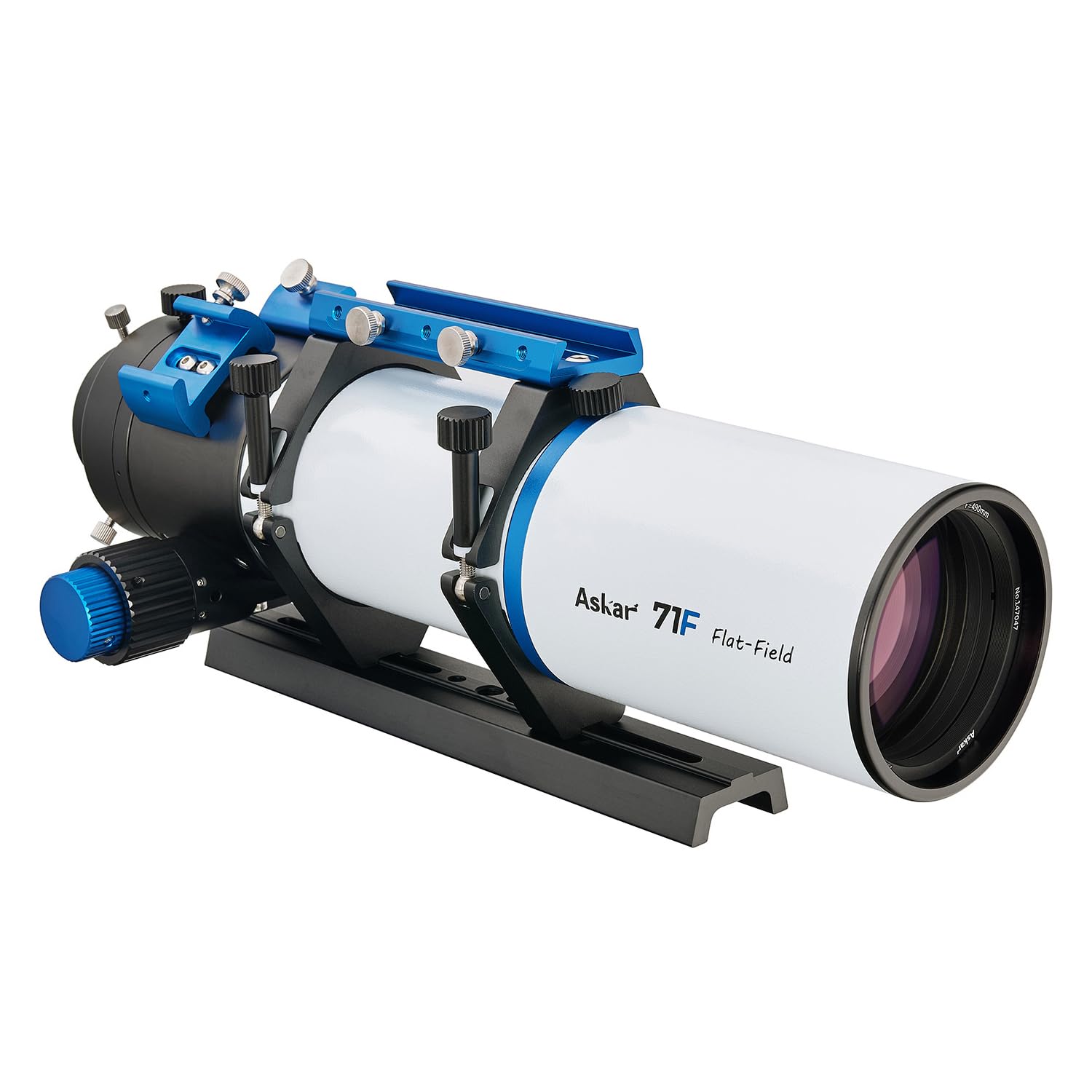
Full-frame flat-field imaging with zero chromatic fringing, straight from the start.
The Askar 71F is a “self-flattened” telescope, meaning you don’t need to buy a separate field flattener to get sharp stars at the edges of your photos. That’s a huge convenience and a cost saver. Its 71mm aperture quadruplet air-spaced APO design produces a large, perfectly flat image circle that owners confirm fits a Canon 5D full-frame camera.
At f/6.9 with a 493.9mm focal length, it’s a versatile imaging refractor. The 360° rotatable focuser makes framing shots easy, and the CNC-machined barrel with matte interior paint reduces stray light reflections that can wash out faint details. Owners describe razor-sharp, chromatic-aberration-free views of the Moon, Jupiter, and nebulae.
A few owners note the finder rings sit too close to the mounting bar, requiring small 3D-printed risers to fit. But as a “very good value” flat-field refractor — even in extreme light pollution — it earns consistent praise, with owners calling the optics “excellent” for the price.
What Stands Out
- No extra flattener needed; sharp stars across a full-frame sensor.
- High-quality matte internal coating cuts stray light.
- Smooth focuser and stable rotator for easy framing.
Minor Hurdles
- Ring clamps may need risers for perfect mounting.
- At 71mm, it’s not tune for small planetary detail.
Ideal for: DSLR owners who want a premium, ready-to-image refractor without buying extra flattener accessories.
Not ideal for: someone who primarily wants to magnify planets.
6. ZWO Seestar S30 Pro Smart Telescope
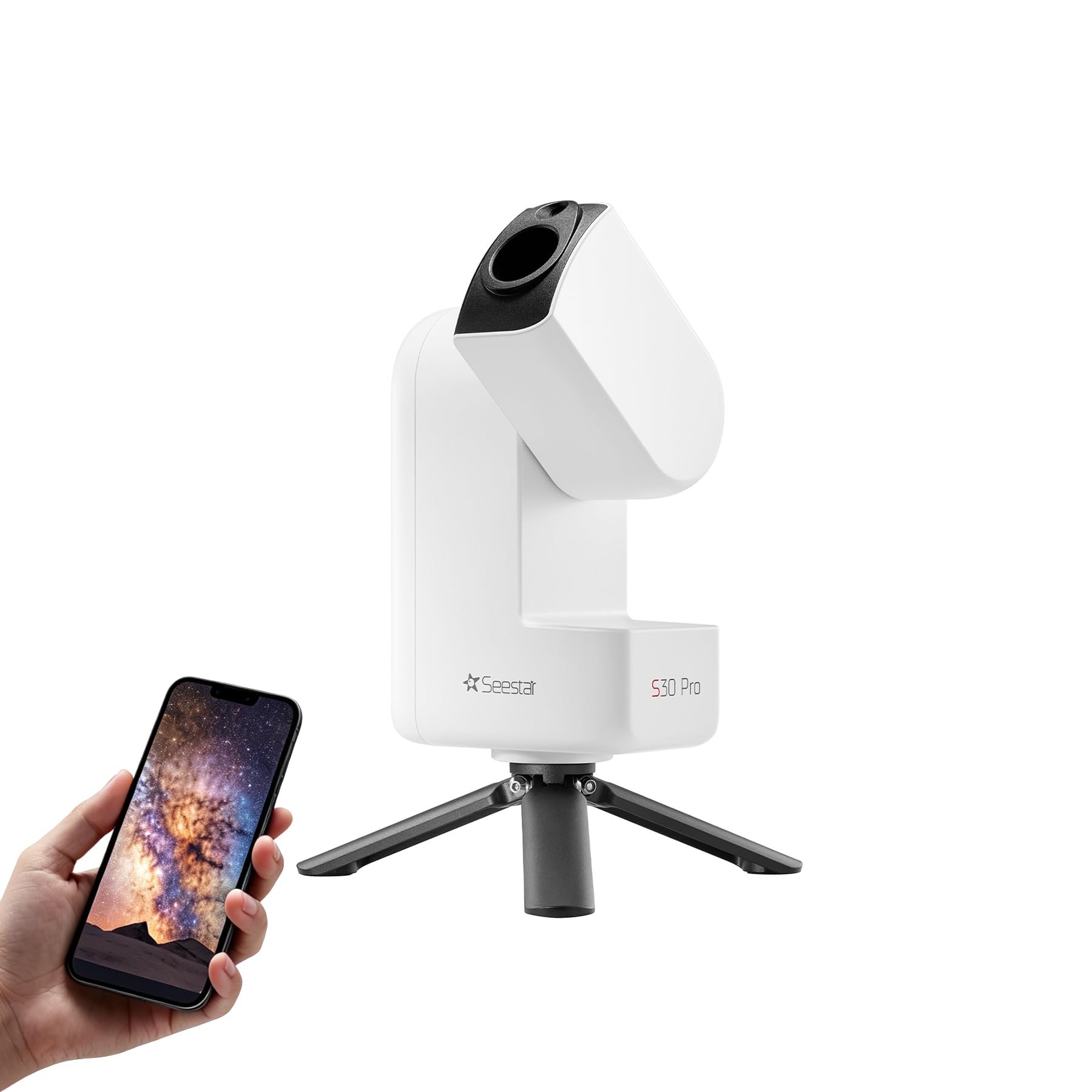
A smart scope that gets a sharp galaxy image in under ten minutes from a city lot.
The Seestar S30 Pro is built for people who live under bright city lights. It combines apochromatic optics (glass that corrects color distortion for sharper stars) with built-in light pollution filters to capture deep-sky objects from urban backyards. Customers note capturing the Pac-Man Nebula in under 10 minutes from a light-polluted city lot.
Its dual-camera 4K system handles both deep-sky objects and wide night landscapes. A single tap on the app lets you capture the Milky Way, star trails, or galaxies — automatic mosaic stitching creates wide-field images without complex setup. AI processing automatically reduces noise and can separate the sky from the foreground for more natural nightscape shots.
At 3.64lb, it’s travel-friendly, and with anti-dew protection, it’s built for all-night sessions. The main complaint is documentation — owners say the manual describes features but not how to use them, and some had to buy a book to figure it out. For pure ease of use and urban performance, though, it’s a winner.
The Standout Features
- Captures galaxies, planets, and star trails with one tap.
- AI noise reduction and sky/foreground separation.
- Light pollution filters make city imaging viable.
The Learning Gap
- Poor documentation requires extra research.
- Smart features work best when the scope stays stationary.
Grab this if: you want to see results on your first night and live where light pollution is a constant.
Pass it by if: you prefer manual control over automated, app-driven imaging.
7. Celestron NexStar 6SE Schmidt-Cassegrain Telescope

A 6-inch classic with a robotic brain that reveals Saturn’s rings in seconds.
The NexStar 6SE is a legendary choice for visual astronomy and casual astrophotography. Its 6-inch (150mm) Schmidt-Cassegrain optics collect enough light to show Jupiter’s cloud bands, Saturn’s rings, and a host of deep-sky objects like the Orion Nebula — all in a surprisingly compact, portable tube.
The real star here is the fully automated GoTo mount with the NexStar+ hand control. Tap an object from the 40,000+ database and the mount automatically slews to it and tracks it. SkyAlign technology lets you align by centering any three bright stars or planets, even if you don’t know their names, and the system calculates your position in minutes.
For astrophotography, know its limits: the mount is alt-azimuth, so long-exposure deep-sky photos will show field rotation — reviewers point out max useful exposures around 10 seconds. It’s much better for planetary imaging, where you stack short video frames, and for visual observation. The AA battery life is short, so most owners recommend a power bank, and a dew shield is a must.
Why People Love It
- Incredible planetary views: Jupiter, Saturn, and its moons.
- SkyAlign gets you observing in minutes, no star charts.
- Portable enough to take to a dark site.
Why It’s Limited
- Alt-az mount means short exposures for deep-sky.
- Stock eyepieces are mediocre; budget for upgrades.
Perfect for: someone who wants the best all-rounder for viewing planets and bright deep-sky objects with robotic GoTo assistance.
Not for: deep-sky photographers shooting long exposures of faint nebulae — you’ll want an equatorial mount.
8. Celestron Advanced VX Computerized German Equatorial Mount
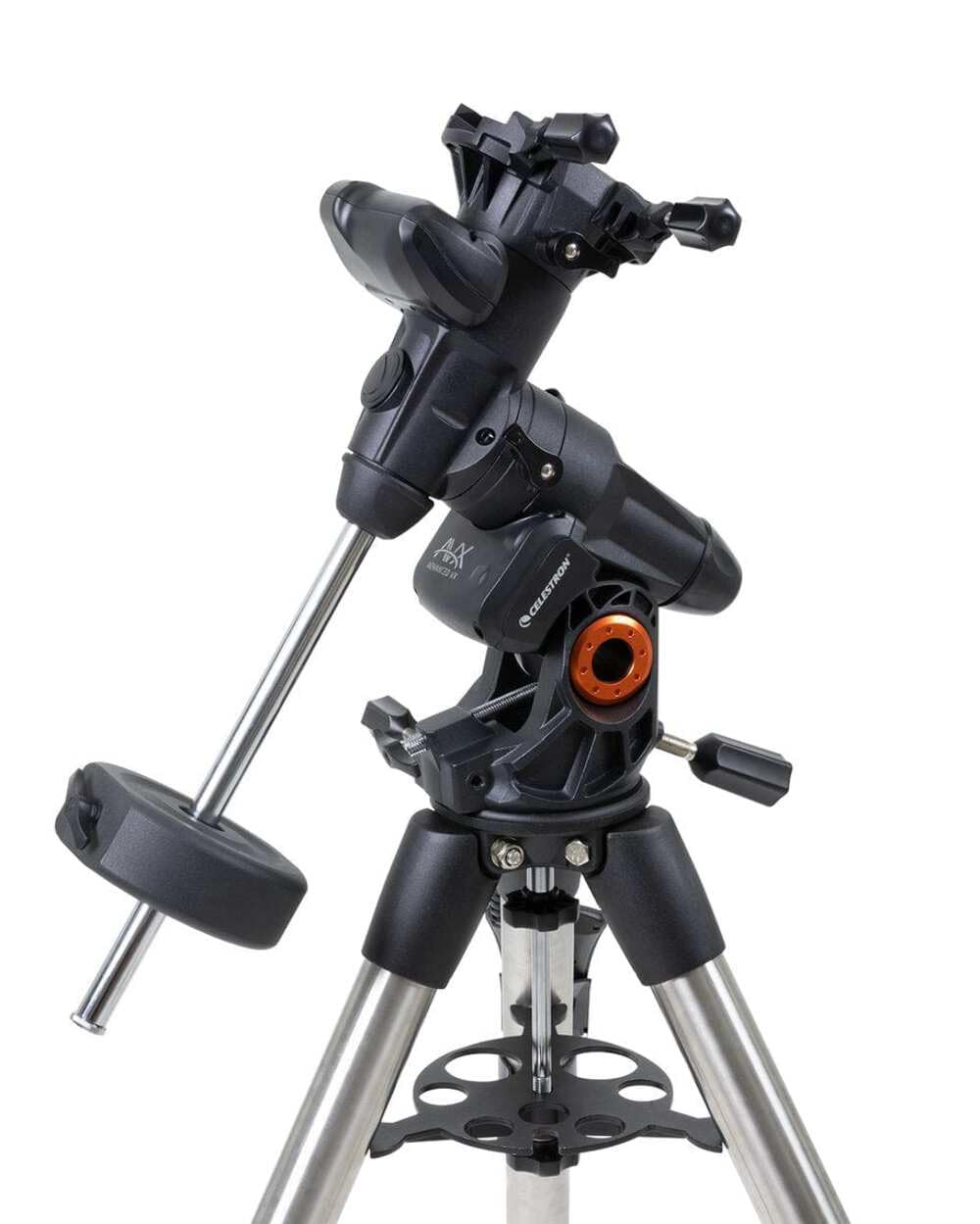
The workhorse mount that lets you attach almost any telescope and shoot serious deep-sky.
This is a mount, not a telescope — and for serious astrophotography, the mount is often more important than the tube. The Advanced VX is the entry point into true equatorial imaging, supporting up to 30lbs of gear, which covers most 8-inch Schmidt-Cassegrains or 80-100mm refractors with a camera attached. The 2-inch stainless steel tripod legs minimize vibration for steady views at high magnification.
What makes it exceptional for astrophotography is the German equatorial design. It tracks objects by rotating on an axis parallel to Earth’s, so you can take long unguided exposures — shoppers say tracking 90 seconds of exposures with no autoguider. The NexStar+ hand control offers a 40,000+ object database with All-Star Polar Alignment and multiple alignment procedures, plus sidereal, solar, and lunar tracking rates.
Owners praise the sturdiness and GoTo accuracy (the motorized system that automatically finds objects in the sky), with many finding it “a great introduction to quality guided equatorial mounts.” The honest caveat is reliability: feedback is split, with some units working flawlessly and others arriving with issues that need service. Also, the total kit is heavy at 47lbs, so be ready for two trips to your observing site — you won’t carry this in one go.
What Makes It Great
- 30lb payload handles a wide range of telescopes.
- Equatorial tracking enables long deep-sky exposures.
- Accurate GoTo finds faint objects quickly.
Honest Trade-offs
- Heavy and less portable; plan for multiple trips.
- Quality control has hit-or-miss reports.
Buy this when: you’re committed to deep-sky astrophotography and want a serious, upgradeable mount platform.
Hold off if: you want a grab-and-go setup or prefer a complete telescope package.
9. UNISTELLAR Odyssey Smart Telescope

An all-in-one observatory with a 37-million-star database and citizen-science cred.
The Odyssey is the premium answer to “I want cosmic photos but don’t want to learn imaging.” It’s an 85mm f/3.9 digital telescope with no eyepiece — you view and control everything from your phone or tablet. Power on, connect the app, and within 2 minutes the motorized Alt-Az mount aligns itself and auto-focuses. No polar alignment, no calibration, no steep learning curve.
The optics are fast at f/3.9, meaning it gathers light quickly for deep-sky imaging of faint galaxies and nebulae. Owners rave about the gorgeous images of the Moon, Saturn, Jupiter, and galaxies. For the technically minded, it exports RAW/FITS data for advanced processing and boasts a 5,000+ object catalog. It even connects to NASA and SETI citizen-science campaigns, letting you contribute to real asteroid-occultation and exoplanet-transit research.
The trade-offs are real. It’s expensive, and owners note the app lacks manual control and manual focus options. It struggles in cloudy skies and the app is considered “basic” by some. But for group viewing and instant image sharing, with up to 5 hours of built-in battery, it’s a fantastic travel companion.
Premium Perks
- Start observing in under 2 minutes, no astronomy skill needed.
- RAW/FITS export for advanced post-processing.
- Contribute to real NASA & SETI research.
Premium Price, Basic App
- High cost for what a smart scope does.
- App lacks manual control and detailed tracking features.
Ideal for: tech-savvy families and educators who want instant astrophotography with a touch of scientific purpose.
Not worth it if: you want hands-on manual control over your imaging sessions.
10. Vaonis Vespera Pro Smart Telescope
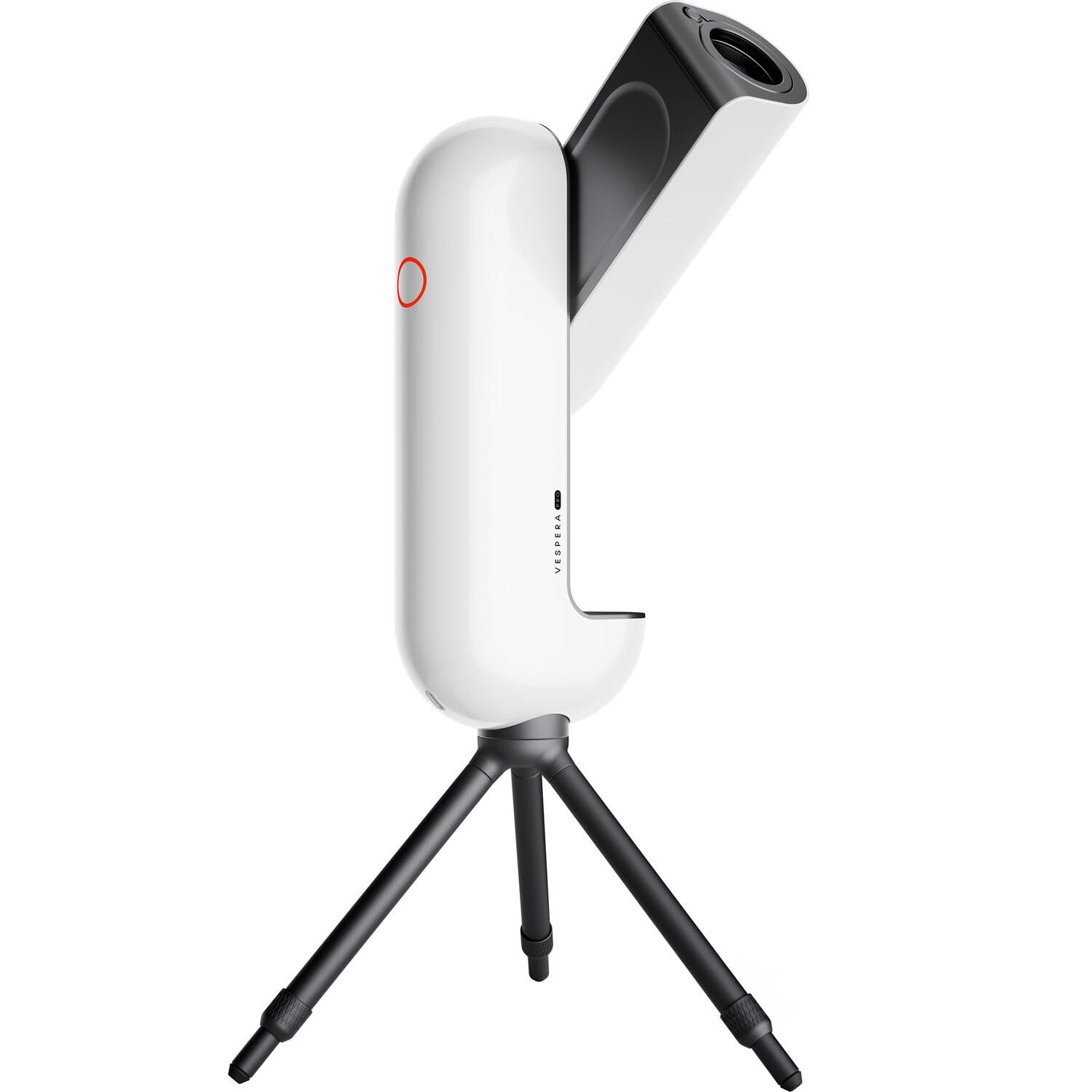
A premium observation station with a cutting-edge sensor and exclusive live panorama tech.
The Vespera Pro is the enthusiast’s smart scope. At its core is the ultra-high-sensitivity SONY IMX676 Starvis 2 sensor, which excels at pulling faint detail out of the dark. Vaonis pairs this with a new field corrector designed to exploit 100% of the sensor’s potential, meaning sharp stars across the entire frame — a rarity in smart telescopes.
Unique to Vaonis is the CovalENS technology, which enables live panorama capture — you can watch a nebula or the Milky Way build across your screen in real time. The Pro version open up Expert Mode in the app, giving you deeper control, and it automatically subtracts dark calibration frames from your observations for cleaner images.
Owners praise the easy setup, reliable tracking, and outstanding auto-stacked images. It packs a 9-10 hour battery and 225GB of storage. The caveats are connectivity — it only works via direct WiFi, not your home network — and file transfer that is FTP-only, with no USB option. The app also lacks a star map. If you can accept those quirks, you get an impressively capable device “for its size.”
Pro-Level Highlights
- Ultra-sensitive sensor captures faint deep-sky detail.
- Live panorama capture with CovalENS technology.
- Automatic dark calibration + Expert Mode control.
Premium Quirks
- Direct WiFi only; no home network connection.
- Slow FTP file transfer; no USB drive support.
Choose the Pro if: you want the best possible image quality from a smart scope and don’t mind a few app limitations.
pass on it if: you need smooth network integration and fast file transfer to your computer — this model’s connectivity can feel slow and clunky for heavy data users.
11. UNISTELLAR Equinox 2 Smart Telescope
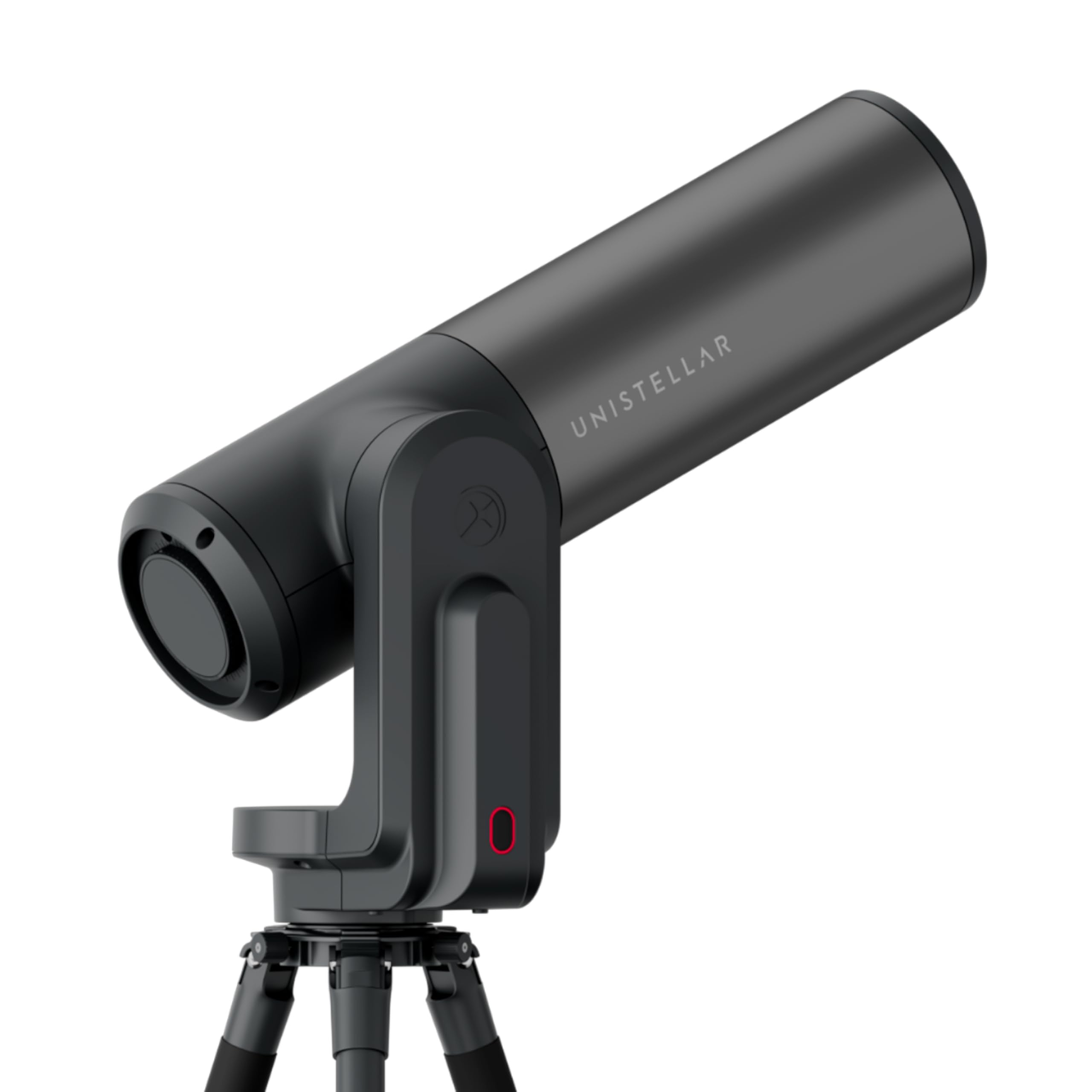
The big-aperture smart scope that reaches deeper into space than its siblings.
The Equinox 2 is the larger sibling in UNISTELLAR’s lineup. Its 114mm aperture at f/4 with a 450mm focal length reaches magnitude 18.2, capturing fainter galaxies and nebulae than the 85mm Odyssey, plus better planetary detail. It uses a manual fine-focus control for sharp stars, adding a tactile element that other smart scopes lack.
Like the Odyssey, it’s app-controlled with a motorized Alt-Az mount and one-click GoTo, and it participates in NASA and SETI citizen-science campaigns. Its 11-hour battery supports a full night of autonomous imaging. It exports RAW/FITS for advanced processing and has the same 5,000+ object catalog and 37-million-star database.
This is a polarizing product. Happy owners call it “excellent,” pulling in great photos of deep-sky objects within 45 minutes of setup. But there are also sharp criticisms: some call it overpriced with poor image quality and a bad app, and one owner described a “hobby killer” experience where the focusing and mirror alignment failed. Given the high price, the mixed reviews are a genuine risk to weigh.
Where It Excels
- Largest aperture among the smart scopes here for deeper reach.
- Up to 11 hours of battery for all-night sessions.
- Manual fine-focus for better star sharpness.
Where It Struggles
- Expensive for the results some buyers report.
- Reports of focusing and alignment failures from the start.
Consider it if: you want the deepest reach of any smart scope and value a very long battery life.
Be cautious if: you’re risk-averse — the variable quality-control reports make it a gamble at this price.
Understanding the Specs
Aperture and Focal Length
Aperture is the diameter of the main lens or mirror; bigger means more light gathered and fainter objects visible. Focal length is the distance the light travels to focus; longer means higher magnification but a narrower field of view. For deep-sky nebulae you often want a short, “fast” focal ratio (f/5 or lower) to gather lots of light quickly; for planets you want a long focal length.
Mount Type: EQ vs Alt-Az vs GoTo
An equatorial (EQ) mount tilts to match Earth’s axis, so a single motor can track stars perfectly for long exposures. An alt-azimuth (Alt-Az) mount moves up/down and left/right, which is simpler but causes field rotation in long photos. A GoTo mount is computerized and finds objects on command — essential for beginners. Smart telescopes combine all of this into one automatic unit.
FAQ
Which is better for astrophotography beginners: a smart telescope or a traditional telescope with a mount?
Can I take astrophotography photos with the Celestron NexStar 6SE?
What is the difference between an equatorial mount and a GoTo mount for astrophotography?
Do smart telescopes like the DWARFLAB or ZWO require a computer to process images?
How long does the battery last on a smart astrophotography telescope?
What does “field flattener” do and why is it important for astrophotography?
Can I use my DSLR camera with any of these telescopes?
Is a star tracker the same as a telescope mount for astrophotography?
Final Thoughts: The Verdict
For most buyers, the astrophotography telescopes winner is the SVBONY SV503 80ED because it gives you premium ED glass and a field flattener at a value that owners consistently praise as punching above their price class. If you want a grab-and-go experience that works from your phone in minutes, grab the DWARFLAB Dwarf 3 — it’s the most versatile smart scope here. And for serious DSLR photographers who want the full-frame imaging experience, the Askar 71F is the one to reach for.
How We Picked
We do not accept paid placement. Every pick is matched to a real buyer and a real use-case; we do not hands-on test units.
Sources & Methodology
Specifications: manufacturer listings and product documentation. Review insights: verified customer reviews, as of August 2026. Pricing: not shown on this page (it changes often); check the current price via the retailer link.
As an Amazon Associate, Gadgets Feed earns from qualifying purchases. This does not affect which products we feature.