
Chronic bloating, unexplained fatigue, or persistent skin issues often lead to a dead end with standard medical panels. At-home food sensitivity tests offer a way to uncover which foods and environmental factors your body may be reacting to, without weeks of waiting or expensive specialist appointments. These kits use a small hair or blood sample to screen for hundreds of potential triggers, giving you data to build a personalized elimination diet.
I’m Min — the co-founder and writer behind Gadgets Feed. I’ve spent dozens of hours researching the technical specs, lab certifications, and customer outcomes across the most popular sensitivity testing kits to cut through the marketing and identify which ones deliver genuinely useful data. My focus is on the measurable differences in sample type, lab standards, and reporting depth that actually matter for your results.
This guide breaks down the top-tier options, from budget-friendly hair analysis kits to premium CLIA-certified blood tests, so you can confidently choose the best at-home allergy test for your specific wellness goals and get answers fast.
How To Choose The Best At-Home Allergy Test
Navigating the world of home sensitivity testing requires understanding three core differentiators: the biological sample used (hair vs. blood), the breadth and quality of the screening panel, and the regulatory standards backing the lab results. Each factor directly impacts how actionable your final report will be.
Sample Type and Methodology
Hair-based tests offer a non-invasive, blood-free collection process and can screen a massive range of over 1,000 items including foods, additives, and environmental factors. Blood-based tests, typically measuring IgG antibody reactivity, are more commonly accepted by functional medicine practitioners and are analyzed in CLIA-certified labs, lending them higher clinical credibility. The choice comes down to convenience versus the perceived clinical validity of the results.
Panel Size and Relevance
A larger panel covering 1,000+ items can reveal surprising triggers you never suspected, like specific spice blends or household chemicals. However, a more focused panel of 96 to 286 common foods, tested by a CLIA-certified lab, provides deeper data on each item, including specific protein fractions (e.g., casein vs. whey in dairy). Decide if you want breadth of discovery or depth of analysis.
Data Security and Diagnostic Disclaimers
Given that these tests generate personal health data, verify if the company adheres to certifications like ISO/IEC 27001 for data protection. Crucially, every reputable test clearly states it is a “wellness screening tool” and not a diagnostic medical test. Understanding this limitation ensures you use the results to guide an elimination diet and lifestyle adjustments, not as a replacement for a physician’s diagnosis.
Quick Comparison
On smaller screens, swipe sideways to see the full table.
| Model | Category | Best For | Key Spec | Amazon |
|---|---|---|---|---|
| Everlywell Food Sensitivity Test | Blood Test | Clinical-grade accuracy | 96 foods, CLIA-certified lab | Amazon |
| AllergyHero Comprehensive Test | Blood Test | Detailed protein breakdown | 286 foods & beverages | Amazon |
| Verisana Food Sensitivity Complete | Blood Test | Physician-reviewed results | 240 foods, CLIA-certified lab | Amazon |
| AFIL Food Sensitivity Test | Hair Test | Comprehensive 1,000+ item screen | 1,000+ items, 72-hour results | Amazon |
| UCARI Personal Sensitivity Profile (1,100+) | Hair Test | Dietary guidance on a budget | 1,100+ food & lifestyle factors | Amazon |
| 5Strands Food Intolerance Test | Hair Test | Nutrient imbalance insights | 1,052 items, 4-day results | Amazon |
| UCARI Personal Sensitivity Profiling (1,500+) | Hair Test | Maximum item screening | 1,500+ foods & triggers | Amazon |
In‑Depth Reviews
1. Everlywell Food Sensitivity Test
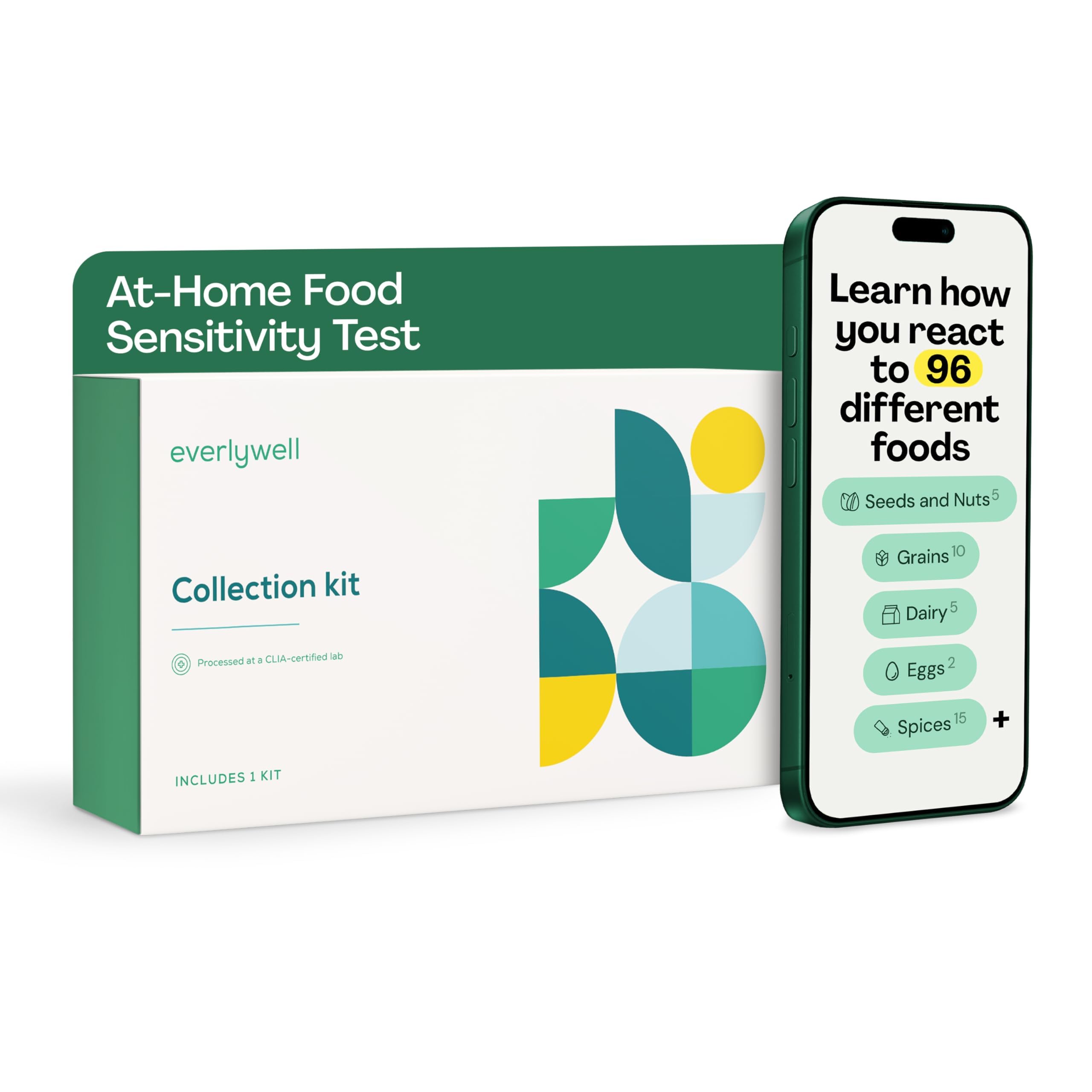
Everlywell sets the gold standard in the home sensitivity space with a blood-based IgG test analyzed in a CLIA-certified lab. The 96-food panel, while smaller than many hair tests, is highly targeted and measures quantitative IgG antibody reactivity. This provides a clinically familiar metric for your body’s delayed immune response to specific proteins in foods like gluten, dairy, and shellfish.
The at-home collection uses a finger prick to fill a small blood card, and the results are delivered via a clean digital dashboard within 3-5 business days of sample receipt. A board-certified physician reviews your results, adding a layer of medical oversight missing from most hair analysis kits. The test is HSA/FSA eligible, which makes it a practical choice for those with health savings accounts.
User reports consistently mention that following the elimination diet based on their high-IgG items resolved chronic bloating, migraines, and psoriasis flare-ups. However, the 96-item limit means it won’t catch uncommon triggers, and the kit is not available in New York due to state regulations on direct-to-consumer lab tests. It is intended for adults 18 and over.
Why it’s great
- CLIA-certified lab with board-certified physician review for high clinical credibility
- Measures quantitative IgG antibody levels, providing a clear metric for elimination diet planning
- FSA/HSA eligible, making it a practical healthcare investment
Good to know
- Limited to 96 foods — narrower than most hair-based competitors
- Not available in New York state due to regulatory restrictions
- Blood sample requires a finger prick and may yield insufficient blood if not done carefully
2. AllergyHero Comprehensive Food Sensitivity Test

AllergyHero steps up the game by offering a 286-food and beverage panel, making it one of the most comprehensive blood-based tests available. This panel analyzes specific protein fractions within foods — for example, breaking down milk into casein, alpha-lactalbumin, and beta-lactoglobulin. This granularity helps identify exactly which dairy component triggers your symptoms, rather than flagging dairy as a whole.
The at-home finger prick method is straightforward, and users typically have results within two business days of the lab receiving the sample — significantly faster than the Everlywell timeline. The kit is designed for both adults and children, making it a versatile choice for families who want to test multiple members. The digital report is color-coded and easy to navigate.
Customer feedback is overwhelmingly positive regarding the accuracy of the results, with many users confirming their elimination diets resolved long-standing digestive discomfort and skin issues. However, like all IgG tests, results represent “soft guidance” — a high IgG level doesn’t necessarily mean you must avoid that food forever. The test is a powerful tool for structured reintroduction, not a lifelong sentence of restriction.
Why it’s great
- Extensive 286-item panel with detailed protein fraction analysis for precise dietary adjustments
- Fast turnaround — results available within 2 business days of sample receipt
- Suitable for both adults and children, offering a family-friendly testing solution
Good to know
- IgG results require careful interpretation; high reactivity does not equal a permanent allergy
- Mailing the sample can take up to two weeks in some regions, delaying the start time
- Finger prick may leave a small scar if done improperly
3. Verisana Food Sensitivity Complete Test
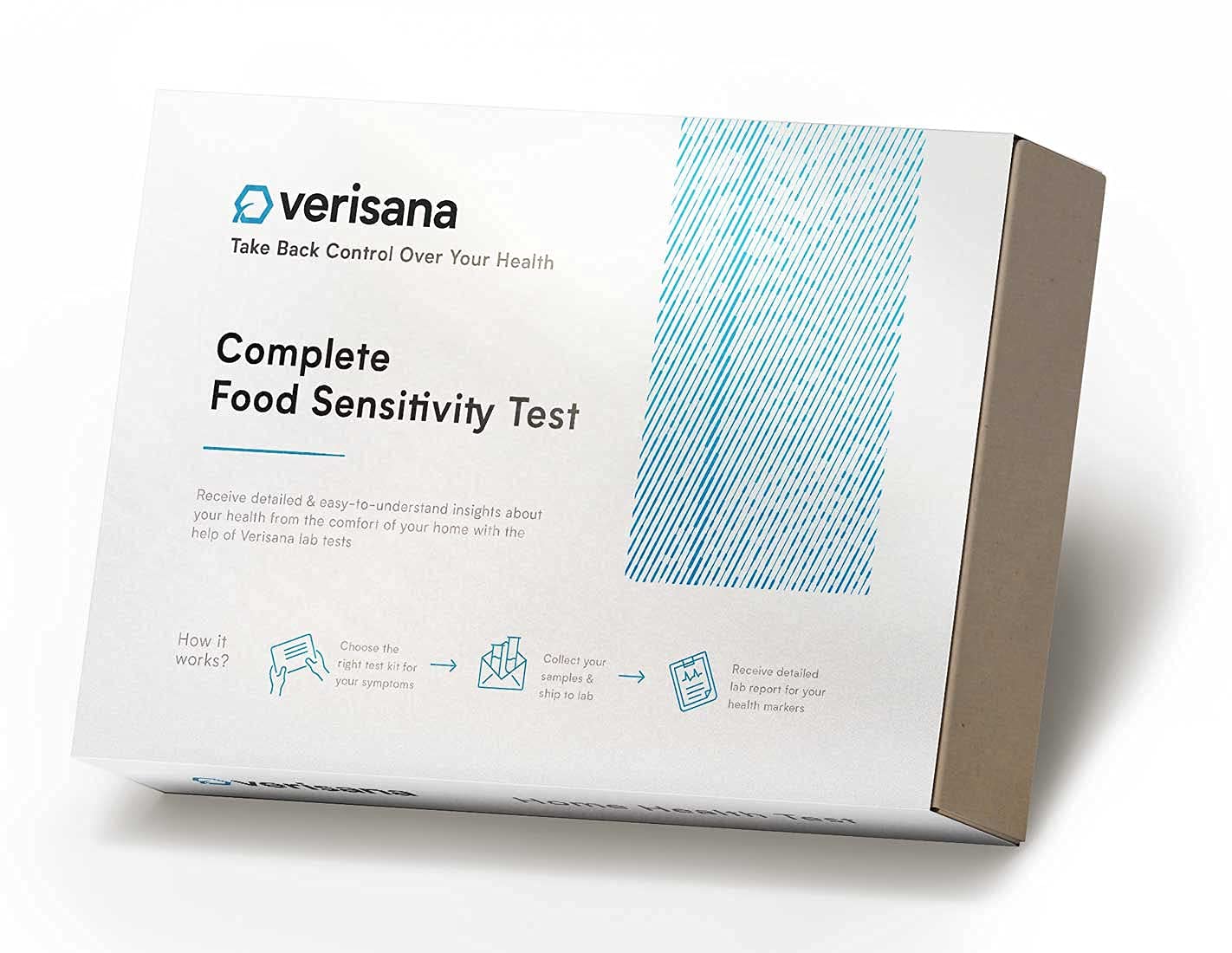
Verisana offers a strong middle ground between the broad panels of hair tests and the clinical rigor of CLIA-certified blood testing. Their Complete Test screens 240 foods using a finger-prick blood sample, and every test request and result is reviewed by an independent board-certified physician in your state. This physician oversight provides a crucial layer of medical validation that many competing blood tests lack.
The lab analysis is performed in a CLIA-certified facility, meeting federal standards for accuracy and reliability. Results are delivered within a few business days via a secure web portal, and the report is structured to clearly identify which foods trigger an IgG antibody response. The test includes a candida screening, which can be a valuable addition for those dealing with yeast overgrowth symptoms.
Users appreciate the detailed dietary insights and report the process is simple and well-documented. A key limitation is its availability: due to state regulations, Verisana cannot ship to New York, New Jersey, Rhode Island, or Maryland. Additionally, the test requires a blood sample — some customers were disappointed to discover this after ordering, assuming it would be a saliva or hair-based test.
Why it’s great
- Results reviewed by a board-certified physician in your state, adding strong medical oversight
- CLIA-certified lab analysis ensures clinical-grade accuracy and reliability
- Includes candida screening, offering additional insight into gut health beyond just food sensitivities
Good to know
- Not available in NY, NJ, RI, or MD due to direct-to-consumer testing regulations
- Requires a finger-prick blood sample, which may be a deterrent for needle-averse users
- 240-item panel is comprehensive but still narrower than 1,000+ item hair tests
4. AFIL Food Sensitivity Test
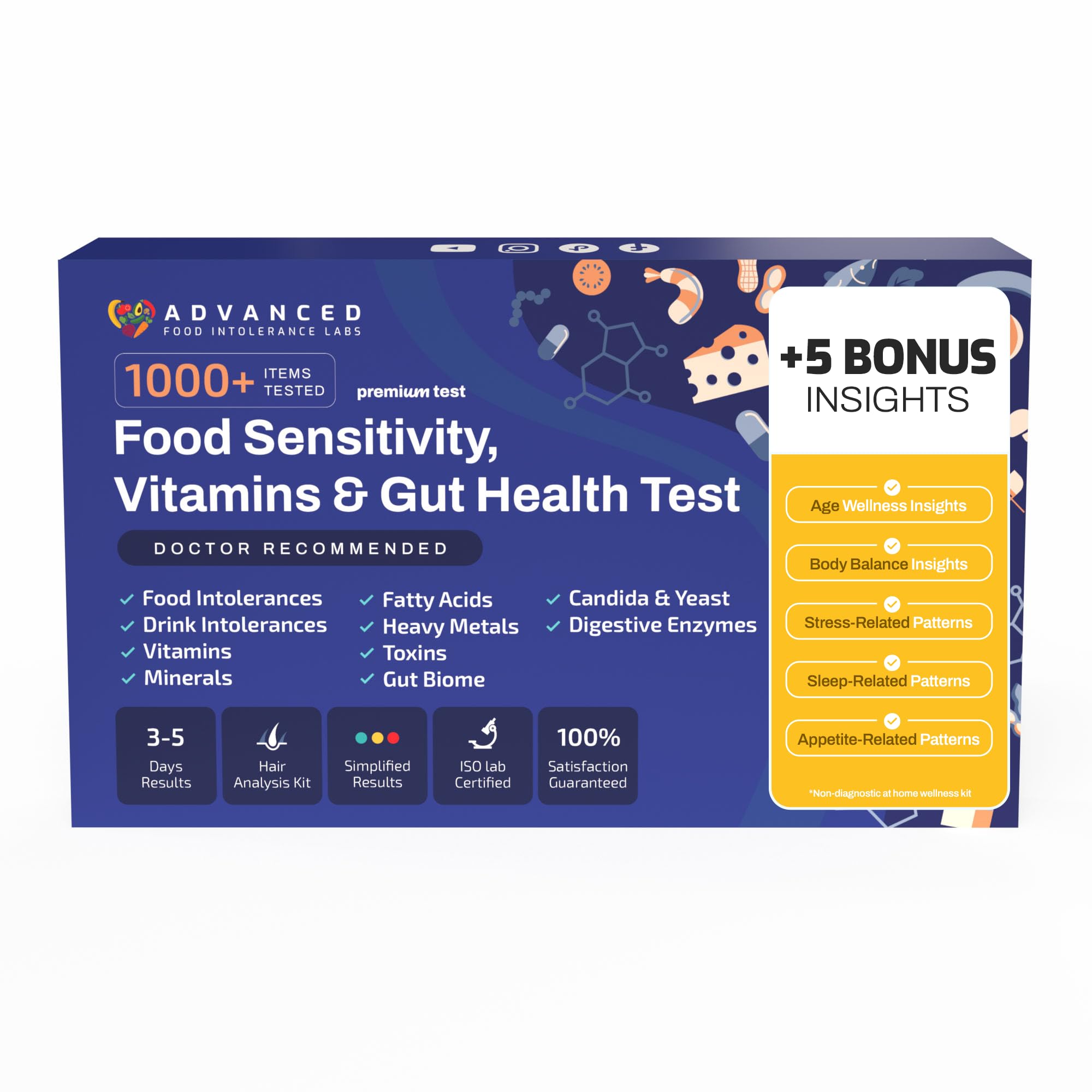
AFIL provides a compelling entry point for those who want maximal coverage without the anxiety of a blood draw. Using a simple hair sample (just 10 strands), the test screens over 1,000 items including foods, drinks, household materials, and vitamins. The interactive color-coded report is delivered within 72 hours of sample receipt, making it one of the fastest options available.
AFIL is a family-run brand that emphasizes data privacy, boasting an ISO/IEC 27001 certification for information security. This is a meaningful distinction in the health data space, ensuring your personal results are not sold or misused. The report is interactive, allowing you to click on each item to learn more about its potential impact and how to mitigate inflammation from it.
Users frequently report that the test validated suspected trigger foods and revealed surprising sensitivities that aligned with their symptoms. The inclusion of gut biome and nutritional deficiency analysis adds another layer of usefulness. However, hair-based tests are not diagnostic and some customers noted items flagged as problematic were simply foods they ate frequently, which can introduce false positives from overconsumption.
Why it’s great
- Massive 1,000+ item screening panel covers foods, household items, and nutritional imbalances
- Non-invasive hair sample collection — no blood or needles required
- ISO/IEC 27001 certified for data protection, ensuring your health data remains private
Good to know
- Hair-based testing lacks the clinical validation of CLIA-certified blood IgG tests
- Frequently consumed foods may appear as sensitivities, requiring critical interpretation
- Some users found the follow-up text messages too personal and intrusive
5. UCARI Personal Sensitivity Profile Kit (1,100+)
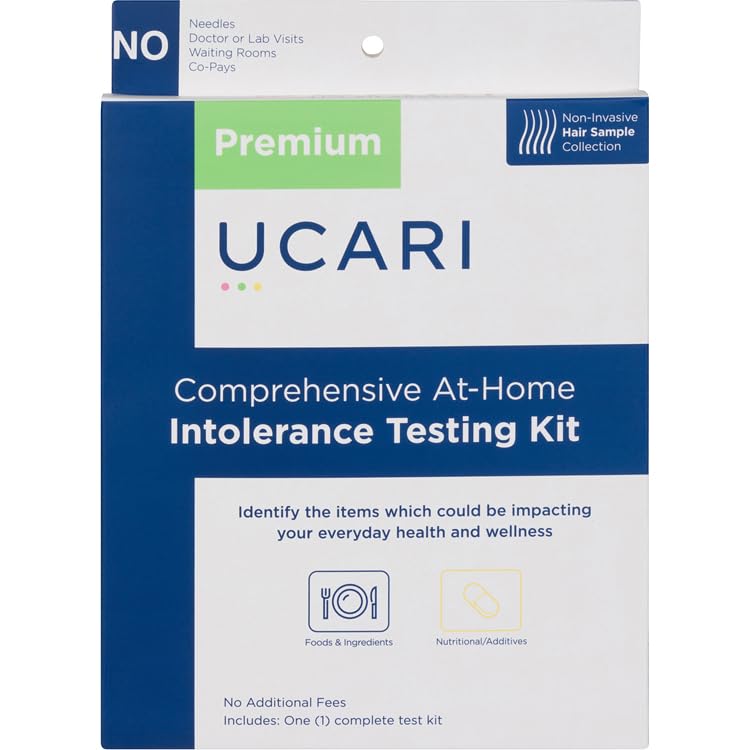
For those on a tighter budget, the UCARI 1,100+ Sensitivity Profile Kit offers a familiar hair-based screening experience at a lower entry point. It screens over 1,100 foods and lifestyle factors, providing a broad overview of potential dietary triggers. The collection process is straightforward: register online, snip a small hair sample, and mail it in the prepaid envelope.
The digital wellness report is delivered via a secure portal and is color-coded for easy interpretation, clearly separating “intolerant” and “safe” foods based on your sample. UCARI markets this specifically as a wellness tool, not a diagnostic test, which aligns with the FDA regulatory stance on such kits. The lightweight design (just 2.08 ounces) makes it easy to handle and mail.
Customer reviews highlight the speed and simplicity of the process. However, a few users noted their package arrived torn, though the contents remained intact. More critically, at least one user reported receiving a result flagging spinach as highly intolerant despite consuming it daily with zero issues, which raises questions about the test’s specificity with commonly consumed foods.
Why it’s great
- Lowest price tier for a 1,100+ item screening, making it accessible for budget-conscious buyers
- Simple hair collection process with clear instructions and prepaid return envelope
- Color-coded digital results are easy to read and share with a nutritionist or coach
Good to know
- As with all hair tests, results should be treated as wellness insights, not medical diagnoses
- May flag frequently eaten foods as intolerant, requiring careful interpretation
- Some packages arrived with torn outer packaging, though inner contents were safe
6. 5Strands Food Intolerance, Environmental & Nutrition Test
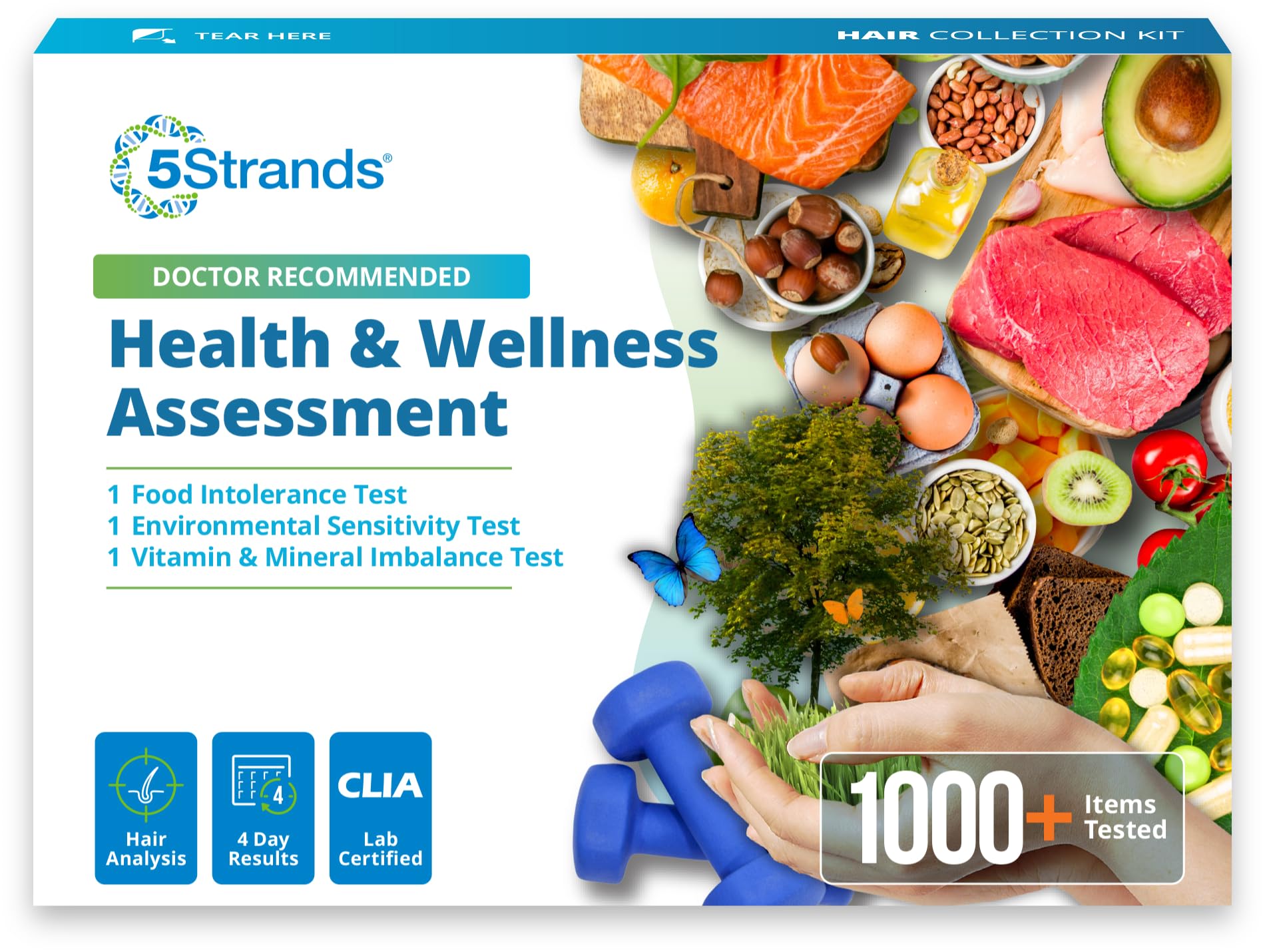
5Strands stands out by combining food intolerance, environmental sensitivity, and nutritional imbalance screening into a single 1,052-item hair analysis test. It covers 658 foods, 282 household and outdoor environmental items, and evaluates how your body absorbs 112 essential vitamins and minerals. The double-pass analysis process in a certified U.S. lab adds a layer of rigor uncommon in hair-based tests.
The test is 3rd-party verified and has been used by over 345,000 people and pets, giving it a robust track record. Results are delivered in approximately 4 days and are organized into four response levels, helping you understand which items to remove temporarily, rotate in moderation, or keep. The nutrient imbalance report highlights vitamins and minerals your body may not be utilizing efficiently, guiding targeted supplementation.
Users often describe the test as life-changing, noting significant improvements in energy and comfort after eliminating flagged foods. However, one critical review highlighted a major red flag: the test reported a “severe deficiency” in Vitamin D, while a follow-up blood serum test showed the user’s level was actually very high (95.1 ng/mL). This discrepancy emphasizes the importance of using hair tests as a starting point, not a definitive diagnostic tool.
Why it’s great
- Triple screening covers food, environmental triggers, and nutrient absorption in one kit
- 3rd-party verified with a large user base of over 345,000 people and pets
- Double-pass lab analysis process improves consistency for a hair-based methodology
Good to know
- Case reports exist of nutrient deficiency claims being directly contradicted by blood tests
- Requires hair from the root, which may necessitate assistance from a hairdresser for some users
- Results include a “Standatd” typo, indicating some quality control issues in report generation
7. UCARI Personal Sensitivity Profiling (1,500+)

UCARI’s 1,500+ item profiling kit is the most comprehensive screening option in this lineup, covering foods, additives, skincare ingredients, and environmental factors. Like its sibling kit, it uses a simple hair sample collection process with no needles or clinic visits required. The test is suitable for both adults and children, making it a versatile family health tool.
The lab turnaround is impressive — you receive your secure, color-coded report approximately 2 business days after your sample arrives at the US-based laboratory. The results are structured to help you understand which items to eliminate entirely and which to try rotating back in. The downloadable wellness insight guidance provides a framework for running a structured elimination diet.
User experiences are mixed, highlighting a common pitfall of hair-based testing. One satisfied customer successfully identified a beef intolerance in their dog, saving money on expensive specialty food. However, another customer felt the test was a waste of money because it listed obscure items like kumquat and soy sprouts while missing common environmental allergens. The broad panel can sometimes feel scattershot rather than targeted.
Why it’s great
- Largest panel in this guide at 1,500+ items including food, skincare, and environmental triggers
- Results in just 2 business days after lab receipt, one of the fastest turnaround times available
- Non-invasive hair collection suitable for children and adults alike
Good to know
- Hair-based methodology has lower clinical acceptance compared to blood IgG testing
- Broad panel may flag obscure items while missing common environmental allergens
- Some users experienced results that were not useful for their specific symptoms
FAQ
What is the difference between IgG and IgE in allergy testing?
Can a hair-based sensitivity test diagnose a food allergy?
Why might a food I eat every day show up as a sensitivity?
Final Thoughts: The Verdict
For most users, the best at-home allergy test winner is the Everlywell Food Sensitivity Test because its CLIA-certified lab analysis and physician-reviewed results offer the strongest balance of clinical credibility and actionable data in the home testing space. If you want a deeper look at specific protein fractions across a larger panel, grab the AllergyHero Comprehensive Test. And for a budget-friendly, non-invasive starting point to screen 1,000+ items, nothing beats the AFIL Food Sensitivity Test.