
Waking up with itchy red welts that appear in a straight line across your arm is a specific kind of dread. The frantic search for the source, the mattress flipping, the late-night paranoia — it’s a cycle that calls for a decisive, chemistry-backed solution you can trust on your own schedule. An effective spray is your first and best line of defense against an infestation taking over your sleep sanctuary, and the right formula makes all the difference between a quick resolution and a drawn-out war.
I’m Min — the co-founder and writer behind Gadgets Feed. I’ve spent countless hours dissecting the active ingredients, residual kill rates, and user-reported efficacy data behind dozens of household pest control formulas to build this guide.
Whether you are treating a single mattress or doing a full-room perimeter sweep, choosing the right formula is critical. This guide breaks down the seven best contenders for the title of best at home bed bug spray, focusing on what actually works versus what just smells strong.
How To Choose The Best At Home Bed Bug Spray
Selecting a spray isn’t about grabbing the first can you see at the store. You need to match the formula type, active ingredients, and application style to the severity of your infestation. A light preventive treatment requires a different chemistry than a full-blown multi-room outbreak.
Water-Based vs. Oil-Based Formulas
Water-based sprays dry clear and odorless, making them ideal for mattresses, upholstery, and fabrics where you sleep. They typically offer faster drying times and are less likely to stain. Oil-based sprays, on the other hand, often contain pyrethrins that provide a strong initial contact kill and longer residual surface protection, but they leave a faint oily residue and a stronger scent that requires ventilation.
Contact Kill vs. Residual Protection
A spray that kills on contact within five minutes sounds perfect, but bed bugs hide in wall cracks, behind baseboards, and inside box springs. A formula with residual protection lasting 2–4 weeks ensures that newly hatched nymphs or bugs that emerge after the initial spray die when they cross the treated surface. For severe infestations, residual power is more important than contact speed.
Pyrethroid Resistance and Second-Generation Ingredients
Many common bed bug populations have developed resistance to traditional pyrethroid-based sprays. If your first treatment failed, you may need a formula with a non-repellent active ingredient like clothianidin or a combination product that uses a synergist (like piperonyl butoxide) to overcome the bug’s natural defenses. Checking the active ingredient list is the smartest move you can make before buying.
Quick Comparison
On smaller screens, swipe sideways to see the full table.
| Model | Category | Best For | Key Spec | Amazon |
|---|---|---|---|---|
| Harris 5 Minute Kill | Premium | Fast action + 30-day residual | 5-min contact kill, 30-day residual | Amazon |
| Crossfire Aerosol | Premium | Professional-grade, kills resistant strains | Non-repellent, kills eggs | Amazon |
| Ortho Home Defense Max 3-Step | Premium | Complete system (traps + spray + powder) | 3-piece detection and treatment kit | Amazon |
| Bedlam Insecticide Spray | Mid-Range | Professional treatment at a consumer price | Kills pyrethroid-resistant bed bugs | Amazon |
| JT Eaton Oil Base Spray | Mid-Range | Potent oil-based contact killer | 32 oz oil-based, kills eggs on contact | Amazon |
| Good Night Bed Bug Spray | Value | Budget-friendly, multi-pest use | 16 oz, odorless water-based | Amazon |
| JT Eaton Gallon Spray | Value | Large area coverage (1 gallon) | 128 oz, water-based with sprayer | Amazon |
In‑Depth Reviews
1. Harris 5 Minute Kill Time Bed Bug Killer Spray (32oz)

Harris hits the sweet spot between immediate gratification and long-term strategy. Its water-based formula kills bed bugs, nymphs, and eggs within five minutes of contact — that’s verified speed for when you spot a live bug and need it dead instantly. The 32-ounce bottle covers a surprising amount of surface area, and the non-staining, odorless profile means you can spray your mattress seams, box spring edges, and headboard without worrying about lingering chemical smell or fabric damage.
The real value here is the full 30-day residual protection. Most budget sprays dry up in a week or less, but Harris keeps a chemical barrier active on surfaces for an entire month. This matters because bed bug eggs can take 6 to 10 days to hatch. With Harris, any nymph emerging after the initial treatment crawls through the treated zone and dies before it can bite. It is EPA-registered for indoor use, giving you the same regulatory backing as professional-grade products without the exterminator markup.
User reports confirm that the spray works on heavy infestations where other products failed. One reviewer who threw out a mattress and tried multiple sprays said Harris killed bugs “almost instantly” and broke a six-month nightmare cycle. The only catch is that severe cases may still require a second application at the 2-week mark, but that is standard for any contact spray regimen.
Why it’s great
- EPA-registered 5-minute contact kill time verified by users
- 30-day residual protection disrupts the egg-hatching cycle
- Odorless and non-staining, safe for mattress and upholstery
Good to know
- May need a second application after 2 weeks for active infestations
- Slightly higher initial cost per ounce compared to gallon-size options
2. Crossfire Aerosol – Kills Resistant Bed Bug Strains (17 oz)

Crossfire is the formula that professional pest control operators reach for when standard pyrethroid sprays fail. The key differentiator is its non-repellent technology — bed bugs cannot detect the chemical barrier, so they walk right through it instead of avoiding the treated area. This is a massive tactical advantage because traditional sprays often scatter the bugs deeper into walls and furniture, making the infestation harder to locate. Crossfire keeps them coming to the treated zone where they die.
The aerosol formulation kills all life stages — adult bugs, nymphs, and eggs — by both contact and residual action. It is approved for direct mattress application and leaves no staining residue. The 17-ounce can includes a pair of USA Supply gloves, a thoughtful addition since you should always wear protection when handling concentrated insecticides. Users report that a single thorough treatment of baseboards, bed frames, and couches eliminated infestations that had persisted for months with other methods.
The only trade-off is the smaller can size relative to liquid concentrates. For a single-room infestation, one can is usually sufficient, but multi-room outbreaks will require multiple units. The price per ounce is higher than generic alternatives, but when you consider that it eliminates the need for repeat professional visits, the cost-to-result ratio is actually excellent.
Why it’s great
- Non-repellent formula prevents bugs from scattering deeper into walls
- Kills pyrethroid-resistant bed bug strains at all life stages
- Approved for direct mattress use with minimal odor after 2-hour dry time
Good to know
- Smaller 17 oz can may require multiple units for large homes
- Higher price per ounce than standard consumer sprays
3. Ortho Home Defense Max 3-Step Bed Bug Solution System
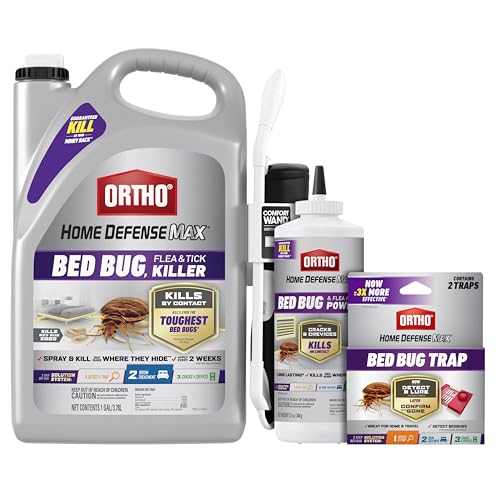
Ortho takes a different approach by packaging detection and treatment into a single three-piece system. Step 1 is a pair of bed bug traps that lure bugs out of hiding so you can confirm the infestation and pinpoint the hot zones. Step 2 is a full gallon of ready-to-use liquid spray that kills bed bugs, fleas, and ticks across all life stages. Step 3 is a 12-ounce powder applicator designed for cracks, crevices, and wall voids where liquid spray cannot reach effectively.
The system shines in its completeness. Instead of buying traps, a liquid concentrate, and a dust applicator separately, everything arrives in one box. The gallon-sized spray container is already mixed, so there is no measuring or diluting. The powder is particularly valuable for treating behind baseboards and inside electrical outlets (after removing the cover plate) — places where liquid spray would just drip out. Users consistently report that the combination of trapping, spraying, and dusting eliminates infestations that single-method approaches cannot touch.
The downside is that the system is overkill for a very small or suspected infestation. If you only need a spot treatment for a single mattress buy, the Harris or Crossfire options are more precise. But for anyone facing a multi-room problem, the Ortho system delivers the closest thing to a professional protocol available over the counter.
Why it’s great
- Complete detection and treatment kit in one purchase
- Gallon of pre-mixed spray covers large areas without dilution math
- Powder applicator reaches deep wall voids and crevices liquid cannot
Good to know
- Heavier investment for small or single-spot infestations
- Requires multiple weekly applications for severe cases
4. Bedlam Insecticide Spray – Kills Bed Bugs, Lice, and Dust Mites (17 oz)

Bedlam is the exact product that professional exterminators often recommend when a homeowner wants to DIY without losing efficacy. It is designed specifically to kill pyrethroid-resistant bed bugs, which is the single biggest reason self-treatment fails. The aerosol spray comes out as a fine mist that penetrates into fabric seams, tufts, and crevices where bugs hide, and it works on both contact and as a residual surface contaminant.
The formula targets bed bugs, lice, dust mites, fleas, ticks, carpet beetles, and clothes moths, making it one of the most versatile broad-spectrum insecticides in this roundup. It is labeled for use in residential homes, hotels, hospitals, schools, and even pet sleeping areas (when dry). Users who incorporated Bedlam into a multi-stage approach — using mattress encasements, diatomaceous earth, and thorough cleaning — reported full elimination after 3 to 5 treatments spaced three weeks apart.
The main consideration is that it does not deliver instant knockdown like some oil-based sprays. It kills on contact but the primary mechanism is contaminating the nest and killing bugs over several hours as they groom themselves. This makes it excellent for integrated pest management (IPM) but less satisfying if you want to watch a bug die immediately upon spraying. Also, the 17-ounce can is smaller than the gallon options, so budget for multiple cans if you are treating a large area.
Why it’s great
- Effective against pyrethroid-resistant bed bug populations
- Broad-spectrum control for lice, dust mites, fleas, and ticks
- Professional-grade formula recommended by exterminators
Good to know
- Works best as part of a multi-treatment IPM strategy
- Small 17 oz can size requires multiple units for larger spaces
5. J T Eaton Oil Base Bedbug Spray (32 oz)
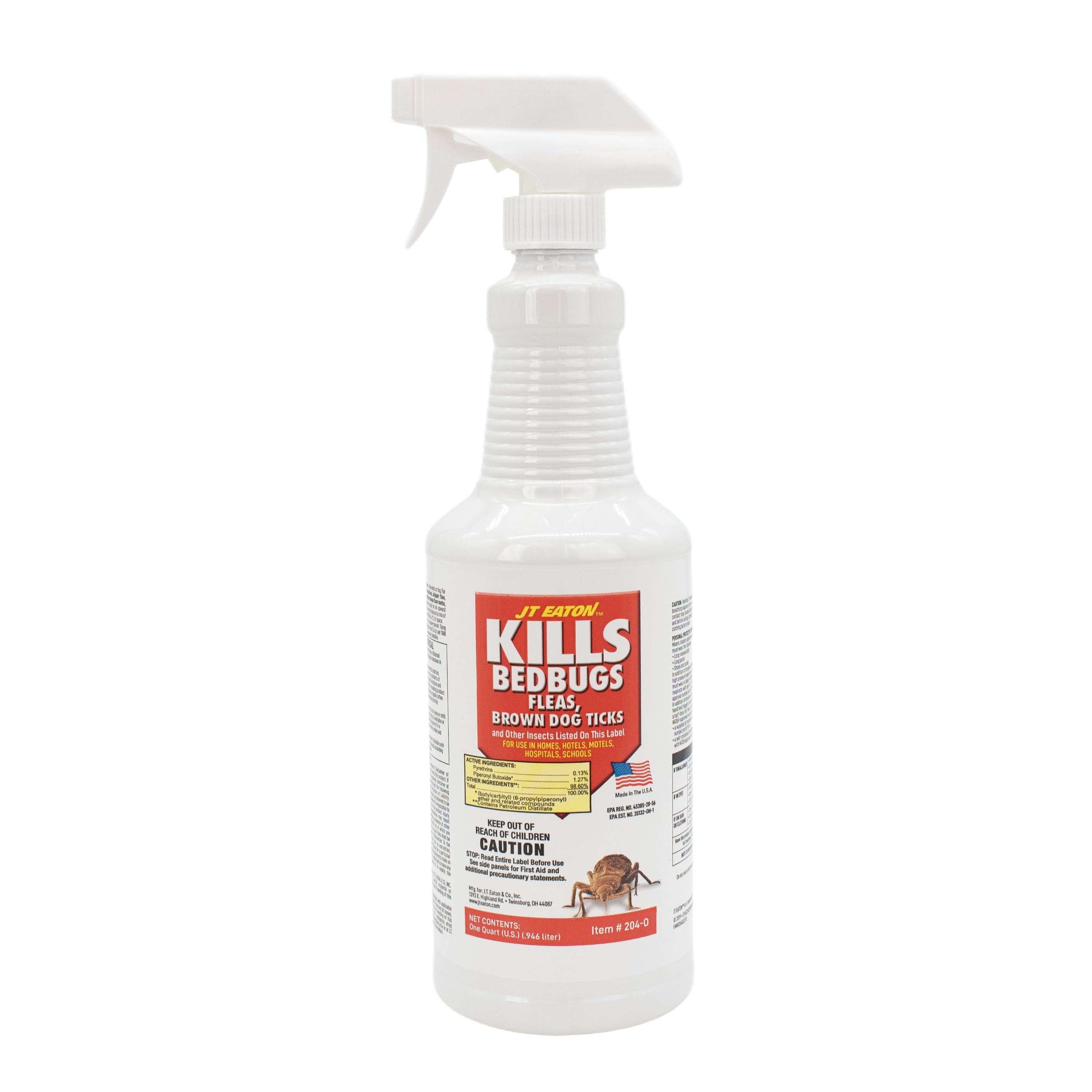
This is the heavy artillery in the contact-kill category. The oil-based formula contains 0.13% Pyrethrin and 1.27% Piperonyl Butoxide, a synergist that prevents bed bugs from metabolizing the insecticide, effectively overcoming mild resistance. When you spray this directly on a bed bug, it dies within seconds. It also kills eggs on contact, which is crucial because eggs are typically resistant to water-based sprays that lack penetrating oils.
The 32-ounce bottle with a sprayer attachment is ready to use out of the box. It is effective against bed bugs, ticks, cockroaches, fleas, and spiders, making it a good general-purpose household insecticide. Users who followed the recommended schedule — spraying every three days for two weeks — reported complete elimination of infestations that had resisted earlier treatments. The oil base also means the spray adheres better to vertical surfaces like baseboards and headboard slats, staying active longer before drying.
The trade-off is that oil-based sprays leave a visible residue and a stronger chemical smell. You will need to ventilate the room for several hours after application, and some users reported the smell lingering for up to three days. The oil can also stain certain fabrics, so it is best reserved for non-porous surfaces, bed frames, baseboards, and carpet edges rather than direct mattress fabric. The sprayer mechanism on the bottle is also basic and may fail after repeated use, so having a backup handheld sprayer is wise.
Why it’s great
- Pyrethrin + PBO synergy overcomes mild pyrethroid resistance
- Kills bed bug eggs on contact, breaking the hatching cycle
- Oil base clings to vertical surfaces for longer residual activity
Good to know
- Strong odor requires thorough room ventilation for 2-3 days
- Oily residue may stain fabrics; avoid direct mattress application
6. Good Night Bed Bug Spray (16 oz)

Good Night is the entry-level workhorse that punches well above its price point. The 16-ounce water-based spray is completely odorless and non-staining, making it an excellent choice for people who are sensitive to chemical smells or who need to treat shared bedding in dormitories or guest rooms. It kills bed bugs, lice, ticks, fleas, and house dust mites on contact, and the residual protection lasts up to 8 weeks on treated surfaces — a remarkably long window for a spray in this price tier.
Where this product truly surprises is user satisfaction over time. One reviewer reported using it for years against fleas and lice with consistent success. Another, a regular user for deck treatment, praised its safety profile. The water-based formula dries clear and won’t discolor furniture or leave any trace other than dead bugs. For preventive spraying around baseboards, bed skirts, and curtain hems, this is an affordable way to maintain a defensible perimeter without smelling like a chemical plant.
The primary limitation is the 16-ounce bottle size. At this volume, you will use the entire bottle treating a single bedroom thoroughly. For a whole-house infestation, you will need multiple bottles, which reduces the per-unit savings. Also, while it kills on contact, some users reported that for severe infestations, professional help or a more potent concentrate was eventually required. Consider this a strong first-line preventive or light-treatment option, not a silver bullet for entrenched populations.
Why it’s great
- Completely odorless and non-staining, safe for sensitive environments
- 8-week residual protection is exceptionally long for its price tier
- Effective on multiple pests including dust mites and fleas
Good to know
- Small 16 oz bottle may not cover a full-room infestation in one go
- May require professional intervention for severe, entrenched infestations
7. JT Eaton 209-W1G Bed Bug, Tick, and Mosquito Killer Spray (Gallon)
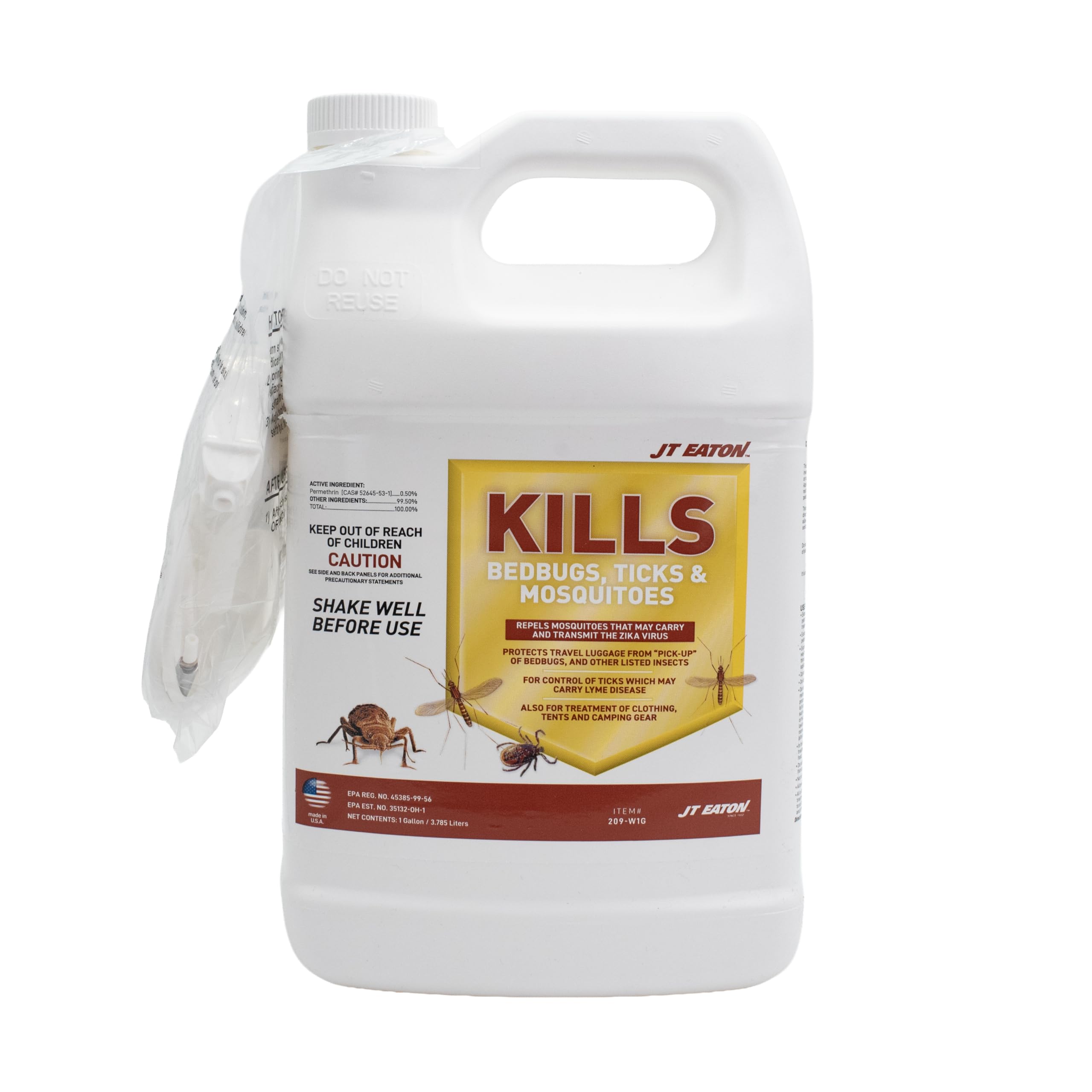
When you need to cover serious square footage at the lowest cost per ounce, the JT Eaton gallon jug is the obvious play. At 128 fluid ounces, this is a full gallon of ready-to-use water-based insecticide that kills bed bugs, ticks, and mosquitoes. It comes with an additional sprayer attachment, so you can start treating immediately without buying extra equipment. The water-based formula is safe for mattresses, tents, clothing, and camping gear, and it dries with minimal odor.
The real win here is the economics. One gallon treats an entire house — baseboards, bed frames, couches, carpet edges, and even outdoor camping equipment — for roughly the same price as two small cans of premium concentrate. Users apply it to hiking gear and dog harnesses for tick protection that lasts up to 6 weeks. The formula is the same active ingredient used in premium brands sold at higher prices, so you are paying for volume, not diluted chemistry.
The catch is that this spray is not as fast-acting as oil-based or concentrated formulas. It kills on contact within an hour, but it relies more on residual activity for long-term control. It is also toxic to cats before it dries, so you need to keep pets away for a couple of hours after spraying. For a single-room bed bug problem, the gallon size may feel excessive, but if you are treating an entire home or need a general insect barrier spray, this is the most efficient buy on the list.
Why it’s great
- 128 oz gallon size offers the lowest cost per ounce on this list
- Safe on mattresses, clothing, tents, and pet gear when dry
- Effective tick and mosquito repellent for outdoor use up to 6 weeks
Good to know
- Toxic to cats while wet; requires separation until dry (approx 2 hrs)
- Slower contact kill (up to 1 hour) compared to oil-based concentrates
FAQ
Can I spray bed bug killer directly on my mattress and sleep on it?
How often should I reapply bed bug spray to fully eliminate an infestation?
Why did my spray kill some bed bugs but not all of them?
Final Thoughts: The Verdict
For most users, the best at home bed bug spray winner is the Harris 5 Minute Kill because it combines a verified 5-minute contact kill with a full 30-day residual period in an odorless, non-staining water-based formula that is safe for direct mattress use. If you are dealing with a resistant infestation that has shrugged off standard sprays, grab the Crossfire Aerosol for its professional-grade, non-repellent chemistry that pyrethroid-resistant bugs cannot avoid. And for whole-home coverage on a strict budget, nothing beats the sheer volume and low cost per treatment of the JT Eaton Gallon Spray.