
Our readers keep the lights on and my morning glass full of iced black tea. As an Amazon Associate, I earn from qualifying purchases.
Specs are compiled from manufacturer listings and verified buyer reviews and can change over time — please confirm the key details on the product page before buying.
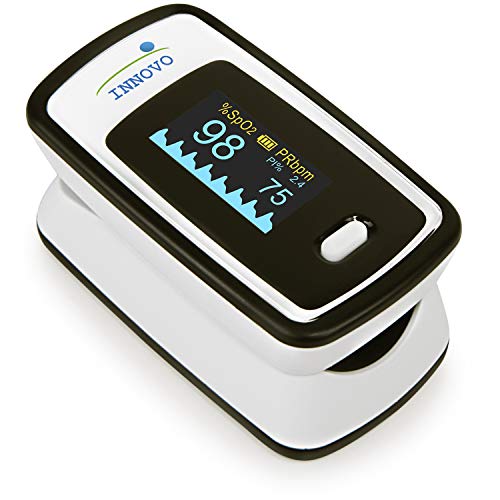
If you want one answer fast, it is this: for most households the Innovo Deluxe iP900AP is the pulse oximeter to buy, because it pairs a fingertip fit that suits nearly everyone with a bright screen you can read without hunting for your glasses. Everything else on this list is a specialist — a small-finger model, a sunlight-ready model, a sleep-tracking model — and you only need those if your situation matches. Below you get every spec that actually changes how these devices behave on your nightstand, plus the trade-off nobody prints on the box.
I’m Min — the founder and writer behind Gadgets Feed. This guide is built by comparing the manufacturers’ published specifications and the patterns across verified customer reviews, so you get each pick’s real strengths and trade-offs instead of marketing spin.
A fingertip oxygen reader is one of the simplest health gadgets you can own, yet the differences in display, fit and reading range decide whether you actually reach for it. Here is what separates the strongest options in this at home oxygen monitor lineup.
Our Picks at a Glance

How To Choose The Best At Home Oxygen Monitor
The single mistake that trips up most first-time buyers is chasing display size and ignoring fit. A pulse oximeter sends light through your fingertip, so if the chamber is too loose the sensor loses contact and the number drifts. If it is too tight, your finger throbs and the reading wobbles. Get the fit right and almost everything else about these devices is pleasant.
Match the finger chamber to who will use it
Adult fingers generally want a chamber that clamps evenly across the nail bed with no rocking. The Zacurate Cute model is cut for something different entirely — it lists a recommended finger thickness of 0.2-0.6 inch (5-16 mm), which is a child or a small adult finger, not a broad hand. Meanwhile the Zacurate 500 Series chamber uses a SMART Spring System and is listed for ages 12 and above. Buy for the smallest regular user in your house, because a loose chamber on a small finger is the most common reason a reading takes forever.
Decide if you need only a spot check or a whole night of data
A standard fingertip unit gives you a snapshot — hold still, wait a few seconds, read the number, done. That covers coughs, allergy season, workouts and altitude checks. Continuous overnight recording is a different job, and only one pick here is built for it: the EMAY EMO-90, which records second by second and stores 72 hours internally. Know which job you have before you buy, because a spot-check device will not tell you what happened at 3 a.m.
Understand what SpO2, pulse rate and perfusion index mean
SpO2 is your blood oxygen saturation — the percentage of hemoglobin carrying oxygen. Pulse rate is your heartbeats per minute. Perfusion index is a strength score for the blood flow at the sensor site, and a plethysmograph is the little waveform that shows your pulse shape. Those last two are the honest signals: they tell you whether the device actually found a strong pulse or is guessing. Several picks here include them, and that is worth more than a bigger font.
Quick Comparison
| Model | Best For | Battery Life | Measuring Range | Display | Amazon |
|---|---|---|---|---|---|
| Innovo Deluxe iP900AP★ Best Overall | All-round home use | 30 hours | 70% – 100% SpO2 | Adjustable brightness | Amazon |
| easy@Home EHP035Best for Outdoors | Outdoor and bright light | 24 hours | SpO2: 35%~100% | Rotatable OLED | Amazon |
| WRINERY Fingertip (Gray-White)Best Value | Everyday pocket carry | 2 AAA required | — | Sharp OLED | Amazon |
| WRINERY Premium M170 | Travel and altitude checks | 2 AAA required | — | Vivid OLED | Amazon |
| Zacurate Cute (Small Finger) | Kids and small fingers | 30 hours | — | 6-way OLED | Amazon |
| AccuMed CMS-50D1 | Rotating readout | 32 hours | — | Auto-rotate LED | Amazon |
| Zacurate 500C Elite | Fast spot checks | 30 hours | SpO2: 0-100%, PR: 30-250 BPM | Large LED | Amazon |
| Innovo iP900BP-B | Phone app logging | 30 hours | 70% – 100% SpO2 | Multi-directional | Amazon |
| EMAY EMO-90 | Overnight recording | 72 hours memory | 70% to 100% | Real-time screen | Amazon |
In‑Depth Reviews
1. Innovo Deluxe iP900AP Fingertip Pulse Oximeter
Our pick — over 4.5★ from 50,500+ verified ratings; the strongest balance of quality and price.
The do-everything fingertip meter that most homes should just buy and stop comparing
If your household keeps one oxygen reader in the drawer for coughs, allergy season and the occasional post-workout check, this is the one that fits that job best. It measures blood oxygen and pulse rate even at low blood perfusion — meaning even when your hands are cold and circulation is sluggish — and it holds a rated accuracy of +/-2% across a measuring range of 70% to 100% SpO2. That range floor is the quiet spec that matters: a device with a narrow low end can simply fail to report when your fingers are chilled.
Where it pulls ahead of the crowd is what it shows you alongside the number. The plethysmograph displays your pulse as a waveform and the perfusion index rates the blood flow strength at the sensor, so you can see whether the device actually locked onto a strong signal before you trust the figure. It also gives you more control than most: adjustable display brightness, an auditory alarm, and pulse detection beeps you can toggle. A nurse who bought one for home use called it good quality and easy to use.
Battery life runs up to 30 hours on the two included AAA batteries, which is longer than the easy@Home EHP035 further down this list at 24 hours — a gap note if you leave the meter on for long stretches. What wins people over, though, is the readability: the large, bright digits settle in seconds and the whole device slips on without pinching. Compare that with the AccuMed CMS-50D1 below, whose biggest gripes center on a slippery plastic shell and a loose battery hatch; the Innovo feels more planted on the finger. The honest caveat is reliability — most units hum along for years, but a rare one shuts off after a few seconds of use, and the recurring small wish is for an included storage case.
What it gets right
- Measures SpO2 and pulse rate even at low blood perfusion, so cold or slow hands still get a reading
- Perfusion index and plethysmograph waveform let you confirm the signal is strong before trusting the number
- Rated +/-2% accuracy with a 70% to 100% SpO2 range
- Up to 30 hours on the two included AAA batteries
- Adjustable brightness, auditory alarm and pulse beeps for nighttime checks
Where it falls short
- No storage case in the box — you will want a pouch if it lives in a bag
- An occasional unit powers down after a few seconds of use; the vast majority do not
Buy this if: you want one accurate meter for the whole household and value seeing the pulse waveform next to the number.
Look at the EMAY instead if: your actual goal is recording oxygen all night, which this device is not built to do.
2. easy@Home Fingertip Pulse Oximeter EHP035
The outdoor specialist whose plastic side shields keep sunlight from faking your oxygen number
Bright light is the enemy of a fingertip oximeter — stray light leaks into the sensor gap and drags the reading off. This unit solves that with plastic side shields that block stray light, which is why buyers report getting solid blood oxygen numbers in strong sun and open air where ordinary clip-style meters drift. If your checks happen on a trail, a ski slope or a bike ride rather than on a couch, that one design choice is the whole reason to pick this over the others.
The spec sheet is built for movement, too. It displays the reading four different ways so you can rotate it toward your eyes in any grip, and holds down to adjust the screen across 10 brightness levels. A measuring range of SpO2: 35%~100% and PR: 25 BPM ~250 BPM is one of the widest here — the pulse ceiling reaches 250 BPM, well beyond what a resting adult will ever produce, and the oxygen floor sits far lower than the 70% start on the Innovo models. For anyone who pushes hard at altitude, that headroom is genuine confidence. It shows the pulse as a plethysmograph waveform plus a bar graph that flags an irregular or weak heartbeat, and it reads within 8 seconds.
Runtime is 24 hours on two AAA batteries, and the meter shuts itself off within 8 seconds of nonuse to protect that. Owners consistently call it accurate and easy to read, and the size is a travel favorite — small enough to ride in a pocket. Be clear about the label, though: the manufacturer states plainly that this model is for sports or aviation use and is not intended for medical use, so it is a fitness and altitude tool rather than a clinical device.
What buyers prize most: the side light shields that keep outdoor readings honest — the single feature that separates it from the pack.
The trade-off to accept: it is explicitly a sports and aviation instrument, so treat it as a training and travel companion, not a diagnostic device.
Suits hikers, skiers and cyclists: the light-blocking body and rotatable screen are made for gloves-off check-ins on the move.
Not the pick for a nightstand: if your checks happen indoors at rest, the cheaper, simpler units on this list do the same job.
3. WRINERY Fingertip Pulse Oximeter (Gray-White)
A pocket meter that arrives with its own hard case, lanyard and clip — no extras to buy
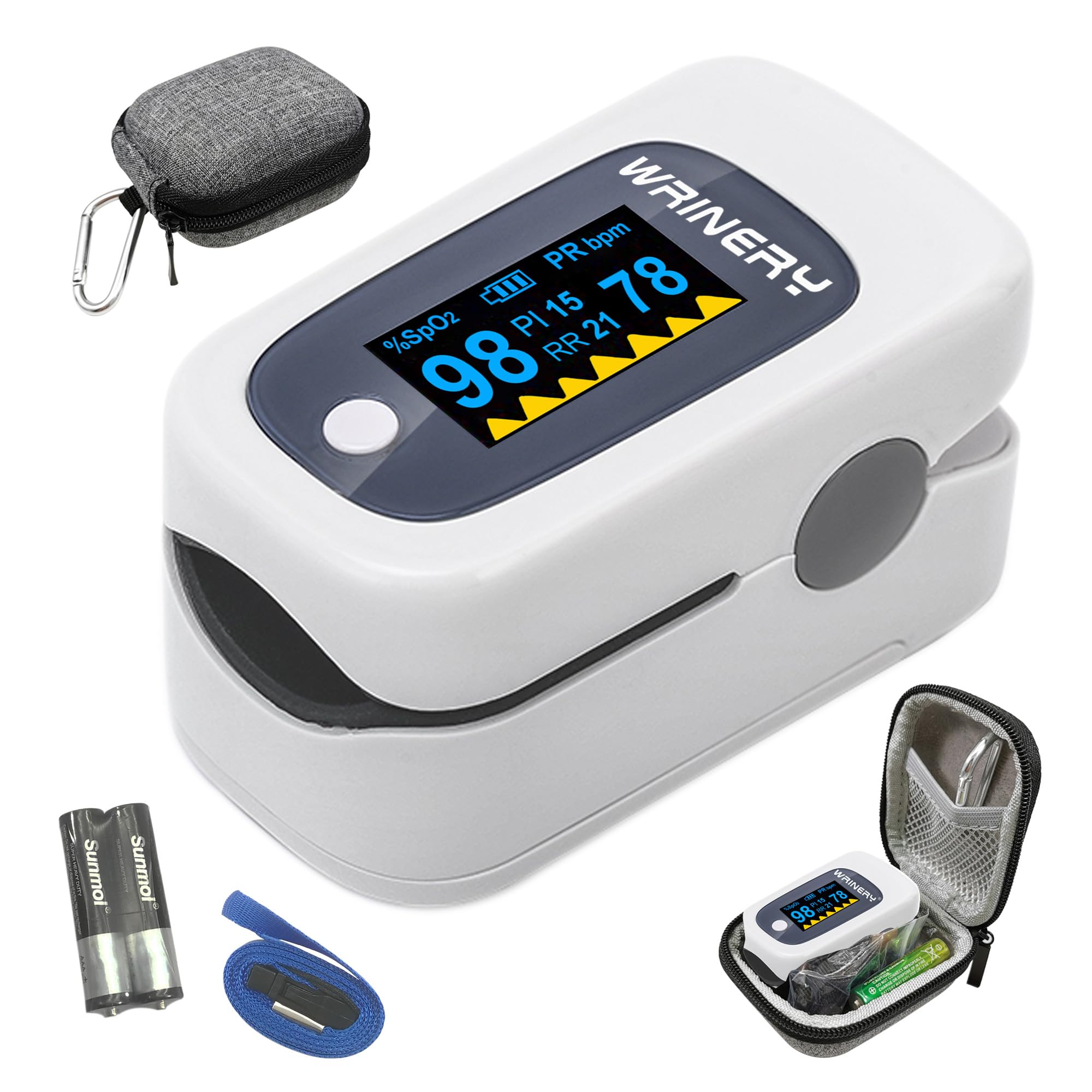
Most budget oximeters leave you hunting for a case. This one ships whole: the box includes the meter, a protective case, a hook, a lanyard and two AAA batteries. The chamber is sized to take a wide range of finger sizes from young people to elders, so it works as a shared household unit rather than a one-person device, and it reads oxygen level and pulse rate within 8 seconds. For a meter that lives in a drawer or a gym bag, that all-in-one packaging is the practical advantage.
The screen is a sharp OLED, which means the digits glow against a dark background and stay legible without backlight glare — helpful in a dim bedroom. It also measures perfUSION-style signal quality through the plethysmograph waveform, and owners who checked the displayed pulse rate against a Fitbit reported it matched. Where this model genuinely earns its keep is in motion: the manufacturer notes it is built for mountain climbers, skiers, bikers and aviators, and it recommends holding still while the reading is taken.
Read the mixed signals honestly. The meter nails the basic job — owners mention it functioning exactly as described, and it is praised for value. But accuracy and readability draw divided feedback: plenty of buyers find it precise and simple, while others say it misses the mark for them. One structural note worth knowing is that some customers note the display lacks a rotation feature, so you have to read it in its fixed orientation. And as with several units here, the manufacturer states this is for home, sports or aviation use only and not medical use.
The thing everyone agrees on: the function-and-accessories package — the case, clip and lanyard are real value on a budget meter.
The honest snag: accuracy and readability split opinion, so buy it knowing it is best for casual checks rather than critical ones.
Reach for this if: you want a complete, ready-to-go kit with a hard case at a low price.
Look elsewhere if: you need a screen that rotates to your viewing angle or you want the widest low-end SpO2 range.
4. WRINERY Premium Pulse Oximeter Fingertip (Rose Gold-Royal Black)

A tidy travel meter with a belt-loop case, neck cord and a body that barely weighs anything
Altitude is where a travel oximeter earns its place. When you fly into a high city or climb to a new elevation, your body needs time to adjust, and this meter lets you watch your oxygen level as it acclimates. It reads oxygen saturation and pulse rate within 8 seconds and shows both on a vivid OLED screen. The packaging is built for the road: a hard case with a belt loop, plus a neck or wrist cord, so it stays reachable while it rides in a pack or on a hip.
Fit is generous — it accommodates a wide range of finger sizes from young people to elders, and the compact body slips into a jacket pocket. Owners describe the readings as fast and the screen as very easy to read, with the weight kept light enough that it disappears in a bag. If you compare it with the standard WRINERY above, this Premium version adds the belt-loop hard case and the full accessory set while keeping the same 8-second readout and OLED output.
Here is the part a spec table will not tell you: durability has been a real complaint for some buyers, with reports of units failing within a month and at least one order arriving in a previously opened, damaged box. The vast majority of owners are happy with how it performs, but the honest read is that this is a well-priced travel companion rather than a rugged investment. As with most meters in this tier, the manufacturer labels it for sports and aviation use, not medical use.
Why travelers like it: a belt-loop case, neck cord and pocketable body that make altitude checks easy on the go.
Keep in mind: a small fraction of reviewers point out early failures, so it is best enjoyed as a lightweight travel tool.
Pick this for altitude trips: skiers, hikers and frequent flyers get a belt-loop case and cord ready to go.
Not the one for rugged daily handling: if it needs to survive drops and harsh use, look at the sturdier picks on this list.
5. Zacurate Cute Digital Fingertip Pulse Oximeter for Small Finger
The one meter on this list engineered around tiny fingertips instead of adult hands
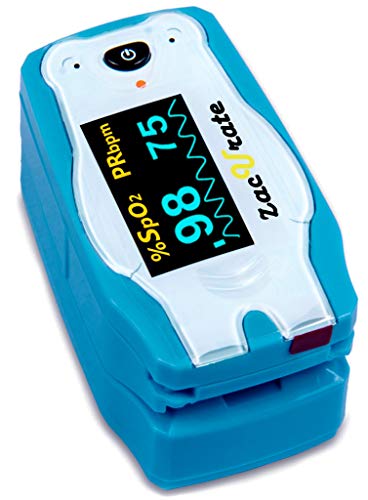
This is the pick for the household with a small child, or an adult whose fingers simply never fit a standard clamp. The recommended finger thickness for proper use is 0.2-0.6 inch (5-16 mm), and that narrow chamber is the entire point — a small finger gets full sensor contact instead of rattling around a loose clip. It runs on one-button operation: slide the finger into the chamber and read blood oxygen level and pulse rate in seconds. It is also the model families with young children reach for, since it works on newborns and is described in its own materials as suited to children and families watching respiratory health.
The screen has more flexibility than most adults’ meters. A patented multi-directional display offers 6 different layout options, so you can rotate the OLED into whatever orientation reads best to you, and a plethysmograph shows blood flow for extra confidence in the reading. It also comes with the full starter kit: two AAA batteries so it works right from the start, a silicon cover, a pouch to protect it from dirt and damage, and a lanyard. Runtime is 30 hours on those two AAA batteries. The animal theme and compact size also make it less intimidating for a nervous child than a plain black clip.
What parents know that the spec sheet hides: this meter is patient, but the child may not be. It takes a long time to settle on a wiggly little one, and that wait is the main complaint new users hit. Size is the other split — perfect for small fingers, yet some buyers find it too big for a newborn. If you are unsure, remember the device was built around a 5-16 mm finger, so measure the smallest finger in your house before you commit.
Why parents choose it
- Recommended finger thickness of 0.2-0.6 inch (5-16 mm) — engineered for small hands
- 6 display layout options let you rotate the OLED to any orientation
- Ships with 2 AAA batteries, silicon cover, pouch and lanyard
- 30 hours of battery life; one-button operation for quick checks
What to expect
- A reading can take a while on a squirming child
- Some parents find it too big for a newborn despite the small-finger design
The right call for a family with little fingers: the small chamber and gentle pressure make readings gentler for children.
Skip it for a full-grown adult hand: the 5-16 mm chamber is built narrow, so adult fingers belong on another pick.
6. AccuMed CMS-50D1 Fingertip Pulse Oximeter

A rotating LED readout and the longest battery run on this list, built for one-handed use
Hold your hand any way you like — this meter swings its readout to meet you. The LED display auto-rotates between portrait and landscape by sensing your hand movement, so you are never tilting your head to decode the digits. It fits all finger sizes from kids above four years old to adults and reads blood oxygen and pulse rate in just eight to ten seconds. Just as important, it is specified to work in a stationary position and not while moving, which is a useful reminder that every fingertip oximeter wants a still hand.
Battery life is the headline number here: up to 32 continuous hours on two AAA batteries, the longest runtime of any standard meter on this list, with automatic power-off to stretch it further. The body weighs only 50 grams, and every unit ships with a travel case and lanyard so it can ride in a gym bag or backpack without scratches. The clear LED readout shows your oxygen level, pulse rate and a pulse graph, and a single power button cycles through three view modes.
Durability is where you should set expectations. The most common gripe is a flimsy battery hatch that some owners tape shut, and a few note the shell is slippery in the hand. Against that, long-term owners describe it as sturdy and reliable — one buyer replaced a unit only after seven years and returned to the same brand after trying another. As with nearly every meter here, the manufacturer frames it as a home, exercise and travel tool rather than a medical device.
Most praised: the bright auto-rotating display and the 32-hour runtime that keeps it alive through a whole trip.
The recurring gripe: a battery door that can feel loose — a strip of tape solves it, and it does not affect the reading.
Best for one-handed, any-angle checks: the auto-rotating LED and long runtime suit frequent users.
Think twice if: you want a sure-feeling battery compartment or a chamber built specifically for tiny fingers.
7. Zacurate 500 Series Fingertip Pulse Oximeter (Mystic Black – OLED)
The OLED speed demon that settles on your oxygen number in seconds, not minutes
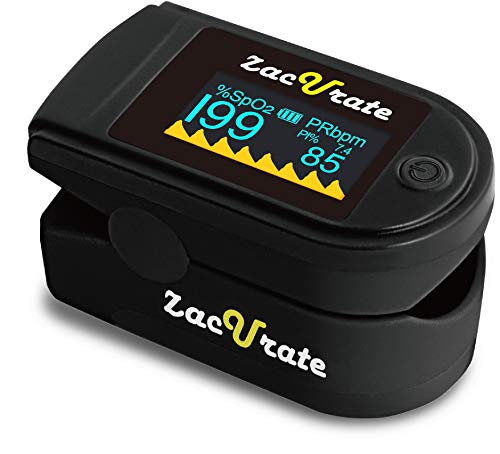
Founded on speed: this meter determines your blood oxygen saturation, pulse rate and pulse strength in 10 seconds and puts them on a large digital display you can read from across a room. It carries a measuring range of SpO2: 0-100% and PR: 30-250 BPM with a rated accuracy of +/-2%, and the maker positions it as the only LED pulse oximeter in this line that can read and display SpO2 up to 100%. The finger chamber uses a SMART Spring System and is specified for ages 12 and above, so it grips a broad range of adult and teen hands.
Owners who upgraded from the older non-OLED version describe the jump in features — a rotatable display, a two-color screen with a pulse waveform graph, an audible pulse beep and automatic shut-off, where the earlier model needed manual powering down. That rotating screen is the practical win: flip it toward you regardless of which hand you are using or which way the meter sits. Battery life reaches 30 hours on the two included AAA batteries, and it ships with a silicone cover and lanyard. A buyer who used it during a sleep study reported it matched a professional oximeter exactly on pulse and SpO2.
One thing to plan for: readout speed can slow with heavy use over time, with reports of readings moving from near-instant to 15-30 seconds, and a small number of buyers have seen a unit need replacing after roughly a year of daily handling. Accuracy itself is also affected by cold hands or movement, which is true of every meter here. If you want the simple, no-frills version, the 500BL mentioned by owners skips the rotatable screen and pulse graph but still delivers the core reading.
what separates it: the combination of 10-second readout, a rotatable two-color OLED screen and a pulse waveform graph.
The honest caveat: readout can slow with heavy long-term use, so it rewards a protective case and gentle handling.
A strong everyday pick: the fast readout and rotatable OLED suit anyone checking oxygen several times a week.
Not ideal if: you need an overnight recorder or want the silicon cover and case bundled as one rugged kit.
8. Innovo iP900BP-B Fingertip Pulse Oximeter with Bluetooth

The Bluetooth meter that turns a fingertip check into a dated, shareable record on your phone
When you want a history rather than a snapshot, the wireless link is the reason to buy this one. It pairs with your iPhone or Android through the Beyond Oximeter App over Bluetooth, where you can record readings, view the SpO2 waveform and check the perfusion index — a strength rating for the blood flow at the sensor. The meter itself is a premium model with an improved LED and sensor that measures SpO2, pulse rate and respiratory rate (RR, your breathing rate) even at low blood perfusion, with rated +/-2% accuracy across a 70% to 100% SpO2 range. It is a useful option for daily tracking, not just a one-time check.
Owners like being able to log oxygen by day and date, and one owner showed that phone history to a pulmonologist, who valued the records. A buyer who cross-checked the pulse rate against a Fitbit found the two matched. The display offers 6 layout options, so you can swing the numbers toward you or toward a caregiver with a press of a button. If you compare it with the standard Innovo Deluxe above, the Bluetooth model adds the app and the respiratory rate measurement while keeping the same plethysmograph and perfusion index features.
The wireless side is where expectations should be set carefully. Bluetooth connectivity is generally reliable, but some users hit pairing trouble, and the app has limits — most notably, you cannot add comments to a reading to note whether you were standing, resting or walking. There is also no design for continuous overnight recording, so if you want full-night data, the EMAY further down this list is the correct tool. Runtime is 30 hours, matching the standard Innovo.
The feature that matters most: Bluetooth logging that lets you store daily readings and share them with a doctor.
The catch worth knowing: connection hiccups and an app that will not let you annotate readings, so plan your notes elsewhere.
For daily trackers: anyone who wants a dated history and shareable reports will get the most from the app.
Not for overnight studies: this is a spot-check device, so look at the EMAY if full-night recording is the goal.
9. EMAY EMO-90 Sleep Oxygen Monitor

The overnight recorder that captures oxygen second by second while you sleep undisturbed
This is the only pick here built for a full night, and the specs say so plainly. It records data second by second over time for later analysis, holds 72 hours of built-in memory, and works stand-alone without a smartphone. It runs in two modes: a spot check that reads your oxygen live with no recording, and a continuous mode that logs everything for a report. The measuring range runs from 70% to 100%. Settings — alarm threshold, mode switch and memory clearance — can all be changed on the device itself, so you never need to open an app mid-setup.
The safety net is an audio alarm that sounds when your oxygen or heart rate drops below a threshold you set — one owner ran the alarm through a baby monitor and reported it came through clearly. On the data side, free PC software and iOS/Android apps let you review the history second by second, export the raw data as a CSV file, and generate a report that includes oxygen and heart-rate trends over time plus ODI data to share with a physician. Owners describe the reporting as genuinely informative and the Bluetooth connection as reliable, with clear graphs in the EMAY app.
Two design trade-offs come with the overnight job. It is described as less comfortable than a competing recorder by at least one buyer, and if it shifts off your finger overnight it can produce separate files that do not merge cleanly. Extended wear can also leave red marks on the finger. Most owners find the finger attachment stays on comfortably all night and matches their CPAP machine’s data.
Built for the overnight job
- Second-by-second continuous recording with 72 hours of built-in memory
- Works stand-alone with on-device settings — no phone required
- Audio alarm when oxygen or heart rate drops below your threshold
- Free PC software and iOS/Android apps with CSV export and physician reports
Worth knowing before you buy
- Rechargeable, so you top it up instead of swapping AAA batteries
- If it shifts off the finger at night, it can create files that do not merge cleanly
The one to choose for overnight data: second-by-second logging, a settable alarm and exportable reports make it the sleep-monitoring specialist.
Overkill for a quick daytime check: if you just want a fast number, the simpler fingertip models do it for far less commitment.
Understanding the Specs
SpO2 And Its Measuring Range
SpO2 is your blood oxygen saturation — the share of your hemoglobin that is carrying oxygen. A meter that lists a range of 70% to 100%, like the Innovo models, will still report a value when your hands are cold and circulation is poor. A model with a wider low end, such as the easy@Home EHP035 at 35%~100%, gives even more headroom for tough conditions. Accuracy is usually quoted as +/-2%, meaning the reading can sit two percentage points either side of the true value — a small margin that is normal for this class of device.
Battery Type And Runtime
Two AAA batteries are the standard power source here, and runtime clusters between 24 and 32 hours. The easy@Home EHP035 runs 24 hours, the Innovo models and Zacurate units run 30 hours, and the AccuMed CMS-50D1 reaches up to 32 continuous hours. The EMAY EMO-90 breaks the pattern with a rechargeable lithium-ion cell and 72 hours of built-in memory, which suits overnight wear. For travel, a longer runtime means fewer spare batteries in your bag.
Perfusion Index And Plethysmograph
The perfusion index is a number that rates how strong the blood flow is at the sensor site, and the plethysmograph is the little waveform of your pulse. Together they tell you whether the device found a good signal or is producing a shaky guess — which is far more useful than a single number. Several picks on this list include both, so you can check the signal quality before you trust the SpO2 figure.
Finger Chamber And Display Options
The chamber has to match the finger. The Zacurate Cute model is cut for a 0.2-0.6 inch (5-16 mm) finger, while the Zacurate 500 Series uses a SMART Spring System for ages 12 and above. On the display side, OLED screens glow with sharp contrast in low light, and rotating or multi-directional layouts like the AccuMed’s auto-rotation make the digits easy to read from any hand position.
FAQ
Will a fingertip oxygen monitor work on cold hands?
How long should a fingertip oximeter take to give a reading?
Do I need perfusion index and a plethysmograph, or is SpO2 enough?
What size finger does a small-finger oximeter fit?
Can I record my oxygen levels while I sleep overnight?
How many hours do these meters run on AAA batteries?
Are these pulse oximeters medical devices?
Will nail polish or movement affect the reading?
Does a smartphone app make an oximeter easier to use?
Do oximeters show pulse rate as well as oxygen level?
Final Thoughts: The Verdict
For most homes, the winner is the Innovo Deluxe iP900AP — it reads down to 70% SpO2 for cold hands, shows the perfusion index and plethysmograph so you can verify the signal, and runs up to 30 hours on the included AAA batteries. If your checks happen outdoors in bright sun, the easy@Home EHP035 is the one to reach for, thanks to its light-blocking side shields and 35%~100% range. For a small child’s finger, the Zacurate Cute is built around a 0.2-0.6 inch (5-16 mm) chamber that actually fits. And the crowd that wants a shareable record should look at the Innovo iP900BP-B, whose Bluetooth app turns a fingertip check into a dated history — a pick worth taking seriously given its strong owner following and the daily-tracking value owners describe.
How We Picked
We do not accept paid placement. Every pick is matched to a real buyer and a real use-case; we do not hands-on test units.
Sources & Methodology
Specifications: manufacturer listings and product documentation. Review insights: verified customer reviews, as of September 2026. Pricing: not shown on this page (it changes often); check the current price via the retailer link.
As an Amazon Associate, Gadgets Feed earns from qualifying purchases. This does not affect which products we feature.