
Buying your first home sewing machine — or upgrading from a frustrating starter model — can feel like a minefield of jargon. Between stitch counts, frame materials, and buttonhole styles, it’s easy to spend too much on features you’ll never use or, worse, buy a machine that chokes on a single layer of denim. The right machine should feel like an extension of your hands, not a puzzle you have to solve before every project.
I’m Min — the co-founder and writer behind Gadgets Feed. I’ve spent years analyzing the mechanical and electronic specifications that separate a workhorse from a frustration machine, studying thousands of user reports across the to spectrum..
This guide breaks down nine of the most capable models available, from basic mechanical stalwarts to feature-rich computerized quilting rigs. Whether you’re patching a pair of jeans or piecing a king-size quilt, understanding the trade-offs in frame construction, feed systems, and stitch flexibility is the key to making a confident, lasting purchase. You’ll find the best at home sewing machine for your specific skill level and project ambitions right here.
How To Choose The Best At Home Sewing Machine
The ideal home sewing machine balances stitch versatility with build quality that suits your typical projects. Buyers often over-prioritize total stitch count while ignoring the frame construction that determines long-term reliability. Your choice should start with what you sew most — lightweight cotton garments, denim repairs, quilting, or heavy upholstery — and then match the machine’s capacity to that workload.
Frame Construction: Metal vs. Plastic Internals
The internal frame is the single strongest predictor of longevity. A heavy-duty metal interior frame, like the one inside the SINGER Heavy Duty 4423, resists twisting during high-speed stitching and when pushing through thick seams. Machines with all-plastic internal frames are lighter and cheaper, but they can develop vibration and alignment drift over years of use. For anyone planning regular quilting or heavy fabric work, a metal-frame machine is a worthwhile investment.
Mechanical vs. Computerized Controls
Mechanical machines — like the Janome 2212 — use physical dials for stitch selection, length, and width. They are simpler, harder to break electronically, and allow the user to learn tension and fabric feel intuitively. Computerized machines, such as the Bernette B37, offer hundreds of stitch patterns, automatic buttonholes, adjustable needle positions, and speed control sliders. The trade-off is complexity and potential electronic repair costs. Beginners with no intention of using decorative stitches often prefer the tactile reliability of mechanical controls.
Feed Systems and Quilting Capabilities
Feed dogs are the metal teeth that pull fabric under the needle. A 7-piece feed dog system, as used in the Janome JW8100, provides more gripping points and reduces fabric shifting on knits and slippery materials. For serious quilting, look for a machine that offers a drop feed function (to lower the feed dogs for free-motion work) and includes a walking foot or even feed foot in the box. The Juki TL-2010Q takes this further with a knee lifter lever that lets you raise the presser foot hands-free — a major convenience when layering large quilt sandwiches.
Quick Comparison
On smaller screens, swipe sideways to see the full table.
| Model | Category | Best For | Key Spec | Amazon |
|---|---|---|---|---|
| Brother CP100X | Computerized | Versatile home sewing & quilting | 100 built-in stitches, metal frame | Amazon |
| Janome JW8100 | Computerized | Quilting & garment sewing | 7-piece feed dog, extension table | Amazon |
| SINGER 6700C | Computerized | Heavy fabrics & creative stitches | 411 stitch applications, LCD screen | Amazon |
| Bernette B37 | Computerized | Precision sewing & stitch memory | 50 stitches, LCD display, 15 needle positions | Amazon |
| Juki TL-2010Q | Mechanical | Straight-stitch quilting & tailoring | Auto thread trimmer, knee lifter | Amazon |
| Bernette B35 | Mechanical | Durable everyday garment sewing | 7 presser feet, 23 stitches, metal build | Amazon |
| SINGER 4423 | Mechanical | High-speed heavy fabric sewing | 1,100 stitches/min, metal frame | Amazon |
| Janome 2212 | Mechanical | Budget-friendly reliable basics | 12 stitches, 4-step buttonhole | Amazon |
| Brother XM3700 | Mechanical | Entry-level lightweight projects | 37 stitches, drop-in bobbin | Amazon |
In‑Depth Reviews
1. Brother CP100X Computerized Sewing and Quilting Machine

The Brother CP100X hits a sweet spot that few machines in its tier manage: it combines a durable metal internal frame with a vast 100-stitch library, including 8 auto-size buttonholes, without intimidating the user. The computerized interface keeps stitch selection simple via buttons and an LCD screen, and the fixed needle bar ensures cleaner line stitching — a meaningful upgrade over cheaper oscillating hook designs. Weight comes in at just 10.5 pounds, making it surprisingly portable for a machine with this feature set.
What pushes the CP100X ahead of direct competitors is the bundle: a wide extension table, 10 included sewing feet (including a walking foot and a 1/4 inch quilting foot), and a protective hard case. That walking foot alone saves you a purchase that can cost up to one-fifth the machine’s value. Owners consistently report quiet operation and reliable tension across denim, cotton, and light webbing, with the only common complaint being that bobbin winding sometimes needs a manual finger-guide to stay even.
The speed control slider allows sewing without the foot pedal — a critical feature for users managing back or leg issues. For the home sewer who wants to move from basic repairs into quilting, garment construction, and decorative stitching without replacing their machine six months later, the CP100X offers an unusually complete package.
Why it’s great
- Metal frame provides stability for thick fabrics and quilts
- Includes walking foot, wide table, and hard case in the box
- Speed slider lets you sew without the foot pedal
Good to know
- Bobbin winding can be uneven and may require manual guidance
- Needle threader feels bulky and takes practice to master
2. Janome JW8100 Fully-Featured Computerized Sewing Machine

The Janome JW8100 is built around a 7-piece feed dog system — two more segments than most home machines. That extra grip translates directly to reduced fabric puckering on knits and more precise seam matching on quilts. It offers 100 built-in stitches and 7 one-step buttonhole styles, all controlled through an intuitive LCD interface that shows stitch length and width numerically, removing guesswork. The metal internal construction delivers the quiet, vibration-free operation Janome is known for.
This machine ships with the accessories you would otherwise have to buy separately: an extra-wide extension table, a hard cover, an even feed walking foot, and a 1/4 inch quilting foot. The even feed foot is specifically designed for matching patterns across fabric layers, a task that frustrates users of machines that lack it. Owners upgrading from entry-level Brother or SINGER models often describe the JW8100 as the moment sewing became enjoyable again — smooth, consistent stitches with no tension drama even through multiple layers of denim or fleece.
The only consistent criticism is that the built-in LED light, while adequate for most work, could be brighter for detailed quilting in low-light rooms. The needle up/down button and jam-proof drop-in bobbin system save significant time during thread changes. For the home sewer prioritizing quilting and garment construction with occasional heavy fabrics, the JW8100 offers a premium feel at a mid-range price.
Why it’s great
- 7-piece feed dog system prevents fabric shifting and puckering
- Includes extension table, hard cover, and even feed foot
- Extremely quiet and smooth operation with metal build
Good to know
- Light could be brighter for detailed quilting work
- Needle doesn’t raise extremely high for very thick fabric stacks
3. SINGER Heavy Duty 6700C Computerized Sewing Machine

The SINGER 6700C takes the heavy-duty foundation of the 4423 line — the powerful motor and full metal frame — and wraps it in a computerized package with an LCD screen and 411 stitch applications. That stitch count includes stretch stitches for knits, decorative patterns, and a lettering font for monogramming. The screen displays your selected stitch with real-time length and width adjustments, and the built-in speed control lets you cap the maximum pace for delicate fabrics.
This machine ships with 10 presser feet, including an even feed walking foot and an open toe foot, plus a soft dust cover. The 1-step buttonhole system offers 7 styles, providing flexibility for garment closures far beyond basic 4-step buttonholes. Reviewers consistently note that the machine handles silky, stretchy, and heavy fabrics with equal ease — a sign of good tension architecture. The main trade-off is that the throat space (the area to the right of the needle) is modest, making large quilt handling slightly awkward compared to a dedicated quilting machine.
The included Creativate app provides quick access to the manual and tutorials, though experienced users have noted that a full printed manual would have been welcome. For the home sewer who wants high stitch variety and the piercing power for denim or home decor projects without jumping to a professional machine, the 6700C delivers a strong bridge between creative capability and physical work capacity.
Why it’s great
- 411 stitch applications including lettering for monograms
- Powerful motor handles thick fabrics and multiple layers easily
- 10 included feet with even feed walking foot
Good to know
- Throat space is small for large quilting projects
- Printed manual not included; relies on online app
4. Bernette B37 Computerized Sewing Machine

The Bernette B37 brings Swiss design philosophy to the home sewing market: clean, functional, and built to last. It features 50 built-in stitches, 5 automatic one-step buttonholes, and a memory function that can save stitch combinations for repeat projects. The LCD display is bright and clear, and the 15 needle positions give you fine control over seam placement — particularly useful for inserting zippers or topstitching. The machine runs at up to 700 stitches per minute, which is comfortably fast for home use while remaining controllable.
Where the B37 stands out is its build quality under the hood. The metal internal frame and 2-step presser foot lift provide stability across fabric types, and the maximum 7 mm stitch width allows for bold decorative stitching. Beginners benefit from the two-speed setting and start/stop button, which removes the foot pedal learning curve. Reviewers often praise the machine for producing exceptionally even stitches straight out of the box with minimal tension adjustment needed.
The main concern with the B37 is that some units have been delivered with minor cosmetic defects, and a small number of users report it struggles with very heavy fabrics like multiple layers of denim or fleece — so it is best suited for medium-weight garment sewing, cotton quilting, and general home decor. For the sewer who values precision and stitch quality over raw piercing power, and who appreciates a machine that looks as good as it performs, the Bernette B37 is a joy to use.
Why it’s great
- 15 needle positions for precise seam and zipper placement
- Stitch memory saves combinations for repeat projects
- Quiet, stable, and produces beautiful even stitches
Good to know
- May struggle with thick layers of denim or heavy fleece
- Some cosmetic quality control issues reported on early units
5. Juki TL-2010Q Portable Sewing Machine

The Juki TL-2010Q is a straight-stitch-only machine — no zigzag, no decorative stitches, no buttonholes. It is a dedicated tool for quilters, tailors, and home decor sewists who prioritize stitch perfection above all else. The machine features an automatic thread trimmer that cuts both the needle and bobbin threads with a single button press, a push-button automatic needle threader, and a knee lifter lever that raises the presser foot up to 12 mm without using your hands. This is the machine that makes free-motion quilting feel fluid.
The aluminum construction keeps the weight at 38 pounds — hefty enough to stay planted during high-speed piecing but portable if needed. Owners report speeds that feel nearly industrial, with a stitch quality described as sewing through butter. The 12 mm presser foot clearance handles thick quilt sandwiches and layers of upholstery fabric effortlessly. The machine is remarkably quiet for its speed, and the knee lifter is repeatedly cited as a game-changer for chain piecing and layered work where hands need to stay on the fabric.
This machine demands a specific buyer: someone who knows they will never need zigzag or decorative stitches for their core work. The threading system and bobbin case can be finicky when new, and the foot pedal may require repositioning to avoid accidentally triggering the thread trimmer. For the home sewer committed to quilting, garment tailoring, or upholstery who wants industrial-grade straight stitching in a home-portable format, the TL-2010Q is a long-term investment that delivers professional results.
Why it’s great
- Automatic thread trimmer saves significant time per seam
- Knee lifter allows hands-free presser foot control up to 12mm
- Extremely fast, quiet, and powerful with flawless stitch quality
Good to know
- Straight stitch only — no zigzag, buttonhole, or decorative patterns
- Foot pedal can accidentally trigger thread trimmer if bumped
6. Bernette B35 Sewing Machine

The Bernette B35 is a fully mechanical machine built on the same quality platform as Bernina’s higher-end models, but at a fraction of the cost. It offers 23 built-in stitches including a stretch stitch for knits, adjustable stitch length and width via two dials, and a 1-step automatic buttonhole that delivers consistent results every time. The metal chassis and frame give it a reassuring heft of just over 15 pounds, and the LED light is noticeably brighter than many competitors at this level.
This machine comes with 7 presser feet, including a hemmer foot and zipper foot, plus an extension table for larger projects. The drop-in bobbin system is jam-proof and clearly marked for ease of use. Owners consistently describe the B35 as intuitive — the manual tension control gives tactile feedback that helps beginners learn how different fabrics behave. The machine handles medium-weight fabrics like cotton, linen, and felt beautifully, and the automatic buttonhole system is simple to activate and produces clean, balanced results.
The main limitation is that the B35 vibrates at high speed on lighter tables and is not ideal for heavy denim or multiple fleece layers. Reviewers with 60 years of sewing experience call it a favorite for its reliability and steady stitch quality. For the home sewer who appreciates Swiss build quality and wants a no-screen, no-menu mechanical workhorse for everyday garment sewing, the Bernette B35 is a straightforward, long-lasting choice.
Why it’s great
- Sturdy metal internal frame with Swiss engineering quality
- 1-step automatic buttonhole is simple and produces clean results
- Bright LED light improves visibility on the sewing surface
Good to know
- Vibrates at high speed on lightweight tables
- Not designed for thick layers of denim or heavy fleece
7. SINGER Heavy Duty 4423 Sewing Machine
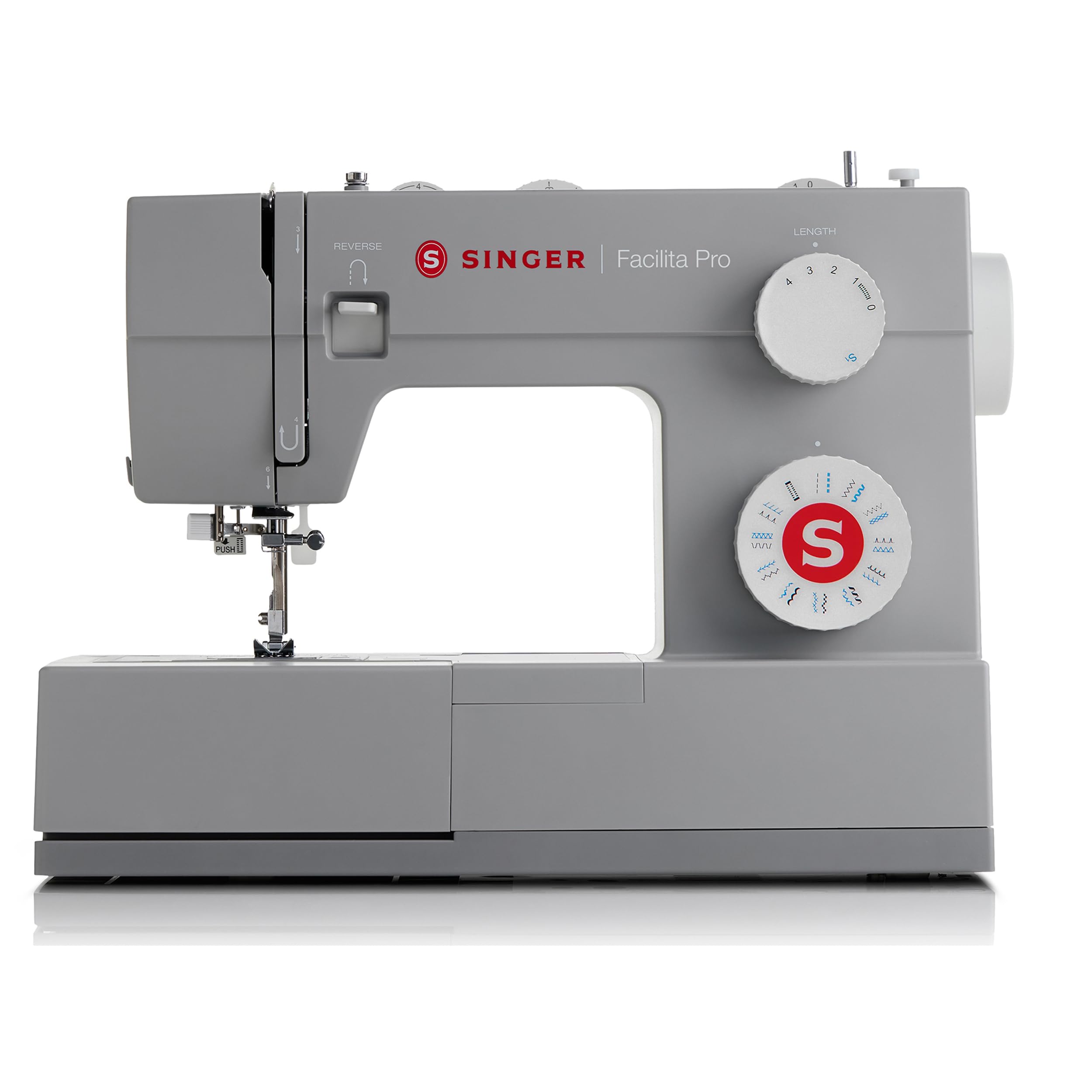
The SINGER 4423 is the model that defined the heavy-duty home sewing category. It houses a heavy-duty metal internal frame and a 60% stronger motor compared to standard machines, enabling it to reach 1,100 stitches per minute and punch through multiple layers of denim, canvas, and vinyl. It offers 23 built-in stitches delivering 97 stitch applications, including basic, decorative, and stretch stitches, plus a 1-step buttonhole. The stainless steel bedplate provides a smooth surface for fabric feeding.
This machine ships with a clear instruction manual printed on the body for threading paths, plus accessories including an all-purpose foot, zipper foot, buttonhole foot, button sewing foot, quilting guide, and a soft-sided dust cover. Owners who have had their 4423 for 8 years or more report that it powers through heavy velvet, fleece, and multiple denim layers without hesitation. The variety of feet available in the standard box also means you can start zipper and button projects immediately.
The main downsides are the lighter plastic housing over the metal frame, which can cause the machine to shift during heavy projects, and the foot pedal cable is notably short. The stitch width must be set to 0 for straight stitches, which is an easy detail to miss. For the home sewer who frequently repairs jeans, sews bags, or tackles home decor projects and wants speed and power without a computer interface, the 4423 is a proven, durable option.
Why it’s great
- Heavy-duty metal frame and powerful motor for thick fabrics
- Sews at 1,100 stitches per minute for fast project completion
- Proven long-term reliability reported over 8+ years of use
Good to know
- Light plastic housing can shift during heavy fabric sewing
- Foot pedal cord is short; stitch width must be set to 0 for straight stitch
8. Janome 2212 Front-Loading Sewing Machine

The Janome 2212 strips away everything that can break — no computer, no electronics, no automatic features — leaving a pure mechanical sewing experience with 12 built-in stitches and a 4-step buttonhole. It uses a front-loading vertical oscillating hook bobbin system, which is the traditional design that many experienced sewists prefer for its reliability and ease of tension adjustments. The machine weighs 14.85 pounds, with high-quality metal internal parts that give it a solid feel far beyond its price point.
This machine comes with a zipper foot, blind hem foot, sliding buttonhole foot, 4 bobbins, needles, a seam ripper, screwdrivers, and a dust cover. The snap-on presser feet and 5-piece feed dog system handle woven and jersey fabrics with even feeding. Owners report that the 2212 sews through 4 layers of fleece or multiple layers of denim without struggling, and the variable speed foot pedal gives precise control — one reviewer compared it to driving a car with a responsive gas pedal.
The trade-offs are real: the 4-step buttonhole takes more manual attention than a 1-step auto buttonhole, and the reverse mechanism requires holding a switch down rather than a simple push button. The bobbin is front-loading, which means you remove a cover plate to access it rather than dropping it in from the top. For the beginner who wants to learn sewing fundamentals on a machine built to last decades, or the experienced sewer wanting a reliable backup, the Janome 2212 is an exceptional value.
Why it’s great
- High-quality metal internal parts for decades of reliable use
- Excellent variable speed pedal gives precise fabric control
- Handles woven and jersey fabrics and multiple denim layers
Good to know
- 4-step buttonhole requires manual attention for each step
- Front-loading bobbin requires removing a cover plate
- Reverse requires holding a switch down
9. Brother XM3700 Sewing Machine

The Brother XM3700 is designed as a welcoming, low-stress entry point for new sewists. It features 37 built-in stitches, a one-step auto-size buttonhole, and a jam-resistant drop-in top bobbin that makes threading simple. The automatic needle threader pushes thread through the eye of the needle with a lever — a feature usually reserved for higher-priced machines. At 12.5 pounds, it is light enough to carry with one hand, and the free arm allows easy access to cuffs, sleeves, and pant hems.
This machine comes with 5 sewing feet (zigzag, zipper, blind stitch, buttonhole, and button sewing), a 3-piece needle set, twin needle, 4 bobbins, and a white accessory pouch. Reviewers consistently describe the setup as intuitive, with arrows printed on the machine body guiding the threading path. The machine handles a wide range of materials, from lightweight silk to heavy denim and felt, without significant tension issues. Beginners particularly appreciate the clear instruction manual and the extensive YouTube tutorial ecosystem for this model.
The main limitation is the plastic internal frame, which means this machine is best suited for light to medium use rather than daily heavy-duty work. The automatic needle threader can be tricky to master at first. For the absolute beginner who wants a reliable, affordable machine to learn on with enough stitch variety to grow into basic projects, the XM3700 offers the best combination of ease of use and feature accessibility in the entry-level tier.
Why it’s great
- Jam-resistant drop-in top bobbin for easy setup
- Automatic needle threader reduces eye strain for beginners
- Lightweight at 12.5 pounds, easy to move and store
Good to know
- Plastic internal frame, best for light to medium use
- Automatic needle threader has a learning curve to master
FAQ
Is a mechanical or computerized sewing machine better for a beginner?
How many stitches per minute do I actually need for home sewing?
Can I use a home machine for quilting, or do I need a dedicated machine?
Final Thoughts: The Verdict
For most home sewists, the best at home sewing machine overall is the Brother CP100X because it delivers a durable metal frame, 100 versatile stitches, and a comprehensive accessory bundle — including a walking foot and extension table — at a price that leaves room for fabric and supplies. If your priority is quilting and you want a smooth, quiet machine with a 7-piece feed dog system, grab the Janome JW8100. And for the dedicated quilter or tailor who values flawless straight stitching above all else, nothing beats the Juki TL-2010Q.