
That earthy aftertaste from your tap isn’t dirt — it’s chlorine, sediment, and trace heavy metals your municipality didn’t fully remove. A countertop or under-sink unit strips those out at the molecular level, giving you water that tastes like it came from a mountain spring without the plastic waste or the back-breaking grocery store haul.
I’m Min — the co-founder and writer behind Gadgets Feed. I’ve spent hundreds of hours cross-referencing NSF certifications, real-world TDS reduction data, and filtration stage counts so you don’t have to trial-and-error your way through murky product pages.
After tearing through gallons of spec sheets and verified buyer feedback, I’ve found the standout options that define the best at home water purifier category for 2024 and beyond, balancing filtration depth, flow speed, and installation sanity.
How To Choose The Best At Home Water Purifier
Not all purifiers are created equal — a basic carbon pitcher won’t touch dissolved solids or heavy metals. Focus on these three pillars to avoid wasting money on a system that can’t handle your specific tap chemistry.
Filtration Stages and Membrane Type
A 4-stage system with sediment, carbon block, and a thin-film composite RO membrane is the baseline for removing 99% of contaminants. Systems below that tier typically lack the precision to filter PFAS, arsenic, or nitrate. Look for at least 5 stages if you want a dedicated remineralization cartridge that puts calcium and magnesium back into the water for a more balanced taste.
Flow Rate and Tank Design
Countertop units with a reservoir (3L to 5L) are fine for 1–2 people but slow refills frustrate larger households. Under-sink tankless models rated at 400 GPD or higher deliver nearly instant water on demand, while tank-based systems store pre-purified water for burst use. The trade-off: tankless units require electrical power and a drain connection, whereas tank-based systems work passively under pressure.
Pure-to-Drain Ratio
Older RO systems waste 3–4 gallons of water for every gallon they produce. Modern units achieve a 2:1 or even 3:1 pure-to-drain ratio, slashing waste significantly. If you’re on a well or a metered water bill, prioritize that ratio to avoid flushing money down the drain every day.
Quick Comparison
On smaller screens, swipe sideways to see the full table.
| Model | Category | Best For | Key Spec | Amazon |
|---|---|---|---|---|
| DREO RO Filter 112 | Countertop RO | No-install countertop | 3:1 Pure-to-Drain Ratio | Amazon |
| Waterdrop T3-T 220 GPD | Under Sink RO | Remineralized water | 220 GPD Flow Rate | Amazon |
| Glacier Fresh GFU03 | Under Sink Tankless | No-electricity install | 800 GPD Flow Rate | Amazon |
| SimPure T1-400UV | Under Sink Tankless | Near zero TDS water | UV Sterilization | Amazon |
| AquaTru Glass Carafe | Countertop RO | Apartment / rental | Glass Carafe, No Plumbing | Amazon |
| Home Master TMHP | Under Sink RO | UV + remineralization | 9 Stages, EPA UV | Amazon |
| Waterdrop KJ600 | Under Sink RO + Hot | Instant hot water | 600 GPD, 203°F Heat | Amazon |
In‑Depth Reviews
1. DREO RO Water Filter 112
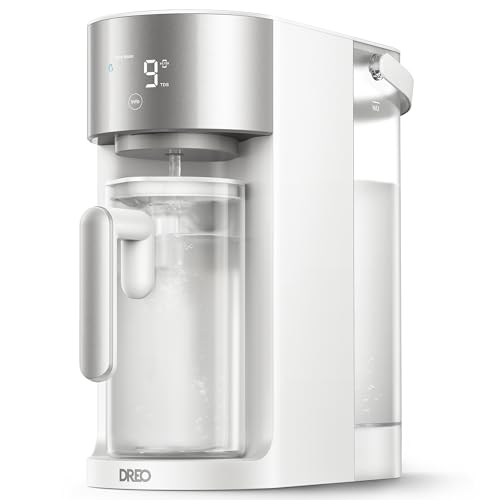
The DREO RO Filter 112 sits on your counter with a slim 14.5-inch footprint and no plumbing required — just fill its 3-liter tank and let the 7-in-1 RO membrane do the work. SGS testing confirms it removes 99.99% of 1,000+ impurities including PFOA, PFOS, and fluoride, making it ideal for renters or anyone who hates drilling into granite.
The real-time TDS display shows raw and pure water readings side by side — buyers reported drops from 285 ppm down to 11 ppm — while the auto-fill pitcher sensor refills hands-free when you slide the carafe back under the spout. The self-cleaning cycle flushes internal tubes automatically so you don’t have to remember a weekly manual cleaning.
At a 3:1 pure-to-drain ratio, it wastes far less water than older countertop units, and the filter lasts 265 gallons (roughly 5 per bottle equivalent). The 3L tank plus 1.1L pitcher is best suited for 1–2 people; heavier households may want its 5-liter variant for fewer refill cycles.
Why it’s great
- No-install countertop design with slim footprint
- Real-time TDS monitoring for both raw and filtered water
- Auto-fill pitcher sensor and self-cleaning flush cycle
Good to know
- Slow fill rate; 3L tank requires frequent refills for larger households
- Plastic pitcher; some users prefer glass to avoid microplastic concerns
2. Waterdrop T3-T 220 GPD
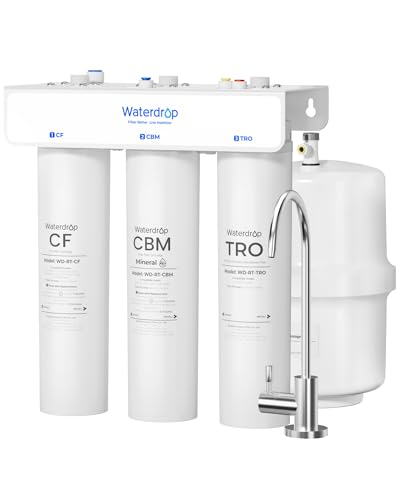
The Waterdrop T3-T delivers 220 gallons per day — triple the output of legacy 75 GPD systems — and packs a remineralization stage that adds potassium, calcium, sodium, and magnesium back into the purified water. That means your morning coffee and tea gain a noticeably smoother taste compared to standard RO water that tastes flat.
Installation takes roughly 30 minutes with simplified push-fit water lines, and the compact canister measures just 12.6 by 6.1 by 14.7 inches, saving up to 40% under-sink space versus traditional tank-based units. The 2:1 pure-to-drain ratio means a family of three can save roughly 225 gallons of water per month relative to older 1:1 systems.
NFC tap-to-phone filter reminders eliminate guesswork, while the all-in-one twist-off filter design swaps in three seconds with no housing removal or spills. The CF filter lasts six months, the CBM filter one year, and the TRO filter two years — making ongoing costs predictable and low.
Why it’s great
- 220 GPD flow fills five 16.9 oz bottles in ~1 minute
- Remineralization cartridge restores calcium and magnesium for taste
- NFC filter change reminders via smartphone tap
Good to know
- Requires a power outlet under the sink
- Faucet installation needs a drilled hole in the countertop
3. Glacier Fresh GFU03

The Glacier Fresh GFU03 is a tankless under-sink RO system that runs entirely on water pressure — zero electricity required. Its 0.0001-micron RO membrane catches particles smaller than most bacteria, and the 800 GPD rating means a cup fills in about five seconds, making it one of the fastest non-electric RO systems on the market.
The five-stage filtration train (PPC + C + RO) meets NSF/ANSI 58 and 372 standards, removing over 1,000 contaminants including PFOA, PFOS, chlorine, lead, and fluoride. The external water pressure gauge helps you monitor incoming pressure to protect the membrane, and the 3:1 pure-to-drain ratio keeps wastewater minimal.
Installation takes roughly 30 minutes with tool-free connectors, though you’ll need to drill a 1/2 to 1-inch hole for the faucet. The pull-out filter design swaps in three seconds with no water valve shutdown needed — just turn off the tap, pull, and insert. Post-install, the system requires a 10–20 minute rinse to clear initial carbon fines.
Why it’s great
- 800 GPD flow with zero electricity or pump noise
- Ultra-fine 0.0001μm RO membrane for thorough contaminant removal
- External pressure gauge protects system and extends filter life
Good to know
- Flow rate drops noticeably when filling large containers like pots
- Initial rinse needed for 10–20 minutes before using first glass
4. Home Master TMHP HydroPerfection
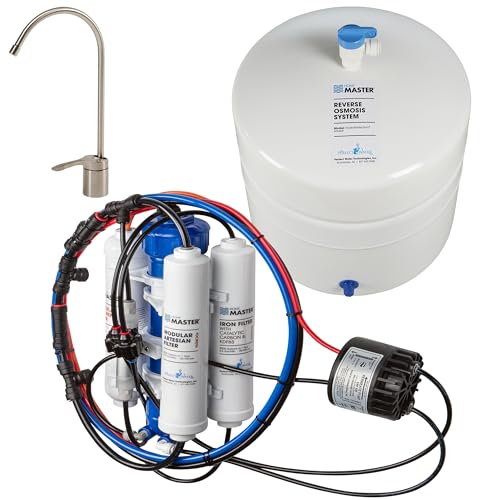
The Home Master TMHP HydroPerfection is a 9-stage under-sink system that runs water through two separate remineralization passes — restoring calcium and magnesium after the RO stage — and an EPA-registered UV sterilizer that kills 99.9% of microorganisms. That dual approach delivers water that tastes closer to mineral spring water than any standard RO system.
Its patented non-electric permeate pump achieves a 1:1 waste ratio while maintaining a fast 4.5-second fill rate for a standard glass, and the larger-diameter tubing reduces the typical pressure drop seen in 1/4-inch line designs. Buyers consistently report TDS drops from 430 ppm down to 25 ppm, with clear ice and no chlorine aftertaste even after three years of use.
The iron prefilter is a standout for homes with older pipes or well water — it protects the RO membrane from early fouling. Annual filter replacement is straightforward, and Home Master’s customer support is frequently cited as responsive and willing to replace components under warranty without hassle.
Why it’s great
- 9-stage filtration with EPA-registered UV sterilization
- Two-pass remineralization for a balanced, mineral-water taste
- 1:1 waste ratio with permeate pump saves significant water
Good to know
- Higher initial investment; premium ongoing filter costs
- Permeate pump produces a soft audible sound during operation
5. AquaTru Glass Carafe
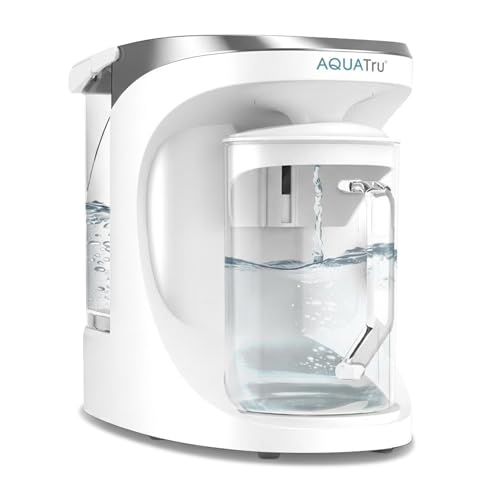
The AquaTru Glass Carafe is a true plug-and-play countertop RO system — just fill its tank, plug it into a standard wall outlet, and watch purified water dispense into the borosilicate glass carafe. It’s certified by IAPMO to NSF standards and removes 84 contaminants including microplastics, fluoride, chromium-6, lead, arsenic, and PFOA/PFOS — far more than any carbon pitcher can handle.
The 4-stage filtration includes a pre/carbon filter (6 months / 300 gallons), an RO membrane (12 months / 600 gallons), and a VOC carbon filter (12 months / 300 gallons). Buyers consistently note the water tastes “crisp” and “pure,” with TDS dropping to near zero — though you’ll need to dump the wastewater from the intake tank every cycle since there’s no drain line connection.
At 14.7 pounds and roughly the size of a mid-size coffee maker, the unit sits comfortably on any counter. The glass carafe avoids the microplastic leaching issues of plastic pitchers, and the 1-year warranty provides a safety net for first-time RO buyers. The main caveat: the intake tank holds only about 1.5 carafe volumes, so you’ll refill and dump wastewater multiple times per day in a household of three or more.
Why it’s great
- No plumbing required — fills from faucet and plugs into outlet
- NSF-certified removal of 84 contaminants including PFAS and lead
- Boroborate glass carafe eliminates plastic taste and microplastic shedding
Good to know
- Small intake tank requires frequent refilling and wastewater dumping
- RO filter longevity can be inconsistent; some users saw failure before the 12-month mark
6. SimPure T1-400UV

The SimPure T1-400UV is a tankless under-sink RO system that combines 8-stage filtration with a built-in UV light that activates on water flow to kill any remaining bacteria or viruses. It’s SGS-tested against NSF/ANSI 58 standards and reliably reduces TDS from 200–500 ppm down to near zero — buyers reported drops from 270 ppm to 0 ppm initially, stabilizing around 10–14 ppm after 18 months of continuous use.
The 400 GPD rating delivers about 0.27 gallons per minute — enough to fill a bottle in 15 seconds — and the 1.5:1 pure-to-drain ratio is decent for the price point. The BPA-free food-grade construction and quick-change twist filters (combined 1,057-gallon lifespan, roughly 8,000 water bottles) keep maintenance simple and cost-effective.
SimPure has been based in Seattle since 2006, and their customer service gets strong marks for standing behind the product — one review noted a free control box replacement after 1.5 years despite expired warranty. The tankless footprint (15.6 x 5.3 x 15.7 inches) frees up under-sink space, though you’ll need a power outlet nearby for the pump and UV module.
Why it’s great
- Near-zero TDS output with UV sterilization for microbiological safety
- Compact tankless design saves significant under-sink space
- Strong customer support with out-of-warranty replacements reported
Good to know
- Requires 10–20 minute initial flush; some filters ship with damaged O-rings
- Water flow rate (0.27 GPM) is slower than premium tankless competitors
7. Waterdrop KJ600
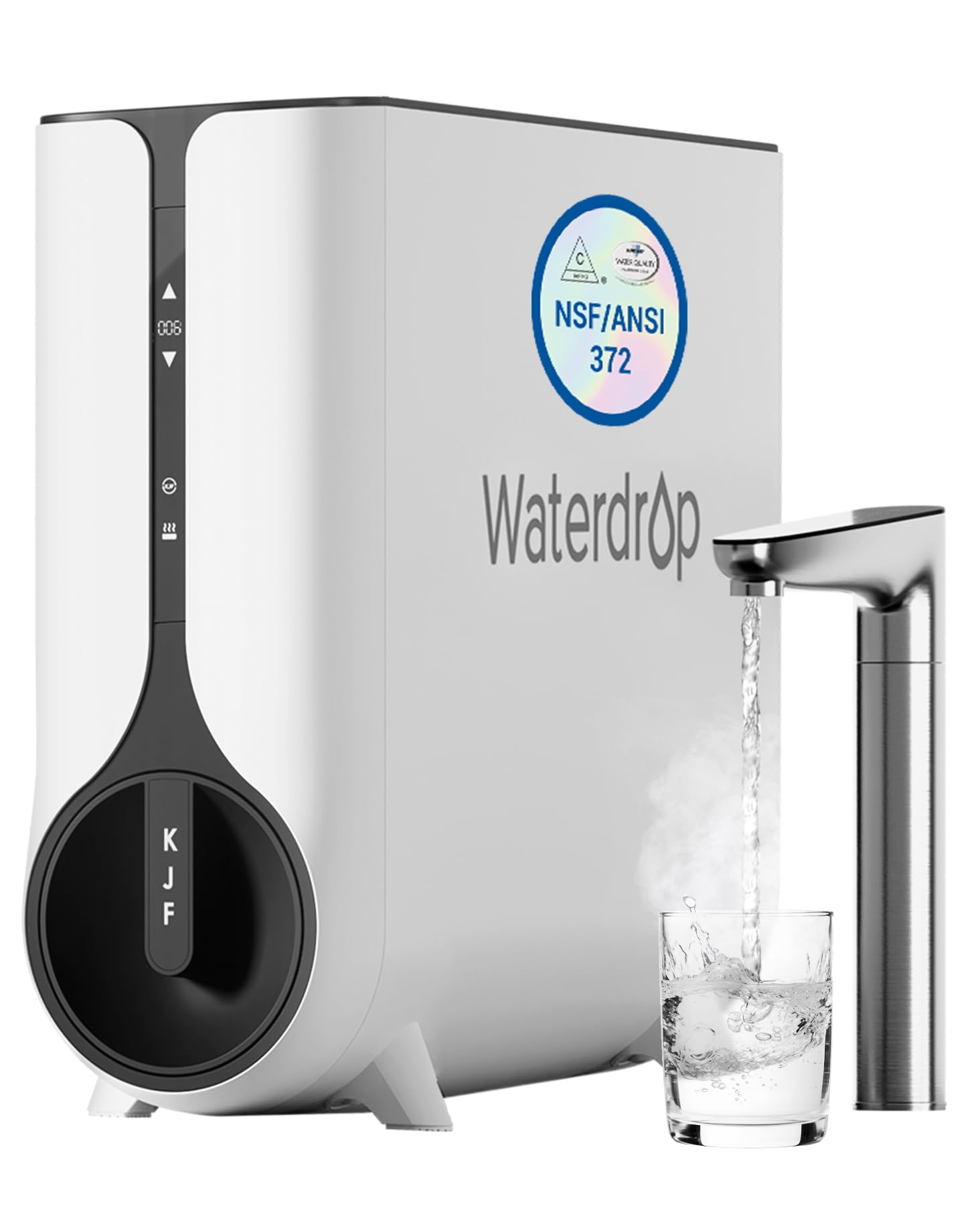
The Waterdrop KJ600 is a first-to-market under-sink RO system that integrates an instant hot water dispenser, capable of delivering water from 104°F up to 203°F directly from the smart faucet. That means you can brew pour-over coffee, steep tea, or cook instant oatmeal without waiting for a kettle to boil — all from the same spout that delivers cold purified water.
The 5-stage 5-in-1 filter (PP cotton, carbon block, RO membrane, and additional filtration layers) reduces TDS, PFOA, PFOS, fluoride, arsenic, lead, and mercury, while the 600 GPD flow rate fills a cup in just a few seconds. The Teflon tube used for the hot water line is rated up to 500°F, and the child-lock function prevents accidental scalding by requiring a two-step touch sequence for hot water.
The smart display faucet shows real-time TDS levels and filter life, and automatically monitors for dry burning with NTC temperature sensors. The 2:1 pure-to-drain ratio is efficient, though the system cannot connect to a refrigerator or ice maker. At roughly 17.5 by 6.7 by 16.6 inches, the base unit takes up noticeable under-sink cabinet space — measure your cabinet before buying.
Why it’s great
- Integrated instant hot water up to 203°F eliminates the need for a kettle
- Smart faucet with TDS display, filter life indicator, and child-lock safety
- 600 GPD flow provides rapid cold water dispensing
Good to know
- Large base unit requires significant under-sink space
- Cannot be connected to a refrigerator or ice maker; touch sensor can be finicky with wet hands
FAQ
How often do I need to replace the filters on an RO system?
Does RO water remove healthy minerals from drinking water?
Can I install an under-sink RO system if I rent my apartment?
Final Thoughts: The Verdict
For most users, the best at home water purifier winner is the DREO RO Filter 112 because it balances countertop convenience, real-time TDS monitoring, and a strong 3:1 pure-to-drain ratio without requiring any installation. If you want remineralized water that tastes like natural spring, grab the Waterdrop T3-T. And for instant hot water on demand while eliminating your kettle, nothing beats the Waterdrop KJ600.