
Our readers keep the lights on and my morning glass full of iced black tea. As an Amazon Associate, I earn from qualifying purchases.
Specs are compiled from manufacturer listings and verified buyer reviews and can change over time — please confirm the key details on the product page before buying.
You want deep pressure on sore muscles without the roller squishing flat in a month. That depends on one thing: density (firmness). A dense roller pushes into tight tissue to release knots, so number plates stay readable at night — wait, the right density means you get that pressure without the roller collapsing under your body weight. Too soft and you bounce on a sponge. Too hard and you might bruise. This guide looks at five athletic foam rollers and sorts out which density and length fits your real routine, comparing published specs and verified customer reviews to highlight each pick’s real strengths and trade-offs.
I’m Min — the founder and writer behind Gadgets Feed. This guide is built by comparing the manufacturers’ published specifications and the patterns across verified customer reviews, so you get each pick’s real strengths and trade-offs instead of marketing spin.
Whether you target a knot in your shoulder blade after a heavy lift or stretch out a tight lower back after sitting all day, the right athletic foam roller makes the difference between relief and frustration.
Quick Picks
- OPTP AXIS Firm Foam Roller — Best Overall
- Black Mountain Products High Density Extra Firm — Best Value
- Amazon Basics High-Density Foam Roller — Daily Driver
- ProsourceFit High Density Foam Roller — Compact Performer
- Brazyn Morph Foam Roller — Travel Innovator
How To Choose The Best Athletic Foam Roller
Two specs make or break your experience: firmness and length. Here is what matters.
Firmness (Density)
Firmness is the roller’s resistance to your body weight. A high-density (extra firm) roller pushes deep into muscle tissue to release knots, so you get lasting relief. A soft roller compresses easily, which feels gentler for beginners or tender spots. Most athletic rollers use expanded polypropylene (EPP) foam — a dense plastic foam that holds its shape under repeated heavy pressure. If you weigh more or need deep tissue work, go extra firm. If you are new to rolling, a medium-firm roller may be more comfortable.
Length and Portability
Length affects how much of your back the roller covers in one pass. A 36-inch roller supports your full spine and both legs at once, so you roll continuously. An 18-inch roller targets smaller muscle groups like calves and IT bands and fits in a suitcase. Travel-friendly collapsible rollers exist, but they sometimes trade firmness for portability — a common compromise buyers face.
Surface and Texture
Smooth rollers glide evenly for broad muscle release. Textured rollers with ridges or nubs dig into trigger points for a deeper massage but can feel intense on bony areas like your shins. Beginners should start smooth; experienced athletes often prefer some texture for targeted knot work.
Quick Comparison
| Model | Best For | Length | Firmness | Material | Amazon |
|---|---|---|---|---|---|
| OPTP AXIS Firm Foam Roller | Deep, consistent pressure for heavy users | 36″ | Extra Firm | Closed-cell EPP foam | $49.95Amazon |
| Black Mountain High Density Foam Roller | Full-length firm roller at a mid-range price | 36″ | Extra Firm | Foam | $29.99Amazon |
| Amazon Basics High-Density Foam Roller | Daily use without wearing out | 36″ | Firm | Polypropylene | Amazon |
| ProsourceFit High Density Foam Roller | Compact firm roller for travel and small muscles | 18″ | Extra Firm | EPP foam | Amazon |
| Brazyn Morph Foam Roller | Collapsible roller that fits in a bag | 16″ | Medium-Firm | Textured foam | Amazon |
In‑Depth Reviews
1. OPTP AXIS Firm Foam Roller

The lasting shape and deep pressure you need for serious muscle release — the OPTP AXIS is the 36-inch roller physical therapists recommend to heavy clients.
This roller measures 36 x 6 inches (the standard full-body length) and uses closed-cell EPP foam — a dense plastic foam that resists moisture and holds its shape longer than standard foam. That means you get deep, consistent pressure every time you roll, so muscle knots release without the foam giving out. One buyer who weighs over 250 pounds reported that it easily supports their full weight and pressure, a strong durability signal for larger athletes.
Unlike the shorter ProsourceFit at 18 inches, the OPTP AXIS spans your entire spine, letting you roll both hamstrings and your full back without repositioning. The firmness is what several buyers called “borderline hard” — that is the trade-off. One reviewer noted it is the stiffest option from OPTP, with other colors being softer. If you are a beginner or have a very tender back, this roller might feel painful at first. But for deep myofascial release (open up tight muscle fibers) and core stability work, it is the most consistent performer here. Buyers report this roller is “superb” and holds up after continuous use without flattening.
Built for deep work: The firmest, most durable EPP foam in this roundup, recommended by physical therapists for lasting shape retention.
The stiff reality: If you bruise easily or are new to rolling, the extra-firm surface can be uncomfortable — start with short sessions.
Best for: Athletes and taller users who need a 36-inch roller that does not soften over time and can handle over 250 pounds of pressure.
Consider a different pick if: You want a soft beginner roller or need something small enough to travel with.
2. Black Mountain Products High Density Extra Firm Foam Roller

You get the same 36-inch extra-firm support as the OPTP AXIS for less cost, but with standard foam instead of closed-cell EPP.
This roller matches the 36 x 6-inch dimensions of the OPTP AXIS above and is labeled “Extra Firm” — a confidence builder if you want deep muscle release. The core difference from the OPTP is the material: this one uses standard high-density foam rather than closed-cell EPP, meaning it is still firm but may retain heat or moisture a bit more over time. Still, it is made in the USA and listed as phthalate-free (free of chemical softeners), which is a quality marker. Owners mention using it for physical therapy and scoliosis-related back pain, describing it as “dense” and “exactly what I wanted.”
At 0.8 kilograms (roughly 1.76 pounds), it is light enough to toss in a gym bag — one reviewer specifically mentioned bringing it to the gym for stretching the back and legs. The 24-inch version is also available if you prefer a shorter length, but the 36-inch version offers the same full-spine coverage as the Amazon Basics roller. One early buyer noted theirs arrived wrapped only in plastic with no box, so the ends were perfectly round without a slight indent — a cosmetic detail that did not affect performance.
Why it stands out
- Extra-firm density for deep muscle work
- Phthalate-free foam — a safety plus
- Made in the USA
One thing to note
- Not closed-cell foam, so less moisture resistance than the OPTP AXIS
- Some units arrive without retail packaging
Reach for this if: You want a full-length extra-firm roller that costs less than the OPTP AXIS while still delivering solid construction for PT work.
Look elsewhere if: You need a collapsible travel roller or the most moisture-resistant EPP foam on the market.
3. Amazon Basics High-Density Foam Roller

A 36-inch workhorse one buyer has used daily for three years without it wearing out — that kind of durability is rare at this price.
This is the no-frills option that quietly outperforms its price tier. It is made from molded polypropylene (a durable plastic foam that won’t absorb sweat) and measures 36 x 6 x 6 inches — the same dimensions as the OPTP AXIS and Black Mountain rollers. The edges are rounded for a bit more comfort when you roll across the outer sides. You can wipe it clean easily, which matters if you use it right after a sweaty workout. Unlike the extra-firm Black Mountain and OPTP, the Amazon Basics sits between firm and extra firm — a good middle ground if you want deep pressure without the borderline-hard feel of the OPTP.
Buyers consistently mention two things: it is very firm, almost hard, and it holds up. One buyer mentioned “I use this almost daily and have for at least 3 years” without it losing shape. Another called it “basic, but works just as well as more expensive ones.” The main knock is that some buyers found it “thicker than I thought,” meaning the 6-inch diameter feels larger than expected when you first hold it — that is not a flaw, just something to know if you have smaller hands.
Reliable and affordable: Excellent 36-inch roller that has proven its durability over years of daily use, with a firm pressure that suits most athletes.
Worth knowing: The 6-inch diameter can feel bulky to grip, and it is not as moisture-repellent as closed-cell EPP rollers.
Best for: Budget-conscious athletes who want a full-size roller they will actually use every day without it breaking down.
skip it if: You need a compact roller for travel or the absolute highest density for heavy professional use.
4. ProsourceFit High Density Foam Roller
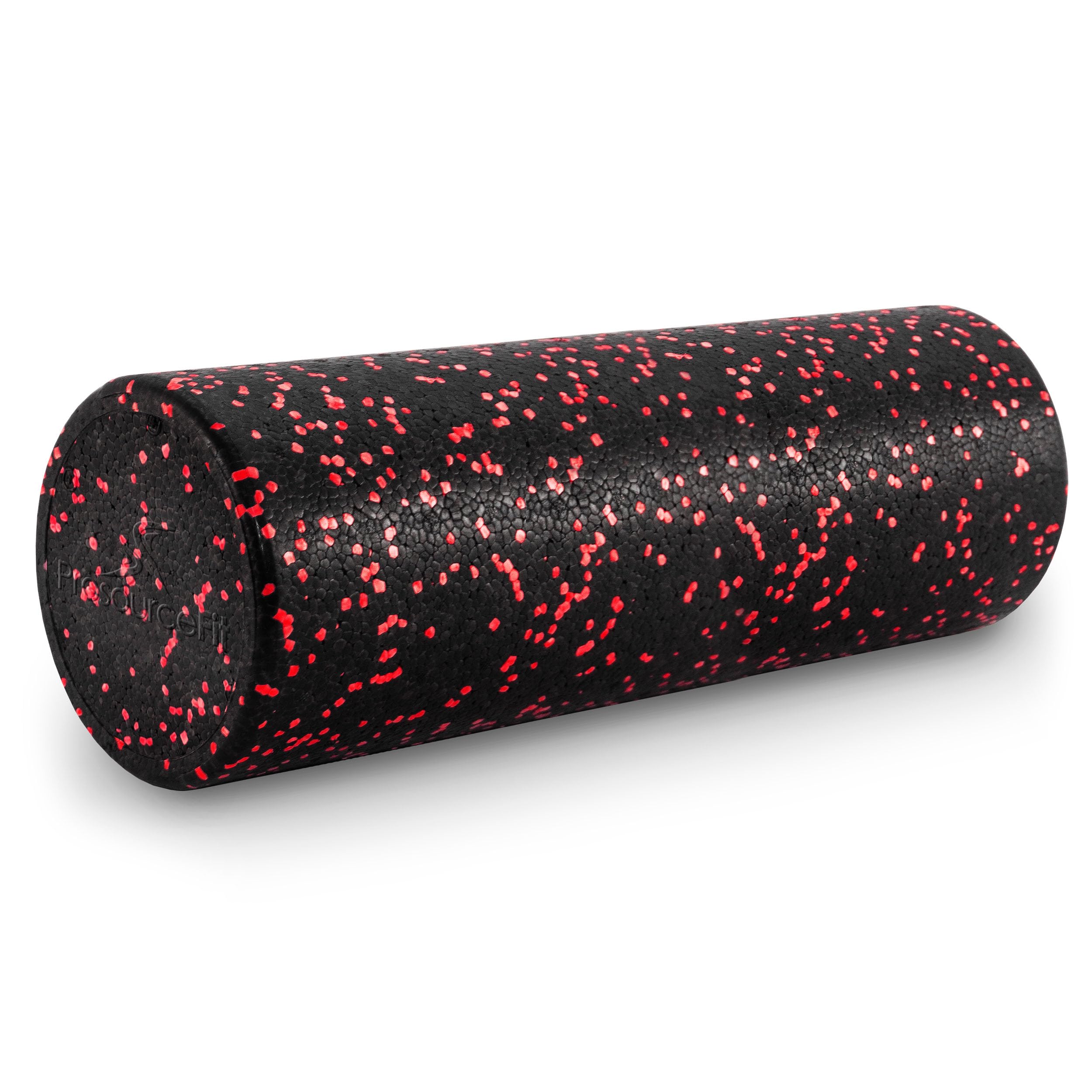
An 18-inch extra-firm roller that disappears into a bag but still sinks into sore calves and IT bands — perfect for travel.
While the 36-inch rollers above are great for home use, this ProsourceFit is half the length — 18 inches — which makes it ideal for targeting smaller muscle groups like calves, the IT band (the thick band of tissue along your outer thigh), and hamstrings without needing floor space. It is made from recycled EPP foam (expanded polypropylene), the same moisture-resistant material used in the OPTP AXIS, so you can wipe it clean and it won’t break down in humidity. The maximum weight capacity is 300 pounds, competitive with the larger rollers.
Customers note it is “extremely dense” and “has not even damaged and retained its shape very nicely” after months of use — a sign that the EPP foam holds up well in this compact size. One reviewer who is a regular gym-goer called it “very firm” and said it is perfect for targeting the IT band, though they noted it may be too hard for beginners. Another mentioned using it for PT exercises and liking that it is “firm without being hard.” Unlike the Brazyn Morph, which collapses but is softer, this ProsourceFit stays unyieldingly firm for deep, targeted pressure.
The catch is that at 18 inches, it does not cover your full back. The 36-inch Amazon Basics roller, for comparison, spans your entire spine in one pass, while the ProsourceFit requires you to roll in segments. That is by design — it is meant for portability and targeted work, not full-spine massages.
Perfect for
- Extra-firm EPP foam resists moisture and holds shape
- 18-inch length fits in a backpack or carry-on
- 300-pound weight capacity — solid for a compact roller
Limitation
- Too short for full-back rolling; you must reposition several times
- Extra-firm feel can be painful for sensitive beginners
Reach for this if: You travel frequently or want a compact, extra-firm roller for post-run calf and IT band work without hauling a 36-inch tube.
Look elsewhere if: You want a single roller that covers your whole back at once — you will want the 36-inch Black Mountain or Amazon Basics instead.
5. Brazyn Morph Foam Roller

The only roller here that collapses to 2.6 inches thick, so you can toss it in a carry-on without sacrificing recovery on the road.
This is the outlier on this list — a collapsible roller that flattens to just 2.6 inches thick (16 x 7 x 2.6 inches) and weighs 1.5 pounds. It is designed specifically for travelers who cannot pack a standard 36-inch tube. The Morph uses a textured foam surface with raised nubs, which provides a more targeted, aggressive massage than a smooth roller. The maker claims it supports up to 350 pounds, and one reviewer confirmed using it daily for 1.5 years of travel without the foam degrading.
The trade-off is density. While the ProsourceFit and OPTP rollers are unyieldingly firm, the Brazyn Morph is noticeably softer. One owner reported “it is a bit too soft” for their liking, saying they wanted something more firm for deep tissue work. Another called it “firm textured” but still softer than a solid EPP roller. For travel, that compromise is worth it — three years of regular use and the foam reportedly stays nice and firm according to one long-term owner. Unlike every other roller here, the Morph’s textured surface provides grip and pressure-point release, so it feels effective for loosening tight quadriceps (the large muscles on the front of your thighs) and back muscles after a long flight. But that texture means it is less comfortable on bony areas like your shins.
class-leading portability: Collapses flat to fit in a carry-on, with a textured surface that hits trigger points — ideal for frequent travelers.
Softer than expected: Not as firm as solid EPP rollers; if you need deep, unyielding pressure, this will feel too cushioned.
Best for: Travelers and gym-goers who need a roller that fits in a backpack and can handle daily use without falling apart.
pass on it if: You want the hardest possible density for deep tissue work at home — stick with the OPTP AXIS or Black Mountain.
Understanding the Specs
Firmness and Density
Firmness is the single most important feature of an athletic foam roller. A “high-density” or “extra-firm” roller resists compression, so it pushes deep into muscle tissue to break up knots and trigger points. Softer rollers compress easily, which feels gentler but may not release tight muscles effectively. If you are a heavier athlete or have chronic tightness, choose extra firm. If you are new to foam rolling, start with a standard firm roller to avoid bruising.
Length and Full-Body Coverage
Length determines how much of your body the roller covers in one pass. A 36-inch roller spans your entire back, hamstrings, and glutes without you needing to shift position. An 18-inch roller is compact enough to pack in a duffel bag but requires you to roll in segments — fine for calves and IT bands, less convenient for a full spinal release. For home use, 36 inches is the standard. For travel, 12 to 18 inches is more practical.
FAQ
Foam rolling can release tight lower back, glutes, and hamstring muscles that often contribute to back discomfort.
What is the difference between soft and extra firm foam rollers?
How long does a high-density foam roller last?
Should I get a 36 inch or 18 inch foam roller?
Foam rolling the glutes and piriformis muscle may relieve sciatic nerve tension, depending on the root cause.
How much weight can a foam roller support?
Is a textured foam roller better than a smooth one?
Can I take a foam roller on a plane?
Final Thoughts: The Verdict
For most people, the athletic foam roller winner is the OPTP AXIS Firm Foam Roller because its extra-firm closed-cell EPP foam supports deep muscle work and holds its shape for years, even under heavy pressure. If you want a full 36 inches of firm support at a more approachable price, grab the Black Mountain High Density Foam Roller. And for travelers or anyone short on space, the standout is the collapsible Brazyn Morph Foam Roller.
How We Picked
We do not accept paid placement. Every pick is matched to a real buyer and a real use-case; we do not hands-on test units.
Sources & Methodology
Specifications: manufacturer listings and product documentation. Review insights: verified customer reviews, as of July 2026. Pricing: not shown on this page (it changes often); check the current price via the retailer link.
As an Amazon Associate, Gadgets Feed earns from qualifying purchases. This does not affect which products we feature.
Related Guides
Product prices and availability are accurate as of the date/time indicated and are subject to change. Any price and availability information displayed on Amazon at the time of purchase will apply to the purchase of this product. As an Amazon Associate I earn from qualifying purchases.
CERTAIN CONTENT THAT APPEARS ON THIS SITE COMES FROM AMAZON. THIS CONTENT IS PROVIDED "AS IS" AND IS SUBJECT TO CHANGE OR REMOVAL AT ANY TIME.
Amazon and the Amazon logo are trademarks of Amazon.com, Inc. or its affiliates.