
Our readers keep the lights on and my morning glass full of iced black tea. As an Amazon Associate, I earn from qualifying purchases.
Specs are compiled from manufacturer listings and verified buyer reviews and can change over time — please confirm the key details on the product page before buying.
If you have flat feet, every step you take sends a shockwave up your legs, and the wrong pair of athletic shoes can turn a short walk into a day of aching arches and tired heels. The good news is that the right shoe—one built with motion control, a firm midsole, and real arch support—can make flat-footed miles feel almost normal. This guide breaks down seven athletic shoes for flat feet that actually earn their keep, sorting them by what they do best so you can match a pair to your daily routine.
I’m Min — the founder and writer behind Gadgets Feed. This guide is built by comparing the manufacturers’ published specifications and the patterns across verified customer reviews, so you get each pick’s real strengths and trade-offs instead of marketing spin.
Whether you’re on concrete all day or pounding pavement, the right athletic shoes for flat feet provide the stability and cushioning that keep your arches from working overtime.
Our Picks at a Glance
How To Choose The Best Athletic Shoes For Flat Feet
Flat feet means your arch collapses inward when you stand, which rolls your ankle inward too—a pattern called overpronation. A good stability shoe counteracts that roll with a firmer midsole and a higher sidewall, guiding your foot back to a neutral line with every stride. You want structure, not just plushness.
Look for a supportive midsole, not just cushion
Soft foam feels great in the store but lets your arch sink and your ankle roll. Stability shoes use a denser foam or a guidance system that keeps your foot centered over the sole. A rocker shape that eases toe-off also helps flat-footed walkers move smoothly without forcing the arch to do all the work.
Check the toe box width for all-day comfort
Flat feet often come with wide forefeet, and a narrow toe box squeezes your toes together and throws off your balance. Many of the best flat-foot shoes offer wide (W) or extra-wide (XW) sizing, giving your toes room to splay naturally for better stability. If you have bunions or swelling, a roomy toe box is non-negotiable.
Quick Comparison
| Model | Best For | Support Type | Toe Box | Key Tech | Amazon |
|---|---|---|---|---|---|
| New Balance 608 V5★ Best Overall | All-day wear & gym | ABZORB heel + PU insert | Relaxed / Wide fits | ABZORB crash pad | Amazon |
| ASICS GT-1000 14Top Performer | Road running | Stability midsole | Narrow (wide opt.) | FF BLAST midsole | Amazon |
| Saucony Guide 18 | Cushioned daily trainer | Center Path + rocker | Wide / 4E option | PWRRUN foam | Amazon |
| G-DEFY MATeeM | Prolonged standing | Rocker sole + orthotic | Wide / XW options | VersoShock hybrid | Amazon |
| IIV Wide Toe Box | Wide feet & bunions | Removable arch insole | Extra wide | Shock absorption | Amazon |
| OrthoComfoot Women’s | Swollen feet & plantar fasciitis | Arch support insole | Roomy | Cushioned bounce | Amazon |
| Orthopedic Waterproof Trail | Trail & hiking | Dual inserts | Ample toe room | Waterproof build | Amazon |
In-Depth Reviews
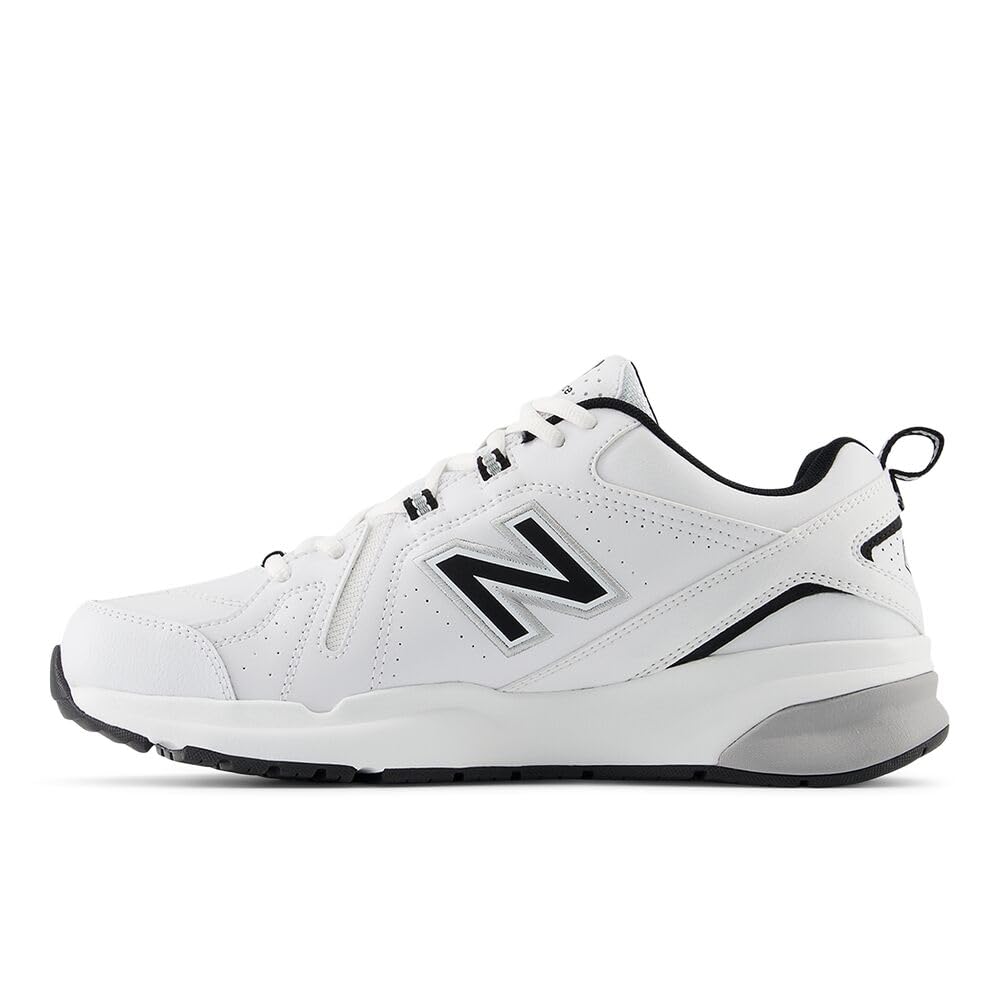
1. New Balance Men’s 608 V5
Our pick — over 4.5★ from 76,000+ verified ratings; the strongest balance of quality and price.
The all-day workhorse that flat-footed walkers reach for again and again.
The 608 V5 earns the top spot because it attacks the two things flat feet hate most: hard landings and collapsing arches. The ABZORB heel crash pad absorbs impact on every step, while the molded PU insert gives your arch a firm, supportive ledge instead of letting it sink into mush. A relaxed fit last means your toes aren’t fighting the shoe, and the dual density collar foam wraps your ankle for lockdown that doesn’t bite.
This is the pair owners describe as comfortable right from the start, with no break-in whining. The crowd favorite—with 4.6 stars across 76,000+ owners—is full of people who stood on concrete all day and reported their feet didn’t hurt once.. Buyers report walking over 5 hours at a theme park pain-free, and Several mention buying a second pair or being recommended the shoe by a podiatrist..
The trade-off is durability under heavy punishment. Some owners mention the shoes falling apart within months under intense use, while others say they last—so treat them as a reliable daily shoe rather than an invincible work boot. The suede upper also means you’ll want to keep them out of heavy rain, and sizing runs a touch narrow for some, so the X-wide option is worth considering if you’re between widths.
What wins people over
- Excellent arch support that holds up for all-day standing and walking
- Comfortable from day one with no break-in period
- Great value for the price, especially in wide sizes
What to watch
- Suede upper needs protection from rain and standing water
- Durability is mixed—some report wear within months under heavy use
Reach for these if: you want a proven, supportive do-everything shoe for work, gym, and casual wear that feels great on wide, flat feet from the first step.
Think twice if: you need a waterproof shoe or you log extreme daily mileage and demand maximum sole longevity.
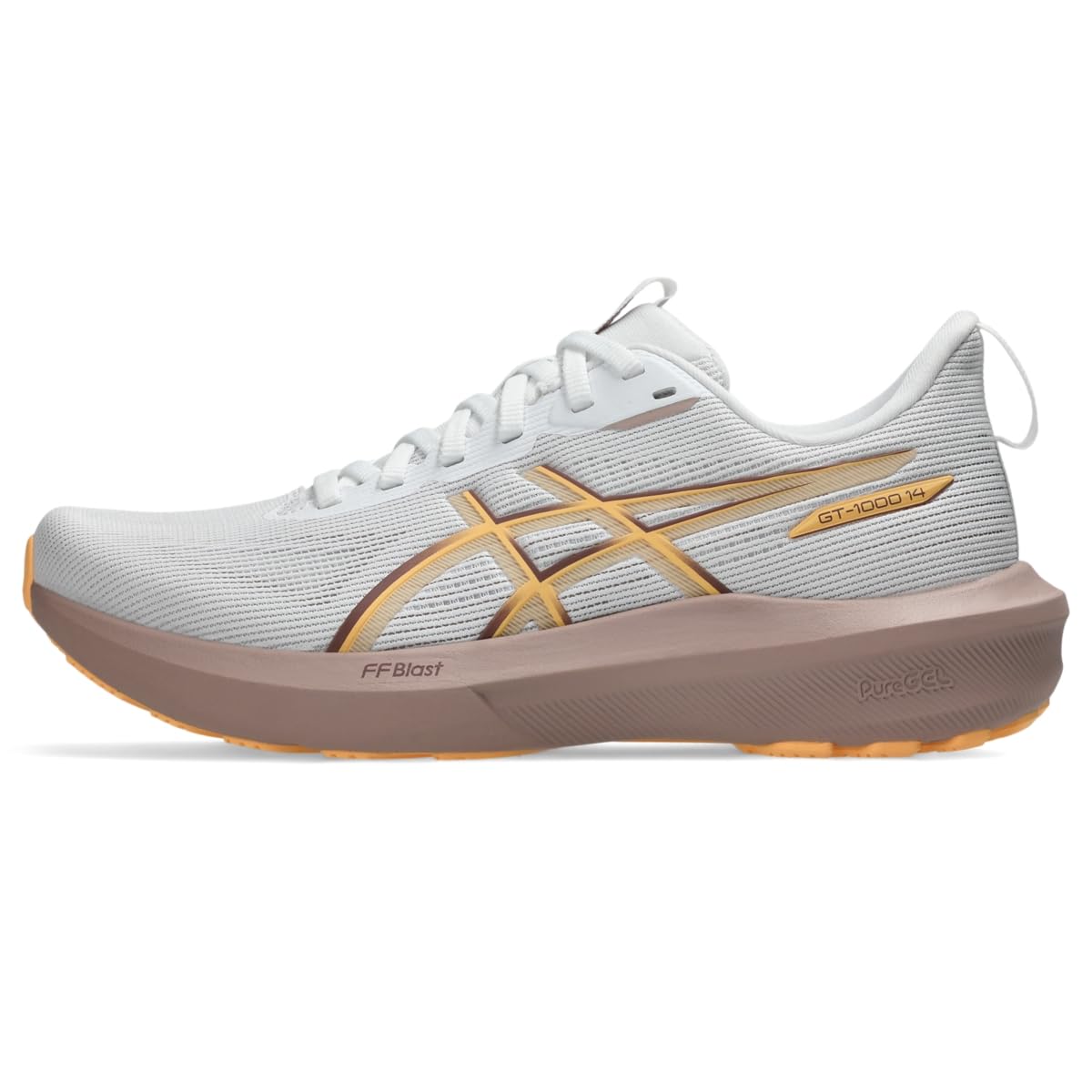
2. ASICS Women’s GT-1000 14 Running Shoes
The lightweight stability trainer that keeps overpronators rolling smooth on the road.
The GT-1000 14 is built for runners who need their shoe to do the stabilizing work, so their arch doesn’t have to. The updated FF BLAST midsole delivers a cloud-like feel and an energized bounce that powers you forward, while the 3D GUIDANCE SYSTEM boosts stability for a smooth, confident ride on pavement or everyday miles.
This is the pick for the flat-footed runner who found other stability shoes too clunky. Owners praise the cushioning and lightweight build, with many reporting it helped a knee injury after a previous bad shoe made things worse. It runs narrow, so the wide option fits better for most flat-footed runners—one owner with bunions warns the toe box is snug, so wide-footed buyers should size up or choose wide.
The main durability gripe is the sole, with some owners reporting the outsole peeling apart over time. The shoe also runs narrow and deep, which suits thin, low-arch feet well but can feel too deep for very slender feet that sink in. A few owners went up half a size for a comfortable fit.
Why runners like it
- Responsive FF BLAST foam with a bouncy, cloud-like ride
- Stability features that help overpronators and knee pain
- Lightweight feel that doesn’t weigh you down on long runs
Who should skip
- Narrow toe box—wide feet or bunions may feel squeezed
- Some customers note sole peeling over time
Best for: the flat-footed road runner who wants a lighter stability shoe with a lively, cushioned feel that still controls overpronation.
Look elsewhere if: you have wide feet or bunions—the snug toe box is the recurring theme in owner feedback.
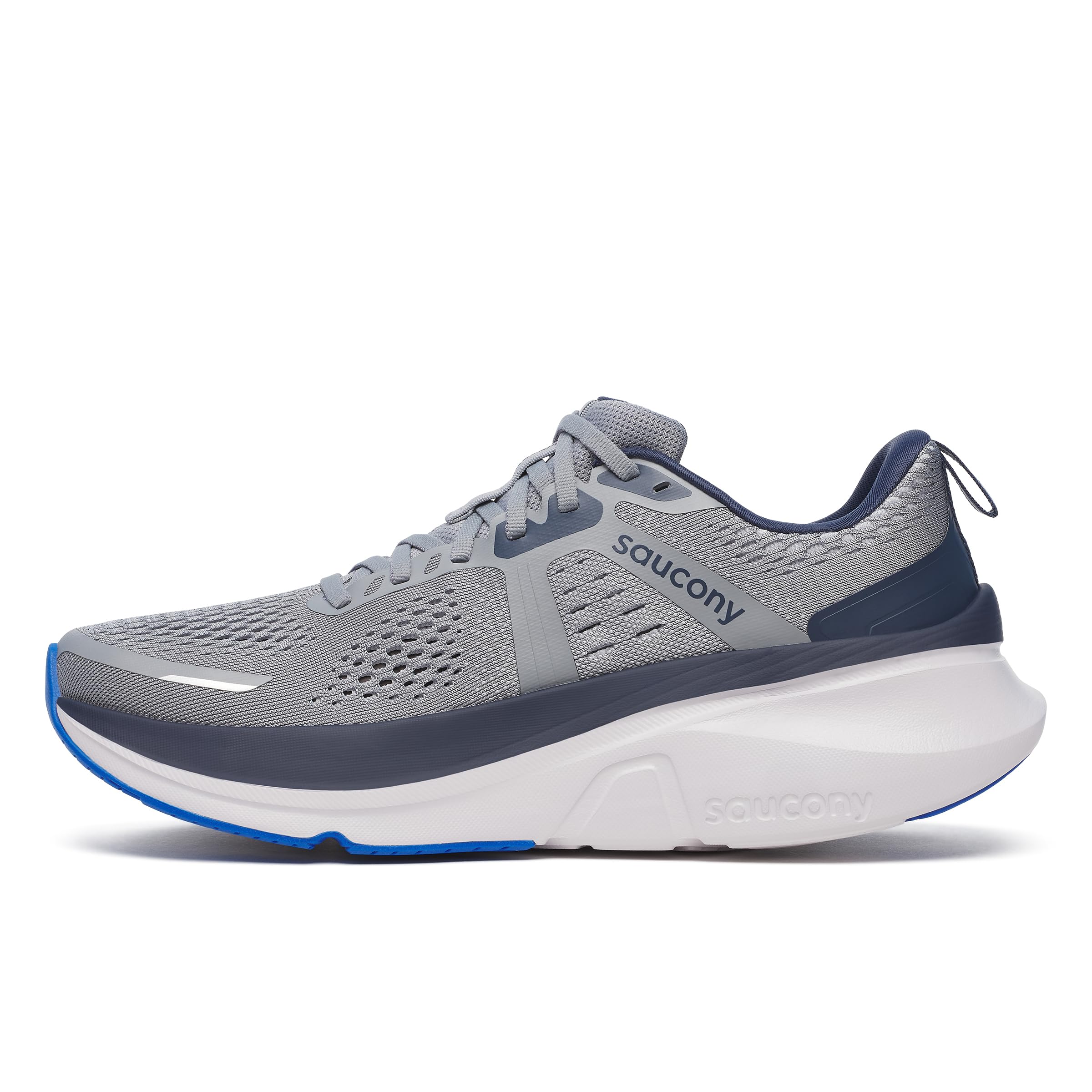
3. Saucony Men’s Guide 18 Sneaker
Maximum cushion with a rocker shape that keeps flat feet centered and moving.
The Guide 18 is Saucony’s core maximum cushioning training shoe, and it’s a serious answer for flat-footed runners who want plushness without losing control. It combines soft, responsive PWRRUN foam with Center Path Technology, which keeps the foot centered and supported by maintaining a standard centerline, raising the sidewalls, and building the sole on a rocker shape to ease toe-off.
This shoe solves the classic flat-foot problem: too much softness lets the arch collapse, but this one guides your foot back to center with every stride. Owners with flat feet and overpronation report immediate relief from aches and shin splints., and even a postal worker logging 13.5 miles a day found them comfortable with no blisters. The wide toe box and flexible upper are standout features for wide-footed runners.
Durability is the honest concern here. One owner in the 4E width reported a hole developing in the mesh upper after about 5 months, and another saw excessive sole wear in under a month. The rocker shape also means a slightly different feel than traditional ankle-support shoes—worth a few test strides before committing.
The cushion king: owners consistently describe the Guide 18 as cloud-like and bouncy, with several noting it feels lighter than its cushioning suggests.
A fair caveat: the soft foam and mesh upper trade some longevity for that plush ride, so heavy milers may wear through them faster than firmer trainers.
Grab these if: you want a plush, rocker-driven daily trainer that steadies flat feet and overpronation while feeling like a cloud underfoot.
Skip them if: you need a shoe that will survive a full year of hard daily miles—the foam and mesh are the vulnerable points.
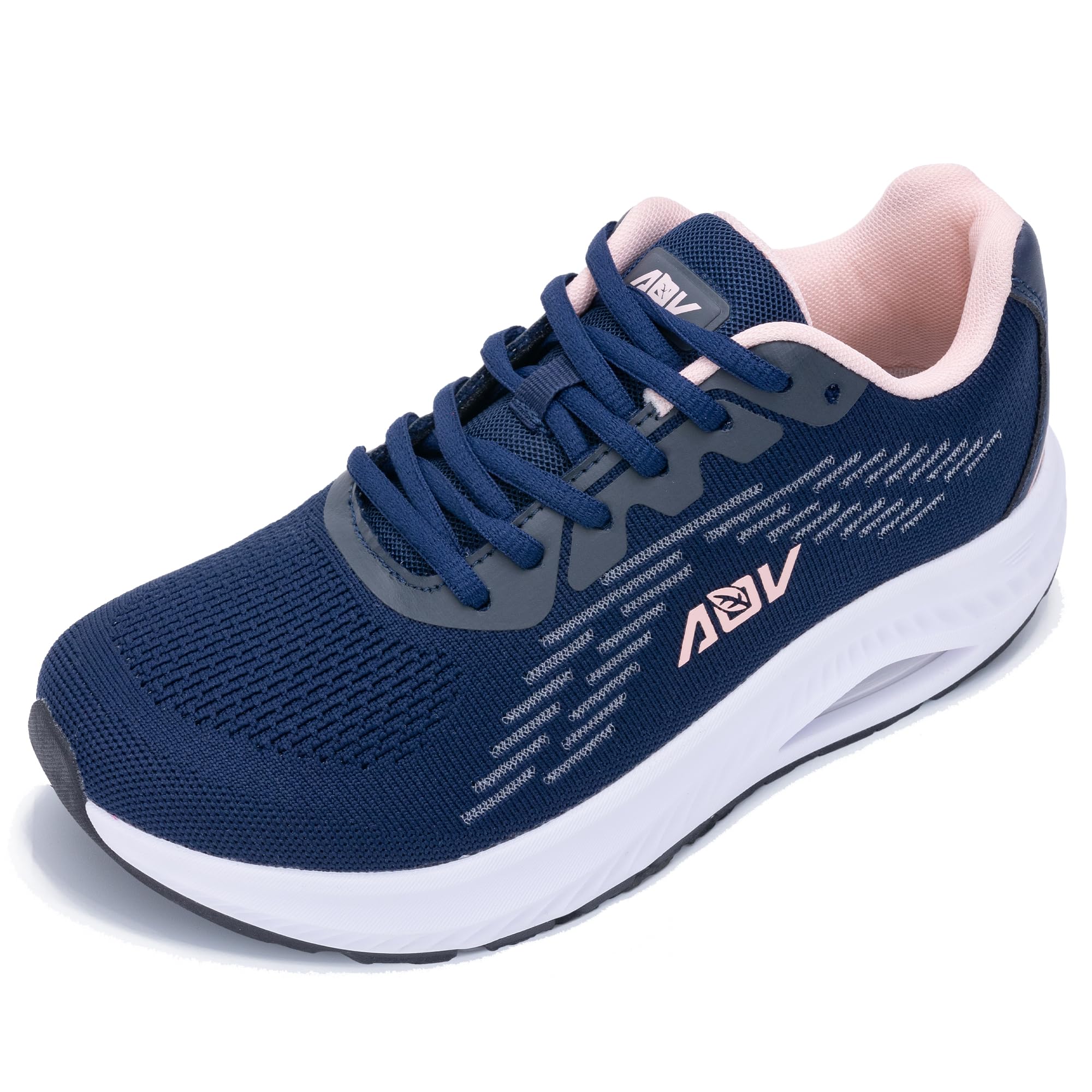
4. IIV Women Wide Toe Box Arch Support Sneakers
The extra-wide sneaker that finally lets flat, bunion-prone feet breathe.
For flat-footed women with wide forefeet, bunions, or swelling, the IIV sneaker is built around one idea: give the toes room. The extra-wide toe box accommodates swelling and lets toes splay naturally, while the removable arch support insole adds the lift flat feet need. The breathable upper and non-slip sole round out a shoe designed for long hours on your feet.
This is the pair that owners describe as a revelation for wide feet—One buyer walked 18 holes of golf with no foot pain for the first time ever.. Nurses and others on their feet for long shifts praise the roomy fit and the arch support that extends all the way up to the hips for better gait alignment. Another owner with a bad hip reports the shoes give noticeably better balance.
Honest notes: some owners find the shoe heavy and cumbersome, particularly older buyers or those with arthritis. Others wish the toe box were even wider, and a few report the heel slipping off while walking. The cushioning is decent but not plush, so some owners swap in their own insoles for extra impact absorption on hard floors.
The wide-foot fix: if your flat feet come with bunions or swelling, this is the rare sneaker that fits properly without squeezing your toes.
Worth knowing: the removable insole means you can drop in your own orthotic, but the stock cushioning is firmer than plush and the shoe runs heavy for some.
Best for: women with wide feet, bunions, or swelling who need a roomy toe box and solid arch support for long shifts or walking.
Consider something else if: you want a feather-light shoe or need maximum plush cushioning straight from the start.
5. G-DEFY MATeeM Women’s Cross Trainer
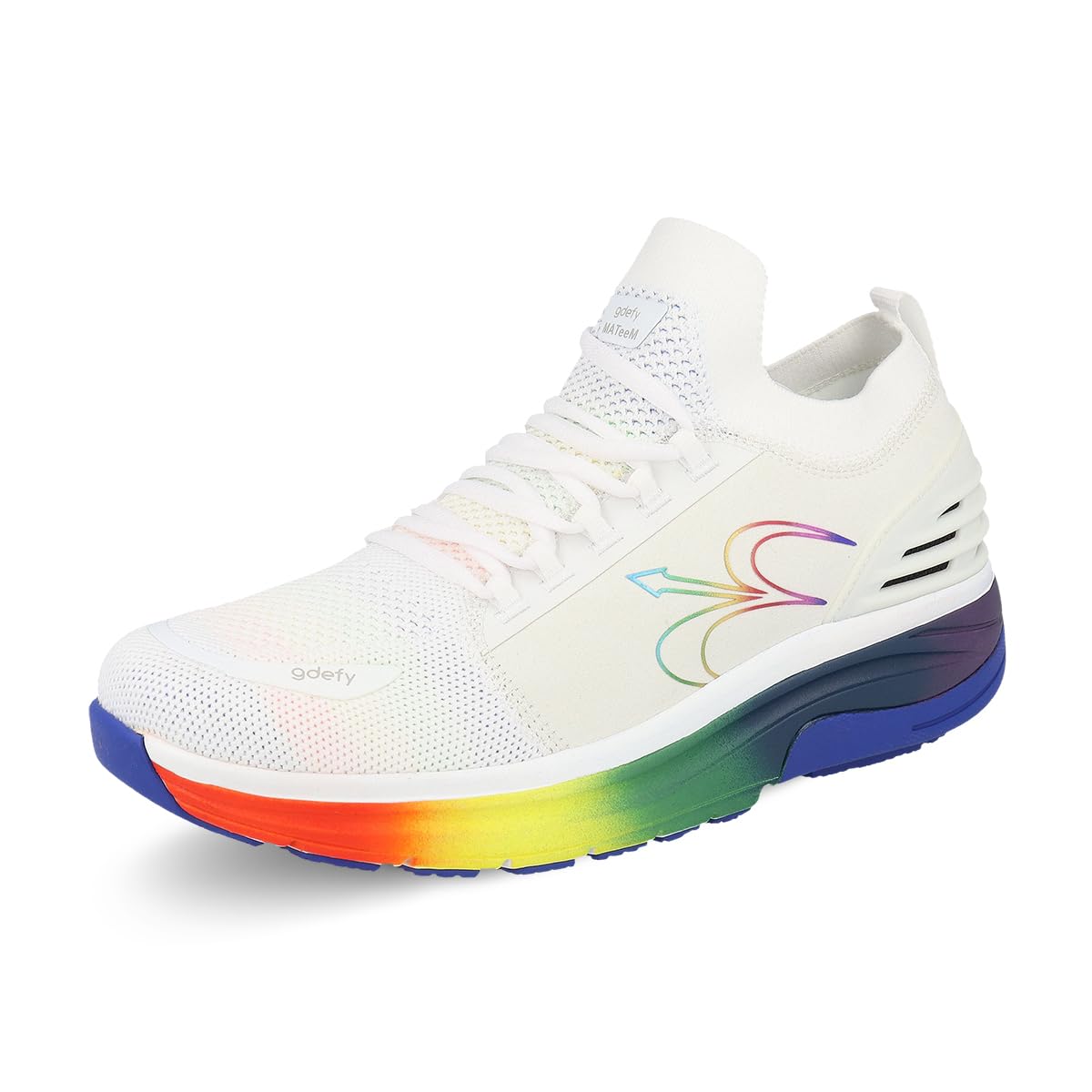
The rocker-sole cross trainer that turns hard hospital floors into padded mats.
The MATeeM is built for people who stand for a living, and its VersoShock hybrid technology is designed to absorb shock and return energy with every step. The rocker sole promotes a natural heel-to-toe gait, and the shoe comes with free orthotics plus two extra insole pairs so you can tune the fit. It’s marketed for pain associated with prolonged standing or walking.
This is the shoe for the flat-footed worker who spends 8 to 10 hours on concrete. Reviewers point out virtually no pain while walking and feet that no longer ache at the end of a shift—One hospital worker on her feet 10 hours a day reports her third pair lasted over 2 years.. Another with back surgery and neuropathy found that by day three, foot, back, and knee pain had vanished..
The fit is the recurring challenge. The sizing runs inconsistent across styles, with several owners reporting they needed to size up a half size or more, and some finding them too tight around the ankles and toes. The full elastic top also makes them genuinely hard to put on at first—a shoehorn helps until the material loosens up over a few weeks.
What stands out
- Exceptional shock absorption for all-day standing on hard floors
- Includes free orthotics plus two extra insole pairs
- Shoppers say real pain relief in knees, back, and feet after long shifts.
What to know
- Sizing is inconsistent—many owners must size up half a size or more
- Hard to slip on at first due to the full elastic top
- Rocker sole takes a few days to get used to
Reach for these if: you stand on hard floors for hours and want serious shock absorption plus the ability to swap in your own orthotics.
Order carefully if: you’re between sizes—the inconsistent fit is the most common owner complaint, so size up and test the rocker sole on flat ground first.
6. Women’s Orthopedic Diabetic Wide Running Shoes
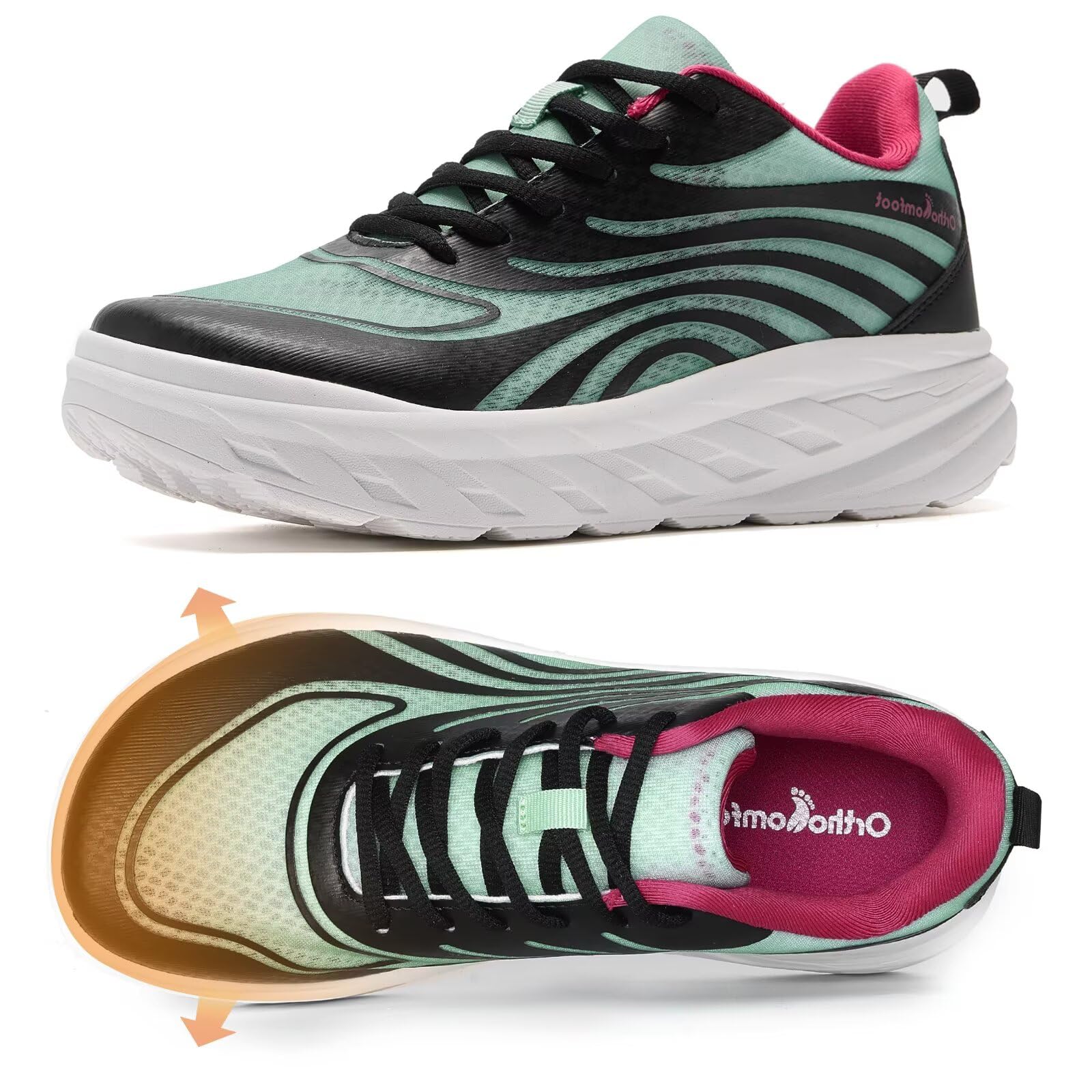
The cushioned orthopedic sneaker that brings bounce back to painful, swollen feet.
These orthopedic sneakers are designed for women who need serious cushioning plus a roomy toe box to accommodate swelling, bunions, and conditions like plantar fasciitis. The arch support insole lifts flat arches, while the breathable upper and cushioned bounce help take the sting out of standing on concrete for 8 to 13 hours a day. An adjustable insole system even helps with leg-length differences.
The standout feature here is the combination of a lovely, roomy toe box and real bounce underfoot. Owners with plantar fasciitis report real relief from heel pain., and those with mobility issues describe these as the only tennis shoes they can wear when on their feet all day. One owner with drop foot and arch loss calls them miracle shoes for long concrete shifts, praising the wide toe box for accommodating swelling.
The honest trade-off is durability—the mesh on the sides doesn’t hold up as long as the sole, and the back is high and soft, making the shoes hard to slip into without using your hands. One owner with existing foot problems found them unsuitable for prolonged standing, so this is a shoe that shines for walking and daily wear rather than stationary work.
Why owners love them
- Roomy toe box that comfortably fits swelling and bunions
- Cushioned bounce that owners say puts a spring in their step
- Effective for plantar fasciitis and all-day standing relief
The trade-offs
- Side mesh durability is a weak point over time
- High, soft back makes them difficult to slip into quickly
Best for: women with plantar fasciitis, bunions, or swollen feet who need a cushioned, roomy shoe for long walking days.
Not ideal if: you stand in one spot for hours—some owners find them better for walking than stationary standing.
7. Men’s Orthopedic Waterproof Trail Running Shoes

The waterproof trail shoe that keeps flat feet happy off the pavement.
Most flat-foot shoes are road runners, but this one is built for the trail. It combines arch support for plantar fasciitis and low arches with a waterproof build that shrugs off wet grass and puddles, plus a cushioned, orthopedic insole. It comes with two pairs of inserts so you can adjust the arch height and stride alignment to your foot.
Owners in mountain communities use these as a daily hiking and walking shoe, praising the comfort on hard surfaces compared to stiffer hiking boots. The arch support works well for low arches, and the ample toe room means your toes aren’t cramped on downhill trails. Multiple buyers report their feet feel better after a long day of work in these than in any other shoe.
Durability is the real question mark. The shoes run a little small for some, so consider sizing up. More concerning, a few owners mention the side blowing out after 4 months or the shoelaces busting within a couple of months—so these are best treated as a comfortable, supportive daily shoe rather than a rugged long-haul boot.
The trail flat-foot fix: rare to find waterproofing, arch support, and dual inserts in one trail-ready package at this level.
Worth noting: owner feedback is split on build longevity—the comfort is unanimous, but the side panels and laces can fail faster than the sole.
Grab these if: you want a waterproof, arch-supporting shoe for trail walking, hiking, or outdoor work on your feet all day.
Think twice if: you need a shoe that will survive a full year of rugged daily use—the materials have shown early wear for some owners.
Understanding the Specs
Stability vs. Neutral Cushioning
A neutral shoe lets your foot move naturally, but flat feet roll inward (overpronate), which strains the arch and knee. A stability shoe uses a firmer midsole and raised sidewalls to guide your foot back to center. Look for terms like “Center Path,” “motion control,” or a guidance system in the description—these signal the shoe is actively steadying your stride rather than just padding it.
Midsole Foam & Drop
The midsole is the foam layer between your foot and the ground, and it determines both cushioning and stability. Softer foams like PWRRUN or FF BLAST feel plush and bouncy but need a structured frame to prevent arch collapse. The “drop” is the height difference between heel and toe—a lower drop (like 6mm) encourages a more natural midfoot strike, which can reduce heel-strike impact for flat-footed runners.
FAQ
Do I need motion control shoes if I have flat feet?
Should I size up in athletic shoes for flat feet?
Can I replace the insole with my own orthotic?
Are stability shoes good for plantar fasciitis?
What does a rocker sole do for flat feet?
Which is better for flat feet, more cushioning or more support?
How long do athletic shoes for flat feet last?
Are wide toe box shoes better for flat feet?
Final Thoughts: The Verdict
For most buyers, the athletic shoes for flat feet winner is the New Balance 608 V5 because its combination of ABZORB heel cushioning, molded PU arch support, and relaxed fit covers everything from the gym to an all-day shift while staying affordable. If you want a lighter, bouncier ride for actual road running, grab the ASICS GT-1000 14. And for long hours standing on hard floors, the G-DEFY MATeeM is the one to reach for.
How We Picked
We do not accept paid placement. Every pick is matched to a real buyer and a real use-case; we do not hands-on test units.
Sources & Methodology
Specifications: manufacturer listings and product documentation. Review insights: verified customer reviews, as of September 2026. Pricing: not shown on this page (it changes often); check the current price via the retailer link.
As an Amazon Associate, Gadgets Feed earns from qualifying purchases. This does not affect which products we feature.