
Our readers keep the lights on and my morning glass full of iced black tea. As an Amazon Associate, I earn from qualifying purchases.
Specs are compiled from manufacturer listings and verified buyer reviews and can change over time — please confirm the key details on the product page before buying.
If you have wide feet, every pair of athletic shoes you have ever tried has probably pinched your toes, rubbed your pinky raw, or made your arch ache before lunch. The problem is almost never the length of the shoe — it is the width. You need a pair built on a wider last (the mold the shoe is shaped around) so your foot sits inside instead of spilling over the edge. The good news: brands are finally making extra-wide (2E, 4E) options that do not look like orthopedic clodhoppers. This guide compares three top-rated models that actually deliver on that promise, using published specs and real buyer feedback — so you know which pair fits before you click “add to cart.”
I’m Min — the founder and writer behind Gadgets Feed. This guide is built by comparing the manufacturers’ published specifications and the patterns across verified customer reviews, so you get each pick’s real strengths and trade-offs instead of marketing spin.
We have sorted through the specs and hundreds of buyer reports to bring you the most honest breakdown of the best athletic shoes for men with wide feet currently available on Amazon, focusing on the specific widths and support features that matter for real use.
Quick Picks
- ASICS Men’s Gel-Venture 11 Trail Running Shoes — Best Overall
- Skechers Men’s Hands Free Slip-ins Go Walk Flex — Easiest On, Easiest Off
- FitVille Extra Wide Walking Shoes Rebound NEO V2 — Premium Wide Fit
How To Choose The Best Athletic Shoes For Men With Wide Feet
The biggest mistake wide-footed buyers make is sizing up instead of going wide. A shoe that is a full size longer will still crush your midfoot if the width is standard. Here is what to check instead.
Know Your Width Letter
A men’s “D” width is standard. A “2E” is wide. A “4E” is extra wide. Many brands now also use labels like “X-Wide” — always compare the letter, not just the word. If you usually wear a D and your toes feel cramped, you need at least a 2E.
Toe Box Shape vs. Overall Width
A wide rating alone does not guarantee comfort up front. Some shoes taper at the toes even in a 4E, which is bad for bunions or splayed toes. Look for a rounded or anatomical toe box — buyer reviews often mention toe space directly.
Cushioning and Arch Support
Extra space means nothing if the sole is flat or the arch hits the wrong spot. Shoes with a removable insole let you swap in your own orthotics. “Neutral pronation” is a middle-ground arch — fine for most, but flat-footed guys want a higher arch-lock or a supportive footbed.
Quick Comparison
| Model | Best For | Width Options | Midsole Tech | Weight | Amazon |
|---|---|---|---|---|---|
| ASICS Gel-Venture 11 | Trail & Gym Versatility | Extra Wide | Rearfoot GEL + AMPLIFOAM PLUS | 1.44 lbs | Amazon |
| Skechers Hands Free Slip-ins Go Walk Flex | Easy On/Off & Daily Walking | Extra Wide | Ultra Go + Air-Cooled Memory Foam | — | Amazon |
| FitVille Rebound NEO V2 | Bunion & Flat Foot Relief | Extra Wide (4E+) | Rebound Cushioning | — | Amazon |
In‑Depth Reviews
1. ASICS Men’s Gel-Venture 11 Trail Running Shoes
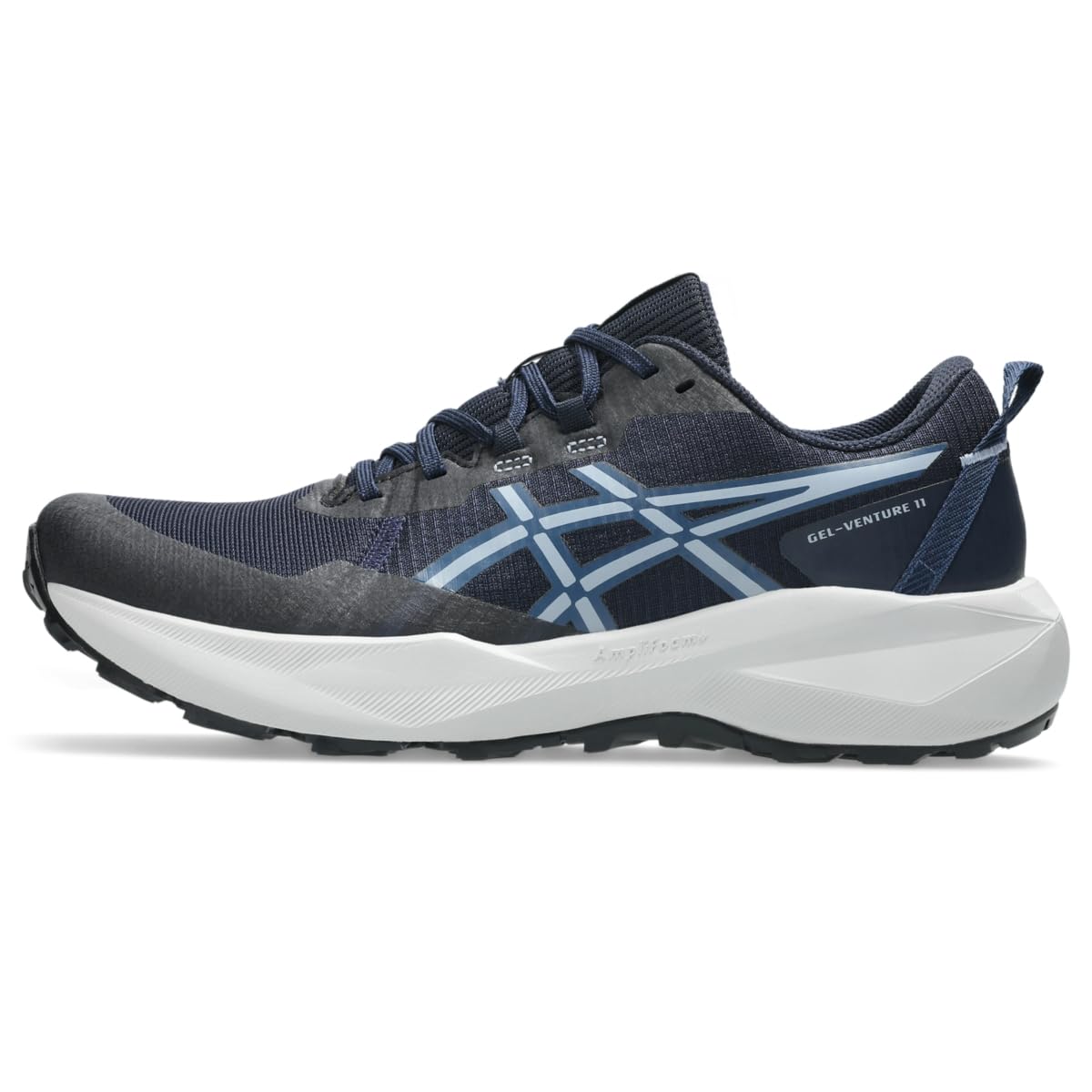
The trail-tested wide-body that doubles as a daily walker without feeling like a brick.
Buyers report that the “Gel-Venture lasts longer than other brands I’ve used over the years for trail running, high-intensity workouts, and everyday walking around the neighborhood.” That same long-term durability comes from a molded rubber outsole and Rearfoot GEL technology — that is a small shock-absorbing pad placed in the heel midsole to soften every step on pavement or loose dirt. The AMPLIFOAM PLUS midsole adds a 2mm taller stack height (the layer of foam between you and the ground) for better impact absorption when you land hard on a downhill stride.
Unlike the Skechers below, these lace up for a locked-in fit, which matters if you are cutting sideways on a gym floor or scrambling up a rocky path. The OrthoLite Hybrid Max Lite sockliner manages moisture and breathability — one reviewer with a post-surgery bunion said these were “the only shoe style that I was able to walk with even compared to shoes costing 2x the price.” They weigh a measured 1.44 lbs per shoe and come in an extra-wide 4E option that gives your midfoot room without turning the shoe into a boat.
Why guys stick with them
- Aggressive tread provides strong traction on uneven terrain
- Deep arch support from the OrthoLite insole pleases long-time ASICS wearers
- No-sew upper eliminates the hot-spot stitching that rubs wide feet raw
A pinch point to note
- Some owners mention the 4E fits true-to-size but the toe box tapers slightly, so ultra-wide forefeet may still feel snug
The go-to for active versatility: If you want one shoe that handles trail runs, gym sessions, and everyday pavement without wearing out fast, this is your pick.
The one caveat: If your toes splay very wide and you need a completely round toe box, the FitVille below gives you more horizontal room.
2. Skechers Men’s Hands Free Slip-ins Go Walk Flex No Hands Sneaker

The slip-on that solves the “bending over and tying laces” problem for good.
A reinforced heel pillar — a stiff structure at the back of the shoe — lets you literally step in without using your hands or a shoehorn. Customers note that “15 x-wide is hard to come by” and that these fit perfectly for wide feet. The Ultra Go midsole is paired with an Air-Cooled Memory Foam insole, which one reviewer described as “walking on a yoga mat.” That pillowy feel is the main reason these work well for all-day standing, casual walking, or recovery days after a long run.
Compared to the laced ASICS above, these trade a secure forefoot wrap for pure convenience — you lose some lateral lockdown, so sharp cuts or trail hops feel less planted. The outsole uses a flexible construction for natural movement, but the tread is not as deep as the Gel-Venture’s. One buyer who wears a 9.5 wide found that he needed to size up a half-size to an 11 wide before the fit was comfortable, so expect a break-in period. However, for someone who just had surgery or struggles to bend over, these are the most accessible wide shoe on the list.
What makes them a daily winner
- True hands-free entry — no bending, no pulling
- Air-Cooled Memory Foam offers immediate cushion without a break-in
- Available in narrow, medium, and extra wide for versatility
The trade-off you need to know
- Some reviewers found they run a half-size small, especially in the wide width, so order up
Best for the “step and go” crowd: If you prioritize not bending over and want a forgiving wide fit for walking and casual wear, these are the obvious choice.
Not ideal for: High-impact gym work or trail running — the lack of laces means your heel can lift during lateral movements.
3. FitVille Extra Wide Walking Shoes Rebound NEO V2

The wide-body specialist built for bunions, flat arches, and toes that need to spread.
Reviewers point out that after just 2 miles of walking, they felt “very little pain from bunions” — a direct result of the extra-wide toe box that lets your forefoot splay naturally. The Rebound NEO V2 also includes built-in arch support for flat feet, so one reviewer who “usually ha[s] to wear a very hard orthopedic insert” found these comfortable without an insert. The midsole uses a Rebound cushioning foam that prioritizes step-in softness over trail firmness.
Unlike the Skechers, these have a lace-up closure that lets you lock the heel, but the upper is also stretchy enough that some buyers slip them on without tying. One reviewer with a back injury initially struggled to get his foot in, but after a break-in found the construction “very good” and kept the shoe. Where the ASICS offers more aggressive traction, the FitVille tread is smoother — it is better for pavement, gym floors, and daily walking than for loose gravel or trails. At roughly the same price tier as the ASICS, the FitVille gives you the widest internal volume of the three, making it the best pick for extra-wide feet that need space in every direction.
What makes this a bunion-friendly standout
- Very wide anatomical toe box that shoppers say relieves bunion pressure
- Built-in arch support for flat feet that reduces the need for orthotics
- Breathable mesh upper that keeps feet cool in warm weather
The honest downside
- Not as comfortable as a pair of New Balance shoes, and less cushioned under the heel than the Skechers
First pick for bunions and flat feet: If your primary problem is toe crowding along the sides, or you have a fallen arch that needs support, this shoe gives you the most room.
Avoid if: You need deep tread for trail running or high-intensity lateral moves — the outsole is built for walking, not scrambling.
Understanding the Specs
Width Letters (D / 2E / 4E)
Men’s “D” is a standard medium width. “2E” is wide, and “4E” is extra wide. Some brands use phrases like “X-Wide” or “E-Wide” — always check the letter. A 4E offers roughly an extra 0.5 to 1 inch of space across the ball of the foot compared to a D. If your current shoes squeeze your pinky toe after a few hours, you almost certainly need a 2E or 4E.
Midsole Cushioning Tech
Brands use different names for foam — ASICS uses AMPLIFOAM PLUS, Skechers uses Ultra Go, FitVille uses Rebound. They all aim to absorb shock on each step. A higher stack height (the thickness of the foam under your heel) means more cushion for hard pavement, but also a slightly less stable feel for trail running. Rearfoot GEL, specific to ASICS, is a separate gel pad embedded in the heel area for targeted shock absorption.
Removable Insole / Arch Support
A removable insole lets you drop in custom orthotics if the built-in arch does not match your foot. All three shoes here have insoles, but only the FitVille specifically calls out arch support for flat feet. If you have high arches, a neutral shoe like the ASICS or Skechers may feel fine; if you overpronate (your ankle rolls inward when walking), you need a stiffer medial post that prevents that roll.
Toe Box Shape
Even a wide shoe can feel tight if the toe tapers to a point. A rounded or “anatomical” toe box gives your toes room to spread naturally — critical for bunions and hammer toes. The FitVille is the most generous of these three in the toe area, while the ASICS has a slight taper on the outer side. Reading reviews for the phrase “toe room” will tell you more than the width label alone.
FAQ
What is the difference between D, 2E, and 4E width?
Will a wide athletic shoe fix bunion pain?
How do I know if I have flat feet or just need arch support?
Can I wear extra wide shoes if I normally wear a standard width?
Are slip-on shoes like Skechers good for wide feet on long walks?
Which of these three has the most durable outsole?
Do these shoes come in half sizes for wide widths?
Can I remove the insole to use my own orthotics?
How long do these shoes last before the cushioning wears out?
Will the Skechers slip-ins work for someone recovering from foot surgery?
Final Thoughts: The Verdict
For most guys with wide feet, the athletic shoes for men with wide feet winner is the ASICS Gel-Venture 11 because it blends solid arch support, a durable outsole that handles both trail and pavement, and a 4E width that gives you room without slop. If you want the easiest on/off shoe for daily walking and you hate tying laces, grab the Skechers Hands Free Slip-ins. And for extra-wide toes that need bunion relief or flat-foot support built into the shoe, the standout is the FitVille Rebound NEO V2.
How We Picked
We do not accept paid placement. Every pick is matched to a real buyer and a real use-case; we do not hands-on test units.
Sources & Methodology
Specifications: manufacturer listings and product documentation. Review insights: verified customer reviews, as of July 2026. Pricing: not shown on this page (it changes often); check the current price via the retailer link.
As an Amazon Associate, Gadgets Feed earns from qualifying purchases. This does not affect which products we feature.