
Our readers keep the lights on and my morning glass full of iced black tea. As an Amazon Associate, I earn from qualifying purchases.
Specs are compiled from manufacturer listings and verified buyer reviews and can change over time — please confirm the key details on the product page before buying.
The biggest mistake is assuming any soundbar labeled “Atmos” delivers true overhead effects. It won’t. True height effects require up-firing speakers or a receiver that processes 3D audio, separating real Atmos from simulated sound. This guide focuses on the specs that matter for your room, TV, and listening habits.
I’m Min — the founder and writer behind Gadgets Feed. This guide is built by comparing the manufacturers’ published specifications and the patterns across verified customer reviews, so you get each pick’s real strengths and trade-offs instead of marketing spin.
The focus here is on finding the best atmos home theater system that matches your space, your TV, and your budget without overpaying for features you’ll never use.
Our Picks at a Glance


How To Choose The Best Atmos Home Theater System
Before you dive into specific models, understand the three things that actually determine whether you’ll hear rain overhead or just louder TV speakers: the speaker layout, the audio connection, and your room itself. Nail these three and any system here will deliver.
Channel Configurations Decoded
You’ll see numbers like 5.1.2 or 7.1.4 on every box. The first number is traditional surround speakers (front, center, sides), the second is the subwoofer count, and the third is the height channels — the ones that bounce sound off your ceiling. A 5.1.2 system has two up-firing speakers, while a 7.1.4 has four. More height channels mean more precise overhead effects, but they also cost more and demand a ceiling that reflects sound well.
The eARC Connection is Non-Negotiable
Dolby Atmos in its lossless form needs a high-bandwidth connection called HDMI eARC (Enhanced Audio Return Channel). A regular HDMI ARC connection or an optical cable can carry Atmos, but often in a compressed form that loses some of the spatial detail. If your TV only has ARC, you’ll still get decent Atmos — but checking for eARC on both your TV and the soundbar is the smartest move for future-proofing.
Quick Comparison
| Model | Best For | Channels | Subwoofer | Key Feature | Amazon |
|---|---|---|---|---|---|
| Sonos Arc Ultra★ Best Overall | Whole-home ecosystem | 9.1.4 | Separate (sold separately) | Sound Motion tech | Amazon |
| JBL Bar 500MK2Bass Champion | Big bass on a budget | 5.1 | 10″ wireless | 750W output | Amazon |
| Amazon Fire TV Soundbar PlusAlexa Ecosystem | Alexa households | 5.1 | Wireless | Fire TV integration | Amazon |
| TCL Q75H | Value with height channels | 5.1.2 | 6.5″ wireless | Up-firing speakers | Amazon |
| ULTIMEA Skywave X50 | Wireless rear freedom | 5.1.4 | 8″ wireless | 760W peak power | Amazon |
| Sony BRAVIA Theater System 6 | Sony TV owners | 5.1 | Wireless | Voice Zoom 3 | Amazon |
| Yamaha YHT-4970U | Traditional AV receiver setup | 5.1 | Powered (wired) | 8K/60 & 4K/120 | Amazon |
| Polk MagniFi Max AX SR | True theater with real rears | 7.1.2 | 10″ wireless | SDA 3D technology | Amazon |
| ULTIMEA Skywave X70 | Maximum wireless immersion | 7.1.4 | 10″ wireless | 980W peak output | Amazon |
| Klipsch Flexus CORE 300 | Audiophile room tuning | 5.1.2 | Separate (sold separately) | Dirac Live correction | Amazon |
| SAMSUNG Q990D | All-in-one flagship | 11.1.4 | Wireless (included) | Q-Symphony | Amazon |
In‑Depth Reviews
1. Sonos Arc Ultra Soundbar
Our pick — over 4.5★ from 650+ verified ratings; the strongest balance of quality and price.
The all-in-one bar that replaces a full component system with room-filling 9.1.4 height effects.
If you’ve lived with a traditional AV receiver for years, the Arc Ultra is the system you switch to for a cleaner setup. It uses a 9.1.4 speaker layout (nine main channels, one subwoofer, and four height channels) powered by Sonos’s Sound Motion architecture — a hybrid driver design that fills the room and places sounds precisely around you. Buyers call it a new benchmark for premium home theater audio, with rich spatial sound and dialogue so clear it feels like the characters are sitting with you.
Setup is easy via a single HDMI eARC cable and the Sonos app. A single HDMI eARC (Enhanced Audio Return Channel) cable to your TV, then the Sonos app walks you through everything — including Trueplay, which fine-tunes the sound for your specific room. You control it with your TV remote, the app, touch controls, or your voice via Sonos Voice Control or Amazon Alexa. Speech Enhancement uses AI to detect the human voice and clarify every word, which matters for dialogue-heavy dramas.
Owners consistently praise its rich sound quality above all else. The catch: adding the Sonos Sub and Era 300 rears for the full experience significantly raises the total cost. Some buyers also hit connection hiccups with their TVs, usually fixed by re-pairing. If you want music streaming, it handles Wi-Fi, Bluetooth, Apple AirPlay 2, and Spotify Connect from the start.
Why it leads: A 9.1.4 layout in a single bar that genuinely delivers overhead effects — the thing most soundbars fake.
Who should hesitate: Buyers who want a complete surround kit in one box without paying extra for a sub and rears.
Reach for it if: you want the best-sounding single bar and plan to grow a Sonos multi-room ecosystem.
Look elsewhere if: you need a subwoofer and rear speakers bundled at a fixed price.
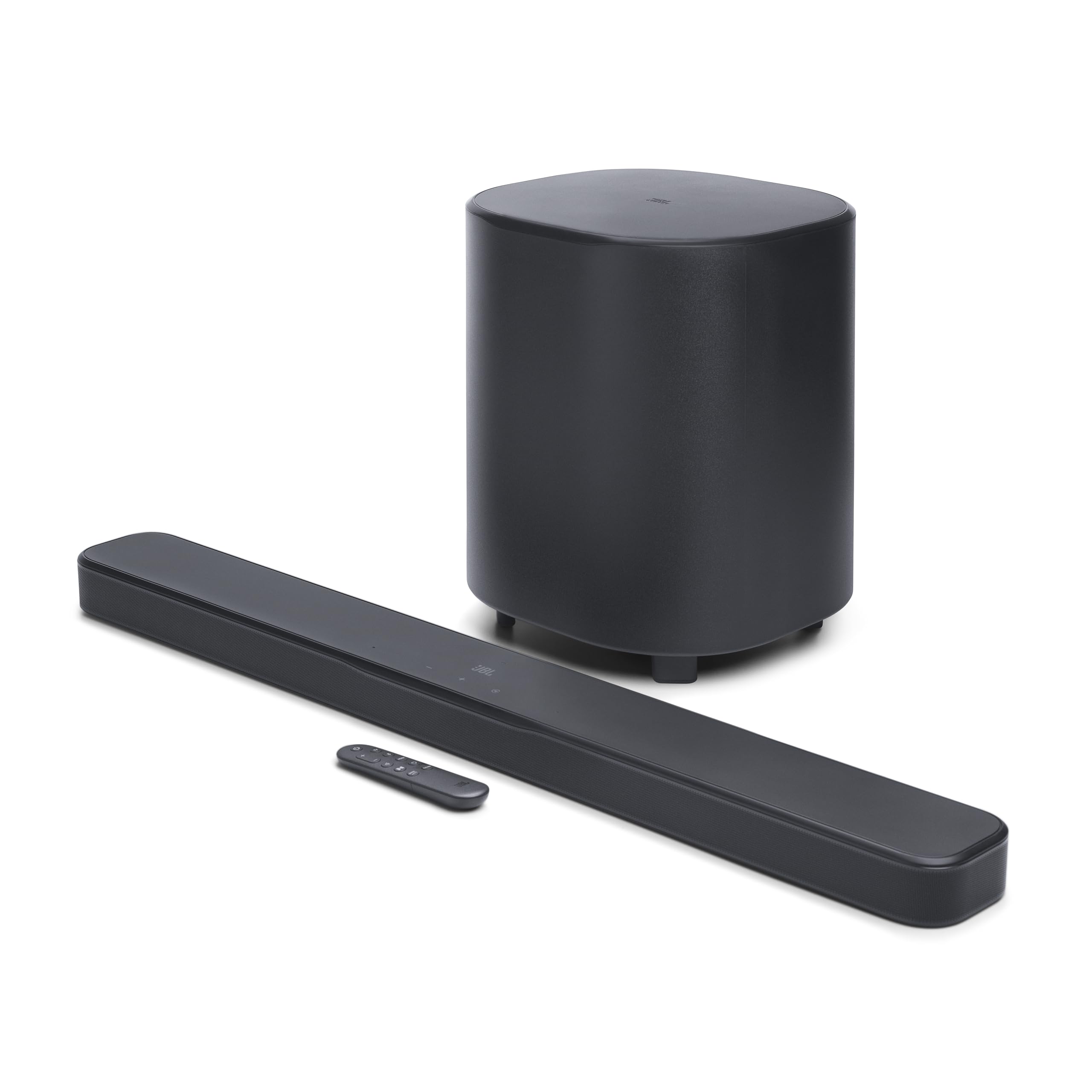
2. JBL Bar 500MK2 5.1 Channel System
Serious chest-thumping bass at a mid-range price, with dialogue tech that keeps whispers clear.
The JBL Bar 500MK2 is the pick for people who watch action movies and want to feel every explosion. It pushes 750W of total system power through a 5.1 layout with a 10-inch wireless subwoofer — a combination buyers report wakes the neighbors at volume 15. The standout feature is PureVoice 2.0, which automatically adjusts the dialogue level based on ambient scene noise, so whispered plot twists stay audible.
Owners mention it outperforms much pricier systems — several note it beats an older Bose setup that cost three times as much. The MultiBeam 3.0 technology widens the soundstage so you get a cinema-like feel even without rear speakers. Setup is genuinely plug-and-play: HDMI eARC with 4K Dolby Vision passthrough handles uncompressed Atmos through one cable, and the JBL ONE app adds a precise equalizer.
It also streams from nearly any service — AirPlay, Google Cast, Spotify Connect, Tidal Connect, and Roon Ready are all built in. The honest trade-off: this is a 5.1 system, not a 5.1.2, so there are no dedicated height channels. The Atmos effect is simulated through MultiBeam rather than true up-firing speakers. For the price, buyers overwhelmingly call it a movie theater experience, but purists who want real overhead audio should look at a system with physical height drivers.
Standout value: Cinema-level bass and clarity for a fraction of what premium rivals charge — the “no premium price tag” praise is consistent.
The limitation: Simulated Atmos, not true up-firing height channels.
Grab this if: you want huge bass and clear dialogue while staying affordable.
Pass if: you specifically want speakers that bounce sound off your ceiling.
3. Amazon Fire TV Soundbar Plus with Sub & Surrounds
Get a full 5.1 kit (five speakers and one subwoofer) that pairs instantly with Fire TV and delivers crisp dialogue.
This is the full-cinema package for Amazon households. The bundle includes the Fire TV Soundbar Plus, a wireless subwoofer, and two surround speakers — everything pre-paired, so you literally plug them into power and they connect to the soundbar. Buyers love that it works with any streaming device, not just Fire TV, and that the setup takes minutes instead of an afternoon.
The dedicated center channel is the hero here. It sharpens conversations so you catch every line, and the 5-level dialogue button helps people who struggle to hear speech — one owner with tinnitus said the clarity was life-changing for TV watching. Dolby Atmos and DTS:X both deliver 3D sound, and Movie, Music, Sports, and Night modes automatically tune the audio based on what you’re watching.
At this price, though, you get simulated overhead effects rather than physical up-firing drivers. Some customers note the system can stop working after a month, and the subwoofer needs at least 12 inches of clearance from the wall to sound right. Still, for sheer value — a complete 5.1 system with a sub and rears — it’s among the most efficient buys here. The sturdy build and cloth mesh finish feel more expensive than the price suggests.
Ease of setup: Plug-and-play wireless pairing — the least intimidating system on this list.
The honest catch: Simulated height effects and occasional reliability complaints after extended use.
Ideal for: first-time home theater buyers who want a full 5.1 kit without receiver wiring.
Not for: audio purists who demand physical height speakers for Atmos.
4. TCL Q75H 5.1.2 Sound Bar

The rare budget-priced bar with true up-firing speakers and auto room calibration.
The TCL Q75H is the value king for one specific reason: it has actual up-firing speakers in a 5.1.2 layout. That means sound bounces off your ceiling and comes down on you — true Atmos, not simulated. It pushes up to 620W of total power, and the wireless subwoofer has a 6.5-inch driver with Bass Boost for deep, rich tones.
What makes it stand out at this price is Ai Sonic Auto Room Calibration — a feature usually reserved for pricier systems. It measures your room and tailors the sound automatically. The built-in center channel keeps dialogue crisp even during action scenes, and the Ray Danz Technology with Acoustic Reflectors dramatically widens the soundstage.
Owners with hearing loss specifically praised it for making dialogue clear over background noise at high volume. The main complaint is the limited tone controls — treble and bass only offer low, medium, or high presets. But for movies, music, and gaming, buyers consistently call it amazing for the money, with deep bass and clear highs that outperform expectations at this tier.
True Atmos on a budget: Up-firing drivers plus room calibration — features usually found on bars costing twice as much.
The compromise: Basic tone control limits fine-tuning for fussy listeners.
Choose this if: you want genuine overhead effects without paying premium prices.
Think twice if: you need granular EQ control beyond three-level presets.
5. ULTIMEA Skywave X50 5.1.4 System

A fully wireless 5.1.4 system with a wood-crafted sub that rattles the room.
The Skywave X50 delivers true 5.1.4 Atmos with up-firing drivers — four height channels total — wrapped in a sleek design with a metal grille and rose gold accents. It runs on dual 5GHz wireless transmission, so no speaker wires cross your floor. The 8-inch subwoofer with Gravus Ultra-Linear Bass digs down to 28Hz, giving you deep bass that’s rich even at high volume.
Under the hood, the GaN (gallium nitride) amplifier hits up to 98% efficiency with 8x faster response than silicon, meaning lower heat and cleaner audio at peak volume. The NEURACORE engine processes 24-bit/192kHz audio with under 0.5% distortion, supporting up to 17 channels. Buyers describe the overhead effects as smooth — rain, helicopters, and thunder genuinely move over you.
Setup is a highlight: the app guides you through everything, and the rears connect wirelessly so you just need power outlets near them. One warning — the bass is strong enough to be overwhelming in apartments, though it’s adjustable. It also passes 4K HDR content without signal loss, so gaming consoles and streamers keep full picture quality. At 760W peak power, it’s a serious step up in immersion for the price.
Why it wins
- True 5.1.4 Atmos with up-firing drivers
- Fully wireless rear speakers
- Clean, distortion-free sound at high volume
- 4K HDR passthrough for gaming
The trade-offs
- Bass can overwhelm in small apartments
- Rear speakers still need power outlets
Reach for this if: you want true overhead Atmos with zero speaker wire runs.
skip it if: you live in a thin-walled apartment where deep bass will cause problems.
6. Sony BRAVIA Theater System 6

If you own a BRAVIA TV, this system matches smoothly and brings dialogue enhancement straight from the cinema.
If you own a Sony BRAVIA TV, this is the system that “just works.” Pairing the Theater System 6 with a compatible BRAVIA TV open up Voice Zoom 3 — a feature that enhances dialogue clarity directly from the TV menu. Buyers describe it as magic: the soundbar and TV work together automatically, and setup takes minutes through the BRAVIA Connect app.
It’s a 5.1 system with three front-firing speakers, two rear speakers, and an included subwoofer. Dolby Atmos and DTS:X both get full support, and Multi Stereo mode plays the same sound from all speakers for room-filling boost. The dedicated center channel keeps conversations crisp, and the subwoofer adds genuine cinema bass to movies.
The main issue buyers flag is HDMI connectivity — several report audio dropping out on some sources, often solved by switching to optical. Also, the system relies on HDMI (no optical input on some setups), which limits how many gaming consoles you can connect. For music, the up-mixing technology restores acoustic detail for a richer listen. It’s not the most powerful system here, but for BRAVIA owners who want simple, reliable, great-sounding audio, it’s a standout.
Perfect pairing: Voice Zoom 3 and TV-menu control make it the easiest BRAVIA upgrade.
The caveat: HDMI audio dropouts reported by some, solved via optical.
Ideal for: Sony TV owners who want deep integration and easy setup.
Not ideal for: multi-console gamers, since HDMI inputs are limited.
7. Yamaha YHT-4970U 5.1 System
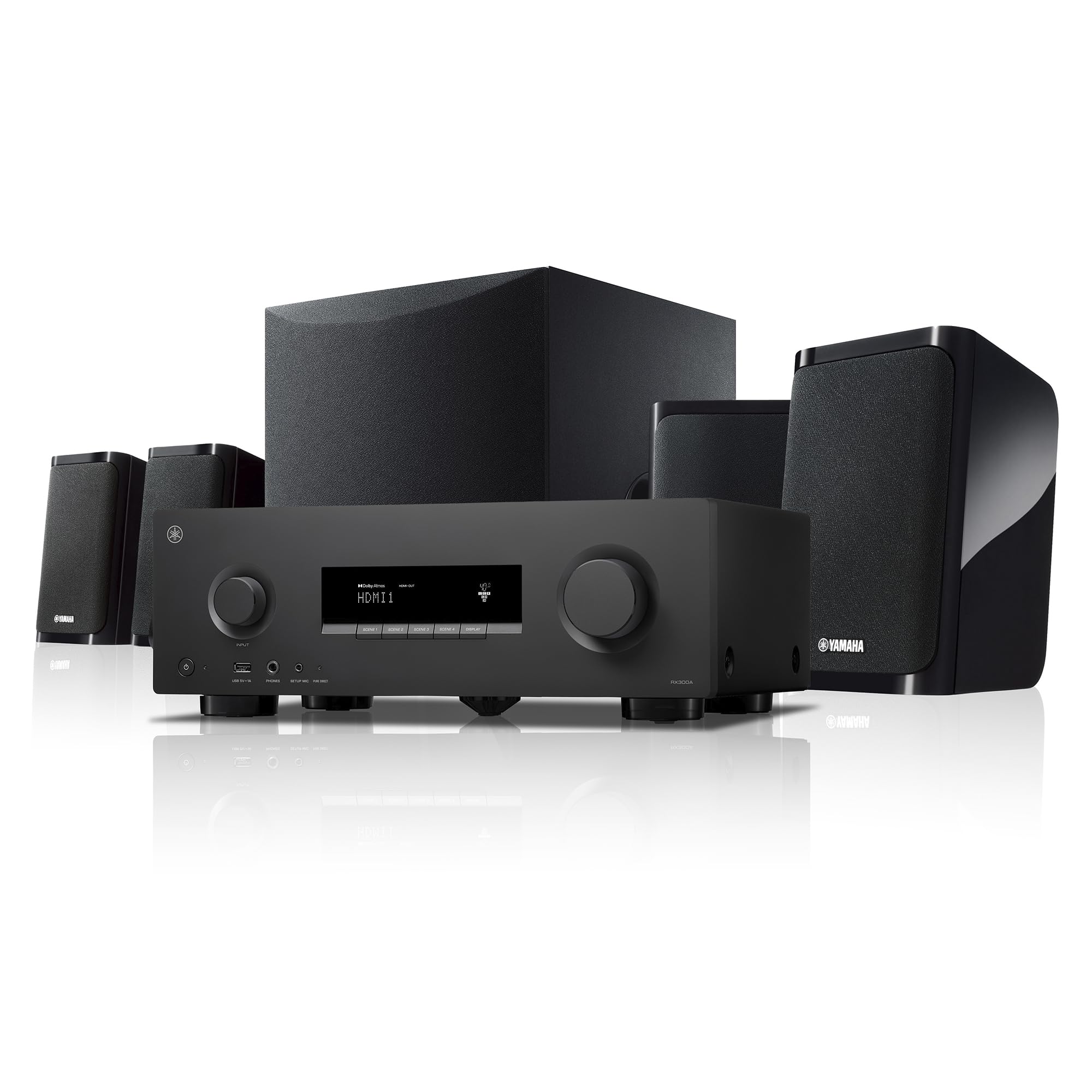
The traditionalist’s choice — a true AV receiver with separate speakers, not a soundbar.
This is the system for people who want real component audio. The YHT-4970U is a complete package: a Yamaha RX300A AV receiver, two front speakers, a center channel, two surround speakers, and a powered subwoofer — plus 80 feet of speaker wire and a 16-foot subwoofer cable in the box. It’s a genuine home theater in a box, not a soundbar pretending to be one.
The receiver is the star. It handles 8K/60 and 4K/120 video, supports Dolby Vision and HDR10+, and includes next-gen gaming features like ALLM (Auto Low Latency Mode) and VRR (Variable Refresh Rate) for PS5 and Xbox. YPAO room correction — where an included microphone measures your room — automatically tune the sound for your exact space. That’s a feature hardcore audio fans love, and it matters for Atmos, which depends heavily on room acoustics.
Bluetooth Multipoint lets you pair two devices and switch between them. Reviewers point out setup takes time — you’ll be cutting and connecting speaker wire — but the payoff is refined, powerful sound with clear dialogue and an effective sub. It lacks AirPlay (Bluetooth only) and can’t expand to height channels later, which is the one real limitation for Atmos purists. But for a dedicated gaming and movie room, owners say it far exceeds soundbars at this price.
Real component sound: A dedicated receiver with room correction beats any soundbar for pure audio fidelity.
The learning curve: Wire cutting and manual connection — not plug-and-play.
Pick this if: you want a true receiver-based system with 4K120/8K60 gaming support.
Avoid if: you want a clutter-free wireless setup with height channels.
8. Polk Audio MagniFi Max AX SR
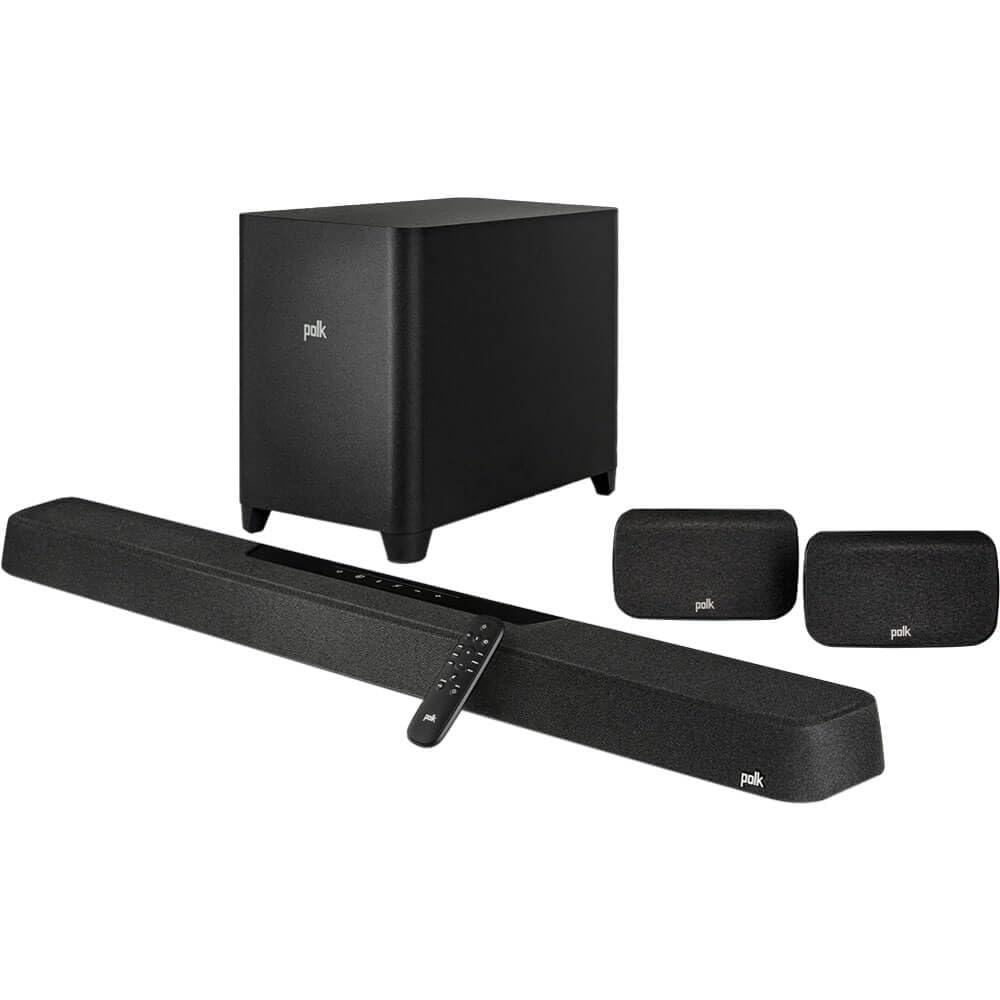
Polk’s flagship 7.1.2 bar with a real 10-inch sub and dedicated surround speakers in the box.
The MagniFi Max AX SR is Polk’s full-attack bundle: the flagship soundbar, a 10-inch wireless subwoofer, and SR2 surround speakers — everything needed for room-filling audio including overhead. Polk’s patented SDA 3D technology and two up-firing speakers deliver certified Dolby Atmos and DTS:X. Buyers consistently describe the surround and height channels as fantastic.
what separates it is the included surround speakers, which most soundbar systems skip. They add genuine rear immersion rather than simulated effects. The 10-inch sub uses an MDF (medium-density fiberboard) enclosure for clean, deep bass with nice harmonic overtones. VoiceAdjust technology boosts vocal levels through the integrated center channel without touching the rest of the soundtrack.
Streambuilding is comprehensive: Wi-Fi, Bluetooth, Apple AirPlay 2, Chromecast, Spotify Connect, and Alexa built-in. The setup is genuinely plug-and-play — many shoppers say it connected and running in about 5 minutes with no app required. The one honest knock: some buyers report the system occasionally fails to power on after a few months, needing an unplug-and-replug. Also, the up-firing speakers are less effective in rooms with very high or angled ceilings. For pure cinema immersion at this price, though, it’s a top contender.
Complete immersion: Real surround speakers plus up-firing heights — a rare full bundle.
Reliability note: A minority report power-on issues requiring a reset.
Best for: buyers who want true rear surround sound included, not sold separately.
Consider others if: your ceiling is very high, limiting up-firing effectiveness.
9. ULTIMEA Skywave X70 7.1.4 System
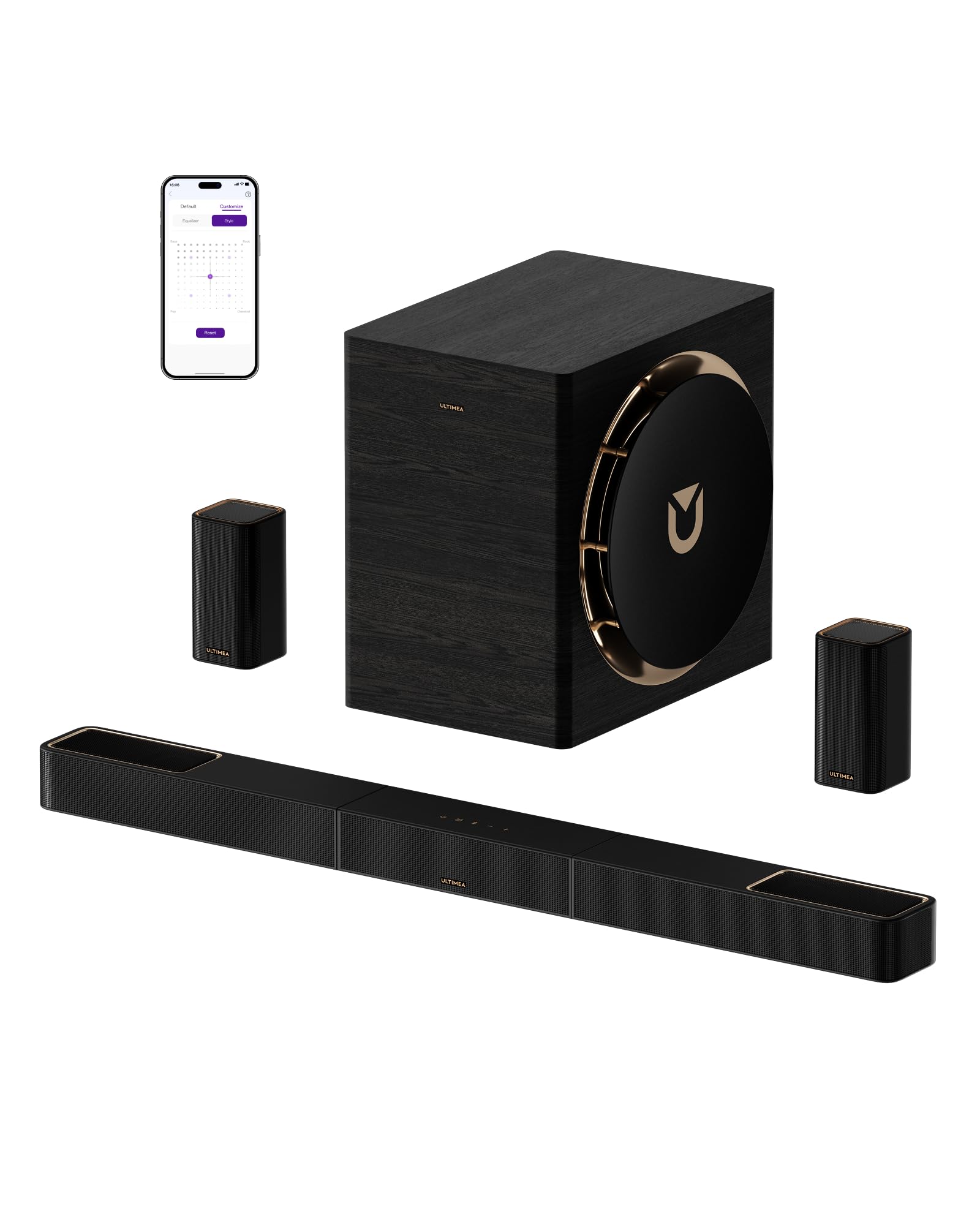
Eleven channels of wireless audio with a 10-inch sub that hits 20Hz — and 980W of peak power.
The Skywave X70 is the big brother to the X50 and the most complete wireless system ULTIMEA makes. It’s a 7.1.4 layout — seven surround channels, one sub, four height — all connected via dual 5GHz wireless transmission with no speaker wires. The 10-inch subwoofer with Gravus technology digs down to 20Hz, and the whole system peaks at 980W.
Owners say it rivals or beats setups costing even more — several note it outperforms soundbar and subwoofer combos. The soundbar itself snaps together in three pieces, and everything comes factory-paired, so setup truly is plug-and-play. The app supports OTA updates, a 10-band EQ, and 121 sound presets for deep customization. Presets matter because there’s no auto-calibration — you adjust manually.
The built-in AI surround mode adds rear effects even to non-Atmos content, which is a clever trick. But there are trade-offs: the sub is boomy rather than punchy according to some, and its performance depends heavily on placement. The system also lacks DTS support. Owners mention it fills a 20×20 foot room easily and describes explosions that shake the house at volume 14 out of 100. For a fully wireless 7.1.4 setup, it’s a stunning value.
Wireless flagship: 7.1.4 channels, 10-inch sub, and 980W — the most complete wireless package here.
Manual tuning required: No auto-calibration; you’ll want to use the EQ to dial in the sound.
Grab it if: you want maximum channel count without any speaker wire.
pass on it if: you want automated room correction to handle the tuning for you.
10. Klipsch Flexus CORE 300
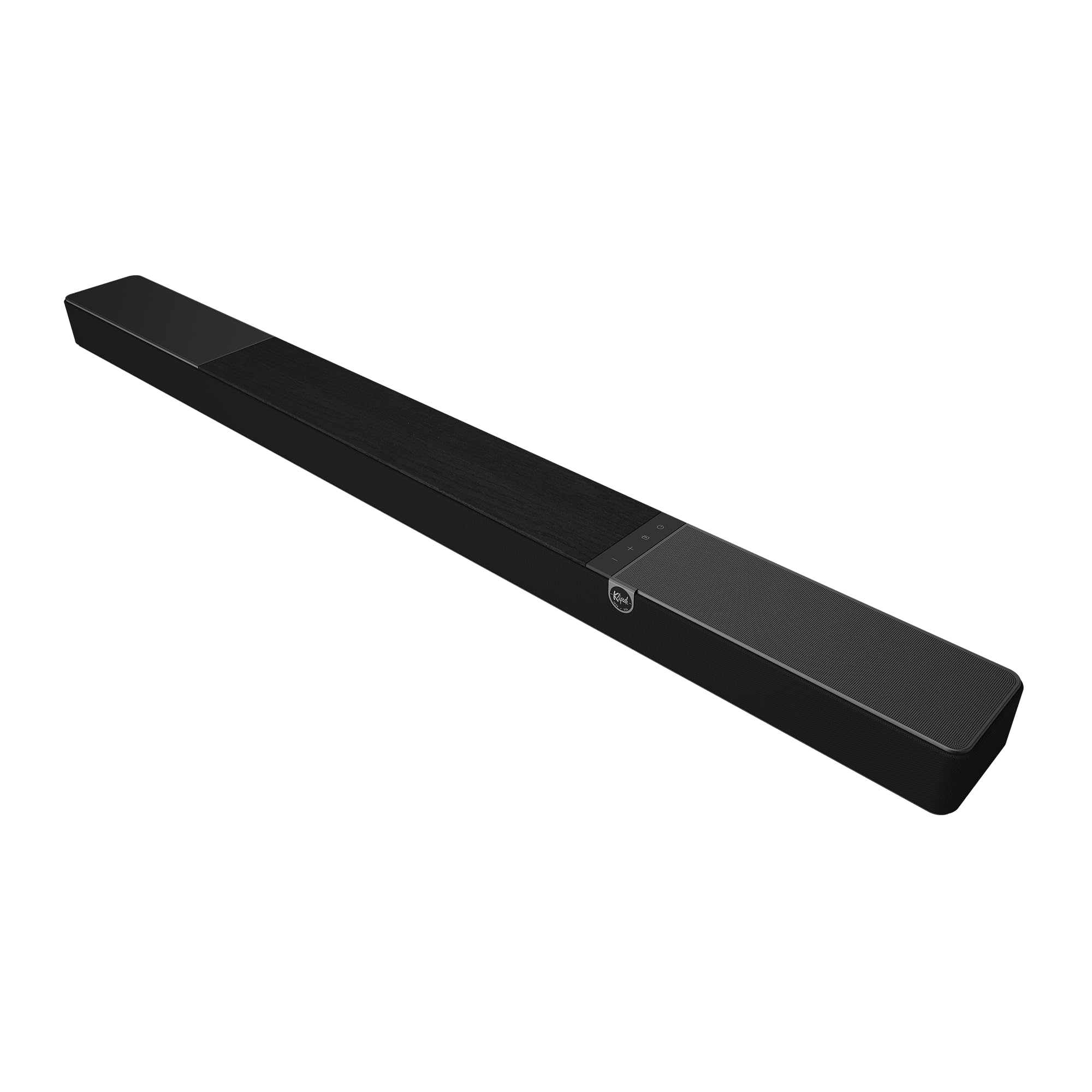
The world’s first soundbar with Dirac Live auto room correction — tuning sound to your exact space.
The Flexus CORE 300 is for the audio obsessive who wants their room measured and corrected, not just filled with sound. It’s the first soundbar with Dirac Live, a professional room-correction system that scans your space and fixes acoustic anomalies. After a quick scan, it delivers lifelike audio tuned to your specific room — the kind of calibration usually found only in high-end component systems.
Klipsch partnered with Onkyo for the engineering, combining Klipsch’s American speaker heritage with Onkyo’s Japanese manufacturing precision. The bar features two built-in 2.254-inch elevation speakers and two side-firing drivers, processing Dolby Atmos to place sounds around and above you. Buyers describe it as sounding like separate speakers, with crisp detail — footsteps, bullets, and bass all distinct. It’s especially praised for action movie immersion.
The catch is that the soundbar alone has weak standalone bass and surround — it’s designed to work with external subs and surround speakers, like Klipsch’s own Flexus Sub 100 or Surr 100. Many owners pair it with high-quality third-party subs for the best results. The basic Dirac correction is limited to 500Hz unless you pay for the full version. Bluetooth connectivity also gets mixed feedback from owners. If you want a bar that you’ll build a system around, this is it.
Unique capability: Dirac Live room correction is a genuine differentiator — no other bar here does this.
Best with extras: The bar shines when paired with external subs and surrounds, which adds cost.
Choose this if: you want professional-grade room tuning and plan to add external speakers.
Look elsewhere if: you want a complete system in one box without hunting for extras.
11. SAMSUNG Q990D 11.1.4 System

The all-in-one king — 16 channels of true Atmos with a rear speaker kit included in the box.
The Q990D is the reference for “everything in the box.” It’s an 11.1.4 system — 11 front channels, 1 subwoofer, and 4 up-firing channels — that includes the wireless sub and a rear speaker kit, each rear packing forward, side, and ceiling drivers. Buyers describe it as the king of soundbars, with a massive soundbar that turns your room into a movie theater. The Atmos effects are the best on this list, revealing subtle sounds like rain, wind, and distant explosions.
Q-Symphony is the headline feature for Samsung TV owners: the TV speakers and soundbar work together, optimizing all channels as one. SpaceFit Sound Pro automatically calibrates to your room, and Adaptive Sound analyzes scenes in real time to pull out the most important audio — so dialogue stays clear even at low volume. Game Mode Pro delivers 3D tune sound that activates automatically with compatible TVs.
There’s even built-in Alexa, Chromecast, and AirPlay 2. Wireless Dolby Atmos means you can skip HDMI cables entirely if your source supports it. The honest knock: some buyers find the bass heavy and mid-bass weak until the system breaks in, and the EQ is only fully adjustable in Standard mode. But after a break-in period, owners say it’s practically perfect. For a single purchase that gives you true flagship Atmos, this is the one to beat.
What makes it king
- True 11.1.4 with rear speakers included
- Q-Symphony sync with Samsung TVs
- Wireless Dolby Atmos support
- Automatic room calibration
What to know
- Needs break-in period for balanced bass
- Full EQ only in Standard mode
- No HDMI passthrough when powered off
Reach for it if: you want the most complete, most powerful Atmos system available without separate components.
Only skip if: you don’t have a Samsung TV and won’t use the extra smart features.
Understanding the Specs
Channel Configurations (5.1.2 vs 7.1.4)
The first number is your surround speakers, the second is the subwoofer, and the third is the height channels. A 5.1.2 system has two up-firing speakers bouncing sound off your ceiling, while a 7.1.4 has four — two in the bar and two in the rears. More height channels mean more precise overhead effects, which is the whole point of Atmos. But they only work well if your ceiling is flat, not angled or textured.
HDMI eARC vs ARC
HDMI eARC (Enhanced Audio Return Channel) is the high-bandwidth connection that carries lossless Dolby Atmos from your TV to the soundbar. Regular ARC can carry compressed Atmos, but you lose spatial detail. Check that both your TV and soundbar have eARC to get the full effect. Optical cables can carry Atmos too, but always in compressed form — so eARC is the gold standard.
FAQ
Do I need up-firing speakers for Dolby Atmos to work?
What’s the difference between a 5.1.2 and a 7.1.4 soundbar?
Will my TV support Dolby Atmos passthrough?
Can I use a Dolby Atmos soundbar with any TV brand?
Is a soundbar with a subwoofer better than a soundbar without one?
How much power do I need for a home theater system?
Do wireless surround speakers need power outlets?
Do wireless surround speakers need power outlets?
Can I add rear speakers to a soundbar later?
How many HDMI inputs do I need on a soundbar?
What is room correction and do I need it?
Are soundbars with Dolby Atmos worth it for music?
Final Thoughts: The Verdict
If you want one dependable pick, the atmos home theater system winner is the Sonos Arc Ultra because it delivers true 9.1.4 spatial audio in a single sleek bar with the easiest setup and the strongest ecosystem. If you want maximum power and a complete all-in-one package, the Samsung Q990D with its 11.1.4 channels and included rear speakers is the one to reach for. And for the best value with genuine up-firing height channels, the TCL Q75H punches far above its price tier. Whatever your room or budget, one of these will upgrade your TV audio to cinematic.
How We Picked
We do not accept paid placement. Every pick is matched to a real buyer and a real use-case; we do not hands-on test units.
Sources & Methodology
Specifications: manufacturer listings and product documentation. Review insights: verified customer reviews, as of September 2026. Pricing: not shown on this page (it changes often); check the current price via the retailer link.
As an Amazon Associate, Gadgets Feed earns from qualifying purchases. This does not affect which products we feature.