
The jump from ATSC 1.0 to ATSC 3.0 brings 4K HDR, better audio, and interactive features, but it also introduces DRM encryption that can turn a perfectly good tuner into a brick. The trick is finding a unit that decodes those encrypted channels without demanding a second mortgage or a dedicated IT degree.
I’m Min — the co-founder and writer behind Gadgets Feed. I spend hundreds of hours analyzing technical specifications, comparing tuner sensitivity, codec support, and DRM compatibility to identify the hardware that actually delivers on the NextGen TV promise.
Whether you need a simple USB dongle for your streaming stick or a full network-attached DVR for the whole house, this guide breaks down the top contenders to find the truly best atsc 3.0 tuner.
How To Choose The Best ATSC 3.0 Tuner
ATSC 3.0 is still rolling out across the US, and not every tuner handles the new standard the same way. Before you buy, focus on three key factors: DRM compatibility, the type of tuner (USB vs. network), and your host device’s ability to decode HEVC and AC-4 audio. Get these wrong and even the most expensive box will sit unused.
DRM Support Is Non-Negotiable
Many ATSC 3.0 broadcasters encrypt their signals. If your tuner doesn’t support the necessary DRM (Widevine L1 is the most common), you’ll only see a black screen on those channels. The ADTH USB tuner and the GTMEDIA X1 handle DRM, while older SiliconDust models currently do not. Always check the product specs and recent reviews for DRM compatibility in your market.
USB or Network: Which Fits Your Setup?
A USB tuner connects directly to a single streaming stick or TV. It’s cheap and simple, but only works on that one device. A network tuner like the HDHomeRun Flex Quatro plugs into your router, letting any device on your home network watch live TV. If you want a whole-home DVR, go network. If you just need one TV working, a USB or converter box is fine.
Verify Your Device’s Codec Support
ATSC 3.0 uses HEVC video and AC-4 audio. Not all smart TVs, Fire Sticks, or Roku devices can decode these formats. An otherwise excellent tuner is useless if your streaming stick can’t play the video. Use the tuner manufacturer’s compatibility test app (like the ADTH NextGen TV Test app) before purchasing.
Quick Comparison
On smaller screens, swipe sideways to see the full table.
| Model | Category | Best For | Key Spec | Amazon |
|---|---|---|---|---|
| SiliconDust HDHomeRun Flex Quatro | Network Tuner | Whole-home DVR & multi-device streaming | 4x ATSC 1.0 tuners, Ethernet | Amazon |
| ADTH NextGen TV Box Gen 2 | Converter Box | Single TV upgrade with built-in DVR | ATSC 3.0 + 1.0, 64GB storage | Amazon |
| SiliconDust HDHomeRun Flex Duo | Network Tuner | Budget network setup for 2 simultaneous viewers | 2x ATSC 1.0 tuners, Ethernet | Amazon |
| GTMEDIA 4K Next-Gen ATSC3.0 X1 | Converter Box | DRM channel decoding on a budget | ATSC 3.0 + 1.0, Bluetooth 5.0 | Amazon |
| Tablo 4th Gen 4-Tuner | Network DVR | Subscription-free whole-home DVR | 4 tuners, 128GB storage, Wi-Fi | Amazon |
| Sling AirTV 2 | Network Streamer | Sling TV integration for cord cutters | 2 tuners, Ethernet + USB | Amazon |
| ADTH NextGen TV USB Tuner | USB Tuner | Adding ATSC 3.0 to a streaming stick | USB-A, requires HEVC + AC-4 host | Amazon |
In‑Depth Reviews
1. SiliconDust HDHomeRun Flex Quatro 4 x ATSC Tuners – HDFX-4US

The HDHomeRun Flex Quatro is the gold standard for whole-home OTA TV. With four ATSC 1.0 tuners packed into a compact Ethernet-powered box, it streams live TV to Android, Fire TV, Apple TV, Roku, Xbox, and even Windows or Mac computers simultaneously. Setup is genuinely plug-and-play: connect antenna Ethernet, power, and the HDHomeRun app finds the tuner on your network instantly.
The real power is its DVR flexibility. You can add a USB hard drive for free local recordings, or subscribe to the optional guide service for advanced auto-record features. For Plex Pass users, integration is flawless — the Quatro is recognized within seconds and handles channel scanning, guide data, and recording setup in under ten minutes. The tuner sensitivity is excellent, reliably pulling in stations even at 45 miles from the broadcast towers.
It does lack native ATSC 3.0/DRM decoding, so if you absolutely need encrypted NextGen channels today, you’ll need to wait for SiliconDust’s promised firmware update or pair it with an external decoder. But for pure ATSC 1.0 reliability, multi-device streaming, and Plex DVR integration, nothing else matches the Quatro’s polish.
Why it’s great
- Four tuners handle up to four simultaneous streams across any device on your network
- Rock-solid stability with flawless Plex DVR integration
- Excellent tuner sensitivity pulls in channels from 45+ miles away
Good to know
- Does not natively decode ATSC 3.0 or DRM encrypted channels
- DVR guide subscription costs extra for advanced features
2. ADTH NextGen TV Box Gen 2 ATSC 3.0 & ATSC 1.0 Digital Converter Box
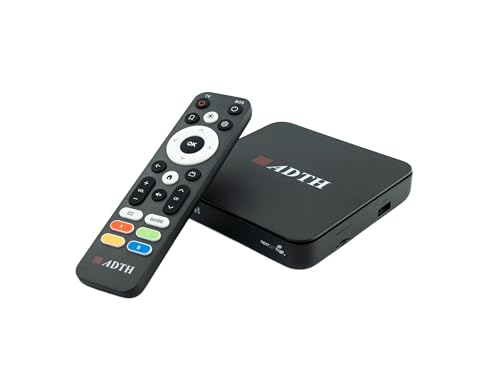
The ADTH NextGen TV Box Gen 2 is the most complete all-in-one ATSC 3.0 solution available today. Unlike network tuners that require a separate streaming device, this converter box connects directly to your TV via HDMI and handles everything: ATSC 3.0 and ATSC 1.0 reception, 4K HDR output, Dolby AC-4 audio, and built-in DVR with 64GB of onboard storage. No subscriptions, no extra hardware.
It decodes DRM-encrypted NextGen channels without requiring internet access on the box itself, which is a significant advantage over USB tuners that depend on the host device’s Widevine support. The Wi-Fi and Bluetooth connectivity handle firmware updates and future feature enhancements. The remote includes a signal strength meter, making antenna aiming much easier. Users report that the picture quality is sharper and brighter than ATSC 1.0.
Downsides include occasional lockups that require an unplug-and-reboot, and the channel list mixes ATSC 3.0 and 1.0 stations without a clear way to tell them apart. Customer support is reportedly responsive and helpful. If you want a single-box solution for a single TV with full DRM support and no recurring fees, this is the unit.
Why it’s great
- Decodes DRM-encrypted ATSC 3.0 channels without needing internet on the box
- Includes 64GB onboard storage for DVR recordings right out of the box
- Supports 4K HDR output and Dolby AC-4 audio
Good to know
- Occasional lockups require a power cycle to fix
- Channel list mixes ATSC 3.0 and 1.0 without differentiation
3. SiliconDust HDHomeRun Flex Duo 2 x ATSC Tuners – HDFX-2US

The Flex Duo is the two-tuner sibling of the Quatro, offering the same network-based approach and excellent tuner sensitivity at a lower cost. It streams live OTA TV to any device on your home network — Roku, Fire TV, Apple TV, Android, Windows, and Mac — without needing a dedicated PC to run it. The app-based experience is fast and intuitive, with channel changes happening in under a second.
Like the Quatro, it supports whole-home DVR via a USB hard drive. The free DVR option works well for basic recording, and the paid guide subscription adds auto-record and series recording features. The tuner is PoE (Power over Ethernet) capable, which simplifies cabling if you have a PoE switch. Users report getting 40 channels crystal clear from 45 miles away without even using an amplified antenna.
The obvious trade-off is the two-tuner limit: only two people can watch or record at the same time. If you have a household with multiple viewers, the four-tuner Quatro is worth the upgrade. The Flex Duo also lacks ATSC 3.0 DRM support, making it a strictly ATSC 1.0 device for now. It’s a great entry point for network-based OTA viewing if you don’t need simultaneous streams.
Why it’s great
- Network-based design streams to any device in the house using a single antenna
- Excellent tuner sensitivity pulls in channels from long distances
- PoE capable for cleaner installation
Good to know
- Two-tuner limit means only two simultaneous streams or recordings
- No native ATSC 3.0 or DRM channel decoding
4. GTMEDIA 4K Next-Gen ATSC3.0 TV Converter X1
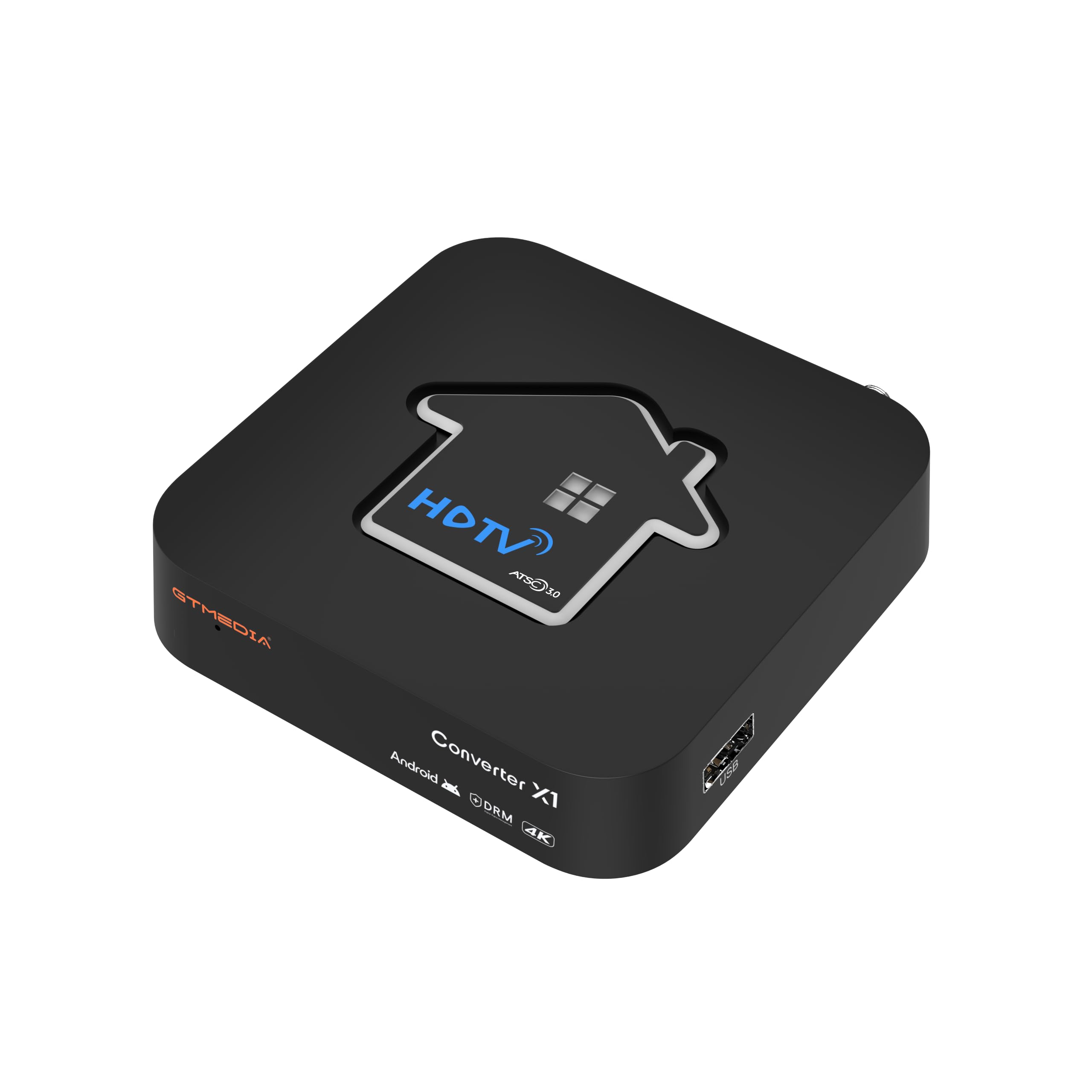
The GTMEDIA X1 is a budget-friendly converter box that supports both ATSC 3.0 and ATSC 1.0, including DRM-encrypted channels. It connects to your TV via HDMI or RCA, making it compatible with older displays, and includes dual-band Wi-Fi and Bluetooth 5.0 for firmware updates and wireless peripherals. The unit can record DVR content to USB storage.
For its price point, the X1 does handle DRM decoding, which is a feature many more expensive network tuners lack. Some users report that it successfully decodes encrypted NextGen channels where other hardware fails. The setup is straightforward: connect antenna, connect HDMI, run the channel scan. The interface is basic but functional.
The biggest concern is stability. Multiple user reports describe frequent lockups requiring power cycles, and the channel scanning process can be buggy — one reviewer found that scanning crashed midway. The manual is difficult to follow, and customer support is reportedly unresponsive. The Netflix app is outdated and non-functional. If your primary goal is DRM channel decoding on a tight budget and you’re comfortable with occasional reboots, it works. For a smoother experience, the ADTH Gen 2 box is worth the extra cost.
Why it’s great
- Decodes DRM-encrypted ATSC 3.0 channels at a budget-friendly price
- Includes Bluetooth 5.0 and dual-band Wi-Fi for connectivity
- Compatible with older TVs via RCA output
Good to know
- Frequent lockups require unplugging and restarting the unit
- Channel scanning can be buggy and may crash
5. Tablo 4th Gen 4-Tuner Over-The-Air (OTA) DVR (Renewed)

The Tablo 4th Gen is a whole-home OTA DVR with a focus on simplicity and zero subscription fees. It includes four tuners, 128GB of onboard storage (good for about 50 hours of HD recordings), and Wi-Fi connectivity so you can place the antenna wherever reception is best. The Tablo app works on Roku, Fire TV, Apple TV, Android TV, and smart TVs, allowing pause, rewind, and recording from any device in the house.
Setup is genuinely straightforward: connect antenna and power, download the app, and follow the on-screen wizard. The unit automatically integrates free streaming channels alongside your OTA channels, giving you more content without any additional hardware. Users consistently praise the picture quality and the reliability of the guide data. The ability to start watching an in-progress recording from the beginning is a standout feature.
However, the Tablo is an ATSC 1.0-only device. It does not support ATSC 3.0 or DRM-encrypted channels. The renewed (refurbished) nature of this specific listing means you’re getting a unit that was previously returned, and reliability reports are mixed — some users report DOA units or failures after a few months. There is no Windows or Mac viewing app, which limits PC-based watching. It’s a great value for a subscription-free whole-home DVR, but only if you don’t need 3.0 support.
Why it’s great
- Four tuners with 128GB onboard storage, no subscription required
- Wi-Fi connectivity allows flexible antenna placement
- Integrates free streaming channels alongside OTA channels
Good to know
- ATSC 1.0 only — no ATSC 3.0 or DRM channel support
- Renewed unit may have reliability issues; no PC viewing app
6. Sling AirTV 2 Dual-Tuner Local Channel Streamer

The AirTV 2 is designed specifically for Sling TV subscribers who want to integrate local OTA channels directly into the Sling guide. It connects a standard HD antenna to your home Wi-Fi network, streaming ABC, CBS, Fox, NBC, and other locals to any Sling TV app on Roku, Fire TV, Android TV, or mobile devices. You can also watch and record live TV outside your home through the Sling TV mobile app.
Its two-tuner design allows recording up to two shows at once using an external hard drive (sold separately), with pause, rewind, and fast-forward. When it works, the integration with Sling is seamless — local channels appear right alongside your Sling subscription channels in a unified guide. Users who successfully set it up via Ethernet report it’s fast and reliable.
The catch is setup. Many users find the app-based Wi-Fi configuration frustrating and unreliable; using the WPS button or Ethernet is strongly recommended. The AirTV 2 is also ATSC 1.0 only — it does not support ATSC 3.0 or DRM channels. Some users report that it deliberately excludes certain channels (like CW) from the guide despite receiving them clearly. It’s a niche product that only makes sense if you’re already deep in the Sling TV ecosystem.
Why it’s great
- Integrates local OTA channels directly into the Sling TV guide
- Allows remote streaming of local channels outside the home
- Two-tuner DVR with pause, rewind, and fast-forward
Good to know
- ATSC 1.0 only — no ATSC 3.0 or DRM support
- Wi-Fi setup is notoriously difficult; Ethernet or WPS is recommended
7. ADTH NextGen TV USB Tuner, ATSC 3.0 + ATSC 1.0 OTA Receiver
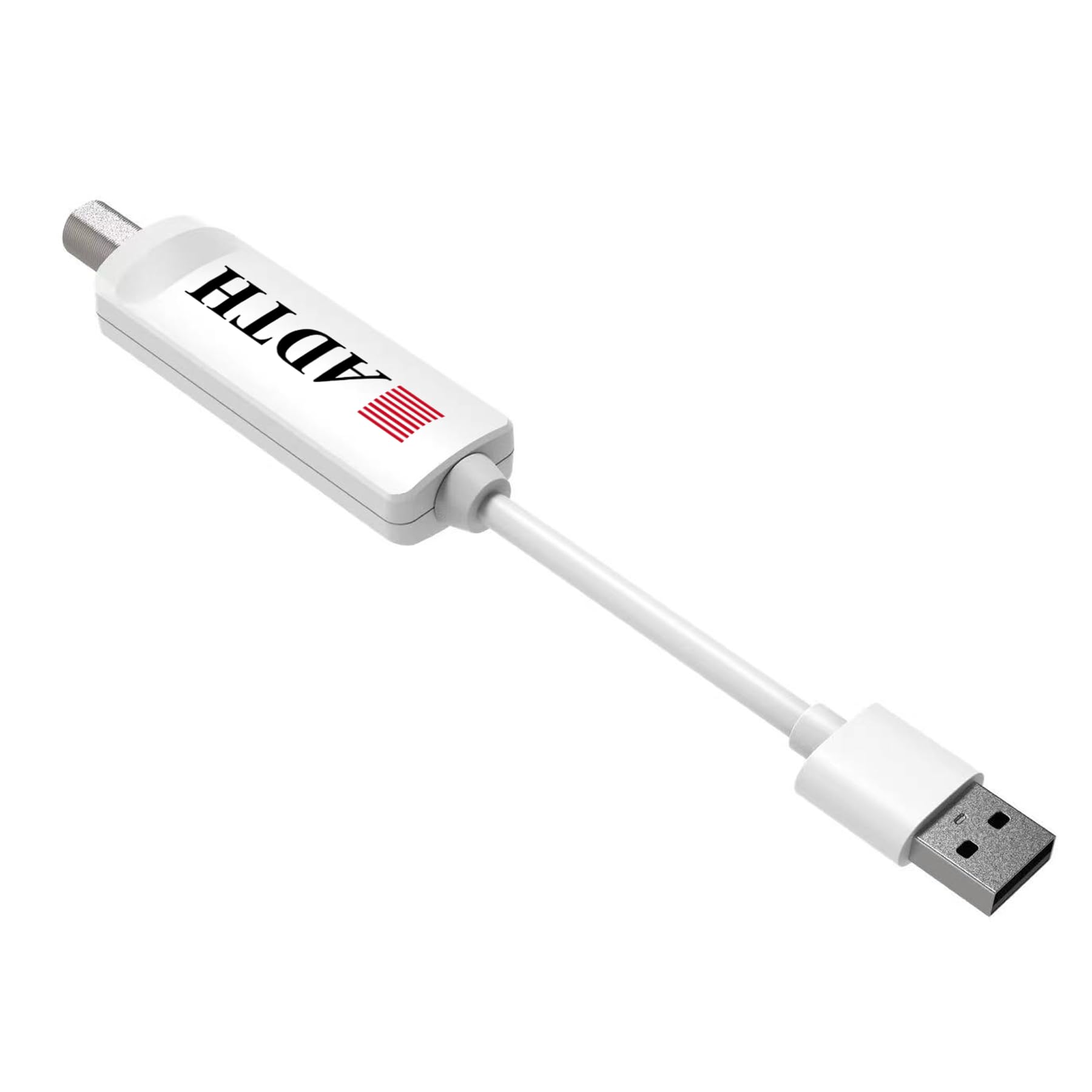
The ADTH USB tuner is the lowest-cost path to ATSC 3.0, but it comes with strict compatibility requirements. This USB dongle plugs into a streaming device running Android TV, Google TV, or Fire TV, allowing that single device to receive both ATSC 1.0 and ATSC 3.0 channels — including DRM-encrypted ones. It’s a great option if you already own a compatible streaming stick.
It works well with tested devices like the Onn 4K Pro and Fire TV Cube (3rd gen). Users report stable reception even with a small 12-inch whip antenna, and the ability to decode DRM content is a major advantage over many competing products. The channel scan is fast, and the guide works reasonably well. For users with compatible hardware, this is the cheapest way to get NextGen TV.
The downsides are significant. This is not a network tuner — it works only on the single device it’s plugged into. Your streaming device must support HEVC decoding, AC-4 audio, and Widevine L1 DRM. Many Android TV devices fail this test; one user reported that only one out of four devices worked for encrypted channels. There is no Windows, Linux, or iOS support. If you don’t verify device compatibility beforehand, you may end up with a paperweight.
Why it’s great
- Most affordable way to add ATSC 3.0 with DRM support to a compatible device
- Stable reception reported even with a small antenna
- Fast channel scan and functional guide
Good to know
- Requires host device with HEVC, AC-4, and Widevine L1 — many devices are incompatible
- Single-device only, no network streaming, no PC or iOS support
FAQ
Will an ATSC 3.0 tuner work with my existing TV antenna?
What is the difference between ATSC 3.0 and ATSC 1.0?
Do all ATSC 3.0 tuners support DRM-encrypted channels?
Can I record ATSC 3.0 channels on any DVR?
Final Thoughts: The Verdict
For most users, the best atsc 3.0 tuner winner is the SiliconDust HDHomeRun Flex Quatro because it delivers unmatched whole-home streaming reliability with four tuners and flawless Plex DVR integration. If you need native ATSC 3.0 with DRM support and a built-in DVR, grab the ADTH NextGen TV Box Gen 2. And for a budget-friendly network entry point, nothing beats the SiliconDust HDHomeRun Flex Duo.