
Our readers keep the lights on and my morning glass full of iced black tea. As an Amazon Associate, I earn from qualifying purchases.
Specs are compiled from manufacturer listings and verified buyer reviews and can change over time — please confirm the key details on the product page before buying.
That cold draft dripping from your ceiling vent in winter, or the blast of hot attic air in summer, is your whole-house fan working against you. An attic fan cover is a simple insulated panel that seals that opening, and the right one boils down to three things: the material’s thickness, how it attaches, and whether it actually fits your shutter. The pick that wins people over most is the one that combines real insulation value with the least fussy installation.
I’m Min — the founder and writer behind Gadgets Feed. This guide is built by comparing the manufacturers’ published specifications and the patterns across verified customer reviews, so you get each pick’s real strengths and trade-offs instead of marketing spin.
You want to stop that cold draft from dropping onto your head and keep your heating bill in check. This breakdown of the attic fan cover market helps you match the right material and adhesion style to your home’s vent, if you need a budget-friendly panel or a premium seal.
Quick Picks
- Battic Door Whole House Attic Ceiling Fan — Top Performer
- MEPERPER Attic Fan Insulation Cover — Best Value
- Attic Armour Whole House Fan Cover — Seasonal Swap
- DOITOOL Attic Door Insulation Cover — White Finish
- UNIFAMILY Attic Fan Cover — Budget Champion
- Xanadued Whole House Fan Cover — Starter Sheet
How To Choose The Best Attic Fan Cover
An attic fan cover is a one-time fix that stops your living space from leaking heat in winter and pulling in scorching attic air in summer. The catch is that not all covers are true air seals — some are breathable, which defeats the whole purpose. Here’s what separates a cover that actually works from one that just looks the part.
Thickness and material are everything
The core job is insulation, and that depends on the foam. Closed-cell foam (a dense, airtight foam that blocks heat flow) with reflective foil layers does the heavy lifting, resisting heat transfer in both directions. Thicker material with a meaningful R-value (a measure of thermal resistance; higher means better insulation), like the R-8 foam on the premium pick, is what actually stops that cold draft from dropping onto your head.
Adhesion must match your shutter
Your fan’s shutter material decides which attachment method you need. Self-adhesive Velcro strips grab onto aluminum, plastic, wood, and drywall. Magnetic tape only works on metal surfaces. Measure first and match the attachment to your frame, or you will spend an afternoon re-securing a panel that keeps falling off.
Size up, then trim down
Always buy a cover that overlaps your opening. These panels are designed to be trimmed with scissors, so a larger sheet gives you a custom fit without exact measuring. A cover that’s slightly too small leaves gaps around the edges — and gaps mean the draft wins.
Quick Comparison
| Model | Best For | Material | Weight | Coverage | Amazon |
|---|---|---|---|---|---|
| Battic Door Shutter Seal | Maximum insulation | R-8 White Foam | 2.2 lb | 36 x 48 in | Amazon |
| MEPERPER Insulation Cover | Versatile adhesion | Aluminum Foil Foam | — | 38 x 46 in | Amazon |
| Attic Armour Cover | Easy year-round swaps | Aluminum Film | 10.88 oz | 50.79 x 50.79 in | Amazon |
| DOITOOL Insulation Cover | Modern white finish | Aluminum | 10.6 oz | 50.78 x 37.4 in | Amazon |
| UNIFAMILY Shutter Cover | Large budget coverage | Aluminum Foil Foam | 6.7 oz | 51.18 x 51.18 in | Amazon |
| Xanadued Whole House Cover | Generous single sheet | Plastic | 12 oz | 50.79 x 50.79 in | Amazon |
In-Depth Reviews
1. Battic Door Whole House Attic Ceiling Fan Shutter Seal Cover
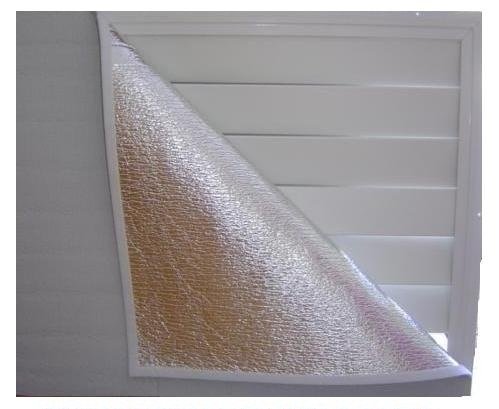
The thickest foam here, and the one that actually makes a room feel warmer instantly.
That R-8 rating is the standout spec, and it shows in the owner reports: a warm hallway felt immediately warmer the moment the panel went up. So you get a noticeable comfort boost right after installation, not just a theoretical improvement.
The installation is the most-praised part of this pick — the generous loop tape and simple measure-cut-press routine takes about 30 minutes with two people. It trims easily to fit, which is why it suits the 36 x 48-inch opening it’s made for. The trade-off is that the Velcro separates easily and the adhesive is almost too strong, refusing to come off without damage if you ever need to remove it.
One honest catch is the price — at roughly it carries a markup over what a DIY kit might cost, and a few owners felt they could build something similar cheaper. But the durability is proven, holding up where thinner foil panels sag and tear, and it ships flat rather than folded, so you avoid the permanent creases that plague rolled covers.
What wins people over
- R-8 foam insulation blocks heat and cold far better than foil sheets
- Trims easily to fit your exact opening
- Ships flat, so no permanent creases from folding
What to know going in
- Velcro separates easily and reattachment gets fiddly
- Strongest adhesive means removal can damage the surface
- Premium price — a DIY kit can cost less
Reach for this if: you want maximum insulation and don’t plan to remove the cover frequently — the R-8 foam makes it the most effective seal here.
Think twice if: you need to swap the cover on and off with the seasons, since the aggressive adhesive makes repeated removal a hassle.
2. MEPERPER Attic Fan Insulation Cover

The draft-stopper that sticks where magnets won’t, with a trim-to-fit 38 by 46-inch sheet.
What wins people over here is real heat reduction — buyers report cutting cold drafts at 15°F and feeling the difference through the louvres. The aluminum foil foam construction with a closed-cell core is designed to resist extreme temperatures and even dampen wind and rain noise from the roof, making it a genuine all-rounder rather than a flimsy sheet.
Its defining move is the self-adhesive backing that grabs wood, drywall, or metal — the surfaces where magnetic tape fails. One owner with an aluminum register had to switch to the included Velcro tape, underscoring the need to match the attachment to your shutter material. The 38 x 46-inch panel covers 11.44 square feet and trims with scissors for a custom fit.
The honest downside is the adhesive itself — it’s the most common gripe, with panels coming away from the wall within days for some owners. Wiping the surface down with alcohol before applying made the tape hold for others, so surface prep matters. It also arrives folded with creases that may flatten over time, and the foam side looks cheap on the ceiling.
Why it earns its place
- Self-adhesive strips stick to wood, drywall, and metal
- Closed-cell foam with foil layers blocks heat and dampens noise
- Covers 11.44 square feet and trims to fit
The honest trade-offs
- Adhesive can fail within days without proper surface prep
- Arrives folded with creases that may not flatten fully
- Foam side looks cheap against the ceiling
Pick this for: a drafty non-metal shutter where magnetic tape is useless — the self-adhesive backing is the most versatile here.
Look elsewhere if: you want a cover that’s easy to remove repeatedly, since the adhesive wants to stay put.
3. Attic Armour Whole House Fan Cover

A foil-faced panel that’s built for easy on-and-off, ideal for switching between seasons.
The aluminum film material with good heat preservation is the core draw here, and it earns its premium spot with a sealing effect that prevents air leakage. Owners who’ve used whole-house fans for decades report real heating and cooling cost savings, with one calling it a great value that looks nice installed. The defining feature is the hook-and-loop backing that makes installation and disassembly genuinely easy — no tools, no entering the attic.
At 10.88 ounces, it’s one of the lighter full-size panels, covering a generous 50.79 x 50.79-inch opening. The trim-to-fit design handles many different sizes, and the Velcro-on-insulated-side, foil-facing-open installation method is the one owners converge on. That seasonal swap ability is its real strength — foil facing the opening in summer, reversed for winter.
The recurring gripe is that it ships folded, leaving creases that complicate measuring and look less than perfect. Some owners reported the aluminum side shows small squares not pictured in the listing, and the included Velcro strip is slim — several upgraded to industrial-strength Velcro for a tight fit. One owner found the project took a couple hours, not the advertised minutes.
What makes it stand out
- Hook-and-loop back allows easy seasonal removal
- Large 50.79 x 50.79-inch coverage with trim-to-fit design
- Foil-facing flexibility for summer and winter setups
What to expect
- Ships folded, leaving creases and measuring challenges
- Included Velcro strip is slim; industrial tape recommended
- Installation can take hours despite the quick claim
Reach for this if: you switch between fan and AC seasons and want a panel that comes down and goes back up without a fight.
skip it if: you demand a pristine finish right from the start — the shipping creases are hard to ignore on a ceiling.
4. DOITOOL Attic Door Insulation Cover
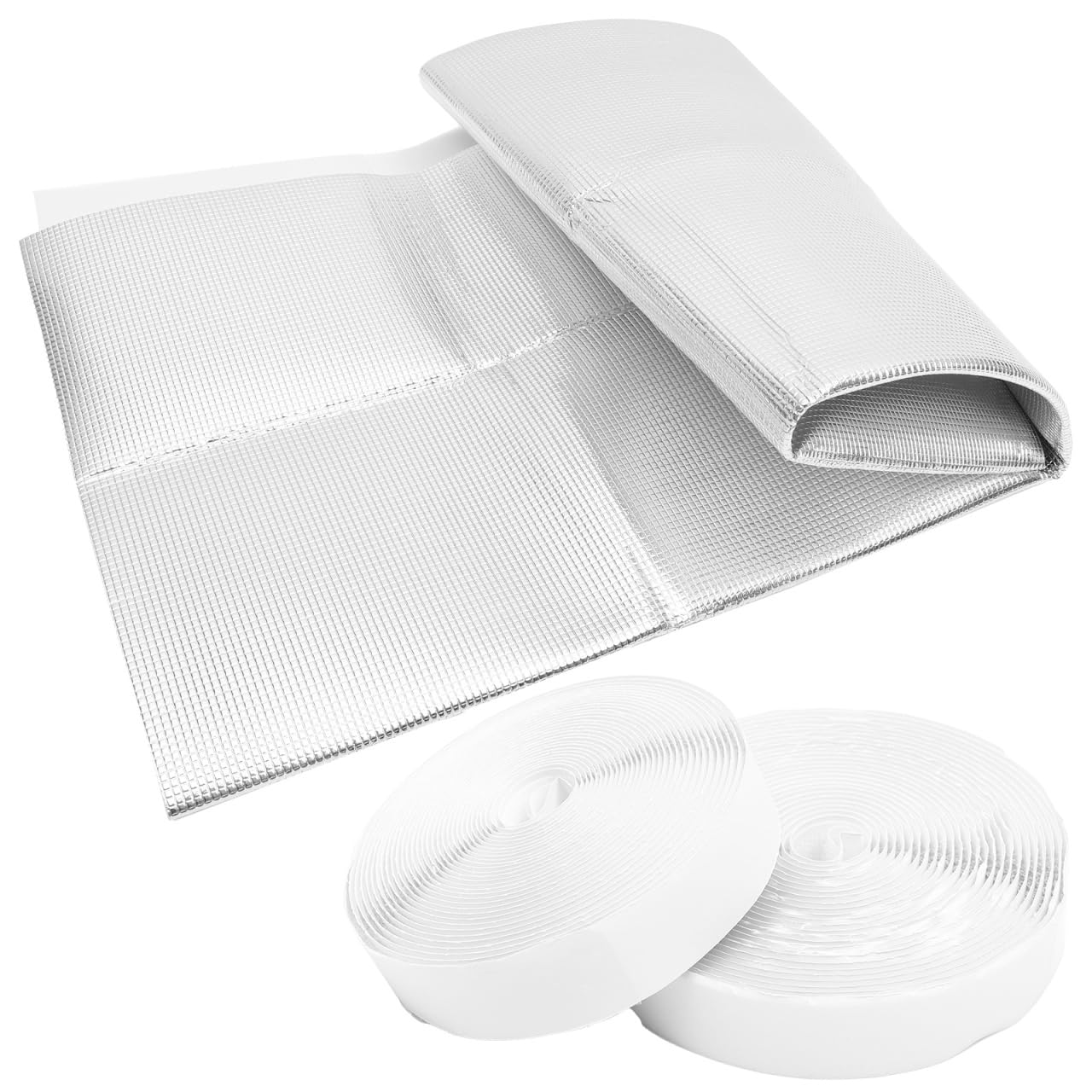
The white-faced cover that blends into the ceiling while blocking heat both ways.
Owners consistently praise the quality here, with one reporting it performs better than the tape-and-plastic approach they’d tried before. The aluminum foil foam inner core with a waterproof finish works great in both summer and winter, and the standout story is a homeowner who secured it to their attic access and ceiling fan — then walked upstairs and felt no temperature change from the cool downstairs. That’s the result this panel delivers, making it a strong pick if you want a permanent fix rather than a temporary patch.
At 10.6 ounces with a 50.78 x 37.4-inch footprint, it’s a mid-size option that trims easily to fit any vent. The self-adhesive strip attaches firmly without tools, mountable from outside the attic. The white exterior is the differentiator here — it reads as intentional rather than as a DIY patch on your ceiling.
The honest weakness is the adhesive-to-panel bond. One owner needed Super glue to keep the Velcro from separating from the panel under attic heat, and another found the cover ripped into pieces on removal after four days. It also ships folded, leaving permanent creases. If you love the white look, this is the pick, but treat the attachment points gently.
Why owners like it
- White finish looks cleaner on the ceiling than silver foil
- Waterproof aluminum foil foam blocks heat in both seasons
- Easy tool-free install from outside the attic
What to watch
- Velcro can separate from the panel under attic heat
- Delicate on removal — one cover tore apart after four days
- Folded shipping leaves permanent creases
Choose this for: a finished look that doesn’t scream “temporary fix” — the white face is the reason to pick it over silver foil panels.
Pass if: your attic runs extremely hot, since the heat can weaken the glue holding the Velcro to the panel.
5. UNIFAMILY Attic Fan Cover with Self-Adhesive Tape
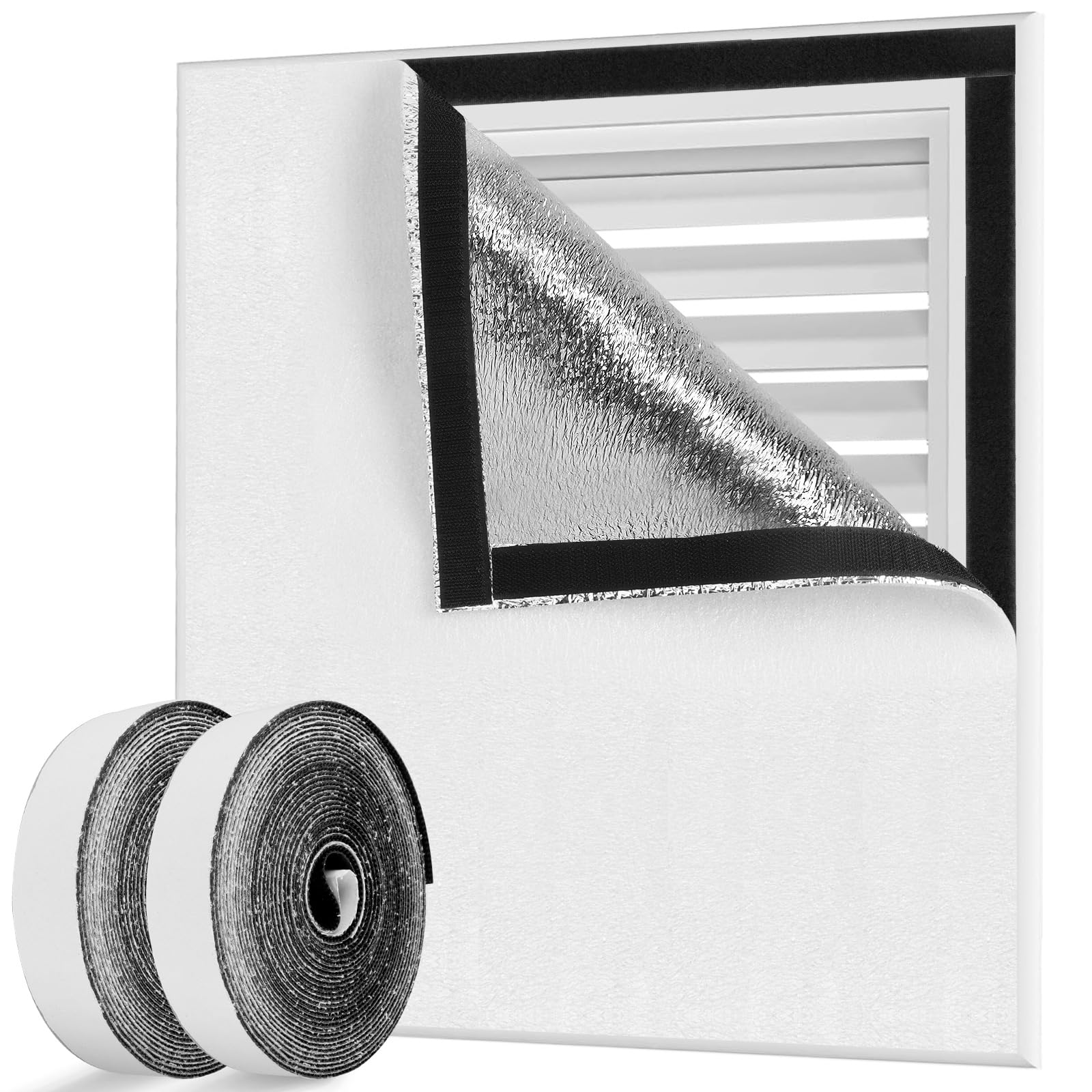
The budget sheet with the biggest footprint, covering up to a 51-inch opening for less.
This is the entry-level option that makes a real difference for some owners — one secured it over a large attic fan vent leaking hot air in summer and cold air in winter, and reported a world of difference in their second-floor temperature. The aluminum foil foam material is waterproof and humidity-resistant, and the 51.18 x 51.18-inch size is the largest coverage in this lineup, giving you plenty of overlap to trim down. If you have a big vent and a tight budget, this is the one to start with.
At just 6.7 ounces, it’s the lightest full-size panel here — at 6.7 ounces versus the 12-ounce Xanadued option with a similar footprint. The self-adhesive Velcro attaches from outside without tools, and the cover is easy to cut to size. For a drafty shutter on a budget, the math is simple: maximum coverage for minimum cost.
The trade-off is the thin material — owners describe it as not very thick, and the breathable construction means it’s not a true air seal. The Velcro attachment gets mixed feedback, with some finding the two pieces don’t stick well to each other, leaving gaps even when pressed together. One owner found it fell off within hours due to attic heat. This is a seasonal draft-blocker, not a permanent insulation upgrade.
Where it shines
- Largest coverage at 51.18 x 51.18 inches
- Lightest option at 6.7 ounces, easy to handle overhead
- Waterproof aluminum foil foam at a budget price
Where it falls short
- Thin and breathable — not a true air seal
- Velcro pieces can struggle to grip each other, leaving gaps
- May fall off in extreme attic heat
Grab this if: you need max coverage on a tight budget and your main goal is cutting the worst of a draft seasonally.
Save up if: you want a permanent, thick insulation upgrade — this thin sheet won’t match the R-8 foam of the premium pick.
6. Xanadued Whole House Fan Cover

A generously sized sheet with a magnetic tape promise that turns out to be Velcro.
At 12 ounces, this is the heaviest of the large panels — at 12 ounces versus the UNIFAMILY’s 6.7 ounces, with the same sort of footprint. That heft suggests more material, and owners confirm it cuts down on cold air seeping through the attic fan, even if it needs occasional reattachment. The package includes a 50.79 x 50.79-inch shutter cover plus a generous 197-inch flexible tape, which is plenty for most openings.
The selling point is the “self-adhesive magnet strip” for enhanced stability — but the reality, per owners, is that it’s actually Velcro with a messy adhesive. That mismatch is the core disappointment. The cover also ships folded, leaving creases that linger, and the corner tends to pull away. For a simple draft barrier it works, but the expectations set by the listing don’t match the experience.
The practical upside is the generous material for a large attic access opening, and installation is genuinely easy. Owners note the adhesive holds fine on the fan grill but fails on the cover itself, sometimes requiring painter’s tape as a fix. If you go in knowing it’s a basic Velcro sheet rather than a magnetic wonder, it does the job — just manage your expectations.
The good
- Generous 50.79 x 50.79-inch sheet with 197-inch tape included
- Heavier 12-ounce material cuts cold air seepage
- Easy tool-free installation
The not-so-good
- Marketed as magnetic but is actually Velcro
- Adhesive fails to stick to the cover, needing painter’s tape
- Ships folded with creases that linger
Consider it if: you have a very large opening and want one sheet with ample tape included — the coverage is real.
Look past it if: you specifically wanted magnetic attachment, since the listing overstates what this cover actually is.
Understanding the Specs
R-Value and foam thickness
The R-value measures how well a material resists heat flow — higher means better insulation. The premium pick’s R-8 foam is a serious barrier, while thin foil sheets offer minimal resistance. A thicker closed-cell foam core with reflective foil layers is what actually stops the cold draft from reaching your living space, not just a shiny surface.
Adhesion: Velcro vs. magnetic tape
Your shutter material decides which attachment works. Self-adhesive Velcro strips grab onto aluminum, plastic, wood, and drywall, making them the most versatile. Magnetic tape only sticks to metal surfaces. Always match the attachment method to your frame material, and wipe the surface with alcohol before applying for a stronger hold.
FAQ
How do I measure my attic fan opening for a cover?
Will an attic fan cover work on both aluminum and plastic shutters?
How much does an attic fan cover actually reduce heat transfer?
Why does my cover keep falling off?
Can I leave an attic fan cover on year-round?
Is magnetic tape or Velcro better for an attic fan cover?
How thick should an attic fan cover be?
Will a cover stop dust, bugs, and noise from the attic?
Do I need tools to install an attic fan cover?
Why do some covers ship folded with creases?
Final Thoughts: The Verdict
Across the board, the attic fan cover winner is the Battic Door Shutter Seal because its R-8 foam insulation delivers the most dramatic temperature improvements and ships flat for a clean install. If you want versatile adhesion that works on any shutter material, grab the MEPERPER Insulation Cover. And for a budget-friendly seasonal draft blocker with maximum coverage, the UNIFAMILY sheet is the one to reach for.
How We Picked
We do not accept paid placement. Every pick is matched to a real buyer and a real use-case; we do not hands-on test units.
Sources & Methodology
Specifications: manufacturer listings and product documentation. Review insights: verified customer reviews, as of August 2026. Pricing: not shown on this page (it changes often); check the current price via the retailer link.
As an Amazon Associate, Gadgets Feed earns from qualifying purchases. This does not affect which products we feature.