
The air in your living space moves in one direction — upward, toward the attic, carrying your conditioned air with it. Without the right barrier, every degree you pay to heat or cool leaks right through the ceiling joists, the attic hatch, and the unsealed gaps that make your HVAC system work triple shifts. Stopping that vertical airflow with the proper material is the single most effective way to make your home’s thermal envelope airtight.
I’m Min — the co-founder and writer behind Gadgets Feed. I’ve analyzed the thermal resistance, vapor permeability, and installation profiles of over thirty different attic insulation products, cross-referencing R-values per inch, facing materials, and real-world customer installation feedback to separate effective thermal barriers from frustrating compromises.
This guide cuts through the marketing chatter to deliver practical, data-driven advice on choosing the best attic insulation batts for your specific ceiling assembly and climate zone. Whether you need fiberglass rolls, reflective radiant barriers, or high-heat ceramic blankets, you’ll find clear recommendations tailored to your project.
How To Choose Attic Insulation Batts
Selecting the right attic insulation comes down to three factors: the material’s thermal resistance (R-value per inch), the vapor permeability of the facing, and the specific heat source or air leak you’re trying to control. A radiant barrier won’t stop conductive heat loss through the ceiling drywall, and a fiberglass batt won’t reflect summer radiant heat off the roof deck. Match the material to the problem.
R-Value Per Inch vs. Total Thickness
Attic joists limit your available depth. Fiberglass batts typically offer an R-value of roughly 3.1 to 3.7 per inch, while closed-cell foam boards reach R-6 or more per inch. For standard 2×4 or 2×6 joist cavities, the R-value per inch determines whether you can hit your target R-38 or R-49 without stacking layers or furring down. Check your local building code for the minimum required R-value for your climate zone before buying.
Facing Material: Kraft, Foil, or Unfaced
Kraft paper facing acts as a vapor retarder, blocking moisture migration from the warm interior into the cold attic. This is essential in colder climates where warm indoor air carries significant humidity. Unfaced batts are used when adding a second layer over existing insulation or when the attic is already vented and dry. Foil-faced reflective insulation is a radiant barrier, not a vapor retarder — it reflects heat but does not stop air movement. Use foil only in combination with air sealing.
Radiant Barrier vs. Mass Insulation
Radiant barriers reflect up to 95% of radiant heat energy, making them highly effective in hot climates where the sun heats the roof deck directly. However, they have negligible R-value and do not slow conductive or convective heat transfer. Mass insulation (fiberglass, mineral wool, cellulose) stops conductive and convective heat flow. The most effective attic assembly uses both: a radiant barrier on the underside of the roof deck and mass insulation between the ceiling joists.
Quick Comparison
On smaller screens, swipe sideways to see the full table.
| Model | Category | Best For | Key Spec | Amazon |
|---|---|---|---|---|
| Miloo Attic Door Insulation Cover | Premium | Sealing attic hatch air leaks | R-Value 15.6, 25″x54″x11″ | Amazon |
| Houseables Radiant Barrier | Premium | Large attic roof deck coverage | 1000 sq ft, >97% reflectivity | Amazon |
| USA Reflective Insulation Bubble Roll | Premium | Versatile multi-surface insulation | 48″x125′, R-4.9 to 14.1 | Amazon |
| Reflectix BP24050 | Premium | Garage door and window insulation | 24″x50′, 0.31″ thick | Amazon |
| SmartSHIELD Reflective Insulation | Mid-Range | Radiant barrier with foam core | R-17, 5mm foam core | Amazon |
| R-13 EcoRoll Kraft Faced Fiberglass | Mid-Range | Standard cavity insulation with vapor retarder | R-13, 3.5″ thick, 15″x32′ | Amazon |
| Lyrufexon Ceramic Fiber Insulation | Mid-Range | High-heat fireproof applications | 2600°F rating, 1″ thick | Amazon |
In‑Depth Reviews
1. Miloo Attic Door Insulation Cover

The Miloo Attic Door Insulation Cover addresses the single biggest thermal weak point in most homes — the uninsulated attic hatch. Measuring 25 inches by 54 inches by 11 inches, this cover slips over the top of a pull-down stair system and uses a multi-layer reflective film construction with a double air-bubble inner lining to deliver an R-Value of 15.6. That is dramatically more thermal resistance than the zero insulation most attic hatches provide out of the box.
Installation is measured in minutes, not hours. The cover staples directly to the attic floor framing around the hatch opening, and the built-in zipper allows full access to the attic without removing the insulation each time. The reflective aluminum outer layers create a water and vapor-resistant barrier, which prevents moisture from condensing on the attic side and dripping back into the living space — a problem that plagued multiple users before switching to this cover.
Customer feedback consistently reports a noticeable elimination of drafts and a measurable reduction in HVAC runtime after installation. The 2.29-pound weight means one person can install it without assistance. For anyone with a pull-down attic ladder or a whole-house fan opening, this is the highest-impact upgrade you can make for the money, instantly stopping the thermal chimney effect that bleeds conditioned air into the attic.
Why it’s great
- R-Value 15.6 in a package that installs in under 15 minutes
- Reflective outer layers resist moisture and humidity
Good to know
- Sized specifically for 25″x54″ hatches; measure your opening first
- Not designed for use as a whole-room insulation layer
2. Houseables Radiant Barrier

The Houseables Radiant Barrier delivers a massive 1,000 square feet of double-sided reflective aluminum foil in a single 250-foot by 4-foot roll — enough to cover the entire underside of a typical roof deck in a 2,000-square-foot home. The material reflects more than 97 percent of radiant heat energy, which means the roof deck radiates significantly less heat into the attic space during summer months. This is a Class A / Class 1 fire-rated product that meets ASTM E-84 standards, so it satisfies building code requirements for radiant barrier classification.
The foil is tear-resistant and laminated to a strong scrim backing, making it much more durable than thin household aluminum foil. Users report cutting it easily with scissors or a utility knife, then stapling it directly to the underside of roof rafters. The reflective surface is unaffected by humidity or climate changes, and it does not promote mold, fungus, or rodent nesting. In one Phoenix installation, attic temperatures dropped by approximately 30 degrees Fahrenheit after stapling this barrier across the rafters.
This product is a dedicated radiant barrier — it provides negligible R-value and does not replace mass insulation between the ceiling joists. It works best when installed with an air gap of at least 1 inch between the foil and the roof deck. For homeowners in hot climates who want to reduce cooling loads without tearing out existing insulation, this is the most cost-effective upgrade available at this coverage level.
Why it’s great
- 97% reflective value with Class A fire rating for code compliance
- Durable tear-resistant foil laminated to a scrim backing
Good to know
- Requires an air gap to function as a radiant barrier
- Unwieldy in tight attic spaces due to the 4-foot width
3. USA Reflective Insulation Bubble Roll
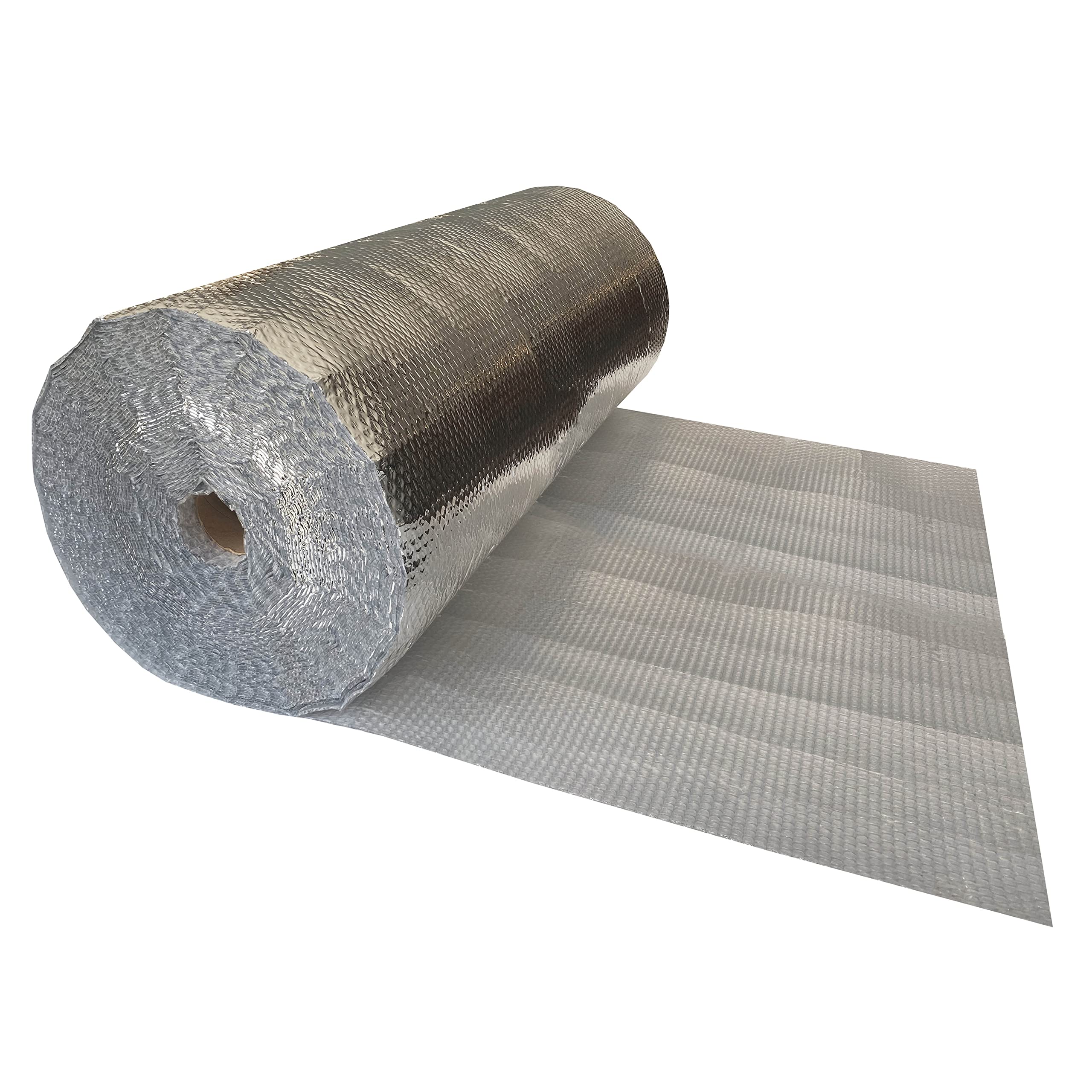
The USA Reflective Insulation Bubble Roll from UBMOVE is a 48-inch-wide, 125-foot-long thermalized bubble roll that bridges the gap between a radiant barrier and a mass insulation solution. Its 3/16-inch bubble layer is sandwiched between a foil outer layer and a polyethylene backing, providing a variable R-value range of 4.9 to 14.1 depending on the assembly configuration. This product is made in the USA and uses a one-sided thermoflex design that prioritizes thermal stability over simple cushioning.
Installation is straightforward — cut with scissors or a utility knife and attach with staples or adhesive tape. Users have applied it successfully to garage ceilings, greenhouses, metal buildings, crawl spaces, and even as shipping insulation for temperature-sensitive goods. One chocolatier reported using custom-cut pieces to maintain stable temperatures during transport, while another user saw garage temperatures drop by 3 to 10 degrees Fahrenheit on 85 to 92-degree days. The material is lightweight at 5 pounds total and does not irritate skin during handling.
It is worth noting that this product is not a replacement for thick fiberglass batts in terms of conductive thermal resistance. The bubble core provides cushioning and modest R-value, but the primary mechanism is still radiant heat reflection. It performs best when used as a supplemental layer or in applications where the air gap is present. The 48-inch width is ideal for standard rafter spacing of 24 inches on center, allowing you to cut two strips per pass.
Why it’s great
- Variable R-value range adapts to different installation methods
- Lightweight and non-irritating compared to fiberglass
Good to know
- R-value varies significantly with air gap and assembly
- Some users report the length can be slightly short of stated 125 feet
4. Reflectix BP24050 Bubble Pack Insulation

The Reflectix BP24050 is perhaps the most widely recognized name in reflective bubble insulation, and for good reason. This 24-inch-wide by 50-foot-long roll uses two layers of polyethylene bubble sandwiched between two layers of highly reflective aluminum foil. At 0.31 inches thick, it is notably denser than the thin foil-only barriers, and its 24-inch width makes it an exact fit for standard garage door panels — a use case where this product has gained near-legendary status among DIYers.
Users consistently report that cutting this material to size is straightforward with scissors or a utility knife, and its lightweight nature (about 6 pounds total) makes it manageable for one person to install. In garage door applications, it typically reduces the interior surface temperature of the door by 5 to 10 degrees Fahrenheit in summer conditions. The double-sided reflective surface means it works regardless of which side faces the heat source, so orientation during installation is not a concern.
The primary limitation is that, like all radiant barriers, it does not provide substantial conductive R-value. Reflectix rates the product at approximately R-3 for horizontal applications and R-1.1 for vertical applications when installed with air gaps on both sides. It also adds weight to garage doors — about 20 pounds for a double garage door — which may require adjustment of the door spring tension. For RV windows, camper insulation, or metal building liners, this is a proven solution that balances cost with effective radiant heat rejection.
Why it’s great
- 24-inch width matches standard garage door panel width perfectly
- Double-sided reflective foil works in any orientation
Good to know
- R-value is low in vertical installations without air gaps
- Adds noticeable weight to garage door panels
5. SmartSHIELD Reflective Insulation Roll
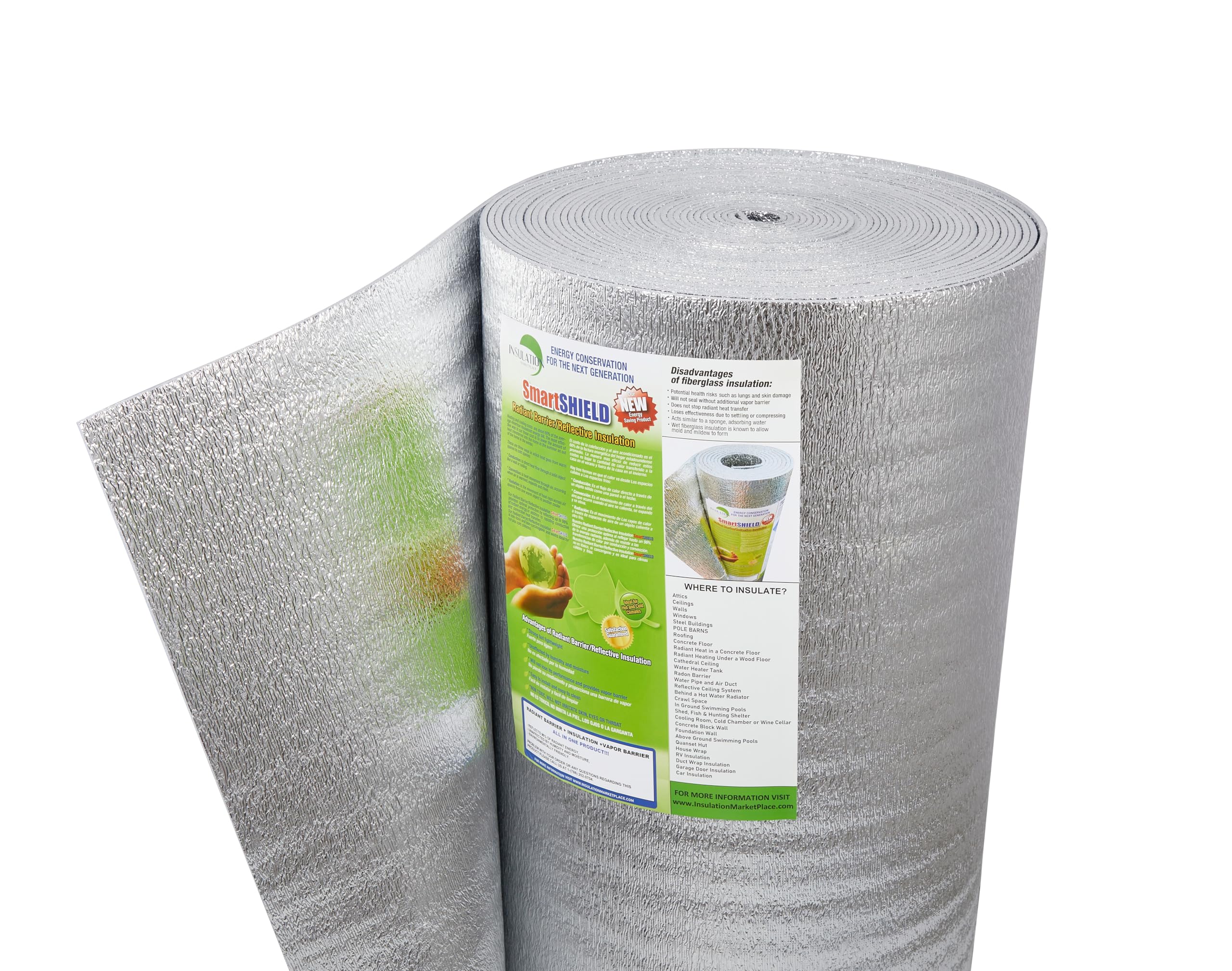
The SmartSHIELD Reflective Insulation Roll uses a 5mm closed-cell foam core sandwiched between two layers of engineered foil, providing an R-17 rating that sets it apart from thin bubble wraps and single-layer radiant barriers. This is an industrial/commercial-grade product that meets ASTM C1313 standards, carries a Class A fire rating (E84 with E2599 mounting), and includes a proprietary clear coating for corrosion resistance per ASTM D3310. The 16-inch width by 50-foot length covers about 66.7 square feet per roll, making it a targeted solution rather than a whole-attic product.
The foam core gives this product a structural integrity that bubble wrap lacks — it resists punctures and tears better, yet still cuts cleanly with utility scissors. User reports include an energy engineer who successfully used it to seal an attic hatch and crawl space opening, noting an immediate reduction in hot air flow during 100-degree weather. Another user applied it to RV windows and documented a 4-degree Fahrenheit temperature rise inside the vehicle while outside temperatures dropped from 40 to 35 degrees Fahrenheit. The foam provides enough depth to double as a modest sound barrier as well.
Because the foam core is only 5 millimeters thick, this product is best used as a supplemental radiant barrier or for specific openings (attic hatches, ductwork, windows) rather than as a primary ceiling insulation replacement. The R-17 rating depends on the air gap and orientation; without an air gap, the effective R-value drops significantly. For metal buildings, pole barns, or concrete walls where thin, rigid reflective insulation is needed, this is a premium choice that outperforms simple foil wraps.
Why it’s great
- R-17 rating with a structural foam core that resists punctures
- Class A fire rating and corrosion-resistant coating
Good to know
- 16-inch width means more seams for large attic areas
- R-value drops without proper air gap installation
6. R-13 EcoRoll Kraft Faced Fiberglass Insulation

The R-13 EcoRoll is a traditional Kraft-faced fiberglass insulation roll that delivers exactly what classic batts promise: a 3.5-inch thickness providing R-13 thermal resistance, with a brown Kraft paper vapor retarder facing that prevents moisture migration into the attic. At 15 inches wide and 32 feet long (40 square feet total coverage), this roll is designed to fit between standard 16-inch-on-center wall or ceiling joists. The natural brown binder, made from corn, sand, and recycled glass, avoids added dyes and is GREENGUARD Gold certified — meaning it meets strict chemical emissions limits for indoor air quality.
The fiberglass material is softer to the touch than traditional pink fiberglass, and users report it cuts easily and splits cleanly around obstructions like electrical boxes and recessed lighting. The Kraft facing staples securely to joist edges, and the vapor retarder side faces the warm-in-winter interior, reducing condensation within the wall cavity. One user noted that the material was noticeably darker in color compared to standard insulation from the same supplier, though this is a cosmetic difference related to the eco-friendly binder rather than a performance issue.
This is a conventional mass insulation product — it works by trapping air within the fiberglass matrix to slow conductive and convective heat transfer. It does not reflect radiant heat, so it performs best as the primary insulation layer between conditioned space and the attic. For homeowners adding a first layer of insulation to unfinished attic joists or replacing old, compressed batts, this roll provides the standard R-value per dollar that the industry has relied on for decades. Just ensure the Kraft facing is properly sealed at all seams to maximize vapor retarder performance.
Why it’s great
- GREENGUARD Gold certified with eco-friendly binder materials
- Kraft facing provides a proper vapor retarder for moisture control
Good to know
- Color inconsistency in the natural binder may be cosmetically unappealing
- Local big-box stores may offer lower per-roll pricing
7. Lyrufexon Ceramic Fiber Insulation Blanket

The Lyrufexon Ceramic Fiber Insulation Blanket is not a standard attic batting product — it is a specialty high-heat blanket rated at 2600 degrees Fahrenheit constant temperature, designed for applications where fiberglass and foam would melt or catch fire. At 60 inches by 24 inches by 1 inch thick, each blanket covers 9.9 square feet and is made from dense ceramic fiber that withstands direct flame contact. This is the correct material for insulating wood stove baffles, fireplace inserts, chimney liners, pizza ovens, and forge chambers.
Users praise the blanket’s density and flexibility — it cuts cleanly with a utility knife or scissors and holds its shape when wrapped around curved surfaces like oven domes or boiler shells. One builder used it to insulate a DIY pizza oven, reporting that the exterior remained cool to the touch while the interior reached 900 degrees Fahrenheit. Another user upgraded a Traeger smoker by replacing the factory insulation with this blanket, noting superior heat retention and zero off-gassing smell compared to fiberglass alternatives. The material is available in a single 1-inch-thick layer, so multiple layers may be needed for higher R-value applications.
The trade-off is that ceramic fiber dust can be irritating to skin and lungs during cutting. The manufacturer explicitly recommends wearing gloves and a mask when handling. The blanket is also heavier than fiberglass, and the fibers can shed if the edges are not sealed. This is not a product for general attic insulation — it does not provide a vapor retarder, it has no Kraft facing, and it is priced per square foot significantly higher than standard batts. But for heat sources that reach temperatures above 500 degrees Fahrenheit, there is no safer or more effective insulation option in this price range.
Why it’s great
- 2600°F constant temperature rating withstands direct flame contact
- Dense, flexible material cuts easily and wraps curved surfaces
Good to know
- Ceramic fiber dust requires gloves and a mask during cutting
- Not suitable as a primary attic insulation or vapor barrier
FAQ
Can I just lay radiant barrier over my existing fiberglass batts?
Do attic insulation batts need a vapor barrier on top or bottom?
What R-value do I need for attic insulation in a cold climate?
Final Thoughts: The Verdict
For most users, the attic insulation batts winner is the Miloo Attic Door Insulation Cover because it directly attacks the largest single air leak in most homes — the uninsulated attic hatch — and delivers an R-Value of 15.6 in a 10-minute installation. If you want a whole-roof radiant barrier to slash summer cooling costs, grab the Houseables Radiant Barrier. And for high-heat projects like wood stoves or pizza ovens, nothing beats the Lyrufexon Ceramic Fiber Insulation Blanket at 2600 degrees Fahrenheit.