
Your attic is the single largest source of unwanted heat gain in summer and heat loss in winter, yet most homeowners leave it unprotected with outdated fiberglass batts that do little to stop radiant transfer. The right reflective material can slash cooling costs by up to 45% and keep your living space comfortable without overworking your HVAC system.
I’m Min — the co-founder and writer behind Gadgets Feed. I’ve spent hundreds of hours analyzing thermal performance data, reviewing ASTM fire ratings, and cross-referencing real-world installation results to separate effective radiant barriers from overpriced foil rolls that rip the moment you staple them.
Whether you are retrofitting an existing home or building new, this guide breaks down the key specs, installation quirks, and true R-value equivalents so you can confidently pick the best attic insulation material for your climate and budget.
How To Choose The Best Attic Insulation Material
Choosing the right attic insulation starts with understanding that heat moves three ways: conduction, convection, and radiation. Standard fiberglass batts address conduction and convection but do almost nothing to block radiant heat from a hot roof. Reflective insulation materials specifically target radiant transfer, making them the most effective upgrade for attics in hot climates.
Reflectivity and Emissivity
The primary metric for a radiant barrier is its ability to reflect radiant energy back toward the source. Look for products that reflect at least 95% of radiant heat, with premium options reaching 97%. Emissivity — how much heat the material re-radiates — should be below 0.1 for maximum effectiveness. Aluminum foil naturally achieves this, but coating quality and thickness matter for long-term performance.
Core Material and Thickness
The inner core dictates both R-value equivalent and structural integrity. Solid EPE foam cores between 5mm and 5.5mm provide better thermal breaks than single bubble layers, while double-bubble construction offers a balance of cushioning and insulation. Thicker cores (1/4 inch or more) resist compression better in tight attic spaces but add weight that makes overhead installation more challenging.
Fire Rating and Vapor Control
Attic insulation must meet ASTM E84 or E2599 standards for surface burning characteristics, with Class A or Class 1 being the strictest ratings accepted by building codes. A vapor barrier layer prevents moisture from condensing on cold roof sheathing, which can lead to mold and rot. Some materials are perforated to allow breathability while still blocking radiant transfer.
Quick Comparison
On smaller screens, swipe sideways to see the full table.
| Model | Category | Best For | Key Spec | Amazon |
|---|---|---|---|---|
| RadiantGUARD Xtreme | Premium Foil | Maximum attic temp reduction | 6.5 mils, 95% reflection | Amazon |
| US Energy Products 1000 sqft | Premium Foil | Commercial-grade tear resistance | 99.7% reflective, Class A | Amazon |
| Trade Winds Double Bubble | Double Bubble | Multi-surface versatility | 1/4 in thick, 97% reflection | Amazon |
| AES Diamond Radiant Barrier | Standard Foil | Large coverage at low weight | 1000 sq ft per roll | Amazon |
| SmartSHIELD 5mm Foil/Foil | Foam Core | Vapor barrier + insulation combo | 5mm EPE foam core | Amazon |
| VEVOR Double Reflective | Foam Core | Budget-friendly foam core | 5.5mm EPE foam, 95% | Amazon |
| USA Reflective Bubble Roll | Bubble Wrap | Garage doors and packaging | 3/16 in bubble layer | Amazon |
In‑Depth Reviews
1. RadiantGUARD Xtreme Attic Insulation 1000 sq ft

RadiantGUARD Xtreme is the heavyweight champion of attic radiant barriers, weighing in at 28 pounds per roll — two to three times heavier than most competitors. This density translates directly to puncture resistance and longevity: the reinforced aluminum foil holds staples cleanly without tearing out, even when stretched taut across rafters in a 140°F attic. Certified to ASTM C1313 with a Class A / Class 1 fire rating, it satisfies the strictest building code requirements across all states.
During real-world testing in extreme heat, this barrier dropped attic temperatures by 30°F on the covered side of the roof, reducing heat soak into living spaces below. The 6.5 mil thickness makes it noticeably stiffer than thinner foils, which helps it lie flat without wrinkling, but also means installation requires patience and a quality staple gun — expect two to three helpers for the full 250-foot length. The non-toxic, fiber-free construction means no respirators or protective gear are needed during installation.
One nuance with this product is its perforation pattern: the tiny holes allow moisture vapor to escape, preventing condensation on the roof deck while still blocking 95% of radiant heat transfer. This makes it ideal for attics with ridge vents or gable vents where air movement is already designed into the system. For homeowners who want a permanent, maintenance-free radiant barrier that will outlast the roof itself, this is the reference standard.
Why it’s great
- Heavy-duty 6.5 mil reinforced aluminum resists tearing and punctures during installation
- Class A / Class 1 fire rated with full ASTM compliance documentation available
- Perforated design allows vapor permeability while blocking 95% of radiant heat
Good to know
- Very heavy roll (28 lbs) is awkward to handle in tight attic spaces without helpers
- Stiff material makes cutting and fitting around roof trusses more labor-intensive
- Premium pricing reflects the industrial-grade build quality; cheaper alternatives exist for less demanding applications
2. US Energy Products Radiant Barrier 1000 sqft

The US Energy Products radiant barrier achieves an extraordinary 99.7% reflectivity rating, placing it among the most efficient foil barriers on the market. What sets it apart is the integrated fabric mesh sandwiched between two reflective layers — this internal reinforcement means the foil does not rip or wrinkle when subjected to the aggressive stapling and stretching required for attic rafter installation. One reviewer reported struggling with a “scrappy electric stapler” yet the material held up without a single tear.
With 1000 square feet per roll cut at 4 feet wide, this barrier covers standard 24-inch on-center rafter bays efficiently. The perforated design meets ASTM 96-00 breathability standards, making it suitable for SCIF and RIFD government-grade applications where controlled environments are critical. Cooling cost reductions ranging from 10 to 45 percent have been documented in various climate zones, with the most dramatic savings in southern states with metal roofs where radiant heat is the primary thermal load.
Installation reports note that the material is remarkably thin to the touch yet does not compress or degrade over time, unlike bubble-wrap alternatives that can collapse under their own weight in horizontal applications. The roll is heavy enough that three people are recommended for cutting 13-foot sections, but the effort pays off immediately — users reported noticeable temperature drops in metal shops and attics after each section was stapled in place. For anyone needing a professional-grade barrier that meets federal fire code standards, this is a strong contender.
Why it’s great
- Fabric mesh inner layer makes the foil genuinely tear-proof during aggressive overhead installation
- Meets ASTM fire and breathability standards for commercial and government applications
- Extremely high 99.7% reflectivity outperforms most residential-grade barriers
Good to know
- Heavy roll requires multiple people for safe handling and accurate alignment on rafters
- Thin material can wrinkle if not pulled taut; careful tensioning is essential
- Premium price tier justified by industrial reinforcement, but may exceed budget for simple DIY projects
3. Trade Winds Double Bubble Foil Insulation (4ft x 50ft)

Trade Winds Double Bubble insulation brings together two layers of polyethylene air bubbles sandwiched between highly reflective metalized aluminum polyester film, creating a 1/4-inch thick barrier that reflects 97% of radiant heat while emitting less than 3%. This double-layer construction provides a noticeable thermal break that single-bubble and foam-core materials cannot match at this thickness, making it particularly effective for spaces where conductive heat transfer through the insulation itself is a concern.
One of the strongest selling points is the sheer versatility: the material holds staples without tearing, cuts easily with utility scissors, and does not compress or collapse even under the weight of additional insulation layers. Homeowners have used it for everything from greenhouse temperature stabilization to bee hive insulation, window heat blocking, and RV roof protection. The Class 1 / Class A fire rating under ASTM E84 and E2599 means it meets code requirements for exposed attic applications where fire safety is paramount.
The 48-inch width by 50-foot length covers standard rafter bays efficiently, and the lack of fiberglass fibers means zero itch during installation — no respirator, no gloves required. A few users mentioned receiving the wrong width initially, but the company provided prompt replacement service. For homeowners who want a single product that works across attics, windows, garages, ducts, and barns without sacrificing radiant performance, this double-bubble option is the most flexible mid-range choice available.
Why it’s great
- Double bubble core provides a genuine thermal break that outperforms single-layer materials
- Class A fire rated with documented ASTM compliance for code approval
- Lightweight and easy to cut with standard scissors; no special tools or protective gear needed
Good to know
- Occasional width discrepancies in packaging require quality checks before bulk installation
- Not perforated, so vapor management depends on attic ventilation design
- Shorter 50-foot length covers less area per roll compared to 250-foot foil options
4. AES Diamond Radiant Barrier 1000 sqft

AES Diamond Radiant Barrier delivers the largest coverage per dollar in the mid-range bracket, providing 1000 square feet of reflective foil on a single roll. The 4-foot width by 250-foot length makes it straightforward to run continuous strips along rafter bays without excessive seam overlap, and the lightweight aluminum construction means a single person can manage the roll in most attic spaces. In South Texas installations, users reported an immediate cooling improvement after stapling the foil to rafter undersides.
The primary trade-off with this product is durability: the foil rips more easily than reinforced alternatives, especially when stretching over joists with sharp edges or protruding nails. One reviewer received a defective roll with large cuts and holes, though the seller replaced it promptly. When installed carefully with proper staple spacing and avoiding contact with rough surfaces, the 97% reflectivity rating performs as advertised, dramatically reducing heat soak into the living space below.
For large-scale projects where coverage area is the priority and the installer has experience handling delicate foil, this is an efficient solution. The 48-inch width requires cutting around jack supports and roof penetrations, so a 26-inch vertical install approach has been recommended by seasoned users to reduce waste. Pair this barrier with proper air sealing and additional blown-in insulation for a comprehensive attic energy retrofit that maximizes the return on every dollar spent.
Why it’s great
- Generous 1000 sq ft coverage per roll reduces the number of rolls needed for large attics
- Lightweight construction allows one-person installation in accessible attic spaces
- Noticeable cooling improvement immediately after installation in hot climates
Good to know
- Thin foil tears easily and requires careful handling around rough surfaces and sharp edges
- Quality control inconsistency may produce rolls with cuts, holes, or manufacturing defects
- Not reinforced, so staples may pull through if over-tightened or if material is stretched too aggressively
5. SmartSHIELD 5mm Foam Core Reflective Insulation (24″ x 50ft)
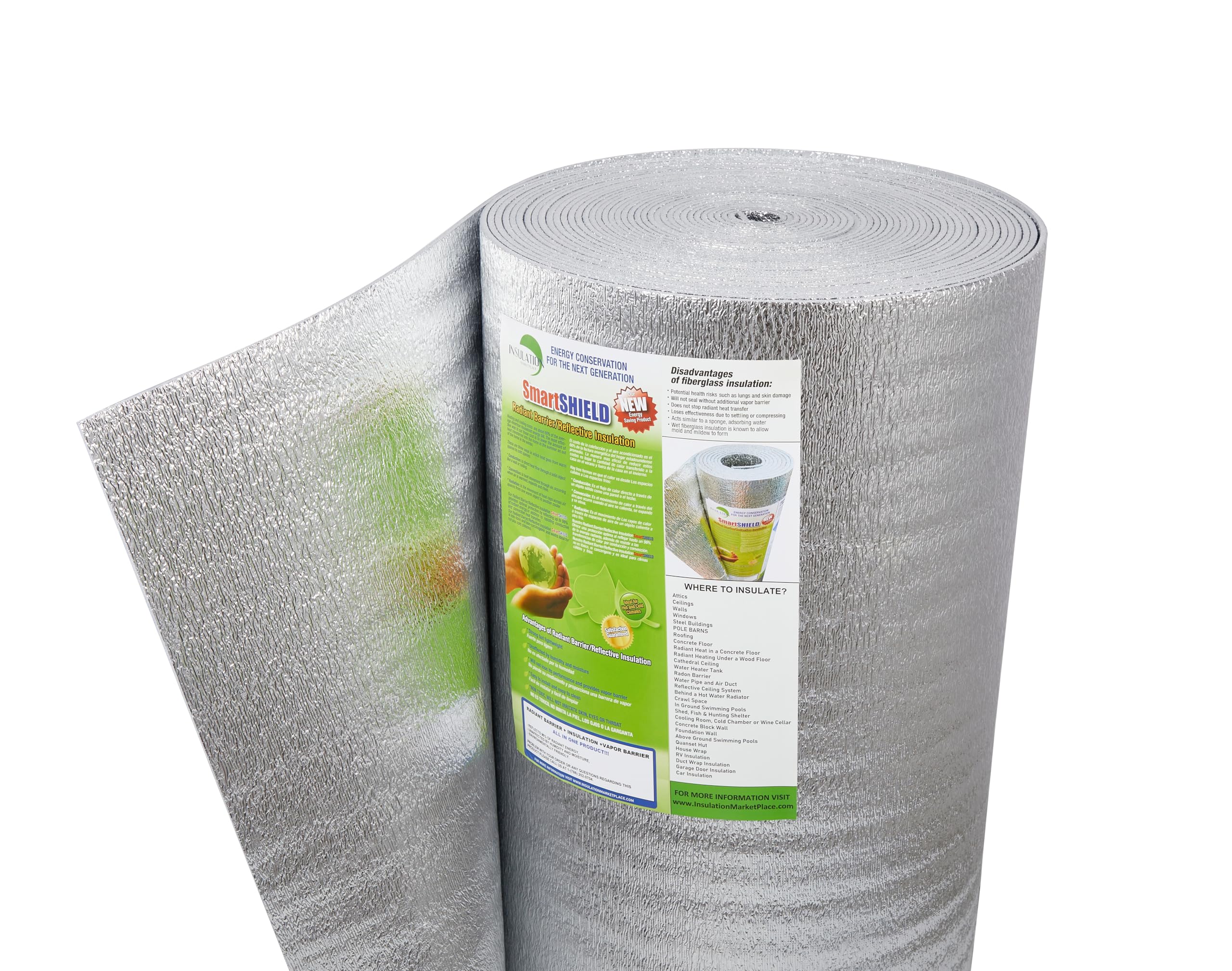
SmartSHIELD breaks from the pure foil category by pairing two reflective aluminum surfaces with a 5mm closed-cell EPE foam core, achieving an R17 insulation value that pure radiant barriers cannot claim. This hybrid design provides both a vapor barrier (preventing condensation on cold roof decks) and a thermal break, making it uniquely suited for attic hatches, crawl spaces, and cathedral ceilings where moisture control is as critical as heat reflection. The proprietary clear coating on the foil surface also meets ASTM D3310 corrosion resistance standards, a rare feature among reflective insulations.
Energy engineers and HVAC professionals have specifically recommended this product for sealing building envelope gaps. One reviewer, an energy engineer, stapled SmartSHIELD to the back of their attic hatch cover and immediately stopped hot air infiltration from the uninsulated attic above. The foam core provides enough rigidity that the material lies flat without sagging, and the double-sided reflectivity means there is no wrong orientation during installation — both sides reflect 95% of radiant energy.
The 24-inch width is narrower than most competitors, which is actually advantageous for tight rafter bays, vertical gable walls, and retrofitting existing insulation without tearing out old material. The tear-proof and puncture-proof construction withstands aggressive stapling, and the non-toxic, non-allergenic composition eliminates the need for protective gear. For homeowners who want a true insulation material with measurable R-value rather than just a radiant reflector, this foam-core option bridges the gap between foil barriers and traditional batt insulation.
Why it’s great
- 5mm EPE foam core provides a genuine R17 insulation value, not just radiant reflection
- Corrosion-resistant coating prevents foil degradation in humid attic environments
- Double-sided reflectivity eliminates orientation guesswork during installation
Good to know
- Narrow 24-inch width requires more cutting and seam sealing compared to 48-inch alternatives
- Actual thickness reportedly measures slightly less than 5mm, with length sometimes rounded up
- Premium per-square-foot pricing reflects the foam core construction and R-value certification
6. VEVOR Double Reflective Insulation Roll (48″ x 50ft)

VEVOR’s double reflective insulation roll offers the thickest EPE foam core in this roundup at 5.5 millimeters, paired with double-sided aluminum foil for 95% heat reflectivity. At just 5.7 pounds for a 48-inch by 50-foot roll, it is significantly lighter than foam-core competitors, making it the easiest overhead installation option for solo DIYers. The 3-in-1 design as a radiant barrier, insulation layer, and vapor control membrane simplifies material selection for first-time installers who want a single product that handles all three functions.
User reports consistently highlight dramatic temperature reductions: one Florida homeowner installed two layers on a 16-foot garage door with an air gap and measured a 30–35°F temperature drop compared to bare steel. Another user installed the material on the underside of rafters from soffit to ridge vent and reported a significant cooling improvement on a dark-colored metal roof in a southern state. The material cuts cleanly with utility scissors and accepts spray adhesive for flush mounting on flat surfaces.
The 5.7-pound weight means the roll does not tire your arms during extended overhead work, and the foam core provides enough rigidity that the material does not flop or fold over itself during unrolling. Some users wished for a thicker foam option, but at this price point the 5.5mm core delivers an excellent balance of insulation value and handling convenience. For budget-conscious homeowners tackling their first attic radiant barrier project, this VEVOR roll offers the gentlest learning curve and the fastest path to measurable temperature reduction.
Why it’s great
- Thickest EPE foam core in the budget tier at 5.5mm provides superior thermal break
- Extremely lightweight at 5.7 lbs makes overhead solo installation practical and safe
- 3-in-1 radiant barrier, insulation, and vapor control simplifies product selection
Good to know
- Foam core thickness is fixed; users wanting higher R-values must double-layer or add additional insulation
- Reflectivity capped at 95% compared to 97-99% on premium foil-only barriers
- Not suited for applications requiring structural rigidity or heavy compression resistance
7. USA Reflective Insulation Bubble Roll (48″ x 125ft)
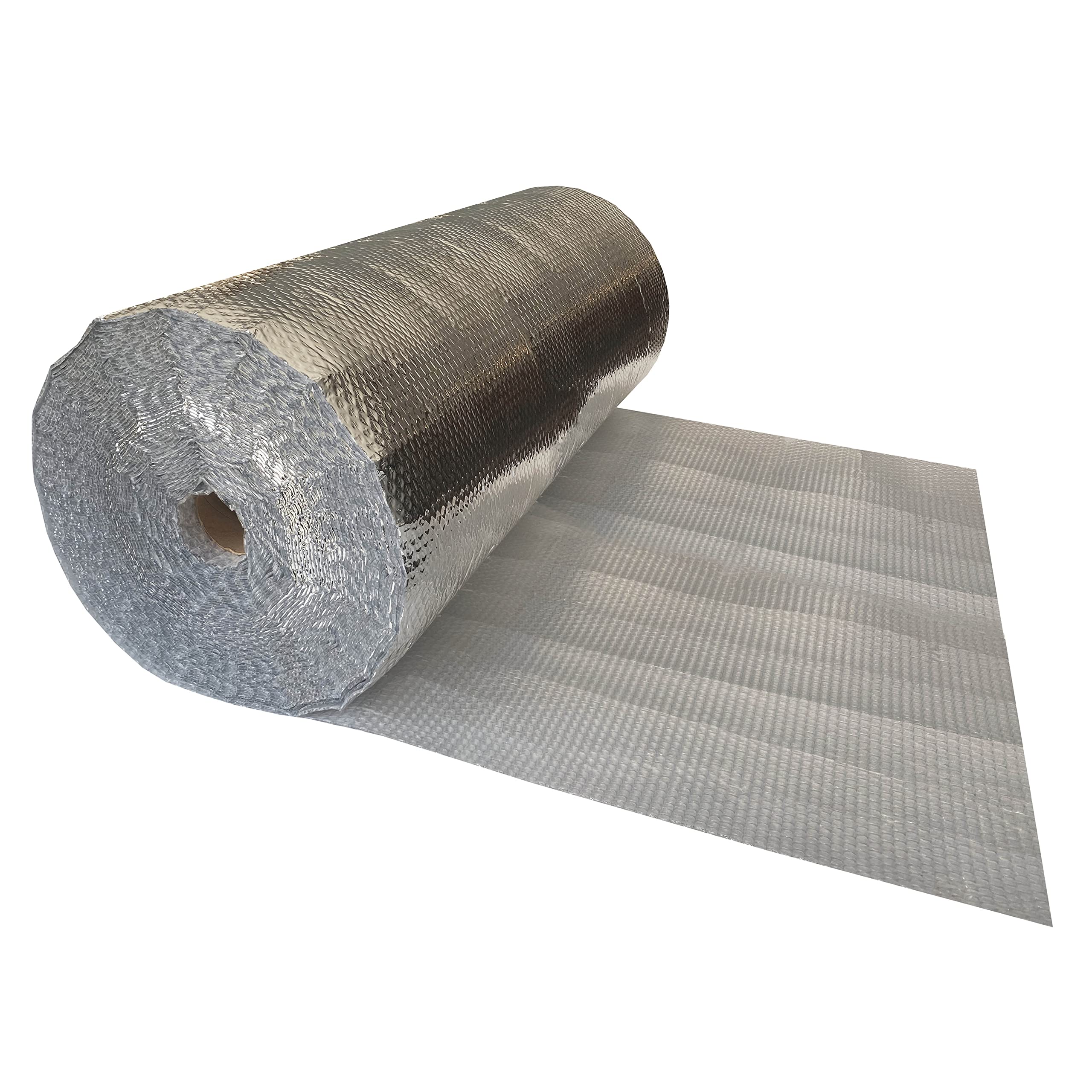
The USA Reflective Insulation Bubble Roll from UBMove uses a single-sided thermoflex bubble layer with a foil outer surface, providing an R-value range of 4.9 to 14.1 depending on application configuration and air gap. At 48 inches wide by 125 feet long, this roll offers the most linear footage in the entry-level tier, making it ideal for garages, greenhouses, crawl spaces, and packaging applications where a lightweight flexible barrier is preferred over rigid foam panels. The polyethylene bubble construction provides cushioning that foil-only barriers cannot match.
Real-world performance testing showed a 3–10°F temperature drop inside a garage when outside temperatures reached 85–92°F, with the manufacturer noting that the product is designed for moderate rather than extreme temperature reductions. One chocolatier uses cut pieces for shipping temperature-sensitive products in cool conditions, confirming the material’s utility as both a building insulation and a packaging solution. The one-sided foil means proper orientation matters — the reflective surface must face the heat source for maximum effectiveness.
The 0.19-inch thickness provides adequate thermal resistance for mild climates but will not match the performance of 5mm foam core or double-bubble products in extreme heat. Some customers reported receiving rolls that measured 9 feet short of the advertised 125-foot length, so verifying length upon delivery is advisable. For hobbyists, DIY greenhouse builders, and homeowners who need a versatile, low-cost material that works across multiple applications, this bubble roll is the most accessible starting point in the attic insulation category.
Why it’s great
- Longest linear footage per roll at 125 feet covers larger areas with fewer seams
- Flexible bubble construction conforms to curved surfaces and irregular shapes
- Dual-purpose design works as building insulation and protective packaging material
Good to know
- Maximum temperature reduction limited to 10-15°F; not suitable for extreme climate zones
- Length discrepancies reported; verify actual footage before starting installation
- One-sided foil requires careful orientation toward heat source for optimal performance
FAQ
Does reflective attic insulation work without an air gap?
Can I install radiant barrier over existing fiberglass insulation?
What fire rating does attic insulation need to meet?
Is double bubble insulation better than solid foam core for attics?
Final Thoughts: The Verdict
For most users, the best attic insulation material winner is the RadiantGUARD Xtreme because its reinforced 6.5 mil construction and Class A fire rating deliver proven 30°F attic temperature drops with long-term durability. If you want an insulation material with genuine R-value rather than pure radiant reflection, grab the SmartSHIELD 5mm Foam Core for its R17 rating and vapor control. And for budget-conscious DIYers tackling their first attic project, nothing beats the lightweight handling and 5.5mm core of the VEVOR Double Reflective for fast, solo installation that still delivers measurable cooling improvements.