
A rattling, wobbly attic ladder turns a simple storage run into a stressful balancing act. The right kit locks into place, supports your weight without flex, and folds away cleanly, leaving your ceiling flush. Choosing one means matching rough opening dimensions, ceiling height, and weight capacity to a unit that installs square the first time.
I’m Min — the co-founder and writer behind Gadgets Feed. I spent dozens of hours cross-referencing rough opening specs, load ratings, step widths, and insulation values across the current attic ladder market so you don’t have to measure twice.
Every unit in this guide was vetted for real-world stability and installation ease, ensuring you land on a reliable attic ladder kit that feels solid underfoot from the first step to the thousandth.
How To Choose The Best Attic Ladder Kit
An attic ladder is a permanent fixture — once framed in, swapping it is a demolition project. Get the rough opening, ceiling height, and load class right before you buy.
Measure Your Rough Opening Twice
The three common rough openings are 22.5″ x 54″, 25″ x 54″, and 30″ x 54. Most kits match one size exactly. A 25″ wide unit forced into a 22.5″ cutout requires reframing. Measure the finished hole between the joists before you search.
Match Ceiling Height Without Guesswork
Nearly every 10-foot ladder covers 7’8″ to 10’3″. If your ceiling is 8 feet, you will trim the bottom legs. Look for kits with pre-marked cut lines and leg caps that reseal after trimming — some leave bare aluminum edges that collect moisture.
Weight Capacity Dictates Build Quality
Type IAA (375 lb) is the residential benchmark. A 350 lb rating is common on lower-cost units and works for most homeowners, but the hinges and rivets on Type IAA ladders tend to feel tighter over years of use. The 880 lb wall-mounted option fills a niche for workshops where heavy equipment moves through the hatch.
Quick Comparison
On smaller screens, swipe sideways to see the full table.
| Model | Category | Best For | Key Spec | Amazon |
|---|---|---|---|---|
| Louisville Ladder AL3040MG-R10 | Premium | Energy Efficiency | R10 Insulated Door | Amazon |
| ELTFROH 10-Foot | Premium | Quiet Operation | ANSI 14.9 Compliant | Amazon |
| LITE AP2240MS | Premium | Lightweight Build | 22 lb Frame Weight | Amazon |
| WTRAVEL 25″ x 54″ | Mid-Range | Wider Opening Fit | 25″ Wide Frame | Amazon |
| Vantic ALD001 | Mid-Range | Smooth Gas Rod Assist | Gas Rod Opening | Amazon |
| LITE AA2211 | Mid-Range | Pre-drilled Accuracy | 3.25″ Step Depth | Amazon |
| KWCWB Wall-Mounted | Mid-Range | Extreme Load Capacity | 880 lb Capacity | Amazon |
| Thctvous SKLJD98 | Budget-Friendly | Non-Slip Foot Mats | 3″ Wide Rungs | Amazon |
| AVGVLIJ TZ-1 | Budget-Friendly | Quick Adjustable Legs | 5-Step Configuration | Amazon |
In‑Depth Reviews
1. Louisville Ladder AL3040MG-R10

The Louisville Ladder AL3040MG-R10 is the only unit in this roundup with an R10 insulated door and weather stripping. That insulation layer makes a measurable difference in garage or conditioned-space attics where heat loss through a bare aluminum hatch is a real concern. The 30″ x 54″ rough opening is wider than the standard 22.5″, which translates to easier maneuvering when you are hauling holiday decorations or luggage up.
Build quality matches the premium bracket: Type IAA rating (375 lb), heavy-duty aluminum frame, and a handrail integrated into the door panel. Users note that the top five steps sit flush against the door back, which can feel tight for larger feet, but the trade-off is a compact fold that leaves no ceiling gap. The ladder arrives with pre-drilled holes that align cleanly with standard framing, cutting install time compared to units that require improvised mounting.
Customer reviews consistently highlight zero frame flex under load and smooth hinge operation. The wider step treads provide confident footing even when carrying boxes. For homeowners who want an energy-efficient, rattle-free entry point into their attic, this kit earns the top spot without qualification.
Why it’s great
- R10 insulated door reduces energy loss through the hatch
- 30″ wide opening provides generous clearance for bulky items
- Pre-drilled frame speeds up installation
Good to know
- Top steps sit flush with door back, limiting toe room
- Rough opening must be exactly 30″ x 54″
2. ELTFROH 10-Foot Attic Ladder
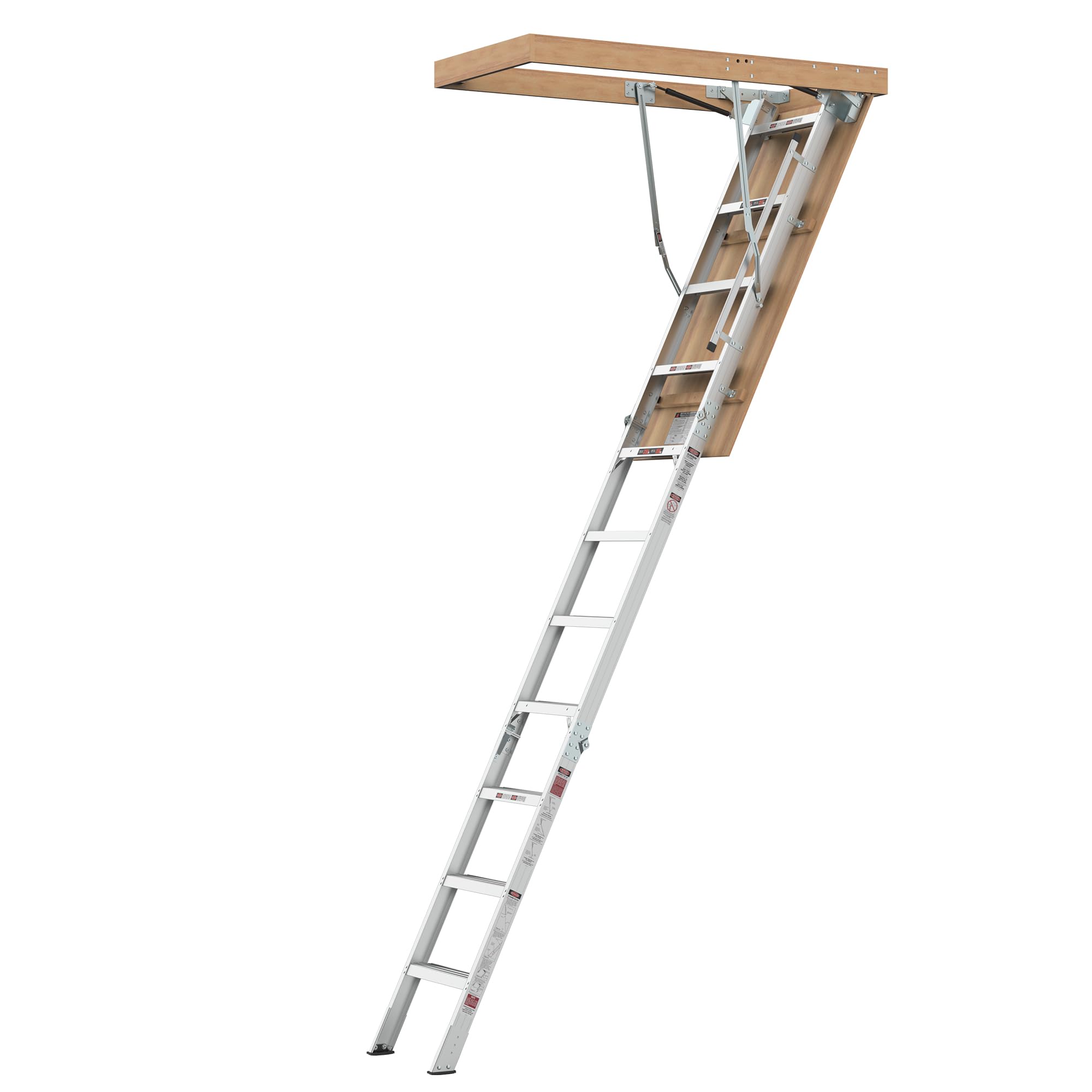
The ELTFROH 10-foot ladder brings ANSI 14.9 compliance to the table, which means it has been tested to meet industry safety standards for loading and stability. The 25″ x 54″ rough opening fits a wider cutout, and the aluminum frame holds 375 lb. Each rung is 3 inches wide with a non-slip surface, reducing the chance of a foot slipping when you are climbing with an armful of boxes.
The advanced opening and closing mechanism uses a damping system that cuts down on the jarring noise most pull-down ladders make. Users report that the ladder operates smoothly even after repeated daily use. Integrated handrails add confidence on the way up, and the heavy-duty hinges keep the frame square without developing lateral play over time. Installation takes two people about two hours based on feedback, with clear instructions guiding the process.
The main trade-off is the 350 lb load rating — slightly below the Type IAA 375 lb benchmark. For most residential storage scenarios that difference is negligible, but heavy-traffic workshops might prefer the Louisville or a wall-mounted alternative. For a quiet, secure attic access solution, the ELTFROH delivers on every practical front.
Why it’s great
- Quiet dampened opening mechanism minimizes noise
- 3-inch non-slip rungs improve footing safety
- ANSI 14.9 certified for structural reliability
Good to know
- Rated for 350 lb, not the full 375 lb Type IAA
- Requires exact 25″ x 54″ rough opening
3. LITE AP2240MS

The LITE AP2240MS weighs only 22 lb — almost half the mass of a typical aluminum attic ladder. That low weight makes solo installation feasible, as you can lift and position the frame without a second set of hands. Despite the feathery frame, it still carries a 375 lb Type IAA load rating, so the structure does not sacrifice strength for portability.
The rough opening is 22.5″ x 54″, the most common residential size, and the ceiling height range spans 7’8″ to 10’3″. The steps feature slip-resistant cross treads with a 3.25-inch depth, giving your foot a solid platform. Feedback from long-term owners who installed the ladder two years ago reports the hinges remain tight and the door seals flush with no sag.
Some buyers noted that the MDF door panel can arrive with minor damage from shipping, and the included lag screws are not the highest grade. Replacing them with 3/8″ structural screws during installation addresses that concern. For anyone who values a lightweight kit that does not compromise on weight capacity, the AP2240MS is a standout.
Why it’s great
- 22 lb frame enables one-person installation
- Type IAA 375 lb rating with minimal weight trade-off
- Deep 3.25-inch steps for stable footing
Good to know
- MDF door panel vulnerable to shipping damage
- Lag screws are low quality; replace during install
4. WTRAVEL 25″ x 54″

The WTRAVEL kit is a straight-ahead aluminum pull-down that targets the 25″ x 54″ rough opening market. Its frame is 44 lb — heavier than the LITE but still manageable for two people. The 375 lb capacity matches the Type IAA standard, and the widened steps provide secure footing even when your hands are full.
Customer feedback emphasizes the ladder’s stability after installation: the heavy-duty hinges hold the sections rigid during extension, and the non-slip footings grip the floor without sliding. The instructions are clear, and pre-drilled holes align with standard joist spacing. One reviewer noted that the aluminum build feels significantly more solid than the wood-framed ladder it replaced.
The biggest limitation is the 22.5″ x 54″ model variant — if your rough opening is 25″, this unit fits perfectly, but it will not squeeze into a narrower cutout. For homeowners framing a new opening or replacing a 25″ existing ladder, the WTRAVEL delivers fuss-free installation with no surprises.
Why it’s great
- Sturdy aluminum frame with reinforced hinges
- Non-slip footings prevent floor shifting
- Straightforward installation instructions
Good to know
- Only fits 25″ wide rough openings
- 44 lb frame requires two-person install
5. Vantic ALD001
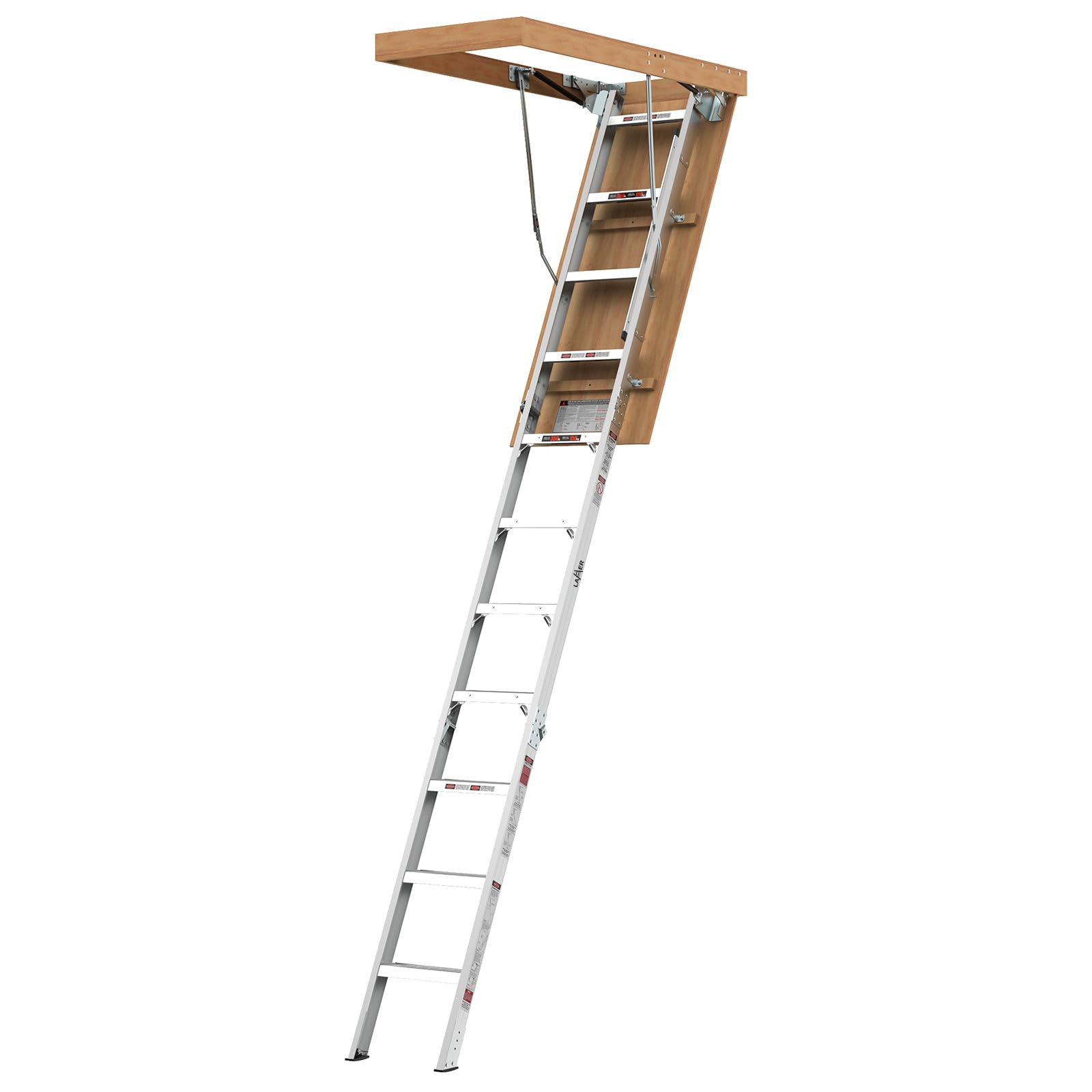
The Vantic ALD001 stands out for its gas rod opening system. Unlike standard spring-loaded hinges that can slam down or require a hard yank, the gas rod provides controlled, smooth descent. That feature alone makes it worth considering for anyone who uses their attic weekly — the motion stays consistent without developing the jerky catch that mechanical springs eventually get.
The frame is aluminum with diagonal stabilizing bars that reduce lateral sway during climbing. The 350 lb load capacity is slightly below the Type IAA benchmark, but the trade-off is a noticeably softer close action that also prevents the door from bouncing on the frame. Users mention that the ladder feels light enough for one person to install, though two people make the initial positioning easier.
One concern: the unit is less wide than some older models, so if you are replacing an existing ladder, the new steps might feel narrower. The 22.5″ x 54″ rough opening is standard, and the included hardware covers most framing scenarios. For quiet, controlled attic access, the Vantic gas rod mechanism is a genuine differentiator.
Why it’s great
- Gas rod provides smooth, controlled lowering
- Diagonal stabilizer bars reduce ladder sway
- Light enough for solo installation
Good to know
- 350 lb rating, not full Type IAA
- Narrower step width than some competitors
6. LITE AA2211

The LITE AA2211 is the more budget-conscious sibling of the AP2240MS, sharing the same 22.5″ x 54″ rough opening and 375 lb capacity but at a lower price point. The aluminum frame is lightweight at under 12 lb, making it one of the easiest units to handle during installation. The steps measure 3.25 inches deep with slip-resistant cross treads.
Installation requires deploying the ladder to access most pre-drilled holes, which adds a step compared to kits that allow full assembly on the ground. The hatch door does not sit perfectly flush with the frame, extending down slightly — something to consider if you plan to add ceiling trim. Users report that the ladder opens and closes smoothly once mounted, and the hinge pins stay tight over time.
For the price, the AA2211 offers genuine Type IAA stability. The main compromises are the less refined door fit and the need for careful planning during installation. If your priority is maximum strength at a lower cost, this LITE model delivers that balance effectively.
Why it’s great
- Type IAA 375 lb rating at a competitive price
- Ultra-light frame simplifies handling
- Deep, slip-resistant step treads
Good to know
- Door sits slightly below ceiling plane
- Must deploy ladder to reach mounting holes
7. KWCWB Wall-Mounted Attic Ladder

The KWCWB ladder breaks the pull-down mold with a wall-mounted, vertical-fold design. It mounts to a solid wall rather than a ceiling cutout, making it a viable option for garages, basements, or workshops where a ceiling hatch is impractical. The frame is Al-Mg alloy with an 880 lb capacity — more than double the standard attic ladder rating.
With 12 steps and a maximum vertical reach of 10.17 ft, the ladder extends to a usable height for most single-story attics. The S-bent skeletons and reinforcement rivets add rigidity, though users note a slight side-to-side wobble when fully extended. The included handrails on both sides mitigate that sensation, and the ladder remains stable under normal climbing loads. Installation requires a helper and cross-bracing if your stud spacing does not align with the pre-drilled holes.
For homeowners moving heavy equipment or supplies through an attic hatch, the 880 lb rating provides a safety margin that no pull-down ladder can match. The trade-off is that the ladder occupies wall space when folded and does not disappear into a ceiling panel. For its niche — high-capacity, space-efficient wall access — this unit is unmatched in this lineup.
Why it’s great
- 880 lb load capacity for heavy-duty use
- Wall-mounted design saves ceiling space
- Handrails on both sides improve climbing safety
Good to know
- Noticeable side-to-side sway when fully extended
- Requires wall framing or cross-bracing for secure mount
8. Thctvous SKLJD98

The Thctvous SKLJD98 lands in the budget-friendly tier but does not cut corners on safety fundamentals. It uses high-strength aluminum with a 350 lb load capacity and includes non-slip foot mats at the base that grip the floor securely. The 25″ x 54″ rough opening fits standard cutouts, and the ceiling height range of 7’8″ to 10’3″ covers most residential scenarios.
The 3-inch wide rungs have a non-slip surface, and the integrated handrails add stability during ascent. Customers describe the installation as straightforward, with clear instructions and all necessary hardware included. The pneumatic springs assist with a controlled opening, reducing the strain of pulling the ladder down. Several users mention that the ladder feels much wider and more stable than their old wooden unit.
The main drawback is the 350 lb rating, which sits below the Type IAA standard. For typical attic storage — boxes, seasonal items, light traffic — that is sufficient. The ladder also uses carbon steel for some hinge components, which adds weight (50 lb frame) compared to all-aluminum competitors. If your budget is tight and your rough opening is 25″ x 54″, this kit offers reliable performance without breaking the bank.
Why it’s great
- Non-slip foot mats improve floor grip
- Pneumatic springs enable smooth opening
- Wider rungs with slip-resistant surface
Good to know
- 350 lb rating below Type IAA threshold
- Heavier frame due to steel hinge components
9. AVGVLIJ TZ-1

The AVGVLIJ TZ-1 is the most entry-level kit in this guide, with a 5-step design suited for ceiling heights up to 10’3″. Its aluminum frame resists rust and keeps the overall weight manageable for a single installer. The 375 lb load capacity matches the Type IAA rating, which is impressive at this price tier and suggests the hinges and rivets are built to last.
The folding mechanism allows the ladder to retract into a compact ceiling panel when not in use. The widened steps and non-slip footing provide basic stability, though there is no integrated handrail — you grip the ladder sides directly. Customers report a straightforward one-hour assembly time, with additional time needed for ceiling prep if you are cutting a new opening.
The biggest concern from buyers is unexpected shipping charges, which can nearly double the total outlay. Factor that into your budgeting before ordering. The ladder itself performs as advertised: sturdy enough for frequent access, easy to open and close, and compatible with standard framing. For the lowest upfront cost, the AVGVLIJ delivers a functional attic access solution with a strong load rating.
Why it’s great
- Type IAA 375 lb rating at entry-level pricing
- Rust-resistant aluminum construction
- Quick assembly with basic tools
Good to know
- No handrail — grip ladder sides directly
- Shipping charges may be substantial
FAQ
Can I install an attic ladder kit by myself?
How do I trim an attic ladder leg to fit my ceiling height?
What is the difference between R10 insulated and standard attic ladder doors?
Are wall-mounted attic ladders safer than pull-down units?
Final Thoughts: The Verdict
For most users, the attic ladder kit winner is the Louisville Ladder AL3040MG-R10 because its R10 insulated door and 30-inch wide opening provide the best combination of energy efficiency and access comfort. If you want a lightweight frame that one person can install, grab the LITE AP2240MS. And for extreme load capacity in a workshop or garage, nothing beats the KWCWB Wall-Mounted Ladder with its 880 lb rating.