
An ATV engine works harder than a street vehicle’s power plant, often slogging through deep mud, climbing steep inclines, or idling in summer heat for hours. When the coolant can’t keep up, heat soak leads to lost power, detonation, and eventually warped heads — a repair that totals many machines. Choosing the right fluid is not about color; it’s about understanding what happens inside your cooling jacket at 250°F and beyond.
I’m Min — the co-founder and writer behind Gadgets Feed. I’ve spent countless hours cross-referencing chemical formulations, boil-over points, and real-world user data to find the fluids that actually protect your machine in the gnarliest conditions.
After reviewing gallons of data and testing conditions from desert summers to winter storage, I’ve nailed down the definitive lineup of the best atv engine coolant for every riding style and budget.
How To Choose The Best ATV Engine Coolant
ATV cooling systems are smaller and run at higher specific heat loads than passenger cars. Picking the wrong chemistry can lead to silicate dropout that clogs narrow radiator passages or SCA depletion that eats aluminum cylinder heads. Focus on these three factors before you pour anything into your overflow tank.
Chemistry: IAT vs. OAT vs. HOAT
Inorganic Additive Technology (IAT) is the old green stuff with silicates that protect ferrous metals well but need changing every two years. Organic Acid Technology (OAT) uses carboxylate salts that last up to five years and protect aluminum, but some OAT formulations lack the initial SCA charge required for wet-sleeve diesel engines used in heavy ATVs. Hybrid OAT (HOAT) blends both worlds with silicate and organic inhibitors. Check your owner’s manual spec before mixing — color alone is not a reliable guide anymore.
Boil-Over Threshold and System Pressure
Standard 50/50 ethylene glycol boils at 223°F under a 0 psi cap and around 265°F with a typical 13 psi radiator cap. Propylene glycol coolants like Engine Ice raise that threshold further while reducing head temperatures by 10–20°F on average. Waterless coolants eliminate vapor pressure entirely, boiling above 375°F, but they require a completely dry system with no residual water. If you ride in deep sand or high-altitude technical terrain, prioritize a higher boiling point over freeze protection.
Pre-Dilution and SCAs
Concentrate coolants force you to mix with distilled water, which introduces error margin. A pre-diluted 50/50 mix guarantees consistent freeze and boil protection out of the bottle. For ATVs with heavy-duty diesel components or wet-sleeve engines, supplementary coolant additives (SCAs) must be present from the start — some brands pre-charge the coolant with SCAs, others require a separate additive at first fill. Know which your engine requires to avoid premature liner pitting.
Quick Comparison
On smaller screens, swipe sideways to see the full table.
| Model | Category | Best For | Key Spec | Amazon |
|---|---|---|---|---|
| Engine Ice TYDS008-03 | Premium | Hard riding & summer heat | Boils at 256°F, propylene glycol | Amazon |
| Evans EC72064 | Premium | Extreme desert & racing | Boils above 375°F, waterless | Amazon |
| Engine Ice TYDS008C | Premium | Powersports fleets | 4-pack, reduces temps 10-20°F | Amazon |
| Zerex Original Green | Mid-Range | Vintage & heavy-duty ATVs | Low silicate, SCA compatible | Amazon |
| Valvoline Multi-Vehicle | Mid-Range | Universal replacement | Phosphate free, Alugard Plus | Amazon |
| Hot Shot’s Secret Green | Mid-Range | Diesel ATVs & tractors | Pre-charged SCA, 150k mile formula | Amazon |
| RV & Marine Splash 619526 | Budget | Winter storage & plumbing | -50°F burst protection, biodegradable | Amazon |
In‑Depth Reviews
1. Engine Ice TYDS008-03 High Performance Coolant

Engine Ice uses propylene glycol instead of traditional ethylene glycol, which transfers heat more efficiently and drops operating temperatures by an average of 10–20°F in powersports applications. Independent lab testing confirms a boil-over point of 256°F at atmospheric pressure, giving your ATV significant headroom before vapor lock sets in on long, slow technical climbs.
The 3-pack of half-gallon bottles provides 1.5 gallons total — enough for most full-system flushes on mid-displacement ATVs. Users running Can-Am and Polaris machines report that water temperature rises slower at traffic stops, with the electric fan cycling less frequently compared to standard green coolant. The formula is phosphate-free, which prevents scale buildup inside aluminum radiators.
One trade-off is the freeze protection rating: only -7°F, which is marginal for riders who start engines in subzero conditions. Riders in northern climates may need to blend with a standard coolant or winterize carefully. For the vast majority of warm-weather and powersports use, however, this fluid delivers the most consistent temperature suppression seen across the category.
Why it’s great
- Proven 10-20°F temperature reduction in real-world ATV and motorcycle use
- Non-toxic propylene glycol base is safer for pets and wildlife during spills
- Phosphate-free formulation prevents scale in aluminum radiators
Good to know
- Freeze protection limited to -7°F; not ideal for deep winter starting
- Pricier per gallon than standard ethylene glycol coolants
2. Evans Coolant EC72064 Powersport Waterless Coolant
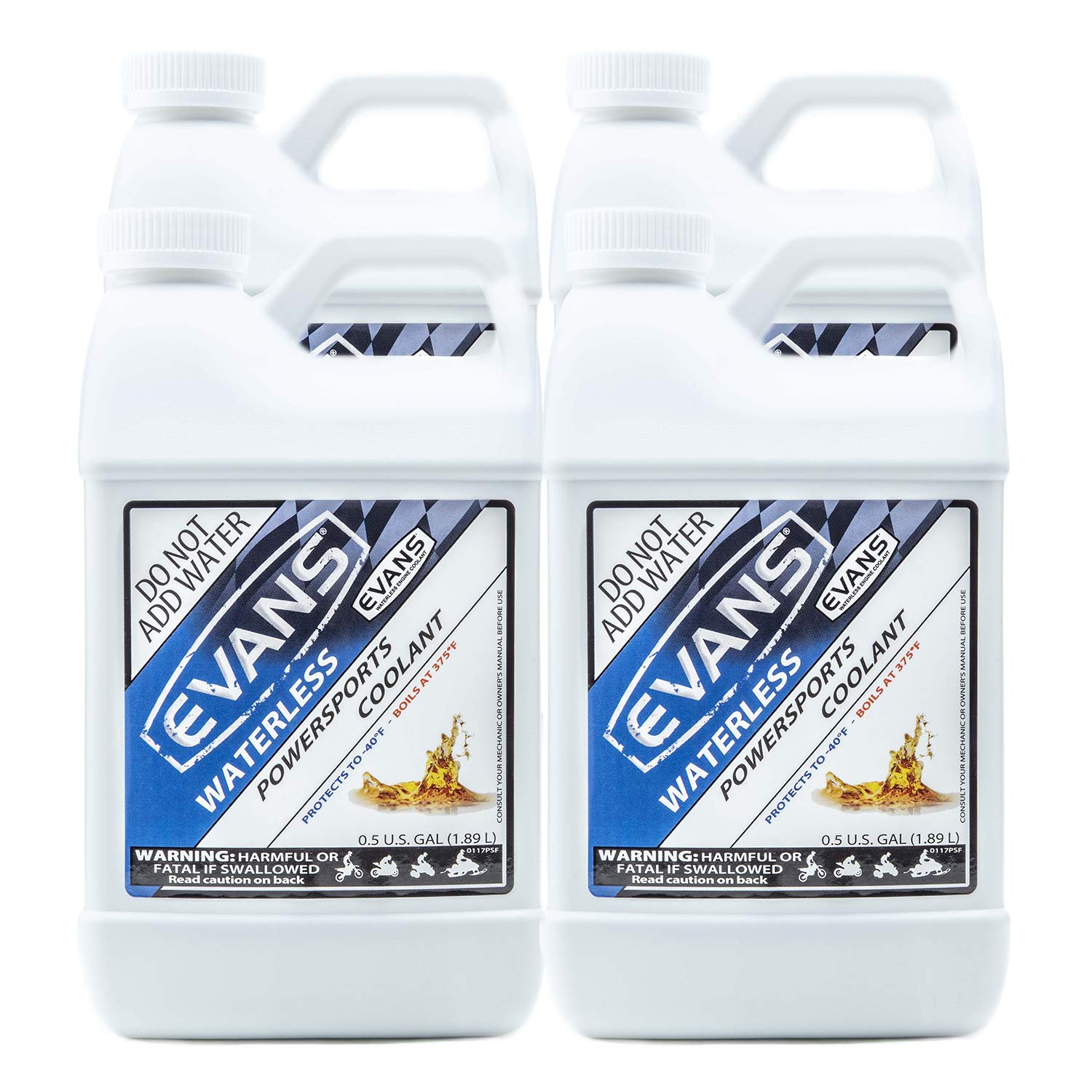
Evans Waterless Coolant eliminates the most common failure point in ATV cooling: vapor pressure. Because it contains no water, it cannot create steam pockets that cause localized hot spots on cylinder walls. Its boiling point exceeds 375°F, meaning even under sustained full-throttle load in 100°F desert air, the fluid stays liquid and maintains full contact with metal surfaces.
Users on Suzuki and Honda CRF450R platforms have reported that the engine fan rarely turns on after switching to Evans, and overheating issues that plagued their machines on graded climbs vanished entirely. The 4-pack of 64-ounce bottles delivers over 2 gallons of coolant, sufficient for large-displacement ATVs and UTVs. The freezing point sits below -40°F, so cold-weather riders aren’t compromised.
The installation process is critical: the system must be completely dry with no residual water. Evans sells a prep fluid for flushing, and skipping that step will dilute the coolant and reduce its performance. Once installed, the coolant lasts indefinitely with no scheduled change interval, which offsets the higher upfront cost over the long haul.
Why it’s great
- Zero vapor pressure eliminates steam pocket formation and after-boil
- Boiling point above 375°F handles the most extreme desert racing conditions
- No scheduled change interval reduces lifetime maintenance cost
Good to know
- Requires a completely dry system and prep fluid for proper installation
- Higher initial cost per gallon compared to conventional coolants
3. Engine Ice TYDS008C High Performance Coolant (Case of 4)

This is the same proven propylene glycol formula as the 3-pack but scaled to a case of four 64-ounce bottles for a total of 2 full gallons. The larger volume suits bigger ATVs that hold more than 1.5 gallons in their system, or a rider who maintains multiple machines in a garage fleet. Users running Can-Am X3 and RZR models saw temperature drops of 15–30°F when combining this coolant with a high-flow radiator shroud.
The OAT-based chemistry reduces operating temperatures compared to standard green coolant, and the phosphate-free composition prevents white deposits in the radiator core. Multiple reviews confirm that fan engagement frequency drops noticeably, which reduces electrical load on the stator and leaves more current for accessories like LED light bars or winches.
Like the smaller pack, freeze protection stops at -7°F, so northern riders should reserve this for the riding season and switch to a winterizing fluid during storage months. The per-gallon cost is slightly lower than buying the 3-pack, making this the smarter bulk option for multi-ATV households or riders who perform annual flushes.
Why it’s great
- 2-gallon total capacity covers large ATVs and UTV cooling systems in one purchase
- OAT technology reduces head temperature and fan cycling frequency
- Better per-gallon value than the smaller 3-pack
Good to know
- Freeze protection of -7°F may require winterization in cold climates
- Not compatible with systems that still contain ethylene glycol without a full flush
4. Zerex Original Green Low Silicate 50/50 Antifreeze/Coolant

Zerex Original Green uses low-silicate IAT chemistry specifically designed for heavy-duty applications where supplemental coolant additives (SCAs) are added separately. The low silicate level prevents gel formation and water pump seal wear in older engines that may have brass or copper radiators and cast iron blocks. It is pre-diluted to a 50/50 mix, protecting down to -34°F and boiling at 265°F under a 13 psi cap.
Users with 1931 Ford tractors and classic ATVs confirm that this fluid holds up well against solder bloom and corrosion in brass-core radiators — a common problem with modern OAT coolants that lack the silicate buffer. The case of six gallons provides enough volume for multiple flushes on older machines, and the bittering agent deters accidental ingestion by livestock or pets around the farm.
The main limitation is the change interval: IAT chemistry breaks down faster than OAT, requiring a flush every two years or 30,000 miles. For riders using their ATV seasonally, this is manageable, but high-mileage daily riders may prefer a longer-life HOAT or OAT coolant for reduced maintenance frequency.
Why it’s great
- Low-silicate formula protects brass, copper, and solder joints in vintage radiators
- Pre-diluted 50/50 mix guarantees -34°F freeze protection from the bottle
- Compatible with SCA additives for wet-sleeve heavy-duty engines
Good to know
- Requires more frequent changes than OAT or HOAT coolants
- Bulk case may be excessive for single-ATV owners
5. Valvoline Multi-Vehicle 50/50 Antifreeze/Coolant
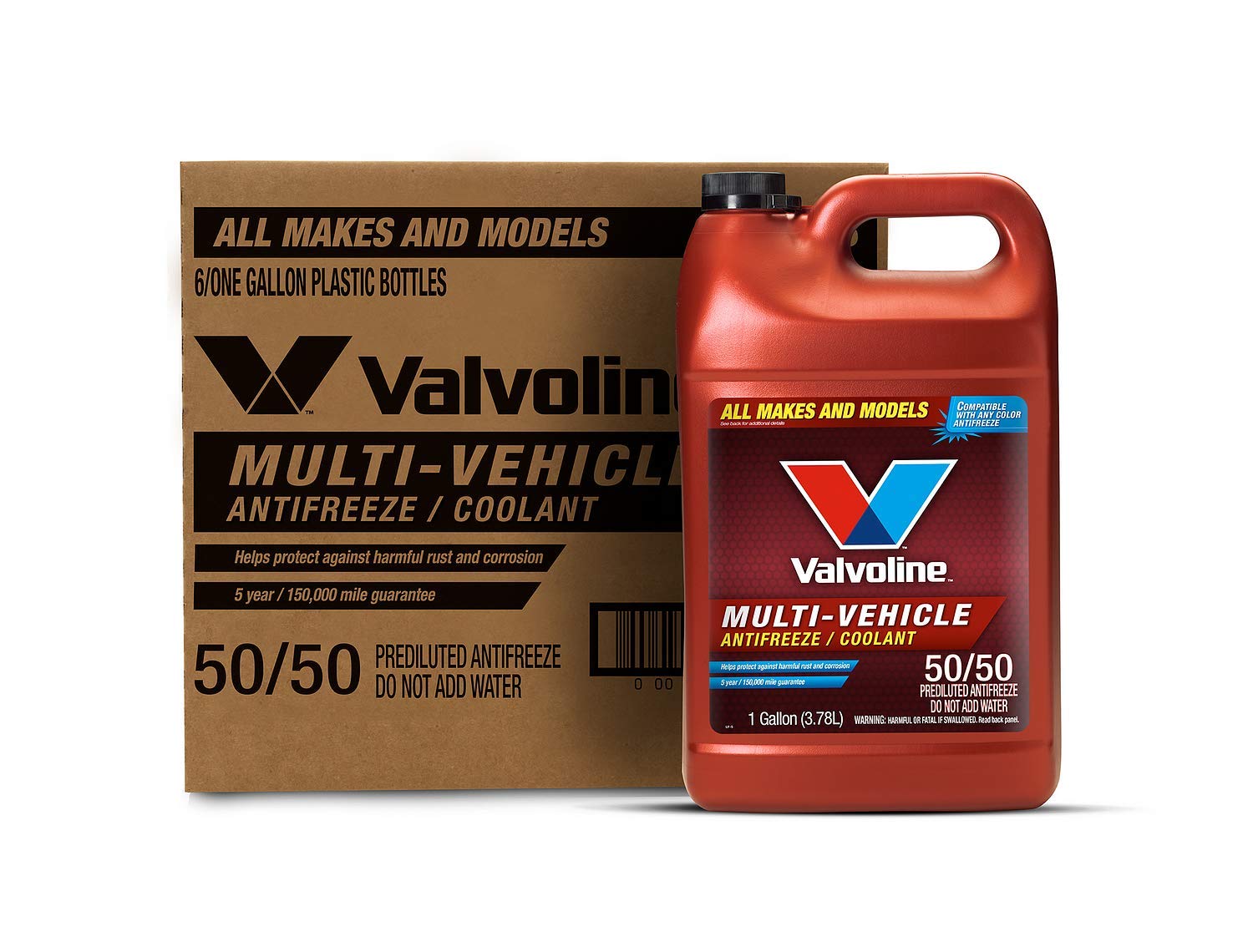
Valvoline Multi-Vehicle is formulated with Alugard Plus, a proprietary additive that allows the coolant to be mixed safely with any color or chemistry — green, orange, yellow, or pink — without causing gel formation or sludge. This is the fluid to grab when you don’t know what the previous owner used or when you’re topping off between flushes on a machine with unknown service history.
The 50/50 pre-dilution ensures consistent 265°F boil protection and -34°F freeze protection out of the bottle. Users report that it lubricates the water pump seal effectively, extending the life of the mechanical seal in older ATV engines. The case of six gallons covers multiple machines or several years of top-offs for a single ATV.
The phosphates and silicates in this formula are optimized for mixed-metal cooling systems, but they can leave deposits if the coolant is left unchanged beyond its service interval. Valvoline recommends a flush every five years for this coolant, which is a reasonable schedule for low-mileage seasonal riders. For competition ATVs run at full throttle for extended periods, the heat transfer performance is adequate but not as effective as dedicated powersports coolants.
Why it’s great
- Compatible with any color or chemistry coolant already in the system
- Alugard Plus additive package protects aluminum, cast iron, and copper surfaces
- Lubricates water pump seals to reduce dry-start wear
Good to know
- Not optimized for the extreme heat suppression needed in racing ATVs
- Bulk case may be overkill for single-machine owners
6. Hot Shot’s Secret Green Antifreeze/Coolant 1 Gallon (4 Pack)

Hot Shot’s Secret Green is a heavy-duty SCA extended-life coolant pre-charged with the initial Supplemental Coolant Additive dose required by wet-sleeve diesel engines commonly found in utility ATVs and tractor conversions. The 150,000-mile formula reduces the frequency of SCA test strip monitoring, which is a relief for owners who don’t want to mess with chemical test kits every oil change.
The 50/50 pre-dilution with distilled water meets ASTM D3306 and D6210 standards, making it suitable for both light-duty and severe-service operation. Users running Ford Lightning intercoolers and 1949 Ford 8N tractors with modern aluminum radiators confirm that the green dye stays stable and the corrosion protection holds up across temperature cycles without drop-out.
Because this is a conventional ethylene glycol base with SCAs, it doesn’t offer the temperature reduction benefits of propylene glycol coolants. Riders pushing their machines to the edge of the thermal envelope should consider Engine Ice for heat suppression instead. The four-gallon case covers a full flush on a large diesel ATV with reserve for top-offs.
Why it’s great
- Pre-charged with SCAs eliminates need for separate additive at first fill
- 150,000-mile service life reduces maintenance burden for diesel ATVs
- Compatible with conventional and extended-life coolants
Good to know
- Ethylene glycol base does not suppress heat as effectively as propylene glycol
- Not designed for brass or copper vintage radiators without proper flushing
7. RV & Marine Splash 619526 RV/Marine Antifreeze
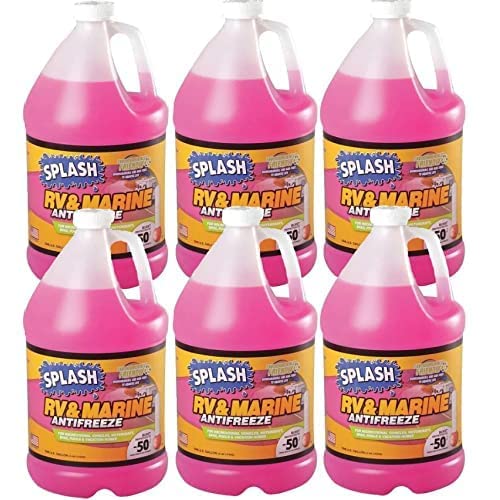
This pink propylene glycol antifreeze is designed for winterizing recreational vehicles, boats, and vacation home plumbing, not for circulating through an ATV engine under load. It provides -50°F burst protection, meaning it prevents frozen pipes from cracking but does not offer the heat transfer or corrosion inhibition required for an engine cooling system during operation.
Buyers in the Midwest use it annually to winterize travel trailers and seasonal pool lines, and the 6-gallon case covers an entire property shutdown. The plant-derived additive is biodegradable and non-toxic, making it safe for incidental contact with pets and wildlife compared to ethylene glycol products. If you have an ATV that you store for the winter, running this through the system before hibernation protects the block, water pump, and radiator from freeze damage.
This product should not be used as a year-round engine coolant. It lacks the corrosion inhibitors, water pump lubricants, and high-temperature stability required for operation. Its role is strictly protective storage. For owners who only need a winterizing fluid and already have a dedicated operating coolant, this is the cheapest and safest option per gallon.
Why it’s great
- -50°F burst protection ensures no freeze damage during harsh winters
- Non-toxic propylene glycol base is safe for pets and lawn runoff
- Excellent value per gallon for seasonal storage applications
Good to know
- Not formulated for use as an operating engine coolant
- Lacks corrosion inhibitors and water pump lubricants needed for riding
FAQ
Can I use standard automotive coolant in my ATV?
How often should I flush and replace my ATV coolant?
Is propylene glycol better than ethylene glycol for ATVs?
Can I mix different coolant colors or chemistries?
What does SCA stand for and why does my ATV need it?
Final Thoughts: The Verdict
For most users, the best atv engine coolant winner is the Engine Ice TYDS008-03 because it delivers a consistent 10–20°F temperature drop with a non-toxic propylene glycol base, perfect for riders who push their machines in summer heat. If you need absolute protection against boil-over in desert racing or turbocharged builds, grab the Evans Coolant EC72064 for its waterless 375°F boiling point. And for vintage ATV owners with brass and copper radiators, nothing beats the Zerex Original Green for keeping old cooling systems sealed and functional.