
The single most underrated tool in a serious PC setup is the headset—most gamers settle for muddy audio and a mic that makes you sound like you’re calling from a wind tunnel. Whether you’re tracking footsteps in a ranked match, deep into a work-from-home shift, or editing audio at 2 A.M., the right pair of wired or wireless cans separates immersion from frustration. The challenge is that between entry-level plastic builds and triple-digit flagships, the spec sheet alone won’t tell you which headset actually survives daily abuse and delivers clear voice chat without constant fiddling.
I’m Rikta — the co-founder and writer behind Gadgets Feed. I analyze dozens of PC audio peripherals each quarter, comparing driver sizes, microphone pickup patterns, battery endurance, and platform compatibility so you don’t have to dig through conflicting reviews. (And Homer 🐱 approved this guide only after knocking the dongle off the desk twice).
This guide breaks down seven wired and wireless PC headsets spanning budget-conscious builds through premium all-day performers. Whether you prioritize a detachable boom mic, spatial audio for competitive shooters, or a Teams-certified mic for open-office noise rejection, these reviews help you find the right fit. Read on for our pick of the best audífonos para pc based on real customer experience and head-to-head specs.
How To Choose The Best Audífonos Para PC
Picking the right PC headset isn’t about grabbing the cheapest pair or the one with the most LEDs. You need to weigh driver quality, connection type, microphone clarity, and battery life (if wireless) against how you actually use them—whether that’s competitive gaming, remote meetings, or late-night content creation. Here are the key specs that separate a long-term companion from a six-month disappointment.
Driver Size & Sound Signature
Larger drivers—50mm and above—typically deliver fuller bass and better spatial separation for explosions and environmental cues. The HyperX Cloud III’s 53mm angled drivers, for example, are tuned specifically to highlight directional audio in shooters. Smaller 40mm drivers can still sound crisp (the Logitech Zone Wired proves that), but they often lack the low-end punch that makes gaming feel visceral. For pure PC gaming and music, aim for at least 50mm unless you prioritize a neutral, analytical sound for editing or calls.
Wired vs Wireless & Latency
Wired headsets (USB-C, USB-A, or 3.5mm) offer zero latency and zero charging anxiety—ideal for competitive FPS players who can’t afford even a 20ms delay. Wireless options like the NUBWO G06 (23ms latency) or the ASUS ROG Delta II (2.4GHz SpeedNova) have bridged the gap impressively, but the trade-off is battery management and occasional interference in dense 2.4GHz environments. If you hate cables and play casually, a dual-mode headset with 2.4GHz plus Bluetooth gives you the best of both worlds.
Microphone Quality & Noise Rejection
A headset’s mic is the difference between “Can you repeat that?” and seamless team coordination. Look for detachable boom mics with cardioid pickup (the Razer Kraken V4 X is a great example) or dual-mic arrays with active noise cancellation like the Logitech Zone Wired. Budget headsets often have omnidirectional mics that pick up every keyboard click and fan hum—fine for solo use, but rough in multiplayer or open offices. If you take calls or stream, invest in a mic with a built-in mesh filter or side-tone control.
Quick Comparison
On smaller screens, swipe sideways to see the full table.
| Model | Category | Best For | Key Spec | Amazon |
|---|---|---|---|---|
| ASUS ROG Delta II | Premium Wireless | All‑day gaming & dual‑device audio | 50mm titanium‑plated drivers | Amazon |
| Logitech Zone Wired | Professional UC | Open‑office calls & Teams meetings | 40mm drivers + dual‑mic ANC | Amazon |
| Razer Kraken V4 X | Wired Gaming | Multi‑platform gaming with RGB | 40mm Triforce drivers + 7.1 | Amazon |
| HyperX Cloud III | Wired Premium | Competitive FPS & comfort marathons | 53mm angled drivers + DTS | Amazon |
| NUBWO G06 | Budget Wireless | Wireless convenience on a budget | 50mm drivers + 100hr battery | Amazon |
| OneOdio Pro‑10 | Studio Monitor | Monitoring, mixing & casual listening | 50mm drivers + swivel ear cups | Amazon |
| Turtle Beach Recon 50 | Entry‑Level | First gaming headset on a tight budget | 40mm speakers + removable mic | Amazon |
In‑Depth Reviews
1. ASUS ROG Delta II

The ASUS ROG Delta II earns the top spot because it solves nearly every compromise PC gamers face. Its tri-mode connectivity—2.4GHz via ROG SpeedNova, Bluetooth 5.3, and a 3.5mm wired fallback—means you can jump between a PC, PS5, Xbox, and your phone without unplugging a single cable. The 50mm titanium-plated drivers deliver 24-bit/96kHz audio over the 2.4GHz link, and the DualFlow Audio feature lets you hear game audio over 2.4GHz while taking a phone call on Bluetooth with one button press. That kind of seamless multitasking is rare at this level.
Battery life is the real headline: up to 110 hours on 2.4GHz with RGB off, and a 15-minute quick charge gives you 11 more hours of play. That’s enough endurance for a full work week plus a weekend gaming marathon without plugging in. The 10mm detachable super-wideband boom mic captures voice with exceptional clarity for team chat and streaming, and the D-shaped ear cushions with replaceable cloth or leather pads keep things comfortable even during six-hour sessions. At just 318 grams, it’s lighter than many wired competition headsets.
The flip side is the price—this is a premium investment, and the RGB lighting does drain the battery noticeably faster when left on. The headband could also use slightly more cushioning at the top for those with larger heads. But if you want one wireless headset that does everything—PC gaming, console play, music, and calls—with audiophile-grade audio and ridiculous battery life, the ROG Delta II is the complete package.
Why it’s great
- Tri‑mode wireless with simultaneous 2.4GHz + Bluetooth DualFlow Audio
- 110‑hour battery life with 15‑minute quick charge for 11 more hours
- Lightweight 318g build with replaceable cloth/leather ear pads
Good to know
- Premium price point; RGB shortens battery dramatically when enabled
- Top headband cushioning is minimal for very large head sizes
2. Logitech Zone Wired

The Logitech Zone Wired is purpose-built for the modern hybrid worker, not the gamer. It’s certified for Microsoft Teams and Skype for Business, and the dual‑mic noise‑canceling array is legitimately the star here—it filters out keyboard clatter, HVAC hum, and even nearby conversations so your voice stays clear on calls. The 40mm drivers provide a balanced, low‑distortion sound that’s excellent for voice clarity and acceptable for background music, though it won’t shake your desk during an action movie. The Teflon‑coated stainless steel headband and memory‑foam ear pads keep it comfortable across eight‑hour workdays.
The in‑line controls on the tangle‑free cable are intuitive: volume, mute, call answer/end, and music play/pause are always within reach without looking. The Logi Tune desktop app adds EQ and sidetone control, letting you adjust mic monitoring levels so you don’t shout. The travel bag and USB‑A adapter make it easy to move between workstation and home office setups.
Where it stumbles is value. The non‑detachable cable is a vulnerability—some users report failure after 4‑5 months, and the 6‑foot cord can tangle despite the “tangle‑free” claim. The clamping force is also slightly tight out of the box and the ear pads get warm in extended sessions. If your priority is crystal‑clear calls in a noisy office and you need platform‑specific mute button integration (Teams, Zoom, Google Voice), the Zone Wired is top‑tier—but casual users may be fine with a simpler alternative.
Why it’s great
- Open‑office dual‑mic ANC that silences background noise remarkably well
- Certified for Microsoft Teams with in‑line call controls
- Balanced 40mm drivers with low distortion for clear voice calls
Good to know
- Non‑detachable cable is a durability weak point reported by several users
- Clamping force is tight and ear pads get warm over long sessions
3. Razer Kraken V4 X

The Razer Kraken V4 X brings the brand’s signature Chroma RGB lighting and a retractable HyperClear cardioid mic to the wired gaming market at a mid-range price that feels like a step up from entry‑level plastic. Its 40mm Triforce drivers split the audio into three distinct frequency bands (highs, mids, lows), which keeps the soundstage cleaner than typical single‑driver designs—footsteps and gunshots don’t blur into bass rumble. The 7.1 surround sound, while software‑driven, does add spatial awareness in games like Call of Duty and Fortnite, though some users find it slightly “choppy” compared to native DTS or Dolby solutions.
The retractable cardioid mic is a smart design choice: it stays protected when not in use, and the improved pickup pattern rejects more keyboard and fan noise than the omnidirectional mics on cheaper headsets. Build quality is solid, with memory‑foam cushions wrapped in hybrid fabric and leatherette that provide a good seal for passive noise isolation. The convertible Type‑C to Type‑A cable means you can plug directly into a modern laptop (USB‑C) or a desktop (USB‑A) without an adapter, and compatibility extends to PC, Mac, PS5, Nintendo Switch, and Steam Deck.
The biggest trade‑off is that 40mm drivers, however well‑tuned, can’t match the physical bass authority of 50mm or 53mm competition. The 7.1 surround also requires Razer Synapse software to function, and the app’s performance can feel bloated on older systems. If RGB aesthetics and a clean retractable mic matter more than raw bass extension, the Kraken V4 X is a stylish, comfortable wired choice—but competitive FPS players might prefer the HyperX Cloud III’s larger drivers.
Why it’s great
- Retractable cardioid mic that isolates voice without detaching
- Chroma RGB lighting adds immersive desk aesthetics
- Convertible USB‑C / USB‑A cable for wide platform fit
Good to know
- 40mm drivers lack sub‑bass compared to 50mm+ competitors
- Razer Synapse software required for 7.1 surround; feels bloated on older PCs
4. HyperX Cloud III

The HyperX Cloud III is the wired gaming headset that competitive players keep coming back to, and the reason is simple: angled 53mm drivers tuned by HyperX’s audio engineers deliver accurate directional audio without the muddy low‑end bloom that plagues lesser headsets. The DTS Headphone:X Spatial Audio adds virtual 3D positioning that gives you a genuine advantage in tactical shooters—you’ll hear footsteps on the left balcony before you see the killcam. The aluminum frame is flexible without feeling cheap, and the memory‑foam ear cushions (HyperX’s famous “Cloud” pads) are among the most comfortable in the category for glasses‑wearers.
The detachable 10mm noise‑cancelling mic features a built‑in mesh filter and an LED mute indicator so you always know when you’re live. Connectivity is generous: the headset ships with a USB‑C to USB‑A cable and a 3.5mm cable, making it compatible with PC, PS5, Xbox Series X|S, and mobile devices right out of the box. The tactile volume wheel on the ear cup is easy to find by touch during a match, which is a small detail that wireless headsets often fumble.
The biggest caveat is that the cable is non‑detachable from the headset side, which means if the cord frays or a cat chews through it (as some reviewers noted), you can’t simply swap it—you’re looking at a full replacement. The mic is also very sensitive and picks up mouse clicks if the gain isn’t dialed down in Windows. That said, for pure wired gaming performance and long‑session comfort below the premium wireless tier, the Cloud III remains the benchmark.
Why it’s great
- Angled 53mm drivers deliver pinpoint directional audio for competitive FPS
- Memory‑foam ear cushions are among the most comfortable for glasses‑wearers
- Aluminum frame is durable without adding weight
Good to know
- Non‑detachable cable is a failure point if damaged
- Mic is sensitive to clicks; gain needs manual adjustment
5. NUBWO G06
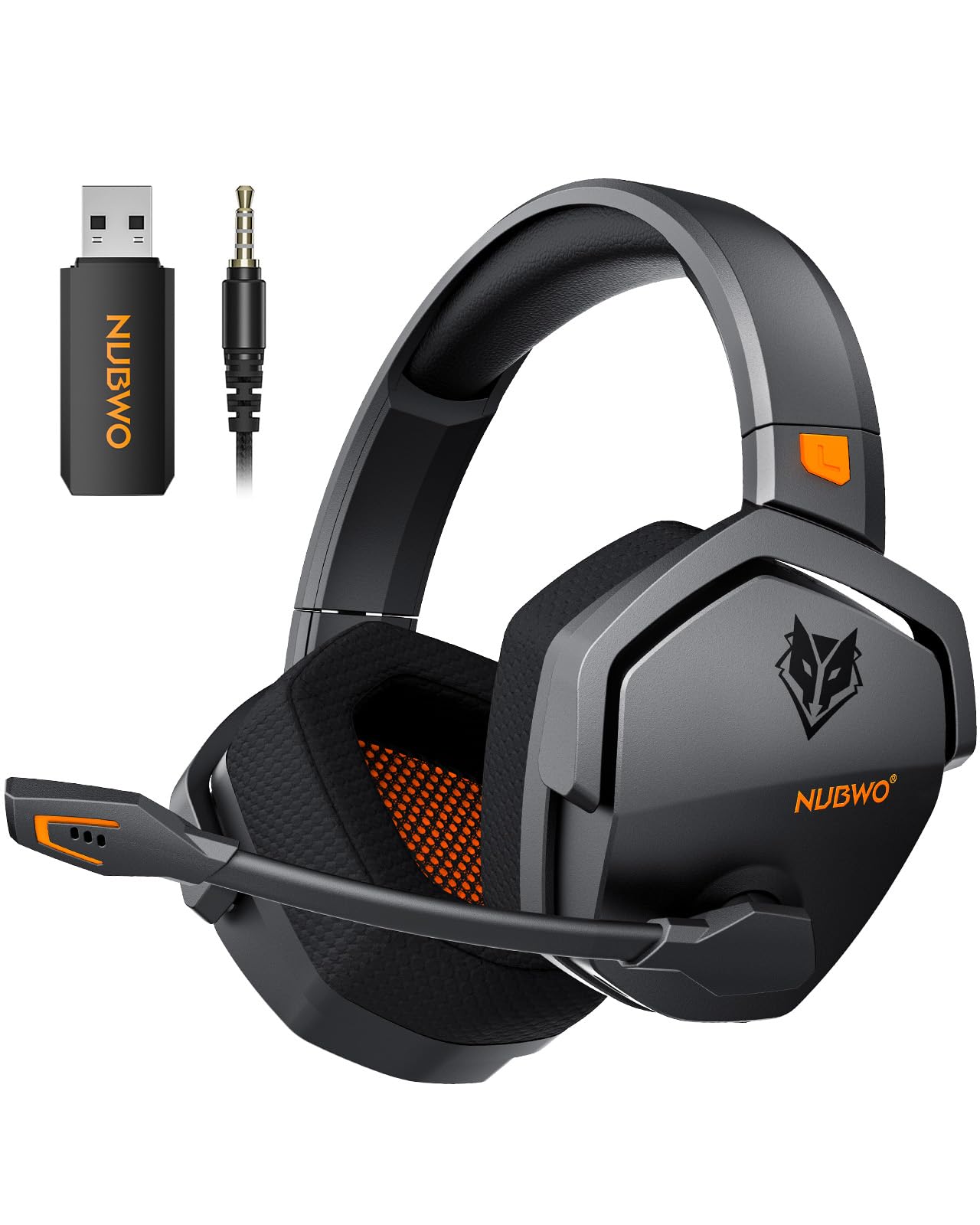
The NUBWO G06 is the wireless headset that punches so far above its price that it’s almost hard to believe. Housing a 1200mAh battery paired with a proprietary low‑power chipset, it delivers a claimed 100 hours of uninterrupted gameplay on a single charge—and real‑world users confirm it lasts over a week of daily use without needing the USB‑C cable. The 2.4GHz wireless dongle provides a stable, interference‑free connection with 23ms audio latency, which is low enough for casual and mid‑tier competitive play. You also get Bluetooth 5.3 for smartphone pairing, and a 3.5mm wired mode covers Xbox and Switch compatibility.
The 50mm composite diaphragm drivers produce immersive 3D surround sound that’s genuinely impressive at this price bracket—explosions have weight, footsteps remain distinct, and the audio‑video sync is tight enough that you won’t notice any lag. The microphone, while not studio‑grade, delivers clear chat with an audible mute confirmation tone, and the on‑ear controls (volume wheel, mute button) are straightforward. The build is mostly plastic but feels solid enough for moderate daily handling.
The durability concerns are real: some users report the right side volume cutting out after about a year of use, suggesting the internal wiring or connection isn’t built for the long haul. The 1200mAh battery, while capacious, also takes around 4 hours to fully recharge. If you need wireless freedom on a tight budget and don’t mind replacing the headset every 12‑18 months, the NUBWO G06 is unmatched for value. For a permanent desk companion, you may want to step up to a wired option or a higher‑tier wireless set.
Why it’s great
- 100‑hour battery from a 1200mAh cell—lasts weeks of moderate use
- 50mm drivers with 23ms latency for immersive wireless gaming
- Triple‑mode (2.4GHz, Bluetooth 5.3, 3.5mm) for universal compatibility
Good to know
- Long‑term durability concerns; audio dropout in one ear reported after ~1 year
- Full recharge takes 4 hours; plastic build won’t survive drops
6. OneOdio Pro‑10

The OneOdio Pro‑10 is an anomaly in this roundup: it’s a studio monitor headphone that also happens to work brilliantly for PC gaming and casual listening. The 50mm neodymium drivers deliver powerful bass, clear vocals, and crisp highs with a balanced stereo sound that’s ideal for music production, podcast monitoring, or hearing game audio as the designer intended. The 90° swiveling ear cups let you do single‑ear monitoring, which is a staple for DJs and audio editors who need to keep one ear open to the room.
Comfort is solid for the price: the adjustable, stretchable headband and soft padded ear cushions (though synthetic leather) provide a good seal for passive isolation, and the included 1/4‑inch and 3.5mm cables cover everything from audio interfaces to laptops and smartphones. The detachable cable is a practical touch that extends lifespan, and the “Share Audio Port” lets you daisy‑chain a second pair of headphones without a splitter—handy for co‑op gaming or co‑editing sessions. Plus, it folds up into a compact shape for travel.
The build quality is the main trade‑off. The plastic construction feels lightweight and the included aux cables are thin, so you’ll want to treat them gently. The ear cushion coating is known to peel after a couple of years of regular use. There’s also no inline volume control, so you’ll rely on your source device for level adjustment. If you need a budget headphone that pulls double duty as a PC gaming headset and a monitoring tool for recording or mixing, the OneOdio Pro‑10 is a capable, no‑nonsense choice.
Why it’s great
- 50mm neodymium drivers deliver powerful, balanced sound suitable for monitoring and gaming
- 90° swiveling ear cups allow single‑ear use for DJs and editors
- Detachable cable with 1/4‑inch and 3.5mm jacks; folds up for portability
Good to know
- Plastic build feels lightweight; included cables are thin and prone to fraying
- No inline volume control; ear cushion coating may peel after extended use
7. Turtle Beach Recon 50
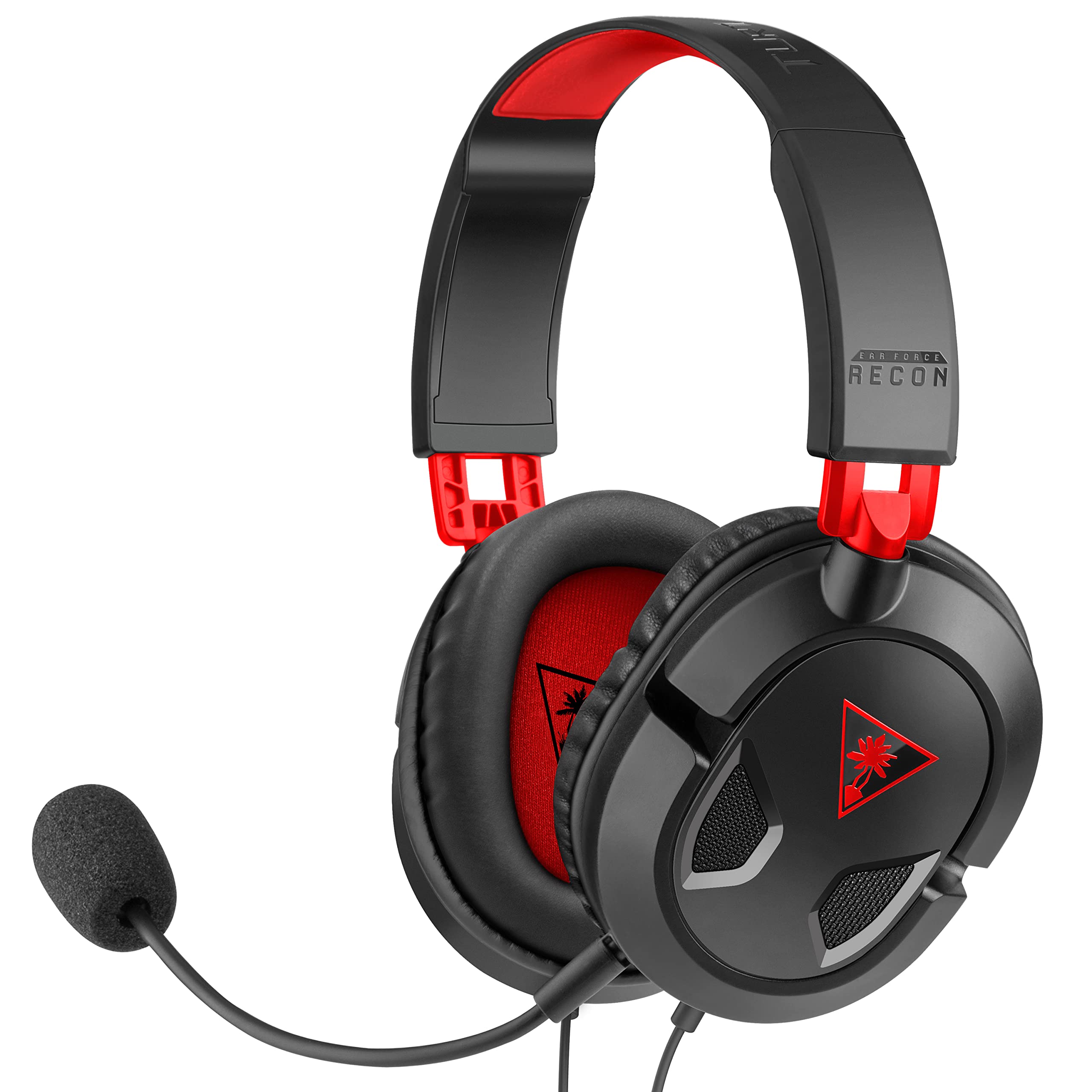
The Turtle Beach Recon 50 is the entry‑level headset that refuses to embarrass itself. For a budget‑conscious buyer, it delivers a detachable, adjustable microphone with decent voice clarity and a noise‑canceling windscreen—far better than the tinny, fixed mics on the cheapest gaming cans. The 40mm speakers handle footsteps and explosions well enough for casual play, and the lightweight design (it barely registers on your head) makes it a viable choice for kids, teens, or anyone who wants a spare headset for the living room. The in‑line volume and mute controls are simple and functional.
Comfort is a pleasant surprise: the leatherette ear cushions create a decent passive seal and the adjustable headband accommodates larger heads without pinching. The wired connection (3.5mm) means zero battery anxiety, and Turtle Beach includes a PC splitter cable so you can plug into both the headphone and mic jacks on a desktop. Lay‑flat design makes storage easy, and the color options (Black/Red, Blue, White) let you match your setup.
The shortcomings are predictable at this price. The 40mm speakers produce thin mids, so music and vocal‑heavy content sound underwhelming compared to larger‑driver headphones. The cord is short (around 4 feet), and the soft wire jacket is prone to abrasion over time—you’ll need to be careful routing it around your desk. The microphone volume is also somewhat low and requires correct positioning for best results. For the price, however, the Recon 50 is a perfectly serviceable wired gaming headset for a first‑time buyer or a secondary rig.
Why it’s great
- Detachable adjustable mic with windscreen punches above its price tier
- Lightweight, comfortable leatherette ear cushions for long sessions
- Includes PC splitter cable; lay‑flat design for easy storage
Good to know
- 40mm drivers lack mid‑range detail for music; sound is gaming‑focused
- Short 4‑foot cord and thin wire jacket are durability weak points
FAQ
Should I get a wired or wireless headset for PC gaming?
What driver size works best for hearing footsteps in shooters?
Can I use a PC gaming headset for work calls?
Final Thoughts: The Verdict
For most users, the best audífonos para pc winner is the ASUS ROG Delta II because it combines tri‑mode wireless connectivity, 110‑hour battery life, and 50mm titanium‑plated drivers in a lightweight 318g frame that handles gaming, music, and calls without compromise. If you want pure wired competitive performance with the best directional audio, grab the HyperX Cloud III. And for wireless on a tight budget, nothing beats the sheer value of the NUBWO G06.