
Our readers keep the lights on and my morning glass full of iced black tea. As an Amazon Associate, I earn from qualifying purchases.
Specs are compiled from manufacturer listings and verified buyer reviews and can change over time — please confirm the key details on the product page before buying.
An audio console is the brain of your sound setup, but buying the wrong one means hours of troubleshooting noise, routing issues, or weak preamps that leave your vocals thin. You want a board that captures your sources cleanly, routes them where you need, and doesn’t require a degree in electrical engineering just to get signal to your speakers. The right pick depends on channel count, mic preamp quality, and whether digital features like onboard effects or USB recording fit your real-world workflow.
I’m Min — the founder and writer behind Gadgets Feed. This guide is built by comparing the manufacturers’ published specifications and the patterns across verified customer reviews, so you get each pick’s real strengths and trade-offs instead of marketing spin.
Whether you are building a home studio, mixing live sound at a venue, or recording a podcast, this breakdown of the best audio console options from mid-range workhorses to premium digital boards reveals exactly which features matter and which ones are just hype.
Our Picks at a Glance


How To Choose The Best Audio Console
Picking an audio console means matching the board’s architecture to your microphone types, stage or studio size, and monitor mix or effects needs. Here are the three factors that separate a great console from a frustrating one.
Channel Count and Routing
Channel count determines how many microphones, instruments, or line-level sources you can plug in, but routing—the bus structure—gives you control. A 10-channel board with a single stereo bus is fine for a duo or a podcast, but a band with four monitor mixes will need a console with multiple aux sends and subgroups. Count your inputs first, then look at how the console sends those signals to different outputs.
Mic Preamps and Gain Range
The preamp is the first circuit your microphone signal hits, and its quality defines the noise floor and headroom of your entire mix. A good preamp delivers clean gain (measured in dB) without hiss or distortion. The data shows that many mid-range consoles now offer between 60dB and 65dB of gain, which is enough for dynamic microphones that need a lot of clean amplification, like the Shure SM7B.
Digital Features: Effects, USB, and Recording
Onboard digital effects—reverb, delay, chorus—can save you the cost of an external processor, but quality varies widely. A class-compliant USB interface lets you record directly to a computer without installing drivers, while built-in SD recording captures multitrack audio with no computer at all. These features add weight and cost, so pick only the ones that fit your workflow—a live sound engineer might skip the recorder, but a podcaster will rely on it every session.
Quick Comparison
| Model | Best For | Channels | Weight | Mic Preamps | Amazon |
|---|---|---|---|---|---|
| Behringer X AIR XR18★ Best Overall | Wireless tablet control and digital mixing | 18 | 7.1 lbs | 16 Midas-designed | Amazon |
| Allen & Heath CQ-12TAlso Great | Digital flexibility in a compact frame | 12 | 8.85 lbs | 10 plus stereo line | Amazon |
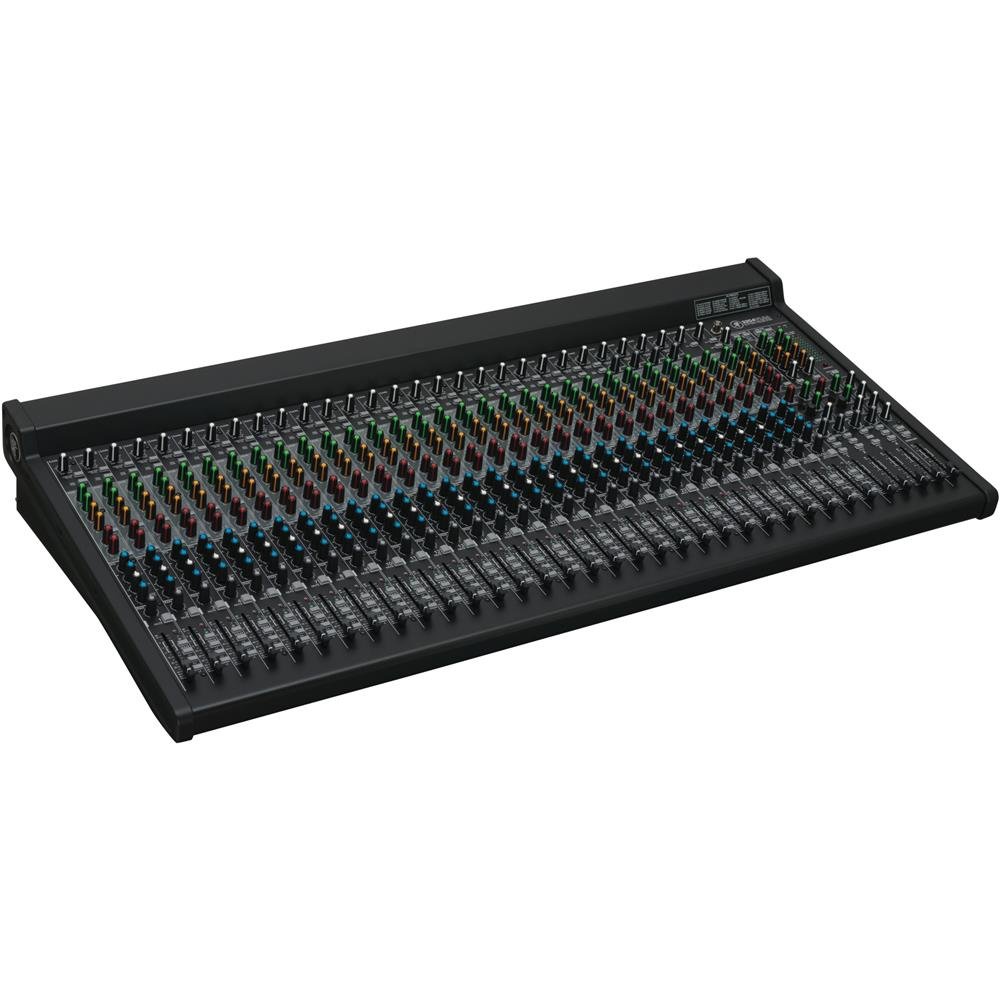
| Mackie 3204VLZ4Large Format | Large-format live sound with 32 channels | 32 | 39 lbs | 28 Onyx | Amazon |
| Mackie ProFX16v3 | Versatile analog mixer with a powerful effects engine | 16 | 19.8 lbs | 11 Onyx | Amazon |
| Zoom LiveTrak L-12 | Portable multitrack recording and band monitoring | 12 | 5.7 lbs | 8 with -128dBu EIN | Amazon |
| Behringer X1832USB | High-input analog with built-in compressors | 18 | 10.2 lbs | 6 XENYX | Amazon |
| Pyle PMXU128BT | Value-packed Bluetooth mixer for DJs and events | 12 | 10.59 lbs | 8 XLR/combo | Amazon |
| Yamaha MG10XU | Compact studio and podcasting with USB audio | 10 | 3.3 kg (7.27 lbs) | 4 D-PRE | Amazon |
| Yamaha MG10 | Simple, reliable analog mixing without bells | 10 | 1.9 kg (4.19 lbs) | 4 D-PRE | Amazon |
In‑Depth Reviews
1. Behringer X AIR XR18 Digital Mixer
Our pick — over 4.5★ from 850+ verified ratings; the strongest balance of quality and price.
An 18-channel digital beast you run entirely from a tablet — no physical faders needed.
With 16 award-winning Midas-designed, fully programmable mic preamps on board, the XR18 delivers audiophile-grade sound quality in a compact chassis that weighs just 7.1 pounds. The built-in Tri-mode Wi-Fi router lets you connect an iPad or Android tablet directly without needing an external router, and the 18×18 bidirectional USB interface allows direct multitrack recording to a tablet or computer.
Owners mention that the 16 combo TRS/XLR inputs, small footprint, and rugged housing make it a perfect stage or studio companion. One reviewer calls it the “best mixer ever” when paired with the Mix Station app, noting that no additional gear is needed. The XR18 also features a revolutionary Dugan-style auto-mixing function that automates microphone gain sharing (available in future firmware). At 7.1 pounds, the XR18 is lighter than the Pyle PMXU128BT at 10.59 pounds, making the Behringer a clear winner for portability and channel density.
The biggest trade-off is that every adjustment lives inside the app — there are no physical faders or knobs on the unit itself. Some users report the built-in Wi-Fi can be flaky, and the iPad app lacks a real-time analyzer (RTA). But if your workflow is already tablet-based, this is the most flexible 18-channel digital mixer at this weight class.
top-tier features
- 16 programable Midas preamps for audiophile sound quality
- 18×18 USB audio interface for multitrack recording
- Dugan-style auto-mixing for easy gain sharing
Digital-only limitations
- No physical faders — all control is through the app
- Built-in Wi-Fi can be unreliable in crowded RF environments
- No AES50 connectivity for expanding the system
Ideal for the tablet-centric engineer: Perfect if you are comfortable mixing from an iPad and want 18 channels of high-quality digital mixing in a sub-8-pound package.
skip it if: You prefer physical faders and knobs or need a console that works without a tablet in mission-critical live situations.
2. Allen & Heath CQ-12T Digital Mixer
The digital console that feels less like a mixer and more like a smart sound assistant.
You get a responsive 7-inch capacitive touchscreen that puts every parameter at your fingertip, backed by a physical rotary control for those moments you want tactile feedback. The board houses 10 mic or line inputs (5 of which are combi jacks) plus a stereo line channel and a stereo Bluetooth input — so you can stream backing tracks or click tracks wirelessly.
Recording is handled by a 16×16 USB interface and a 16×16 SD card recorder, meaning you can capture every channel to your computer or straight to an SD card without extra gear. Buyers report that the Auto Gain feature is invaluable for live adjustments, and that the preamps are clear and warm — one reviewer specifically noted they are less bright than Focusrite Air preamps. The 8.85-pound body slips into a backpack or a small bag, making it a genuine travel companion for sound gigs at smaller venues.
The one repeated caveat in the reviews is that mutes, mute groups, and DCAs (digitally controlled amplifiers) are not output-specific — they affect all mixes at once, so you must use individual faders per output for fine control. Still, the combination of a 7-inch touchscreen, easy Wi-Fi remote mixing from an iPad, and that SD recording puts the CQ-12T in a class of its own for compact digital consoles.
Verdict for the versatile sound pro: This is the pick if you want a do-it-all digital board that replaces external effects processors, recorders, and a separate control surface — all in a package under 9 pounds.
Reach for this if: You need a portable digital mixer with multitrack recording, wireless remote control, and a touchscreen interface that makes complex routing intuitive.
Look elsewhere if: You rely on output-specific mute groups for complicated live shows — the CQ-12T’s mutes affect all mixes, not individual ones.
3. Mackie 3204VLZ4 32-Channel Mixer
The 32-channel analog fortress for serious live sound and broadcast applications.
With 28 boutique-quality Onyx mic preamps and an ultra-wide 60dB gain range, the 3204VLZ4 is built for situations where clean, high-headroom signal capture is non-negotiable. The 4-bus architecture gives you flexible routing, while phantom power covers all condenser microphones. Dedicated inline channel compression on channels 25-28 adds another layer of control for your most critical inputs.
Buyers consistently describe the construction as “sturdy” and “professional,” with one noting that the all-metal build and clean, powerful mic preamps make it a solid workhorse for demanding environments. The board weighs 39 pounds — it is not portable, but it is stable. Reviewers also point out that there are no built-in effects, so you will need external processors for reverb or delay. The improved RF rejection makes this particularly suitable for broadcast applications where interference must be zero.
If you need more than 16 channels in a pure analog format with high-quality preamps, the 3204VLZ4 is the clear choice over the Mackie ProFX16v3 (16 channels). It also dwarfs the Yamaha MG10’s 10 channels — the 3204VLZ4 offers 32 channels, providing much greater capacity for large-scale setups.
The verdict for large-scale analog purists: This is the console to buy when channel count, preamp quality, and physical build matter more than portability or onboard effects.
Best for: Live sound engineers, houses of worship, and broadcast studios that need 32 analog channels with pro-grade Onyx preamps and zero digital latency.
Not for: Mobile musicians or podcasters — at 39 pounds and with no built-in effects or USB recording, it is a fixed-installation tool.
4. Mackie ProFX16v3 16-Channel Analog Mixer

The analog workhorse that brings 24-bit/192kHz recording and a versatile effects engine to the stage.
Eleven Onyx mic preamps deliver up to 60dB of clean gain with ultra-low noise performance — perfect for high-gain microphones popular with content creators. The high-resolution GigFX effects engine includes 24 different FX options from reverbs to delays, all accessible via a single knob and a dedicated display. The 2×4 USB I/O allows you to create two custom monitor mixes from your computer and send them back into the mixer, which is a huge help for recording overdubs alongside a pre-recorded track.
Customers note that the setup is simple and the sound quality is a clear upgrade from older mixers — one church audio team noted it sounded better right from the start than their previous Presonus board. At 19.8 pounds, it is a substantial piece of gear, but the combination of 16 channels, 24-bit/192kHz recording, and a sturdy FX engine makes it a serious contender. However, one reviewer flagged a defect where inputs and speaker outputs did not work — a single quality-control concern in a sea of positive feedback.
Unlike the CQ-12T’s digital touchscreen, the ProFX16v3 keeps a traditional analog layout with physical faders, making it intuitive for anyone who grew up on analog consoles. The trade-off is that channels 9-16 lack the Onyx preamps found on channels 1-8, so the highest-quality inputs are limited to the first eight channels.
Why it shines
- 24-bit/192kHz USB recording for crisp, high-resolution captures
- 11 Onyx mic preamps with 60dB of clean gain
- GigFX engine with 24 effects, including reverbs and delays
Areas to note
- Channels 9-16 do not have Onyx preamps — first eight only
- At 19.8 lbs, it is heavy for portable gigging
- One reviewer noted a factory defect (inputs/speaker outputs not working)
Your best bet if: You need a traditional analog mixer with high-quality USB recording and an onboard effects engine that saves you buying a separate processor.
Think twice if: You require premium preamps on all 16 channels or need a lightweight board for frequent transport.
5. Zoom LiveTrak L-12 Mixer/Multitrack Recorder

The all-in-one mixer, recorder, and headphone distribution hub for bands and podcasters.
Five separate headphone outputs with individual monitor mixes mean every performer on stage or in the studio can dial in their own personal mix without fighting over a single headphone amp. The L-12 records up to 14 tracks simultaneously at 24-bit/96kHz directly to an SD card, delivering studio-quality captures without needing a computer at all. The preamps offer -128dBu EIN (equivalent input noise) with up to +60dB of gain — clean enough for even the most demanding dynamic microphones.
Buyers describe it as a “musical Swiss Army knife” that excels for practice, rehearsal, writing, and recording. One buyer mentioned that the 5 independent headphone mixes and built-in metronome make it ideal for bands, while another called it the “best multitrack recorder at this price.” At just 5.7 pounds, it is the lightest full-featured console in this lineup, comfortably beating the Allen & Heath CQ-12T (8.85 pounds) for portability.
The catch is that the onboard effects are global — they apply to the main mix, not individual channels — and there is no dedicated effects send-return loop. The SD file naming is also a bit awkward. But for any musician or podcaster who wants to mix, record, and monitor without a computer, the L-12 is the most complete standalone solution.
Perfect for the mobile band or podcast crew: This console replaces a mixer, a multitrack recorder, and a headphone distribution system — all in a 5.7-pound package that can run on batteries.
Reach for this if: You need to record full-band rehearsals or live shows to SD while giving every member their own headphone mix.
Look elsewhere if: You rely on per-channel effects sends — the L-12 only offers global effects, not individual channel inserts.
6. Behringer Xenyx X1832USB Premium Mixer

An 18-input analog console with professional-grade compressors on six channels.
Six studio-grade compressors with one-knob functionality and control LEDs let you quickly dial in professional vocal and instrumental dynamics without diving into sub-menus. The neo-classic “British” 3-band equalizers with semi-parametric mid bands give you warm, musical tone shaping. A new studio-grade FX processor offers 16 editable presets including reverb, chorus, flanger, delay, pitch shifter, and multi-effects, all with a tap function for syncing delays to your song’s tempo.
Buyers are consistently impressed with the value — one reviewer called it “an all-in-one board” that does everything, noting the built-in FX, EQ, aux sends, and sub outputs. Another said it has “virtually everything we need in one compact unit.” The 18-input count matches the Behringer X AIR XR18 for channel capacity — both offer 18 inputs, compared to the Yamaha MG10’s 10 inputs — but the X1832USB keeps it analog with physical faders and buttons, which many performers prefer for quick, hands-on adjustments.
The number of channels (18) and the Behringer X AIR XR18 also has 18 channels — both offer more inputs than the Yamaha MG10 (10 channels). The main difference is that the X1832USB is an analog board weighing 10.2 pounds, compared to the XR18’s 7.1-pound digital rack unit. The user manual is famously poor, and some users report scratchy sliders after extended use, but these issues are manageable with third-party documentation and basic maintenance.
Packed with pro features
- 6 one-knob studio-grade compressors with control LEDs
- 16 editable FX presets with tap tempo
- Neo-classic British 3-band EQs with semi-parametric mid
Small drawbacks
- User manual is practically useless — you will need online resources
- Some sliders may become scratchy over time
- No built-in Wi-Fi or digital control — purely analog operation
Ideal for the budget-conscious live performer: Get this if you want 18 inputs with built-in compressors and effects in a traditional analog format that costs less than many 8-channel digital mixers.
pass on it if: You want a digital workflow with recallable settings or remote control from a tablet — this board is hands-on analog only.
7. Pyle 12-Channel Console Style Audio Mixer with Bluetooth

A budget-friendly 12-channel console that adds Bluetooth streaming and 16 DSP effects to your rig.
Built-in Bluetooth wireless streaming lets you connect an iPhone, Android device, or tablet and use it as an input to mix with your other sound sources — perfect for playing backing tracks or DJ sets without a wired connection. The board features 8 XLR/combo inputs, a 7-band equalizer, 16 DSP effects, and a USB soundcard interface for recording to a PC or Mac. The stereo output level meter uses a 12-segment LED display so you always know your signal level at a glance.
Reviewers point out excellent headroom when paired with FetHeads, delivering crisp, clean audio with zero preamp noise. One reviewer called it the “perfect master controller” for multi-mic and live call setups, while another praised its reliability for gigging musicians on a budget. At 10.59 pounds, the Pyle is heavier than the Behringer X AIR XR18 (7.1 pounds) and takes up more desk space with its 21.4-inch depth.
The biggest limitation is that the USB interface only records a single stereo track, not multitrack — so you cannot capture individual channels separately. Some buyers also report that the USB connection needs occasional reinsertion to stay stable. For the price, it packs a staggering feature set, but the build quality and recording flexibility are a tier below the Yamaha MG10XU or the Behringer XR18.
Perfect for the budget-conscious performer: This console gives you Bluetooth streaming, 12 channels, and 16 DSP effects for a fraction of the cost of comparable analog mixers — just don’t expect multitrack recording or road-ready durability.
Best for: DJs, church sound teams, and hobbyist musicians who need Bluetooth input and lots of channels on a tight budget.
Not for: Serious recording engineers — the USB output is stereo only, and build quality is not road-case tough.
8. Yamaha MG10XU 10-Channel Analog Mixer

The compact analog mixer that brings Yamaha’s D-PRE preamps and SPX effects to your desk.
Yamaha’s D-PRE mic preamps deliver clean, transparent, and natural sound using an inverted Darlington circuit that provides fat, natural bass and smooth highs. Class-compliant USB 2.0 lets you record and play back audio with any computer or tablet without installing drivers, and the built-in SPX effect processor offers a comprehensive suite of 24 effects. The 3-band EQ on all mono channels, 1-knob compressors, and high-pass filters give you professional control in a package that measures just 11.57 by 9.61 by 2.8 inches.
Buyers rave about its sound quality and build — one owner reported it “exceeds current skill needs” and praised its superb sound with monitors and a subwoofer. Another verified buyer noted it is great for podcasting, specifically that it “replaces Cloudlifter/external recorder” thanks to the clean preamps and USB interface. The MG10XU is significantly more compact than the Pyle PMXU128BT (21.4 inches deep — a massive size difference), making it a true desktop-friendly console.
The downsides are minor: the headphone volume is not independent of the main mix, and the form factor is a bit plain. But for a home studio, podcasting, or small gig setup, the MG10XU’s combination of clean preamps, USB audio, and 24 effects in a compact frame is tough to top at this level.
What makes it great
- D-PRE preamps with inverted Darlington circuit for fat, natural sound
- Class-compliant USB 2.0 for plug-and-play recording with any computer
- 24 SPX effects including reverb, delay, and chorus
Small trade-offs
- Headphone volume is linked to main mix — cannot solo monitor independently
- Limited to 10 channels — not enough for large bands
- No Bluetooth or wireless connectivity built-in
Your balance for desktop use: Ideal for podcasters, streamers, and home studio owners who need clean preamps and USB connectivity in the most compact professional analog mixer on this list.
Look elsewhere if: You need more than 10 inputs, wireless streaming, or independent headphone monitoring.
9. Yamaha MG10 10-Input Stereo Mixer

The no-nonsense analog mixer that skips USB and effects to deliver pure, reliable sound.
It is a 10-channel standalone analog mixer with studio-grade discrete class-A D-PRE preamps — the same inverted Darlington circuit found in the MG10XU. You get 3-band EQ and high-pass filters on every channel to eliminate unwanted noise, plus 1-knob compressors that make it easy to tighten up vocals and instruments. The chassis is a rugged, impact-resistant, powder-coated metal design, and +48V phantom power is built-in for condenser microphones.
A verified buyer noted they “upgraded from the 6 channel yamaha mixer because I needed additional microphones,” and at a gala, they connected 2 JBL speakers, a sub, and 3 mics with zero issues. Another reviewer, on their second MG10, called it a “solid workhorse mixer” bought for its reliability and ease of use. The MG10 is the most focused console here — it does not include USB recording, effects, or Bluetooth, which keeps the signal path pure and the price low.
The absence of USB means you cannot record directly to a computer, so you will need an external audio interface if that is your goal. Compared to the MG10XU above, the MG10 saves money by removing the USB interface and SPX effects processor — if you already have an external recorder and effects unit, the MG10 is the cleaner, lower-cost choice for pure analog mixing.
The verdict for analog purists on a budget: If you want Yamaha’s excellent D-PRE preamps and a rock-solid metal chassis without paying for features you will not use, this is your board.
Reach for this if: You need a simple, reliable analog mixer with great preamps for live sound or a fixed studio setup and already own separate USB interfaces and effects processors.
Look elsewhere if: You need to record to a computer, apply onboard effects, or connect Bluetooth sources — the MG10 is a pure analog board with zero digital features.
Understanding the Specs
Mic Preamps and Gain
The mic preamp is the first stage your microphone signal passes through. A higher gain rating (measured in dB) means the console can amplify a quiet source — like a dynamic microphone — without adding hiss. Look for at least 60dB of gain and a low EIN (Equivalent Input Noise) figure, ideally below -127dBu, for clean, quiet recordings. The data shows that the Zoom LiveTrak L-12 offers -128dBu EIN, which is among the best in this class.
Channel Count vs. Input Flexibility
A console’s channel count tells you how many microphones or instruments you can plug in, but “combo” jacks (accepting both XLR and TRS connectors) add flexibility. A 12-channel mixer with 8 combo inputs can handle 12 sources of various types, while a board with only dedicated XLR inputs limits you to microphones only. The Behringer X AIR XR18 has 16 combo TRS/XLR inputs, making it extremely versatile for both mics and line-level gear.
USB Audio and Recording
A USB audio interface built into the mixer lets you send individual channels or the main mix to a computer for recording or live streaming. Class-compliant USB (like the Yamaha MG10XU) works with any device without driver installation. Some consoles like the Allen & Heath CQ-12T add an SD card slot for standalone recording, which is ideal when you do not want to bring a computer to a gig. The Pyle PMXU128BT’s USB interface only captures a stereo mix, not multitrack — a key difference if you need to edit individual tracks later.
Onboard Effects and Routing
Built-in effects processors (such as reverb, delay, and chorus) save you from buying an external unit. The Mackie ProFX16v3 has a GigFX engine with 24 effects, while the Behringer X1832USB offers 16 editable presets. The routing — how many aux sends, subgroups, and buses the console has — determines whether you can send different mixes to monitors, recording gear, or effects processors. More buses and sends give you greater flexibility for complex live sound setups.
FAQ
Do I need a digital mixer or an analog mixer?
How many channels do I need for a live band?
Can I record directly to a computer with an analog mixer?
What is phantom power and do I need it?
Is a mixer with built-in effects worth the extra cost?
How important are the mic preamps?
What does “EIN” mean in mixer specs?
Can I control a mixer from my phone or tablet?
How much weight can I expect from a mixer for portable use?
What is the difference between a mixer and an audio interface?
Final Thoughts: The Verdict
Across the board, the best audio console is the Allen & Heath CQ-12T because it combines a responsive touchscreen, 16×16 recording via USB and SD card, and Wi-Fi remote control in a compact 8.85-pound frame that works for live sound, studio, and content creation. If you want wireless digital mixing with 18 channels and Midas-grade sound, grab the Behringer X AIR XR18. And for the purest analog experience with 32 high-quality Onyx preamps, the standout is the Mackie 3204VLZ4.
How We Picked
We do not accept paid placement. Every pick is matched to a real buyer and a real use-case; we do not hands-on test units.
Sources & Methodology
Specifications: manufacturer listings and product documentation. Review insights: verified customer reviews, as of July 2026. Pricing: not shown on this page (it changes often); check the current price via the retailer link.
As an Amazon Associate, Gadgets Feed earns from qualifying purchases. This does not affect which products we feature.