
Our readers keep the lights on and my morning glass full of iced black tea. As an Amazon Associate, I earn from qualifying purchases.
Specs are compiled from manufacturer listings and verified buyer reviews and can change over time — please confirm the key details on the product page before buying.
Your first audio interface and mic bundle should make you sound clear and professional, not just loud enough for a game chat. The kits below take different paths to that goal. Some pair a dedicated interface with studio-grade conversion (the chip that turns analog sound into digital data), while others combine a mixer and mic in one unit to free up desk space. Match each bundle’s strengths to your real use — vocals for a podcast, guitar for songwriting, or live chat for streaming.
I’m Min — the founder and writer behind Gadgets Feed. This guide is built by comparing the manufacturers’ published specifications and the patterns across verified customer reviews, so you get each pick’s real strengths and trade-offs instead of marketing spin.
After comparing ten complete bundles — interfaces, mics, and the accessories that hold them — I’ve narrowed down the best audio interface and mic combinations for every level of home recording, from first-time streamers to serious songwriters.
Our Picks at a Glance


How To Choose The Best Audio Interface And Mic Bundle
Before you buy, know the difference between the two bundle types. A traditional audio interface converts your mic’s analog signal (the continuous electrical wave) into digital data your computer reads. A mixer-style bundle does the same, but adds physical faders and sound effects so you can adjust levels live. Pick based on if you want to shape the sound after recording or during it.
Match the Mic to Your Room
Condenser mics are incredibly sensitive and capture rich detail — great for vocals and acoustic instruments. But they pick up everything, including your keyboard clicks and the neighbor’s dog. Dynamic mics are more forgiving and isolate your voice better in untreated rooms. If you’re streaming from a live gaming setup, a dynamic mic saves you hours of noise removal later. If you’re recording in a quiet, dedicated space, a condenser rewards you with detail.
Check the Conversion Quality
Sample rate and bit depth tell you how accurately your recordings capture sound. A 24-bit/192kHz interface captures more dynamic range and detail than a 16-bit/48kHz one. For spoken word and streaming, the difference is barely noticeable. For music production, that extra headroom prevents distortion on loud peaks. Look for at least 24-bit conversion if you plan to mix and master songs.
Count Your Inputs and Outputs
Think about what you plug in today and a year from now. A single mic input covers solo podcasts and songwriting with one singer. Two inputs let you interview a guest or record guitar and vocals simultaneously. Some bundles add instrument inputs for direct bass or electric guitar recording, bypassing a microphone entirely. Choose your channel count based on your real workflow, not a marketing promise of “studio quality.”
Quick Comparison
| Model | Best For | Mic Inputs | Sample Rate | Mic Type | Amazon |
|---|---|---|---|---|---|
| Focusrite Scarlett 2i2 Studio 4th Gen★ Best Overall | Songwriters & musicians | 2 | 192 kHz | Condenser (included) | Amazon |
| SAMSON G-Track ProMost Versatile | Streaming & podcasting | 1 (built-in) | 96 kHz | Dual back electret condenser | Amazon |
| FIFINE AmpliGame KS5Gaming Pick | Gaming & Discord | 1 XLR | — | Dynamic XLR/USB | Amazon |
| FIFINE SC3+K688 | Budget streamers | 1 XLR | — | Dynamic XLR/USB | Amazon |
| MAONO AME2C | Podcast production | 2 XLR | — | Dynamic XLR | Amazon |
| PreSonus AudioBox USB 96 25th Anniversary | Home recording beginners | 2 | 96 kHz | Condenser (included) | Amazon |
| MAONO MaonoCaster AME2 Duo | Two-person podcasts | 2 XLR | — | Condenser XLR + 3.5mm | Amazon |
| Movo PodKit2A | Two-mic value kits | 2 combo | 48 kHz | Cardioid condenser (x2) | Amazon |
| PreSonus AudioBox iTwo Studio | Plug-and-play simplicity | 2 | 96 kHz | Condenser (included) | Amazon |
| Focusrite Scarlett Solo Studio 3rd Gen | Full kit with stand | 1 | 192 kHz | Condenser (included) | Amazon |
In‑Depth Reviews
1. Focusrite Scarlett 2i2 Studio 4th Gen USB-C Audio Interface Bundle
Our pick — over 4.5★ from 650+ verified ratings; the strongest balance of quality and price.
A complete studio kit that turns a first hit into a whole album.
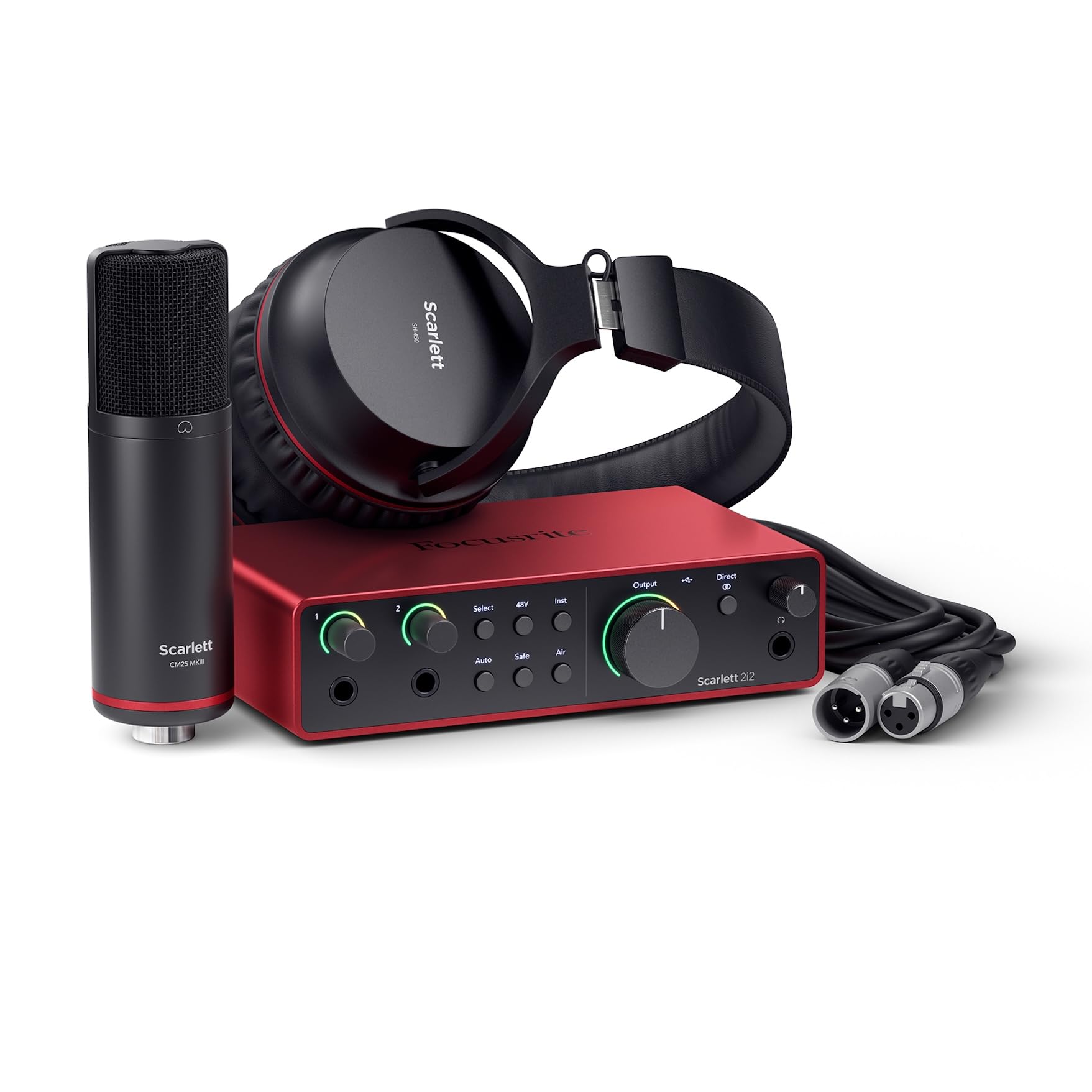
The Scarlett 2i2 Studio 4th Gen leads with conversion quality that matches Focusrite’s flagship interfaces found in major studios — a 120dB dynamic range that captures everything from quiet fingerpicking to loud vocal peaks without distortion. The bundle includes the CM25 MkIII condenser mic, a 3m XLR cable, and SH-450 headphones, so you have a full signal chain from the moment you unbox it.
Auto Gain sets your mic or guitar level automatically, and Clip Safe prevents harsh clipping, which means you spend less time fiddling with gain knobs and more time recording. Air mode pushes vocals and guitars forward in the mix with musical presence. The software bundle is massive: Pro Tools Intro+, Ableton Live Lite, Cubase LE, and the Hitmaker Expansion suite of effects and mastering tools.
Buyers report this is “best purchase ever” for songwriting, with one owner recording an entire album on it. The rear-panel ports earn praise for flexibility, and the build quality feels solid and well-made. Compatibility is the most-discussed trade-off — most owners plug in and go, but a minority report connection issues on certain setups. If you’re serious about recording music rather than just chatting, this is the benchmark.
entry-level pro interface
- Auto Gain and Clip Safe keep every take clean without manual leveling
- Two mic preamps and two Hi-Z inputs cover vocals and direct guitar
- Air mode adds instant musical presence to vocals
- Full software suite included for recording, mixing, and mastering
small knob feel
- Included software can be overwhelming for absolute beginners
- Compatibility issues reported on a minority of computer setups
- Premium price reflects studio pedigree, not budget value
bedroom studio: you write songs, record guitar, or want the cleanest possible home recordings with room to grow.
desktop mixer: if you only need voice chat and never plan to record instruments, a simpler all-in-one mic saves you money.
2. SAMSON G-Track Pro Professional USB Condenser Microphone with Audio Interface
A heavy all-metal mic with an audio interface built right into its base.
The G-Track Pro folds an audio interface into a studio condenser mic, so you skip the separate box entirely. It offers three polar patterns — cardioid for solo voice, bi-directional for two-person interviews, and omni-directional for capturing a whole room. The 25mm/3-micron dual back electret capsule records up to 96kHz/24-bit, which is plenty of detail for streaming, podcasting, and voiceover work.
What wins people over is the build — commercial-grade, heavy, and all-metal with a sturdy rubber base. Buyers describe the audio as clean, crisp, and comparable to much more expensive setups, and the zero-latency monitoring means you hear yourself instantly with no delay. A 3.5mm headphone jack and clipping LED indicator give you real-time feedback while you record.
The catch is weight: at over 5 lbs, a standard boom arm will struggle — you need a heavy-duty arm or the included stand. The mic is pop-sensitive, though rotating it 90° solves it, and the cardioid mode prevents speaker feedback so you can game with speakers on. The bottom cable port can bend your cable and slide out, a minor annoyance on an otherwise excellent value.
all-in-one mic: The G-Track Pro beats similarly priced podcast mics on audio quality, with rich, noise-free sound that owners say outperforms the Blue Yeti.
needs desk space: one heavy mic replaces a separate interface and mic, freeing up space but demanding a serious stand.
3. FIFINE AmpliGame KS5 XLR/USB Gaming Microphone Set with Streaming Mixer
A dynamic XLR mic and streaming mixer that bring game-chat audio up a level.
The AmpliGame KS5 pairs a dynamic XLR microphone with a 4-channel gaming mixer, which gives you individual mute controls, headphone monitoring, and a volume fader for precise audio control during streams. The dynamic mic’s stability means natural, conversational output without peaking, and the RGB lighting on both mixer and mic adds five different lighting effects to match your setup’s theme.
Connectivity flexibility is the standout: hook the mic up via XLR to the mixer, or skip the mixer and run USB directly to your PC. The USB route open up the mute button, gain knob, real-time monitoring, and headphone volume knob. Buyers describe the sound as clean and full, with the XLR connection beating USB quality, and the noise reduction is enough to keep background noise out of Discord and Twitch streams.
The honest trade-off: all the function keys (RGB, mute, monitoring, volume) only work over USB, not XLR. Some owners note the XLR mic volume can run low at times, needing a careful gain balance. The mixer has an occasional shutdown-and-reboot quirk in a minority of units, and the plastic build isn’t the toughest. For a beginner’s gaming rig, though, the flexibility and sound quality justify the budget-friendly price.
streamers: gamers and beginner streamers who want a fast, flexible setup with a mixer’s physical controls and RGB flair.
audiophiles: podcasters needing broadcast-grade silence — the plastic build and occasional volume quirks point elsewhere.
4. FIFINE SC3+K688 Streaming 4-Channel RGB Mixer with XLR Microphone Interface

A 48V phantom-power mixer bundle that opens up real condenser mic choices.
This FIFINE bundle stands out by including 48V phantom power on the mixer — the voltage that condenser mics need to operate — so you’re not locked into the included dynamic mic. That means you can upgrade to any condenser microphone later without buying more gear. The signal-to-noise ratio exceeds 75dB, which cuts circuit noise and gives your vocals more dynamics and detail.
The mixer’s tap-to-mute is a thoughtful touch: a noise-free tap silences you instead of pushing a physical button. Two input and two output interfaces (mic and line-in, headphones and line-out) plus a headset jack let you balance music, game audio, and voice physically without software. Owners run the USB-C connection to a PS5 and XLR to the mixer simultaneously, and the plug-and-play works with Mac OS and Windows.
The main friction is that the XLR cable isn’t included — a surprising omission since XLR is the headline feature, so budget for that extra cable. A few owners mention a buzz if both USB-C and XLR plug into the same PS5 side. Buyers call it “the most affordable and best sounding mic” they’ve tried, and the mixer works without software even on locked-down laptops, which is a real win for school or work machines.
cheap channel control: This is the most affordable route to a real XLR mixer with phantom power, ideal for streamers testing the waters.
plastic build: you’ll spend a little more on the missing XLR cable, and the build is beginner-tier rather than road-ready.
5. MAONO AME2C Podcast Equipment Bundle with Audio Interface and XLR Dynamic Mic

A 10-channel podcast mixer with 11 sound pads for radio-style production.
The AME2C is built for podcasters who want live production control, not just recording. Its 10-channel mixer hosts 11 customizable sound pads — three record up to 60 seconds of audio each with one-key looping, and the other eight handle 20 seconds. Upload sound effects via smartphone, PC, microphone, or Bluetooth, then trigger them live during your show. Six reverb modes and a 12-step auto-tune add polish without external plugins.
The preamp supports phantom power for XLR condenser mics and ultra-low-noise gain up to 60dB for dynamic mics. A 32-bit chipset with a DENOISE function keeps recordings clear, while the included XLR dynamic mic has a built-in double-layer pop filter to tame plosives. For musicians, the 6.35mm instrument jack records guitar or bass directly with high headroom so the tone stays intact.
Buyers — including a former radio professional — call it “outstanding value” with incredible control over sound settings. Connectivity spans USB-C for computers, LIVE-OUTPUT 1/2 for smartphones, and Bluetooth. The catch is the finicky controls: pad volume won’t always hit zero, and pad buttons occasionally fail, so pre-show sound checks are wise. Functionality is the most-discussed aspect with mixed results — most praise it, a few hit real glitches.
podcast newbies: podcasters and content creators who want live sound effects, reverb, and instant control without a computer in the chain.
mobile recorders: you demand rock-solid reliability — the occasional pad glitch will frustrate perfectionists.
6. PreSonus AudioBox USB 96 25th Anniversary Studio Recording Package

A rugged 2-channel interface bundle with a condenser mic and studio headphones included.
For a full studio setup in one box, the AudioBox USB 96 25th Anniversary package includes the rugged AudioBox USB 96 audio/MIDI interface (a device that connects your mic and instruments to your computer), the M7 large-diaphragm condenser mic (a sensitive mic that captures detailed sound), HD7 headphones, a desktop mic stand, and all cables. It records up to 96kHz (96,000 samples per second, so high-frequency detail stays crisp) and suits vocals and acoustic instruments — the M7 is built specifically for those sources.
That’s a full digital audio workstation to record, mix, and produce from day one. Buyers describe the connectivity and reliability as great for beginners and enthusiasts, with one calling it “way above my skill” yet easy enough to level up quickly.
The trade-off shows in mixed reliability reports — some owners praise the sound quality, while others report buzzing issues and a frustrating setup. It’s genuinely easy for some, genuinely frustrating for others. The 25th Anniversary edition adds Ableton Live Lite (a basic version of the music production software), but if you hit a hardware quirk, support varies. Customers note that a beginner wanting a full studio experience from one box gets strong value here, but be ready for possible setup hurdles.
first interface: first-time home recorders who want an interface, condenser mic, headphones, and a full DAW in a single purchase.
hi-res needs: you’re not comfortable troubleshooting — a minority of units arrive with buzzing that needs work.
7. MAONO MaonoCaster AME2 Duo Podcast Equipment Bundle for 2

A two-person podcast studio with an all-in-one mixer, dual mics, and shock mounts.
The MaonoCaster AME2 Duo is built for two voices from the start. It includes two condenser microphones — one professional XLR and one 3.5mm — plus two shock mounts, two table stands, two metal pop filters, and two XLR cables. The cardioid polar pattern on each mic captures audio in front while rejecting unwanted room noise, keeping both voices clear and isolated.
This mixer mirrors the AME2C’s power: a 10-channel interface (handles up to 10 audio inputs) with 11 customizable sound pads — three record up to 60 seconds each with looping, eight at 20 seconds — plus six reverb modes, 12-step auto-tune (corrects pitch in 12 semitone steps), and three tone knobs for treble, mid-range, and bass. The 3-level mic gain adjusts up to 60dB (decibels, a measure of volume) with ultra-low noise, and the 32-bit chipset with DENOISE (a noise-reduction feature) keeps output clean.
Podcasters who upgraded mid-series say it “totally changed the quality” of their shows, praising the plug-and-play setup and intuitive controls. Noise cancellation earns specific praise for live video work. The honest caveat: Mac users must manually select the device in system sound settings, and the included software is minimal — recording relies on your own DAW. The cardioid pattern is a fit note for rooms with a lot of ambient noise; quality overall is mixed in the reviews, so test your gain staging early.
two-person shows: co-hosted podcasts and duo streams where two clean vocal channels and live sound pads matter.
solo simplicity: you’re a solo Mac user wanting a zero-configuration recording app — you’ll need your own software.
8. Movo PodKit2A Podcast Bundle with Phantom 2×2 USB-C Audio Interface and Scissor Arms

Two cardioid condenser mics with arms, shock mounts, and pop filters on a dual-channel interface.
The PodKit2A is designed to be a complete two-person podcast rig. The Movo Phantom interface has two combination mic/instrument inputs, letting you record two people or a person plus a guitar simultaneously. The PC-M6 cardioid condenser mics capture 48kHz/16-bit audio with no latency, powered by the interface’s 48V phantom power. Each mic ships with a sturdy scissor arm, shock mount, windscreen, XLR cable, and dual-layer pop filter.
The value proposition is clear: everything needed for a dual-mic podcast arrives in one box, and owners describe plug-and-play operation with a MacBook Pro and Studio One. The mics are high quality with low noise for the price, and the interface’s two XLR/1/4-inch combo inputs with headphone and stereo outputs cover the basics well.
Quality reviews split hard here. Some call it “great value” and praise the build, while others report the mic stand breaking in three places and voice quality that sounds “like an 8-bit game.” One owner needed to jiggle the cord to keep the interface working, pointing to the occasional defective unit. This budget-friendly two-mic kit trades consistency for all-in-one convenience — inspect the interface and arm joints carefully on arrival.
condenser users: budget-minded duos who want two full mic setups with arms and pop filters without buying pieces separately.
dynamic mic fans: you need dependable hardware — the mixed build reports and occasional interface defects make this a gamble.
9. PreSonus AudioBox iTwo Studio USB 2.0 Recording Bundle

A portable USB interface bundle with powerful-bass headphones and a versatile condenser mic.
The AudioBox iTwo Studio is the grab-and-go version of PreSonus’ studio formula. It records up to 96kHz and is designed to let you record and produce anywhere.
The ease of setup is the headline: buyers describe downloading the drivers and working in under 30 minutes, replacing older interfaces with zero friction. The microphone quality is good with professional appearance, and the compact size makes it easy to move between desks or pack for travel. The value for money earns consistent praise, and the included software suite is deep enough to grow into without buying anything else.
The compatibility story is the honest caveat — the most-mentioned aspect is mixed. It works cleanly with some computers and software, but reviewers point out it missing in screen recorders and Discord refusing to use it, while Audacity works fine. The included software also gets mixed feedback, with one owner noting “it’s a good deal” but struggling outside the main apps. For a simple recording workflow, it’s reliable; for complex multi-app setups, verify compatibility first.
tablet recorders: you want a simple, portable bundle that’s up and running in minutes for basic recording and production.
Windows gamers: you rely on many different apps like screen recorders and Discord — compatibility with third-party software is patchy.
10. Focusrite Scarlett Solo Studio 3rd Gen USB Audio Interface and Recording Bundle

A five-piece Scarlett bundle with boom stand, pop filter, cables, and studio condenser mic.
The Scarlett Solo Studio 3rd Gen bundle goes beyond the interface by adding a full physical setup: an adjustable boom microphone stand, a studio condenser microphone, XLR cables, and a pop filter. The interface itself is the high-performance 24-bit/192kHz Scarlett Solo with a premium mic preamp and balanced connectivity. A combination input handles both mic and instrument, plus a dedicated instrument input for direct guitar or bass.
What owners praise most is the overall package quality — everything arrives new and complete, and the audio quality is described as HD-quality with the mic sounding crisp, loud, and better than cheaper condensers. Free software comes bundled, and the two extra XLR cables add flexibility. The pop filter effectively reduces plosive sounds, and the boom stand is durable, though bulky with its three-prong base.
The recurring gripes are specific: the headphones fit loosely on some heads and let in external noise, and the mic stand doesn’t fit properly with the mic for a few owners. The software installation can hit compatibility snags. For a complete single-mic studio setup where the interface is the star, this bundle delivers the full Scarlett experience with fewer trips to a music store.
voiceover work: solo podcasters, streamers, and singers who want a ceiling-mounted boom setup plus proven Focusrite conversion.
instrument duos: you already own a mic stand and cables — the core Scarlett Solo package alone may be the smarter buy.
Understanding the Specs
Sample Rate and Bit Depth
Sample rate (measured in kHz, like 48kHz or 192kHz) is how many times per second your interface captures the audio signal. Bit depth (16-bit or 24-bit) is how much dynamic range each sample holds. Higher numbers mean more detail and headroom, which matters for music production but is barely noticeable for spoken word. A 24-bit/96kHz interface covers almost every home recording need; 192kHz is future-proofing for serious producers.
Phantom Power and Polar Patterns
Phantom power (labeled 48V) sends voltage through the XLR cable to power condenser microphones, which have no internal battery. Dynamic mics don’t need it. Polar patterns describe where a mic picks up sound: cardioid grabs audio in front while rejecting the sides and rear, omni captures everything around it, and bi-directional records two opposite sides. Match the pattern to your room — cardioid is the safest default for home setups.
FAQ
Do I need both an audio interface and a separate microphone?
What is 48V phantom power and why does it matter?
Will these bundles work with a Mac or only Windows?
Can I record guitar or bass through these bundles?
How many people can record at once?
What software comes with these bundles?
Are condenser mics or dynamic mics better for streaming?
How heavy are these bundles and do I need a special stand?
What is latency and why does zero-latency monitoring matter?
Can I use these bundles for streaming on Twitch or recording YouTube videos?
Final Thoughts: The Verdict
Across the board, the best audio interface and mic winner is the Focusrite Scarlett 2i2 Studio 4th Gen because it pairs studio-grade 120dB conversion with a complete recording kit and software suite that grows with you. If you want a flexible gaming setup with a mixer’s physical control, grab the FIFINE AmpliGame KS5. And for a two-person podcast studio, the MAONO MaonoCaster AME2 Duo is the one to reach for with dual mics and a 10-channel mixer included.
How We Picked
We do not accept paid placement. Every pick is matched to a real buyer and a real use-case; we do not hands-on test units.
Sources & Methodology
Specifications: manufacturer listings and product documentation. Review insights: verified customer reviews, as of September 2026. Pricing: not shown on this page (it changes often); check the current price via the retailer link.
As an Amazon Associate, Gadgets Feed earns from qualifying purchases. This does not affect which products we feature.