
Our readers keep the lights on and my morning glass full of iced black tea. As an Amazon Associate, I earn from qualifying purchases.
Specs are compiled from manufacturer listings and verified buyer reviews and can change over time — please confirm the key details on the product page before buying.
You want your voice, instruments, and backing tracks to sound crisp in a livestream, podcast, or small gig. That depends on one decision: finding a single box that handles both the mixing (blending levels on the fly) and the interface (sending that mix into your computer). You need something that does not force you to juggle two separate devices or wrestle with confusing routing. This guide breaks down the models that do both jobs well, so you can focus on your performance, not the setup.
I’m Min — the founder and writer behind Gadgets Feed. This guide is built by comparing the manufacturers’ published specifications and the patterns across verified customer reviews, so you get each pick’s real strengths and trade-offs instead of marketing spin.
The right audio interface and mixer can simplify your signal chain into one reliable hub that delivers professional sound without extra complexity.
Our Picks at a Glance


How To Choose The Best Audio Interface And Mixer
Picking the right combination of audio interface and mixer depends on how many things you need to plug in and how you plan to record or stream. The key is to look for a unit that handles the physical mixing of your inputs and then sends that blended signal to your computer through USB.
Channel Count: Matching Your Inputs
The number of channels determines how many microphones, instruments, or line-level sources you can connect at once. A solo podcaster might only need two channels, while a live band requires eight or more to cover vocals, guitars, and keyboards. Plan for your current needs plus one or two extra inputs for future growth.
USB Connectivity and Sample Rate
Most modern units connect via USB-C and act as the computer’s sound card. The sample rate (measured in kHz like 192 kHz) affects how much detail the recording captures. A higher sample rate is beneficial for music production, while spoken-word content works well at standard rates. Loopback functionality is a must-have for streaming, as it mixes computer audio with your microphone input.
Essential Features: Preamps, Phantom Power, and Effects
Built-in preamps amplify your microphone signal to a usable level. Phantom power (+48V) is needed to power condenser microphones. Onboard effects like compression and reverb can polish your sound live without needing additional computer plugins, which is very handy for live streaming or quick podcast recording.
Quick Comparison
| Model | Best For | Channels | Frequency | Weight | Amazon |
|---|---|---|---|---|---|
| Behringer FLOW 8★ Best Overall | Mobile DJs & Small Bands | 8 | 20 kHz | 3.1 lbs | Amazon |
| Depusheng DT12Multi-Channel Beast | Large Live Setups | 12 | — | 9.5 lbs | Amazon |
| Audio-Technica AT-UMX3Desktop Precision | Desktop Streaming | 2 | 192 kHz | 0.75 lbs | Amazon |
| Pyle PMXU46BT | Budget Multi-Mic Setups | 4 | 20 kHz | 6.84 lbs | Amazon |
| Yamaha AG06MK2 | Live Streaming | 6 | 192 kHz | 2.8 lbs | Amazon |
| Zoom LiveTrak L6 | Synth Artists & DAWless Recording | 10 | 48 kHz | 1.4 lbs | Amazon |
| Mackie ProFX10v3+ | Live Gigs & Home Recording | 10 | 192 kHz | 4.9 lbs | Amazon |
| RØDECaster Duo | Podcast Studios | 4 | — | 4.4 lbs | Amazon |
In‑Depth Reviews
1. Behringer FLOW 8
Our pick — over 4.5★ from 800+ verified ratings; the strongest balance of quality and price.
The compact digital mixer built for mobile DJs and small bands who want wireless control.
The Behringer FLOW 8 packs professional-grade features into a 6.5-inch deep chassis you can toss in a bag. It gives you eight input channels, with two Midas microphone preamps that run at ultra-low noise and offer programmable gain. The EZ-Gain function is a genuine time-saver — it analyzes your signal and sets the optimal level for clean headroom.
This unit steps ahead of the pack with Bluetooth audio and app-based remote control, letting you adjust faders and effects from your phone across the room. Buyers report the sound quality is “fantastic” and that the built-in effects add professional polish to small gigs. The downside is that the companion app can disconnect every 15 minutes or so, requiring a manual re-pair — a known hiccup that does not ruin the experience but is note if you rely on wireless adjustments mid-set. The sheer number of quality mentions (35 positive mentions) and sound quality praise (21 positive) confirms this is the crowd favorite.
Compact digital mixer
- Ultra-low noise Midas preamps with programmable gain.
- Bluetooth app control for wireless adjustments.
- Compact design that fits a 2U rack drawer.
Limited analog inputs
- App can disconnect during use, requiring a manual re-pair.
- Not rack-mountable on its own.
Best for podcasters: you need a portable, feature-rich digital mixer that lets you control the mix from your phone — ideal for mobile DJs and small band setups.
Skip for bands: you require rock-solid wireless reliability every second of a live show, or you need many more than 8 physical channels.
2. Depusheng DT12
The budget-friendly 12-channel board that gives a big drum kit every input it needs.
If your setup simply needs a lot of input jacks without stretching your budget, the Depusheng DT12 is a clear contender. It offers 12 channels, while the Audio-Technica AT-UMX3 has 2 channels, making it perfect for miking an 8-piece drum kit with cymbals, leaving room for a vocal mic. The chassis is surprisingly thin at just 1.6 inches, and the sealed rotary controls help resist dust over time. Bluetooth connectivity is included for wireless streaming from your phone directly into the mix.
The sound quality here is described by owners as decent for a home studio, though it does not deliver the pristine high-end clarity of pricier boards. A common mention from the reviews is that the instruction manual is poor, especially for pairing Bluetooth, and one reviewer noted a headphone jack failure after seven months of use. However, the same buyer noted that the tech support team was extremely responsive, sending a video that solved the problem. At this channel count and price point, the quality is praised by 21 owners, making it a great value for live mixing where channel count is king.
Budget-friendly 12-channel
- 12 individual XLR channels for large live setups.
- Ultra-thin, rugged design at only 1.6 inches tall.
- Includes Bluetooth streaming and +48V phantom power.
Basic build quality
- Sound quality is decent, not studio-grade.
- Poor instruction manual for Bluetooth setup.
Best for beginners: live performers who need a high channel count at a low price — think drummers with large kits or band practice rooms.
Skip for pros: critical studio recording where pristine audio fidelity is non-negotiable.
3. Audio-Technica AT-UMX3
The ultra-compact desktop board that brings 192 kHz clarity to your streaming setup.
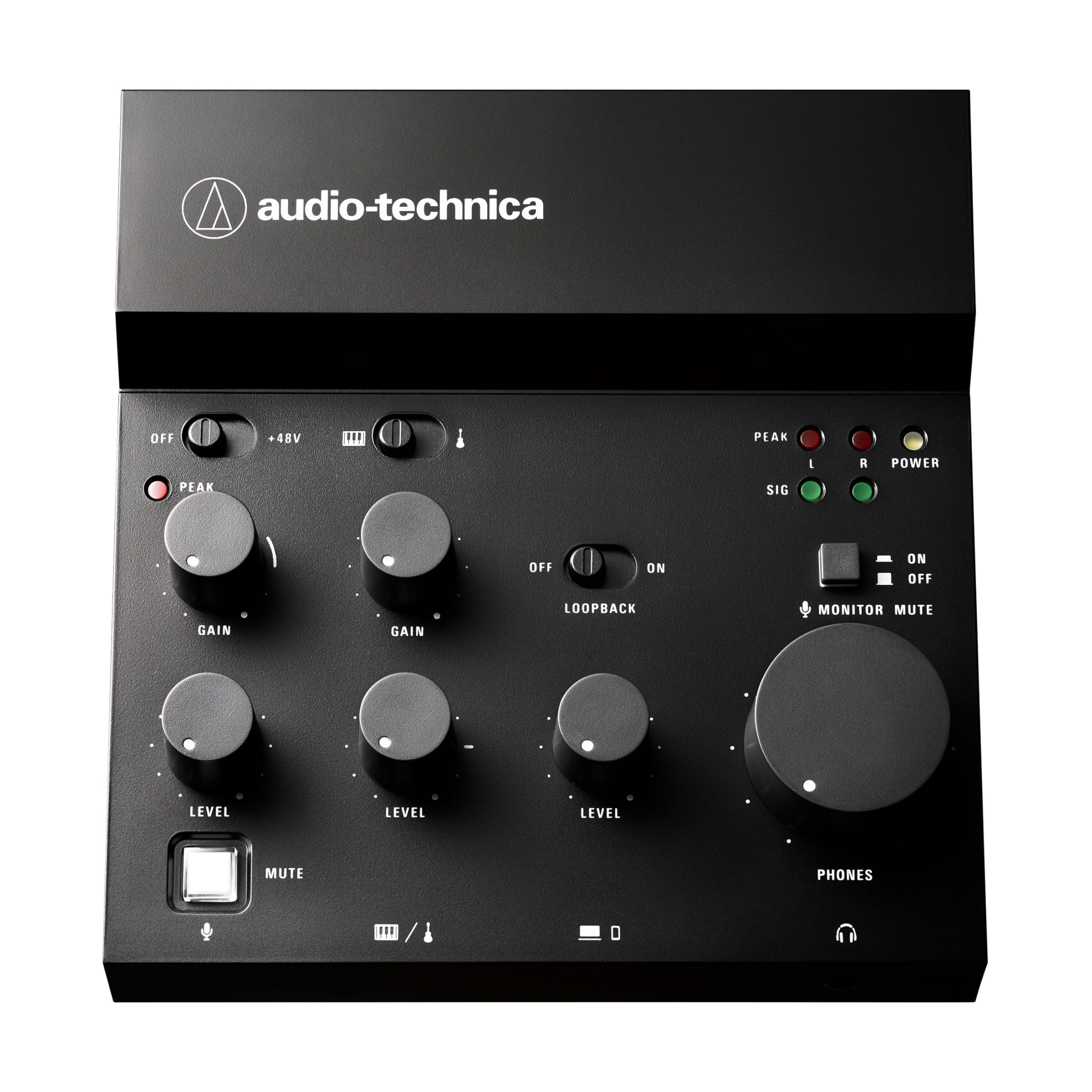
For the podcaster or solo streamer who values desk space and audio fidelity above all, the Audio-Technica AT-UMX3 is a tiny powerhouse. It measures just 5 inches wide and weighs 0.75 pounds, yet it packs a high-performance A/D converter that handles resolution up to 24-bit/192 kHz. The Audio-Technica AT-UMX3 has a 192 kHz frequency spec, while the Behringer FLOW 8 has a 20 kHz frequency spec. The plug-and-play USB-C connection works with both computers and mobile devices without requiring any special drivers.
The unit features a loopback function that makes mixing your microphone with background music or game sounds incredibly straightforward — perfect for live streaming. It has a single mic input (XLR or 1/4″), two line inputs for instruments, and a USB-C port. Build quality is a mixed bag in the reviews; while the sound is praised as excellent, some owners mention a first unit having USB-C connection issues and a second having a misaligned headphone port. The 2-year warranty from Audio-Technica is a reassuring safety net here.
Best for mobile: a clean, ultra-portable desktop setup with high-resolution audio for streaming or home recording.
Skip for studio: you need multiple microphone inputs or a unit with more consistent quality control.
4. Pyle PMXU46BT

The four-channel mixer that punches above its weight with performance and Bluetooth ease.
The Pyle PMXU46BT is backed by 90 positive performance mentions and 70 for value for money. It provides four channels with two XLR/1/4″ combo inputs, plus Bluetooth streaming with a 15-foot range. The USB soundcard function lets you record directly to your PC, and the 12-segment LED level meter gives you clear visual feedback of your signal. The +48V phantom power ensures compatibility with condenser microphones.
Owners consistently highlight its versatility for DJ gigs and karaoke, noting the sound is “crisp, clear audio with zero noise” when paired with quality preamps. The built-in effects are particularly praised for use on snares and toms in a live setting. The build quality is described as a “tank,” with one owner mentioning their previous Pyle mixer lasted years of heavy use. The only minor complaints are that the USB connection occasionally needs a re-seat, and the recording is single stereo track only, not multi-track.
Best for DJs: budget-conscious performers and church/community sound setups needing a reliable, easy-to-use mixer with Bluetooth.
Skip for recording: you need multi-track recording or more than four input channels.
5. Yamaha AG06MK2

The 6-channel live streaming hub built to eliminate echo and polish your broadcast sound.
Yamaha’s AG06MK2 is purpose-built for the modern content creator, focusing heavily on the live streaming workflow. It gives you six channels with a LOOPBACK function and a mute button specifically designed for streaming, which owners say “eliminates echo and TikTok ducking.” The onboard DSP effects and noise gate are standouts — customers note the gain and limit settings successfully cut low-volume sounds like breathing and eliminate clipping, making for a much cleaner podcast or stream. The unit operates at a frequency of 192 kHz, matching the high-resolution standard of the Audio-Technica unit.
A major plus is the included software suite: Cubase AI for music production and WaveLab Cast for audio editing. This adds significant value for someone starting their production journey. The unit can be powered entirely via a USB-C hub with a power bank, making it fully portable. However, functionality comes with a caveat: the mute buttons are reported by some owners to not fully cut the input signal. It is a known quirk that may affect certain use cases.
Best for streamers: streamers and podcasters who need professional noise control and a dedicated mute function for live broadcasts.
Skip for live: you require perfectly reliable mute switching on every channel.
6. Zoom LiveTrak L6

The battery-powered 10-channel mixer that records 32-bit float audio to an SD card.
The Zoom LiveTrak L6 is a truly unique device. It is a compact, battery-powered unit that serves as a 10-channel mixer, a 12-track SD recorder, and a 12-in/4-out USB audio interface. The headline feature is 32-bit float recording, which effectively eliminates the worry of clipping. You can record a hot synth line or a whisper-quiet vocal in the same take, and the audio remains usable without any distortion. The L6 can run on batteries for 5-6 hours, making it a dream for on-the-go field recording or dawless synth jams.
Each of its 10 channels features a full strip with a 3-band sweepable EQ, compression, and pan. It also has physical sound pads for triggering backing tracks. The size is the biggest selling point for most owners (13 positive mentions), as it fits easily on a cluttered desk. The main trade-off, as noted in the reviews, is that the audio interface functionality is limited to 2-in/2-out on iOS devices, and the preamps are described as “okay” rather than exceptional. Some owners also note a learning curve to get the routing set up perfectly.
Best for field: synth players and musicians who need a portable, clip-proof recording solution for dawless or on-the-go use.
Skip for desk: you require top-tier preamps for critical vocal recording or a simple plug-and-play USB interface.
7. Mackie ProFX10v3+

The 10-channel analog desk that brings a studio console’s effects into your home studio or live rig.
Mackie’s ProFX10v3+ strikes a compelling balance between the hands-on feel of an analog console and the convenience of a modern digital interface. It offers 10 channels with 4 Onyx microphone preamps, a 24-bit/192 kHz USB-C audio interface, and a bi-directional Bluetooth channel for sending and receiving audio from your phone. The GigFX+ effects engine is a major highlight, giving you 12 editable presets with a full-size color LCD screen for on-the-fly adjustments. You get three USB recording modes: Standard, Loopback for streaming, and Interface for recording dry signals.
The build quality and reliability are the most praised aspects here (14 and 11 positive mentions respectively). Owners call it “awesome” for DJ setups and note that it is “perfect for some mics and audio inputs with balanced outputs for clean signal.” The Bluetooth pairing is reported to be fast with great range. The single consistent caveat is sound quality, which some find mixed. A few buyers also note they wished it had a second output bus for more complex monitor mixes.
Best for durability: you want a sturdy analog mixer with professional effects processing and a high-quality USB-C interface for streaming or recording.
Skip for effects: pristine audio fidelity is your absolute top priority, as some find the sound quality satisfactory but not outstanding.
8. RØDE RØDECaster Duo
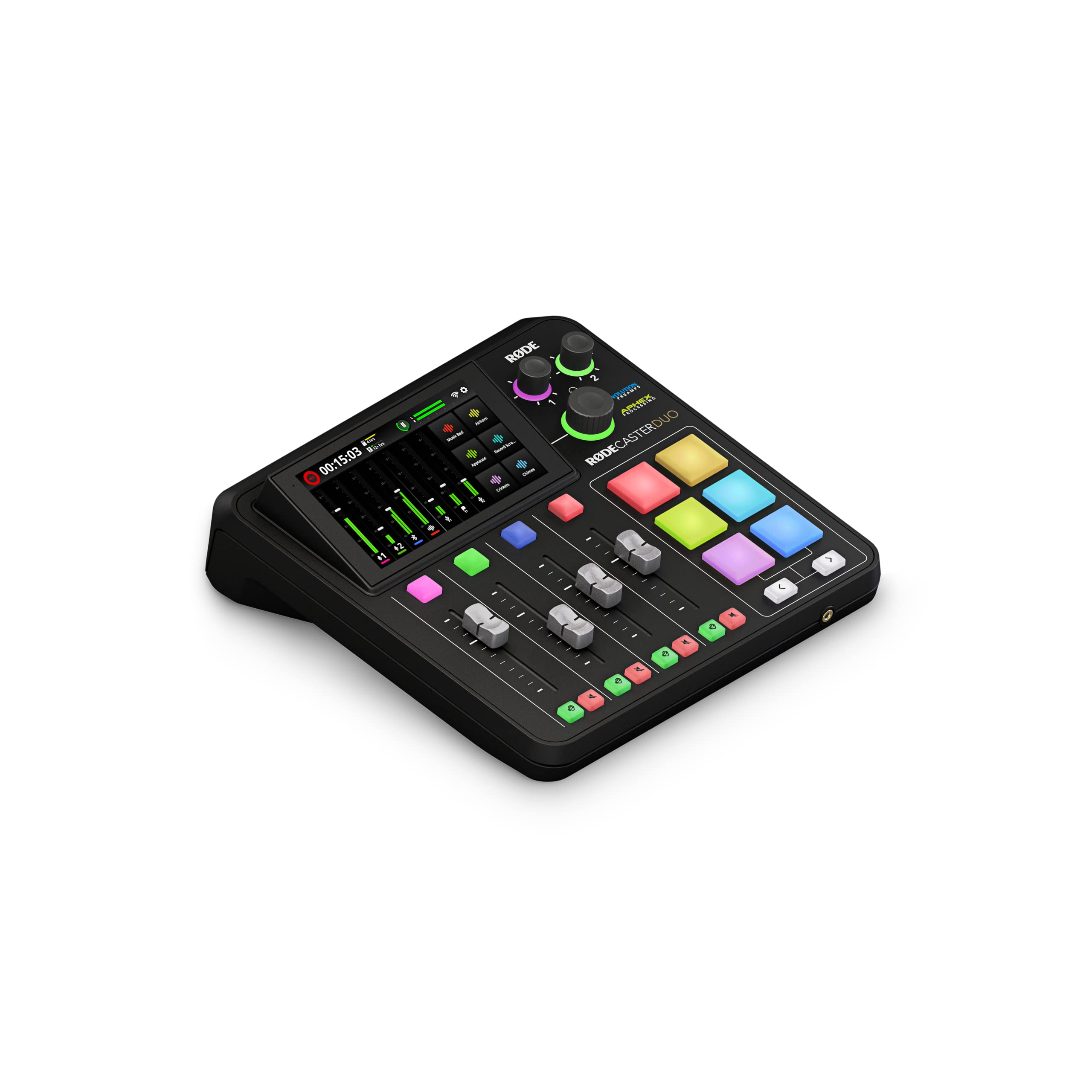
The all-in-one production hub that turns your podcast desk into a broadcast studio.
The RØDE RØDECaster Duo is the dream device for serious podcasters and content creators who want everything in one box. It boasts two ultra-low-noise Revolution Preamps with -131.5dBV EIN and 76dB gain, delivering broadcast-quality sound. The four broadcast-style faders and high-resolution haptic touchscreen give you super intuitive control. It also includes six SMART pads for triggering sound effects, jingles, or samples, making your production sound much more dynamic. The built-in APHEX processing, including the legendary Aural Exciter and Big Bottom effects, polishes your voice to a professional sheen without any additional plugins.
Performance is praised strongly (30 positive mentions), but reliability is the most-discussed aspect with 44 mentions in the “mixed” category. The biggest concern among buyers is that the unit can freeze, crash, or require a full 24-hour power cycle to reset. While many find it super easy to use, others note it is not beginner-friendly, especially for connecting with an iPhone. This is a powerful tool for the dedicated creator who is willing to work through its quirks for the end result, but less suitable for someone who needs a fault-tolerant device for critical live broadcasts.
Best for pro podcasters: serious podcasters and streamers who want a complete, professional production solution with exceptional audio quality in a single unit.
Skip for musicians: you need 100% crash-proof reliability for live shows, or if you consider yourself a tech novice.
Understanding the Specs
Sample Rate (kHz)
This is the number of times per second your audio signal is captured. A standard rate like 48 kHz is fine for spoken word and most streaming, while higher rates like 192 kHz capture more detail, which is helpful for high-end music production or sound design. A higher number means more potential fidelity, but also larger file sizes.
Phantom Power (+48V)
This is an electrical current sent through an XLR cable to power condenser microphones, which require external power to operate. Most professional audio interfaces and mixers have a button to switch this on. You should keep it off for dynamic microphones, as they do not need it.
FAQ
Can I use an audio interface and mixer as a standalone recording device?
What is the difference between a mixer and an audio interface?
Do I need a mixer if I only use one microphone?
What does the LOOPBACK function do for streaming?
How many channels do I need for a podcast with two hosts?
What does 32-bit float recording mean?
Is Bluetooth a useful feature on a mixer?
How important is the weight and size of the mixer?
Will a mixer work with my iPad or Android tablet?
What does a high noise level rating (in dB) mean?
Final Thoughts: The Verdict
For most people, the best audio interface and mixer is the Behringer FLOW 8 because it pairs professional-quality Midas preamps with the convenience of Bluetooth app control in a compact, portable package. If you need a high channel count at a low price for a live drum kit, grab the Depusheng DT12. And for the serious podcaster who wants a complete broadcast studio in a single device, the RØDE RØDECaster Duo is the one to reach for, provided you are comfortable with a bit of a learning curve and some reliability quirks.
How We Picked
We do not accept paid placement. Every pick is matched to a real buyer and a real use-case; we do not hands-on test units.
Sources & Methodology
Specifications: manufacturer listings and product documentation. Review insights: verified customer reviews, as of July 2026. Pricing: not shown on this page (it changes often); check the current price via the retailer link.
As an Amazon Associate, Gadgets Feed earns from qualifying purchases. This does not affect which products we feature.