
Turning a raw vocal take or a live guitar riff into a polished track depends entirely on the analog-to-digital conversion happening inside your interface. The wrong choice introduces noise, limits your dynamic range, and forces you to fight with latency. The right one gets out of the way and lets your performance speak.
I’m Min — the co-founder and writer behind Gadgets Feed. Hundreds of hours of cross-referencing preamp specs, sample rates, and driver stability reports have gone into building a guide that focuses on the measurable differences that actually affect your recordings.
This guide breaks down the top models on the market and explains the critical specs. After reading, you will know exactly what separates a capable unit from a frustrating bottleneck in your signal chain, and find the best audio interface for home recording.
How To Choose The Best Audio Interface For Home Recording
The core function of any interface is simple: convert analog audio (from your mic or instrument) into digital data your computer can process, then convert the processed digital audio back into an analog signal for your headphones or monitors. The differences lie in the quality of those conversion steps, the amount of clean gain available, and the connectivity options on offer. Here’s what to look for.
Input Channels and Gain
Count the number of XLR/TS combo jacks you need. A solo vocalist or one-instrument producer can work with one or two inputs. A podcaster recording a co-host or a musician tracking a stereo source needs at least two. The gain range, measured in dB, determines whether a low-output dynamic mic (like a Shure SM7B) needs an external booster like a Cloudlifter. Look for preamps providing 60 dB of gain or more for dynamic mics.
Sample Rate, Bit Depth, and Converters
Virtually all modern interfaces support 24-bit/192kHz recording. The practical benefit of 24-bit audio is a wider dynamic range (around 120 dB) and lower noise floor compared to 16-bit. The converter chip (like an ESS Sabre32 Ultra DAC) makes a real difference in signal-to-noise ratio and total harmonic distortion. Higher-end converters deliver cleaner, more accurate sound.
Connectivity and Power
USB-C is the current standard, with USB Audio Class 2 providing plug-and-play simplicity on macOS and iOS. Windows users should check for solid ASIO driver support to achieve low round-trip latency — the time it takes for your input signal to go through the computer and back to your headphones. Bus-powered units simplify mobile setups, while AC-powered interfaces offer more headroom for headphone outputs and preamps.
Quick Comparison
On smaller screens, swipe sideways to see the full table.
| Model | Category | Best For | Key Spec | Amazon |
|---|---|---|---|---|
| Focusrite Scarlett Solo 3rd Gen | MID-RANGE | Solo vocalists / guitarists | 24-bit/192kHz, Air mode preamp | Amazon |
| Focusrite Vocaster Two | MID-RANGE | Podcasters / dual-host shows | 70 dB preamp gain, Bluetooth | Amazon |
| Shure MVX2U Gen 2 | MID-RANGE | Mobile XLR-to-USB-C setups | Onboard DSP, +60 dB gain | Amazon |
| Universal Audio Volt 1 | MID-RANGE | Musicians wanting vintage tone | Vintage 610 preamp mode, MIDI I/O | Amazon |
| Pyle PMXU46BT | MID-RANGE | Multi-source live mix/recording | 4 channels, Bluetooth input | Amazon |
| Motu M2 | PREMIUM | Clean preamps for critical ears | ESS Sabre32 DAC, 120dB dynamic range | Amazon |
| Solid State Logic SSL 2 MKII | PREMIUM | Producers wanting SSL character | Legacy 4K enhancement, 32-bit DAC | Amazon |
| MOTU M4 | PREMIUM | Multi-input tracking | 4-in/4-out, loopback, LCD meters | Amazon |
| RØDE RØDECaster Duo | PREMIUM | All-in-one content creation | 76dB gain, APHEX processing | Amazon |
In‑Depth Reviews
1. Focusrite Scarlett Solo 3rd Gen

The Scarlett Solo 3rd Gen is the benchmark for solo home recording. The single XLR combo jack with switchable Air mode adds presence to vocals and acoustic sources by engaging an analog EQ boost at the preamp stage. The two high-headroom instrument inputs handle guitar and bass without clipping, and the Gain Halos provide visual feedback for proper input levels. The metal chassis is durable enough for years of desk moves and studio sessions.
Record and mix at up to 24-bit/192kHz, which preserves more dynamic range than 16-bit alternatives. The bundled software suite — including Ableton Live Lite, Pro Tools First, and the Hitmaker Expansion — gives you a full production environment out of the box. The two balanced 1/4-inch outputs deliver clean playback for studio monitors, while the dedicated headphone jack offers independent monitoring.
Bus-powered via USB-C and requiring no external power supply, this interface is ideal for laptop-based mobile recording. The trade-off is limited expandability: two inputs mean you are confined to solo or one-mic-at-a-time sessions. For the price, the preamp quality, software bundle, and build make this the most balanced entry point into professional home recording.
Why it’s great
- Switchable Air mode on mic preamp adds clarity and presence
- Rugged metal construction with smooth, tactile gain knobs
- Comprehensive software bundle (Ableton Live Lite, Pro Tools First, Hitmaker Expansion)
Good to know
- Only one XLR input — no simultaneous multi-mic recording
- AFX2DAW (onboard DSP plugin) is an extra purchase on Windows
2. Focusrite Vocaster Two

The Vocaster Two is built specifically for podcasters who need a dual-mic setup without complexity. Two XLR inputs labeled Host and Guest each benefit from 70 dB of gain — enough to drive a dynamic mic like the PodMic directly without a Cloudlifter. The Auto Gain button sets your levels in seconds, and the Enhance button applies one of four presets designed for spoken-word clarity.
Two independent headphone outputs with separate Show Mix controls let each presenter manage their own monitoring blend. The Bluetooth phone connectivity enables you to call in a remote guest or play music directly into the mix without additional hardware. The built-in mute button physically cuts the mic signal for coughs or off-mic conversations.
The plastic chassis feels lighter than the all-metal Scarlett series, but the focus on podcast-specific features is the trade-off. If your work is spoken-word content rather than music production, the Vocaster Two reduces setup time and complexity. The USB-C port powers the unit and provides the host connection, keeping your desk cable-free.
Why it’s great
- 70 dB of preamp gain handles low-output dynamic mics without external boosters
- Auto Gain and Enhance presets simplify level setting and voice optimization
- Bluetooth phone connectivity for remote guest calls and audio playback
Good to know
- Plastic build feels less durable than metal-chassis alternatives
- Included USB cable is very short — may need an extension for desktop placement
3. Shure MVX2U Gen 2
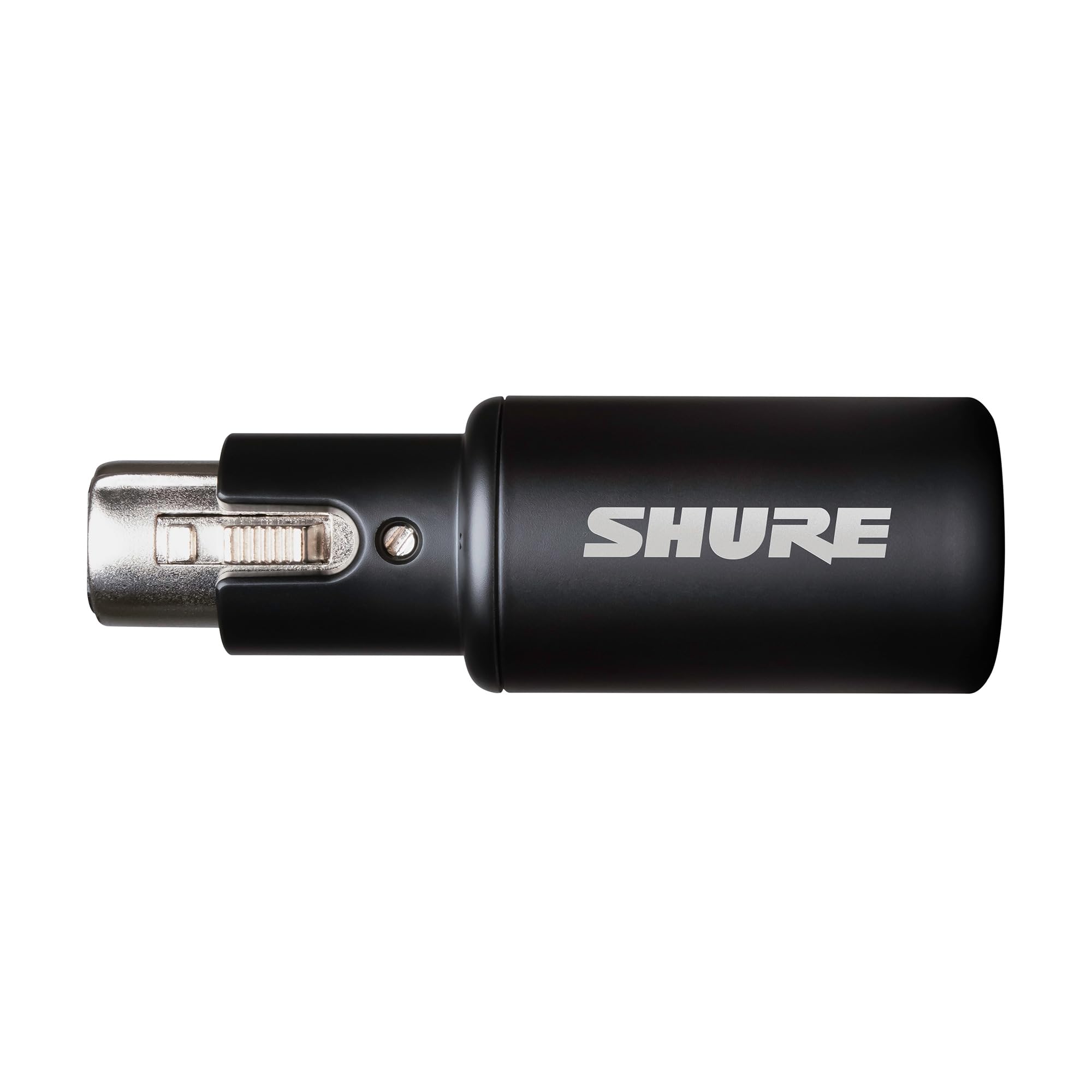
The MVX2U Gen 2 reimagines the audio interface as a palm-sized adapter that converts any XLR microphone into a USB-C device. Its onboard Digital Signal Processing includes Auto Level Mode, Real-Time Denoiser, and Digital Popper Stopper — all applied with zero latency before the signal reaches your computer. The maximum of +60 dB gain plus 48V phantom power means you can use condenser mics or dynamic mics without external gear.
Shure’s free MOTIV apps for desktop and mobile let you fine-tune tone, EQ, compression, and limiting per session. The unit saves your settings internally, so your preferred sound profile persists even when you swap devices. The compact aluminum body weighs 100 grams, making it the most portable option for recording on an iPad or iPhone.
The limitation is channel count: one XLR input only. This is a solo creater’s tool, ideal for single-voice podcasting, voiceover work, or livestreaming. If you need to record two microphones simultaneously or capture instrument and voice at the same time, you need a larger interface. For its intended use case, the MVX2U Gen 2 delivers studio-grade processing in a cable-size package.
Why it’s great
- Professional-grade DSP (Auto Level, Denoiser, Popper Stopper) with zero-latency processing
- Ultra-portable design (100 grams) works with iPhone, iPad, Mac, and PC
- 60 dB of clean gain eliminates the need for an inline booster on most dynamic mics
Good to know
- Single XLR input limits you to one mic or one instrument at a time
- Settings configuration requires the MOTIV app — no hardware knobs for real-time adjustment
4. Universal Audio Volt 1

The Volt 1 brings Universal Audio’s analog heritage to the home studio at a mid-range price point. The Vintage mode button engages a circuit derived from UA’s classic 610 tube preamps, adding a subtle harmonic saturation that warms vocals and acoustic instruments. Recording at 24-bit/192kHz through the crystal-clear converters captures the full detail of your source without digital harshness.
MIDI I/O via 5-pin DIN jacks is a rare find on a single-input interface, enabling you to connect a keyboard controller or drum machine directly without a separate MIDI adapter. The bundled LUNA DAW from UA offers seamless integration with a tape-style workflow, plus a selection of UAD plugins for mixing. The metal chassis feels substantial, and the large central monitor knob provides precise control over playback volume.
One omission is the lack of a dedicated software control panel — all gain and monitoring adjustments are handled via hardware knobs. This keeps the experience simple but limits remote control flexibility. If you want that classic tube preamp character without buying a separate outboard unit, the Volt 1 delivers that flavor in a compact, bus-powered design.
Why it’s great
- Vintage 610 preamp emulation circuit adds warmth and harmonic richness to recordings
- Full MIDI I/O (5-pin DIN) for connecting keyboards, controllers, and drum machines
- Includes LUNA DAW and UAD plugin suite — a powerful production package for beginners
Good to know
- No software control panel — all adjustments are made via hardware knobs only
- Single XLR input cannot record two sources simultaneously
5. Pyle PMXU46BT

The PMXU46BT operates as both a 4-channel analog mixer and a USB audio interface. Two XLR/TRS combo jacks with +48V phantom power connect your microphones, while two stereo channels handle line-level sources like keyboards or drum machines. Bluetooth input streams audio from your phone for backing tracks or music playback, making this a central hub for live-streaming or small-venue recording.
The 12-segment LED level meter gives you visual confirmation of your master output, and the 3-band EQ on each channel lets you sculpt the tone before it hits the DAW. The USB Type-B connection sends the main stereo mix to your computer as a single track — note this is not multi-track recording; you capture the full mix as one stereo file. The metal chassis is robust, and the smooth faders feel reliable for repeated use.
The trade-off for this flexibility is noise floor. With multiple gain stages and analog circuitry in the signal path, the noise floor is higher than a dedicated 2-in/2-out interface like the Scarlett. It also requires AC power via the included adapter. If you need to blend live sources while recording a stereo master, the versatility outweighs the noise trade-off.
Why it’s great
- Four channels provide more simultaneous inputs than most home interfaces
- Bluetooth streaming adds a wireless source for backing tracks or phone audio
- 3-band EQ per channel allows pre-DAW tonal shaping
Good to know
- Records a single stereo mix, not multi-track audio through USB
- Requires AC power — no bus-powered mobile operation
6. Motu M2

The Motu M2 sets a benchmark for converter performance in the sub- category. The ESS Sabre32 Ultra DAC, typically found in mastering-grade converters, delivers a measured 120 dB dynamic range on the outputs and -129 dBu EIN on the mic inputs. These figures translate to an exceptionally low noise floor and pristine playback — you hear exactly what your mix sounds like without the interface adding coloration.
The front panel houses a large LCD screen that displays real-time input and output levels, making it easy to set gain visually. For the home recordist, the headphone output drives high-impedance headphones like the Beyerdynamic DT 990 Pro (250 ohms) to ample volume. The USB-C connection provides bus power, and the bundled Ableton Live Lite and MOTU Performer Lite DAWs get you started immediately.
The M2’s driver stability on Windows is a common point of praise — the ASIO drivers maintain low round-trip latency even at moderate buffer settings. The physical direct monitoring knob blends your input with playback without routing through the computer, eliminating latency for the performer. If clean, transparent conversion is your priority, the M2 outperforms many interfaces costing twice as much.
Why it’s great
- ESS Sabre32 Ultra DAC delivers best-in-class 120 dB dynamic range for this price tier
- Large LCD level meters provide precise visual feedback for input gain staging
- Rock-solid ASIO drivers on Windows maintain low latency without dropouts
Good to know
- Headphone amp power is limited by USB bus power — may not drive 600-ohm cans to full volume
- Occasional pitch-shift bug on Windows requires disabling fast startup in system settings
7. Solid State Logic SSL 2 MKII

The SSL 2 MKII brings the console sound of legendary SSL desks into your home studio. The Legacy 4K button engages an analog enhancement circuit derived from the SSL 4000 series console, adding harmonic presence and high-frequency air to the input signal. Two XLR microphone preamps with 62 dB of gain provide a clean foundation, while the high-pass filters (75 Hz) cut low-end rumble from booth noise or handling vibrations.
The 32-bit AD/DA converters (not 32-bit float recording on the inputs — the 32-bit DAC processes the monitor path for extreme headroom) prevent clipping in your monitoring. MIDI I/O via 5-pin DIN connects your controllers, and the stereo loopback channel lets you capture computer audio for streaming or podcast demos. The all-metal chassis and high-quality knobs mirror the tactile feel of SSL’s pro consoles.
Windows users report driver-free operation via USB Audio Class 2, with the included SSL Production Pack providing the company’s own vocalstrip and bus compressor plugins. The headphone amplifier is notably powerful, delivering clean signal to high-impedance headphones. If you want that classic SSL character on your source before it hits the DAW, the 4K button alone justifies the upgrade over cheaper interfaces.
Why it’s great
- Legacy 4K analog enhancement adds console-style presence and harmonic detail
- High-pass filters on both channels eliminate rumble and subsonic noise effectively
- Comprehensive SSL Production Pack including Vocalstrip and Bus Compressor plugins
Good to know
- Not 32-bit float recording — the input path still clips, only the DAC is 32-bit
- Slightly larger and heavier than comparable 2-in/2-out interfaces in this class
8. MOTU M4

The M4 expands on the M2’s formula with four inputs and four outputs, giving you the flexibility to record two microphones simultaneously while keeping two line-level instruments connected. The ESS Sabre32 DAC technology carries over, delivering the same 120 dB dynamic range and ultra-low noise floor. The front-panel LCD level meters display all four inputs, and each channel has independent 48V phantom power switching.
The dedicated loopback channel captures your computer’s audio output and routes it into your DAW — essential for podcasters who want to record Skype calls or gameplay audio alongside their mic track. The physical direct monitoring knob lets you blend any input with the playback mix at zero latency. The compact metal body includes two balanced 1/4-inch monitor outputs and a separate headphone output with its own mix control.
Bus-powered via USB-C, the M4 draws more power than the M2, so using both mic preamps simultaneously might push the limits of some computer ports. The headphone output is adequate for 32-ohm to 80-ohm headphones but starts to struggle with 250-ohm models — an external headphone amp pairs well for higher-impedance monitoring. For the home recordist who needs extra I/O without stepping up to rack-mount gear, the M4 is the ideal sweet spot.
Why it’s great
- Four inputs allow simultaneous recording of two microphones plus two line sources
- Built-in loopback channel for capturing computer audio into your DAW or stream
- ESS Sabre32 DAC delivers transparent, low-noise conversion across all channels
Good to know
- Higher power draw may cause instability on underpowered USB ports when all channels are active
- Headphone amp is weaker than the M2’s — struggles to drive high-impedance headphones to usable levels
9. RØDE RØDECaster Duo
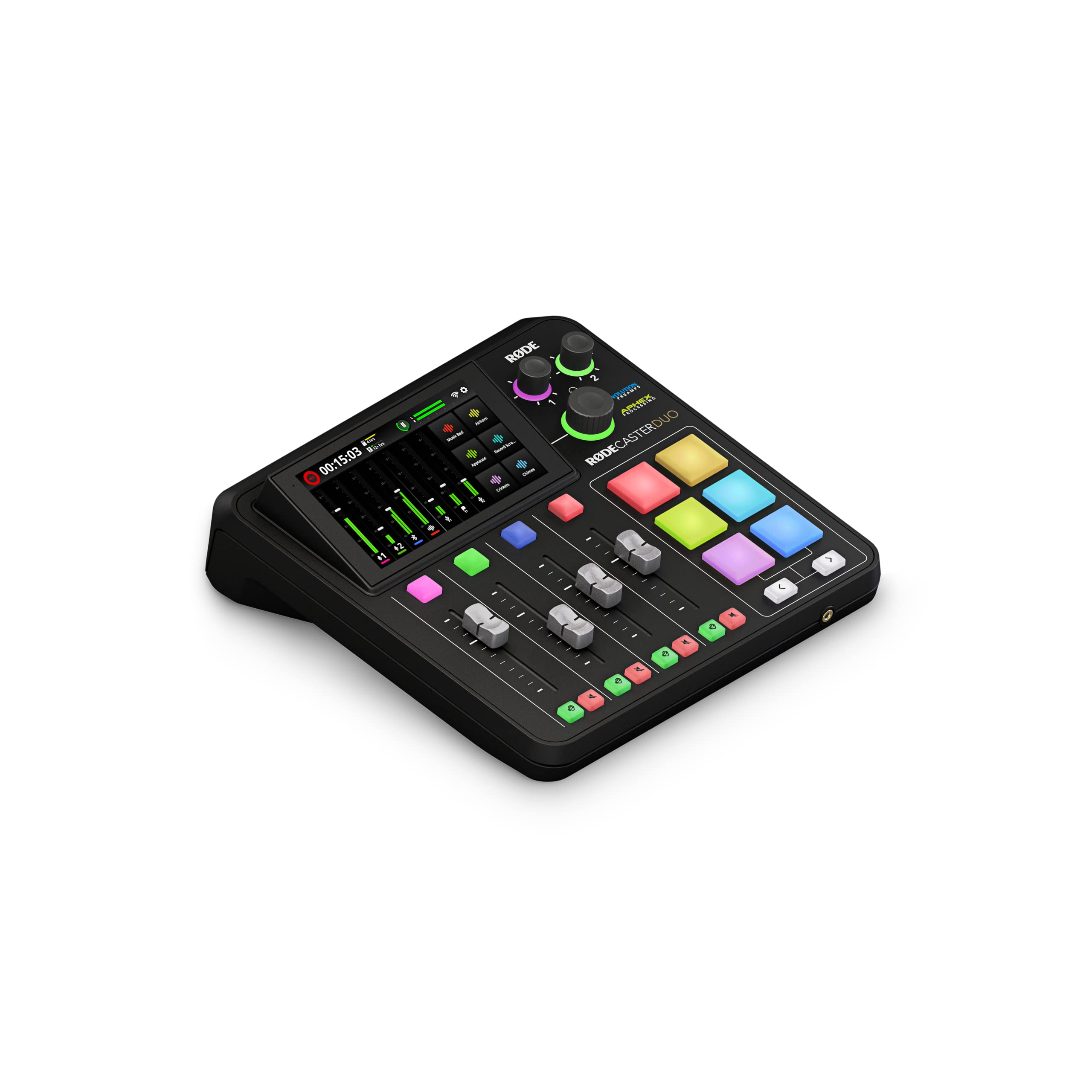
The RØDECaster Duo is an all-in-one production console that integrates four faders, a multitouch screen, six SMART pads, and studio-grade effects into a single chassis. The Revolution Preamps deliver 76 dB of gain with an EIN of -131.5 dBV, making them the quietest and most powerful preamps in this roundup. Massive headroom means even the lowest-output ribbons and dynamics come through clean and loud.
The APHEX processing suite includes the Aural Exciter and Big Bottom effects, traditionally hardware rack units, now available per-channel at the touch of a screen button. The onboard recording function saves directly to a microSD card — no computer required for basic capture. The USB-C connection provides multi-track recording to your DAW, and the Bluetooth input connects your phone for call-in guests or playlist audio.
The learning curve is steeper than a conventional audio interface: navigating the routing matrix and firmware updates requires patience. Some units have reported stability issues requiring a full power-cycle reset. For the content creator who wants a streamlined hardware workflow with broadcast-level processing, the Duo eliminates the need for a separate DAW during live recording. If you prefer a traditional software-based workflow, a standard interface plus a mixer plug-in might serve you better.
Why it’s great
- Revolution Preamps deliver 76 dB of gain with exceptionally low noise for any microphone
- APHEX processing (Aural Exciter, Big Bottom) adds professional polish without plugins
- Built-in microSD recording and touchscreen interface enable computer-free operation
Good to know
- Complex routing and firmware can be confusing — not a true plug-and-play experience
- Occasional stability issues reported (freezing, driver conflicts requiring power cycling)
FAQ
Do I need an audio interface if I have a USB microphone?
What does phantom power (48V) do and when should I use it?
Is 192kHz recording necessary for home recording?
How many inputs do I really need for a home studio?
Final Thoughts: The Verdict
For most users, the audio interface for home recording winner is the Focusrite Scarlett Solo 3rd Gen because it balances preamp quality, build durability, and software bundle value at a mid-range price point that works for vocalists, guitarists, and spoken-word artists alike. If you want the cleanest converters in this price bracket, grab the Motu M2. And for multi-microphone recording without upgrading to a rack, nothing beats the MOTU M4.