
A set of headphones is your most critical mixing tool. If the cans lie to your ears, the entire mix falls apart. Navigating the crowded field of studio cans requires ignoring flashy marketing and focusing on what actually matters for your workflow: transient response, driver consistency, and a sound signature that reveals flaws rather than hiding them.
I’m Min — the co-founder and writer behind Gadgets Feed. I’ve spent hundreds of hours parsing frequency response graphs, impedance curves, and real-user measurements to separate genuine studio tools from consumer pretenders, helping you pick the pair that won’t betray your mix.
Whether you’re tracking a vocalist, editing podcast dialog, or mastering a final stereo bus, the best audio production headphones deliver the uncolored truth so you can make confident creative decisions.
How To Choose The Best Audio Production Headphones
Picking production headphones is not the same as picking everyday listening cans. Some specs and design elements directly impact how well your mixes translate to speakers and earbuds. Understanding these basics keeps you from wasting your budget on an expensive headphone that makes all your tracks sound perfect — but only through itself.
Closed-back vs. open-back design
Closed-back headphones physically seal the driver from the outside world. They offer passive noise isolation, which makes them the default choice for tracking live instruments or vocals in the same room as other musicians. Open-back headphones allow air to pass through the rear of the driver, creating a much wider, more natural soundstage. They do not isolate at all — room sound bleeds in and sound leaks out — but they deliver superior spatial detail for mixing and critical listening. Many engineers own one of each.
Impedance and its impact on your setup
Headphone impedance, measured in ohms, tells you how much power the headphones need to reach proper listening levels. Low-impedance models (under 50Ω) can be driven directly by a laptop headphone jack or a basic audio interface. High-impedance models (150Ω and above) demand a dedicated headphone amplifier to achieve sufficient volume and avoid distortion. If you plan to work with a portable setup or a simple interface, stick to a versatile impedance like 48Ω or 32Ω. For a high-end desktop studio chain, higher impedance can offer tighter driver control.
Frequency response and transient detail
A flat, neutral frequency response is the holy grail for production headphones. The closer the curve is to a straight line, the less the headphone colors your sound. Extended frequency range (5 Hz to 40 kHz, for example) is less important than how neutral the headphone is within the human hearing band. Transient detail — how sharply a headphone reproduces fast attacks like a snare hit or a plucked string — matters enormously for editing and mixing decisions. Driver technology (dynamic versus planar magnetic) heavily influences this behavior, with planar magnetic drivers typically offering faster transient response at a higher price.
Quick Comparison
On smaller screens, swipe sideways to see the full table.
| Model | Category | Best For | Key Spec | Amazon |
|---|---|---|---|---|
| HIFIMAN Arya Stealth | Planar Magnetic | High-end mixing & mastering | Stealth magnet planar driver | Amazon |
| Sennheiser HD 660S2 | Dynamic | Detailed critical listening | 42mm dynamic driver, 300Ω | Amazon |
| Audio-Technica ATH-R70XA | Dynamic | Ultra-lightweight reference work | 199g weight, 45mm driver | Amazon |
| Sennheiser HD 490 PRO | Dynamic | Versatile mixing & gaming | Dual pad sets, 5–36 kHz | Amazon |
| ATH-R70x (Original) | Dynamic | Open-back neutral monitoring | 210g body, 470Ω impedance | Amazon |
| DT 990 Pro X | Open Dynamic | Wide soundstage editing | 48Ω STELLAR.45 driver | Amazon |
| DT 770 Pro X | Closed Dynamic | Tracking & sound isolation | 48Ω STELLAR.45 driver | Amazon |
| Audio-Technica ATH-M50X | Closed Dynamic | Pro monitoring with portability | 45mm driver, folding design | Amazon |
| Shure SRH440A | Closed Dynamic | Entry-level accurate monitoring | 5 Hz–25 kHz, collapsible | Amazon |
In‑Depth Reviews
1. HIFIMAN Arya Stealth Magnet Version

The HIFIMAN Arya Stealth represents a genuine step-change in planar magnetic technology for the production studio. Its stealth magnet geometry eliminates wave diffraction turbulence that degrades the integrity of sound waves, resulting in unusually pure, full-range output. The nanometer-thickness diaphragm delivers instantaneous transient response, making it exceptionally easy to hear compression artifacts and sibilance that other headphones mask.
Driving the Arya properly requires a capable amplifier — the 35Ω impedance demands current, not voltage, so a portable dongle will leave the sound thin. Paired with a hybrid tube amplifier or a robust solid-state unit, the soundstage expands dramatically, with imaging precise enough to place individual instruments on a phantom stage. The asymmetrical ear cups follow the human ear’s natural shape, improving comfort during long sessions despite the headphones’ size.
The build uses high-grade plastic and metal, but the fit is not for everyone — users with smaller heads may find the clamping force light and the weight noticeable after several hours. The included cable is serviceable but many owners upgrade to a balanced termination for improved channel separation. For mixing engineers who want the fastest transient response currently available below four figures, the Arya sets a new benchmark.
Why it’s great
- Stealth magnet design yields extremely low distortion and pure sound
- Exceptional transient speed reveals subtle mix imperfections
- Massive soundstage with laser-precise instrument placement
Good to know
- Demands a powerful amplifier — weak sources sound thin
- Large ear cups may feel heavy during very long sessions
- Stock cable is basic; many users invest in a balanced upgrade
2. Sennheiser HD 660S2
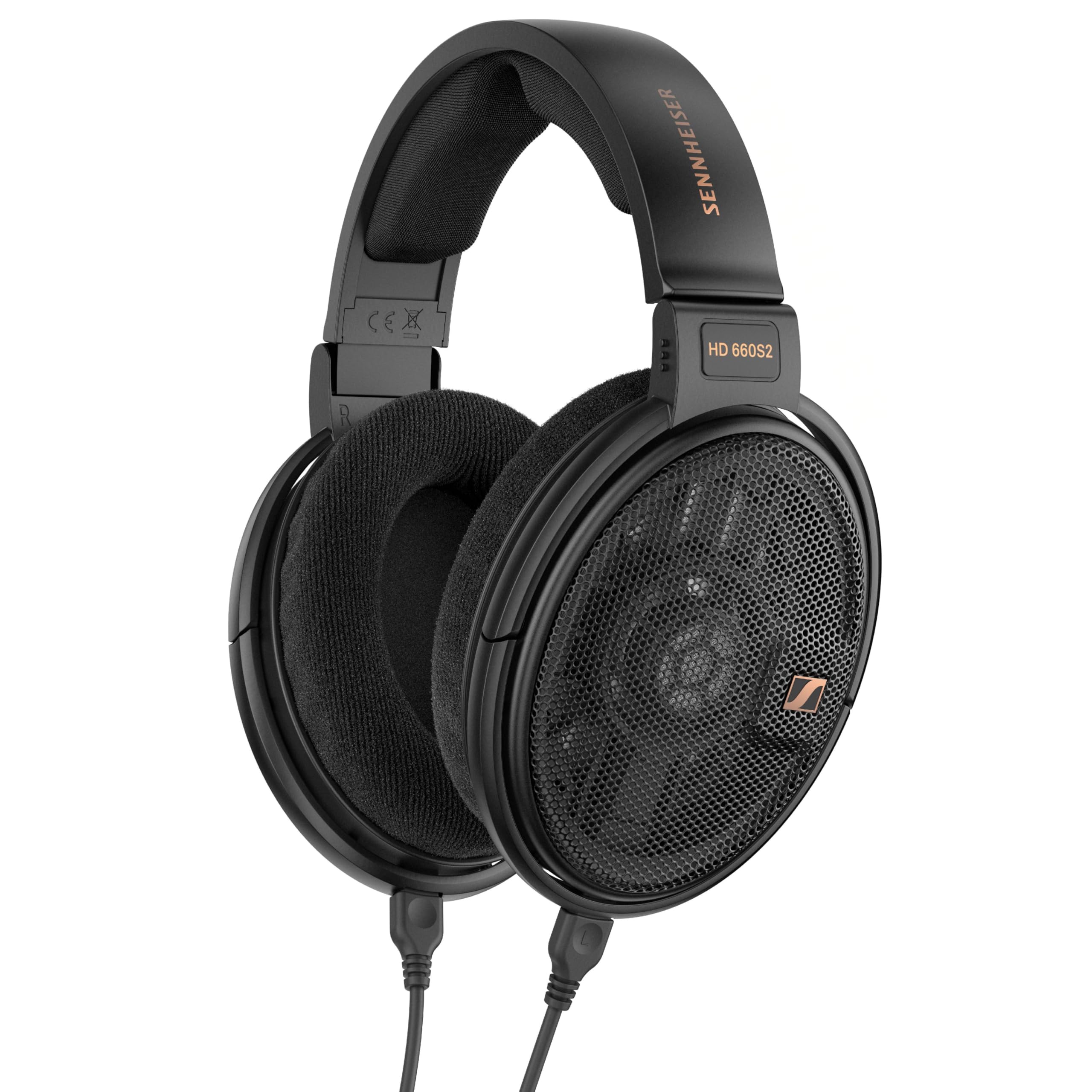
Sennheiser’s HD 660S2 refines the venerable 600-series lineage with an ultra-light aluminum voice coil and a redesigned 42mm transducer. The result is an intimate, surprisingly natural presentation that excels at vocal-focused critical listening and mix editing. The 300Ω impedance means you absolutely need a dedicated headphone amplifier — expecting a laptop to drive these to proper levels will result in a quiet, lifeless experience.
The low-end extension reaches down to 27.5 Hz with genuine authority, letting you feel the sub-bass of a kick drum without any bloat that would fool your ears during mastering. The mids are rich and present, making vocal sibilance checks and dialogue editing very straightforward. The open-back design creates a spacious soundstage, though it is more intimate than the HD 800 series, which some engineers prefer for focused tracking decisions.
The included cables use 6.3 mm and 4.4 mm terminations, with a 3.5 mm adapter — flexible enough for most studio configurations. The carry pouch is underwhelming for the price point. The ear cushions are plush and breathable, and the headband pressure is low enough for all-day wear. If your workflow centers on vocal and midrange detail, the HD 660S2 is an easy recommendation at its current price.
Why it’s great
- Natural, lifelike midrange and vocal reproduction
- Deep, controlled bass extension without bloat
- Lightweight and comfortable for multi-hour mixing sessions
Good to know
- 300Ω impedance — requires a strong headphone amplifier
- Soundstage is intimate rather than wide and expansive
- Included carry pouch is minimal for a premium product
3. Audio-Technica ATH-R70XA
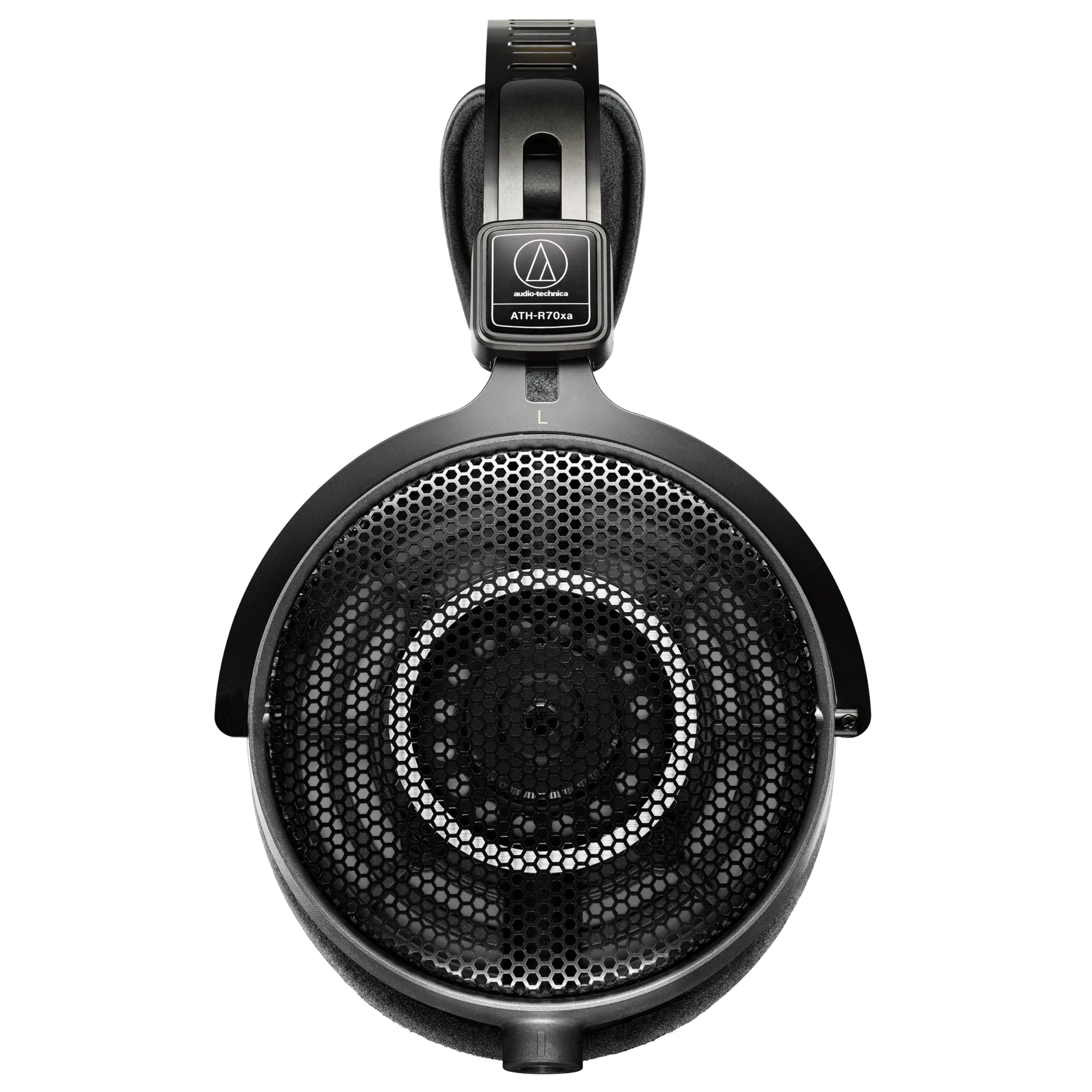
The ATH-R70XA is the refined successor to the well-regarded R70x, hitting a remarkably low 199 grams without sacrificing driver performance. The fully open-back design uses carbon composite resin in the housing to improve structural rigidity, which translates to extremely fast transient response and clear micro-detail retrieval — you can hear the reverb tail of a snare drum decay naturally without any driver resonance. The 45mm dynamic driver covers 5 Hz to 40 kHz with a neutral, honest signature.
The 470Ω impedance is the highest on this list, and driving the R70XA properly requires a balanced output or a powerful desktop amplifier. With the right chain, the imaging is best-in-class among dynamic drivers in this price tier, offering holographic separation that helps you place elements precisely in the stereo field. The unique 3D wing support headband distributes weight evenly, reducing fatigue substantially during twelve-hour mastering sessions.
The dual-sided detachable locking cable is designed with L/R signal independence — a thoughtful touch that prevents accidental phase inversion. The velour earpads are replaceable, and the metal-reinforced construction inspires confidence. The clamp force is deliberately light, which some users find loose when tilting forward. For mix engineers who prioritize comfort and micro-detail above all else, the R70XA is a formidable tool.
Why it’s great
- Extremely lightweight at 199g — virtually disappears on your head
- Remarkable micro-detail retrieval and fast transient response
- Neutral, honest tonality ideal for critical reference work
Good to know
- 470Ω impedance demands a powerful amplifier
- Light clamp feels loose for some users
- No balanced cable included; most users add one
4. Sennheiser HD 490 PRO

Sennheiser designed the HD 490 PRO specifically for studio workflows, and the result feels purpose-built rather than adapted from a consumer model. The open-frame architecture reduces total harmonic distortion and minimizes internal resonance, yielding exceptionally clean audio across the 5 Hz to 36 kHz range. The low-frequency cylinder system produces accurate, well-defined bass that makes sub-bass mixing decisions far more reliable than on conventional open-back designs.
The unique dual pad system is the HD 490 PRO’s standout innovation — the “mixing” pads deliver a neutral, analytical sound, while the “producing” pads offer slightly enhanced bass and treble for a more engaging monitoring experience. Swapping pads takes seconds and genuinely alters the frequency response in a predictable, useful way. The low impedance and high sensitivity make these very easy to drive; a Focusrite or Universal Audio interface drives them to satisfying levels without an external amp.
The patented cable coil structure blocks cable-borne noise, which matters when the cable rubs against your desk or clothing during a take. The build uses fiberglass-reinforced polymer and feels durable without being heavy. The mini-XLR connectors on both ear cups allow flexible cable routing. If you need one headphone that handles everything from tracking to mixing without demanding a separate amplifier, the HD 490 PRO is a remarkably versatile choice.
Why it’s great
- Dual pad system gives two distinct tunings for producing vs. mixing
- Very easy to drive — works with standard audio interface outputs
- Extremely low THD for clean, artifact-free monitoring
Good to know
- Proprietary mini-XLR connectors limit third-party cable options
- Soundstage is less expansive than flagship open-backs
- Price sits at the premium end of the mid-range tier
5. Audio-Technica ATH-R70x

The ATH-R70x has become a reference staple in professional studios, and for good reason. The high-efficiency neodymium magnets paired with a pure alloy magnetic circuit deliver vanishingly low distortion and an extended, detailed high-frequency response that makes cymbal crashes and string harmonics sound natural rather than simulated. The acoustically transparent aluminum honeycomb-mesh housings eliminate internal reflections, giving the R70x a very natural, open, and airy presentation.
The 470Ω impedance is demanding — you need a dedicated amplifier rated for high-impedance loads to unlock the R70x’s dynamic range. Underpowered devices produce a thin, compressed sound that misrepresents the headphone’s capabilities. When properly driven, the dual-sided detachable locking cable ensures consistent phase behavior, and the featherweight 210g body with the 3D wing support system provides fatigue-free wear that rivals the R70XA’s comfort.
The breathable fabric earpads and improved wing support accommodate a wide range of head shapes. The build is robust but not luxurious — the plastic and metal construction prioritizes weight savings over premium feel. The R70x is a proven reference tool that reveals exactly what is in your mix, for better or worse, and its long track record in professional environments speaks for itself.
Why it’s great
- Benchmark neutral tonality trusted by professional mix engineers
- Exceptional comfort with lightweight design and wing support
- Very low distortion for transparent, natural reproduction
Good to know
- High 470Ω impedance requires a capable headphone amplifier
- Sub-bass extension is limited without EQ
- Long 3m cable can be cumbersome in tight desk setups
6. beyerdynamic DT 770 Pro X

The DT 770 Pro X updates the legendary DT 770 series with the new STELLAR.45 driver, which delivers a wider frequency response (5 Hz to 40 kHz) and lower distortion than the previous model. This is a closed-back design, making it the right choice for tracking vocals, guitars, or drums in a live room where isolation matters. The passive noise isolation is substantial — it attenuates ambient bleed significantly better than active noise cancellation systems that can introduce latency.
The 48Ω impedance is a sweet spot for portable and studio use. It reaches comfortable levels from an audio interface headphone output without breaking a sweat, but still benefits from a dedicated headphone amp for the cleanest signal. The sound signature is analytical and bright — the treble emphasizes detail, which is excellent for hearing sibilance and mix errors, but some listeners find it fatiguing over long periods without EQ adjustment.
The detachable mini-XLR locking cable is a major upgrade from the original DT 770’s fixed cable, extending the headphones’ usable life significantly. The velour ear pads are soft and breathable, and the headband pressure is moderate. All parts are replaceable — a real advantage when pads wear out after a year of heavy studio use. If your primary need is a closed-back can for isolation-aware tracking, the DT 770 Pro X is the logical choice.
Why it’s great
- Excellent passive noise isolation for live tracking environments
- Versatile 48Ω impedance works with interfaces and portable gear
- Fully serviceable — replaceable pads, cable, and headband parts
Good to know
- Bright treble can be fatiguing during very long mixing sessions
- No swivel on ear cups, which limits one-ear monitoring
- Clamping force is tight when new, needs breaking in
7. beyerdynamic DT 990 Pro X

The open-back DT 990 Pro X is the natural companion to the closed-back DT 770 Pro X for engineers who want a wide, airy soundstage for mixing decisions. The STELLAR.45 driver in this open configuration delivers a frequency response that emphasizes treble detail and spatial separation, making it particularly effective for editing dense mixes where you need to hear each element’s position in the stereo field. The 48Ω impedance keeps it easy to drive across different interfaces.
The open-back design provides a very natural sense of spaciousness, but it leaks sound significantly and offers zero isolation. This is not a headphone for tracking in a live room — use it for editing, mixing, and critical listening in a quiet control room. The velour ear pads are deeply comfortable, and the circumaural fit accommodates larger ears without pressure points. The lightweight 0.64 lb build keeps fatigue manageable during long sessions.
The detachable 3m cable with a locking mini-XLR connector adds durability and flexibility. The treble emphasis that makes the DT 990 Pro X so revealing for mix errors can also make it sound harsh on poorly recorded material — some users run a gentle treble shelf EQ to tame the peak. For its price, it offers an expansive soundstage and detailed resolution that outclasses many competitors, making it a strong tool for the mixing engineer on a mid-range budget.
Why it’s great
- Wide, spacious soundstage ideal for stereo imaging work
- Easy to drive with 48Ω impedance — no amp required
- Very comfortable velour pads for extended sessions
Good to know
- Treble can sound harsh or bright on certain tracks
- Open-back design leaks sound — not for live tracking
- Bass response is neutral rather than punchy
8. Audio-Technica ATH-M50X

The ATH-M50X needs little introduction — it is one of the most widely adopted studio headphones on the market, and for good reason. The 45mm large-aperture drivers deliver a sound that is detailed, balanced, and slightly forward in the upper midrange, which helps vocals and lead instruments cut through during monitoring. This is a closed-back model, making it suitable for tracking and mixing in moderately noisy environments.
The bundle includes three detachable cables (1.2m straight, 3m straight, and 1.2m–3m coiled) plus a 25-foot extension and a screw-on 1/4″ adapter, covering virtually any studio wiring scenario. The 90-degree swiveling ear cups enable one-ear monitoring, which is indispensable for DJs and vocal tracking engineers who need to hear room sound alongside the mix. The folding design makes the M50X genuinely portable.
The sound signature is not completely flat — there is a gentle bass bump and a slight treble peak that adds perceived detail but can mislead critical mixing decisions on bottom end. The ear pads are comfortable but not as breathable as velour, and the stock pads can flake after extended use. The M50X remains a solid, versatile tool for podcast editing, vocal tracking, and general monitoring, especially for engineers who need one headphone that crosses between studio and field use.
Why it’s great
- Versatile closed-back design with excellent noise isolation
- Swiveling ear cups and folding design for one-ear monitoring and portability
- Three cables and an adapter cover all connection needs
Good to know
- Sound signature has a bass bump — not completely neutral
- Stock ear pads can flake after a year of daily use
- Clamping force is moderate, not ideal for very large heads
9. Shure SRH440A

The Shure SRH440A is an honest entry point into accurate monitoring. Its closed-back, over-ear design delivers a balanced sound signature that aims for neutrality rather than consumer-friendly bass emphasis. The frequency response extends from 5 Hz to 25 kHz, but what matters more is the consistent, low-distortion behavior within the audible band — the SRH440A reveals mix flaws that budget consumer headphones would gloss over.
The collapsible design and lightweight construction make the SRH440A practical for mobile engineers or those with limited desk space. The adjustable headband and cushioned earcups are comfortable enough for recording sessions, though the clamping force is moderate and the pads are not as plush as higher-tier models. The detachable locking cable is a welcome addition at this price, as cable failure is a common failure mode for budget headphones.
Noise isolation is adequate for a closed-back design — it contains sound well enough to prevent significant microphone bleed during vocal tracking. The SRH440A does not include active noise cancellation, and the plastic build does not feel as premium as the Shure’s price suggests. For the beginner producer, podcast host, or budget-conscious studio, the SRH440A delivers genuinely accurate monitoring without breaking the bank.
Why it’s great
- Accurate, transparent sound signature ideal for entry-level monitoring
- Detachable locking cable extends the product’s usable life
- Collapsible design makes it portable and easy to store
Good to know
- No active noise cancellation — relies on passive isolation
- Plastic build feels less durable than metal competitors
- Ear pads and clamping force are adequate but not luxurious
FAQ
Can I use open-back headphones for tracking vocals in a live room?
What headphone impedance works best with a standard audio interface?
Do I need a balanced cable for production headphones?
How often should I replace ear pads on studio headphones?
Final Thoughts: The Verdict
For most users, the best audio production headphones winner is the HIFIMAN Arya Stealth Magnet Version because its planar magnetic driver delivers exceptional transient speed and the lowest distortion in this price range, making critical mix decisions more reliable. If you want a closed-back design for tracking and isolation, grab the beyerdynamic DT 770 Pro X. And for a versatile, easy-to-drive open-back that handles both mixing and editing, nothing beats the Sennheiser HD 490 PRO.