
Upgrading your car’s sound system starts with the brain of the operation: the head unit. A stock stereo masks the potential of even the most expensive speakers, compressing dynamics and muddying vocals. The right receiver acts as a high-fidelity command center, delivering clean signal paths, robust preamp outputs, and precise digital signal processing that transforms your daily commute into a mobile listening room.
I’m Min — the co-founder and writer behind Gadgets Feed. My research for this guide involved cross-referencing hundreds of hours of user feedback and technical spec sheets, focusing on the measurable metrics that separate audiophile-grade gear from the rest: total harmonic distortion figures, preamp voltage output, and the granularity of parametric EQ bands.
For drivers who refuse to compromise on sound, this guide cuts through the marketing noise to identify the true best audio quality car stereo options available today, ranked by real-world sonic performance and feature depth.
How To Choose The Best Audio Quality Car Stereo
Selecting a head unit for sonic excellence requires moving past screen size and brand loyalty. The key metrics are preamp voltage, DAC quality, and processing flexibility. A unit with 4V or 5V preouts delivers a stronger, cleaner signal to external amplifiers, reducing the noise floor that can introduce hiss at higher volumes. For the same reason, the number of EQ bands directly dictates your ability to correct for your car’s unique acoustic flaws — a 13-band graphic EQ offers far finer control than a basic 3-band.
Preamp Output Voltage & RCA Pairs
The voltage of your RCA preouts is the single most important electrical spec for an audio-focused build. A 2V output is standard for entry-level units and requires amplifiers with higher gain sensitivity, often introducing audible noise. Premium units boasting 4V or 5V preouts send a much “hotter” signal to your amps, allowing for lower gain settings and a dramatically blacker background between notes. More RCA pairs also mean dedicated front, rear, and subwoofer channels, giving you independent control over each zone.
Digital Signal Processing (DSP) & Time Alignment
Audiophile-grade receivers include built-in DSP features like a high-resolution EQ, crossovers for HPF/LPF tuning, and digital time alignment. Time alignment lets you electronically delay specific speakers so that sound from all of them reaches your ears at exactly the same moment, reconstructing a proper soundstage. Without it, the speaker closest to you (like the left door) will always dominate the image, collapsing the stereo field. A unit with independent time alignment for each channel is a must for serious tuning.
Quick Comparison
On smaller screens, swipe sideways to see the full table.
| Model | Category | Best For | Key Spec | Amazon |
|---|---|---|---|---|
| Kenwood DMX1057XR | Premium | Ultimate sound tuning & 3-way system | 5V preouts & 3-way DSP | Amazon |
| Pioneer AVH-W4500NEX | Premium | Wireless CarPlay with HD Radio | Hi-Volt RCA & FLAC support | Amazon |
| Alpine iLX-507 | Premium | High-resolution touch & wireless CarPlay | 1280×720 HD display | Amazon |
| Alpine iLX-W670 | Mid-Range | Deep DSP tuning with Sound Boost | 13-band EQ & time alignment | Amazon |
| Kenwood KMM-X705 | Mid-Range | High-voltage preouts for external amps | 6-ch 5V preouts & Alexa | Amazon |
| Sony XAV-AX3200 | Mid-Range | Entry-level CarPlay with solid sound | 2V gold-plated preouts | Amazon |
| Pioneer MVH-S622BS | Mid-Range | Strong built-in amp & volume knob | 50W x 4 output | Amazon |
| Sony MEX-N5300BT | Budget | Classic single-DIN form with CD | FLAC playback & Bluetooth | Amazon |
| Edifier S2000MKIII | Premium | Home-grade planar tweeter fidelity | Planar diaphragm tweeters | Amazon |
In‑Depth Reviews
1. KENWOOD eXcelon Reference DMX1057XR

The DMX1057XR is the current benchmark for pure signal fidelity. Its 5-volt preouts provide the highest headroom in this lineup, letting an external amplifier operate with minimal gain and practically zero background hiss. The built-in DSP supports a full 3-way crossover network with independent EQ, time alignment, and high/low-pass filters for each channel — enough processing power to run a fully active three-way front stage without needing an external DSP unit.
The hardware matches the software ambition. The electrostatic capacitive touch panel on the 10.1-inch HD LCD produces vivid contrast and immediate response, with zero lag when swiping between widgets. Android Auto and Apple CarPlay render across the entire screen, and the iDatalink Maestro RR compatibility retains factory steering wheel controls, cameras, and vehicle telemetry. The four-camera input array also sets a new standard for safety integration.
Durability concerns occasionally surface regarding the microphone jack’s plastic housing, and the unit’s floating design requires a deep DIN cavity for clean installation. For the builder targeting competition-grade sound or a meticulously tuned daily driver, however, the DMX1057XR delivers a processing backbone that few head units at any price can match.
Why it’s great
- 5V preouts deliver the cleanest signal-to-noise ratio in the test pool
- 3-way DSP with independent time alignment enables active system tuning
- Massive 10.1″ capacitive display with flawless Android Auto integration
Good to know
- Floating screen requires a deep dash cavity and solid mounting brackets
- Microphone jack connector is fragile and known to fail under stress
2. Pioneer AVH-W4500NEX
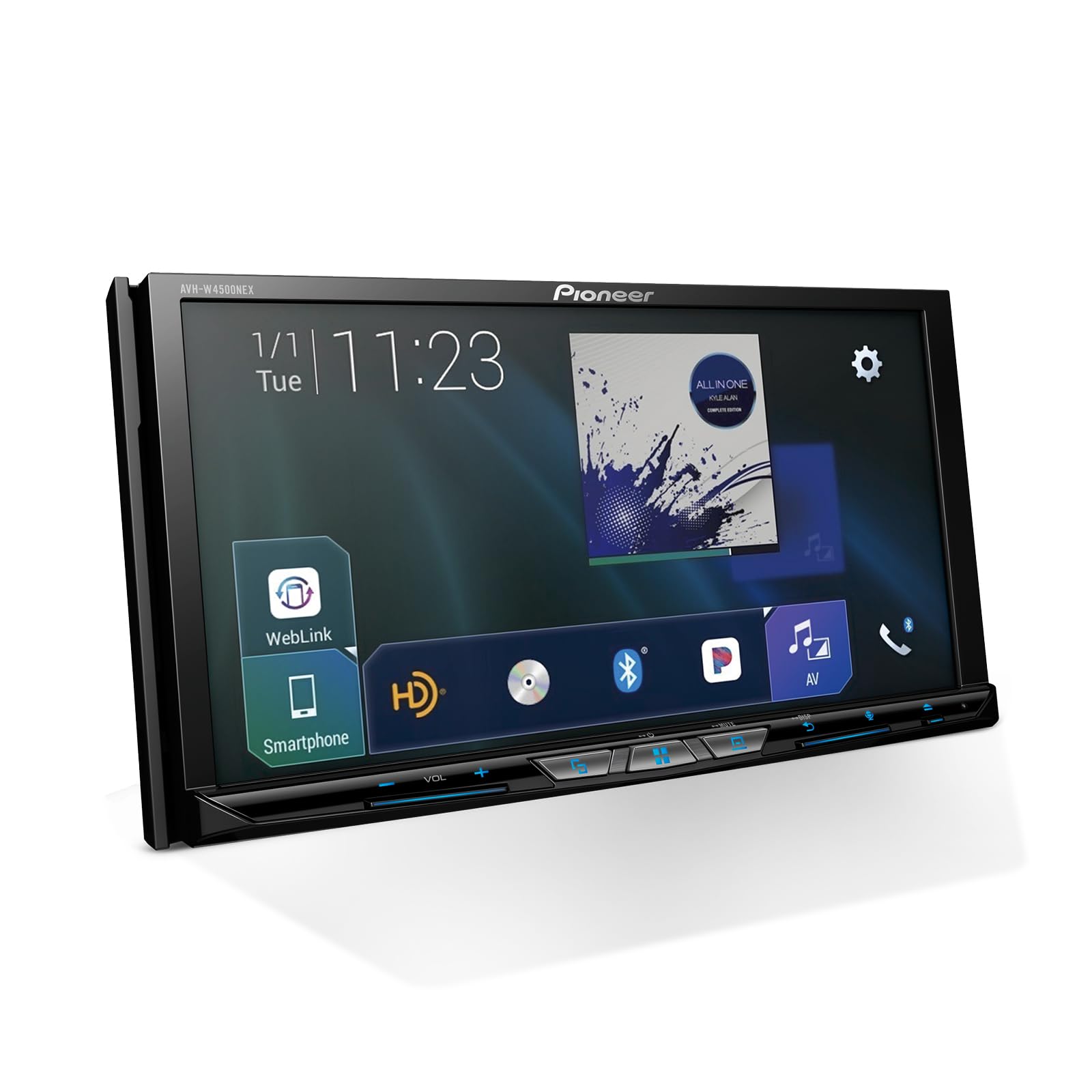
The AVH-W4500NEX bridges premium audio with seamless smartphone integration. Its wireless Apple CarPlay and Android Auto operate without the tethering dropouts that plague cheaper units, and the Hi-Volt RCA preouts preserve signal integrity when feeding external amplifiers. The built-in HD Radio tuner extracts noticeably cleaner FM reception than standard tuners, which matters for listeners who still value terrestrial broadcast quality.
The 7-inch motorized display is a resistive touch panel, which trades some capacitive feel for compatibility with glove use. The interface, while feature-rich, organizes sources and apps differently than competitors — users familiar with Pioneer’s logic will feel at home, but new adopters should budget time for the initial setup menus. The CD/DVD drive remains a niche benefit for those with legacy disc collections.
Heat management is a real concern: the screen can darken or freeze during long drives when running navigation and audio simultaneously. The W4500NEX also requires Android 11 or newer for wireless Android Auto, a detail buried in the manual. Despite these quirks, the combination of wireless phone projection and robust preamp output makes it a strong contender for the premium convenience-focused build.
Why it’s great
- Wireless CarPlay and Android Auto operate reliably without a cable
- Hi-Volt RCA preouts maintain a clean signal path to external amplifiers
- HD Radio tuner provides superior FM audio quality vs. standard receivers
Good to know
- Resistive touchscreen lacks the clarity and sensitivity of capacitive panels
- Internal heat buildup can cause the display to darken during extended use
3. Alpine iLX-507

The iLX-507 sets itself apart with a 7-inch WXGA display running at 1280×720 resolution — dramatically sharper than the 800×480 panels common at this price point. This higher pixel density makes CarPlay map details, album art, and text significantly more legible. The unit also includes dedicated mechanical volume and source buttons alongside the touch interface, a deliberate design choice that improves muscle-memory operation while driving.
Audio performance is anchored by 4V preouts that provide strong voltage swing to amplifiers. The internal amplifier delivers 16 watts RMS per channel, adequate for coax speakers in a moderate setup, but this unit is clearly designed as the command center for an offboard amp system. Wireless CarPlay pairs quickly after an initial manual Bluetooth handshake, and the parking brake bypass remains a standard requirement for accessing configuration menus on the move.
Build quality meets Alpine’s reputation for reliable long-term operation, though the lack of a built-in CD slot and the modest internal power section steer this squarely toward the digital-audio crowd. For the listener who values screen clarity and a future-proofed wired or wireless phone connection, the iLX-507 justifies its premium tier with the best native display in its class.
Why it’s great
- 1280×720 resolution display is the sharpest in this price range
- Wired and wireless CarPlay with fast, stable Bluetooth pairing
- Physical volume knob and mechanical buttons reduce on-road distraction
Good to know
- Internal amp is modest at 16W RMS; best used with an external amplifier
- Parking brake bypass is required to access full settings during driving
4. Alpine iLX-W670

The iLX-W670 packs a processing suite that outspecs units costing hundreds more. Its 13-band graphic EQ, 6-channel time correction, and adjustable high/low-pass crossovers give the tuner enough resolution to correct for any cabin’s acoustic anomalies. The new Sound Boost menu extends control to mid-bass and subwoofer level adjustments with a dedicated interface, and the Lighting Link feature synchronizes compatible Alpine PrismaLink subwoofer enclosures to the music’s beat.
The 7-inch touchscreen uses a responsive interface that refreshes quickly during navigation. Wired Apple CarPlay and Android Auto are lag-free, though the unit skips wireless connectivity to hit its price point. The chassis is unusually shallow, making it a strong fit for vehicles with limited dashboard depth, such as the 2007 Hyundai Santa Fe where reviewers report a perfect fit. The microphone’s background noise cancellation is notably effective during hands-free calls.
One recurring complaint involves the need for an aftermarket parking brake bypass harness (about -20) to unlock the full DSP menu while stationary. The lack of RDS radio text is also a minor omission. For the user building a sound system on a mid-range budget who refuses to compromise on tuning control, the iLX-W670 delivers professional-grade DSP tools at an approachable price.
Why it’s great
- 13-band EQ and 6-channel time correction for precise acoustic tuning
- Sound Boost menu offers expanded bass and mid-bass control
- Shallow chassis fits tight dash cavities where competitors won’t mount
Good to know
- No wireless smartphone projection — must use a USB cable
- DSP setup requires a separate parking brake bypass harness
5. Kenwood KMM-X705 Excelon

The KMM-X705 is a single-DIN powerhouse built for the amplifier enthusiast. Its six channel 5-volt preouts provide the same high-signal voltage as flagship floating-screen units but in a compact mechanical form factor. This makes it an ideal upgrade for classic cars, trucks, and commercial vehicles where dashboard space is limited. The internal amplifier section still sounds clean when driving stock speakers directly, though the unit’s real party trick is the ultra-clean signal it feeds to external amps.
The Excelon badge indicates Kenwood’s premium component selection, and the difference is audible: the DAC delivers a noticeably lower noise floor than standard Kenwood models. The 13-band EQ, digital time alignment, and Drive EQ function (which automatically boosts frequencies masked by road noise) provide enough tools to dial in a convincing soundstage. Alexa integration works through the Kenwood Remote app, adding hands-free voice control for music selection.
Build quality concerns center on the plastic chassis and relatively weak heatsink. Users report audible distortion when pushing the internal amplifier past volume 25 for extended periods, likely due to thermal compression. This unit is best paired with an external amplifier rather than used as an all-in-one solution. For the single-DIN installer chasing 5V signal purity, the KMM-X705 is a rare find at this tier.
Why it’s great
- Six 5V preouts deliver professional-grade signal voltage in a single-DIN chassis
- 13-band EQ and time alignment provide extensive tuning flexibility
- Alexa built-in and Drive EQ add smart features for daily driving
Good to know
- Plastic heatsink limits sustained high-volume internal amp performance
- Best results achieved when paired with an external 4-channel amplifier
6. Sony XAV-AX3200
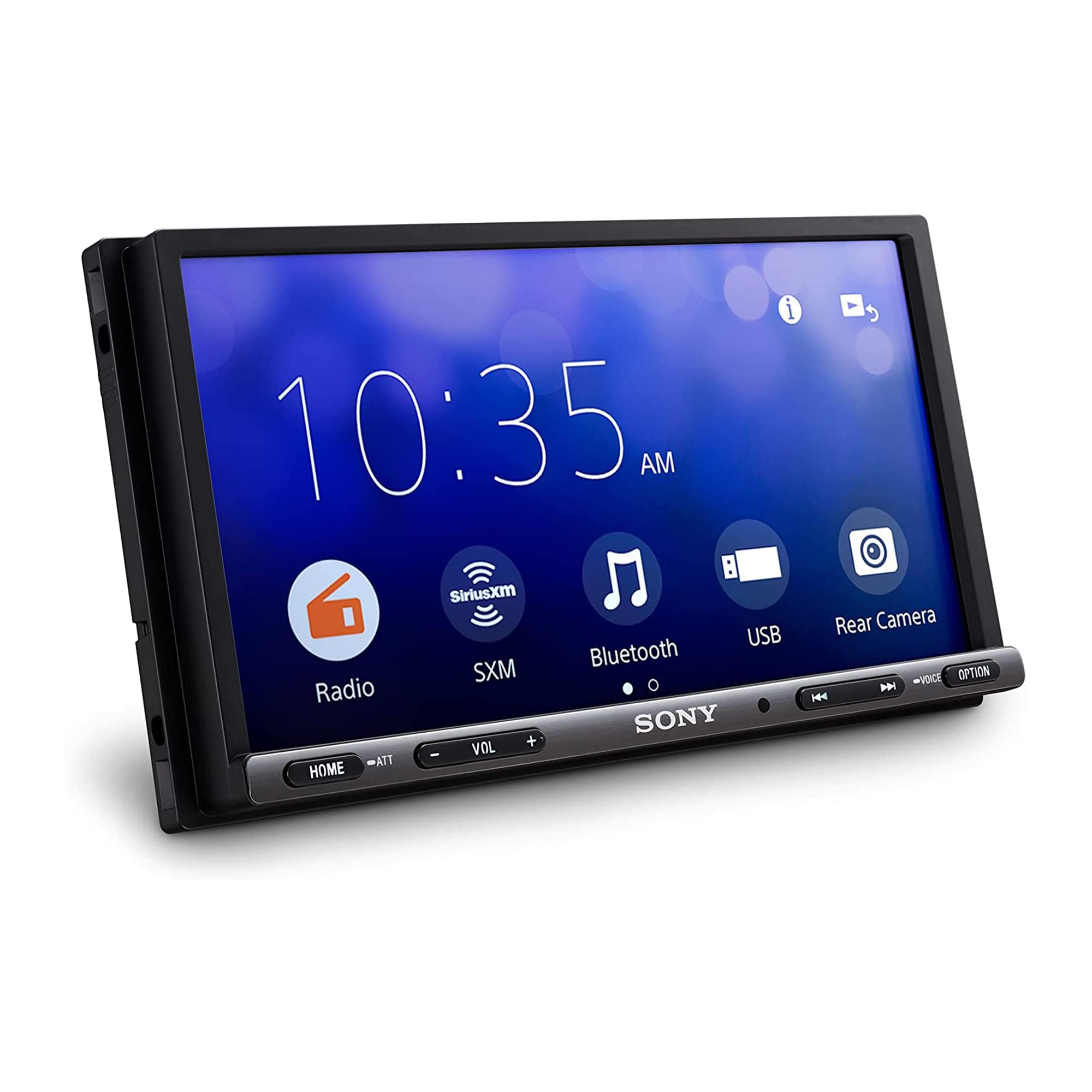
The XAV-AX3200 brings Apple CarPlay and Android Auto to a mid-range price point without the usability headaches of cheaper displays. Its resistive touchscreen includes an anti-glare coating that significantly reduces fingerprint visibility and reflection in direct sunlight — a genuine advantage over glossier capacitive screens in convertible or sun-exposed vehicles. The interface responds quickly, with Sony’s UI prioritizing large, easy-to-hit buttons for music and navigation.
The audio section is more modest, outputting 2V through gold-plated RCA preouts. This voltage is adequate for basic amplifier setups but requires higher gain settings than premium units, introducing more noise into the signal chain. The internal amp does a respectable job with factory speakers, though the lack of advanced DSP features like digital time alignment or a multi-band parametric EQ limits fine-tuning potential. A rear 3.5mm A/V input expands connectivity for external video sources.
The compact rear chassis simplifies installation in vehicles with limited wiring space. Some users report the need for a higher-power USB charger to maintain stable CarPlay connections, and the resistive panel lacks the pinch-to-zoom smoothness of capacitive screens. For the budget-conscious user who prioritizes a functional, glare-resistant CarPlay interface over advanced audio processing, the AX3200 is a solid foundation.
Why it’s great
- Anti-glare resistive screen remains readable in bright, direct sunlight
- Compact rear chassis simplifies installation in tight dash spaces
- Gold-plated 2V preouts provide a clean foundation for basic amplification
Good to know
- 2V preout voltage is lower than premium competitors, limiting signal headroom
- No built-in DSP for time alignment or advanced parametric EQ tuning
7. Pioneer MVH-S622BS

The MVH-S622BS distinguishes itself with a meaty 50-watt x 4 internal amplifier rated at peak output. This is higher than most competitors in its class, delivering noticeable punch to direct-connected speakers without requiring an external amp. The Advanced Sound Retriever feature attempts to restore high-frequency detail lost in compressed audio formats, a worthwhile tool for MP3 collections that softens the digital edge of poorly encoded tracks.
The double-DIN chassis includes a physical volume knob, a simple ergonomic advantage that allows for precise level adjustments without glancing at the display. The Pioneer Smart Sync app extends the interface onto your phone, though many users bypass it entirely after initial setup by long-pressing the source button. SiriusXM readiness adds satellite radio flexibility, and the USB port supports FLAC and WAV playback for higher-resolution local files.
Screen brightness is a pain point — even on the lowest setting, the display can be distracting during nighttime driving, and the unit lacks a dedicated night mode or screen-off feature. The interface logic also feels dated compared to newer touchscreen receivers. For the installer who wants a straightforward mechanical receiver with strong built-in power and a physical knob, the MVH-S622BS delivers dependable performance at a rational price.
Why it’s great
- 50W x 4 peak internal amp provides strong power for direct speaker drive
- Physical volume knob enables tactile, eyes-free volume control
- Advanced Sound Retriever restores clarity to compressed MP3 files
Good to know
- Display stays bright at night with no screen-off or dimming quick toggle
- Smart Sync app interface feels redundant after initial Bluetooth pairing
8. Sony MEX-N5300BT
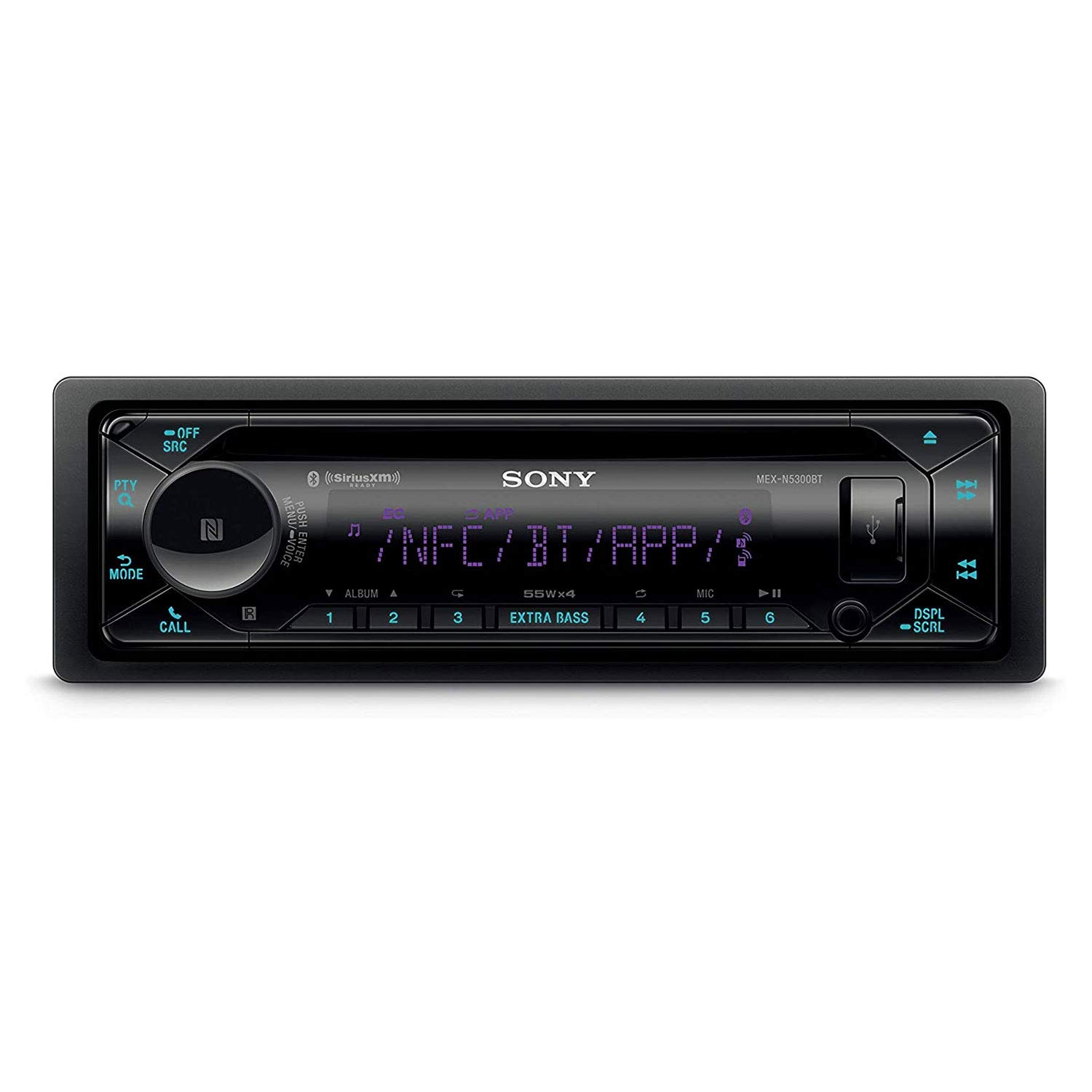
The MEX-N5300BT proves that a single-DIN mechanical unit can still deliver audiophile-adjacent sound. It plays FLAC files via USB and CD, preserving the full dynamic range of lossless recordings without the compression artifacts of Bluetooth streaming. Sony’s internal DAC drives a clean signal through the 25W per channel internal amplifier, which may seem modest on paper but runs factory speakers with surprising clarity and definition.
Bluetooth pairing is simple and consistent, and the phone app provides access to EQ settings that are buried in the on-unit menus. The display is functional but basic, and the remote control’s small buttons make adjustments while driving frustrating. Source switching between CD, USB, Bluetooth, and radio can feel sluggish. The rear connections are well-organized, and the included external microphone improves call quality significantly over built-in mics.
Reviewers consistently call this a major upgrade from generic or low-end Boss/Pyle units, noting that music sounds cleaner across all inputs. The lack of advanced DSP, time alignment, or higher-voltage preouts means this isn’t a unit for serious competition builds. For the classic car owner or budget-minded enthusiast who wants the best possible sound from a direct wired source, the MEX-N5300BT is a proven workhorse.
Why it’s great
- FLAC playback from CD and USB preserves lossless audio detail
- Consistent Bluetooth pairing and clear hands-free calling via external mic
- Dramatic sonic upgrade over generic budget single-DIN units
Good to know
- No advanced DSP, time alignment, or high-voltage preouts for amplifier builds
- On-unit menu navigation is cumbersome during driving without the remote
9. Edifier S2000MKIII
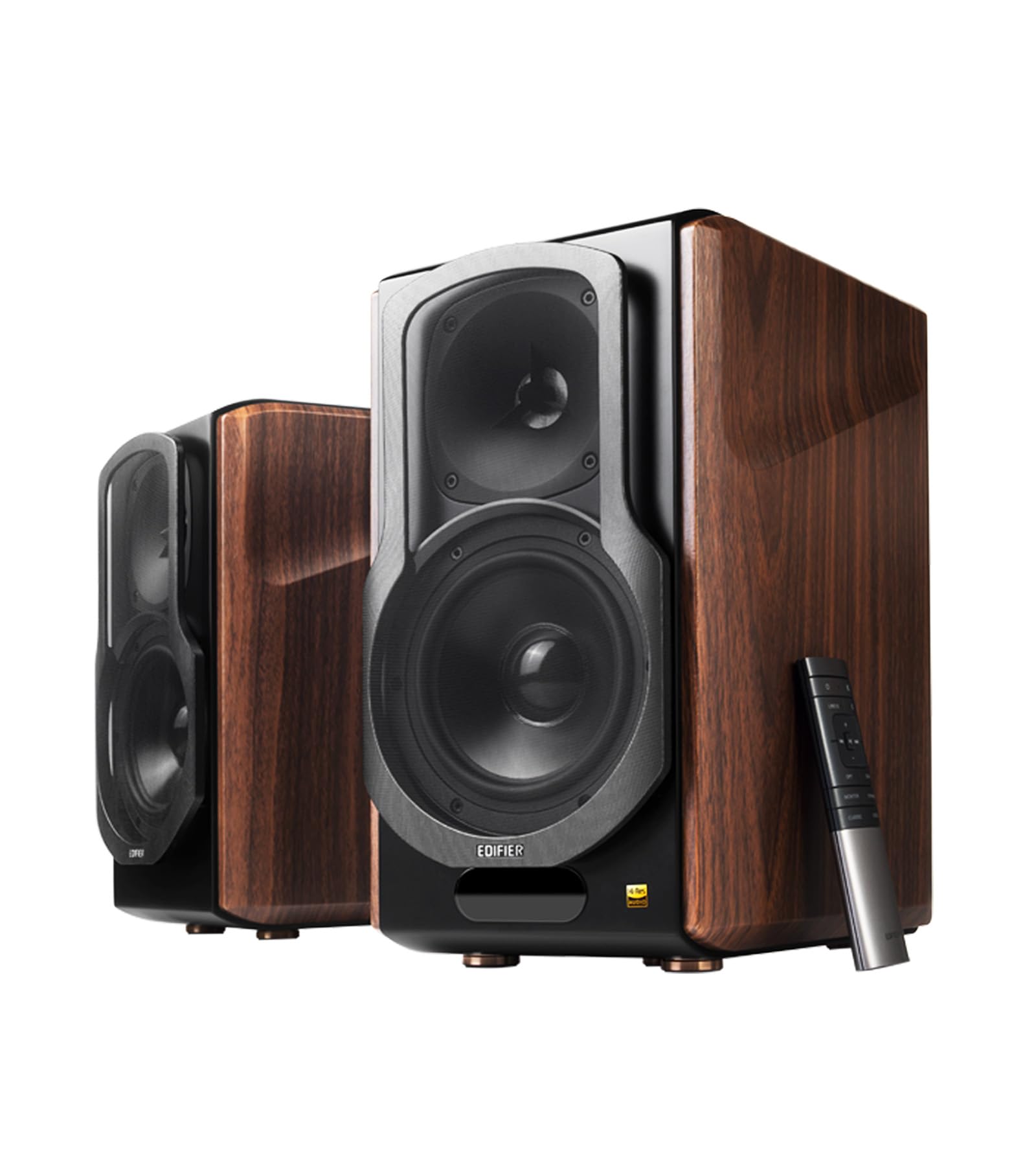
The S2000MKIII is not a car stereo — it is included here as a benchmark for what true home-grade active speaker fidelity sounds like, using planar diaphragm tweeters and 5.5-inch aluminum woofers driven by a tri-amped 130-watt system. The planar drivers deliver a transient response and treble clarity that most automotive coaxial speakers cannot match, revealing micro-details in recordings that standard dome tweeters smear. aptX HD Bluetooth streaming preserves near-lossless quality wirelessly.
The listening experience is defined by surprising bass extension for a bookshelf, eliminating the need for a separate subwoofer in medium-sized rooms. The cabinet construction is solid wood, weighing 40 pounds for the pair, which directly correlates to reduced cabinet resonance and a cleaner midrange. The remote control’s symbols are difficult to read without bright light, but the on-unit OLED display and control knobs offer a satisfying tactile backup.
Separation and soundstage width are good for the price, though critical listeners may find the treble slightly rolled off and the soundstage less holographic than high-end electrostatic or ribbon alternatives. For a dedicated listening room or desktop setup demanding studio-monitor-like accuracy, the S2000MKIII establishes a reference point for what truly resolving audio can cost.
Why it’s great
- Planar diaphragm tweeters deliver transient speed and treble detail beyond dome designs
- Tri-amped 130W system with dedicated drivers for bass, mid, and high frequencies
- aptX HD Bluetooth streaming maintains high-resolution audio wirelessly
Good to know
- Soundstage width and separation are solid but not class-leading for the price
- High weight (40 lbs pair) limits placement flexibility without sturdy stands
FAQ
Does higher preamp voltage always mean better sound quality?
Can I use a 4-channel amp with a single-DIN mechanical receiver like the Sony MEX-N5300BT?
Why is FLAC playback important for audio quality in a car stereo?
Final Thoughts: The Verdict
For most users, the best audio quality car stereo winner is the KENWOOD eXcelon Reference DMX1057XR because its 5V preouts and 3-way DSP provide the cleanest signal and most flexible tuning of any unit tested. If you want wireless convenience with excellent preamp voltage, grab the Pioneer AVH-W4500NEX. And for a single-DIN build where space is tight, nothing beats the Kenwood KMM-X705 Excelon for pure signal integrity in a compact chassis.