
Our readers keep the lights on and my morning glass full of iced black tea. As an Amazon Associate, I earn from qualifying purchases.
Specs are compiled from manufacturer listings and verified buyer reviews and can change over time — please confirm the key details on the product page before buying.
Your audio recorder, camera, or DJ gear will only save your work if the memory card can keep up with the data you send it. A slow card stutters, drops samples, or loses a take you can’t redo. Cards differ mainly in write speed, capacity, and reliability—all critical for uninterrupted audio capture. Here are the best options for different budgets and recording situations.
I’m Min — the founder and writer behind Gadgets Feed. This guide is built by comparing the manufacturers’ published specifications and the patterns across verified customer reviews, so you get each pick’s real strengths and trade-offs instead of marketing spin.
From budget-friendly basics for simple voice memos to premium UHS-II-class performers for multi-track recording, find the right audio sd card for your setup without overpaying for speed you’ll never use.
Our Picks at a Glance


How To Choose The Best Audio SD Card
Audio recording is less demanding on a card than 4K video, but it still has specific needs. A standard voice recorder might only need a slow, small card, while a multi-track field recorder with 24-bit/96kHz files needs more speed and capacity to avoid stutters. Match the card’s speed class and capacity to your device’s requirements, not the price tag.
Match the card type to the slot
First, confirm whether your device takes a full-size SD card or a microSD (often called TF) card. Many portable recorders and cameras use full-size SD, while some compact recorders and smartphones use microSD and need an adapter. Check your device’s manual to confirm whether it needs full-size SD or microSD before purchasing.
Decode the speed classes
Speed classes like Class 10, U3, and V30 tell you the guaranteed minimum write speed. For most audio-only recording, Class 10 (which guarantees 10 MB/s) is plenty. If you record 4K video alongside audio or shoot high-resolution photos, step up to a U3 or V30 card for a 30 MB/s sustained write minimum. Higher speed class numbers guarantee faster sustained write speeds, reducing stutter risk.
Don’t overthink capacity
Audio files are much smaller than video, so even a 4GB card holds hours of WAV recordings. A 4GB card holds hours of uncompressed WAV audio, while a 256GB card holds days of it. Buy the capacity that fits how often you’re willing to offload files; A larger card risks losing all recordings at once if it fails; choose capacity based on offload frequency.
Quick Comparison
| Model | Best For | Capacity | Read Speed | Speed Class | Amazon |
|---|---|---|---|---|---|
| SanDisk Extreme 256GB★ Best Overall | Heavy multi-device recording | 256 GB | 190 MB/s | U3 / V30 | Amazon |
| SanDisk Extreme PRO 128GBPro Choice | Professional 4K video & burst photo | 128 GB | 200 MB/s | U3 / V30 | Amazon |
| Lexar Silver 128GB | Fast transfers & 4K 60FPS video | 128 GB | 225 MB/s | U3 / V30 | Amazon |
| PNY PRO Elite 256GB | Budget-conscious 4K shooters | 256 GB | 100 MB/s | U3 / V30 | Amazon |
| Gigastone 4K Pro 64GB | Reliable mid-range camera use | 64 GB | 100 MB/s | Class 10 / V30 | Amazon |
| Yicunxin TF 16GB | Security cameras & basic tasks | 16 GB | 70 MB/s | Class 10 / A1 | Amazon |
| Gigastone 4GB SDHC | Simple 3D printers & GPS devices | 4 GB | 20 MB/s | Class 4 | Amazon |
In‑Depth Reviews
1. SanDisk Extreme 256GB microSDXC UHS-I Memory Card
Our pick — over 4.5★ from 147,500+ verified ratings; the strongest balance of quality and price.
The crowd-favorite powerhouse that never drops a frame in cameras and handheld recorders.
Its 130 MB/s write speed prevents dropped frames and lost takes during continuous recording. With up to 130 MB/s write speeds (how fast it records data), it keeps up with a mirrorless camera shooting 4K or a DJI Osmo Pocket 3 without stuttering, and buyers report “Flawless performance in mirrorless cameras & DJI Osmo Pocket 3.” The 256 GB capacity means hours of high-resolution audio and video before you need to offload.
It’s rated U3 and V30 (a 30 MB/s sustained minimum write speed), so it’s safe for continuous recording. The A2 rating (4000 read IOPS) means apps and files load faster on devices that support it. At 10 grams, it’s featherlight, and it ships with an SD adapter so it fits full-size slots too.
The main trade-off to know: it’s compatible with the Nintendo Switch but not the Switch 2. Also, some owners mention a card failing after a few months of heavy use, which is a reminder to keep backups of critical recordings regardless of the brand.
Why It Wins
- Blazing 190 MB/s read speed for fast file transfers
- U3 and V30 rating handles 4K, 5K, and continuous audio recording
- A2 rating loads apps and files faster
- Temperature, water, and X-ray proof for field use
Consider This
- Not compatible with Nintendo Switch 2
- A minority report units failing after several months
- Premium price per gigabyte
Grab it if: you record 4K video or high-bitrate audio across multiple devices and want one card that just works everywhere.
Look elsewhere if: you need maximum speeds for professional sports photography, where the faster Extreme PRO is a better fit.
2. SanDisk 128GB Extreme PRO SDXC UHS-I Memory Card
The full-size workhorse that pros trust for zero-lag burst shots and 4K video.
This is the faster sibling to our top pick, and the speed difference is tangible. It hits 200 MB/s read speeds via SanDisk QuickFlow Technology, and writes up to 90 MB/s — enough for 4K UHD video and sequential burst mode photography without buffering. Reliability is the story here, with owners consistently reporting no corruption or errors in high-res stills and long shoots.
The U3 and V30 ratings ensure a sustained write speed when you’re rolling on 4K clips. It’s also temperature-proof, waterproof, shock-proof, and x-ray-proof, which means it survives the field work that audio and video pros throw at it. Pair it with the SanDisk Professional PRO-READER for maximum offload speeds on set.
The honest catch: this is a full-size SD card, so it won’t fit devices that only take microSD. And the read speed advantage over the standard Extreme only matters if your card reader supports it — otherwise you’re paying for speed you won’t see.
Built for: Nikon shooters, R5C users, and anyone whose workflow demands sustained writes for 4K video and RAW bursts. The transfer speeds make dumping a full card painless.
Worth it for: professionals who can’t afford a dropped frame or a corrupted file session.
Watch out for: only buying from a reputable seller to avoid counterfeit cards.
3. Lexar 128GB Silver SD Memory Card
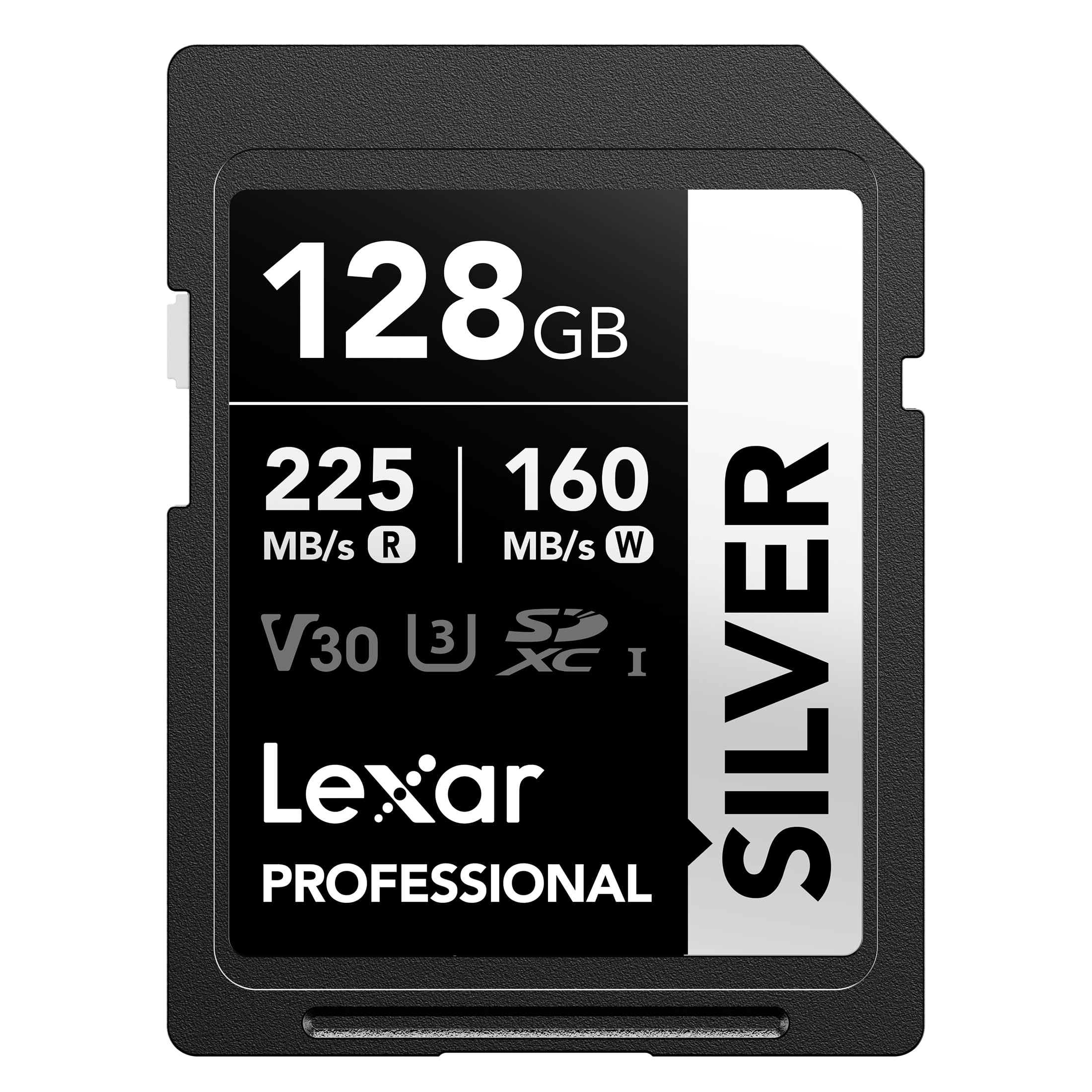
The fastest reader in this lineup, cutting transfer wait times to almost nothing.
The 225 MB/s read speed leads this entire comparison — a clear step ahead of the SanDisk Extreme’s 190 MB/s read. That means offloading a full card of audio sessions or RAW files is noticeably quicker. Write speeds reach 160 MB/s, which keeps a Canon Rebel T6i from lagging even through 1000+ RAW and JPEG shots, as customers note.
It’s rated V30 (a 30 MB/s sustained minimum write), supporting 4K at 60FPS video with a smooth, consistent capture. Compatibility spans Canon, Sony, Nikon, and more, and it’s built to shrug off wear, drops, temperature extremes, X-rays, shock, magnets, and vibration. The Lexar Recovery Tool and lifetime limited warranty are a real safety net.
The main thing to weigh: a few owners found that pictures transferred to a computer were not readable, which is a rare but serious data-integrity concern. Always verify your files after a transfer, no matter which card you use.
Fastest offloads: this card is for the shoot-and-dump workflow where every minute of transfer time costs money.
Reach for this if: you want the fastest file transfers and 4K 60FPS recording in a durable full-size card.
Think twice if: you’re on a tight budget — the extra read speed only shows up with a fast card reader.
4. PNY 256GB PRO Elite SDXC Memory Card

Double the storage of the top pick at a friendlier price, without sacrificing reliability.
You get reliable storage without the premium price: 256 GB with U3 and V30 ratings (speed classes for 4K video) and read speeds up to 100 MB/s, write speeds up to 90 MB/s. That’s enough for up to 5 hours of recording at 100Mbps, so Canon R100 users can shoot all day. Owners consistently praise its consistent performance across multiple devices.
One standout story: it works flawlessly in a Pentax K-70 where a SanDisk card of the same speed caused one-minute video stops and five-minute saves. This compatibility makes it a dependable choice for cameras where other cards stutter. It’s also magnet-proof, shock-proof, temperature-proof, and waterproof for field recording.
The honest trade-off: it’s not the fastest card here — the read speed trails the Lexar by a wide margin at 100 MB/s vs 225 MB/s. And a few reviewers point out the card eventually struggled to write high-quality files, so it’s worth periodic checks if you rely on it heavily.
What You Get
- 256 GB capacity for long recording sessions
- Class 10, U3, V30 rated for 4K UHD video
- Magnet, shock, temperature, and water proof
- Consistent performance across DSLRs and video cameras
Keep In Mind
- Read speed is 100 MB/s, behind the premium Lexar and SanDisk options
- A few shoppers say long-term write reliability questions
Best for: shooters who want maximum storage per dollar and care more about steady reliability than the fastest offload times.
skip it if: you need 200 MB/s+ transfers for daily, high-volume editing workflows.
5. Gigastone 64GB 4K Camera Pro SD Card

A dependable 64 GB full-size card that balances speed and price for everyday camera work.
For a point-and-shoot, HD camcorder, or DSLR doing regular 4K video, this card hits a sensible middle ground. It reads up to 100 MB/s, carries a Class 10 and V30 rating (30 MB/s sustained write), and supports 4K UHD video. The 64 GB capacity is a practical size for a day of shooting, and buyers report it stores photos easily with good readability.
It’s built with the usual field protections — waterproof, temperature-proof, x-ray-proof, shock-proof, and magnetic-proof — and comes with a mini case plus a 5-year limited warranty. That warranty, plus the included case, makes it an easy recommendation for someone upgrading from a bundled card.
The recurring note to weigh: some owners mention it failed after 11 months of use, and others found it wasn’t compatible with their specific cameras. It’s a good card for compatible devices, but verify your camera model supports it first. Also, the 64 GB capacity falls well short of the 256 GB cards above if you shoot long sessions.
Dependable pick: a mid-range card that does the job for 4K UHD video and high-res photos, backed by a 5-year warranty and a protective mini case.
Choose it if: you want a simple, well-priced 64 GB card for a compatible camera and value the included case and warranty.
Pass if: you need expansive storage or have a camera outside its known compatibility list.
6. Yicunxin TF Card 16GB with Adapter
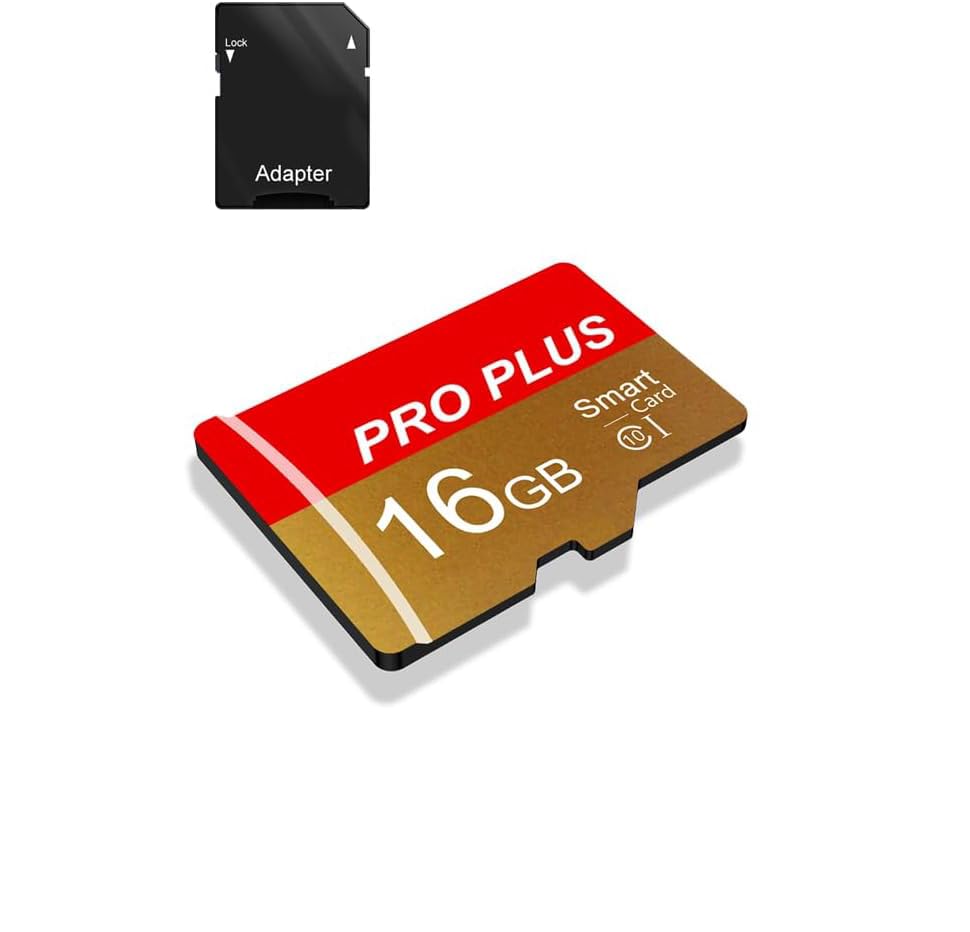
The tiny budget card that’s a perfect fit for security cameras and simple devices.
For a front door camera or a basic task, this microSD card with its included SD adapter just works. It reads up to 70 MB/s, carries a Class 10 and A1 rating (A1 means decent random read speeds for small files), and customers note it “Fits the bill for a o/side live security camera in price and quality.” That suits cameras and tablets.
It’s drop-proof and works across phones, tablets, cameras, drones, and car recorders. The 16 GB capacity is small but fine for a security camera that overwrites old footage. Owner experiences include smooth use in a Samsung tablet for storing downloads and fast performance with an iPhone and iPad via a card reader.
The catch is the biggest reliability question mark in this lineup. Some units worked perfectly while others stopped working, and a few reported the card only showed 1 GB of storage — a classic sign of a counterfeit or faulty card. It’s cheap enough to be a throwaway, but not a place to store irreplaceable recordings.
Fine for basic needs: this is a budget card for non-critical tasks like security cameras, tablets, and game consoles — not for priceless recordings.
Works best: in a security camera or tablet where a card failure isn’t a catastrophe.
Avoid if: you need dependable storage for important audio sessions or photos.
7. Gigastone 4GB SDHC Memory Card
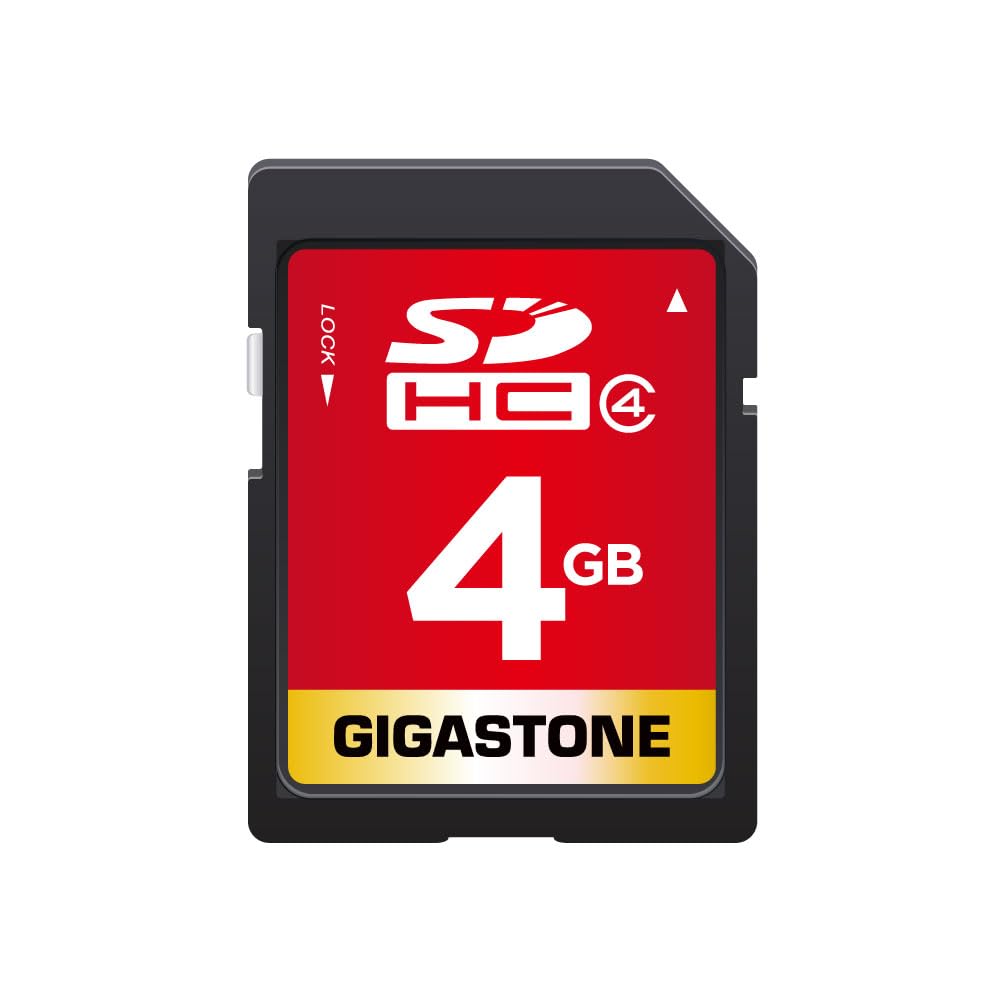
The smallest capacity card on this list, and exactly right for 3D printers and GPS units.
Sometimes you need a tiny, cheap card for a device that doesn’t need speed or space — and this is it. The 4 GB capacity reads up to 20 MB/s, which is the slowest here, but that’s fine for a 3D printer or a GPS that just loads small files. Owners call it “Good card, correct capacity, just too large for my GPS,” a note that it’s still too big for some older devices.
It has built-in error correction (ECC) that automatically detects and fixes transfer errors, plus waterproof, temperature-proof, x-ray-proof, shock-proof, and magnetic-proof protection. The 5-year limited warranty and included mini case add confidence. It’s compatible with all SDHC-labeled host devices, from DSLR cameras to camcorders and POS systems.
It’s a niche tool, not a general-purpose card. But for the devices it fits, it’s a reliable, correct-sized choice.
Purpose-built: this is the card for small-capacity device slots where a larger card is overkill or doesn’t fit — think 3D printers, GPS, and basic data storage.
Get it for: 3D printers, GPS units, and other low-demand devices that need a small, dependable card.
Not for: any recording task — the 20 MB/s read speed and 4 GB capacity are far below modern audio or video needs.
Understanding the Specs
Write Speed
This is the number that matters most for recording. Write speed is how fast the card saves incoming data. If you’re recording audio or video, the card must write faster than your device produces data, or you’ll get drops and stutters. A Class 10 card guarantees 10 MB/s; a U3 or V30 card guarantees 30 MB/s. For audio-only, Class 10 is usually plenty — but if you shoot 4K video too, chase the V30 rating.
Capacity & Card Type
Capacity is how much it holds, and the type tells you the format. SDHC cards go up to 32 GB, while SDXC cards start at 64 GB and go higher. Your device must support the format, so a 64 GB SDXC card won’t work in a device that only reads SDHC. Also check the physical size: full-size SD for most cameras, microSD (or TF) for phones and some compact recorders, often with an adapter.
FAQ
What speed class do I need for audio recording?
Is a 4GB card enough for music or voice recording?
What is the difference between SDHC and SDXC cards?
Does a faster read speed matter for audio playback?
Will a microSD card with an adapter work in a full-size SD slot?
How long does an SD card last in a security camera?
What does the A1 or A2 rating mean on a card?
Can I use a 256GB SD card in any camera?
Which is better for audio, the SanDisk Extreme or the Extreme PRO?
How do I know if a cheap SD card is a counterfeit?
Final Thoughts: The Verdict
For the majority of shoppers, the audio sd card winner is the SanDisk Extreme 256GB because it’s the crowd favorite — holding a 4.8 rating across 100,000+ owners — with U3 and V30 ratings that handle both audio and 4K video without breaking a sweat. If you want the fastest transfers and shoot a lot of video, grab the Lexar Silver 128GB with its 225 MB/s read speed. And for a budget-friendly 4K option that still delivers, the PNY PRO Elite 256GB gives you double the storage of the top pick at a friendlier price.
How We Picked
We do not accept paid placement. Every pick is matched to a real buyer and a real use-case; we do not hands-on test units.
Sources & Methodology
Specifications: manufacturer listings and product documentation. Review insights: verified customer reviews, as of August 2026. Pricing: not shown on this page (it changes often); check the current price via the retailer link.
As an Amazon Associate, Gadgets Feed earns from qualifying purchases. This does not affect which products we feature.