
A dead lecture hall battery, a garbled interview file, or a meeting recording that sounds like a distant radio station — that is the real failure mode of an audio voice recorder. Lousy noise processing, limited storage, and confusing playback menus waste hours of your time. The right device captures every syllable cleanly, from the back row of a conference room to a one-on-one podcast session.
I’m Min — the co-founder and writer behind Gadgets Feed. My research for this guide involved cross-referencing DSP chip generations, battery capacity ratings, microphone configurations, and over a hundred verified user experiences to separate the tools that work from those that frustrate.
Whether you need precise transcription for a legal deposition, hands-free AI summaries for daily standups, or a rugged field recorder for location sound, the best audio voice recorder must deliver consistent audio fidelity across its entire feature set.
How To Choose The Best Audio Voice Recorder
Selecting the right recorder goes beyond picking the cheapest option. You must weigh storage capacity against recording bitrate, battery runtime against charging speed, and mic sensitivity against noise handling. The sections below cover the most critical decisions.
Recording Quality and Bitrate
Measured in kbps and sample rate (kHz), these specs dictate how faithfully the recorder captures sound. A 32 kbps setting stores thousands of hours but sounds muddy; 1536 kbps WAV delivers studio-grade detail but eats storage fast. For voice, 192 kbps MP3 is the usable minimum, while 512 kbps PCM strikes the best balance for lectures and interviews.
Storage and File Management
Built-in memory is convenient, but expandable storage via microSD or SDXC cards lets you swap media without offloading immediately. Look for timestamped file naming and folder sorting — without these, you will spend precious minutes hunting for a single recording in a list of generic filenames.
Battery Life and Charging
Rechargeable lithium batteries are standard, but capacity varies wildly. A 500mAh cell may give 30 hours of recording, while an 1100mAh pack can stretch past 100 hours. USB-C charging is now the norm and offers faster refueling than older Micro-USB ports. Voice activation (VOR) extends runtime by pausing when nobody is speaking.
Quick Comparison
On smaller screens, swipe sideways to see the full table.
| Model | Category | Best For | Key Spec | Amazon |
|---|---|---|---|---|
| Zoom H1 XLR | Pro Audio | Musicians & Podcasters | 32-bit / 96kHz Float | Amazon |
| Plaud NotePin S | AI Wearable | AI Transcription & Summaries | 64GB + GPT-5.5 Engine | Amazon |
| Sony ICD-UX570 | Compact Classic | Journalists & Students | 4GB + 32GB microSD Bundle | Amazon |
| Vormooi V71 | Feature Rich | Lectures & Meetings | 160GB / 110h Battery | Amazon |
| EVISTR L357 | Value Leader | Daily Note Taking | 128GB / 32h Recording | Amazon |
| Innioasis R1 | Touchscreen | Offline Speech-to-Text | 3.69″ Touch Display | Amazon |
| NinTaBro 64GB | Budget | Entry Level & Backup | 64GB / 270mAh Battery | Amazon |
In‑Depth Reviews
1. Zoom H1 XLR 2-Channel Recorder

The Zoom H1 XLR redefines the entry point for professional portable recording by packing dual XLR/TRS locking inputs and 32-bit float recording into a chassis weighing only 6.4 ounces. This means you never need to adjust input gain — the 32-bit float format captures whispers and loud guitar amps in the same take without distortion. The OLED waveform display gives you real-time visual feedback on your levels, removing the guesswork that plagues cheaper recorders.
Connect any dynamic or condenser microphone through the two combo jacks, or plug a line-level instrument directly. The 3.5mm stereo input and headphone output allow monitoring and external device integration for video or podcast rigs. SDXC support up to 1TB ensures you can record multi-hour sessions without swapping cards. Battery life sits at around 10 hours on two AA cells, with USB-C power pass-through for wall-powered marathon recordings.
This is the right tool for musicians tracking rehearsals, filmmakers capturing location dialogue, or podcasters who need hot-swappable mics. The plastic body is lightweight but robust enough for travel. Reviewers consistently note it outperforms units at twice the price in sound clarity and user interface design.
Why it’s great
- Dual XLR/TRS locking inputs enable professional mic connections
- 32-bit float recording eliminates gain clipping entirely
- Supports SDXC cards up to 1TB for massive session capacity
Good to know
- Plastic body may feel less premium than all-metal alternatives
- Battery life of 10 hours requires spare AAs for all-day events
2. Plaud NotePin S AI Voice Recorder
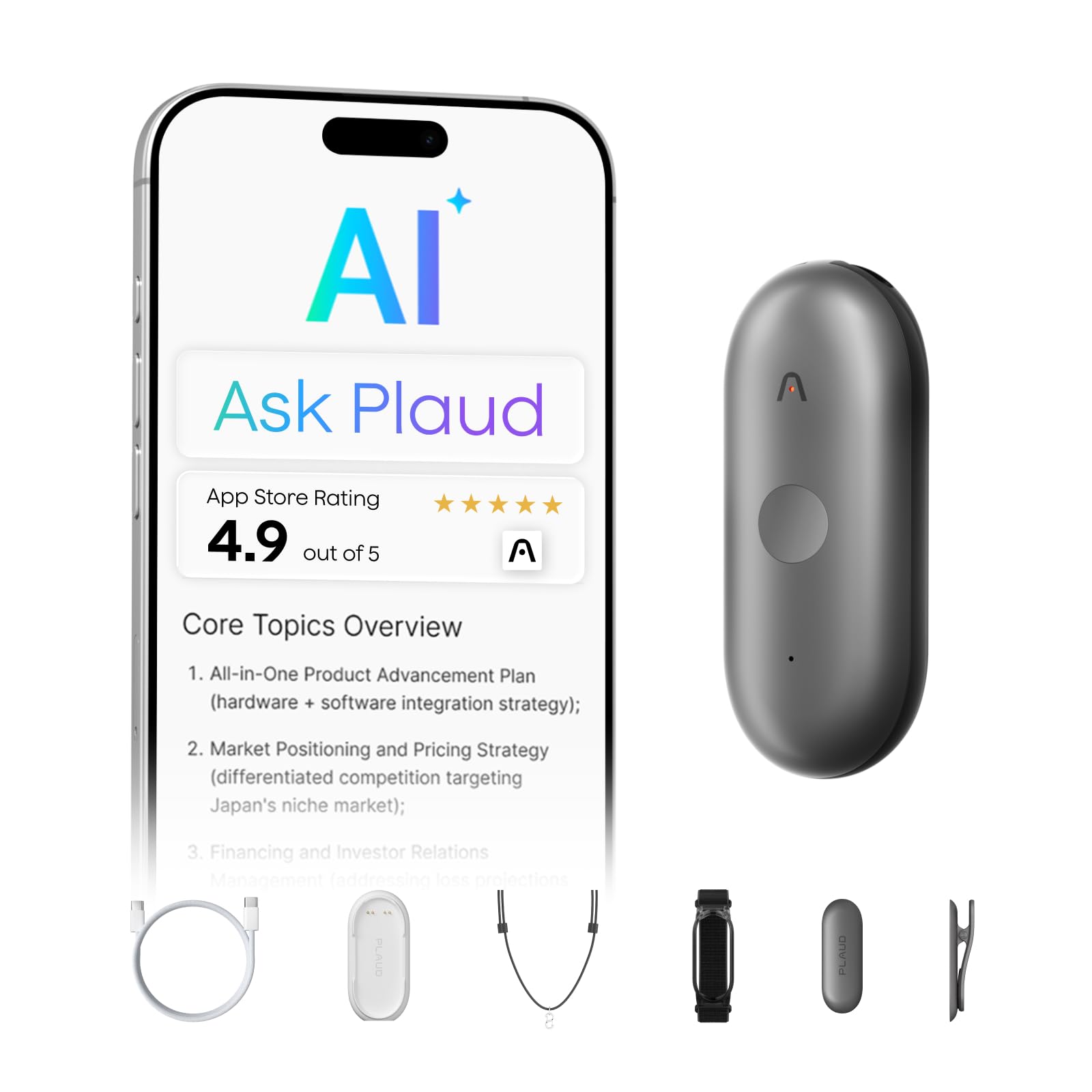
The Plaud NotePin S fundamentally changes how you interact with recorded audio by embedding GPT-5.5, Claude Sonnet 4.6, and Gemini 3.1 Pro into the transcription pipeline. It supports 112 languages and generates structured summaries, mind maps, and to-do lists from raw conversation. The wearable form factor — necklace, wristband, clip, or pin — means you can capture meetings without holding a device or pulling out a phone.
Storage is handled locally with 64GB of onboard memory, and the 1100mAh battery delivers 20 hours of continuous recording plus 40 days of standby. The physical record button provides tactile start/stop control, reducing the risk of missed recording. Privacy compliance with ISO 27001, SOC 2, and HIPAA makes it suitable for medical and legal professionals handling sensitive information.
Each device comes with a free Starter Plan offering 300 transcription minutes monthly, with Pro and Unlimited tiers for heavy users. Reviewers praise the build quality and the one-button simplicity, though some note the subscription model is a consideration for long-term ownership. If you need instant, organized notes from every conversation, this is the most capable tool in the category.
Why it’s great
- Multi-model AI generates summaries, mind maps, and action items
- Wearable design with four included attachment accessories
- Enterprise-grade encryption and compliance certifications
Good to know
- Full transcription features require a monthly subscription after free tier
- No headphone jack for live monitoring during recording
3. Sony ICD-UX570 Digital Voice Recorder
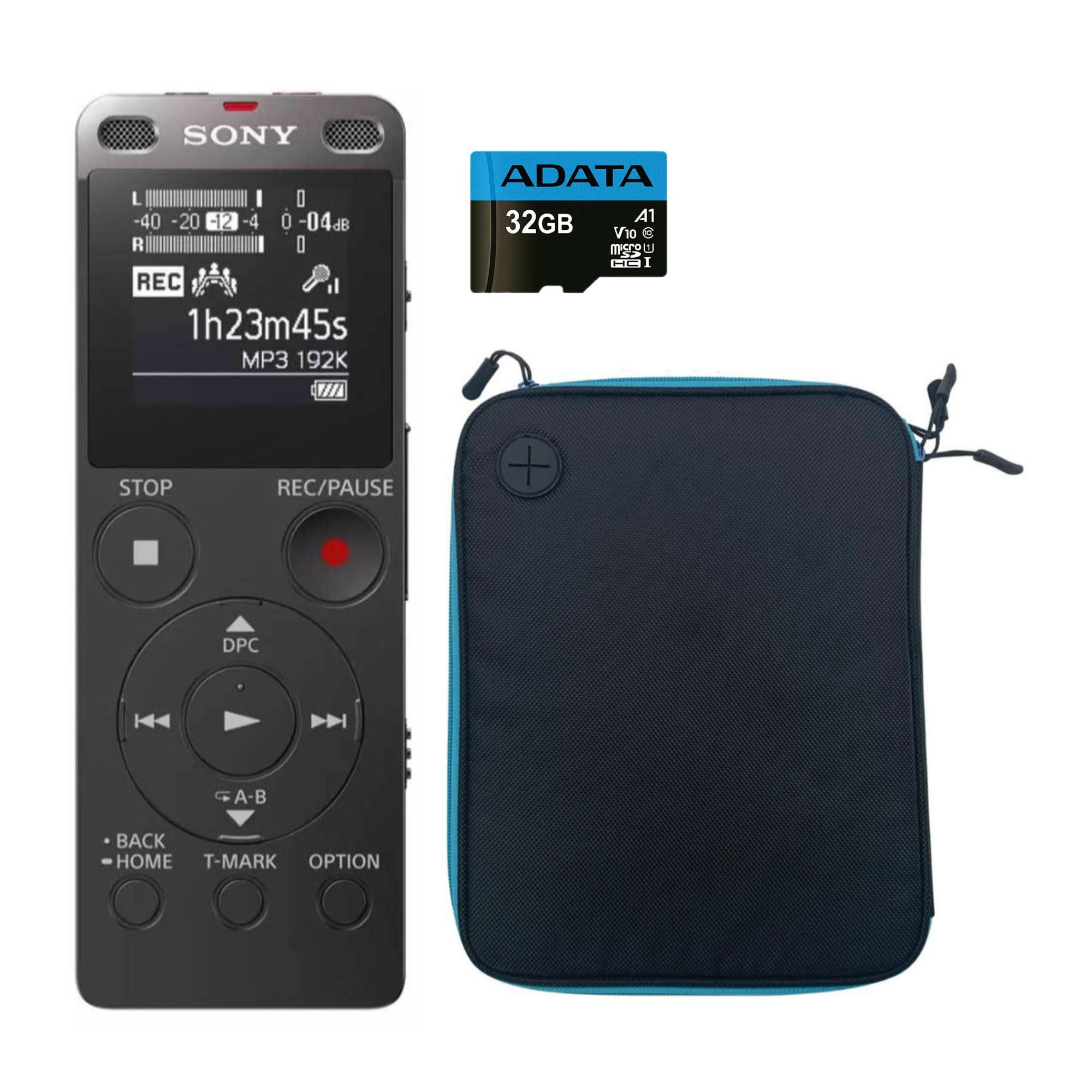
Sony’s ICD-UX570 is the standard against which compact recorders are measured. Its built-in S-microphone with voice-operated recording delivers clear voice pickup even in moderately noisy environments. The unit records in MP3, AAC, WMA, or WAV formats, with a maximum of 159 hours of MP3 recording using the 4GB internal memory. The bundle includes a 32GB microSD card and a zippered carrying case, adding practical value.
The built-in USB connector slides out for direct charging and file transfer without a cable — a small detail that saves frustration. The backlit display and intuitive menu system make navigation simple, and the headphone jack supports private playback review. At just 0.62 pounds, it slides into a shirt pocket or purse effortlessly.
Journalists and students rely on this model for its consistent recording quality and straightforward operation. Reviewers note it replaces older Sony models that lasted over a decade, and the UX570 matches that reputation with excellent build feel and reliable file management. The battery runtime of roughly 5 hours at highest quality PCM is its main trade-off against larger competitors.
Why it’s great
- Sony S-microphone delivers reliable voice clarity in varied environments
- Built-in USB connector for cable-free charging and file transfers
- Compact and lightweight design fits any pocket or bag
Good to know
- Higher quality PCM recording drains battery faster at ~5 hours
- Internal memory limited to 4GB before using the microSD card
4. Vormooi V71 160GB Digital Voice Recorder

The Vormooi V71 packs a massive 160GB of combined storage (32GB internal + 64GB SD card) and an 1100mAh battery capable of 110 hours of continuous recording at 512 kbps. The zinc alloy shell feels durable in hand, and the slide-to-record red button lets you start or save a file instantly without navigating menus. It even includes a 3.5mm external microphone and a line-in transcription cable in the box.
The 2.15-inch color display organizes files into Music, Recordings, Folders, and Settings interfaces, keeping everything logically separated. A 6-digit password lock protects sensitive recordings, and the low-battery protection auto-saves your file before shutdown. Recording quality reaches 1536 kbps PCM using the DSP noise reduction chip, which effectively filters background hum without killing voice presence.
Users highlight the excellent battery longevity and the inclusion of the external mic for collar clipping — a feature that dramatically improves recording quality when the device is in a pocket or on a table. The only minor complaint involves the rewind/fast-forward controls being less intuitive than dedicated buttons, but the overall package delivers premium-tier capacity at a mid-range price point.
Why it’s great
- 160GB total storage handles thousands of hours of recordings
- 110-hour battery runtime with low-battery auto-save protection
- Zinc alloy build with included external microphone and transcription cable
Good to know
- Rewind and fast-forward controls require menu navigation
- Mono microphone operation mode limits stereo separation
5. EVISTR L357 128GB Digital Voice Recorder
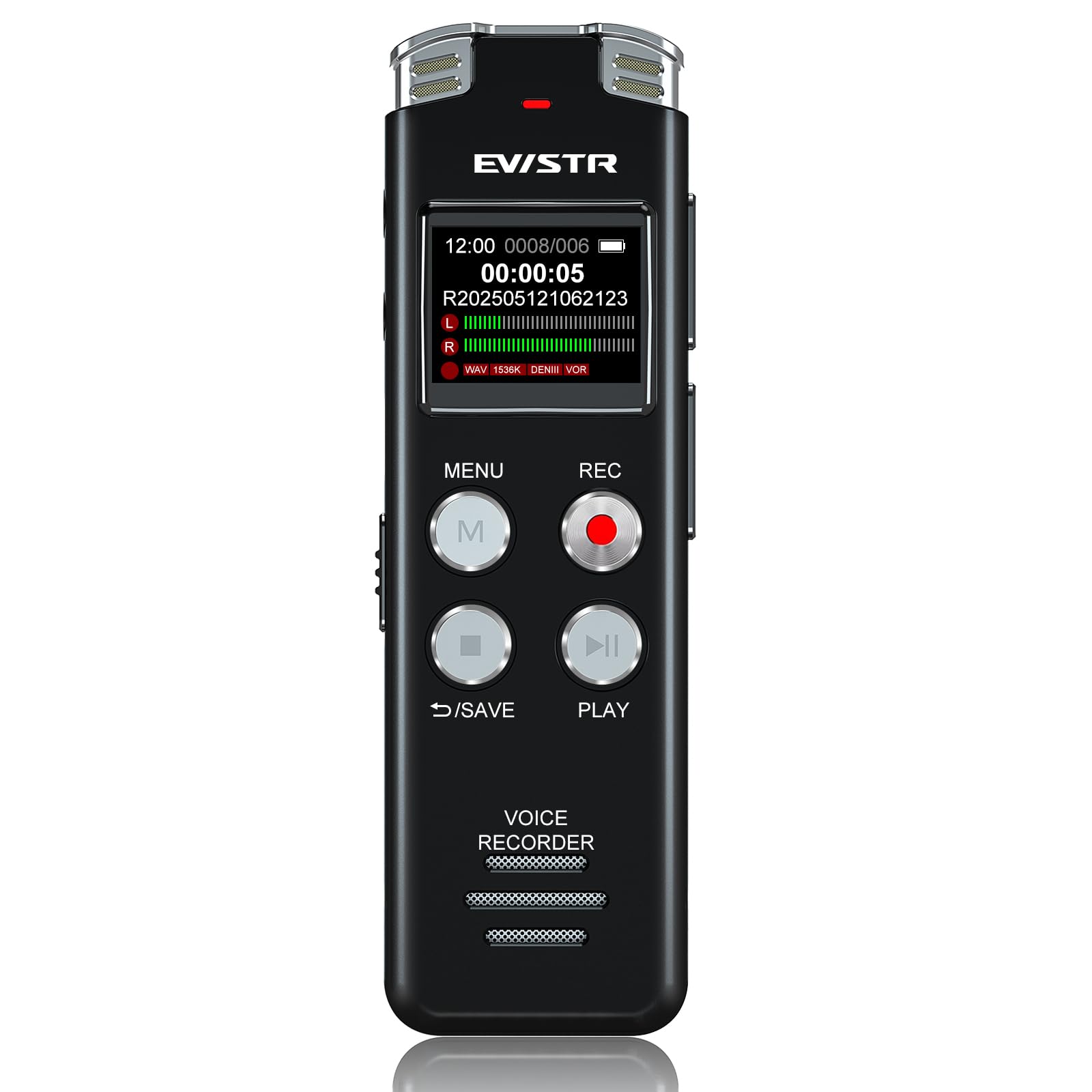
The EVISTR L357 delivers 128GB of built-in storage and a 500mAh battery that records 32 hours continuously — all inside a compact metal chassis measuring just 3.86 x 1.2 x 0.47 inches. Its PCM intelligent noise reduction and 360-degree dynamic microphone capture clear audio at up to 1536 kbps, with seven adjustable gain levels to dial in the right sensitivity for quiet or loud environments.
Voice-activated recording offers seven levels of sensitivity control, so the device starts recording only when someone speaks and pauses during silence. Files are automatically timestamped in the format YYYY-MM-DD-HH-MM-SS, making retrieval straightforward. USB-C charging refills the battery in about three hours, and the Type-C cable also handles file transfers to Windows or Mac computers.
Reviewers consistently describe the recording quality as exceptional for the price, noting it outperforms more expensive options in voice clarity. The metal construction gives it a solid feel, though the small screen and buttons require some initial familiarization. For students on a budget or anyone needing a reliable daily recorder with generous capacity, this is a strong contender.
Why it’s great
- 128GB internal storage provides massive recording capacity out of the box
- Seven-level VOR sensitivity and noise reduction for clear voice capture
- USB-C fast charging with 32-hour continuous recording runtime
Good to know
- Small screen and button layout may feel cramped for larger hands
- Menu navigation requires reading the manual for full functionality
6. Innioasis R1 Full Touchscreen Voice Recorder
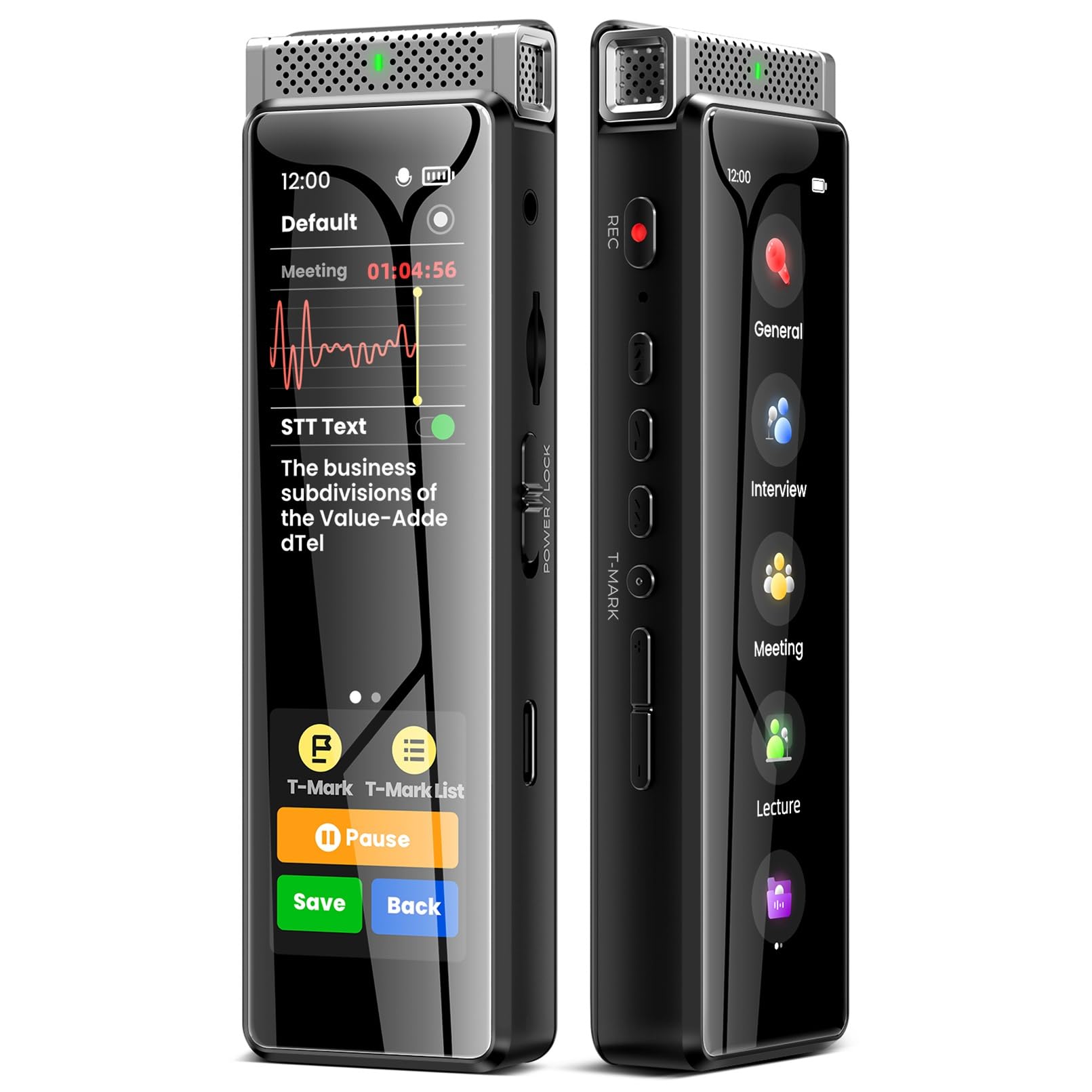
The Innioasis R1 breaks the button-and-screen mold by offering a 3.69-inch high-definition full touchscreen for control, while retaining physical buttons as a backup. Dual microphones — one high-sensitivity and one low-sensitivity — combine with DSP and RTC noise reduction to adapt to different recording scenarios. Preset modes for General, Interview, Meeting, Lecture, and Pocket automatically adjust the recording configuration.
Its standout feature is offline speech-to-text transcription, which runs entirely on-device without requiring an internet connection. This is invaluable for users who need instant written records in legal or field settings. The 1100mAh battery provides extended runtime, and storage is expandable up to 1TB via external SD card — though the unit ships with only 8GB onboard, so an SD card purchase is almost mandatory.
Reviewers praise the build quality and touchscreen responsiveness, though the built-in dictation accuracy is inconsistent with accented speech. The device also functions as an MP3 player with A-B repeat for language learning. For users who prefer a modern interface and need offline transcription, the R1 offers a unique feature set that no other mid-range recorder matches.
Why it’s great
- Full touchscreen with physical button backup offers flexible control
- Offline speech-to-text transcription works without an internet connection
- Expandable storage up to 1TB for ultra-long recording sessions
Good to know
- Only 8GB internal memory — an SD card is essential for practical use
- Offline transcription accuracy can struggle with heavy accents
7. NinTaBro 64GB Digital Voice Recorder
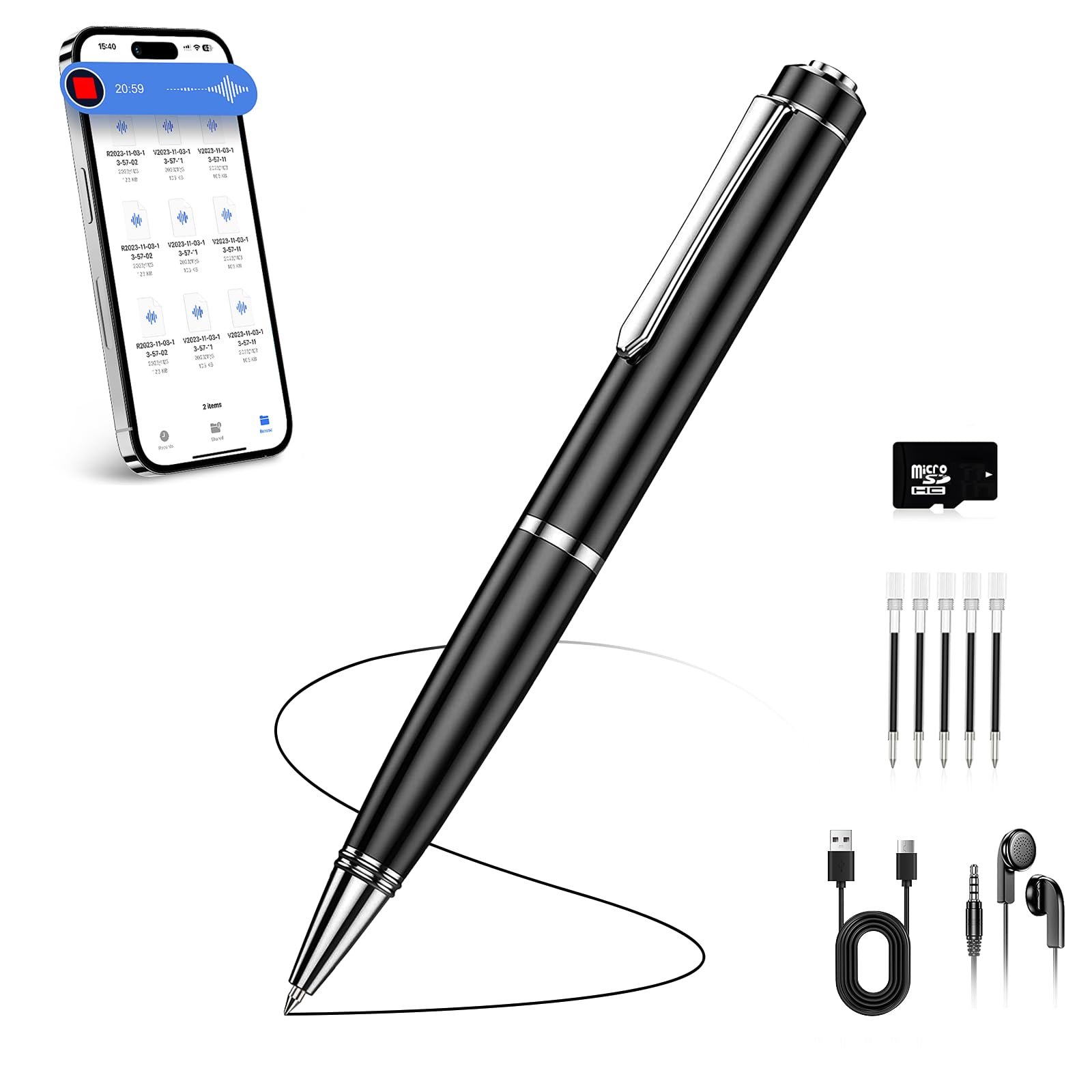
The NinTaBro 64GB recorder is the most accessible entry point into the category, offering a built-in microSD card slot with a 64GB card included, capable of storing up to 4,300 hours of audio at lower bitrates. The 270mAh rechargeable battery charges fully in 1.5 hours and provides 20 hours of continuous recording or 25 hours of playback — sufficient for a full day of lectures or meetings.
A DSP4.0 chip with AI noise reduction and a 360-degree dynamic noise-canceling microphone work to reduce background interference in crowded rooms. The voice-activated recording (VOR) mode preserves battery and storage by only capturing segments with active speech. File management is handled through a simple button interface, and included headphones allow private playback review.
The Micro-USB connectivity feels dated compared to the USB-C standard on most competitors, but it remains compatible with older computers and Android devices. Reviewers appreciate the straightforward recording quality and the long battery endurance for the price. For first-time buyers or anyone needing a reliable backup unit without financial commitment, this recorder delivers the basics without pretension.
Why it’s great
- 64GB card included and expandable slot for more storage
- AI noise reduction with 360-degree microphone for clear capture
- Fast 1.5-hour charging time for the 270mAh battery
Good to know
- Micro-USB interface is slower and less convenient than USB-C
- 270mAh battery limits playback-only use to about 25 hours
FAQ
How much storage do I need for a full semester of lectures?
What is the real difference between voice activation and continuous recording?
Can I use a voice recorder to transcribe meetings automatically?
Final Thoughts: The Verdict
For most users, the best audio voice recorder winner is the Zoom H1 XLR because it offers professional-grade 32-bit float recording and XLR connections at a price that undercuts traditional field recorders by a wide margin. If you want AI-powered transcription and wearable convenience, grab the Plaud NotePin S. And for a compact, proven workhorse that fits any pocket, nothing beats the Sony ICD-UX570.