
Our readers keep the lights on and my morning glass full of iced black tea. As an Amazon Associate, I earn from qualifying purchases.
Specs are compiled from manufacturer listings and verified buyer reviews and can change over time — please confirm the key details on the product page before buying.
If you want real audiophile sound on a tight budget, the answer is simple: stay wired. Wireless headphones spend money on chips and batteries; wired ones spend it on the drivers that actually make the sound. That one decision — wired only — is why every pick below sounds better than its price suggests.
I’m Min — the founder and writer behind Gadgets Feed. This guide is built by comparing the manufacturers’ published specifications and the patterns across verified customer reviews, so you get each pick’s real strengths and trade-offs instead of marketing spin.
We broke down driver size, impedance, comfort, and cable setups so you know exactly what you are paying for. Whether you mix at a desk or just want music to feel alive again, this shortlist covers the best audiophile budget headphones for every kind of listener.
Our Picks at a Glance


How To Choose The Best Audiophile Budget Headphones
Budget audiophile headphones live or die on three things: how they are built, how hard they are to drive, and whether they are open or closed. Get those right and you can stop shopping.
Open-Back or Closed-Back
An open-back pair has grilles that let air move freely around the driver (the moving part that creates sound). You get a wider, airier soundstage — the sense that instruments sit around you rather than inside your head. The trade-off is leakage: everyone nearby hears your music, and outside noise walks right in.
A closed-back pair seals around your ears. That traps bass energy and blocks outside noise, which suits studios, offices, and shared rooms. The sound tends to feel more contained and less spacious.
Driver Size and Impedance
The driver is measured in millimeters, and bigger usually means more air pushed and deeper bass. Impedance, measured in ohms, is electrical resistance — higher numbers need more power to reach the same volume. A low-impedance pair runs happily from a phone; a high-impedance pair wants a dedicated amp (an external amplifier) to open up.
Cables and Connections
Detachable cables are the quiet hero of this category. Cables break first, and a detachable one saves the whole headphone. Watch the jack type too: a 3.5mm plug fits phones, while a 6.35mm plug fits studio gear, and adapters bridge the gap.
Quick Comparison
| Model | Best For | Design | Driver Type | Connection | Amazon |
|---|---|---|---|---|---|
| Audio-Technica ATH-M50X★ Best Overall | All-round studio and daily use | Closed-back | 45 mm dynamic | Detachable cable | Amazon |
| HIFIMAN SUNDARABest Soundstage | Critical desktop listening | Open-back planar | Planar magnetic | 3.5mm detachable | Amazon |
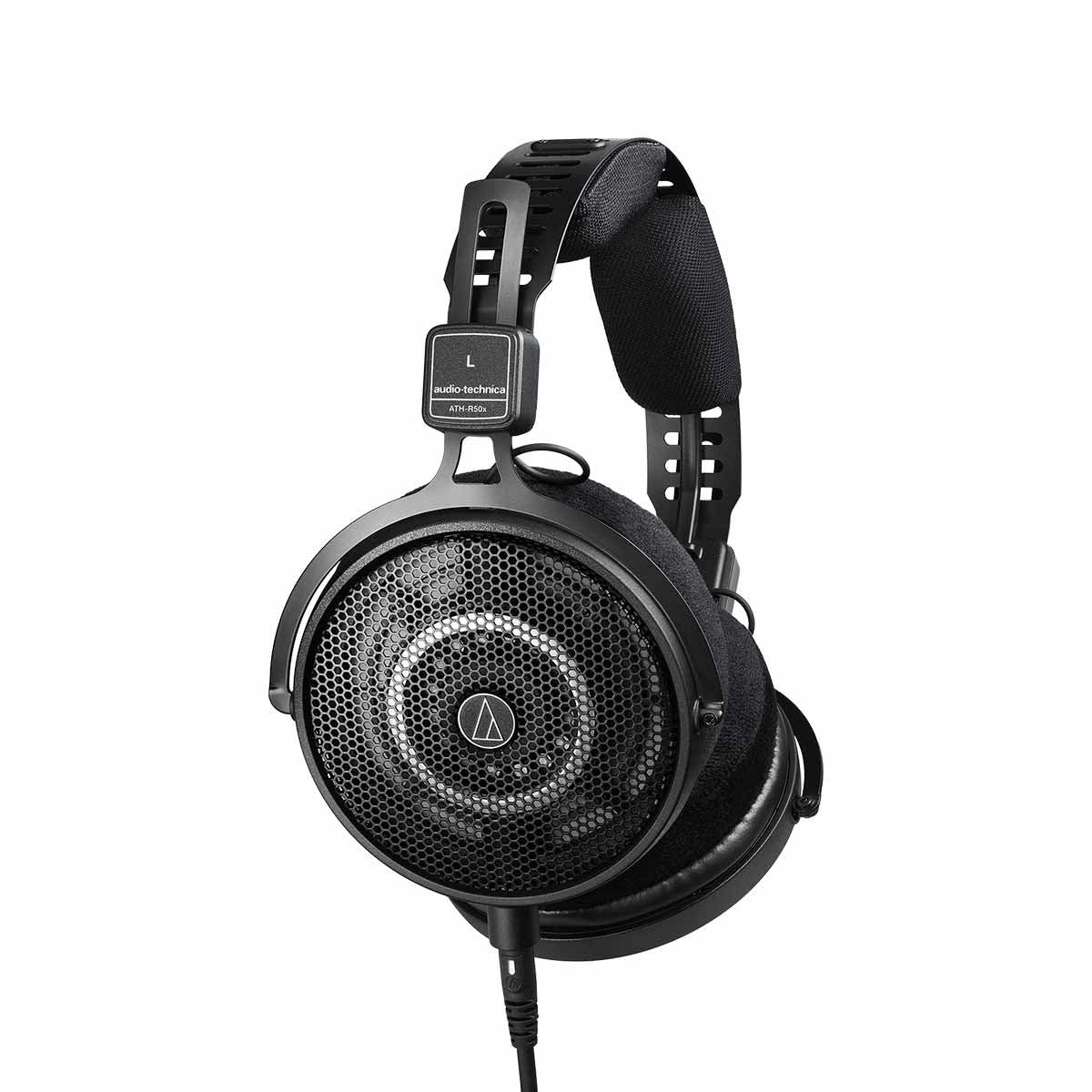
| Audio-Technica ATH-R50XBest Open-Back Value | Open-back reference work | Open-back | Dynamic driver | Detachable cable | Amazon |
| FiiO FT1 | Closed-back detail at home | Closed-back | 60 mm dynamic | Detachable cable | Amazon |
| FiiO JT7 | Portable planar listening | Open-back planar | 95×86 mm planar | 3.5mm / 4.4mm | Amazon |
| Sennheiser HD 505 | All-day home listening | Open-back | Dynamic driver | 1.8 m 3.5mm cable | Amazon |
| Shure SRH440A | Recording and monitoring | Closed-back | Dynamic driver | Detachable cable | Amazon |
| Yamaha HPH-MT5 | Lightweight long sessions | Closed-back | 40 mm dynamic | Detachable cable | Amazon |
| Philips SHP9500 | Entry-level open-back value | Open-back | 50 mm neodymium | Detachable cable | Amazon |
In‑Depth Reviews
1. Audio-Technica ATH-M50X Professional Studio Monitor Headphones, Black
Our pick — over 4.5★ from 33,500+ verified ratings; the strongest balance of quality and price.
The crowd favorite that turns any phone into a serious listening rig
The M50X is the safest first step into audiophile sound because it runs from a phone and needs no amp. Inside sit 45 millimeter large-aperture drivers — the moving parts that create sound — paired with rare earth magnets and copper-clad aluminum wire voice coils. Translation: you get deep, accurate bass without the boomy mess that ruins other closed-backs in this range.
What earns it the top spot is the sheer consistency of the praise. Sound quality dominates every conversation by an enormous margin, and value for money sits right behind it — owners keep describing it as a purchase that simply made sense. The three included cables (one of them a detachable twist-lock) mean you should never need to replace the whole headphone. A 90-degree swivel on the earcups lets you flip one side down for single-ear monitoring, which is exactly what studio work needs.
You can plug this straight into a phone or laptop and still get loud, lively sound. The M50X runs at 38 ohms (a low electrical resistance number), so it plays noticeably louder than 64-ohm models that need real power behind them. Owners with hearing loss report hearing cymbals and backing vocals they had missed before. The honest catch: the fit divides people. The cups seal snugly for most, but some find they do not stay put as well as they would like, and a small group finds the clamp tight at first before the pads soften over a couple of hours. Glass-wearers occasionally notice pressure around the temples.
Where it wins
- 45 mm drivers with rare earth magnets deliver clarity across an extended frequency range
- 38 ohms means it plays loud from phones and laptops without an amp
- Three cables included, including a detachable twist-lock
- Earcups swivel 90 degrees for one-ear monitoring
Where it asks for care
- Fit is genuinely split — snug for some, loose for others
- Pads can feel tight for the first couple of hours
- Closed-back design trades soundstage width for isolation
Reach for this if: you want one pair that handles music, movies, gaming, and light studio work without asking you to buy an amp.
Think twice if: you wear glasses and are sensitive to earcup pressure — the fit is the one thing buyers are split on.
2. HIFIMAN SUNDARA Hi-Fi Headphone with 3.5mm Connectors
Planar detail that makes twenty-year-old albums sound newly recorded
Planar magnetic drivers (a flat diaphragm moved by magnets across its whole surface instead of a coil at the center) are the reason the Sundara punches above its price. The trick here is a diaphragm described as 80% thinner than the previous series — thinner means faster movement, which is why transients (the sharp attack of a drum or a plucked string) land with real snap. Detail, speed, and an extended frequency response all follow from that one change.
You can wear this pair for hours without a hot spot, because a separate head strap spreads the weight evenly across your head instead of concentrating it on one band — owners talk about forgetting they are wearing it. The metal build also draws consistent praise for feeling sturdier than the price suggests. Compared directly with the Audio-Technica ATH-M50X above, this is the more revealing listen: the Sundara separates instruments further apart and pulls more texture out of a recording, while the M50X counters with a warmer, more forgiving tone and no need for amp power.
Here is the honest part. The Sundara needs an amplifier to sound like itself — bass in particular leans thin until you give it proper power, and buyers report the low end opening up once a dedicated amp enters the chain. Long-term owners also flag the stock cable as poor: one four-year owner swapped pads after nine months and the cable early on, while the sound stayed excellent. Occasional units have arrived with mismatched or rattling pads, so it pays to check yours on arrival rather than weeks later.
The amp rule: budget for a small headphone amplifier as part of the purchase, not as an upgrade later. Without it you are hearing maybe half of what these drivers can do.
Built to last, mostly: the all-metal frame holds up over years, but the stock cable and earpads are consumables — treat them as something you will eventually replace, not a flaw in the headphone itself.
Who it beats: anything in its own bracket for raw detail, soundstage, and imaging — this is the pick that makes complex music feel three-dimensional.
Who it loses to: the M50X above if you refuse to buy an amp or want one pair for travel and commuting.
3. Audio-Technica ATH-R50X Open-Back Headphones
A featherweight open-back that stays cool through marathon listening sessions
At 207 grams, the R50X is the lightest proper open-back on this list, and you feel it within the first hour — no clamping, no heat build-up, no pressure points. The fully open-back design lets air move freely around the driver, which kills internal resonance and makes fast musical passages land cleanly instead of smearing together. For reference work and long desk sessions, that combination is hard to argue with.
The bass deserves its own mention. Open-backs usually trade low-end weight for airiness, but owners consistently describe this one as bass-heavier than most of its open-back peers — close enough to a closed-back to satisfy listeners who expected to give bass up entirely. It manages this while staying analytical and cold-leaning rather than warm. Set against the Sundara above, the R50X is the easier listen to power: it needs no dedicated amp, where the planar HIFIMAN genuinely does.
The predictable downside is leakage. This is physics, not a fault — an open grille lets your music out, so anyone in the room hears it, and it is not a commuting or shared-office pick. Some listeners also find it a touch bright up top and reach for EQ to smooth it. The cable situation splits opinion, with the supplied short cable drawing the most complaints and the longer one going down fine.
Comfort verdict: the low clamp force and light frame are the standout, and tall or large heads report the simple headband bends easily to fit.
Pick this if: you work at a desk alone and want reference-grade openness without buying an amp to open up it.
Pass if: you need isolation — the open grilles will broadcast your playlist to the whole room.
4. FiiO JT7 Over-Ear Planar Magnetic Headphones
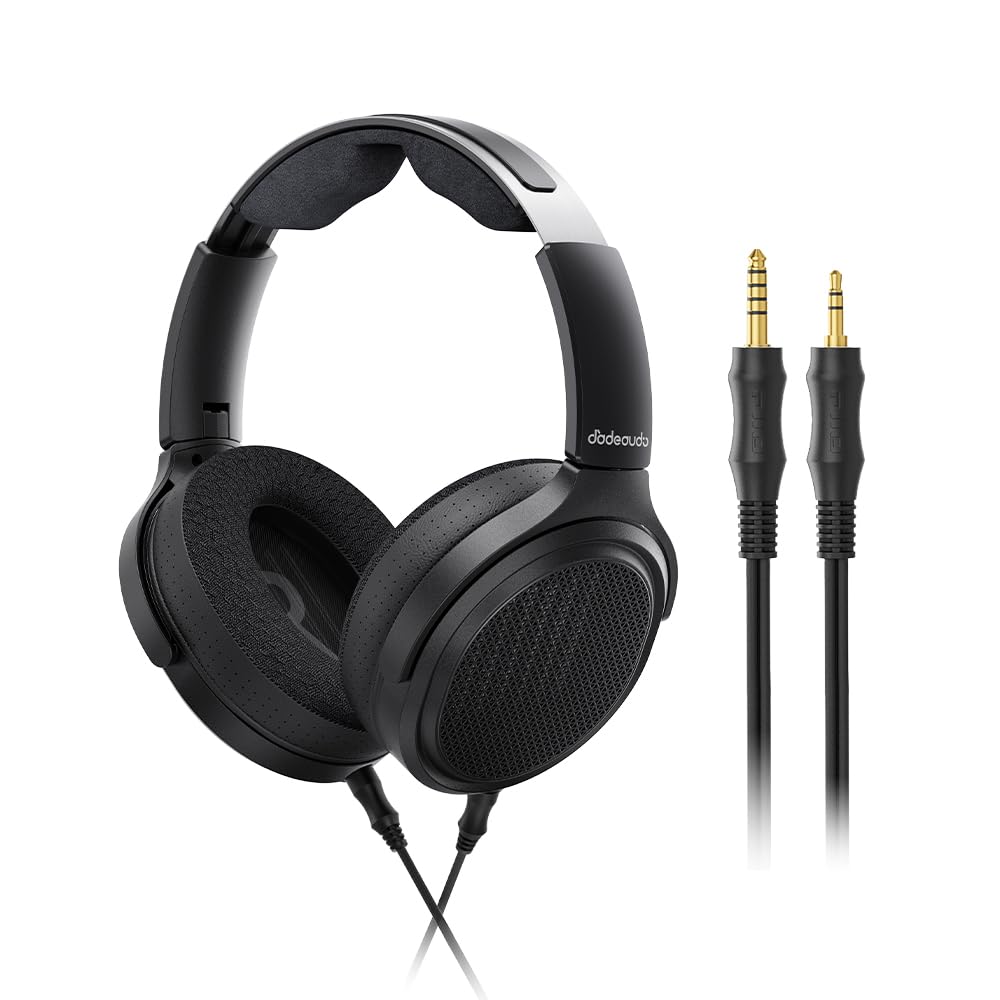
A planar driver you can fold up and take with you
Planar headphones are usually heavy desk-bound beasts. This one is not — the JT7 weighs in at 318 grams and folds compactly, which is why it works as a portable open-back rather than a fixture on your desk. The driver itself is a self-developed 95×86 millimeter planar magnetic unit, and every part from the magnetic circuit to the diaphragm is made in-house. A dual-sided N52 neodymium magnet array pushes sensitivity to 92dB/mW (a measure of how loud it gets per unit of power), which is why portable players and laptops can drive it without an amp.
Around the driver sits FiiO’s F.E.S. Elastic Support System, a textured diaphragm design meant to increase vibration amplitude and deepen bass. Owners confirm the low end delivers — the deep planar bass and wide soundstage come up repeatedly, and the value for money is a consistent theme. Two cables ship in the box: a 3.5mm single-ended and a 4.4mm balanced, plus a 6.35mm adapter, so it plugs into almost anything. Balanced output (a connection type that sends a separate signal per channel) is a genuine upgrade here, and the 4.4mm cable draws specific praise for staying quiet with almost no microphonics (cable noise you hear when it rubs).
The trade-off is tuning personality. This is a warm, colored sound rather than a neutral studio tool — one listener notes the slight bass lift bleeds into the mids, and treble is controlled without much sparkle. It also wants real current: sensitive as it is, the drivers respond well to a cleaner amplifier, and EQ open up noticeably more. The slightly firmer clamp force is deliberate, designed for a better seal and more bass, and it eases after a short break-in period.
What you are buying
- 95×86 mm planar driver with dual-sided N52 magnets and 92dB/mW sensitivity
- 318 g and foldable — far more portable than typical planars
- Two cables (3.5mm and 4.4mm balanced) plus a 6.35mm adapter included
- Replaceable earpads and headband for long-term upkeep
The fine print
- Tuned warm and colored — not a neutral reference
- Firmer clamp force from the start before break-in
- It scales with better power, so a weak source holds it back
Suits: the listener who wants planar richness they can pack in a bag and run from a laptop or portable player.
Not for: mixing engineers who need a flat, uncolored reference to make decisions on.
5. FiiO FT1 Closed-Back Over-Ear Headphones

Real wood cups and a huge diaphragm, tuned for hours of easy listening
Sixty millimeters of diaphragm in a closed-back shell is a lot of moving air, and it shows up immediately in the low end. That diaphragm is a nano wood fiber composite built around 90-year-old Northern European spruce with carbon fiber blended in, landing at roughly 0.1mm thick — light enough to react quickly, tough enough to hold shape. FiiO’s W-shaped independent suspension design then increases the effective vibrating area by 25.8% versus a conventional diaphragm of the same size, which is the technical reason the bass gets so deep and full.
Then there are the cups. North American FAS grade black walnut solid wood does real acoustic work here, reducing cavity resonance and minimizing standing waves so the sound stage stays clean. Every pair carries its own wood grain, which means no two look identical. A steel ball slide rail headband adjusts across 0 to 11 notches for different head sizes, and suede covers the contact area for breathable comfort. Two oxygen-free copper silver-plated cables ship in the box — a 3.5mm single-ended and a 4.4mm balanced — each 1.5 meters with 392 strands of wire.
The catch worth knowing before you commit: bulk and isolation. These are big, wired-only, and average at blocking outside noise, so they are a stay-at-home pair rather than a travel companion. The hinge has drawn scattered reports of giving out after a few months, and the stock cable can pick up handling noise. Vocals sit back rather than pushed forward, which suits electronic and instrumental music more than vocal-led tracks.
What the wood buys you: a reduced-resonance cavity (a cup shape that soaks up vibration) that keeps low frequencies punchy and full without bleeding mud into the mids — the deep, punchy bass owners describe comes from that combination of large diaphragm and dense cup material.
Easy to feed: 32 ohms means a phone can drive it, though a small DAC/amp open up more of what these 60mm drivers can do.
The right buyer: someone who wants closed-back bass and detail for home listening and does not care about packing it up.
The mismatch: anyone who needs noise isolation on a commute or wants a cable that never transmits handling noise.
6. Sennheiser HD 505 Wired Open-Back Audiophile Headphones

The set you forget you are wearing — which is the whole point
Some headphones impress you for ten minutes and hurt by hour three. This one is built the other way around. A lightweight headband with reduced clamping force, matched to plush velour ear pads, means pressure stays low across long sessions, and the design keeps your ears cool rather than trapping heat. If your listening runs into the evening, that detail matters more than any frequency chart.
The sound follows an advanced laminate diaphragm tuned for crisp highs, clear mids, and controlled bass, with a frequency range of 20 Hz to 20,000 Hz. It is a transparent, even listen rather than a bass-forward one — owners describe adequate but not powerful low end, and the strength is really in how naturally voices and acoustic instruments sit. The open-back build gives an airy soundstage that suits music, films, and gaming equally, and reviewers comparing it against older Sennheiser models report it keeping that wide stage while sounding less veiled than what came before.
The cable is the one design choice that splits opinion. It runs 1.8 meters on a 3.5mm plug, which is long and proprietary — fine at a desk, occasionally described as more cable than you need, and replacements mean sticking to Sennheiser’s own HD 500 series cables. There is also no active noise cancelling, which is expected for an open-back design and simply the price of the airy sound. Some listeners notice a touch of high-end sharpness on certain tracks.
Long-haul comfort: the reduced clamp and big pads fit fully over the ears and hold up for all-day wear.
Built for: home listeners who value comfort and an even, natural soundstage over bass slam.
Look elsewhere if: you want punchy low end or need noise blocked out around you.
7. Shure SRH440A Over-Ear Wired Studio Headphones

Built for the studio bench, not the bus seat
The SRH440A is deliberately unfashionable, and that is its strength: a closed-back studio tool, not a lifestyle accessory. A closed-back, over-ear design with tune impedance keeps performance consistent whether you plug into an audio interface, a mixer, a laptop, or a portable player. The balanced sound signature is transparent rather than flattering, which is exactly what you want when you are hearing a mix as it truly is, not as you wish it sounded.
You can wear these through a long session and then fold them away, because the headband adjusts, the earcups are cushioned, and the whole thing collapses for storage between recordings. The included cable runs long with a detachable locking connector, so it stays put instead of pulling loose mid-take — reviewers mention the cord being long enough for most setups and praising how clean and clear the sound comes through on guitar plugins and studio monitoring.
What holds it back from a higher spot is consistency. Build and durability get genuinely split feedback, with some units going strong and a minority reporting failures within months. The ear pads block a fair amount of ambient sound but not all of it, and there is no active noise cancelling. It also leans bulky on the head, and one design quirk is that the cable runs down the left side only rather than splitting to both cups.
Why engineers like it
- Balanced, transparent tuning for honest monitoring
- Consistent performance across interfaces, mixers, and laptops
- Detachable locking cable that resists pulling free
- Collapsible for easy storage and transport
Worth weighing up
- Owners mention durability varying between units
- Cups block some but not all ambient noise
- Large, wide-footprint look on the head
Locked in for: home studios, podcast setups, and guitar-plugin recording where an honest, wired reference beats a flattering one.
Think twice if: you want a stylish set for walking around town — this one is a bench tool.
8. Yamaha HPH-MT5 Monitor Headphones, White

A monitoring headphone light enough to forget you have it on
At 250 grams, the HPH-MT5 is one of the lightest ways into genuine studio monitoring. The low clamp force keeps pressure off your head, which owners notice immediately — piano players and migraine-prone listeners alike describe wearing them comfortably for hours at a stretch. Closed-back and circumaural, the design seals around the ear for solid isolation, so you can track without your surroundings leaking into the take.
You hear the recording as it was made, not a warmed-up version of it. Inside, 40 mm custom drivers with CCAW voice coils (copper-clad aluminium wire, a light coil material) cover a 20 Hz to 20 kHz range — a standard frequency span for monitoring — and the sound stays faithful to the source rather than adding warmth or sparkle of its own. A long detachable locking 3-meter cable reaches from a piano bench to a computer with slack left over, and a gold-plated 6.3mm adapter lets you plug straight into an amplifier. Comparing it against the Shure SRH440A above, the Yamaha is the lighter, easier wear of the two — the Shure counters with a more compact folded shape and a locking left-side cable, so the choice depends on weight versus packing size.
The honesty note: the build feels light, and that lightness occasionally reads as fragile. One owner added an extended warranty for confidence, and the 4 out of 5 reviews center on that same durability concern rather than on sound. The cord is generous but long enough that it can get in the way in a tight setup, which split opinions among owners.
The light-fit advantage: low clamping force paired with a 250 g frame means long mix sessions without a pressure headache — the thing most owners single out first.
Made for: long desk sessions, keyboard practice, and anyone who finds heavier monitors tiring.
Skip if: you need a tank-like build you can throw in a bag every day.
9. Philips Audio SHP9500 HiFi Precision Stereo Over-Ear Headphones

The cheapest real doorway into open-back sound — and it still works without an amp
This is the cheapest way into real audiophile listening, and the reason is simplicity: two 50 mm drivers, a detachable cable, and no amp required. Two 50 mm neodymium drivers (magnets made of neodymium, a strong magnet material) deliver a full sound spectrum, and its 50 mm driver is a full 10 millimeters larger than the Yamaha HPH-MT5’s 40 mm unit above — meaningfully more surface area pushing air for the same power input. Gold-plated connectors, a steel enclosure, and a detachable 1.5-meter cable round out a package that punches well past what the price implies.
What keeps owners happy long-term is the comfort. A double-layered headband cushion and breathable ear pads mean you can wear these through a working day without ear pain, and the light frame takes the fatigue out of long sessions. Sound quality is the dominant theme in every discussion, followed closely by value for money — the sense that these deliver far more than they cost. A 9-month owner summed it up: excellent build, sound, and value.
Two honest limitations shape who should buy these. First, they are open-back, so they leak sound and let the room in — great at a home desk, wrong for a noisy office or a commute. Second, they want a little more power than a phone can easily provide on a weak source; a laptop or a small amp wakes the bass up properly, and file quality shows through clearly. Treble can be grainy on some tracks, which EQ smooths out. The clamping force is also light enough that some owners bend the metal arch to tighten the fit.
Why it earns the slot
- 50 mm neodymium drivers with a gold-plated detachable cable
- Double-layered headband and breathable pads for all-day comfort
- Steel enclosure that holds up over months and years
- Wide, airy open-back sound at the lowest entry point in this list
Know before you buy
- Open-back design leaks sound — not for commuting or shared offices
- Prefers a laptop or amp over a weak phone source for full bass
- Light clamp and grainy treble on some tracks
Ideal first step: you have never owned an open-back and want to hear what the fuss is about without spending much.
Wrong fit if: you need isolation or plan to listen mostly on a phone without any extra power.
Understanding the Specs
Impedance and Why It Decides Your Setup
Impedance is measured in ohms and tells you how much electrical resistance the headphone puts up. A low figure like 38 ohms means the pair runs loudly from a phone or laptop with no help. A high figure needs more voltage to reach the same volume, which is where a headphone amplifier earns its place in your setup. Before you buy, check your source: a desktop PC’s headphone jack is often weaker than a phone’s, and both can fall short of a dedicated amp.
Dynamic vs Planar Drivers
A dynamic driver moves a cone with a voice coil attached at its center, the same basic idea as a speaker. It is efficient and easy to power. A planar magnetic driver instead stretches a thin flat diaphragm across a grid of magnets, moving the entire surface at once. That gives faster transient response and often better detail and separation, but planars tend to ask for more power. If you drive everything from a phone, a dynamic pair is usually the simpler bet.
FAQ
Do I need a headphone amplifier for budget audiophile headphones?
What is the difference between open-back and closed-back headphones?
Are planar magnetic headphones better than dynamic ones?
How long should I expect these to last?
Will an open-back leak sound in a shared room?
What is a balanced cable and do I need one?
Do driver size and frequency range matter for sound quality?
Should I buy a wired pair instead of wireless for sound quality?
Can I use these headphones for gaming?
How do I know which pair fits my head comfortably?
Final Thoughts: The Verdict
If you want one pair that does almost everything well without demanding an amp or a lifestyle change, the Audio-Technica ATH-M50X is the pick — its 45 mm drivers, easy 38-ohm load, and included detachable cables make it the most forgiving way into serious sound. If you want maximum detail and soundstage from a desktop setup, grab the HIFIMAN SUNDARA, just budget for the amp it needs. And for a first open-back experience on the tightest budget, the Philips SHP9500 is the one to reach for.
How We Picked
We do not accept paid placement. Every pick is matched to a real buyer and a real use-case; we do not hands-on test units.
Sources & Methodology
Specifications: manufacturer listings and product documentation. Review insights: verified customer reviews, as of September 2026. Pricing: not shown on this page (it changes often); check the current price via the retailer link.
As an Amazon Associate, Gadgets Feed earns from qualifying purchases. This does not affect which products we feature.