
Finding a pair of closed-back headphones that deliver genuine audiophile-grade clarity without sounding like you’re listening in a broom closet is the real challenge. The best models trick your ears into hearing an open, spacious soundstage while physically blocking out the world around you, letting you pick apart every transient and texture in your favorite tracks without disturbing anyone nearby.
I’m Min — the co-founder and writer behind Gadgets Feed. I’ve spent dozens of hours analyzing frequency response graphs, driver topologies, impedance curves, and real-world reviews to separate the truly transparent closed-back designs from the muddy, resonant messes that plague this category.
Whether you need to critically monitor a mix in a live room or simply want to enjoy your playlist without the noise of the outside world bleeding in, this guide breaks down the nine most compelling models that define the best audiophile closed back headphones available right now.
How To Choose The Best Audiophile Closed Back Headphones
Closed-back headphones present a unique engineering problem: they must isolate sound while simultaneously avoiding the dreaded “cave” resonance that makes everything sound boxed in. The best designs use carefully tuned chambers, high-quality damping materials, and driver innovations to achieve a clean, open-like presentation without sacrificing isolation. Your choice hinges on three core factors:
Driver Topology: Dynamic vs. Planar Magnetic
Dynamic drivers, like the 45mm and 60mm units found in the majority of models here, use a voice coil and cone to move air, typically delivering punchy, impactful bass and a more “traditional” sound signature. Planar magnetic drivers, like the one in the HIFIMAN AUDIVINA, use a thin diaphragm suspended between magnets, which provides lightning-fast transient response, significantly lower distortion, and a more “effortless” delivery of detail, especially in the treble. If you prioritize bass slam and a familiar timbre, a dynamic driver is reliable. If you crave micro-detail and speed, planar magnetic is the superior topology.
Impedance, Sensitivity, and Amplification
Impedance, measured in ohms (Ω), dictates how much power a headphone needs. Models like the 32Ω FiiO FT1 or the 35Ω Focal Celestee are designed to be easily driven by portable devices like phones or laptops. Higher-impedance models, such as the 150Ω Sennheiser HD 620S or the 250Ω version of the beyerdynamic DT 770 PRO, demand a dedicated headphone amplifier to reach their full potential and avoid a thin, lifeless sound. Always match the impedance to your source: low impedance for portable use, high impedance for a desktop setup with a clean amplifier. Sensitivity (dB/mW) is also critical—a higher number means louder volume with less power.
Sound Signature and Tuning
No two closed-back headphones sound the same. Some, like the beyerdynamic models, aim for an “analytical” or “bright” sound with elevated treble, which excels at revealing flaws in a recording but can be fatiguing for long listening sessions. Others, like the FiiO FT1 and Sennheiser HD 620S, offer a “warm-neutral” or “balanced” tuning with a more forgiving top end and a palpable sense of space. The best choice for you depends entirely on your use case: critical mixing engineers may prefer the former; dedicated music lovers may prefer the latter.
Quick Comparison
On smaller screens, swipe sideways to see the full table.
| Model | Category | Best For | Key Spec | Amazon |
|---|---|---|---|---|
| FiiO FT1 | Dynamic | Best Value & Warm Tuning | 60mm Dynamic Driver / 32Ω | Amazon |
| Audio-Technica ATH-M50X | Dynamic | Versatile Monitoring | 45mm Dynamic Driver / 38Ω | Amazon |
| beyerdynamic DT 770 Pro X | Dynamic | Next-Gen Studio Standard | STELLAR.45 Driver / 48Ω | Amazon |
| Sennheiser HD 620S | Dynamic | Open-Back Soundstage in a Closed Design | 42mm Angled Driver / 150Ω | Amazon |
| Sony MDR-M1 | Dynamic | Ultra-Light & Neutral Reference | 40mm Dynamic Driver / 50Ω | Amazon |
| beyerdynamic DT 770 PRO | Dynamic | Budget-Friendly Workhorse | 45mm Dynamic Driver / 80Ω | Amazon |
| Shure SRH1540 | Dynamic | Exceptional Comfort & Detail | 40mm Neodymium Driver / 46Ω | Amazon |
| HIFIMAN AUDIVINA | Planar Magnetic | Holographic Soundstage | Planar Magnetic Driver / 22Ω | Amazon |
| Focal Celestee | Dynamic | High-End Refinement | 40mm M-Shape Driver / 35Ω | Amazon |
In-Depth Reviews
1. FiiO FT1

The FiiO FT1 has become an instant classic in the budget-conscious audiophile space, and for good reason. Its 60mm dynamic driver, paired with a nano wood fiber composite diaphragm derived from 90-year-old spruce, produces a sound that is remarkably mature for the price point. The W-shaped independent suspension design increases the effective vibrating area by 25.8 percent, which translates to a bass response that is deep, tight, and never muddy, while the mids remain lush and the treble avoids any harsh peaks.
Comfort is a major win here. The ball slide rail headband and suede contact points make it lightweight and breathable for hours of listening, even for those with larger head sizes. The premium aesthetic is undeniable thanks to the genuine solid wood cups, which also serve to dampen unwanted resonance. It comes with two oxygen-free copper silver-plated cables (3.5mm and 4.4mm balanced), a welcome inclusion that saves you an immediate cable upgrade purchase.
The one notable compromise is the average noise isolation, as the wood cups don’t seal as aggressively as some studio-focused designs. However, for home listening where absolute isolation isn’t critical — and especially for fans of electronic, ambient, or acoustic music — the FT1 punches so far above its weight that it forces you to question why you’d spend more. It is remarkably easy to drive from a laptop or a basic USB-C dongle DAC, though it scales well with better amplification.
Why it’s great
- Massive 60mm driver delivers authoritative, well-defined bass.
- Wood cups look and feel premium while reducing distortion.
- Included 3.5mm and 4.4mm balanced cables add real value.
Good to know
- Only average sound isolation, not ideal for loud environments.
- The stock cable can be slightly microphonic against clothing.
2. Audio-Technica ATH-M50X

The Audio-Technica ATH-M50X needs little introduction; it has become the de facto standard for everything from YouTube creator setups to audio production suites. Its proprietary 45mm large-aperture drivers with rare earth magnets deliver a sound that is famously punchy, with a V-shaped tuning that offers satisfying bass emphasis and sparkling treble. The clarity is exceptional for the price, though it is not strictly neutral — the treble can be slightly aggressive with poorly recorded material.
Build quality is a strong suit, with a robust metal headband and swiveling earcups that make one-ear monitoring and storage a breeze. The circumaural pads provide decent passive isolation for a closed-back design, and the detachable cable system (the primary upgrade from its M50 predecessor) adds a layer of durability and repairability. It comes with three cables, including a coiled option, which gives you flexibility depending on whether you’re at a desk or on the go.
The primary downside is that the sound signature is not what purists would call “flat.” The bass is elevated, and the treble has a noticeable peak that can induce listening fatigue during very long sessions. However, for the majority of users who enjoy an energetic, fun sound with excellent detail retrieval, the ATH-M50X is a masterpiece of value that performs admirably across music, gaming, and content creation.
Why it’s great
- Punchy, engaging V-shaped sound that reveals detail without sounding cold.
- Foldable, swiveling design makes it portable and easy to store.
- Exceptionally durable build with a proven track record.
Good to know
- Sound signature is not flat, with elevated bass and a treble peak.
- Earpads are replaceable but the stock pads can become uncomfortable over long sessions.
3. beyerdynamic DT 770 Pro X

The beyerdynamic DT 770 Pro X is the latest evolution of the legendary DT 770 lineage, and it addresses nearly every gripe veterans had with the original. The core upgrade is the STELLAR.45 driver, which provides a frequency response of 5 Hz to 40 kHz with a level of clarity and detail that is genuinely impressive. The treble is present and analytical, which is fantastic for critical listening and identifying flaws in a mix, but it can be a touch too bright for those who prefer a relaxed, warm sound.
Comfort is a hallmark of this series. The velour ear pads are plush and breathable, and the ergonomic headband distributes weight evenly to minimize fatigue during all-day wear. A major quality-of-life improvement over the standard DT 770 is the detachable cable with a locking mini-XLR connector, which makes the headphones significantly easier to store, transport, and repair. The 48Ω impedance is a smart middle ground — easier to drive than the 250Ω version but still benefits from a dedicated amplifier.
The sound isolation is excellent, making it a top choice for tracking vocals or instruments in a live recording environment. The main criticism is that the sound signature is not laid-back; it is an analytical tool first and a musical enjoyment device second. If you need to hear every single detail, including the noise floor of your preamp, the DT 770 Pro X delivers with German precision and build quality that should last a lifetime with replaceable parts.
Why it’s great
- Exceptional detail retrieval and analytical clarity from the STELLAR.45 driver.
- Detachable cable with a locking connector is a major durability upgrade.
- Top-tier comfort for extended studio sessions with velour pads.
Good to know
- Treble can be harsh for those sensitive to high frequencies.
- Not a warm sound signature; it is unapologetically analytical.
4. Sennheiser HD 620S
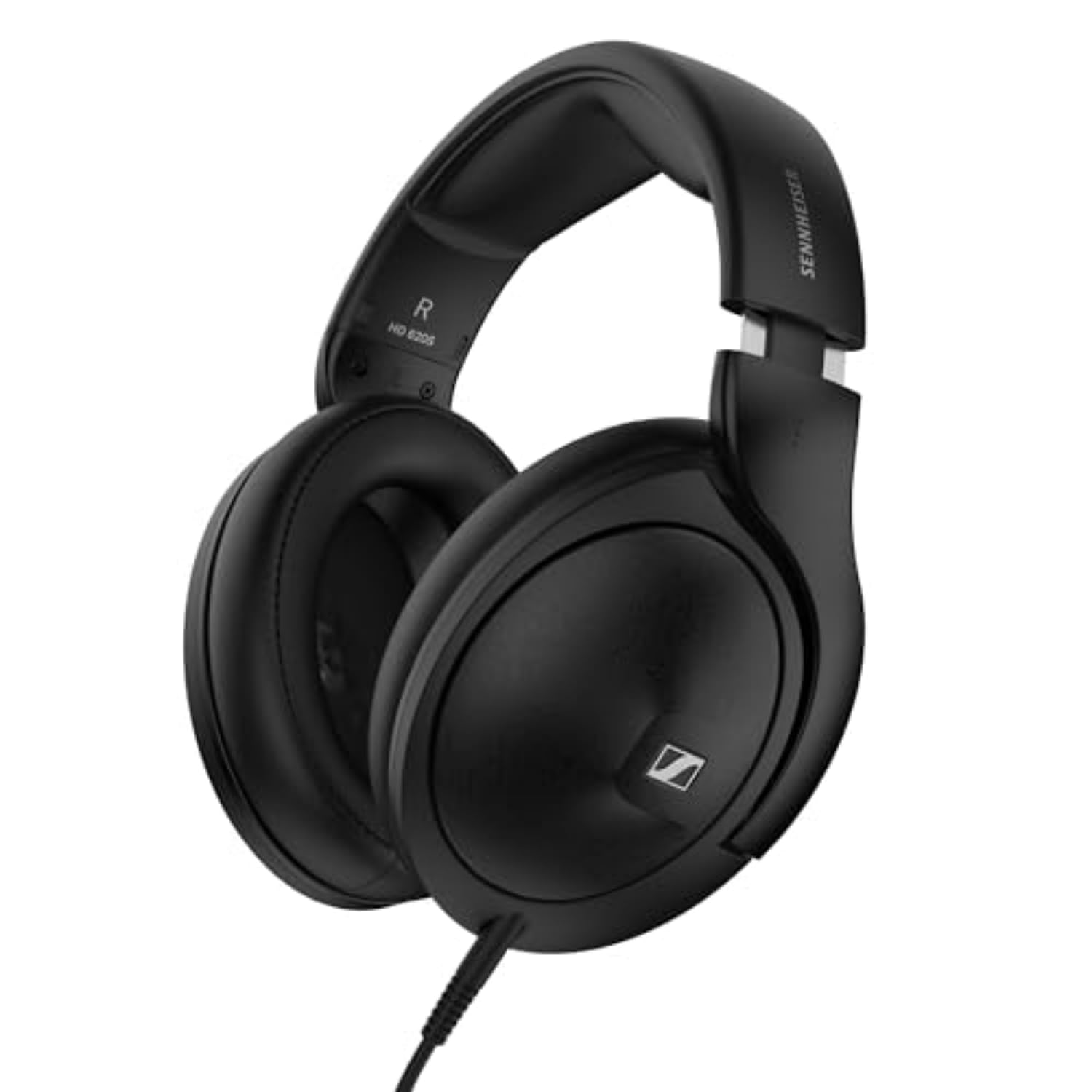
The Sennheiser HD 620S is a fascinating product that attempts to solve the biggest problem with closed-back headphones: the lack of headroom and spatial cues. By using an angled 42mm dynamic driver paired with an open baffle system, Sennheiser engineers have created a closed-back headphone that sounds remarkably spacious and airy. The sound is neutral with a very slight elevation in the bass and treble, making it more engaging than the HD 600 series while retaining its reference-level balance.
The 150Ω impedance means it is designed to be used with a dedicated amplifier or audio interface, and when driven properly, the sound is incredibly detailed without ever becoming harsh. It is a fantastic tool for audio engineers who need to judge a mix but work in a noisy environment, as the isolation is good. The comfort is typical Sennheiser excellence: the artificial leather pads and lightweight chassis are comfortable for hours of focused listening.
The main drawbacks are that it is not a portable headphone due to its impedance requirement, and some listeners may find the stock tuning slightly “wonky” in the midrange, which is easily corrected with a gentle EQ. However, for any listener who values a wide, natural soundstage above all else in a closed-back form factor, the HD 620S is a revelation that brings the best of the 6-series philosophy to a sealed design.
Why it’s great
- Offers a soundstage width that rivals many open-back headphones.
- Neutral, detailed tuning with excellent transient response.
- High-quality build with replaceable parts and a steel-reinforced headband.
Good to know
- 150Ω impedance requires a decent external amplifier to perform optimally.
- Stock tuning can be improved with a small amount of EQ for some ears.
5. Sony MDR-M1

Sony’s MDR-M1 is a direct descendant of the legendary MDR-7506, but it has been completely re-engineered for the modern audiophile and creator. At just 216 grams, it is extraordinarily light, and its soft, thick earpads make it a joy to wear for marathon sessions. The 40mm driver is designed for ultra-wideband playback from 5 Hz to 80 kHz, and the sound is tuned to be neutral, detailed, and surprisingly open-sounding for a closed-back monitor.
The build quality is solid, with a foldable mechanism that makes it easy to pack in a bag, though it lacks a carrying case. It comes with two detachable cables (a short 1.2m and a long 2.5m), and the screw-on 6.3mm adapter is a nice professional touch. The soundstage is wider than many competitors, and the imaging is precise, making it a strong choice for budget-conscious mixers and gamers who need accurate positional audio.
The most common criticism is a slight sibilance in the upper treble that some listeners find fatiguing on certain tracks. This can be addressed with a simple EQ adjustment, and it is a minor flaw in an otherwise brilliant package. For anyone who needs a lightweight, neutral, and comfortable closed-back monitor that sounds great with a simple USB-C DAC dongle, the MDR-M1 is an easy recommendation.
Why it’s great
- Extremely light at 216g, making it one of the most comfortable closed-back headphones on the market.
- Neutral, detailed sound with a wide soundstage for a closed-back design.
- Collapsible design makes it very portable.
Good to know
- Some units exhibit a slight sibilance in the treble that may require EQ.
- Earpads can get warm after extended use, despite the comfort.
6. beyerdynamic DT 770 PRO (80 Ohm)

The original beyerdynamic DT 770 PRO is a titan of the audio industry, and for good reason. The 80-ohm version is the most versatile impedance, offering a balanced frequency response that works well with everything from audio interfaces to higher-end portable DACs. Its closed-back design provides excellent passive noise isolation, making it a staple in recording studios for tracking and monitoring. The velour ear pads are legendary for their comfort, and the build is designed to be fully serviceable for decades.
The sound is detailed and balanced, with a slight emphasis on the bass and treble that gives it a “V-shaped” signature. It is not strictly neutral, but it is highly engaging and works well across genres. The bass has a satisfying punch without being boomy, and the treble is crisp and clear. The main downside of the standard DT 770 is the permanently attached cable; if you damage it, you need to solder a replacement or send it in for repair, which is less convenient than the detachable cable on the Pro X model.
Even without the detachable cable, the DT 770 PRO remains a benchmark in its price bracket. The 80-ohm version is incredibly capable with a wider range of sources than the 250-ohm variant, and the comfort and isolation are still top-tier. It is the safe, reliable choice for anyone who needs a professional-grade monitoring tool that will survive heavy use and sound great doing it.
Why it’s great
- Legendary comfort and build quality that is fully serviceable.
- Excellent passive noise isolation, ideal for recording environments.
- Balanced V-shaped sound signature that is both detailed and fun.
Good to know
- The cable is not detachable and is permanently attached to the headphone.
- 80-ohm version still benefits from a dedicated amplifier for best performance.
7. Shure SRH1540

The Shure SRH1540 is a masterclass in comfort and refinement. Its aircraft-grade aluminum alloy yoke and carbon fiber cap give it a lightweight, premium feel, and the Alcantara-wrapped ear pads are among the most comfortable in the industry. The 40mm neodymium driver uses an APTIV film diaphragm to achieve lower total harmonic distortion and improved linearity, resulting in a sound that is supremely detailed, smooth, and never fatiguing. The tuning is neutral with a slight warmth, making it excellent for analytical listening.
The soundstage is reasonably wide for a closed-back design, and the imaging is precise. The bass is tight and extends well without bleeding into the mids, and the treble is detailed without being harsh. It comes with a quality zippered storage case, two detachable cables, and an extra pair of ear pads, which is a generous accessory set. The headphones are designed to last, with user-replaceable cables and pads.
The most significant flaw is the mechanical cable noise; the cable transmits rustling sounds directly to the ears. This is a known issue that can be mitigated by wearing the cable over the shirt or using a third-party cable. The SRH1540 also benefits from a decent amplifier to truly shine. Despite these quirks, it remains one of the most comfortable and well-rounded closed-back options for the discerning listener who values neutral accuracy.
Why it’s great
- Exceptional comfort with Alcantara ear pads and a lightweight build.
- Neutral, detailed sound with very low distortion and a smooth treble.
- Comes with a premium case, extra cable, and replacement pads.
Good to know
- The stock cable is very microphonic and transmits physical noise.
- Requires a decent headphone amplifier to reach its full potential.
8. HIFIMAN AUDIVINA

The HIFIMAN AUDIVINA is a closed-back planar magnetic headphone that aims to deliver the soundstage of an open-back and the isolation of a closed-back. It uses a NEO Supernano Diaphragm that is 80 percent thinner than previous designs, combined with a “Stealth Magnet” design that reduces wave diffraction turbulence. The result is a sound that is incredibly fast, detailed, and holographic, with a presentation of space that is rare in this form factor. The bass is deep, tight, and impactful, and the treble is airy without being sibilant.
The design is both beautiful and functional. The hardwood cups are lacquered to a high gloss, giving them an heirloom-quality appearance. The comfort is good, though the clamping force can be a bit firm for some. It is a demanding headphone for amplification: it requires a powerful, clean amplifier to control the planar drivers and deliver the best dynamic range. With a weak source, it can sound thin and lifeless.
The main criticism is that the sound isolation is not as effective as its closed-back design would suggest; it leaks sound almost as much as an open-back headphone, and ambient noise is still audible. This is a trade-off for achieving its wide soundstage. The AUDIVINA is a specialist tool for the listener who values micro-detail, speed, and an immersive, three-dimensional soundscape above all else, even if it means compromising on sheer isolation.
Why it’s great
- Holographic, open-like soundstage is a marvel for a closed-back planar.
- Lightning-fast transient response and excellent micro-detail retrieval.
- Beautiful construction with lacquered hardwood cups.
Good to know
- Poor sound isolation for a closed-back; sound leaks in and out.
- Very demanding of amplifier quality and power.
9. Focal Celestee

The Focal Celestee represents the pinnacle of closed-back headphone engineering from one of the world’s most respected speaker manufacturers. Its 40mm M-shaped dome driver delivers a sound that is remarkably dynamic and punchy, with incredible bass extension that doesn’t sacrifice speed or control. The mids are lush and natural, making vocals and string instruments sound incredibly lifelike, while the treble is detailed, extended, and completely free of sibilance. It is a refined, mature sound signature that is both analytical and musical.
The build and aesthetics are top-tier. The navy blue and soft copper color scheme is stunning, and the materials feel luxurious. The 35Ω impedance makes it highly versatile, as it can be driven to satisfying volumes from a good laptop jack, but it truly scales with a dedicated amplifier. The soundstage is wide and well-defined, with excellent imaging that places instruments in a coherent space. It comes with a premium carrying case and a detachable cable.
The most common complaint about the Celestee is the included cable, which is relatively short (around 4 feet) and somewhat stiff, limiting its use case to a desktop setup unless you buy an aftermarket cable. The price tag also puts it in a competitive bracket where expectations are high. For the listener who values a luxurious build, an engaging and detailed sound signature, and the ability to drive it from a portable source, the Celestee is a worthy flagship that justifies its position at the top of the list.
Why it’s great
- Incredibly dynamic and detailed sound with deep, controlled bass.
- Stunning build quality and premium materials finish.
- Low 35Ω impedance makes it easy to drive from decent portable sources.
Good to know
- The stock cable is too short and stiff for comfortable use away from the desk.
- The high price point places it in direct competition with other flagships.
FAQ
Why do audiophile closed-back headphones sound less spacious than open-back headphones?
Can I use a 250-ohm headphone like the beyerdynamic DT 770 PRO with my phone?
What is the difference between a dynamic driver and a planar magnetic driver for closed-back headphones?
How important is soundstage for a closed-back headphone used for gaming?
What is headphone burn-in, and does it apply to these models?
Final Thoughts: The Verdict
For most users, the best audiophile closed back headphones winner is the FiiO FT1 because it delivers a warm, detailed, and mature sound signature at a price that completely redefines the value proposition of the category. If you need a versatile, analytical monitoring tool for a studio environment, the beyerdynamic DT 770 Pro X is the safe, reliable bet. And for a luxurious, engaging listening experience that scales beautifully with high-end gear, the Focal Celestee is the aspirational top pick that is worth every penny of its premium.