
The gap between entry-level listening and true high-fidelity sound narrows dramatically once you cross the threshold. At under $300, the market is dense with headphones that reveal detail, texture, and soundstage that budget models cannot touch. The challenge is separating genuine reference-grade engineering from marketing hype dressed in wood cups and impedance figures.
I’m Min — the co-founder and writer behind Gadgets Feed. I’ve spent hundreds of hours dissecting frequency response graphs, driver topologies, and real-world impedance matching to find the models that deliver measurable performance where it counts.
This guide cuts through the noise to present the best audiophile headphones under $300, ranked by driver technology, build longevity, and the raw accuracy needed for critical listening across every genre.
How To Choose The Best Audiophile Headphones Under $300
Selecting the right pair at this price point means weighing driver architecture, impedance, and intended use case. Open-back designs deliver superior soundstage and imaging at the cost of noise isolation, while closed-back models offer privacy and bass punch. The following factors will determine which headphone fits your gear and listening style.
Driver Type: Dynamic vs. Planar Magnetic
Dynamic drivers are the industry standard, using a voice coil and magnet to move a diaphragm. They tend to offer stronger bass impact and higher sensitivity, making them easier to drive from laptops and phones. Planar magnetic drivers use a thin diaphragm suspended between two magnetic arrays, delivering lower distortion, faster transient response, and a wider, more precise soundstage — but they often require more power and weigh more. Under $300, both types compete fiercely, with planar magnetics like the HIFIMAN Edition XS pushing the boundaries of what’s possible in this price tier.
Impedance and Sensitivity: Matching Your Source
Impedance, measured in ohms, determines how much electrical resistance the headphone presents to your source. Low-impedance models (under 50Ω) are designed for portable devices and will reach adequate volume without an external amplifier. High-impedance models (over 150Ω) often benefit from dedicated headphone amps to deliver their full dynamic range and clarity. Sensitivity, measured in dB/mW, indicates how loud the headphone gets per milliwatt of power. A combination of low impedance and high sensitivity is the sweet spot for on-the-go listening, while higher-impedance models reward a desktop setup with greater control and lower distortion.
Open-Back vs. Closed-Back: Isolation vs. Soundstage
Open-back headphones feature perforated ear cups that allow air to pass through the driver, creating a natural, spacious soundstage that mimics the experience of listening to speakers in a room. The trade-off is significant sound leakage — people next to you will hear your music, and you will hear them. Closed-back headphones seal the driver in a chamber, providing passive noise isolation and containing the sound. This makes them better for recording, commuting, or shared spaces. Audiophiles seeking pure critical listening almost always gravitate toward open-back designs, but the best closed-back monitors under $300, like the Sony MDR-M1 and FiiO FT1, bridge the gap remarkably well.
Quick Comparison
On smaller screens, swipe sideways to see the full table.
| Model | Category | Best For | Key Spec | Amazon |
|---|---|---|---|---|
| HIFIMAN Edition XS | Open-Back Planar | Ultimate soundstage & detail | Planar magnetic, Stealth Magnet design | Amazon |
| FiiO FT1 | Closed-Back Dynamic | Warm, bass-rich closed-back | 60mm nano-wood fiber driver | Amazon |
| Sony MDR-M1 | Closed-Back Monitor | Ultra-wideband studio reference | 5 Hz – 80 kHz frequency response | Amazon |
| Sennheiser HD 505 | Open-Back Dynamic | Transparent, controlled audiophile sound | Advanced laminate diaphragm | Amazon |
| Audio-Technica ATH-M50X | Closed-Back Monitor | Versatile studio monitoring | 45mm large-aperture driver | Amazon |
| beyerdynamic DT 770 Pro X | Closed-Back Monitor | Passive noise isolation & detail | STELLAR.45 driver, 48Ω | Amazon |
| MEZE AUDIO 99 NEO | Closed-Back Dynamic | Fun, bass-forward listening | 32Ω, self-adjusting headband | Amazon |
| beyerdynamic DT 990 Pro X | Open-Back Dynamic | Spacious soundstage for mixing | STELLAR.45 driver, open-back | Amazon |
| Audio-Technica ATH-R50X | Open-Back Reference | Ultra-lightweight reference | 207g, fully open-back design | Amazon |
In‑Depth Reviews
1. HIFIMAN Edition XS

The Edition XS brings planar magnetic technology to a price point previously dominated by dynamics. Its Stealth Magnet design reduces wave diffraction turbulence, resulting in a cleaner, more open presentation than conventional planar arrays. The NEO supernano diaphragm — 75% thinner than earlier generations — delivers rapid transient response and imaging that rivals headphones costing twice as much. The soundstage is expansive, with precise instrument placement and air between notes that open-back dynamic drivers struggle to match.
Bass extension is deep and controlled, avoiding the muddy overhang common in budget planars. The sub-bass hits with authority, while the midrange remains transparent and uncolored. High frequencies are detailed but can tilt bright on poorly mastered tracks — a characteristic that serious listeners correct with gentle EQ. At 209 grams with a lightweight headband, the Edition XS is comfortable for long sessions, though the large ear cups may feel oversized for smaller heads.
This headphone demands a dedicated amplifier to reach its full potential. Running it from a phone or laptop yields low volume and compressed dynamics. Paired with a capable DAC/amp, the Edition XS reveals micro-detail and spatial cues that elevate it far above its price class. For listeners building a desktop rig who want planar resolution without the kilobuck price tag, this is the benchmark.
Why it’s great
- Planar magnetic detail and speed at a breakthrough price
- Wide, holographic soundstage with precise imaging
- Lightweight for a planar — under 210g
Good to know
- Requires external amplification for proper volume and dynamics
- Large ear cups may not fit smaller heads comfortably
- Short stock cable limits desktop placement
2. FiiO FT1

The FiiO FT1 is a closed-back headphone that defies expectations with its 60mm nano-wood fiber composite diaphragm — a massive driver typically found in larger open-back designs. The W-shaped independent suspension increases effective vibrating area by nearly 26%, allowing the FT1 to store and release acoustic energy with surprising authority. The solid wood cups aren’t just aesthetic; they contribute to a warm, organic timbre that plastic enclosures cannot replicate.
Bass response is deep, textured, and never bloated. The sub-bass extension competes with far more expensive closed-back monitors, while the midrange remains present and lively — a rare balance in sealed designs. The treble is smooth and non-fatiguing, making the FT1 suitable for long listening sessions across genres from electronic to acoustic. Imaging is excellent for a closed-back, with clear left-right panning and adequate depth.
The FT1 comes with two detachable cables — a 3.5mm single-ended and a 4.4mm balanced — both using oxygen-free copper with silver plating. The headband uses a ball slide rail design for durable adjustment, and the suede contact area breathes well. A quality DAC/amp improves dynamics, but the FT1 is sensitive enough to run from a laptop or dongle at moderate volumes. For listeners who need closed-back isolation without sacrificing musicality, the FT1 is a compelling choice.
Why it’s great
- Exceptional sub-bass extension and texture for a closed-back
- Solid wood cups provide natural acoustic damping
- Includes both 3.5mm and 4.4mm balanced cables
Good to know
- Bulky build not ideal for portable use
- Cable microphonics can be noticeable during movement
- Average sound isolation compared to pro monitors
3. Sony MDR-M1

Sony’s MDR-M1 is a professional closed-back reference monitor developed in collaboration with industry engineers. Its uniquely designed 40mm driver targets ultra-wideband playback from 5 Hz to 80 kHz, ensuring accurate reproduction across the audible spectrum and beyond. The closed acoustic structure provides effective sound isolation, making it suitable for tracking, mixing, and critical listening in noisy environments. At just 216 grams, it is remarkably lightweight for a full-size monitor.
The sound signature is neutral yet engaging. Bass is present with good sub-bass extension but stays tight without bleeding into the midrange. Mids are clear and natural, revealing vocal nuances and instrument timbre without coloration. The treble is smooth and non-fatiguing — a welcome contrast to the often aggressive highs of classic studio cans. Soundstage width is impressive for a closed-back, with precise imaging that aids panning decisions during mixing.
The MDR-M1 includes two detachable cables — 1.2m with a 3.5mm plug and 2.5m with a 6.3mm screw-in adapter — and the ear pads are user-replaceable. A modest DAC/amp like the X31993 dongle improves clarity and headroom, but the MDR-M1 runs adequately from a laptop output. The lack of a carrying case is a minor inconvenience. For engineers, producers, or listeners who need honest, fatigue-free closed-back monitoring, the MDR-M1 sets a new standard at this price.
Why it’s great
- Ultra-wideband driver delivers exceptional frequency extension
- Extremely lightweight and comfortable for long sessions
- Neutral timbre with good soundstage for a closed-back
Good to know
- Ear pads can get warm after extended use
- No carrying case or storage pouch included
- Some units exhibit minor sibilance out of box (EQ-adjustable)
4. Sennheiser HD 505

The Sennheiser HD 500 series has long been a gateway into high-fidelity audio, and the HD 505 continues that tradition with an advanced laminate diaphragm that delivers crisp highs, clear mids, and controlled bass. The open-back design provides a natural, airy soundstage that is well-suited for acoustic, classical, and vocal-centric listening. The transparency here is genuine — every note is rendered with clarity, making the HD 505 a strong tool for critical listening and light mixing.
Bass is present but lean — it extends adequately and stays well-controlled, but does not deliver the sub-bass punch or warmth of closed-back competitors. The midrange is where these headphones shine: vocals are forward and detailed, with excellent articulation. Treble is smooth without veiling detail, though some listeners may find the upper registers slightly reserved. The overall tuning is neutral with a slight emphasis on clarity, rewarding well-recorded material while forgiving lower-bitrate audio.
Comfort is a standout feature. The lightweight headband and plush velour ear pads distribute weight evenly, and the reduced clamping force makes the HD 505 suitable for all-day wear. The build is predominantly plastic, but the materials feel robust. The 1.8m cable terminates in a 3.5mm plug with a screw-on 6.3mm adapter. The HD 505 is easy to drive from any source and does not require an amplifier, though a clean DAC improves clarity. For budget-conscious audiophiles seeking transparent open-back sound, this is a refined entry point.
Why it’s great
- Transparent, detailed sound with excellent vocal articulation
- Lightweight and very comfortable for extended listening
- Easy to drive — no amplifier required
Good to know
- Bass is lean; not suited for bass-heavy genres
- Plastic build may feel less premium than metal alternatives
- Short cable limits desktop placement flexibility
5. Audio-Technica ATH-M50X

The ATH-M50X is the most widely recognized headphone in pro audio for a reason. Its proprietary 45mm large-aperture drivers with rare earth magnets and copper-clad aluminum wire voice coils deliver a sound signature that balances excitement with accuracy. The bass is punchy and present without overwhelming the mids, and the treble is crisp with good extension. The soundstage is average for a closed-back, but imaging is precise enough for mixing decisions.
This headphone has become a benchmark for versatility. It works equally well for studio monitoring, gaming, and casual listening because its tuning is forgiving enough for compressed streaming audio while revealing enough to hear mistakes in a mix. The circumaural design provides good passive isolation, and the 90-degree swiveling ear cups make one-ear monitoring easy. The build uses metal in the headband and hinges, giving it a durable feel despite the plastic ear cups.
The M50X includes three detachable cables — a 1.2m coiled, a 3m straight, and a 1.2m straight with inline mic — and folds flat for storage. It runs cleanly from any device without amplification. The main criticism from purists is that it is not truly flat; the exaggerated bass and treble peak deliver a “fun” sound rather than a neutral reference. At its price, however, the M50X remains a durable, dependable workhorse that satisfies both professionals and enthusiasts.
Why it’s great
- Punchy, engaging sound that works across genres
- Durable build with metal headband and folding design
- Includes three cable options for different use cases
Good to know
- Sound signature is not neutral; has a bass and treble emphasis
- Soundstage is narrow compared to open-back competitors
- Ear pads wear out over time and affect sound
6. beyerdynamic DT 770 Pro X

The DT 770 Pro X updates beyerdynamic’s classic closed-back design with the new STELLAR.45 driver, delivering a frequency response from 5 Hz to 40,000 Hz. The 48-ohm impedance makes it more versatile than the original 250-ohm version, running adequately from laptops and audio interfaces while still benefiting from a dedicated headphone amp. The closed-back design offers excellent passive noise isolation — among the best in its class — without the complexity of active noise cancellation.
The sound signature is detailed and analytical, with a slightly elevated treble that brings out clarity in vocals and high-frequency instruments. The bass is clean and well-defined, with good impact without bleed into the mids. The midrange is accurate if slightly recessed, making the DT 770 Pro X better suited for critical listening and EQ work than for casual, relaxed playback. Some listeners find the treble peak fatiguing over long sessions, but EQ can tame it effectively.
Comfort is a highlight: the velour ear pads are soft and breathable, and the ergonomic headband distributes weight well. The detachable cable with a locking mini-XLR connector adds durability, and all parts are user-replaceable — a nod to longevity. The 3m cable is long for desktop use but can be cumbersome for portable use. For studio engineers, gamers, or listeners who need a closed-back monitor with precise detail and robust isolation, the DT 770 Pro X is a reliable tool.
Why it’s great
- Excellent passive noise isolation without ANC
- Detailed, analytical sound with good treble clarity
- User-replaceable parts — built to last
Good to know
- Treble can be harsh for sensitive listeners
- Long, non-detachable cable is inconvenient for portable use
- Midrange is slightly recessed compared to open-back models
7. MEZE AUDIO 99 NEO

The Meze 99 Neo prioritizes musical enjoyment over analytical precision. Its 32-ohm impedance makes it effortlessly driveable from any device — phone, laptop, or gaming controller — without an external amplifier. The self-adjusting headband, reinforced with manganese spring steel, distributes pressure evenly across the head. The build is meticulous: ear cups, headband, cables, and even drivers are user-replaceable, secured with fasteners rather than glue.
The sound signature is warm and bass-forward. The low end is elevated and punchy, adding weight to kick drums and bass lines without fully overwhelming the mids. Male vocals sit slightly recessed, while female vocals retain clarity. The treble is smooth and non-fatiguing, making the 99 Neo forgiving of poorly mastered tracks. This tuning is polarizing among purists — it is not neutral — but for listeners who want an immersive, “fun” closed-back experience, it delivers.
The included accessories are generous: a hard carrying pouch, a detachable Kevlar OFC cable with inline microphone and remote, a 6.3mm adapter, and an airplane adapter. The pleather ear pads can cause heat buildup during long sessions, and the stock cable is relatively short. The Meze 99 Neo is ideal for on-the-go listening, gaming, or casual home use where comfort and style matter as much as raw accuracy. For audiophiles seeking a second pair for casual listening, it is a welcome contrast to analytical references.
Why it’s great
- Rich, bass-forward sound that is highly engaging
- User-replaceable components for long-term durability
- Self-adjusting headband offers excellent comfort
Good to know
- Sound signature is not neutral; may not suit purists
- Pleather ear pads can get warm
- Stock cable is short for desktop setups
8. beyerdynamic DT 990 Pro X

The DT 990 Pro X is the open-back counterpart to the DT 770 Pro X, sharing the same STELLAR.45 driver but tuned for a spacious, airy presentation. The open-back design creates a wide, natural soundstage with excellent spatial imaging — instrument placement is precise and the sense of depth is engaging. The frequency response extends from 5 Hz to 40,000 Hz, with the 48-ohm impedance making it more compatible with consumer devices than the classic 250-ohm DT 990.
The sound is balanced and neutral with a slight emphasis on brightness. Highs are detailed and extended, revealing cymbal shimmer and air in recordings. The midrange is clear and articulate, with good vocal presence. Bass is tight and controlled but not emphasized — the sub-bass rolls off compared to closed-back alternatives, which is typical of open-back designs. This tuning suits critical listening, mixing, and gaming where positional audio matters more than bass impact.
Comfort is exceptional. The velour ear pads are deep and breathable, and the lightweight construction at 0.64 lb (290g) reduces fatigue during long sessions. The detachable cable uses a locking mini-XLR connector for security, and the build is robust with serviceable parts. The open-back design leaks sound significantly, so it is not suitable for shared spaces. For listeners who prioritize soundstage, imaging, and analytical clarity in an open-back format, the DT 990 Pro X is a strong contender.
Why it’s great
- Wide, open soundstage with excellent spatial imaging
- Comfortable for long sessions with deep velour pads
- Detachable cable with locking connector adds durability
Good to know
- Bright treble may be fatiguing for sensitive listeners
- Open-back design leaks sound; not suitable for quiet spaces
- Bass is lean compared to closed-back models
9. Audio-Technica ATH-R50X
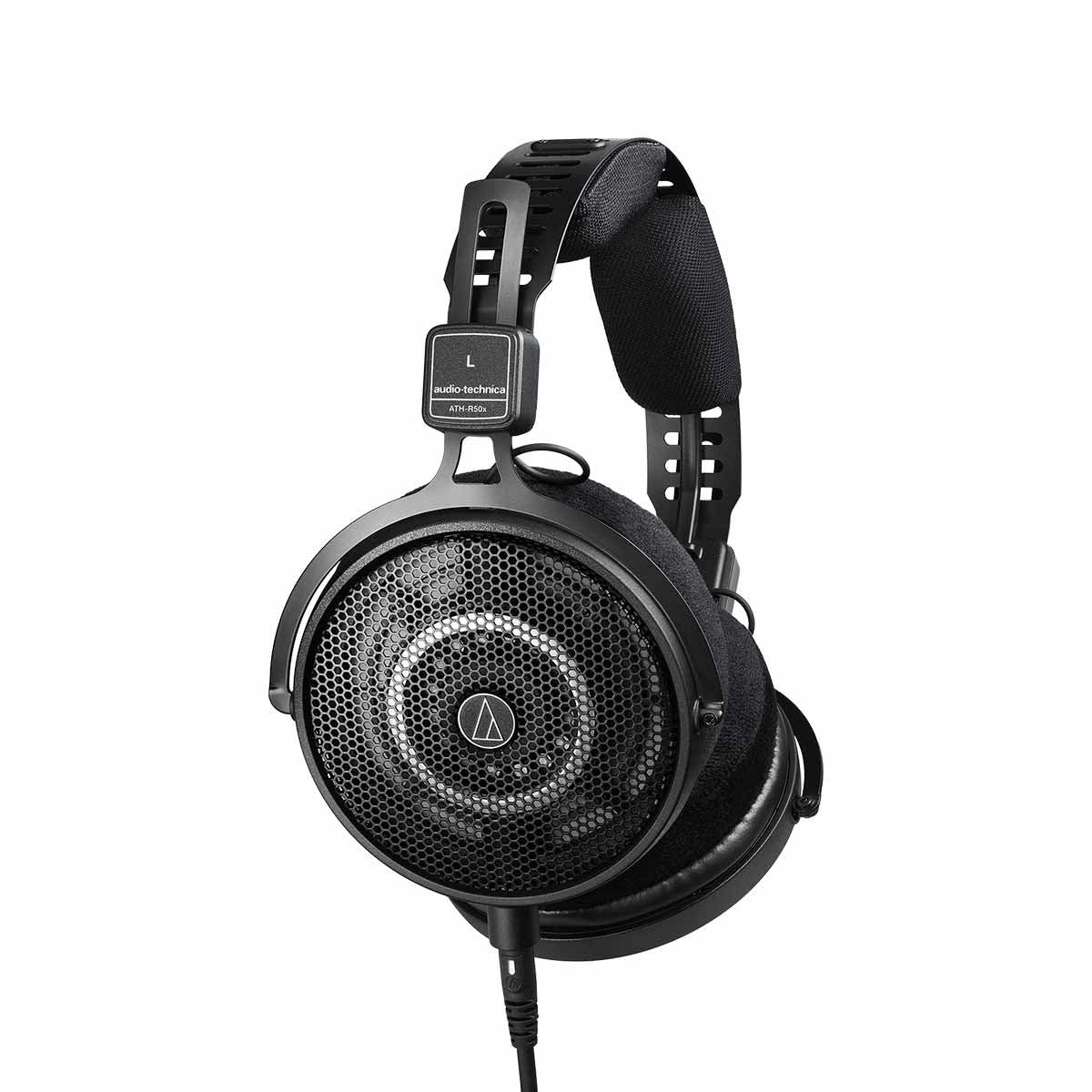
The ATH-R50X is an open-back reference headphone designed for extended comfort and accurate monitoring. At just 207 grams, it is one of the lightest full-size audiophile headphones available, making it ideal for long studio sessions or marathon listening. The fully open-back design eliminates internal resonance and provides quick transient response, resulting in a clean, uncolored sound. The new headband design distributes weight evenly with minimal clamp force.
The sound signature is bright and detailed. Bass is tight and punchy with good attack but limited sub-bass extension — typical for lightweight open-back designs. The midrange is clear and articulate, with vocals and instruments presented with accuracy. Highs are detailed and extended, with a slight forwardness that brings out micro-detail. The soundstage is wide and realistic, providing good instrument separation and depth for the price. It takes EQ well for listeners who prefer a warmer signature.
The R50X comes with two detachable cables — 3.0m and 1.2m — both with a 2.5mm twist-lock connector at the earcup and a 3.5mm gold-plated plug. A 6.3mm adapter and carrying pouch are included. The build is mostly metal with plastic ear cups, feeling sturdy despite the low weight. It runs well without an amplifier from most devices. For listeners who prioritize weight, comfort, and a bright, detailed open-back sound, the R50X is a focused tool that delivers on its reference promise.
Why it’s great
- Extremely lightweight at 207g — barely noticeable during use
- Clean, detailed sound with wide soundstage
- Two detachable cables included with twist-lock connectors
Good to know
- Bright treble may be harsh for some listeners
- Sub-bass roll-off limits performance for bass-heavy genres
- Stock cable retains memory and feels plasticky
FAQ
Do I need a headphone amplifier for the models in this guide?
What is the practical difference between open-back and closed-back headphones under $300?
How does planar magnetic driver technology improve sound quality at this price?
Final Thoughts: The Verdict
For most users, the audiophile headphones under $300 winner is the HIFIMAN Edition XS because it delivers planar magnetic resolution, massive soundstage, and technical performance that challenges headphones in the + range. If you need a closed-back with deep bass and wood-cup resonance, grab the FiiO FT1. And for ultra-lightweight open-back comfort with reference-grade clarity, nothing beats the Audio-Technica ATH-R50X.