
The pursuit of high-fidelity sound no longer tethers you to a desk stack of DACs and amplifiers. A new generation of wireless headphones has cracked the code, delivering the transient speed of planar magnetic drivers, lossless codec support via aptX Lossless and LDAC, and parametric equalization that once required a studio engineer. The challenge is separating genuine audio engineering from marketing noise.
I’m Min — the co-founder and writer behind Gadgets Feed. I’ve spent hundreds of hours analyzing codec implementations, driver topologies, and real-world frequency response measurements to build this guide for discerning listeners who refuse to compromise on sound quality for the convenience of Bluetooth.
After comparing 50+ models across multiple price tiers, winnowing by total harmonic distortion figures, battery endurance, and codec support, only nine truly deserve the title of the best audiophile wireless headphones for 2025.
How To Choose The Best Audiophile Wireless Headphones
Audiophile-grade wireless headphones live in a different universe from mass-market ANC cans. The buying criteria shift from “how much noise does it block” to “how faithfully does the driver reproduce a 5Hz to 40kHz sweep.” Before you buy, you need to understand three fundamental pillars: the driver architecture, the wireless codec chain, and the equalization tools available.
Driver Technology: Dynamic vs. Planar Magnetic
Dynamic drivers use a voice coil suspended in a magnetic field to move a diaphragm. They are efficient, cheap to manufacture, and can produce visceral bass slam. Planar magnetic drivers use a thin, conductive diaphragm sandwiched between two arrays of magnets. The result is a distributed driving force across the entire diaphragm surface, yielding dramatically lower distortion (often below 0.1% THD) and faster transient response — the attack of a snare drum or the decay of a piano note is rendered with microsecond precision. The trade-off is weight: planar magnetic headphones are heavier and often require more power, which impacts battery life in wireless implementations.
The Codec Chain: Bit-Perfect or Bottlenecked
The best driver in the world sounds mediocre if the wireless codec crushes the data. SBC and AAC cap out at roughly 328 kbps and 256 kbps respectively, introducing audible compression artifacts on complex orchestral passages. LDAC supports up to 990 kbps at 24-bit/96kHz over Bluetooth 5.0+. aptX Adaptive scales between 279 kbps and 420 kbps dynamically, while aptX Lossless achieves CD-quality 16-bit/44.1kHz lossless streaming. LHDC 5.0 reaches 1 Mbps. For true audiophile listening, look for headphones that support at least LDAC or aptX Adaptive — and ideally aptX Lossless or a USB-C wired mode that bypasses Bluetooth compression entirely.
EQ and DSP: Presets vs. Parametric Control
A simple bass-boost preset is a blunt instrument. Parametric equalization lets you define the center frequency, bandwidth (Q factor), and gain of each filter band, allowing surgical corrections to the headphone’s stock tuning or compensation for your own hearing profile. Some models now include full parametric EQ inside their companion app — a feature previously exclusive to high-end digital audio players. If you value a neutral, reference sound signature, a headphone with parametric EQ flexibility is far more future-proof than one locked to a single voicing.
Quick Comparison
On smaller screens, swipe sideways to see the full table.
| Model | Category | Best For | Key Spec | Amazon |
|---|---|---|---|---|
| Sennheiser HDB 630 | Closed-Back Wireless | Neutral Reference with Parametric EQ | 470 Ohm impedance, 60H battery | Amazon |
| Focal Bathys | Closed-Back Wireless | Warm Musicality & DAC Mode | 40mm Aluminum-Magnesium drivers | Amazon |
| Bowers & Wilkins Px8 S2 | Closed-Back Premium | Luxury Build & Bass Resolution | 40mm Carbon Cone drivers, aptX Lossless | Amazon |
| Edifier STAX Spirit S5 | Closed-Back Planar | Planar Magnetic Detail & 80H Battery | Planar magnetic driver, aptX Lossless | Amazon |
| Sennheiser MOMENTUM 4 | Closed-Back Wireless | Versatile All-Rounder with ANC | 42mm dynamic drivers, 60H battery | Amazon |
| Bowers & Wilkins Px7 S3 | Closed-Back Wireless | Sound Quality & All-Day Fit | 40mm drivers, aptX Adaptive, 30H battery | Amazon |
| Apple AirPods Max 2 | Closed-Back Wireless | Apple Ecosystem & Spatial Audio | H2 chip, USB-C lossless, 20H battery | Amazon |
| Bang & Olufsen Beoplay H95 | Closed-Back Luxury | Premium Materials & Neutral Sound | 40mm titanium drivers, 38H battery | Amazon |
| HIFIMAN Ananda Nano | Open-Back Planar | Ultra-Low Distortion & Soundstage | Nanometer diaphragm, 5Hz-55kHz | Amazon |
In‑Depth Reviews
1. Sennheiser HDB 630
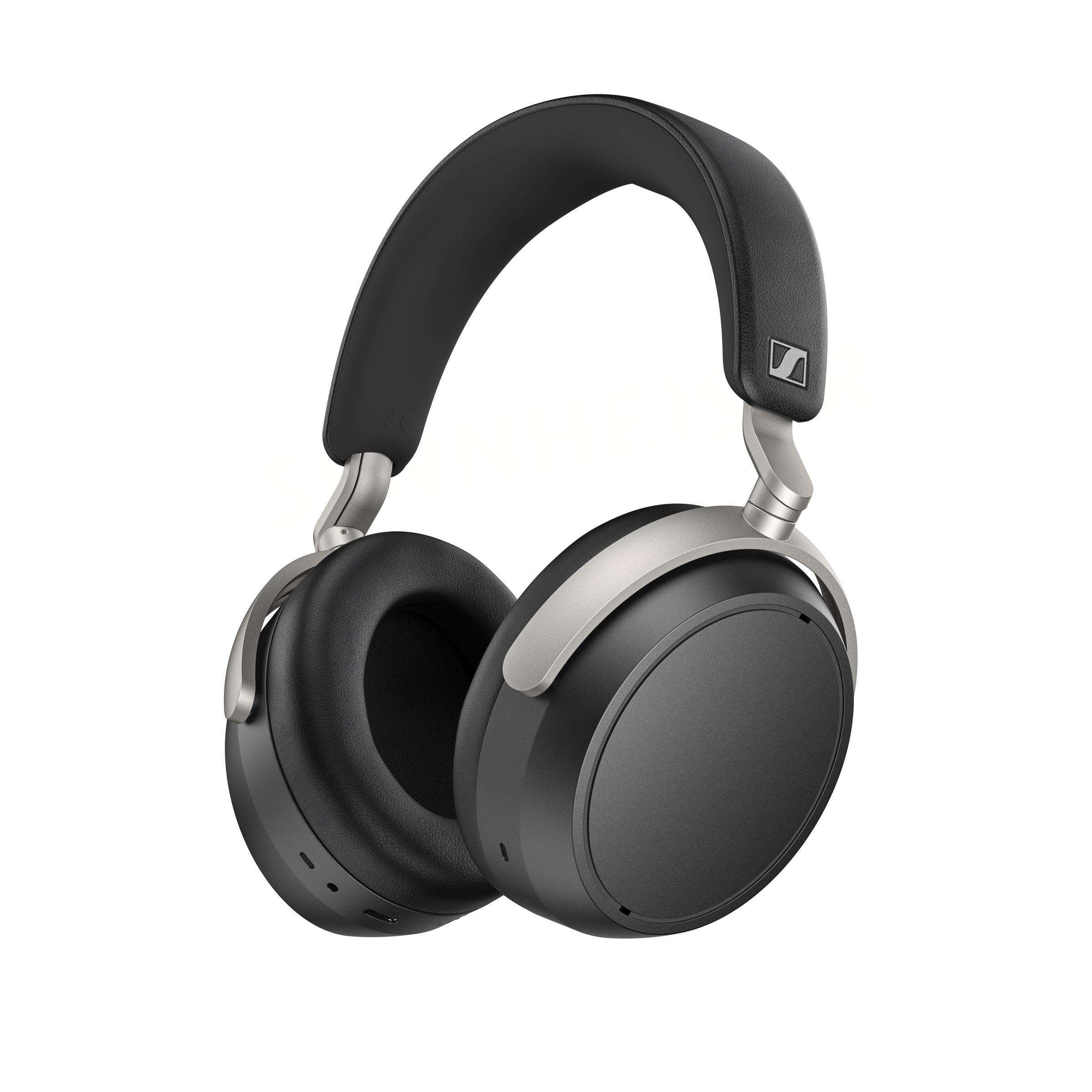
The Sennheiser HDB 630 is a statement of intent — a closed-back wireless headphone built around a 42mm dynamic driver tuned to a neutral, audiophile target curve. What sets it apart from every other wireless headphone at this level is the inclusion of a full parametric equalizer in the companion app, allowing you to define frequency bands, Q-widths, and filter types with the precision of a studio engineer. The 470 Ohm impedance is unusually high for wireless headphones, but the integrated amplifier easily drives them to satisfying levels while the aptX HD and aptX Adaptive codecs preserve micro-detail in the upper registers.
The included BTD 700 USB-C dongle unlocks a wire-free lossless path up to 24-bit/96kHz, bypassing Bluetooth compression entirely for listeners who demand the purest signal chain. Battery life is class-leading at 60 hours with ANC enabled, and a 10-minute quick charge provides seven hours of playback. The adaptive ANC is competent — it filters out HVAC hum and engine drone effectively — though it falls short of Bose or Sony in wind suppression and chatter rejection. The build is predominantly plastic, but the headband yoke and swivel joints feel precise and durable.
On the critical listening bench, the HDB 630 delivers a flat midrange with exceptional vocal clarity, a gently rolled-off sub-bass that remains tight and controlled, and a treble that extends smoothly without sibilance. The soundstage is wide for a closed-back design, with precise imaging that places instruments in a well-defined stereo hologram. For the listener who wants to shape their sound with surgical EQ and values battery endurance over ANC supremacy, the HDB 630 is the most versatile audiophile wireless headphone on the market today.
Why it’s great
- Parametric EQ with per-band Q control rivals desktop software
- Lossless USB-C dongle included for bit-perfect wireless streaming
- 60-hour battery life with ANC — best in its class
Good to know
- ANC is adequate but not class-leading against Sony or Bose
- Build uses premium-grade plastics rather than metal or leather
- Touch controls can be finicky with rapid swipe gestures
2. Focal Bathys

The Focal Bathys bring the French driver manufacturer’s celebrated “M”-shaped aluminum-magnesium diaphragm into the wireless domain, a driver topology known for its rigidity and low breakup distortion. The result is a sound signature that leans warm and musical — rich lower mids, a slightly forward upper midrange that presents vocals with texture and breath, and a treble that sparkles without becoming edgy. The 40mm drivers are powered by a dedicated DAC and amplifier stage that activates when you plug in via USB-C, supporting 24-bit/192kHz playback that bypasses Bluetooth entirely.
Wirelessly, the Bathys support aptX Adaptive and AAC, but notably lack LDAC and aptX Lossless. This is a meaningful compromise for listeners whose library contains high-resolution FLAC files, though the Creative BT-W4 dongle can circumvent AAC’s ceiling on iOS. The ANC offers two modes — Silent (full cancellation) and Soft (reduced, with a transparency option) — that do an admirable job of filtering transportation noise but cannot be fully disabled, which some users report as causing a subtle pressure sensation. Battery life hits 30 hours with ANC on, and a 15-minute quick charge provides five hours of listening.
Comfort is excellent for most head shapes thanks to generous memory foam earpads covered in microfiber, though the 350-gram weight is noticeable during sessions beyond three hours. The magnesium yoke and real leather headband lend a premium tactile feel that rivals headphones costing twice as much. For listeners who prioritize organic, engaging musicality over clinical neutrality — and who can accept the codec ceiling — the Bathys remain the reference for warm-yet-detailed wireless sound.
Why it’s great
- Aluminum-magnesium driver delivers low-distortion, engaging musicality
- USB-C DAC mode supports 24-bit/192kHz lossless audio
- Fast charging — 15 minutes gives 5 hours of playback
Good to know
- No LDAC or aptX Lossless wireless codec support
- ANC cannot be completely turned off
- Heavier than many competitors at 350 grams
3. Bowers & Wilkins Px8 S2

The Bowers & Wilkins Px8 S2 represents the pinnacle of the company’s consumer wireless lineup, and it earns that position with a combination of material craftsmanship and acoustic engineering that few competitors match. The 40mm Carbon Cone drivers — a material borrowed from B&W’s floor-standing loudspeaker range — offer exceptional stiffness-to-mass ratio, allowing the diaphragm to start and stop with minimal inertia. The result is bass that is deep, tight, and textured, with a midrange that resolves harmonic complexity in acoustic guitar and piano without congestion. The treble is airy and extended but never fatiguing.
On the codec side, the Px8 S2 supports aptX Lossless and aptX Adaptive, ensuring that compatible Android and Windows devices can stream CD-quality audio wirelessly. The Bluetooth 5.3 implementation with multipoint is seamless — switching between a phone and laptop while maintaining the audio buffer is among the best in the category. ANC is handled by an eight-microphone array that produces a clean, quiet background without the pressure sensation some ANC implementations introduce. It is not as aggressive as Sony’s XM6, but the trade-off is that music remains unaffected by the cancellation process — no pumping or tonal shifts.
The build quality is what you pay the premium for: die-cast aluminum arms, Nappa leather ear cushions, and memory foam that conforms without creating hot spots. The headband is plush and distributes the 307-gram weight evenly. Battery life is 30 hours with ANC active, and fast charging yields seven hours from 15 minutes of charge. The Px8 S2 is the headphone for the buyer who treats listening as a ritual — who wants reference-quality detail wrapped in materials that feel as refined as the sound.
Why it’s great
- Carbon Cone drivers deliver exceptionally tight, textured bass
- aptX Lossless support for CD-quality wireless streaming
- Luxury build with Nappa leather and die-cast aluminum
Good to know
- ANC is good but not class-leading against Sony XM6
- Heavier than plastic competitors at 307 grams
- Premium price reflects materials as much as acoustic performance
4. Edifier STAX Spirit S5

The Edifier STAX Spirit S5 is a planar magnetic wireless headphone that punches far above its price tier. The EqualMass diaphragm — a second-generation wiring structure with symmetric layout — ensures uniform driving force across the entire diaphragm surface, eliminating the cone breakup that plagues dynamic drivers at high SPL. The result is a transient response that is genuinely fast: cymbal crashes decay naturally, double-bass pedals articulate each note separately, and vocals maintain air and presence even in dense mixes.
Codec support is comprehensive, including LDAC, LHDC, aptX Adaptive, and aptX Lossless via the Qualcomm QCC5181 chipset and Snapdragon Sound certification. The Bluetooth 5.4 implementation is the most current available in any headphone reviewed here, providing stable connections with minimal latency — the 89ms end-to-end figure makes it suitable for video sync without dedicated low-latency mode. The closed-back design provides good passive isolation, though there is no active noise cancellation or transparency mode, so the S5 is best suited for quiet listening environments.
Battery endurance is extraordinary at 80 hours on a single charge — enough for two weeks of daily commuting and desk listening without rethinking your charging routine. The genuine lambskin earpads are comfortable, though the headband adjustment mechanism uses thin plastic that has been reported to crack under repeated stress. The Edifier ConneX app offers a three-band EQ with presets and a custom mode, but lacks the parametric granularity of the Sennheiser HDB 630. For listeners who want planar magnetic speed and resolution at a mid-range price, the STAX Spirit S5 is a revelation.
Why it’s great
- Planar magnetic driver with EqualMass diaphragm offers ultra-low distortion
- 80-hour battery life is the longest in this guide
- LDAC, LHDC, aptX Lossless — every major high-res codec supported
Good to know
- No ANC or transparency mode — passive isolation only
- Plastic headband adjustment has reported durability concerns
- Earcups do not rotate flat for compact storage
5. Sennheiser MOMENTUM 4

The Sennheiser MOMENTUM 4 proves that an audiophile-oriented wireless headphone can also serve as a daily commuter. The 42mm dynamic drivers deliver a sound signature that is neutral with a mild bass warmth — a crowd-pleasing tuning that satisfies both critical listeners and casual music fans. The treble is smooth and forgiving, avoiding the sibilance that plagues some open-back planars, while the midrange retains the clarity that Sennheiser is known for. The soundstage is not as expansive as open-back designs, but instrument separation is clean and positional cues are well-defined.
The adaptive noise cancellation is effective against engine drone and office HVAC, though loud transient sounds like a crying baby or close conversation still penetrate. Four beamforming microphones handle call quality with wind suppression, making it one of the better options for voice calls among audiophile wireless headphones. Battery life is a standout feature at 60 hours with ANC enabled — best-in-class for a closed-back dynamic driver headphone with active cancellation. The Smart Control app includes a five-band equalizer and bass boost, but it is a conventional EQ rather than a parametric system, so you cannot adjust Q-width.
The folding design with a hard carry case makes the MOMENTUM 4 genuinely portable — it collapses into a smaller footprint than any other headphone on this list. The build uses lightweight plastic that feels solid rather than cheap, but it lacks the premium tactile feedback of the Focal Bathys or B&W Px8 S2. Comfort is high for long sessions, though the ear pads can get warm after a few hours in non-climate-controlled spaces. For the buyer who needs one headphone that works for flight cancellations, conference calls, and critical listening at a desk, the MOMENTUM 4 is the safest and most complete recommendation.
Why it’s great
- 60-hour battery with ANC — leading figure for a dynamic driver
- Neutral-warm tuning with excellent midrange clarity
- Folding design with hard case is genuinely travel-friendly
Good to know
- EQ is conventional (5-band) not parametric
- ANC cannot fully block loud, high-frequency transient sounds
- Plastic build lacks the luxury feel of metal competitors
6. Bowers & Wilkins Px7 S3
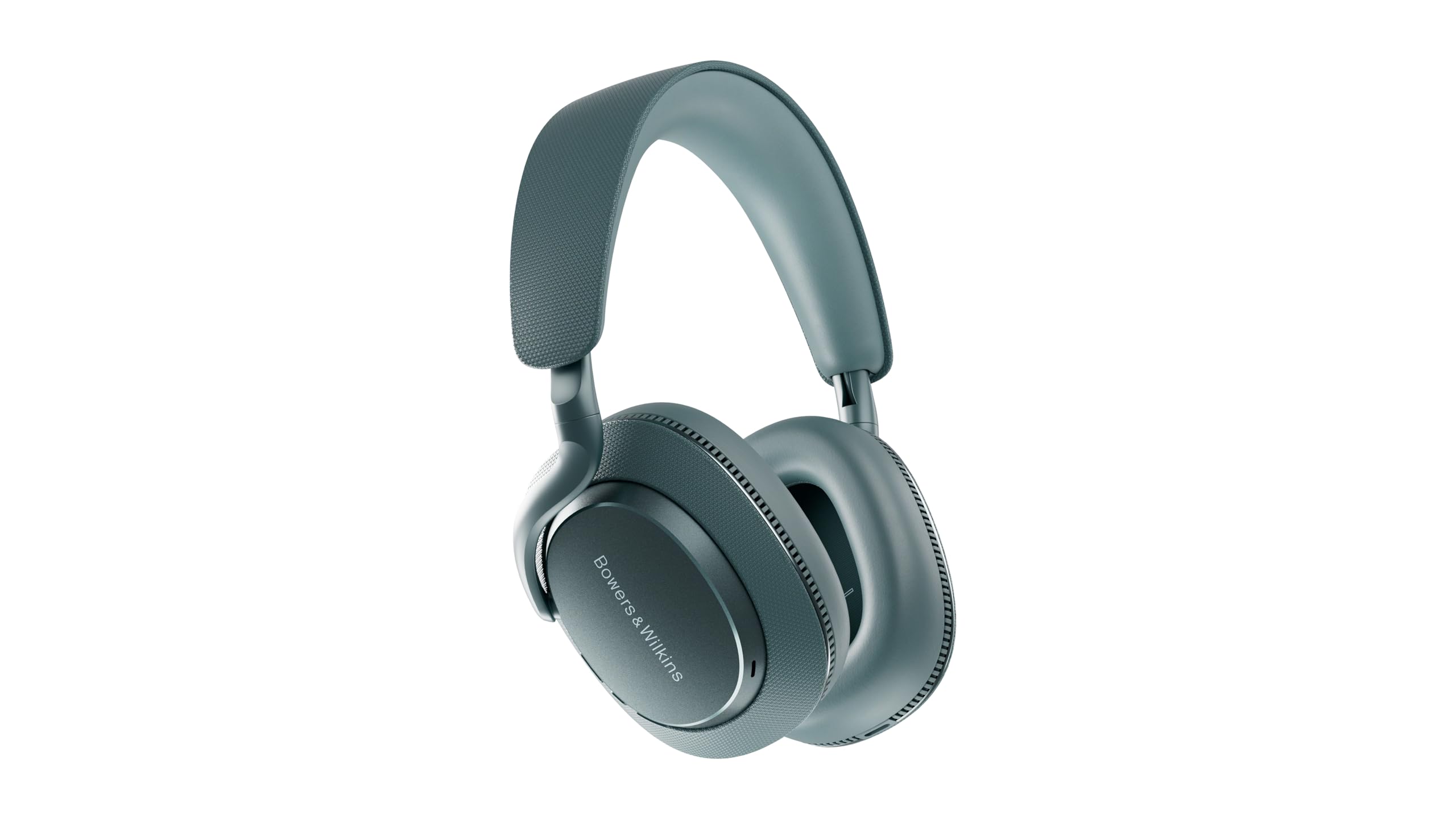
The Bowers & Wilkins Px7 S3 refines the company’s mid-range wireless offering with a focus on acoustic performance that punches above its price tier. The 40mm drivers are tuned with a 24-bit DSP that applies a subtle, well-calibrated correction curve, resulting in a sound signature that is slightly warmer than neutral but with excellent resolution across the entire frequency band. The bass is full-bodied without bloat, the midrange is forward enough for vocal intimacy, and the treble extends cleanly without the metallic sheen that can make cheaper headphones sound harsh.
Codec support includes aptX Adaptive, which dynamically scales bitrate to maintain a stable connection in congested RF environments. The adaptive noise cancellation uses eight microphones to monitor ambient noise and driver output, and it does so with minimal impact on the music — there is no audible hiss or tonal shift when toggling ANC on and off. Battery life is rated at 30 hours, with a 15-minute quick charge delivering seven hours of playback. The fit is among the most comfortable in this class, with memory foam ear cushions and a lightweight headband that accommodates glasses without creating pressure points.
The build uses a combination of fabric finishes and machined aluminum details that elevate the aesthetic beyond most plastic competitors, though the telescoping arms are plastic rather than metal. Call quality is decent but not the standout feature — the eight-mic array does a serviceable job in quiet rooms but struggles in wind or noisy cafes. The Bowers & Wilkins Music app includes a five-band EQ and True Sound mode, but again, it is not parametric. For listeners who want the Px8 S2’s tuning DNA in a lighter, more affordable package, the Px7 S3 is a compelling middle-ground option.
Why it’s great
- 24-bit DSP tuning delivers a refined, warm sound signature
- Extremely comfortable — memory foam pads with zero ear contact
- aptX Adaptive codec support for dynamic bitrate scaling
Good to know
- Call mic performance degrades in windy or noisy environments
- Bass extension is limited compared to larger driver competitors
- App interface is marketing-heavy and slow to load
7. Apple AirPods Max 2
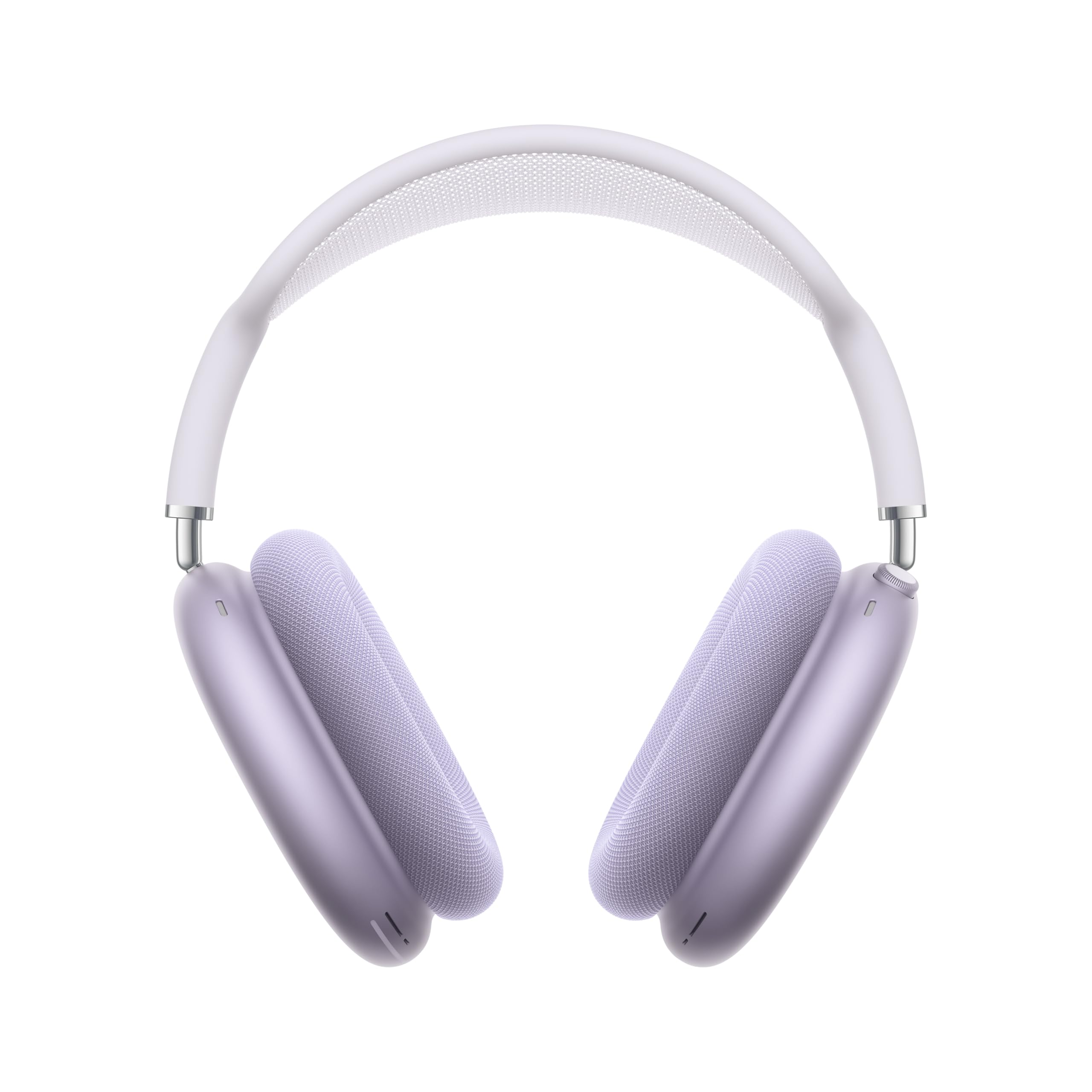
The Apple AirPods Max 2 represents a significant generational leap over the original, driven by the H2 chip that was first introduced in the AirPods Pro 2. The acoustic architecture delivers a sound signature that is rich, clear, and well-extended — the bass is deep without overwhelming the midrange, the mids are natural and lifelike, and the treble is crisp without sibilance. The inclusion of USB-C connectivity now supports lossless audio from compatible Apple devices, a feature the original lacked. Personalized Spatial Audio with dynamic head tracking is still among the best implementations, creating a convincing holographic soundstage for Dolby Atmos content.
The ANC performance is improved by a claimed 1.5x over the first generation, and in practice it rivals the Sony XM6 and Bose QC Ultra for total noise suppression. Adaptive Audio automatically adjusts the cancellation intensity based on your environment, and Conversation Awareness lowers the music volume when you start speaking — a genuinely useful feature for brief workplace interactions. Battery life remains at 20 hours with ANC and Spatial Audio enabled, which is below the class average. The knit-mesh canopy and memory foam ear cushions are comfortable, though the 385-gram weight is felt during extended sessions.
The biggest limitation for critical listeners is the absence of high-bitrate wireless codecs — the AirPods Max 2 uses AAC over Bluetooth, which caps at 256 kbps. Lossless streaming only works over the USB-C cable, tethering you to a source device. Additionally, there is no parametric EQ, and the system-level EQ in Apple Music is a simple set of presets. For Apple ecosystem users who value seamless device switching, spatial audio, and a refined build, the AirPods Max 2 is a compelling but compromised audiophile choice.
Why it’s great
- H2 chip enables excellent ANC and Adaptive Audio features
- USB-C lossless playback from Apple devices
- Seamless ecosystem integration with automatic device switching
Good to know
- Only 20-hour battery life — lowest in this guide
- No high-bitrate wireless codecs — AAC only via Bluetooth
- Heaviest model at 385 grams
8. Bang & Olufsen Beoplay H95

The Bang & Olufsen Beoplay H95 is a luxury wireless headphone that delivers a sound signature defined by neutrality and spaciousness. The 40mm titanium drivers — chosen for their stiffness-to-mass ratio — produce a frequency response that is flat in the midrange with a gentle rise in the upper treble that adds air and sparkle without harshness. The bass is controlled and extended, with a slight roll-off below 40Hz that keeps it tight rather than boomy. The soundstage is wide for a closed-back design, with good depth and precise imaging that places instruments outside the head.
The adaptive ANC is effective for indoor and urban noise — it filters out office chatter and HVAC hum — but it does not match the total noise floor suppression of the Sony XM6 or Apple AirPods Max 2. The volume dial on the right earcup is a physical rotary control, which is a tactile pleasure compared to touch sliders. Battery life is rated at 38 hours, and fast charging provides a few hours of playback from a short charge. The build quality is exceptional: lambskin leather, memory foam, and an aluminum frame that feels both robust and refined.
Comfort is generally good, though the clamping force is slightly higher than B&W’s Px8 S2, which may cause fatigue for listeners with larger head shapes. The carrying case is a hard-shell aluminum case lined with fabric — premium but bulky. The B&O app provides a basic EQ with four presets and a custom mode, but it lacks the frequency-granularity of a parametric system. The Beoplay H95 is for the buyer who prioritizes material quality, Scandinavian design, and a neutral-leaning tuning over ANC supremacy or deep EQ flexibility.
Why it’s great
- Titanium drivers deliver a neutral, spacious sound with low distortion
- Premium build with lambskin leather and aluminum construction
- Physical rotary volume dial is a tactile refinement over touch controls
Good to know
- Higher clamping force than Px8 S2 — may cause fatigue
- App EQ is basic — no parametric control
- Wireless codec support limited to AAC and aptX — no LDAC
9. HIFIMAN Ananda Nano

The HIFIMAN Ananda Nano is a wired-only open-back planar magnetic headphone that belongs in this guide as a necessary reference point — it is the benchmark that reveals what wireless audiophile headphones are chasing. The nanometer-thickness diaphragm — derived from the SUSVARA flagship design — combined with Stealth Magnets eliminates wave diffraction turbulence, resulting in total harmonic distortion figures that are vanishingly low across the entire audible spectrum. The frequency response extends from 5Hz to 55kHz, though the practical limits are defined by the source chain.
The sound signature is neutral with a slight emphasis in the upper midrange and treble that reveals extraordinary detail: the texture of a bow on a double bass string, the resonance of a piano soundboard, the air around a cymbal crash. The soundstage is holographic — instruments are placed with pinpoint accuracy in a three-dimensional space that extends well beyond the head. The bass is tight and controlled, with excellent speed and decay, though it lacks the visceral slam of closed-back dynamic drivers. This is a headphone for careful listening in a quiet room, not for commuting or multitasking.
Comfort is decent but not exceptional — the headband strap stretches over time, and the ear pads are adequate but not plush. The sensitivity is high enough to be driven by most portable DACs, but it truly scales with a dedicated amplifier. The build uses a mix of metal and plastic that feels functional rather than premium. For the purist who wants to hear exactly what the recording chain captured — and who is willing to accept the wired limitation and the need for a quiet listening environment — the Ananda Nano offers planar magnetic performance at a price that undercuts every wireless alternative by a wide margin.
Why it’s great
- Nanometer-thickness planar diaphragm achieves vanishingly low distortion
- Holographic soundstage with precise positional imaging
- Extends from 5Hz to 55kHz — class-leading frequency response
Good to know
- Wired-only — no Bluetooth or wireless codec support
- Open-back design leaks sound and provides no noise isolation
- Headband strap stretches over time, affecting fit consistency
FAQ
Is aptX Lossless actually lossless over Bluetooth?
What is parametric EQ and why does it matter for audiophile wireless headphones?
Why does the ADP/SPL rating on a driver matter for transient response?
Final Thoughts: The Verdict
For most users, the best audiophile wireless headphones winner is the Sennheiser HDB 630 because its parametric EQ, lossless USB-C dongle, and 60-hour battery deliver the fullest package for critical listening without wires. If you want warm, musical engagement with a dedicated DAC mode, grab the Focal Bathys. And for planar magnetic resolution at a mid-range price — with the longest battery in the category — nothing beats the Edifier STAX Spirit S5.