
Our readers keep the lights on and my morning glass full of iced black tea. As an Amazon Associate, I earn from qualifying purchases.
Specs are compiled from manufacturer listings and verified buyer reviews and can change over time — please confirm the key details on the product page before buying.
Augmented reality sunglasses are the shortcut to a massive personal screen that lives inside an ordinary-looking frame — a 201-inch virtual display you can carry on a plane, or a private 174-inch cinema for late-night gaming in bed. The catch is that this category moves fast, and the specs that matter (brightness in nits, field of view, refresh rate) read like alphabet soup until you know what each one does to your eyes. This guide cuts through the noise and tells you which wearable display actually earns its place on your face, and which spec is worth paying for.
I’m Min — the founder and writer behind Gadgets Feed. This guide is built by comparing the manufacturers’ published specifications and the patterns across verified customer reviews, so you get each pick’s real strengths and trade-offs instead of marketing spin.
You’ll learn what separates a bright, sharp, comfortable pair from one that collects dust, and which features matter most for movies, gaming, and work. This is the honest breakdown of the best augmented reality sunglasses for your specific use case.
Our Picks at a Glance

How To Choose The Best Augmented Reality Sunglasses
Before you compare models, you need to know that these glasses are essentially tiny projectors aimed at your eyes. The quality of that projection — its brightness, sharpness, and stability — is what separates a thrilling personal theater from a disappointing gadget. The list below walks you through the three numbers that matter most, so a spec sheet never overwhelms you again.
Brightness: The Nits That Beat Sunlight
Brightness is measured in nits, and it decides whether you can actually see your screen in a bright room or outdoors. A higher number means the image fights off glare better. If you plan to watch during a flight or on a sunny commute, you want to prioritize a model with a higher nits rating, because a dim display turns into a frustrating, washed-out mirror.
Field of View: The Size of Your Cinema
The field of view (FOV) is the angle your eyes can see the projected image. A wider FOV (measured in degrees) makes the virtual screen feel bigger and more rich, like sitting closer to a movie theater screen. A narrower FOV can feel like you are peeking through a small window. Check this spec if you want the “IMAX-like” experience rather than a floating monitor.
Motion Tracking: The 3DoF Anchor
This is the anti-nausea feature. 3DoF (three degrees of freedom) tracking lets the virtual screen stay pinned in space while you move your head, instead of bobbing around with you. Without it, the image can “drift” and cause discomfort. If you plan to move your head while watching or gaming, a pair with built-in 3DoF is worth the premium over a simple plug-and-play screen.
Quick Comparison
| Model | Best For | Display Size | Brightness | Key Feature | Amazon |
|---|---|---|---|---|---|
| RayNeo Air 3s Pro★ Best Overall | Maximum brightness | 201″ | 1200 nits | 120Hz refresh | Amazon |
| RayNeo Air 4 ProBest Audio | HDR movies | 201″ | — | B&O Audio | Amazon |
| XREAL a01+Best Travel Pick | Featherlight travel | 147″ | 1600 nits | 62g weight | Amazon |
| TOZO VIZO Z1 Pro | Outdoor visibility | 160″ | 1800 nits | 6000 nit peak | Amazon |
| XREAL 1S | Native 3DoF | 500″ | — | X1 Chip | Amazon |
| ASUS AirVision M1 | Multi-screen work | 100″ | 1100 nits | 87g design | Amazon |
| VITURE Luma Pro | Sharp text clarity | 152″ | 1000 nits | 1200p resolution | Amazon |
| VITURE Beast | Biggest screen | 174″ | 1250 nits | 58° FOV | Amazon |
| XREAL One Pro | Versatile AR use | 171″ | 700 nits | 57° FOV | Amazon |
In‑Depth Reviews
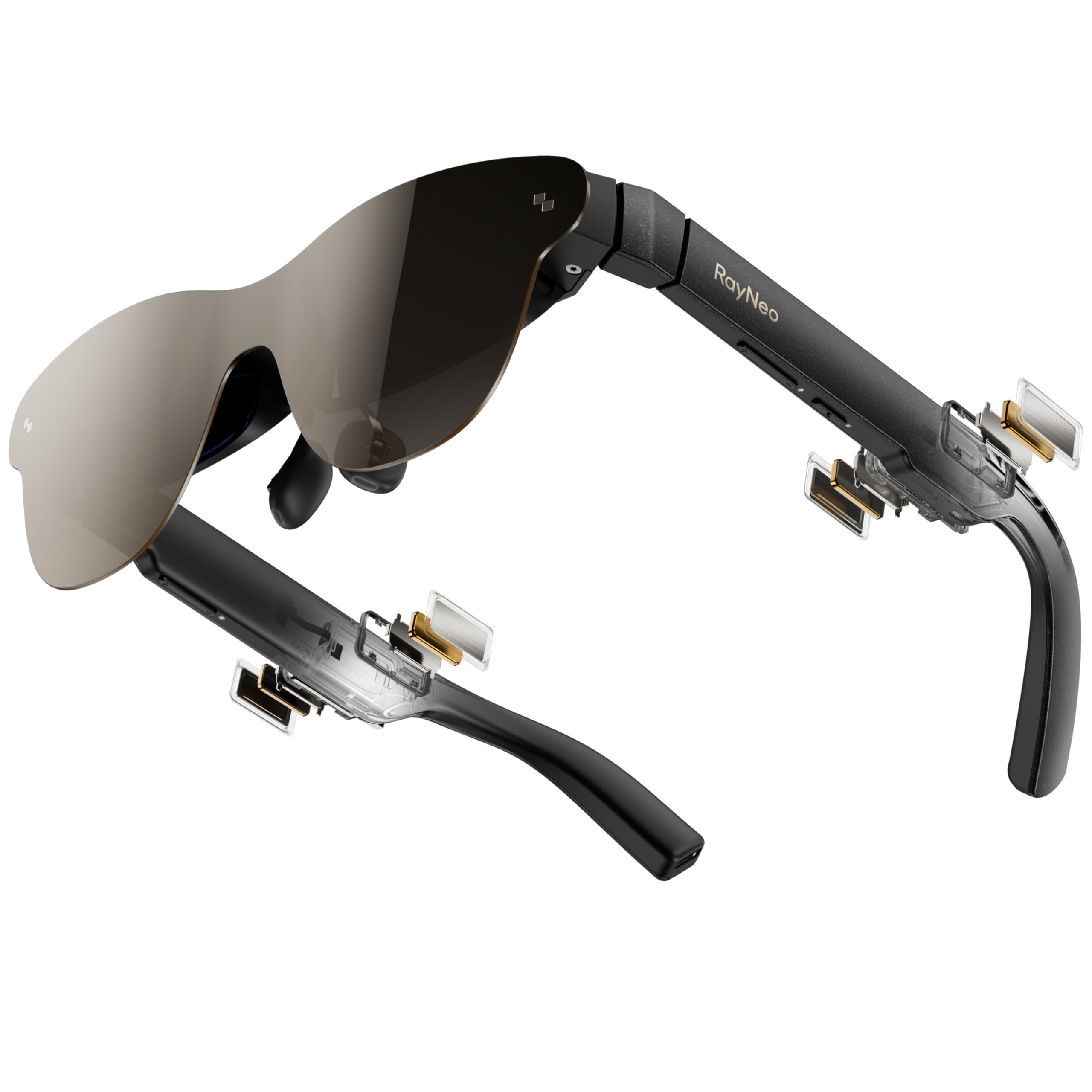
1. RayNeo Air 3s Pro AR/XR Glasses
Our pick — over 4★ from 550+ verified ratings; the strongest balance of quality and price.
The sun-proof pick that keeps your personal cinema vivid even in harsh daylight.
This pair leads with the brightness you need for real-world use. The 1,200 nits to-eye brightness is the highest in any AR glasses today, so faint stars in a movie stay visible instead of vanishing into black, and the screen remains crisp even when you are near a window or outside. For the money, this is the defining spec that makes it a true all-weather companion.
The display is a 201-inch virtual screen (at 6 m away) built on HueView 2.0, the 5.5th-gen tandem Micro-OLED panel, delivering a 200,000:1 contrast and 98% DCI-P3 color for lifelike visuals. It runs at 120Hz for smooth motion and has TÜV SÜD Low Blue Light & Flicker-Free dual certification, plus 3,840Hz high-frequency PWM dimming and 20-level brightness control to reduce eye fatigue during long sessions. The built-in speakers with spatial audio are a real highlight—the sound quality is mind-blowing, though the volume can run a touch low for some.
What wins people over is the overall build quality and display sharpness, with the crisp 1920×1080 resolution getting constant praise. It connects via USB to iPhone 17/16/15, Android devices, Mac, Switch 2, PS5, and SteamDeck, and the adjustable arms and nose piece fit larger heads comfortably. The catch is that fit is personal: some find it uncomfortable, and there are reports of ghosting at the bottom and blurring on the left panel at the 120Hz setting, so treat the fit as a try-before-you-buy decision.
The Bright Standout
- 1200 nits brightness stays visible in direct sunlight
- 201-inch virtual display for a true IMAX feel
- Dual eye-comfort certifications for binge sessions
- Plug-and-play with modern phones and consoles
The Fit Reality
- Comfort varies; some find the nose bridge pressure
- Occasional ghosting or blur at the 120Hz setting
- Speakers sound great but can be quiet
Reach for this if: you want the brightest, most sun-proof screen for movies and gaming anywhere — the 1200-nit panel is the category leader.
Think twice if: you have a very sensitive nose bridge or need perfect edge-to-edge clarity at high refresh rates.
2. RayNeo Air 4 Pro AR/XR Glasses
A featherlight 2.88-ounce frame that skips the battery for instant plug-and-play cinema.
This model is the one to grab if audio quality matters as much as the picture. Audio by Bang & Olufsen uses four precision speakers to deliver 360° spatial sound, and there is a whisper mode for private listening. The matching 201-inch virtual screen with HDR10 pushes over 10 billion colors, making highlights brighter and blacks richer than a standard LCD — a real step up for movie nights on a flight.
The Vision 4000 chip, co-developed with Pixelworks, upscales SDR to HDR in real time and keeps 120Hz visuals smooth for PS5, Steam Deck, Switch 2, and mobile gaming. There’s no battery inside, which keeps the weight at just 2.88 ounces and makes setup instant via USB-C with iPhone 17/16/15, Android, MacBook, iPad, and consoles. The lack of a battery also means no charging anxiety — it’s lighter and always ready.
The thing everyone raves about is how the picture and sound combine for a top-quality experience that feels like a movie theater. The HDR10 makes the picture pop, and the adjustable nose pads fit most faces well. The honest trade-off: the nose bridge can feel uncomfortable for some, and a few find the screen perception smaller than a 75-inch TV — so it’s best as a personal travel theater rather than a full living-room replacement.
Audio-first pick: The four Bang & Olufsen speakers with whisper mode give you rich 360° sound without earbuds, a genuine advantage over rivals.
Honest limit: Comfort on the nose bridge is a recurring point — if you’re sensitive there, consider the adjustable pads carefully.
Best for: movie lovers who want premium sound and a battery-free, ultra-light frame for travel and bed viewing.
Look elsewhere if: you need a stationary monitor for text-heavy work — this is built for entertainment immersion.
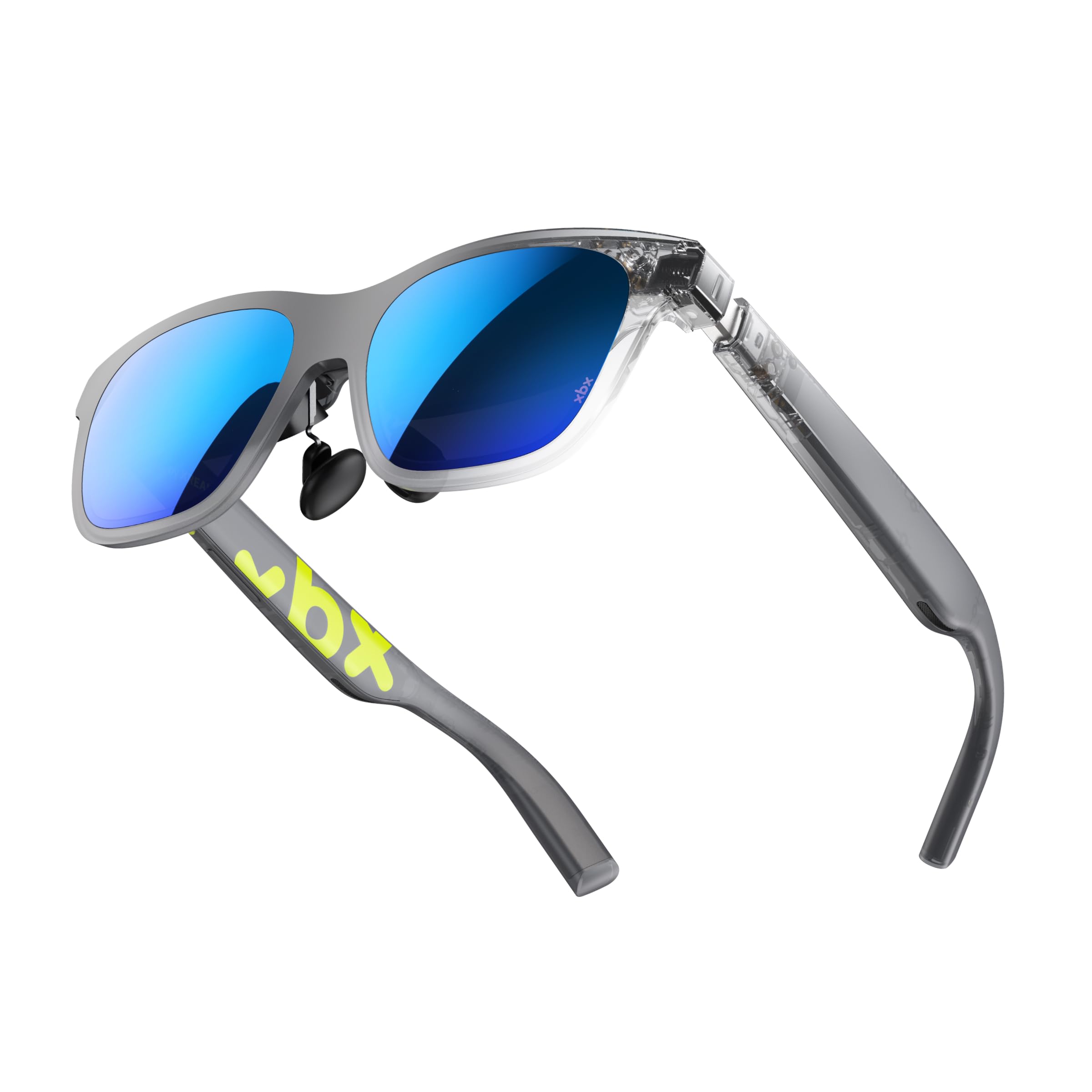
3. XREAL xbx a01+ AR Glasses
At just 62g, this is the pair you forget you are wearing on a long-haul flight.
This is the featherweight champion of the list. Weighing only 62g, with three nose-pad sizes and flexible temples, it stays comfortable through a long movie or a cross-country flight, even while lying down. The 147-inch big-screen display comes in a soda-can-sized 210g case that drops into a pocket, making it the easiest to justify packing.
Under the hood, dual Full HD 1080p-per-eye Micro-OLED panels with a Pixelworks processor push up to 1600 nits across 14 brightness levels, with HDR10 and real-time SDR-to-HDR for vivid color. The screen follows your view with stabilized tracking that keeps it centered as you look around — no drift to reset. Open-ear directional speakers give you rich sound without earbuds, and flicker-free 3840Hz dimming plus TÜV Eye Comfort 5.0 certification protect your eyes.
What wins people over is how lightweight and comfortable it feels, especially for long sessions. It works smoothly with phones and tablets over a single USB-C DisplayPort cable — iPhone 15/16/17, iPad, DP-capable Android phones, Steam Deck, ROG Ally, Mac and PC. The honest note: some find the actual screen appears smaller than the advertised 147 inches (one owner compared it to a 32-inch monitor), and the left lens can look blurry for certain faces, so a good fit is essential.
The travel essential: The 62g frame and pocketable case make this the pair you actually bring — you’ll forget it’s on your face.
The fit caveat: The 1600-nit panel is brilliant, but image clarity can vary by individual eye alignment, so trial is advised.
Reach for this if: you fly often and want a featherlight, easy-to-pack screen that doesn’t tire your face.
Think twice if: you expect a true 147-inch rich wall — treat it as a high-quality portable monitor instead.
4. TOZO VIZO Z1 Pro AR Glasses
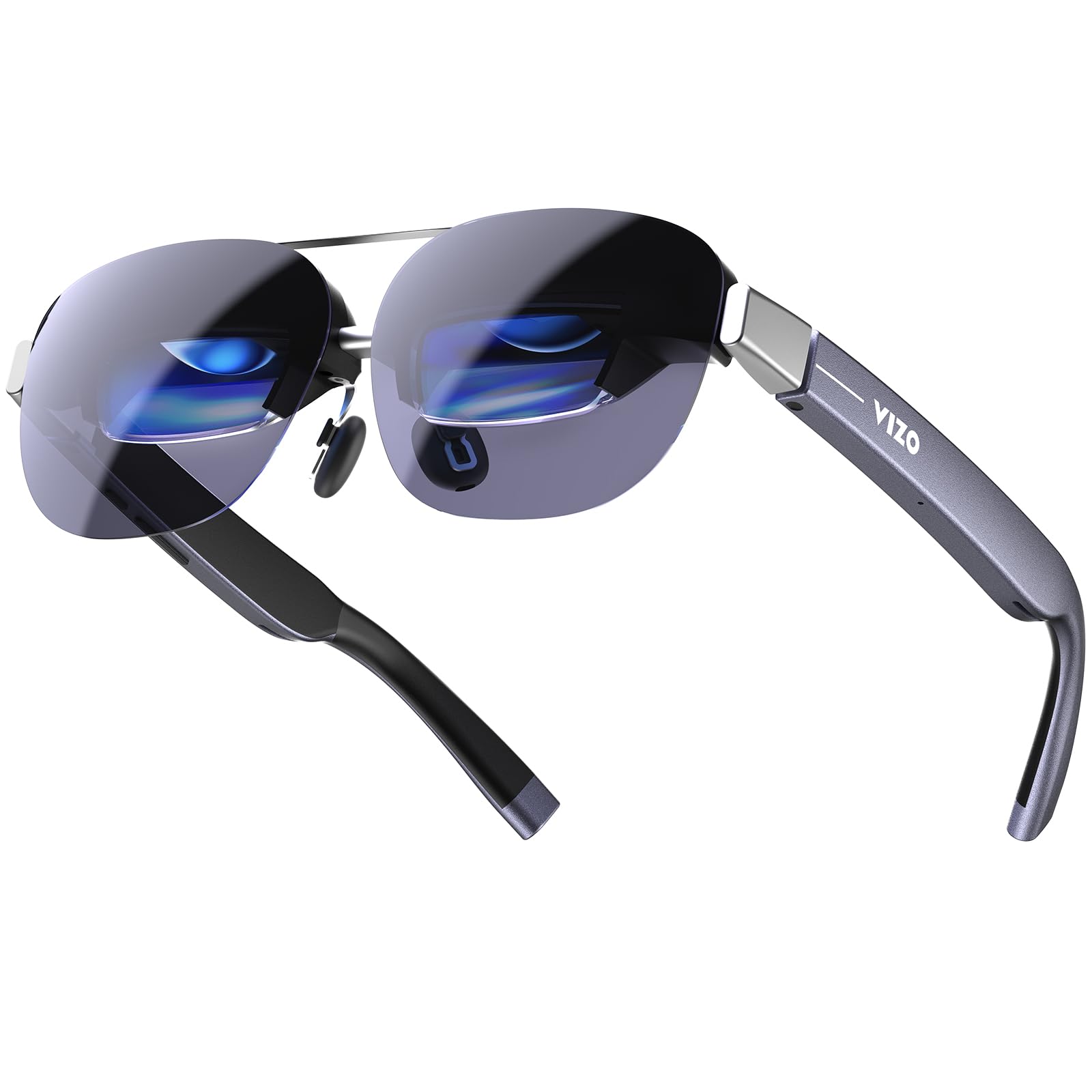
The 1800-nit screen that shrugs off harsh sunlight for outdoor gaming and streaming.
This is the pair for people who refuse to be stuck indoors. It delivers a comfortable perceived brightness of 1800 nits, hitting an ultra-high peak of 6000 nits, so your screen stays clear and vivid under direct sunlight — no more cupping your hands around the lenses. At just 63g, the ergonomic frame relieves facial pressure for all-day wear.
The 160-inch-equivalent screen uses Micro-OLED with Full HD per-eye resolution, 98% DCI-P3 color, and up to 200,000:1 contrast for rich detail. A 120Hz refresh rate keeps fast-moving game scenes fluid, and multi-level in-eye brightness control adapts from indoor relaxation to daytime travel. Dual speakers with tactile buttons give you complete all-in-one control, and plug-and-play USB-C connects to supported smartphones, tablets, and laptops.
The thing everyone raves about is the stunningly clear, bright display with top-notch color that feels like a private theater. For handheld gaming, the 120Hz refresh is described as “crispy” — buyers report it has replaced their main setup for portable play. The honest limit: the resolution caps at 1080p, the screen blocks your normal view (so it’s not a see-through productivity display), and there’s no lens cover, so light bleeds in around the edges.
The Brightest Daily Driver
- 1800 nits perceived, 6000 nits peak for direct sunlight
- 63g frame for fatigue-free all-day wear
- 120Hz refresh for smooth handheld gaming
- 98% DCI-P3 color with deep 200,000:1 contrast
The Honest Gripes
- No lens cover means light bleed around edges
- Blocks normal view — not a see-through AR overlay
- Resolution capped at 1080p
Pick this if: you game outdoors or in bright rooms and want the brightest, most portable personal screen available.
skip it if: you need a transparent productivity display for work — this is a media-first rich screen.
5. XREAL 1S AR Glasses
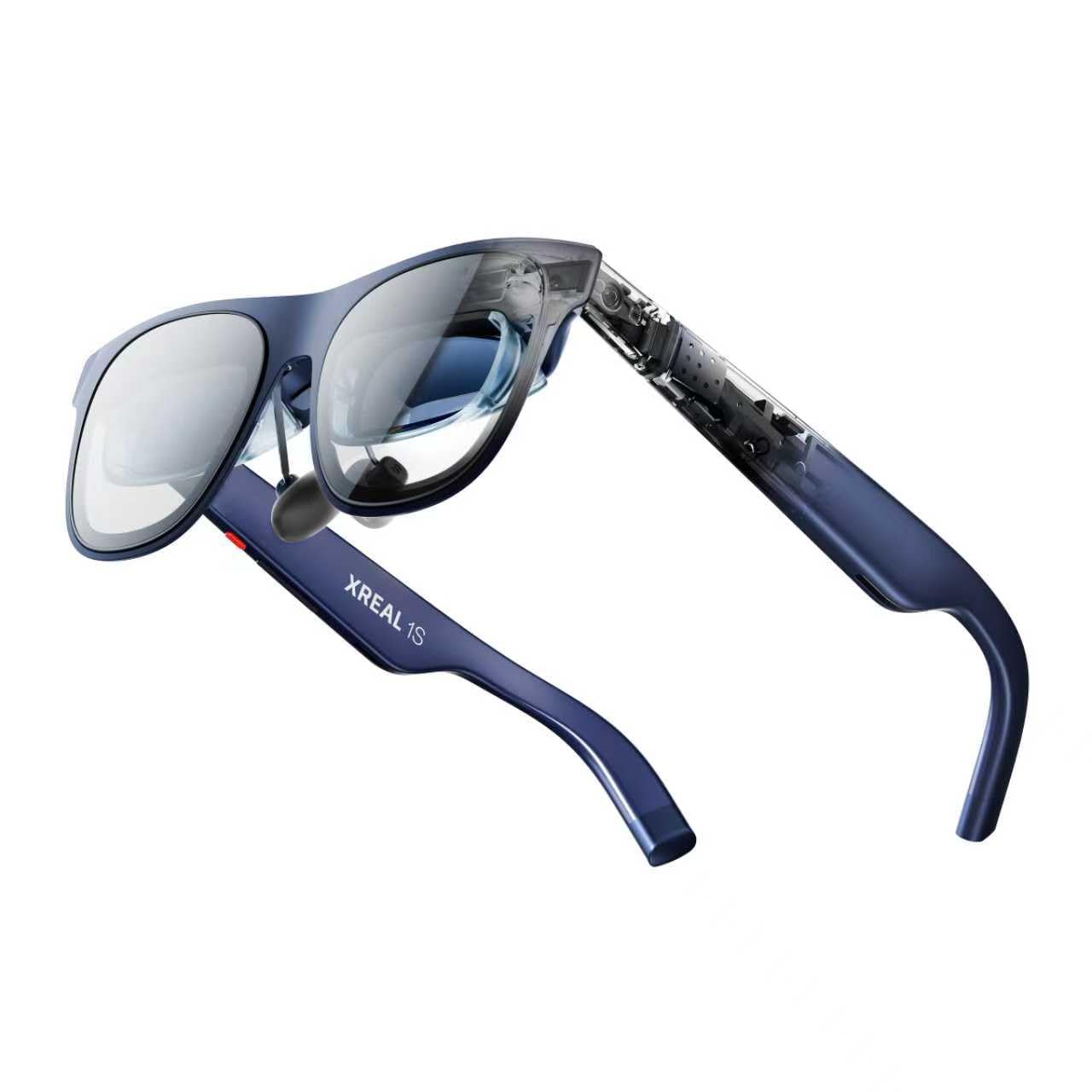
The spatial screen that pins a 500-inch display in mid-air with native 3DoF, no app needed.
This is the pair that moves beyond a simple floating screen into true spatial computing. The X1 chip, the world’s first spatial computing processor built for AR glasses, enables native 3DoF viewing with a 3ms motion-to-photon latency at 120Hz — so the 500-inch virtual screen stays rock-solid as you move your head, with no drift and no motion sickness. Just plug into any USB-C DP device and step straight into spatial content.
The display is a premium OLED with a 52° field of view, delivering a 120Hz refresh rate in 3DoF mode and a 90Hz global refresh that eliminates flicker. Each unit is individually color-tuned and distortion-tuned for precise clarity, and the optical engine boosts clarity by 9%. The world’s first on-glasses REAL 3D technology converts all your content into true 3D at up to 30fps with just 90–100ms latency. Sound by Bose gives you a spacious, balanced soundstage with deep lows and clear mids.
What wins people over is the 2D-to-3D conversion — owners say it makes everything look impressively dimensional, and the sharp OLED renders tiny text crisply. The screen size and distance are adjustable, and the built-in audio is praised as better than rival options. The honest trade-off: you’ll likely need a powered HDMI-to-USB-C adapter for out-of-box compatibility (the standard cable won’t work), the nose pad is uncomfortable for some, and the brightness can feel too high indoors with reflections in sunlight.
Spatial star: Native 3DoF anchoring with the X1 chip means your screen stays pinned while you move — the anti-nausea feature that matters most.
Setup caveat: Expect to buy a powered adapter and possibly a third-party nose pad to get the experience right.
Best for: early AR adopters who want a stable, anchored screen and the wow-factor of real-time 2D-to-3D conversion.
Not for: anyone who wants a zero-fuss out-of-box experience without extra adapters.
6. ASUS AirVision M1 Smart AR Glasses

A 100-inch multi-screen workspace for your laptop that pairs best with the ROG Ally.
This pair is built for getting work done anywhere. The 100-inch display with 1,100 nits brightness and 95% DCI-P3 color gamut gives you vivid, lifelike details, while the AirVision App supports multi-screen setups, screen distance adjustment, and pupil distance customization. At just 87g with built-in speakers and a noise-canceling mic, it’s a lightweight way to stretch a laptop into a multi-monitor workstation.
The design is tailored for gaming handhelds too — it integrates smoothly with the ROG Ally for superior visuals, and works with iPhone 16/15, Android 10 and above, Mac, and tablets via a USB-C cable. The high transparency keeps you aware of your surroundings for safety, and the magnetic shade blocks light when you need full immersion. The Type-C notebook compatibility is the core productivity story, letting you spread windows across virtual space.
The thing that impresses owners is the huge, bright 1080p screen with rich colors and the smooth gaming experience on the Ally X, plus the comfortable, balanced weight. The recurring issue is image quality: blurriness and cut-off edges are reported by several users, with one describing it as “unusable” for office work and another praising it as a complete standout — the variance suggests the IPD (pupil distance) adjustment works well for some faces and not others. The software is also a work in progress, so this is for the tinkerer.
Workstation angle: The AirVision App’s multi-screen mode is the standout — a genuine portable dual-monitor replacement for laptop users.
The gamble: Image clarity varies sharply by face shape; some find it razor-sharp, others unusable — a real try-before-you-buy.
Reach for this if: you pair it with a ROG Ally or Type-C laptop and want a multi-screen productivity setup on the go.
Be cautious if: you have a wider IPD — the blur reports tend to cluster there, and the software needs patience.
7. VITURE Luma Pro XR/AR Glasses
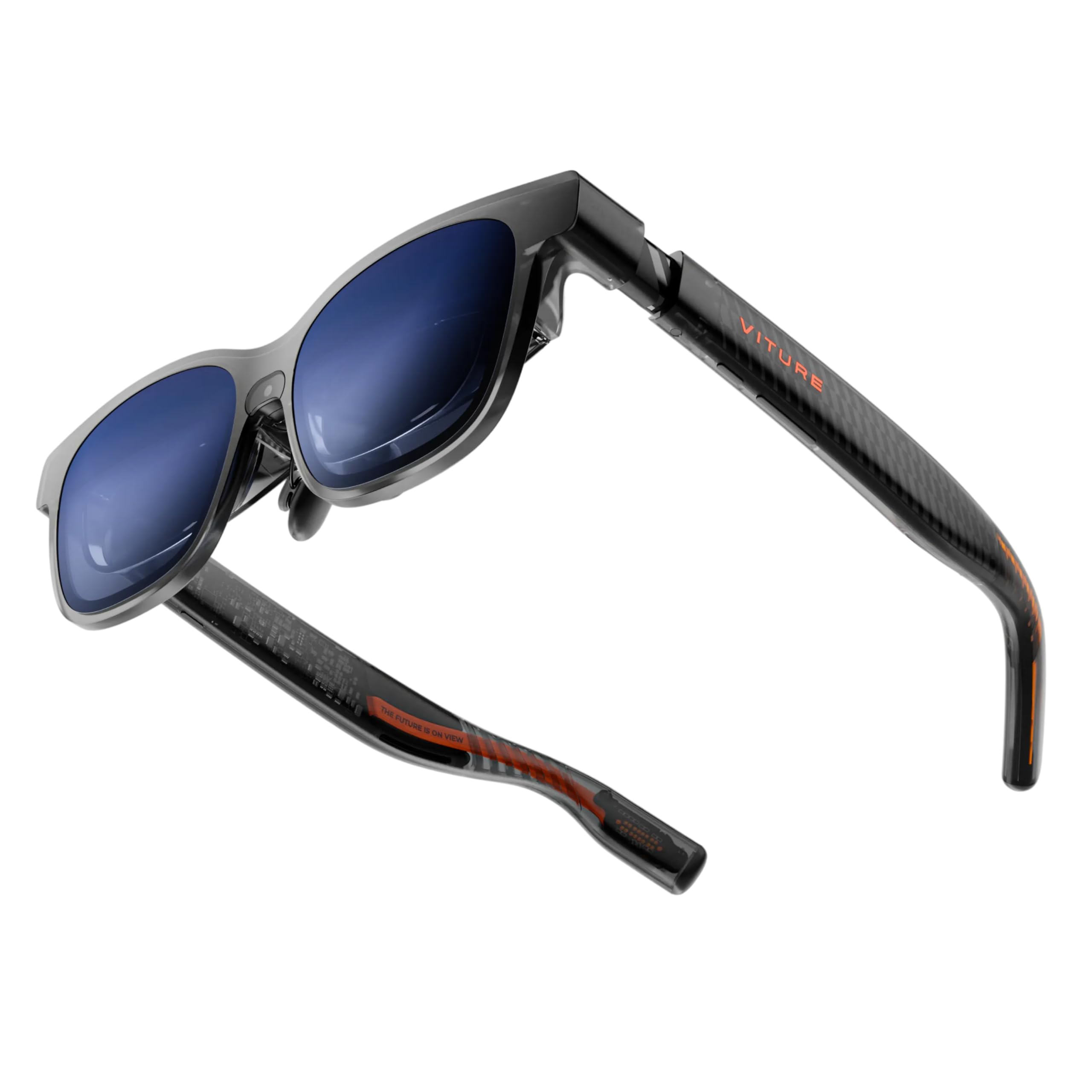
The 1200p razor-sharp panel that makes text look 4K-clean, even sharper than the VITURE Pro.
This is the pair for people who care about sharpness above all else. The 152-inch virtual screen runs at a revolutionary 1200p resolution that feels like 4K, delivering text so razor-sharp it’s described as the sharpest XR display ever created. With a 52° field of view, 1000 nits brightness, and a silky-smooth 120Hz refresh rate, everything from outdoor gaming to bright-room work looks stunning.
The physical design is a standout for glasses wearers. It offers two sizes to fit different IPD ranges, flexible arms, a magnetic ergonomic nose pad, and tilt-adjustable temples for all-day comfort. The built-in myopia adjustment up to -4.0 diopters means you can dial in focus directly on the glasses with no prescription inserts needed — a massive convenience if you’re nearsighted. Audio is crafted by HARMAN’s experts for deeper bass and crisper highs, and the first-ever programmable RGB lighting in XR glasses adds a fun style element.
What wins people over is the crisp picture quality, with improved 1200p resolution and adjustability for vision topping the praise. Owners use it as a perfect portable workstation for travel, and the per-eye focus dials relieve neck pain by letting you lie back and watch. The honest limit: it lacks native 3DoF head tracking (you’ll need a paid add-on for that), has no screen-size adjustment, and the magnetic cord can disconnect when you lie down — so it’s best for relaxed viewing rather than active movement.
The Sharp Screen
- 1200p resolution makes text look 4K-clean
- Built-in myopia adjustment up to -4.0 diopters
- HARMAN audio with deep bass and clear highs
- Two IPD sizes plus tilt-adjustable temples
The Feature Gaps
- No native 3DoF — head tracking needs a paid add-on
- Magnetic cord can detach when lying down
- No screen-size adjustment built in
Pick this if: you’re nearsighted and want built-in focus dials with the sharpest text clarity for work and movies.
pass on it if: you need anchored spatial tracking or plan to move around while watching.
8. VITURE Beast XR/AR Glasses
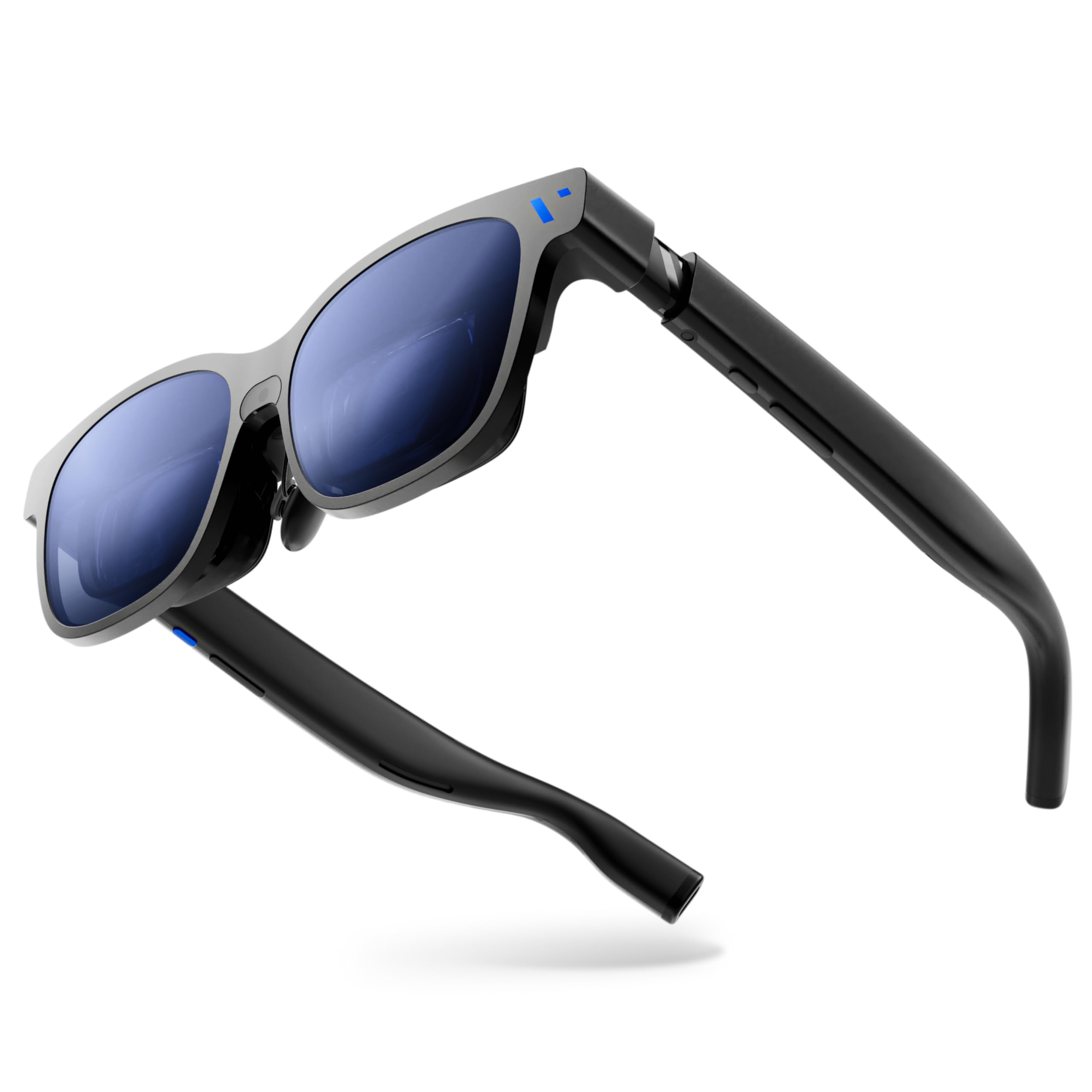
The 174-inch IMAX-style giant with a class-leading 58° field of view and built-in 3DoF.
This is the biggest, boldest screen in consumer XR — a 174-inch virtual display powered by Sony’s latest-generation Micro-OLED panel, pushing 1200p per eye at a class-leading 58° field of view with a 120Hz refresh rate. The 1250 nits of peak brightness means you can actually see the screen outdoors in sunlight without squinting, and it’s over 2× brighter than the competition. It genuinely feels like strapping an IMAX to your face.
The “smartest” claim comes from the built-in VisionPair 3DoF, which lets you pin, resize, and lock the screen in mid-air with no software, no dongles, and no drift. Full screen customizations live right in the glasses: Anchor, Smooth Follow, 32:9 UltraWide, and Side Mode. A 9-level dimming system with Auto Transparency shifts between crisp AR and full cinematic blackout with one tap, adapting to bright offices, dim planes, or pitch-dark bedrooms. HARMAN AudioEFX delivers deeper bass and a wider soundstage.
What wins people over is how clear and sharp the display is, making movies and games feel like a huge screen right in front of them, with pure blacks and vivid colors that keep subtitles readable. The software earns the most praise, and the 88g aerospace-grade aluminum-magnesium alloy frame feels premium and survives daily commutes. The honest limit: some find the software needs refinement (image drift and blurry edges are reported), and you may need a battery pack via adapter for longer sessions, so it demands a bit of patience from early adopters.
The giant screen: At 174 inches with a 58° FOV, this is the most rich virtual display you can wear, with 3DoF built in.
The software tax: The hardware is stellar, but the software still has rough edges — be ready to tinker with button mapping.
Reach for this if: you want the absolute biggest, brightest virtual screen and value built-in 3DoF without extra dongles.
Think twice if: you expect flawless software from the start — occasional drift and edge blur are part of the early-adopter deal.
9. XREAL One Pro AR Glasses

The do-everything pair with a 57° FOV, Bose audio, and 2D-to-3D conversion built on the X1 chip.
This is the most complete package for people who want one pair to handle gaming, movies, and productivity. The X1 spatial computing chip delivers native 3DoF tracking with a 3ms motion-to-photon latency, keeping visuals stable during rapid movements. The 171-inch screen at 57° FOV — the top-tier field of view — recreates the feeling of a massive screen from four meters away, using Sony’s 0.55″ Micro-OLED technology at a smooth 120Hz.
The audio is tuned by Bose engineers with a unique sound chamber design, giving you high-quality sound without needing headphones. Brightness reaches up to 700 nits, staying crisp indoors or under bright sunlight, and advanced electrochromic dimming lets you adjust the lens tint instantly. The dual IPD design comes in two sizes (M: 57–66mm, L: 66–75mm) with three-stage adjustable arms and spring hinges to fit over 95% of users, plus built-in IPD adjustment software to minimize blur or edge cut-off.
What wins people over is the impressive, adjustable screen size and the productivity features — owners say they can use it all day for reading small text and working with spreadsheets. It connects to any USB-C device capable of video output, including iPhone 16/15, Android, Steam Deck, ROG Ally, MacBook, and Windows PCs. The honest note: the display quality gets mixed feedback, with some finding pixelated text at 100% zoom and glare sensitivity, and the carrying case lacks cable storage — so while it’s the most versatile, it rewards the careful user.
The all-rounder: 57° FOV, Bose audio, and built-in 3DoF make this the most balanced AR glasses package for mixed use.
The detail caveat: Text-heavy work can show pixelation at 100% zoom, and the case design is a real oversight.
Best for: the person who wants one premium pair that easily switches between gaming, movies, and spreadsheet work.
Not for: perfectionists who need flawless edge-to-edge text clarity or a case that stores cables properly.
Understanding the Specs
Brightness (Nits)
Nits measure how much light the display pushes toward your eyes. A higher number means the image stays vivid and readable in bright environments, like near a window or outdoors. The 1200-nit RayNeo Air 3s Pro and the 1800-nit TOZO VIZO Z1 Pro are designed to beat sunlight, while a lower-nit display might look washed out in a bright room. If you plan to use yours mostly indoors, you can get away with less, but outdoor users should prioritize this number.
Field of View (FOV)
The FOV (field of view) is the angular size of the image you can see, measured in degrees. It directly controls how big the virtual screen feels. A wider FOV, like the 58° on the VITURE Beast, fills more of your peripheral vision for a more rich, theater-like experience. A narrower FOV can feel like looking through a small window. This is the spec to check if you want immersion over a compact floating monitor.
FAQ
Will augmented reality sunglasses work with my phone?
Can I wear these glasses if I need prescription lenses?
Will I get motion sickness from the moving screen?
Do these glasses have batteries inside?
How does the 2D-to-3D conversion feature work?
Can I use these glasses as a monitor for work?
What is the difference between 3DoF and 6DoF tracking?
Are these glasses comfortable for long sessions?
Final Thoughts: The Verdict
For most buyers, the augmented reality sunglasses winner is the RayNeo Air 3s Pro because its 1200-nit brightness makes the 201-inch screen usable anywhere, and it holds a strong crowd-pleasing rating from a large base of owners. If you want the biggest, most rich screen with built-in spatial tracking, grab the VITURE Beast with its 174-inch display and 58° FOV. And for the lightest travel companion that disappears on your face, the XREAL a01+ at 62g is the one to reach for on your next flight.
How We Picked
We do not accept paid placement. Every pick is matched to a real buyer and a real use-case; we do not hands-on test units.
Sources & Methodology
Specifications: manufacturer listings and product documentation. Review insights: verified customer reviews, as of August 2026. Pricing: not shown on this page (it changes often); check the current price via the retailer link.
As an Amazon Associate, Gadgets Feed earns from qualifying purchases. This does not affect which products we feature.