
Our readers keep the lights on and my morning glass full of iced black tea. As an Amazon Associate, I earn from qualifying purchases.
Specs are compiled from manufacturer listings and verified buyer reviews and can change over time — please confirm the key details on the product page before buying.
Your child will use a spinning chair every day only if it stays put when they climb in on their own. For a sensory-seeking kid, three things decide whether a spinning chair works: does the base tip when they lean hard, is the spin smooth enough to calm them instead of jarring them, and will it still fit in two years. This guide covers nine models, sorted by what each one does best.
I’m Min — the founder and writer behind Gadgets Feed. This guide is built by comparing the manufacturers’ published specifications and the patterns across verified customer reviews, so you get each pick’s real strengths and trade-offs instead of marketing spin.
Every chair below was picked for a different reason, from a no-assembly classroom workhorse to a deep-bowl seat that adults can actually use. Here is what separates a genuinely useful autism spinning chair from one that just looks the part.
Our Picks at a Glance
How To Choose The Best Autism Spinning Chair
Treat a spinning chair as movement equipment, not a toy. Stability comes first, comfort second. Get both right and your child will use it daily for years; get them wrong and it sits in a corner.
Start With The Base, Not The Seat
The base is what keeps your child safe, so look at how wide it spreads and whether it has rubber or non-slip feet underneath. A wide base distributes a leaning child’s weight outward, which is what stops a fast spin from tipping over. Non-slip feet add grip on smooth floors like tile and laminate. A chair with a narrow base and no grip will slide toward the wall every time your child pushes off.
Match The Weight Capacity To Your Whole Family
Weight capacity tells you who can safely sit in the chair, and it is worth checking because older siblings and adults will absolutely want a turn. The chairs here range from a 165-pound rating up to 220 pounds. If you want one chair that lasts through a growth spurt, a higher rating gives you more room before your child ages out of it.
Decide If You Want Handles, A Belt, Or Neither
Handles give a child something to grip while the chair moves, which helps younger kids feel secure during the spin. A safety belt adds a second layer of protection for the smallest riders. Deep bowl-shaped seats do the same job in a different way — they cradle the child so there is nothing to fall out of. Pick based on your child’s age and how confident they are getting in and out on their own.
Quick Comparison
| Model | Best For | Weight Capacity | Assembly | Frame / Base | Amazon |
|---|---|---|---|---|---|
| KidBloom Spinning Chair★ Best Overall | Sensory play with visual stimulation | 220 lbs | Assembly required | Metal anti-slip base | Amazon |
| YGJT Kids Sensory Swivel ChairBest Value | Young toddlers and small spaces | 90KG | Arrives assembled | Sturdy metal base | Amazon |
| Sensory Spinning Chair with HandlesSafest For Small Kids | Younger kids needing a safety belt | 220 lbs | Assembly required | Heavy-duty metal base | Amazon |
| ROBOTIME Kids Sensory Swivel Chair | No-assembly, small-space sensory play | — | No assembly required | Detachable metal base | Amazon |
| Giggle & Play Kids Swivel Chair | Energetic kids under 7 or 8 | — | Pre-assembled | Galvanized steel frame | Amazon |
| BAONILE Kids Sensory Spinning Chair | Balance training and obstacle courses | 220 lbs | Assembly required | Extra-wide anti-tip base | Amazon |
| Olakids Sensory Spinning Chair | Regulation and heavy-duty home use | — | Assembly instructions included | Triangular metal base | Amazon |
| HAPPYMATY Spinning Chair (Blue) | Classrooms and shared use | 220 lbs | Assembly instructions included | Metal frame | Amazon |
| HAPPYMATY Sensory Spinning Chair (Orange) | Kids who won’t outgrow it | 220 lbs | Assembly required, instructions included | Metal frame | Amazon |
In‑Depth Reviews
1. KidBloom Spinning Chair for Autistic Kids, Sensory Toy for Kids Ages 3+
Our pick — over 4.5★ from 800+ verified ratings; the strongest balance of quality and price.
The quiet spinner parents keep coming back to — smooth enough for a whole movie, steady enough for an adult.
What wins people over is the look of this thing, and that is a genuine surprise for a piece of movement equipment. The upgraded octagonal panel carries a diamond pattern that reflects light as your child spins, so the chair feeds visual and tactile sensory input at the same time as the motion. It is a small design choice that changes how long kids stay on it.
The moving parts hold up under real use. A sturdy metal anti-slip base and a 360-degree silent swivel mechanism (a full-circle turning joint that makes no noise) keep the spin smooth and quiet, so your child can spin while you are on a call or a sibling naps. It holds up to 220 lbs (about 100 kg), enough for an adult to sit on. Assembly is quick — one owner described “Easy 10-min assembly” — and the chair arrived with the build quality to survive daily punishment.
The honest catch is small: an occasional unit ships with a screw that will not thread into the base, so check the hardware before you tighten everything down. It is a minor annoyance, not a design flaw. At 4.7 stars from 822 ratings, it has the strongest review showing on this list. Compare the dimensions here — 20.28 x 5.51 x 21.06 inches — against the Sensory Spinning Chair with Handles at 20.98 x 20 x 11 inches, and the KidBloom packaging is noticeably flatter, which makes it easier to store between uses.
What Buyers Rave About
- Silent 360-degree swivel that holds to 220 lbs
- Light-reflecting diamond panel turns each spin into visual sensory play
- Dual handles for a secure grip while the chair moves
- Quick assembly that owners clock at around ten minutes
What To Watch
- Occasional units arrive with a screw that won’t thread into the base
- Assembly is required, so budget a few minutes on arrival
- Larger riders may prefer a wider bowl-style seat
Reach for this if: you want one chair that performs on every front — quiet spin, strong base, visual payoff — and you are fine tightening a few bolts.
Look elsewhere if: your child needs a belt or you want something that arrives ready to use straight from the start.
2. YGJT Kids Sensory Swivel Chair, Spinning Chair for Autistic Kids & ADHD Children, Blue
An entry-level spinner that skips the assembly entirely and throws in a sensory board.
This is the one to grab if you want movement input today, with no tools and no instructions. The chair arrives fully put together, and the box also contains a separate sensory activity board with vibrant colors and light effects. That pairing is unusual — one piece handles the vestibular input, the other gives your child something to touch and watch when they have stopped spinning.
The build itself is more substantial than the price suggests. A sturdy metal base carries up to 90KG, and non-slip rubber feet keep the frame from sliding across smooth flooring. Owners describe being able to spin and then halt without dropping their feet to the floor, which is a real marker of a base that stays grounded. The seat is thick, durable plastic that keeps its position when the chair is moving quickly, and a couch pillow on top handles comfort fine.
Here is the trade-off to weigh before you buy: this chair is sized for younger children, and the seat opening is not generous for big kids or teens. It works beautifully for a five-year-old and gets tight fast for anyone much older. With quality as the most-discussed theme in owner feedback, the recurring takeaway is that this is well-made for what it is — a compact first spinner, not the last chair you will buy.
The setup advantage: shipping assembled with a sensory board included means zero frustration on day one, and the rubber-footed metal legs mean it stays where your child starts it.
Size reality: match this to a toddler or young child, not to a growing teen — the seat room runs out before the weight limit does.
Suits: first-time buyers who want a proven, ready-to-use spinner for a small child without spending much.
Skip if: your child is older than the toddler range or you need one seat that will still fit them later.
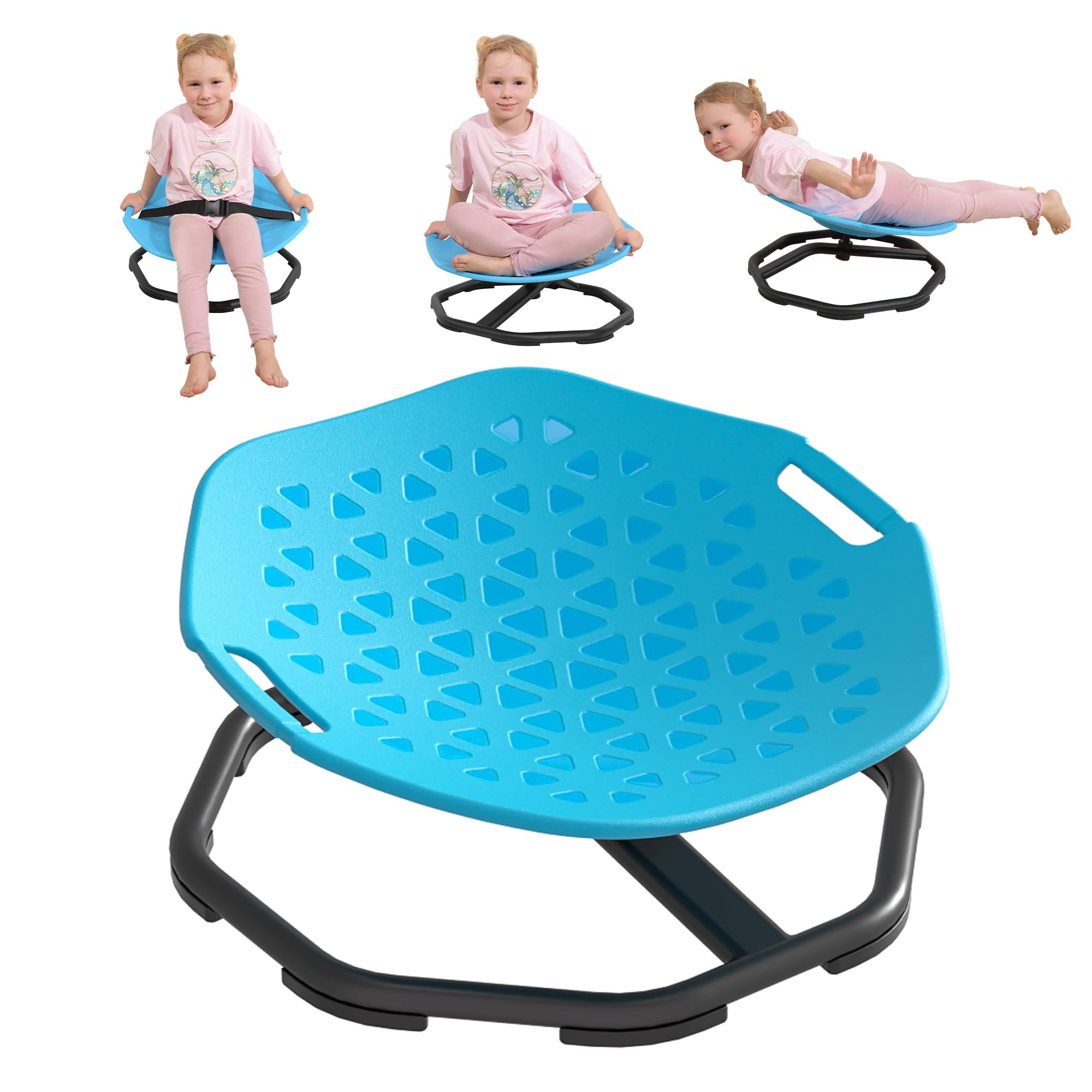
3. Sensory Spinning Chair for Autistic Kids, Upgraded Swivel Chair for Kids with Handles, Safety Belt Included
Two ways to stay on: dual handles for gripping and a belt for the smallest riders.
Most spinning chairs give you stability or restraint, rarely both. This one does both. Two handles run down the sides for a secure grip, and an extra safety belt is included for younger kids who are not yet steady on the chair. That combination makes it the most cautious pick here, and it shows in the numbers underneath: eight non-slip rubber feet spread the load and keep the chair from tipping on smooth surfaces.
The base is a heavy-duty metal frame with a thick seat, and it carries up to 220 lbs. Comfort is the quality owners call out most — the seat gets daily use from kids who settle into it before bed, and the hardware has held up. One parent wrote: “High Quality, sturdy and well used during the winter by a 5 and 2 yo.”
The thing to know before ordering is the recurring fit question. The seat is not molded to a body shape, so a larger or older child may find it less comfortable than a deep-bowl chair. This one is at its best with a small rider who is still learning the motion. It also works outdoors with that rubber footing doing real work on patio or driveway surfaces.
Buy this for: a preschooler who needs both a grip and a belt before they feel safe spinning.
Think twice if: your child is already past the small-kid stage and would be better served by a wider, deeper seat.
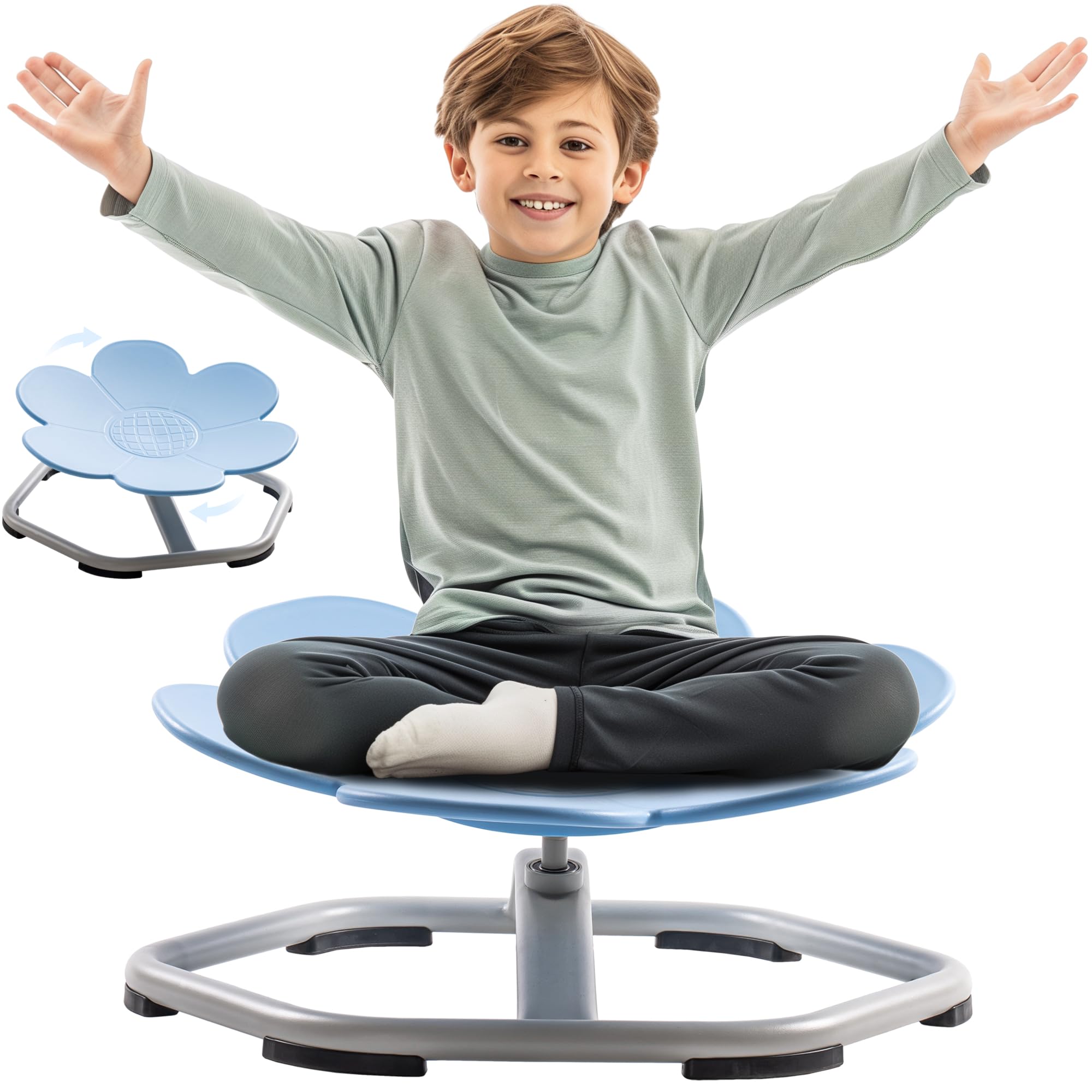
4. ROBOTIME Kids Sensory Swivel Chair, Autism Spinning Chair with Non-Slip Design, No Assembly (Blue)
A detachable base turns this into the one chair you can actually stow away.
Small homes and small cars are the whole reason this chair exists. The metal base detaches, so the chair splits into two parts you can tuck into a closet or slide into the car for a visit to grandma’s. No tools, no assembly required when it arrives. For a family that moves a sensory chair between rooms or houses, that single design choice is worth more than any extra feature.
The spin itself is built on a smooth ball-bearing axis, which keeps the motion consistent instead of jerky. Non-slip pads underneath hold the chair in place and protect hard floors from scratches. It supports both lying-down and sitting positions, so the same chair covers two very different kinds of play. Buyers report it working exactly as intended in a special education classroom, where it gets used heavily all day.
One recurring note is worth watching: the bolts holding the base can loosen over time, and a few owners tighten them periodically to keep everything solid. That is a maintenance item, not a failure. Keep an Allen key handy and the chair stays stable. As with any no-assembly chair, you are trading a small amount of ongoing attention for the convenience of skipping the build.
The portability play: a detachable metal base plus stacked dimensions make this the easiest chair on the list to store or travel with, and the ball-bearing axis keeps the spin smooth wherever you set it up.
Keep an eye on: re-tighten the base bolts now and then — that is the upkeep that comes with the convenience.
Fits your home if: space is tight and you need a sensory chair that can disappear between uses.
Not for you if: you would rather not think about maintenance and want a rigid one-piece build.
5. Giggle & Play Kids Swivel Chairs, Sensory Spinning Chair, 360° Sit and Spin (Blue)

Built for the kid who treats every chair as a launchpad.
If your child’s energy needs somewhere to go before homework or bedtime, this is the chair that channels it. One buyer wrote: “This was the BEST purchase ever! My 4 year old granddaughter (and all of her friends) love this sensory spinning chair. Hours of FUN!” The 360-degree rotation is the entire point here — it converts restlessness into movement instead of screens.
The frame is polypropylene with a galvanized steel structure underneath and an anti-slip base, so the chair stays put even during fast, wild spins. It arrives pre-assembled, which removes the one friction point that stops people from using a chair the day it shows up. Multiple spin positions are supported — sitting, lying, and lying on the side — so kids can find the version that feels right to them.
What holds this one back is the rider range rather than the build. It is sized for kids at the younger end, and the spin mechanism itself draws mixed feelings from owners — some find the rotation starting on its own to be a feature, others less so. For a household with an energetic five- to seven-year-old, that quirk rarely matters. For older kids, look at a chair with a wider body.
Pick this when: you need a pre-assembled chair to absorb a young, high-energy kid right away.
Consider a different pick if: your child is older, or you want a chair where the spin only responds to deliberate input.
6. BAONILE Kids Sensory Spinning Chair, Extra-Wide Anti-Tip Base
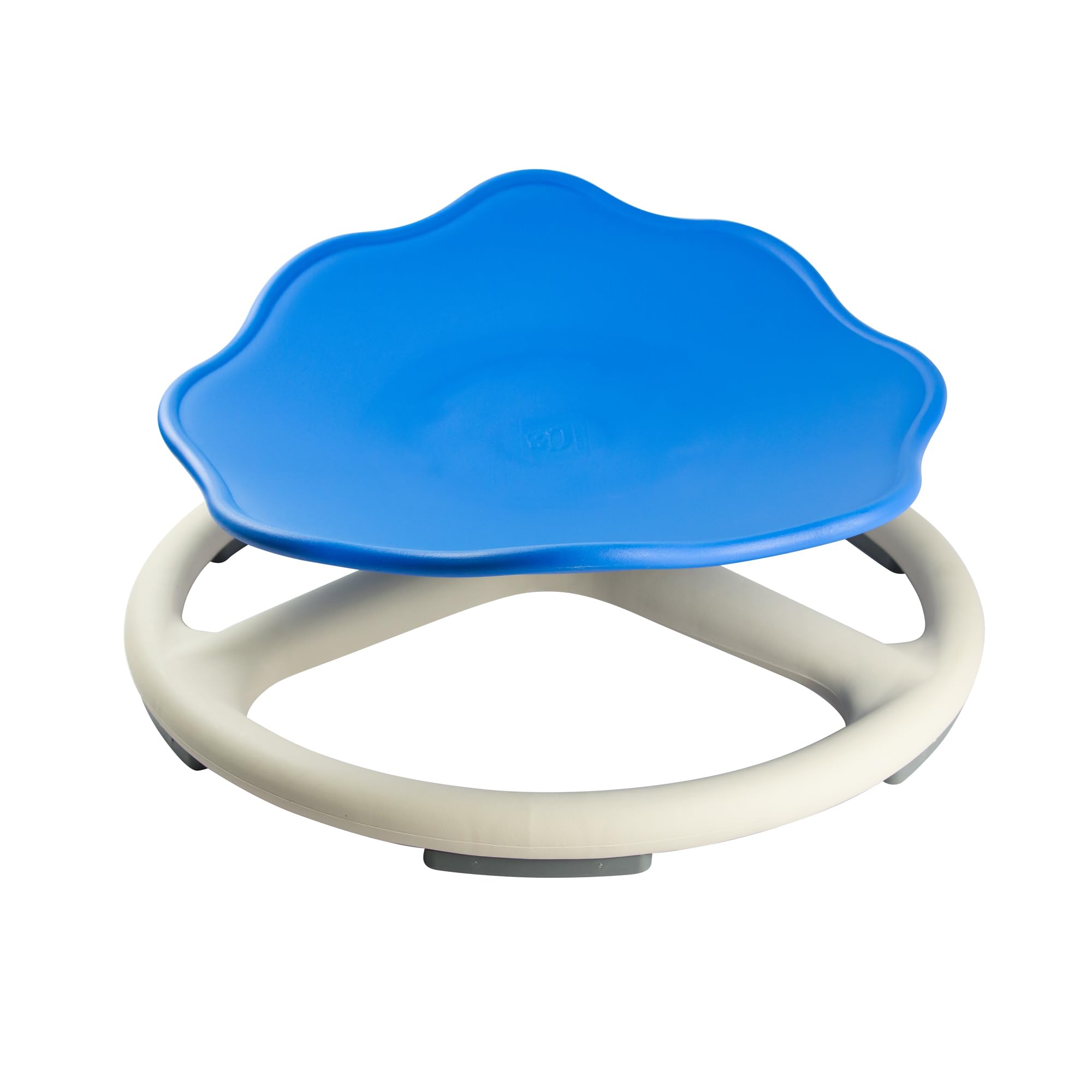
A wide, low-to-the-ground base that a full-grown adult can sit in without slowing it down.
The standout here is the anti-tip base design, which spreads wide and sits low to the floor. That shape keeps the chair stable during fast spins and slow rocking alike. It holds up to 220 lbs (about 100 kg), so an adult can use it too — one 5’10”, 150 lb buyer sat cross-legged and kept the chair spinning through weight shifts alone.
The seat itself is thick, rounded-edged plastic that makes gripping easy even without side handles. That is a meaningful difference from the smaller chairs on this list, where the trim is too thin to hold onto. It works for balance practice, obstacle courses, or just solo spinning, and it stores compactly when the session ends.
One thing to know is how the chair behaves when weight shifts off-center — the base can lift slightly on one side. It does not tip, but it makes the rapid-start spinning feel different from the deep-bowl designs. If you want the chair to feel planted no matter what your child does, weigh that against the lower profile here.
Where it shines: a wide, grounded base rated to 220 lbs makes this the pick for riders who want the chair to stay put while they build momentum.
Worth knowing: shifting weight to one edge can lift the base slightly — expect it, and it stays balanced.
Choose it for: balance-focused play and households where kids and adults will both use the chair.
Rethink it if: you want a seat that cradles a small child with a deeper bowl shape.
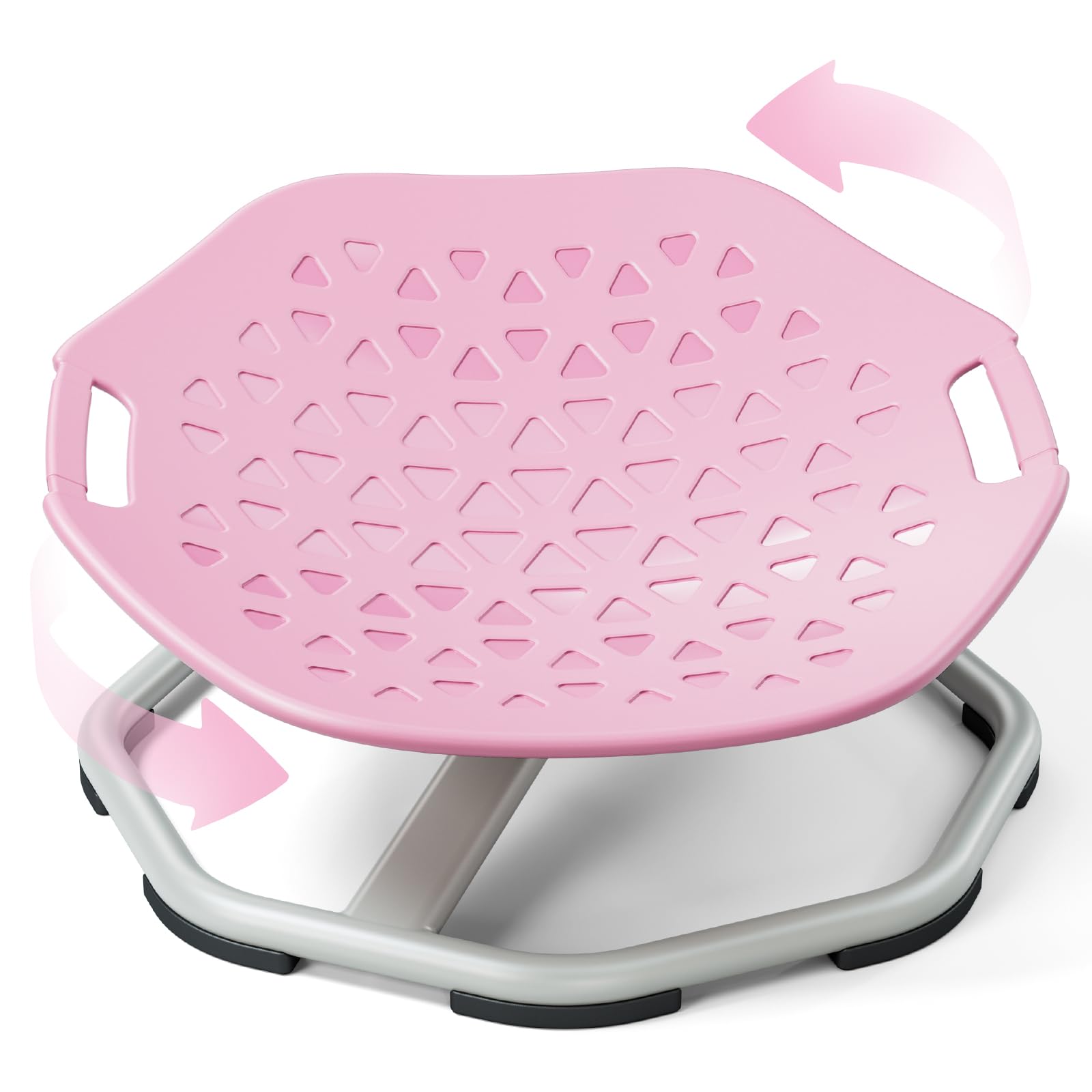
7. Olakids Sensory Spinning Chair, Flower Shape 360° Swivel Seat (Pink)
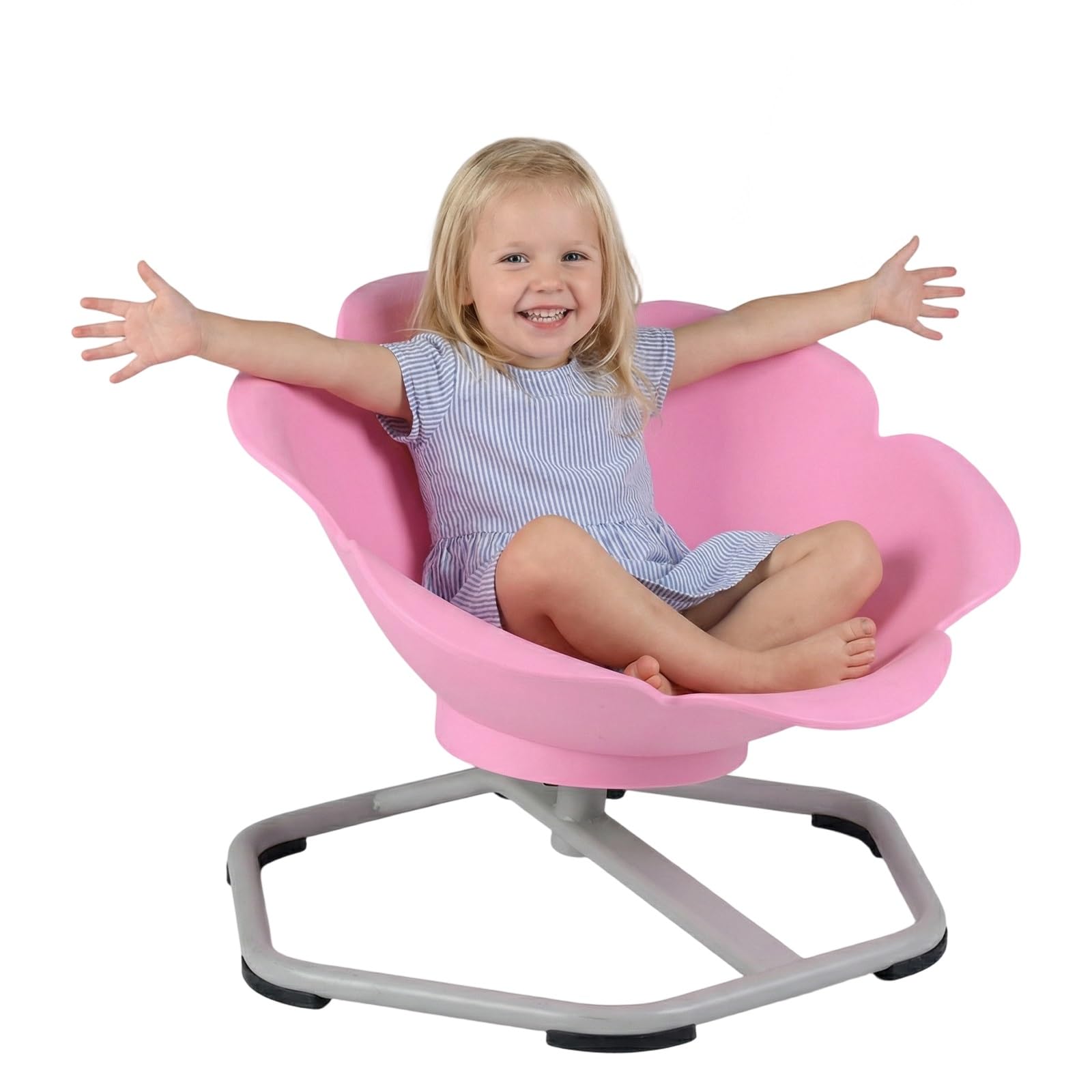
Triangle-based stability and a flower seat that looks like furniture, not equipment.
Two design choices separate this chair from everything else here. First, the base uses a triangular metal structure rather than a round one, which spreads force differently and keeps the chair steady through the full rotation. Second, the seat is shaped like a flower with a widened, deepened bowl that follows a child’s body curves. Rounded, thickened edges make it easy to grip and safe to touch.
The materials are worth calling out because this chair is built to sit in a living room. It is non-toxic and odorless, made without BPA, PVC, phthalates, lead, latex, or formaldehyde. It has passed stability, load, and shear testing and meets US CPSIA and ASTM standards. Owners describe it as heavy duty, and it holds up under busy household use.
The reality of the trade-off is simple: this is a bigger footprint than the smaller chairs here, and it requires assembly when it arrives. It is also sized for kids, so a growing teenager may need something larger. But for a family that wants a chair that looks good sitting out and feels substantial under a moving child, that is exactly the point.
Highlights
- Triangular metal base distributes force for steadier rotation
- Flower-shaped widened, deepened seat follows body curves
- Rounded, thickened edges are safe to grip
Considerations
- Requires assembly before first use
- Larger footprint than compact chairs
- Sized for kids, so older teens may outgrow it
Best for: households that want a sensory chair sturdy enough to leave in the room and safe enough to stop worrying about.
Less ideal for: tight spaces or buyers who want zero setup on arrival.
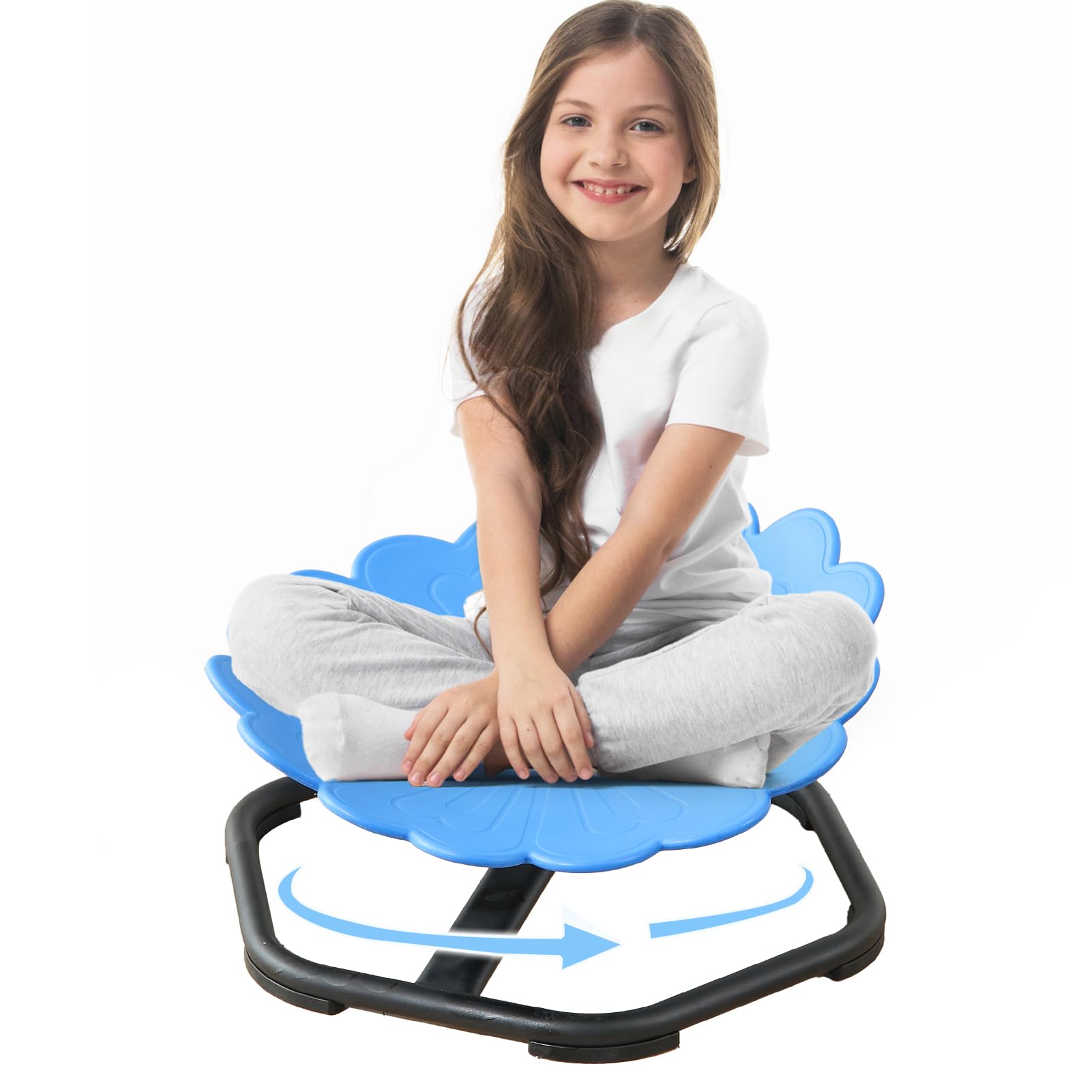
8. HAPPYMATY Spinning Chair for Autistic Kids & Adults, Sit and Spin Sensory Toys (Blue)
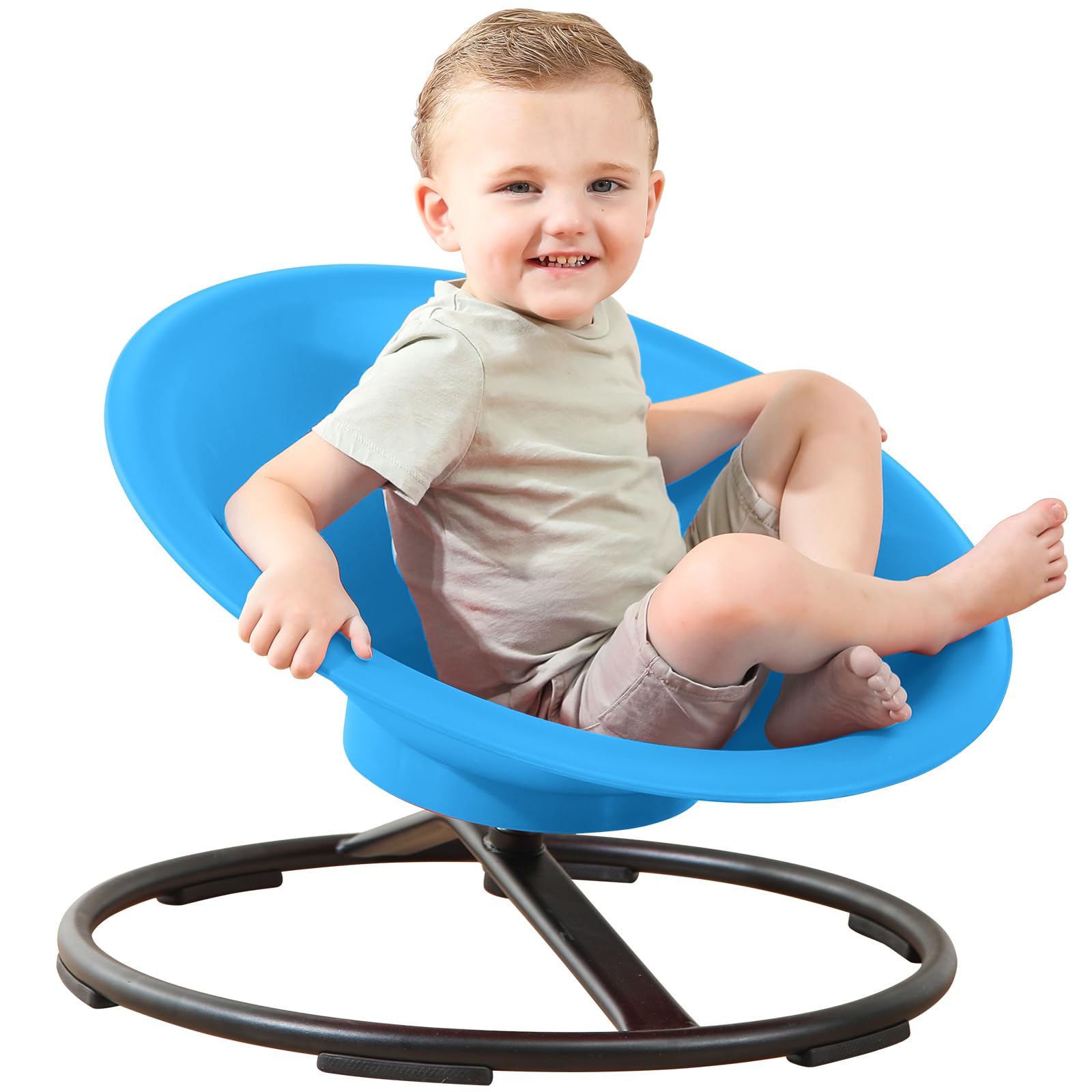
The bowl-style chair built to survive a full classroom, not just one child.
This is the chair that a special education teacher buys two of, then wishes they had room for more. The bowl-shaped seat is deep and spacious, which cradles a broad range of riders — one classroom owner reported it fitting both a five-year-old and an eight-year-old without either looking outsized. The frame is metal with an eco-friendly PP shell, and it is rated for up to 220 lbs.
What holds up under daily punishment is the construction. Screws stay tight, the chair stays upright even at high spin speed, and the deep bowl prevents tipping. Owners describe kids using it indoors and outdoors through an entire winter with no issues. It is a heavier chair than the compact options, and that weight is exactly what keeps it stable when used hard.
The one caveat is that this is not a portable chair. It is heavier to move, and if you need something that travels between rooms or houses, you will want a detachable-base design instead. But if you want a chair that stays in one spot and takes years of abuse, this is the one to consider.
What sells it: a deep bowl seat with a 220 lb metal frame that stands up to shared, high-frequency use.
Where it falls short: heavier to relocate, so it is best left in one playroom or classroom.
The right choice for: classrooms, therapy spaces, and homes where multiple kids will share one chair all day.
Not the right fit if: you plan to move the chair between locations — the weight gets old fast.
9. HAPPYMATY Sensory Spinning Chair for Autistic Kids & Adults (Orange)
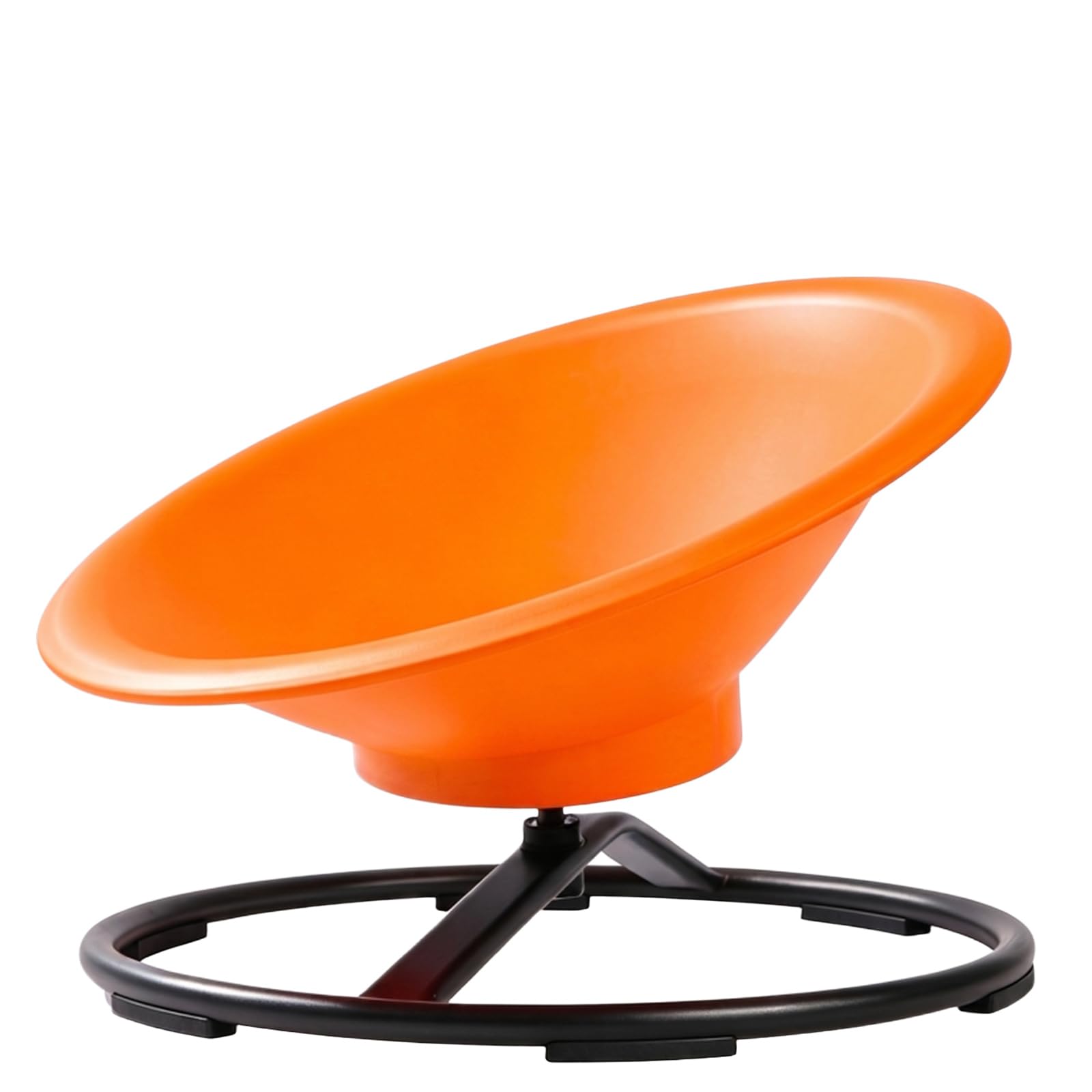
A molded seat that fits a little kid today and a big kid five years from now.
The case for this chair is longevity. It carries up to 220 lbs, and the molded bowl shape means a four-year-old and a ten-year-old can both use it without the seat becoming cramped. One buyer’s nine-year-old autistic son used it constantly once he figured out the motion, and the size fit both little and big kids.
The seat design itself is the differentiator: it is molded rather than flat, so a child sits down into it rather than balancing on top of it. That shape lets a child control spin speed and direction simply by shifting their body weight — no handle needed, no pushing with hands. Owners mention the spin staying quiet with no discernible noise, which is a real plus in shared living space.
Assembly takes a few screws and an included Allen key, so set aside a short block of time before first use. The larger footprint means this is not a chair you stash away, and if you need something portable, a detachable-base model will serve you better. For a chair that will sit out for years and grow with your child, though, this is the one to shortlist.
Suits a family that: wants one sensory chair that will still fit in five years — the 220 lb rating and molded bowl buy you that time.
Skip if: you need something that packs down or moves easily between rooms.
Understanding the Specs
Weight Capacity (lbs)
Weight capacity tells you the maximum rider weight the chair is safe to carry. A higher rating — like 220 lbs — means the base and frame are engineered to stay stable even with a heavier or growing child, and it also means adults and older siblings can sit in it. Match the rating to the heaviest person who will realistically use the chair, and leave some headroom so your child does not age out of it.
Swivel Mechanism
The swivel mechanism (the turning joint) creates the rotation that gives your child sensory input. A ball-bearing axis or a silent 360-degree swivel produces a smooth, continuous spin instead of a jerky one, which is what makes the motion calming. Some designs spin freely on their own; others only move when the rider pushes with their body. Both are valid — pick based on if you want the chair to start moving by itself or only respond to your child’s push.
Base Construction
The base is the safety-critical part of any spinning chair. Look for a wide footprint, a sturdy metal frame, and rubber or non-slip feet underneath. A wide base spreads force outward, which prevents tipping during fast spins. Non-slip feet grip smooth floors so the chair does not slide away. A detachable base trades a bit of rigidity for easier storage and transport.
Safety Features
Handles, safety belts, and deep bowl seats are all ways to keep a child secure in a moving chair. Handles give a child something to grip, which helps younger riders feel steady. A safety belt adds restraint for the smallest kids. A widened, deepened seat cradles the body so there is nothing to fall out of. Choose based on your child’s age and how confident they are getting on and off by themselves.
FAQ
What weight capacity do I need in an autism spinning chair?
Do spinning chairs come fully assembled?
Is a spinning chair safe for a three-year-old?
How do I stop a spinning chair from tipping over?
Can adults use a kids’ sensory spinning chair?
Which spinning chair is best for a child with ADHD or autism?
How long does it take to assemble a sensory spinning chair?
Can I use a sensory spinning chair outdoors?
Does a spinning chair make noise?
How do I clean a sensory spinning chair?
Final Thoughts: The Verdict
For most families, the autism spinning chair that earns its place is the KidBloom Spinning Chair — it holds 220 lbs, spins silently on a metal anti-slip base, and adds light-reflecting visual feedback on top of the movement. It has the highest review count here, which gives you the deepest pool of owner experience to lean on. If safety straps matter most for a small child, the Sensory Spinning Chair with Handles includes both handles and a belt. And for a classroom or a home where the chair gets used all day and needs to stay put, the HAPPYMATY blue chair is the one to reach for.
How We Picked
We do not accept paid placement. Every pick is matched to a real buyer and a real use-case; we do not hands-on test units.
Sources & Methodology
Specifications: manufacturer listings and product documentation. Review insights: verified customer reviews, as of September 2026. Pricing: not shown on this page (it changes often); check the current price via the retailer link.
As an Amazon Associate, Gadgets Feed earns from qualifying purchases. This does not affect which products we feature.