
The difference between a toy that soothes and one that overwhelms is everything for a child on the spectrum. The right sensory tool provides predictable input, a clear cause-effect relationship, and an escape from chaotic stimulation — turning potential frustration into focused, calming play.
I’m Min — the co-founder and writer behind Gadgets Feed. My deep market research involves analyzing thousands of customer reviews and technical spec sheets to identify which sensory toys truly deliver therapeutic value, from vestibular input tools to communication aids. (And Homer 🐱 supervised the assembly of the spinning chair by lying directly on the instruction sheet.)
Whether you need a travel-friendly fidget tool, a speech aid, or a heavy-duty vestibular ride, this guide cuts through the noise to find the best autistic children’s toys that actually hold a child’s attention and support their developmental needs.
How To Choose The Best Autistic Children’s Toys
Not every toy is a therapeutic tool. You need items that provide the right type of sensory input — whether that’s visual, tactile, auditory, or vestibular — without causing overstimulation. Focus on the child’s specific sensory seeking or avoidance patterns before you buy.
Prioritize Vestibular and Proprioceptive Input
Many autistic children crave swinging, spinning, or deep pressure. A spinning chair that supports 360-degree rotation provides the vestibular input that calms an overwhelmed nervous system. Look for a sturdy metal base and a weight capacity that exceeds the child’s weight for safe play.
Look for Predictable Cause-and-Effect Feedback
Toys with buttons, switches, and lights offer reliable, repeatable outcomes that reduce anxiety. A busy board with LED lights, for example, gives immediate visual feedback for each action. Ensure the brightness is calibrated for sensitive eyes and that all parts are securely attached.
Consider Communication Level
For non-verbal children, an AAC device with programmable buttons allows for personalized communication. Look for devices with adjustable volume and multiple pre-installed icons like “thirsty” or “too loud” to reduce frustration. A lightweight build with a storage bag makes it portable for therapy sessions.
Check for Small Parts and Durability
Sensory bins with kinetic sand, water beads, or small figurines provide excellent tactile exploration but require supervision for children who mouth objects. For younger toddlers, opt for larger, chew-safe plastic pieces or wooden boards with no splinters. Durability is key — toys that survive being thrown are better investments.
Quick Comparison
On smaller screens, swipe sideways to see the full table.
| Model | Category | Best For | Key Spec | Amazon |
|---|---|---|---|---|
| BABAMU Spinning Chair | Vestibular Chair | Heavy-duty regulation | 220 lbs weight capacity | Amazon |
| Pterying Spinning Chair | Vestibular Chair | Classroom & home focus | 21″ L x 19″ W size | Amazon |
| Joyreal AAC Device | Communication Aid | Non-verbal communication | 37 pre-installed icons | Amazon |
| AGENTLAN Ocean Sensory Bin | Sensory Bin | Calming tactile exploration | 8 sea animals & sand | Amazon |
| Walenty Dinosaur Alphabet Set | Matching Game | Early letter recognition | 26 double-sided pieces | Amazon |
| Benresive Busy Book | Quiet Book | On-the-go learning | 15 themes + 15 writing pages | Amazon |
| HarVow LED Busy Board | Busy Board | Cause & effect learning | 13 switches + 24 LED lights | Amazon |
In‑Depth Reviews
1. BABAMU Spinning Chair for Autistic Kids
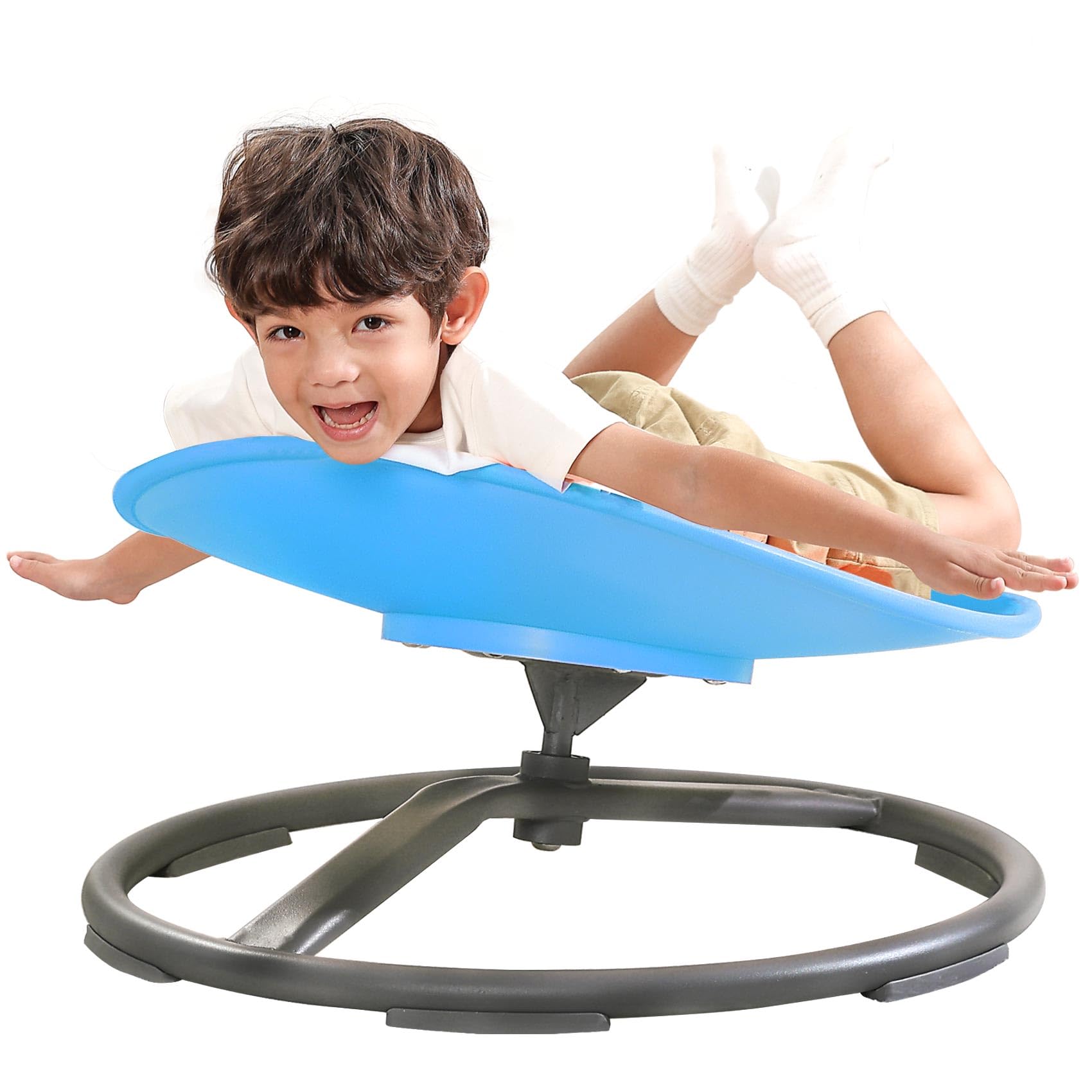
The BABAMU spinning chair is a premium vestibular tool built with a sturdy stainless steel frame and a 220-pound weight capacity, making it the most heavy-duty option for autistic children who need intense spinning input. Its silent 360-degree rotation mechanism ensures smooth, noise-free play that won’t disrupt a calming environment. The ergonomic seat and anti-slip base keep the child safe during fast spins, supporting up to rigorous daily use in therapy rooms or at home.
This chair excels at recalibrating the body’s balance perception, helping to reduce motion sickness-related anxiety while training coordination. Children can sit, kneel, or lie on their stomachs for varied vestibular input — a versatility rarely seen in sensory chairs. Customer feedback confirms it “calms the nervous system” and serves as an effective reset tool for constant movers, with one user noting it is “used daily” by their autistic son for regulation.
Assembly takes about five minutes with included tools, and the compact design stores easily on its side when not in use. The polyester cushion is wipe-clean, and the powder-coated finish resists chipping. For families seeking a clinical-grade sensory tool that blends into family life (rather than looking like medical equipment), this is the definitive choice.
Why it’s great
- Silent 360° spin mechanism with stable, non-slip base
- Versatile play positions (sit, kneel, lie) for varied input
- Easy 5-minute assembly with durable stainless steel frame
Good to know
- Requires open floor space for safe spinning radius
- No cushion adjustment available for lumbar support
2. Pterying Large Size Spinning Chair
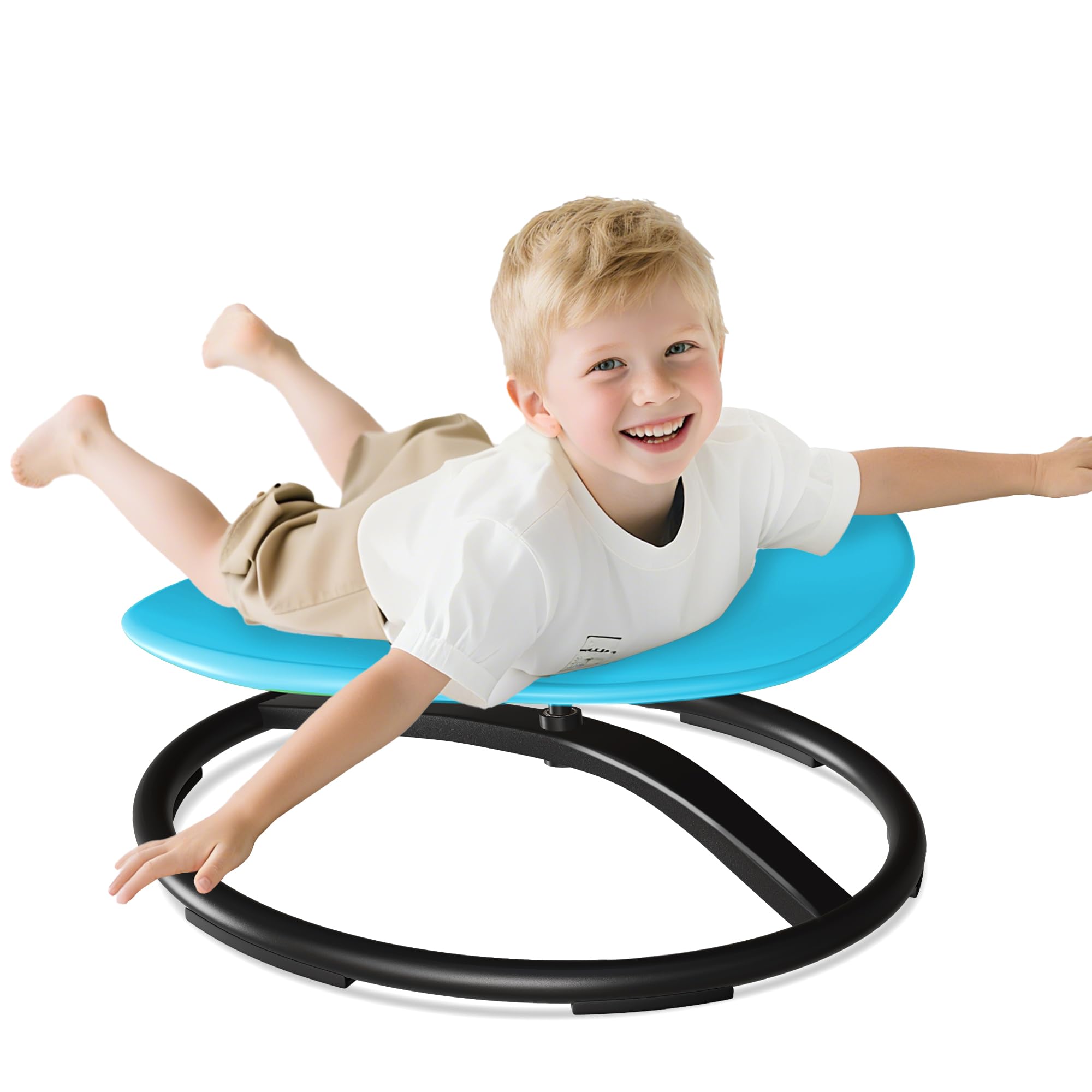
The Pterying spinning chair is a mid-range vestibular solution designed by pediatric occupational therapists specifically for children who experience motion sickness, coordination disorders, or inattention. Its 21 by 19-inch azure rounded shape is slightly smaller than the BABAMU but still accommodates toddlers through pre-teens, with a 150-pound weight capacity that covers most users up to age 12. The PP plastic frame with a sturdy metal base provides excellent stability without the weight of a steel frame.
Multi-functional design allows rotation while sitting, kneeling, or lying down — the thickened edges serve as safe handholds for younger children who may grip tightly. Customer reviews from parents of high-functioning ADHD kids describe it as an “ADHD savior” that provides a daily reset. The chair holds up well under constant use by multiple kids, and one review notes it “stores easily on its side” when playtime ends, making it ideal for smaller homes or classrooms.
Assembly is straightforward at under five minutes, and the lightweight build makes it easy to move between rooms. The plastic material is heat-resistant and corrosion-proof, suitable for both indoor and outdoor use. While the 150-pound limit is lower than the BABAMU, this chair offers a better value for younger children who don’t need the higher capacity, and the azure color is visually calming.
Why it’s great
- Occupational therapist-designed for vestibular development
- Thickened edges for safe gripping during fast spins
- Lightweight and easy to store on its side
Good to know
- 150-pound limit may be outgrown by older children
- Plastic frame is less durable than steel options
3. Joyreal AAC Device for Autism

The Joyreal AAC device is a non-verbal communication tool that packs 37 pre-installed picture-and-color icons covering essential needs like “I’m thirsty,” “it’s too loud,” and “I’m sleepy.” Its 8 programmable buttons let parents or therapists record personalized instructions using their own voice, creating a familiar and comforting communication bridge for the child. The device weighs just over 10 ounces and comes with a velvet storage bag for easy transport between home, school, and therapy sessions.
Adjustable volume control ensures the device can be used in busy areas without being drowned out, or turned down for quiet settings. The male/female voice switch adds another layer of personalization — some children respond better to specific vocal qualities. Customer reviews highlight a breakthrough moment where a daughter said “I love you” for the first time using this device. One speech therapist at Mayo Clinic was reportedly impressed by its affordability and functionality.
The device runs on three AAA batteries, and while the build feels lightweight — almost toy-like — it holds up to daily use by toddlers and young children. The button interface requires direct, intentional pressing, which helps with fine motor targeting. For families on a budget who cannot afford a touchscreen AAC system, this is a reliable, portable gateway to functional communication.
Why it’s great
- 37 pre-programmed icons cover essential daily needs
- 8 recordable buttons allow personalized voice messages
- Lightweight and portable with included storage bag
Good to know
- Requires 3 AAA batteries (not included)
- Feels lightweight and may not survive heavy throws
4. AGENTLAN Ocean Sensory Bin
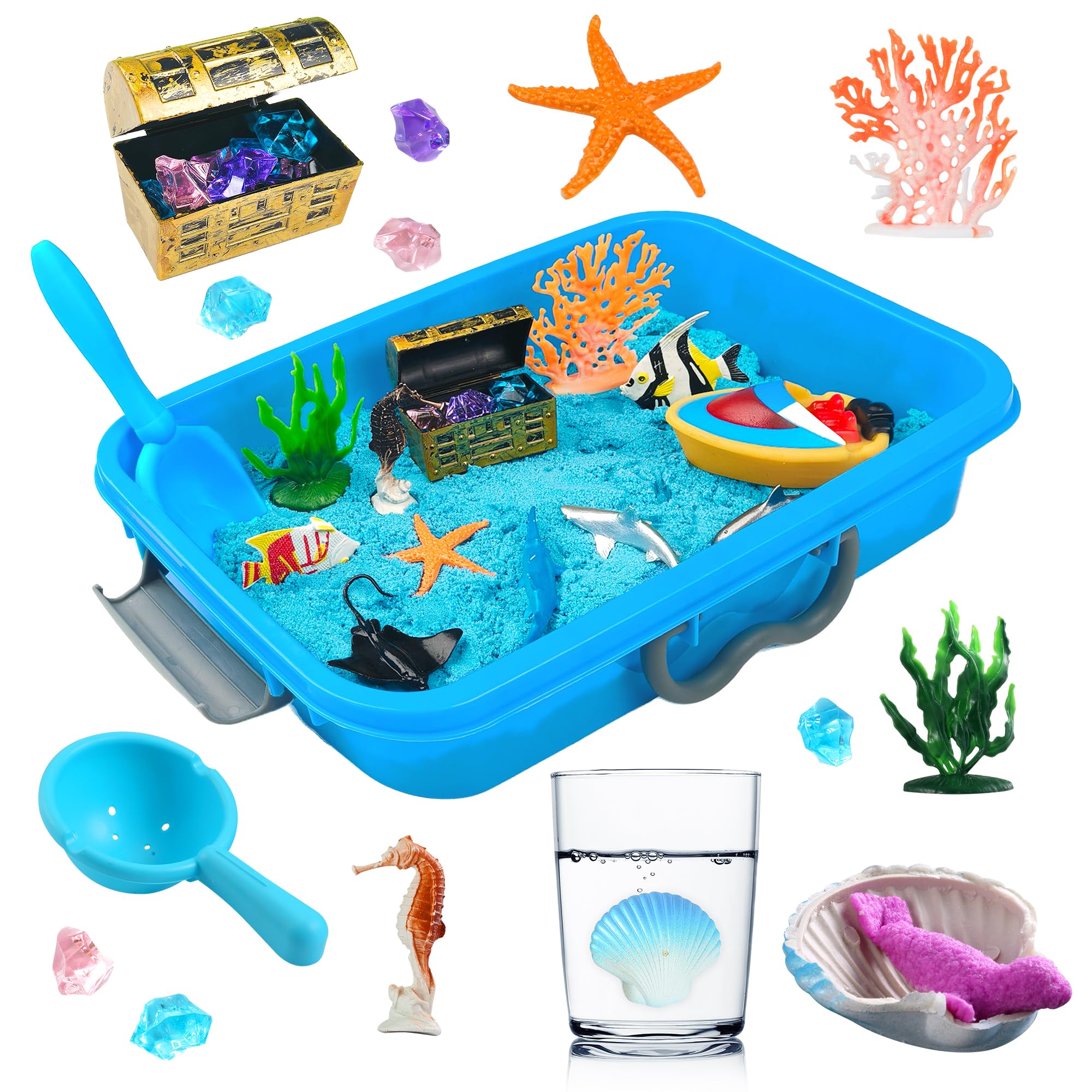
The AGENTLAN Ocean Sensory Bin is a complete tactile play kit designed for children who thrive on hands-on exploration. It includes 8 sea animals, a bag of kinetic sand, 9 gem stones, a treasure chest, coral, sea grass, a boat, and scoops — all housed in a 12.5 by 8.3-inch container that contains the mess. The sensory sand and water beads provide distinct textures that satisfy tactile seekers, while the ocean theme offers a calming, predictable narrative for imaginative play.
Customer reviews from parents of autistic children confirm this bin “kept engaged for hours” and that the variety of textures is “calming yet exciting.” The treasure chest with jewels is a particular hit. The kit comes with instructions that introduce ocean animal facts, adding an educational layer. While the small pieces like gem stones and beads pose a choking hazard for children under three, the kit is well-suited for ages 3-8 under adult supervision.
Non-toxic, eco-friendly materials are used throughout, and the container lid helps store everything neatly. The included tweezer and scoop tools also promote fine motor skill development during play. For families who already have a sensory table, this is a themed refill kit; for those starting out, it provides everything needed for a complete sensory experience without buying separate components.
Why it’s great
- Complete kit with sand, animals, tools, and container
- Calming ocean theme with varied textures
- Promotes fine motor skills with tweezer and scoop tools
Good to know
- Small pieces present a choking hazard for toddlers
- Requires supervision to prevent sand/bead scattering
5. Walenty Dinosaur Alphabet Learning Toys

The Walenty Alphabet Dinosaur set combines a beloved character theme with early literacy skills, featuring 26 double-sided dinosaurs that display both uppercase and lowercase letters. Each dinosaur splits into two halves that snap together, requiring a child to match the correct letter pair — a satisfying fine motor challenge. The bright, vibrant colors and palm-sized pieces are perfectly scaled for small hands, and the durable plastic construction survives frequent assembly and disassembly without fading or cracking.
For autistic children who fixate on dinosaurs, this toy leverages that special interest to teach letter recognition. The matching game format provides clear, predictable feedback — each correct match produces a complete dinosaur, reinforcing success. Customer reviews note that even a 20-month-old can take the pieces apart and attempt reassembly, though some younger children find the snap connection slightly difficult to press together. The set includes a drawstring bag and storage box for organization.
The plastic material is lightweight and silent during play, unlike wooden toys that can be noisy when dropped. Each dinosaur measures about 2 inches tall, making them easy to scatter on a table for sorting activities. For homeschooling or preschool environments, this is an excellent tool for teaching the alphabet in both cases without screens or batteries.
Why it’s great
- Leverages dinosaur special interest for alphabet learning
- Double-sided letters cover uppercase and lowercase
- Durable, fade-resistant plastic with storage bag included
Good to know
- Snap connection can be tight for very small hands
- Pieces can be noisy if dropped on hard floors
6. Benresive Busy Book for Toddlers 3-5

The Benresive Busy Book is a Montessori-style quiet book featuring 15 themed activity pages covering letters, numbers, colors, animals, seasons, shapes, weather, transportation, and puzzles. It also includes 15 blank drawing and writing pages with 8 colored pens, making it a twofold tool for both structured learning and creative expression. The 8 by 12-inch booklet size fits comfortably in a backpack or car seat pocket, making it a go-to travel toy for restaurant waits or long car rides.
This book uses Velcro-based matching activities where children place pieces onto corresponding spots, building fine motor precision and cognitive categorization skills. Customer reviews from a speech-language pathologist note it is “SLP-approved” and effective for teaching size, sequence, and categories. The dry-erase markers wipe clean from the pages, though some reviewers suggest skipping the included markers to prevent streaks and extend the book’s lifespan. The thick PVC pages are double-layered and durable against bending or tearing.
For autistic children who benefit from repetitive, predictable tasks, the matching format is highly regulating. The book covers basic knowledge without overwhelming visual clutter. Assembly requires attaching hundreds of Velcro dots to the pieces — a tedious setup process that takes about 30 minutes — but the result is a comprehensive, reusable activity book that stays engaging through multiple plays.
Why it’s great
- 15 diverse themes cover broad early learning concepts
- Portable 8″x12″ size fits travel bags easily
- SLP-approved for language development and sequencing
Good to know
- Requires manual Velcro dot assembly before first use
- Included markers may leave streaks on pages
7. HarVow LED Light Switches Busy Board
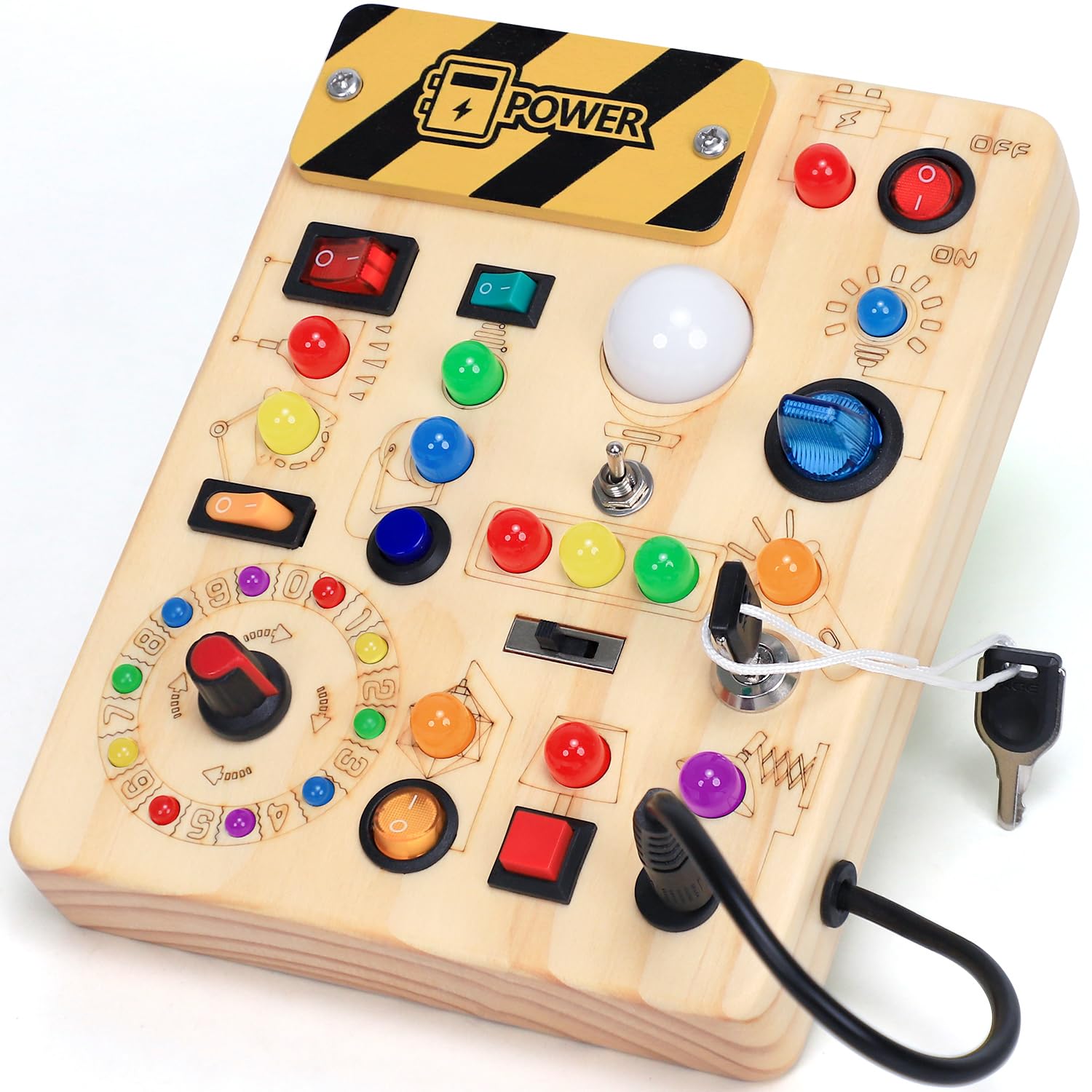
The HarVow LED Busy Board is a compact wooden sensory board packed with 13 unique switches and 24 vibrant LED lights. Each switch triggers different colors and patterns, providing clear cause-and-effect feedback that captivates toddlers. The board measures 6.7 by 5.3 by 1.1 inches and weighs just 0.74 pounds, making it the most portable option in this list — easily slipped into a diaper bag for restaurants or car rides. A master switch allows one-click power-off to save the two AAA batteries required.
The wooden construction is handmade from natural wood with hand-sanded, splinter-free edges, and the LED brightness is calibrated to be safe for sensitive eyes yet vivid enough to hold attention. The backside features engraved A-Z letters and numbers 0-9, adding an early literacy element. Customer reviews highlight that a 15-month-old plays independently for extended periods, and that the board survives being tossed onto hard floors. One reviewer noted a single button’s light flickers (possible short), but overall the durability is praised.
The keys are tethered to prevent loss, and the battery compartment uses screws for child safety. For autistic children who are drawn to switches, buttons, and lights, this board provides a screen-free alternative that satisfies that sensory need. It is also quiet enough not to overstimulate parents — the switches click softly and the lights don’t flash aggressively. At its price point, it offers exceptional value for a cause-and-effect learning tool.
Why it’s great
- Ultra-portable 0.74 lb design fits any bag
- Hand-sanded natural wood with child-safe edges
- 24 LED lights with master power-off switch
Good to know
- Requires 2 AAA batteries (not included)
- Some reports of individual LED flickering over time
FAQ
How do I know if a spinning chair will help my autistic child regulate?
What is the difference between a busy board and a sensory bin for fine motor skills?
Can an AAC device replace a speech therapist?
How do I choose between a quiet book and an electronic busy board for travel?
Final Thoughts: The Verdict
For most families, the autistic children’s toys winner is the BABAMU Spinning Chair because it delivers the heaviest-duty vestibular input with a silent, stable, 220-pound capacity that grows with the child. If you need a portable communication tool, grab the Joyreal AAC Device with its 37 icons and recordable buttons. And for budget-friendly cause-and-effect learning, nothing beats the HarVow LED Busy Board which packs 24 lights into a pocket-sized wooden frame.